270 Results for "

ECL4 loop

" in MedChemExpress (MCE) Product Catalog:
Products (270)

270 Results for "ECL4 loop" in MCE Product Catalog:

Cat. No.: HY-P700514
Purity:  ≥ 90%, as determined by reducing SDS-PAGE.
Synonyms: USF1; Upstream Transcription Factor 1; BHLHb11; Major Late Transcription Factor 1; Upstream Stimulatory Factor 1; MLTFI; UEF; Class B Basic Helix-loop-Helix Protein 11; HYPLIP1; BHLHB11; FCHL1; FCHL; MLTF; USF
Species:  
Human
Source:  
E. coli
loading...
    loading...
Cat. No.: HY-P702776
Purity:  ≥ 90%, as determined by reducing SDS-PAGE.
Synonyms: MYCN; Neuroblastoma MYC Oncogene; Prev. NMYC; Oncogene NMYC; BHLHe37; MYCNsORF; N-Myc; MYCNsPEP; V-Myc Avian Myelocytomatosis Viral Oncogene Neuroblastoma Derived Homolog; BHLHE37; Class E Basic Helix-loop-Helix Protein 37; FGLDS1; N-Myc Proto-Oncogene Pr
Species:  
Human
Source:  
Sf9 insect cells
loading...
    loading...
Cat. No.: HY-P85195
Synonyms: HAND1; BHLHA27; EHAND; Heart- and neural crest derivatives-expressed protein 1; Class A basic helix-loop-helix protein 27; bHLHa27; Extraembryonic tissues; heart, autonomic nervous system and neural crest derivatives-expressed protein 1; eH

Host:  

Mouse

Application:  

FC, ELISA

Reactivity:  

Human

loading...
    loading...
Cat. No.: HY-12388
CAS No.: 303-48-0
Synonyms: Desmethylclomipramine; Norclomipramine
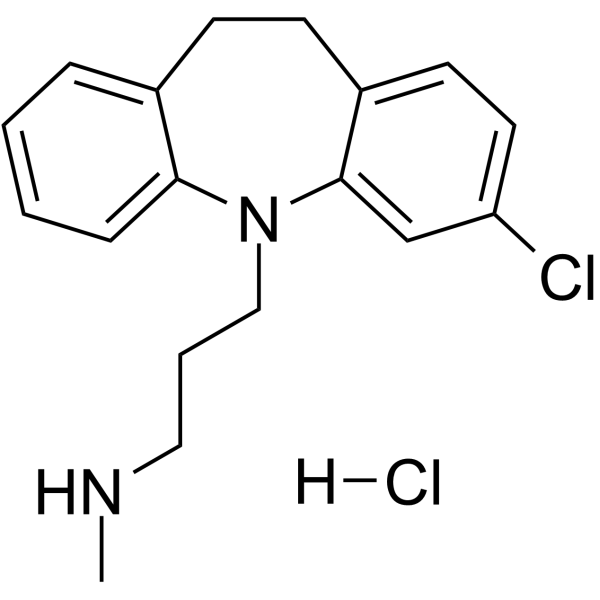
N-Desmethyl clomipramine (Desmethylclomipramine; Norclomipramine) is the orally active major active metabolite of the tricyclic antidepressant Clomipramine (HY-B0457A), possessing multiple activities including anti-inflammatory, antioxidant, antibacterial, and antiparasitic effects. N-Desmethyl clomipramine blocks autophagosome-lysosome fusion, leading to the accumulation of LC3-II, p62, ATG7, WIPI2, and ATG5-12, reactivates the p53/p21 pathway, induces apoptosis through C-PARP and C-CAS3, and inhibits the proliferation, migration, and invasion of renal cancer cells. N-Desmethyl clomipramine inhibits LdTOPIA, inducing R-loop accumulation in the nucleus of Leishmania, ultimately causing parasite death. N-Desmethyl clomipramine can be used for research on depression, metastatic renal cell carcinoma, and leishmaniasis [4] .
loading...
    loading...
Cat. No.: HY-12388A
CAS No.: 29854-14-6
Purity:  99.95%
Synonyms: Desmethylclomipramine hydrochloride; Norclomipramine hydrochloride
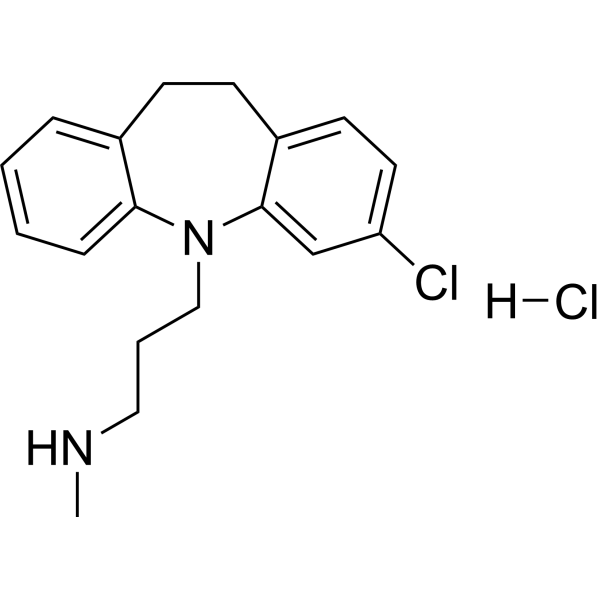
N-Desmethyl clomipramine hydrochloride (Desmethylclomipramine hydrochloride; Norclomipramine hydrochloride) is the orally active major active metabolite of the tricyclic antidepressant Clomipramine (HY-B0457A), possessing multiple activities including anti-inflammatory, antioxidant, antibacterial, and antiparasitic effects. N-Desmethyl clomipramine hydrochloride blocks autophagosome-lysosome fusion, leading to the accumulation of LC3-II, p62, ATG7, WIPI2, and ATG5-12, reactivates the p53/p21 pathway, induces apoptosis through C-PARP and C-CAS3, and inhibits the proliferation, migration, and invasion of renal cancer cells. N-Desmethyl clomipramine hydrochloride inhibits LdTOPIA, inducing R-loop accumulation in the nucleus of Leishmania, ultimately causing parasite death. N-Desmethyl clomipramine hydrochloride can be used for research on depression, metastatic renal cell carcinoma, and leishmaniasis [4] .
loading...
    loading...
Cat. No.: HY-148837
CAS No.: 2883535-99-5
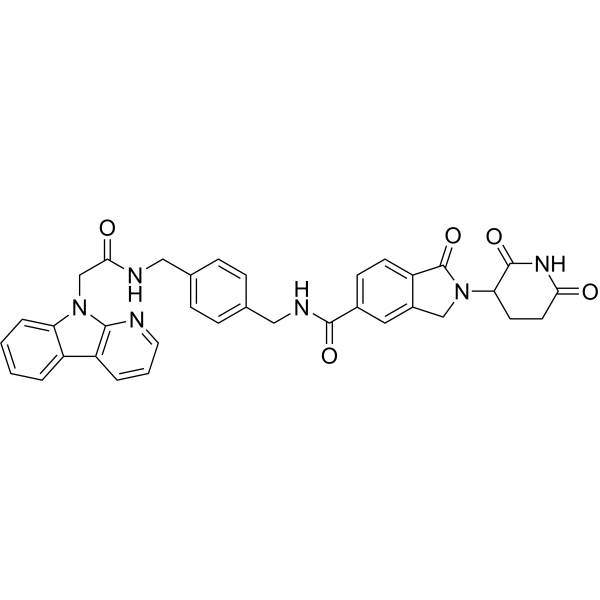
GT19630 is an orally active c-Myc PROTAC targeted degrader based on the cereblon E3 ubiquitin ligase, with an IC50 of 1.5 nM against human c-Myc. GT19630 mediates the degradation of MYC, GSPT1, GSPT2, CK1 alpha, N-Myc, B7-H3 and XIAP, and disrupts the MYC-GSPT1 synergistic regulatory feedback loop. GT19630 inhibits cell proliferation, blocks S-phase progression of the cell cycle, promotes cell apoptosis, reduces cell migration capacity, induces integrated stress response, and blocks oxidative phosphorylation by inhibiting the TCA cycle. GT19630 can be used in the research of Myc-driven hematological cancers, small cell lung cancer, breast cancer, TP53-mutant cancers, and venetoclax-resistant cancers [4] .
loading...
    loading...
Cat. No.: HY-183399
CAS No.: 95669-35-5
Wy 27127 is a potent and selective α2-adrenergic receptor antagonist. Wy 27127 competitively blocks α2-adrenergic receptors, interrupts the negative feedback loop of sympathetic nerve endings, enhances stimulus-evoked norepinephrine release, and blocks agonist-induced inhibition of vas deferens contraction. Wy 27127 shows weak antagonistic effects on α1 receptors, and exhibits no significant antagonistic activity against 5-hydroxytryptamine, muscarinic, presynaptic dopamine, histamine or β1-adrenergic receptors in vitro. Wy 27127 blocks saphenous vein contraction mediated by postsynaptic α2-adrenergic receptor agonists. Wy 27127 is applicable to studies related to sympathetic neurotransmission and vascular adrenergic responses .
loading...
    loading...
Cat. No.: HY-184717
Target:  

Atg4 Autophagy

Research Areas:  

Cancer

Atg4B-IN-3 (compound a25) is a ATG4B inhibitor with a Kd value of 18.01 nM against the human target. Atg4B-IN-3 stably regulates the closed conformation of the loop, prevents substrates from accessing the catalytic site Cys74, and thereby inhibits the proteolytic activity of ATG4B. Atg4B-IN-3 blocks autophagic flux, reduces LC3-II levels, promotes p62 accumulation, disrupts autophagy homeostasis and enhances cell death. Atg4B-IN-3 inhibits cell proliferation, migration and clonogenic survival capacity. Atg4B-IN-3 can be used in studies related to esophageal squamous cell carcinoma .
loading...
    loading...
Cat. No.: HY-46286
CAS No.: 352560-76-0
Synonyms: N-(4-tert-butyl-1,3-thiazol-2-yl)-3-fluorobenzamide
TTFB (N-(4-tert-butyl-1,3-thiazol-2-yl)-3-fluorobenzamide) is a selective, non-competitive zinc-activated channel (ZAC) antagonist. TTFB inhibits Zn 2+- and H +-induced ZAC currents with IC50 values of 3 μM and 8.5 μM, respectively, and has an IC50 of 4.7 μM against spontaneous activity. TTFB shows no significant agonistic, antagonistic or modulatory activity towards representative classical Cys-loop receptors including m5-HT3AR, hα3β4 nAChR, hα1β2γ2S GABAAR and hα1 GlyR. TTFB can be used to investigate the physiological and pathological functions of ZAC.
loading...
    loading...
Cat. No.: HY-L0119V
3,253 compounds

Protein protein interactions (PPI) have pivotal roles in life processes. The studies showed that aberrant PPI are associated with various diseases. However, the design of modulators targeting PPI still faces tremendous challenges, such the difficult PPI interfaces for the drug design, lack of ligands reference, lack of guidance rules for the PPI modulators development and high-resolution PPI proteins structures.

The PPI Library comprises molecules of various sizes, frameworks, and shapes ranging from fragment-like entities to macrocyclic derivatives designed as secondary structure mimetics or as epitope mimetics. The designs cover β-turn / loop mimetics and α-helix mimetics. Since helices present at the interface in 62% of all protein-protein interactions. This library focused on designs including mimics with the substitution geometry of an a-helices, as well as designs that mimic the location of “hot-spot” side chains in helix-mediated PPIs.

Cat. No.: HY-P85216
Synonyms: CHUK; IKKA; TCF16; Inhibitor of nuclear factor kappa-B kinase subunit alpha; I-kappa-B kinase alpha; IKK-A; IKK-alpha; IkBKA; IkappaB kinase; Conserved helix-loop-helix ubiquitous kinase; I-kappa-B kinase 1; IKK1; Nuclear factor NF-kappa-B

Host:  

Mouse

Application:  

WB, ICC/IF, FC, ELISA

Reactivity:  

Human

loading...
    loading...
Cat. No.: HY-P86384
Synonyms: CHUK; IKKA; TCF16; Inhibitor of nuclear factor kappa-B kinase subunit alpha; I-kappa-B kinase alpha; IKK-A; IKK-alpha; IkBKA; IkappaB kinase; Conserved helix-loop-helix ubiquitous kinase; I-kappa-B kinase 1; IKK1; Nuclear factor NF-kappa-B

Host:  

Rabbit

Application:  

WB, IHC-P, ICC/IF, IP, ELISA

Reactivity:  

Human, Mouse, Rat

loading...
    loading...
Cat. No.: HY-P85195A
Synonyms: HAND1; BHLHA27; EHAND; Heart- and neural crest derivatives-expressed protein 1; Class A basic helix-loop-helix protein 27; bHLHa27; Extraembryonic tissues; heart, autonomic nervous system and neural crest derivatives-expressed protein 1; eH

Host:  

Mouse

Application:  

FC, ELISA

Reactivity:  

Human

loading...
    loading...
Cat. No.: HY-P82126
Synonyms: CHUK; IKKA; TCF16; Inhibitor of nuclear factor kappa-B kinase subunit alpha; I-kappa-B kinase alpha; IKK-A; IKK-alpha; IkBKA; IkappaB kinase; Conserved helix-loop-helix ubiquitous kinase; I-kappa-B kinase 1; IKK1; Nuclear factor NF-kappa-B

Host:  

Rabbit

Application:  

WB, ICC/IF, IP

Reactivity:  

Human, Mouse, Rat

loading...
    loading...
Cat. No.: HY-P85293
Synonyms: NCOA3; AIB1; BHLHE42; RAC3; TRAM1; Nuclear receptor coactivator 3; NCoA-3; ACTR; Amplified in breast cancer 1 protein; AIB-1; CBP-interacting protein; pCIP; Class E basic helix-loop-helix protein 42; bHLHe42; Receptor-associated coactivator

Host:  

Mouse

Application:  

WB

Reactivity:  

Human

loading...
    loading...
Cat. No.: HY-P86459
Synonyms: CHUK; IKKA; TCF16; Inhibitor of nuclear factor kappa-B kinase subunit alpha; I-kappa-B kinase alpha; IKK-A; IKK-alpha; IkBKA; IkappaB kinase; Conserved helix-loop-helix ubiquitous kinase; I-kappa-B kinase 1; IKK1; Nuclear factor NF-kappa-B

Host:  

Rabbit

Application:  

WB, IHC-P, ICC/IF, IP, ELISA

Reactivity:  

Human, Mouse, Rat

loading...
    loading...
Cat. No.: HY-L047
908 compounds

The endocrine system is a chemical messenger system comprising feedback loops of the hormones released by internal glands of an organism directly into the circulatory system, regulating distant target organs. Hormones are chemicals that serve to communicate between organs and tissues for physiological regulation and behavioral activities. Hormones affect distant cells by binding to specific receptor proteins in the target cell, resulting in a change in cell function.

The endocrine system is concerned with the integration of developmental events proliferation, growth, and differentiation, and the psychological or behavioral activities of metabolism, growth and development, tissue function, sleep, digestion, respiration, excretion, mood, stress, lactation, movement, reproduction, and sensory perception caused by hormones. Irregulated hormone release, inappropriate response to signaling or lack of a gland can lead to endocrine disease.

MCE offers a unique collection of 908 endocrinology related compounds targeting varieties of hormone receptors such as thyroid hormone receptor, TSH receptor, GNRH receptor, adrenergic receptor, etc. MCE Endocrinology Compound Library is a useful tool for the discovery of endocrinology drugs.

Cat. No.: HY-P85127
Synonyms: TCF3; BHLHB21; E2A; ITF1; Transcription factor E2-alpha; Class B basic helix-loop-helix protein 21; bHLHb21; Immunoglobulin enhancer-binding factor E12/E47; Immunoglobulin transcription factor 1; Kappa-E2-binding factor; Transcription facto

Host:  

Mouse

Application:  

WB, FC, ELISA

Reactivity:  

Human

loading...
    loading...
Cat. No.: HY-12388AR
CAS No.: 29854-14-6
Synonyms: Desmethylclomipramine hydrochloride (Standard); Norclomipramine hydrochloride (Standard)
N-Desmethyl clomipramine hydrochloride (Standard) (Desmethylclomipramine hydrochloride (Standard); Norclomipramine hydrochloride (Standard)) is the analytical standard of N-Desmethyl clomipramine hydrochloride (HY-12388A). This product is intended for research and analytical applications. N-Desmethyl clomipramine hydrochloride is the orally active major active metabolite of the tricyclic antidepressant Clomipramine (HY-B0457A), possessing multiple activities including anti-inflammatory, antioxidant, antibacterial, and antiparasitic effects. N-Desmethyl clomipramine hydrochloride blocks autophagosome-lysosome fusion, leading to the accumulation of LC3-II, p62, ATG7, WIPI2, and ATG5-12, reactivates the p53/p21 pathway, induces apoptosis through C-PARP and C-CAS3, and inhibits the proliferation, migration, and invasion of renal cancer cells. N-Desmethyl clomipramine hydrochloride inhibits LdTOPIA, inducing R-loop accumulation in the nucleus of Leishmania, ultimately causing parasite death. N-Desmethyl clomipramine hydrochloride can be used for research on depression, metastatic renal cell carcinoma, and leishmaniasis [4] .
loading...
    loading...
Cat. No.: HY-W740027
CAS No.: 1160707-78-7
Synonyms: 5-Methyldeoxycytidine-d3
5-Methyl-2'-deoxycytidine-d3 (5-Methyldeoxycytidine-d3) is the deuterium labeled Methyl-2'-deoxycytidine (HY-W012078). 5-Methyl-2'-deoxycytidine (5mdC) is an endogenous substrate of DNA methyltransferases (such as mammalian 5-C-MTase) and binds to DNA dependent on the formation of DNA stem-loop structures. 5-Methyl-2'-deoxycytidine guides de novo DNA methylation by acting as a methylation mark and activates the methylation of adjacent CpG sites in single-stranded DNA through cis action. 5-Methyl-2'-deoxycytidine regulates DNA methylation patterns by recruiting methyltransferases to specific chromatin regions, affecting chromatin condensation and gene expression. Its distribution in plant cells is related to cell proliferation and differentiation stages. The methylation level of 5-Methyl-2'-deoxycytidine is low in proliferating cells and high in differentiated cells .
loading...
    loading...

