266 Results for "

chronic obstructive pulmonary

" in MedChemExpress (MCE) Product Catalog:
Products (266)

266 Results for "chronic obstructive pulmonary" in MCE Product Catalog:

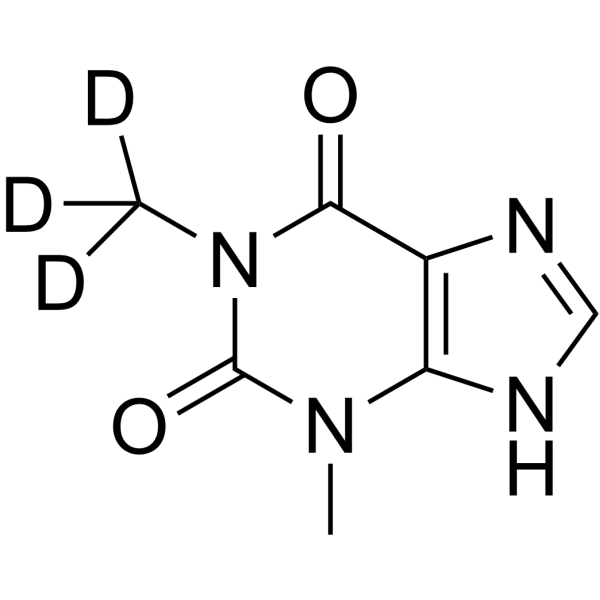
Cat. No.: HY-B0809S1
CAS No.: 65566-68-9
Synonyms: 1,3-Dimethylxanthine-d3; Theo-24-d3
Theophylline-d3 is deuterated labeled Theophylline (HY-B0809). Theophylline (1,3-Dimethylxanthine) is a potent phosphodiesterase (PDE) inhibitor, adenosine receptor antagonist, and histone deacetylase (HDAC) activator. Theophylline (1,3-Dimethylxanthine) inhibits PDE3 activity to relax airway smooth muscle. Theophylline (1,3-Dimethylxanthine) has anti-inflammatory activity by increase IL-10 and inhibit NF-κB into the nucleus. Theophylline (1,3-Dimethylxanthine) induces apoptosis. Theophylline (1,3-Dimethylxanthine) can be used for asthma and chronic obstructive pulmonary disease (COPD) research .
loading...
    loading...
Cat. No.: HY-P990774
CAS No.: 2768386-15-6
Synonyms: ASP-7266; TRAB-1; UPB-101

Target:  

Interleukin Related

Research Areas:  

Inflammation/Immunology

Verekitug (ASP-7266; TRAB-1; UPB-101) is a human monoclonal antibody targeting the thymic stromal lymphopoietin receptor (TSLPR), with a mean half-life of approximately 20 days. At doses of Verekitug ≥100 mg, complete and sustained TSLPR-specific occupancy is achieved, and the antibody does not bind to IL-7Rα. By inhibiting TSLP-driven inflammatory responses, Verekitug blocks TSLP-induced cell proliferation and TARC expression, while reducing fractional exhaled NO levels, blood eosinophil counts, and levels of IL-5 and IgE. Verekitug significantly improves scores for nasal polyps, nasal congestion and olfactory dysfunction, with favorable safety and good tolerability; potential adverse reactions include headache, upper respiratory tract infection, sinusitis and nasopharyngitis. Verekitug is used in relevant studies on asthma, chronic rhinosinusitis with nasal polyps and chronic obstructive pulmonary disease .
loading...
    loading...
Cat. No.: HY-181762
Multitarget AD-IN-6 (Compound 39) is a multi-target inhibitor, with an IC50 of 15.54 μM against PDE4B, 15.15 μM against PDE7A, 8.39 μM against PDE3A, and a Kd of 37.7 μM against CHIT1. Multitarget AD-IN-6 acts as a TRPA1 antagonist, reduces the level of the NLRP3 inflammasome multiprotein complex to inhibit its activation, while inhibiting PDE4B, PDE7A and CHIT1, and decreasing the phosphorylation of NF-κB. Multitarget AD-IN-6 improves the pathology of elastase-induced emphysema in mice. Multitarget AD-IN-6 is applicable for the research of chronic obstructive pulmonary disease .
loading...
    loading...
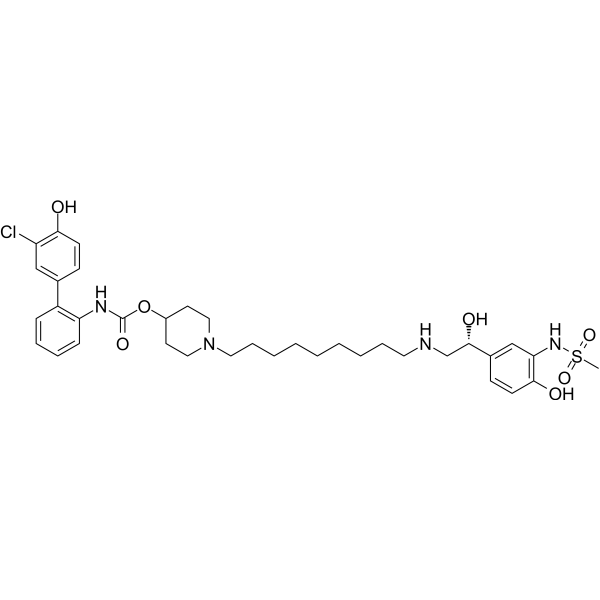
Cat. No.: HY-184681
CAS No.: 3109318-09-1
Research Areas:  

Inflammation/Immunology

β2AR agonist 7 is a MABA with both muscarinic acetylcholine M3 receptor antagonistic activity and β2-adrenergic receptor agonistic activity, with a Ki of 1.75 nM for hM3 and an EC50 of 0.054 nM for hβ2. β2AR agonist 7 binds to the M3 muscarinic receptor with high affinity and long-acting kinetic characteristics. β2AR agonist 7 induces smooth muscle relaxation and acts as a bronchoprotective agent against acute bronchoconstriction. β2AR agonist 7 can be used in the research of asthma and chronic obstructive pulmonary disease .
loading...
    loading...
Cat. No.: HY-B0140R
CAS No.: 317-34-0
Aminophylline (Standard) is the analytical standard of Aminophylline (HY-B0140). This product is intended for research and analytical applications. Aminophylline is a competitive phosphodiesterase 3/4 (PDE3/4) inhibitor. Aminophylline also acts as an adenosine receptor antagonist. Aminophylline elevates intracellular cAMP levels via competitive inhibition of PDE3 and PDE4, antagonizes adenosine A1 receptor (ADORA1), regulates intracellular calcium signaling and synaptic vesicle cycling, upregulates the PPAR signaling pathway, and downregulates glutamatergic synaptic pathways simultaneously. Aminophylline can be used in research related to major depressive disorder, epilepsy, asthma, and chronic obstructive pulmonary disease (COPD) .
loading...
    loading...
Cat. No.: HY-106006
CAS No.: 1293915-42-0
Target:  

PI3K

Research Areas:  

Others Inflammation/Immunology

RV-1729 is an inhibitor of the phosphatidylinositol 3-kinase-δ (PI3Kδ). RV-1729 identifies inhibition of the PI3K isotype by quantifying the release of phosphatidylinositol 3,4, 5-triphosphate (PIP3) (IC50=12 nM), showing twice the selectivity for PI3Kδ relative to PI3Kγ. RV-1729 is also 16 times more selective to PI3Kα. RV-1729 regulates immune and inflammatory responses by inhibiting PI3Kδ. RV-1729 can be used in studies of asthma and chronic obstructive pulmonary disease (COPD) .
loading...
    loading...
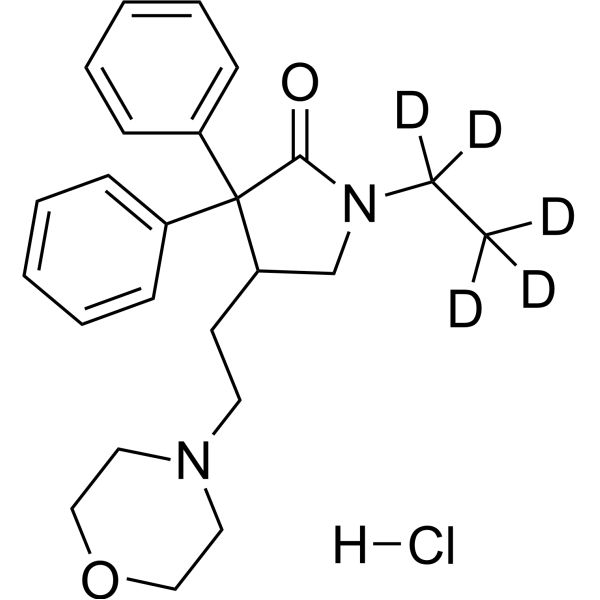
Cat. No.: HY-129146S
Purity:  ≥99.0%
Doxapram-d5 hydrochloride is deuterium labeled Doxapram hydrochloride. Doxapram hydrochloride is a respiratory stimulant. Doxapram hydrochloride increases breathing rate and depth by acting on the brain's respiratory centers and peripheral chemoreceptors. Doxapram hydrochloride inhibits TASK-1, TASK-3, TASK-1/TASK-3 heterodimeric channel function with EC50s of 410 nM, 37 μM, 9 μM, respectively. Doxapram hydrochloride inhibits the Ca²⁺-activated potassium current (IC50 ≈ 13 μM) and Ca²⁺-independent potassium current (IC50 ≈ 20 μM) in type I cells of the carotid body. Doxapram hydrochloride significantly prolongs the effective refractory period of the atrium and has an anti-arrhythmic effect. Doxapram hydrochloride can be used for the study of respiratory depression such as post-anesthesia respiratory depression, chronic obstructive pulmonary disease and apnea of prematurity.
loading...
    loading...
Cat. No.: HY-148525
CAS No.: 1017857-38-3
Synonyms: β2AR/M-receptor agonist-2
β2AR/M-receptor agonist-2 (compound 15) is a muscarinic antagonist and β2 adrenoceptor agonist (MABA). β2AR/M-receptor agonist-2 shows potency to β2 adrenoceptor with an EC50 value of 3.7 nM. β2AR/M-receptor agonist-2 also has potency to human cloned M3 receptor with a Ki value of 0.73 nM. β2AR/M-receptor agonist-2 is a potent bronchodilator, it can be used for the research of chronic obstructive pulmonary disease (COPD) .
loading...
    loading...
Cat. No.: HY-167939
CAS No.: 788821-30-7
Target:  

Adrenergic Receptor

Research Areas:  

Inflammation/Immunology

(R)-Bambuterol is a β2-receptor agonist with anti-asthmatic and colitis-improving activity. (R)-Bambuterol is indicated for the treatment of asthma and chronic obstructive pulmonary disease and has the advantage of a once-daily dosing and a favorable side effect profile. (R)-Bambuterol significantly reduced disease severity in a mouse model of colitis, more effectively than (RS)-Bambuterol or (S)-Bambuterol. (R)-Bambuterol can significantly reduce the levels of inflammatory cytokines and reduce the infiltration of macrophages in mice with colitis. (R)-Bambuterol also increases β2-adrenoceptor levels and reduces the expression of IL-6, IL-17 and other related proteins in colon tissue in a dose-dependent manner .
loading...
    loading...
Cat. No.: HY-179504
PDE4B-IN-6 (compound 4i) is a potent and selective PDE4B inhibitor with an IC50 of 7.42 nM. PDE4B-IN-6 shows ~195- and ~169-fold selectivity for PDE4B over PDE4A (IC50 = 1540 nM) and PDE4C (IC50 = 1260 nM), respectively. PDE4B-IN-6 increases cAMP level and suppresses TNF-α expression. PDE4B-IN-6 shows favorable antioxidant profiles and low cytotoxicity. PDE4B-IN-6 can be used for chronic obstructive pulmonary disease (COPD) research .
loading...
    loading...
Cat. No.: HY-184087
CAS No.: 205807-59-6
Synonyms: TNF484
PKF 242-484 (TNF484) is an orally active dual inhibitor of TACE/MMPs, with Ki values of 3.6, 0.1, 0.9, 1, and 4.5 nM against hMMP-1, hMMP-2, hMMP-3, hMMP-9, and hMMP-13, respectively. PKF 242-484 inhibits the enzymatic activities of MMPs and ADAM17, reduces the release of TNF-α, suppresses the proliferation, migration and invasion of cancer cells, and regulates inflammatory cell infiltration and cytokine production. PKF 242-484 can be used in studies related to airway inflammatory diseases such as asthma and chronic obstructive pulmonary disease, intestinal ischemia-reperfusion injury, epilepsy-induced neuronal damage, and hepatocellular carcinoma .
loading...
    loading...
Cat. No.: HY-184680
CAS No.: 3109318-04-6
Research Areas:  

Inflammation/Immunology

β2AR agonist 6 is a MABA with both muscarinic acetylcholine M3 receptor antagonistic activity and β2 adrenergic receptor agonistic activity, with a Ki of 1.95 nM against hM3 and an EC50 of 0.266 nM against hβ2. β2AR agonist 6 binds to the M3 muscarinic receptor with high affinity and exhibits long-lasting binding, while displaying subnanomolar agonist activity at the β2 adrenergic receptor. β2AR agonist 6 induces smooth muscle relaxation and provides long-lasting bronchoprotective effects. β2AR agonist 6 can be used in research related to asthma and chronic obstructive pulmonary disease .
loading...
    loading...
Cat. No.: HY-D3153
CAS No.: 2693397-68-9
PbQ is a tubulin inhibitor (with an IC50 of 5 μM against goat tubulin) and a fluorescent probe for cuprous ions Cu (I). PbQ can penetrate the membrane of peripheral blood mononuclear cells, form a stable 1:1 complex with Cu + ions, and exhibits low toxicity and good biocompatibility toward macrophage cell lines. In addition, PbQ promotes tubulin degradation and disrupts the microtubule network in lung epithelial cells without affecting actin. PbQ also possesses genotoxicity by forming DNA base adducts, and it can activate caspase-3 and apoptosis-related genes, induce loss of mitochondrial membrane potential, and trigger cell apoptosis. PbQ can be used in studies related to chronic obstructive pulmonary disease .
loading...
    loading...
Cat. No.: HY-W008766R
CAS No.: 5022-65-1
H-Trp-NH2.HCl Standard is the analytical standard of H-Trp-NH2.HCl (HY-W008766). This product is intended for research and analytical applications. H-Trp-NH2.HCl is an amide derivative of tryptophan. H-Trp-NH2.HCl has potential effects in inducing cell proliferation, apoptosis, necrosis, and angiogenesis-related activities. H-Trp-NH2.HCl also exhibits anti-Leishmania activity. H-Trp-NH2.HCl can be used in research on ulcerative colitis, wet age-related macular degeneration, skin diseases, chronic obstructive pulmonary disease, and leishmaniasis .
loading...
    loading...
Cat. No.: HY-W459577
CAS No.: 17949-65-4
Zinc picolinate is an orally effective zinc supplement. Zinc picolinate reduces the expression of Hsp70, inhibits oxidative DNA damage, increases serum ALP activity, decreases MDA concentration, elevates SOD levels, and raises zinc concentrations in serum, whole body and plasma. Zinc picolinate does not alter copper and manganese contents in rainbow trout. Zinc picolinate exerts a protective effect against Acetic acid (HY-Y0319)-induced experimental colitis in Sprague Dawley rats. Zinc picolinate reduces uterine fibroid volume, alleviates colonic oxidative damage, relieves colonic inflammation, and enhances intestinal barrier integrity. Zinc picolinate can be used in research related to uterine fibroids, ulcerative colitis and chronic obstructive pulmonary disease .
loading...
    loading...
Cat. No.: HY-L134
193 compounds

Aging is an unavoidable process, leading to cell senescence due to physiochemical changes in an organism. Aging cells cease to divide and drive the progression of illness through various pathways, resulting in the death of an organism ultimately. Anti-aging activities are primarily involved in the therapies of age-related disorders such as Parkinson's Disease (PD), Alzheimer's Disease (AD), cardiovascular diseases, cancer, and chronic obstructive pulmonary diseases.

Natural products are known as effective molecules in anti-aging treatments, which delay the aging process through influencing several pathways and thus ensure an extended lifespan. MCE offers a unique collection of 193 natural products with validated anti-aging activity. MCE anti-aging natural product library is a useful tool for the study of aging-related diseases drugs and pharmacology.

Cat. No.: HY-15651R
CAS No.: 848141-11-7
Synonyms: AZD9668 (Standard)
Alvelestat (Standard) (AZD9668 (Standard)) is the analytical standard of Alvelestat (HY-15651). This product is intended for research and analytical applications. Alvelestat (AZD9668) is an orally active, selective inhibitor of neutrophil elastase. Alvelestat reduces elastase activity, myeloperoxidase release, neutrophil recruitment and activation, and calcium phosphate precipitation; promotes smooth muscle cell colonization and collagen deposition; and inhibits the formation of neutrophil extracellular traps (NETs) as well as NET-derived neutrophil elastase activity. Alvelestat restores endothelial dysfunction, regulates antioxidant factors, improves the expression of endothelial tight junctions, reduces vascular leakage, and accelerates wound healing. Alvelestat prevents pulmonary hemorrhage, matrix protein degradation, airspace enlargement, and small airway wall remodeling; and alleviates cigarette-induced inflammatory responses. Alvelestat inhibits the growth of abdominal aortic aneurysms exacerbated by Porphyromonas gingivalis. Alvelestat can be used in research related to chronic obstructive pulmonary disease, abdominal aortic aneurysm, radiation-induced skin injury, and bronchiectasis .
loading...
    loading...
Cat. No.: HY-B0551AR
CAS No.: 7081-53-0
Doxapram hydrochloride hydrate (Standard) is the analytical standard of Doxapram hydrochloride hydrate (HY-B0551A). This product is intended for research and analytical applications. Doxapram hydrochloride hydrate is a respiratory stimulant. Doxapram hydrochloride hydrate increases breathing rate and depth by acting on the brain's respiratory centers and peripheral chemoreceptors. Doxapram hydrochloride hydrate inhibits TASK-1, TASK-3, TASK-1/TASK-3 heterodimeric channel function with EC50s of 410 nM, 37 μM, 9 μM, respectively. Doxapram hydrochloride hydrate inhibits the Ca²⁺-activated potassium current (IC50 ≈ 13 μM) and Ca²⁺-independent potassium current (IC50 ≈ 20 μM) in type I cells of the carotid body. Doxapram hydrochloride hydrate significantly prolongs the effective refractory period of the atrium and has an anti-arrhythmic effect. Doxapram hydrochloride hydrate can be used for the study of respiratory depression such as post-anesthesia respiratory depression, chronic obstructive pulmonary disease and apnea of prematurity.
loading...
    loading...
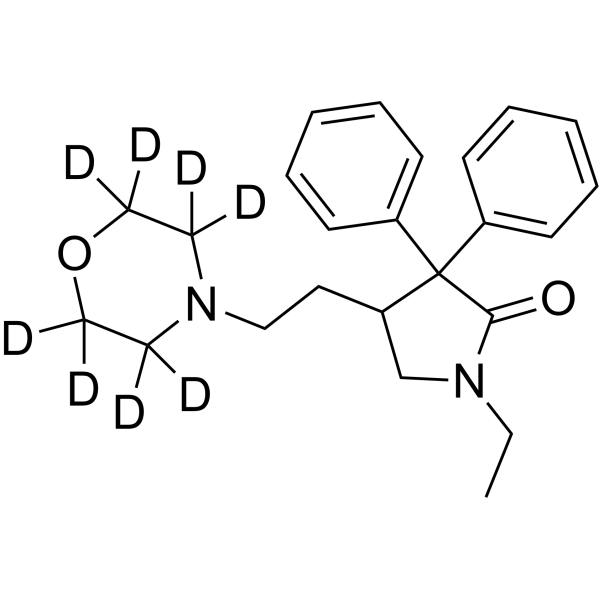
Cat. No.: HY-B0551S
Doxapram-d8 is deuterated labeled Doxapram (HY-B0551). Doxapram is a respiratory stimulant. Doxapram increases breathing rate and depth by acting on the brain's respiratory centers and peripheral chemoreceptors. Doxapram inhibits TASK-1, TASK-3, TASK-1/TASK-3 heterodimeric channel function with EC50s of 410 nM, 37 μM, 9 μM, respectively. Doxapram inhibits the Ca²⁺-activated potassium current (IC50 ≈ 13 μM) and Ca²⁺-independent potassium current (IC50 ≈ 20 μM) in type I cells of the carotid body. Doxapram significantly prolongs the effective refractory period of the atrium and has an anti-arrhythmic effect. Doxapram can be used for the study of respiratory depression such as post-anesthesia respiratory depression, chronic obstructive pulmonary disease and apnea of prematurity.
loading...
    loading...
Cat. No.: HY-15651S
Synonyms: AZD9668-13C,d3
Alvelestat- 13C,d3 (AZD9668- 13C,d3) is the deuterated, 13C-labeled Alvelestat (HY-15651). Alvelestat (AZD9668) is an orally active, selective inhibitor of neutrophil elastase. Alvelestat reduces elastase activity, myeloperoxidase release, neutrophil recruitment and activation, and calcium phosphate precipitation; promotes smooth muscle cell colonization and collagen deposition; and inhibits the formation of neutrophil extracellular traps (NETs) as well as NET-derived neutrophil elastase activity. Alvelestat restores endothelial dysfunction, regulates antioxidant factors, improves the expression of endothelial tight junctions, reduces vascular leakage, and accelerates wound healing. Alvelestat prevents pulmonary hemorrhage, matrix protein degradation, airspace enlargement, and small airway wall remodeling; and alleviates cigarette-induced inflammatory responses. Alvelestat inhibits the growth of abdominal aortic aneurysms exacerbated by Porphyromonas gingivalis. Alvelestat can be used in research related to chronic obstructive pulmonary disease, abdominal aortic aneurysm, radiation-induced skin injury, and bronchiectasis .
loading...
    loading...

