
379 Results for "

zebrafish

" in MedChemExpress (MCE) Product Catalog:
Products (379)

379 Results for "zebrafish" in MCE Product Catalog:

Cat. No.: HY-181071
Research Areas:  

Cancer

POLRMT-IN-3 is a photosensitive inhibitor of mitochondrial RNA polymerase (POLRMT). POLRMT-IN-3 is biologically inactive in the dark but rapidly releases the active parent compound LJ03 upon illumination with 405 nm light, enabling spatiotemporally precise inhibition of POLRMT. POLRMT-IN-3 exhibits antitumor activity and can be used in research on tumors such as pancreatic cancer and ovarian cancer .
loading...
    loading...
Cat. No.: HY-W679754
CAS No.: 72629-94-8
Synonyms: PFTrDA
Pentacosafluorotridecanoic Acid (PFTrDA) is a long-chain perfluoroalkyl carboxylic acid with strong endocrine-disrupting activity. Pentacosafluorotridecanoic Acid exhibits estrogenic effects and disrupts vtg1 transcription as well as sex hormone homeostasis in male Danio rerio. Pentacosafluorotridecanoic Acid disturbs steroidogenesis and HPG axis function in a sex-dependent pattern. Pentacosafluorotridecanoic Acid inhibits CYP17A and CYP11A1 to reduce testosterone and increase E2/T ratio in H295R cells. Pentacosafluorotridecanoic Acid triggers gender-specific immunomodulation after prenatal exposure. Pentacosafluorotridecanoic Acid correlates with lower eczema risk in female infants. Pentacosafluorotridecanoic Acid can be used for the research of endocrine disruption and eczema .
loading...
    loading...
Cat. No.: HY-119976S
CAS No.: 2468796-76-9
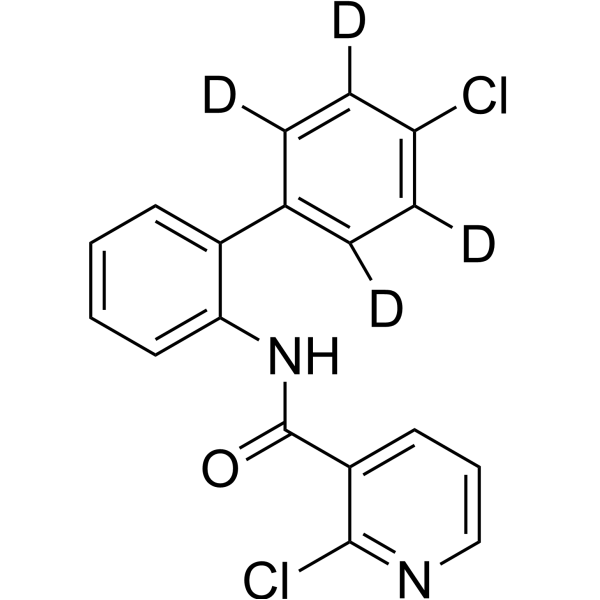
Boscalid-d4 is the deuterium labeled Boscalid. Boscalid is a succinate dehydrogenase (SDHI) inhibitor with antifungal activity. Boscalid binds to the ubiquinone-binding site of fungal mitochondrial complex II, blocks ATP production and aerobic respiration, exhibits good control efficacy against a variety of plant fungal diseases including gray mold, sclerotinia rot and powdery mildew, and is widely used for disease control in agriculture. Boscalid induces apoptosis, altered lipid metabolism, mitochondrial dysfunction, respiratory impairment, oxidative stress, ROS accumulation and neurodevelopmental disorders in zebrafish. Boscalid reduces foraging ability, shortens median death time and causes chronic toxicity in exposed honeybees. Boscalid also possesses genotoxicity, cytotoxicity, elevated mitochondrial superoxide levels and early-stage apoptosis .
loading...
    loading...
Cat. No.: HY-147412
CAS No.: 2642382-41-8
Synonyms: QR-421a
Ultevursen (QR-421a) is a splice-modulating antisense oligonucleotide targeting exon 13 of the USH2A gene, which restores the functional expression of Usherin protein by inducing exon skipping. Ultevursen binds to USH2A pre-mRNA and modulates the splicing process to specifically skip exon 13 carrying the pathogenic mutation c.2299delG, generating an in-frame transcript and a truncated yet functionally normal protein. Ultevursen exhibits concentration-dependent exon skipping activity in human cells and retinal organoid models, and restores Usherin expression and retinal function in zebrafish and gene-edited mouse models. Ultevursen can be used for related research on type 2 Usher syndrome and non-syndromic retinitis pigmentosa .
loading...
    loading...
Ultevursen sodium
0 Images
RNA, (P-thio)[2′-O-(2-methoxyethyl)](A-G-m5C-m5U-m5U-m5C-G-G-A-G-A-A-A-m5U-m5U-m5U-A-A-A-m5U-m5C), sodium salt
Cat. No.: HY-147412A
Synonyms: QR-421a sodium
Ultevursen sodium (QR-421a) is a splice-modulating antisense oligonucleotide targeting exon 13 of the USH2A gene, which restores the functional expression of Usherin protein by inducing exon skipping. Ultevursen sodium binds to USH2A pre-mRNA and modulates the splicing process to specifically skip exon 13 carrying the pathogenic mutation c.2299delG, generating an in-frame transcript and a truncated yet functionally normal protein. Ultevursen sodium exhibits concentration-dependent exon skipping activity in human cells and retinal organoid models, and restores Usherin expression and retinal function in zebrafish and gene-edited mouse models. Ultevursen sodium can be used for related research on type 2 Usher syndrome and non-syndromic retinitis pigmentosa .
loading...
    loading...
Cat. No.: HY-153898
CAS No.: 1332175-56-0
Purity:  99.10%
Target:  

Amyloid-β

Research Areas:  

Neurological Disease

rTRD01 is an orally active, specific TDP-43 binder that targets the RRM1 and RRM2 domains of TDP-43. rTRD01 partially disrupts the interaction between TDP-43 and c9orf72 repeat RNA, but does not affect the binding of TDP-43 to canonical binding sequences. rTRD01 exhibits significant neuroprotective effects in zebrafish models, improves motor function and protects against paraquat (a widely used herbicide)-induced neurodegeneration, with no teratogenicity at high concentrations. rTRD01 is not a general antioxidant and cannot counteract Rotenone (HY-B1756)-induced neuronal death. rTRD01 can be used to study amyotrophic lateral sclerosis and other TDP-43 proteinopathies .
loading...
    loading...
Cat. No.: HY-182372
CAS No.: 1638153-78-2
Target:  

Epoxide Hydrolase

Research Areas:  

Neurological Disease

SH-11037 is a potent inhibitor of soluble epoxide hydrolase (sEH) and docks to the substrate binding cleft in the sEH hydrolase domain. SH-11037 dose-dependently suppresses angiogenesis in the choroidal sprouting assay ex vivo and inhibited ocular developmental angiogenesis in zebrafish larvae. SH-11037 reduces choroidal neovascularisation lesion volume in the laser-induced CNV mouse model. SH-11037 synergises with anti-VEGF treatments in vitro and in vivo. SH-11037 induces G2/M phase blockade and retains retinal endothelial cell viability at active concentrations without overt toxicity. SH-11037 can be used for the research of retinal neovascularization and ocular neovascularization .
loading...
    loading...
Cat. No.: HY-184417
CAS No.: 3085883-97-9
Target:  

Bacterial

Research Areas:  

Infection

Energy-coupling factor-IN-1 is an energy-coupling factor (ECF) transporter inhibitor with an IC50 of 42.84 μM against ECF-FolT2. Energy-coupling factor-IN-1 binds to the interface between the S component and the ECF module, and inhibits the uptake of folic acid and pantothenic acid via the target transporter. Energy-coupling factor-IN-1 acts as a bactericidal agent, exerting rapid and sustained activity for 24 h against Enterococcus faecium, while also acting against Gram-positive bacteria including drug-resistant strains. Energy-coupling factor-IN-1 improves the survival rate of zebrafish embryos infected with Enterococcus faecium. Energy-coupling factor-IN-1 can be used in studies of Gram-positive bacterial infections .
loading...
    loading...
Cat. No.: HY-W015600
CAS No.: 614-80-2
Synonyms: Orthocetamol
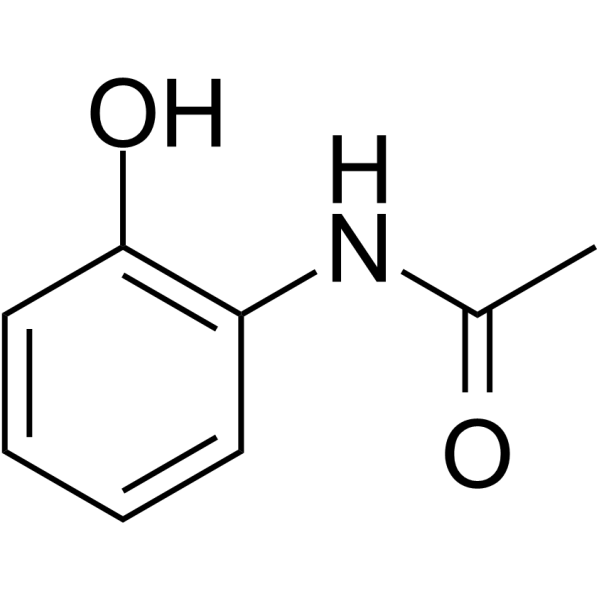
2-Acetamidophenol (Orthocetamol) is a regulator that targets ferroptosis and glutathione metabolic pathways, is the ortho-regioisomer of Paracetamol (HY-66005). 2-Acetamidophenol has anti-atherosclerotic activity, and inhibiting total cholesterol (TC) and triglyceride (TG) in a zebrafish hyperlipidemia model with IC50s for 30 μM and 40 μM, respectively. 2-Acetamidophenol upregulates the expression of glutathione synthesis-related genes (such as GCLC, GCLM, GSS) and iron ion transport genes (such as FPN1, FTH), reduces the accumulation of intracellular reactive oxygen species (ROS) and ferrous ions (Fe 2+), and enhances the activity of glutathione peroxidase GPX4, thereby inhibiting macrophage phagocytosis of oxidized low-density lipoprotein (ox-LDL) and foam cell formation .
loading...
    loading...
Cat. No.: HY-N9164
CAS No.: 62874-52-6
Hecubine is a monoterpene indole alkaloid found in Ervatamia ocinalis. Hecubine activates TREM2 expression, reduces LPS (HY-D1056)-stimulated inammatory cytokines (TNF-αIL-6IL-1β) overexpression, as well as suppresses the levels of TLR4-, MyD88-, MAPK/PI3K/AKT- and NF-κB-related proteins. Hecubin also exhibits antioxidative effect, reduces ROS production and activates of the Nrf2/HO-1 pathway. Hecubine rescues LPS-induced behavioral deficits in zebrash larvae. Hecubine can be used for the research of neural inflammation-associated central nervous system diseases .
loading...
    loading...
Cat. No.: HY-P706224
Purity:  ≥ 85%, as determined by reducing SDS-PAGE.
Synonyms: TNF; Tumor Necrosis Factor (TNF Superfamily, Member 2); Prev. TNFA; Tumor Necrosis Factor-Alpha; TNF-Alpha; Tumor Necrotic Factor Alpha; TNFSF2; TNF Superfamily, Member 2; Tumor Necrosis Factor Ligand Superfamily Member 2; TNF, Macrophage-Derived; TNF-A; TNF, Monocyte-Derived; DIF; APC1 Protein; Cachectin; IMD127; TNLG1F; Tumor Necrosis Factor; Tumor Necrosis Factor Ligand 1F
Species:  
Others
Source:  
E. coli
loading...
    loading...
Cat. No.: HY-121324S
CAS No.: 1202864-57-0
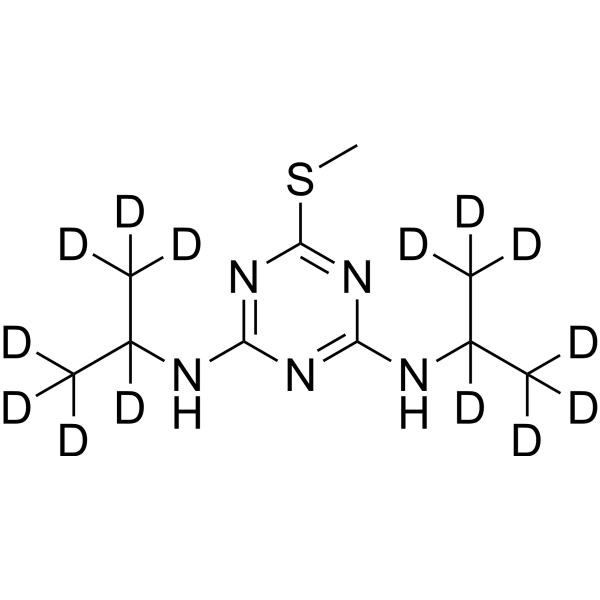
Prometryn-d14 is the deuterium labeled Prometryn . Prometryn is a triazine herbicide. Prometryn induces apoptosis and cell cycle arrest. Prometryn induces oxidative stress, DNA damage and autophagy-related gene expression, and non-specific immunity gene expression. Prometryn can be used for the research of herbicide, hepatopancreas injury, and intestinal stress and intestinal barrier dysfunction .
loading...
    loading...
Cat. No.: HY-184192
CAS No.: 3066783-67-0
Target:  

GPR52

Research Areas:  

Neurological Disease

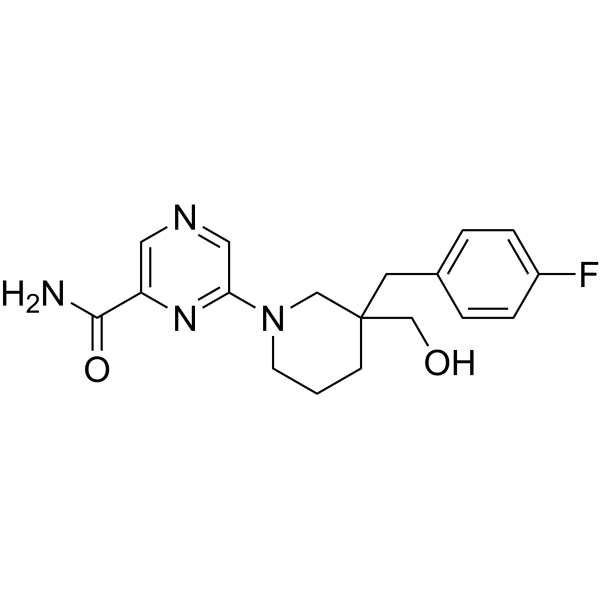
R-185 is an orally active and brain-penetrant GPR52 agonist. R-185 activates GPR52 to increase intracellular cAMP levels. R-185 can be used for the research of schizophrenia .
loading...
    loading...
Cat. No.: HY-B2035
CAS No.: 51218-49-6
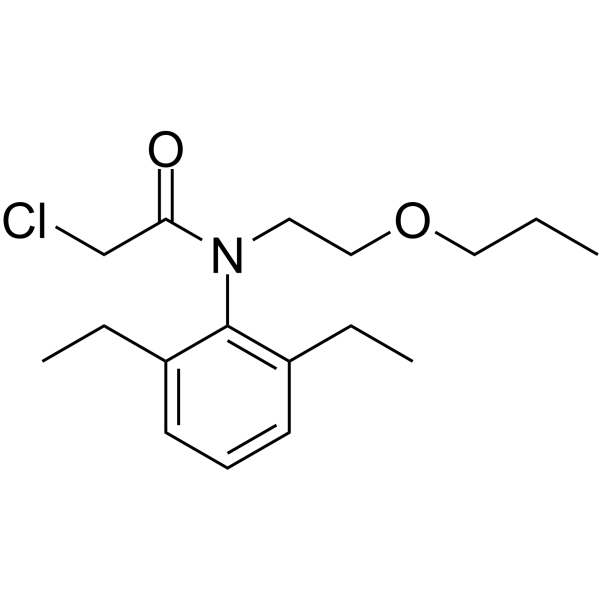
Pretilachlor is a chloroacetamide herbicide with biological activities including endocrine disruption, oxidative stress induction, apoptosis induction, and immunotoxicity. Pretilachlor exerts its effects by interfering with hormone metabolism, inducing oxidative stress, activating apoptotic pathways, and inhibiting immune functions. Pretilachlor upregulates the transcription of P53, Mdm2, and Bbc3, and increases the activities of Caspase3 and Caspase9; it upregulates the transcription of genes in the HPG/HPT axis and the activity of aromatase; it induces oxidative stress, elevates ROS levels, and upregulates CAT, SOD, and GPX. Pretilachlor downregulates the transcription of CXCL-C1C, IL-1β, and IL-8. Pretilachlor disrupts the normal physiological processes and embryonic development of fish, exhibiting significant toxicity. Pretilachlor can be used in studies related to weeding, environmental pollution, and behavioral toxicity in fish .
loading...
    loading...
Cat. No.: HY-E71729
Synonyms: RNA m22G Demethylase (D135S/L118V)
Target:  

DNA/RNA Synthesis

Research Areas:  

Others

AlkB (D135S/L118V), Nuclease-free (RNA m22G Demethylase (D135S/L118V)) is a nuclease-free modified demethylase. AlkB (D135S/L118V), Nuclease-free exhibits catalytic activity toward N2,N2-dimethylguanosine (m22G), N1-methylguanosine (m1G) and N1-methyladenosine (m1A). AlkB (D135S/L118V), Nuclease-free efficiently removes m1G and m1A modifications on RNA, and can also selectively convert m22G to N2-methylguanosine (m2G), thereby significantly reducing the level of m22G in transfer RNA (tRNA). AlkB (D135S/L118V), Nuclease-free greatly reduces sequencing bias and improves the efficiency of high-throughput tRNA sequencing .
loading...
    loading...
Cat. No.: HY-N8541
CAS No.: 481-70-9
Endocrocin is an anthraquinone fungal secondary metabolite. Endocrocin inhibits the recruitment and migration of neutrophils, and enhances the pathogenicity and virulence of Fumagillin (HY-B0751) in Drosophila. Endocrocin can be used in research related to invasive aspergillosis, viral infections and liver diseases .
loading...
    loading...
Cat. No.: HY-107830R
CAS No.: 1448-36-8
Methyl cholate (Standard) is the analytical standard of Methyl cholate. This product is intended for research and analytical applications. Methyl cholate is a bile acid analog and a specific inhibitor of TcdB toxin from Clostridioides difficile. Methyl cholate exerts a stronger selective inhibitory effect on TcdB than on TcdA. Methyl cholate induces conformational stabilization by binding to a unique site of TcdB, thereby blocking the binding of the toxin to host receptors and its self-processing process. Methyl cholate effectively protects human fibroblasts from TcdB-induced cytopathic effects. Methyl cholate exhibits dose-dependent anti-hepatic fibrosis activity in both cellular and zebrafish models, and significantly reduces the expression levels of α-SMA and COL-I. Methyl cholate is suitable for in-depth research in the fields of Clostridioides difficile infection and hepatic fibrosis .
loading...
    loading...
Cat. No.: HY-119976R
CAS No.: 188425-85-6
Boscalid (Standard) is the analytical standard of Boscalid. This product is intended for research and analytical applications. Boscalid is a succinate dehydrogenase (SDHI) inhibitor with antifungal activity. Boscalid binds to the ubiquinone-binding site of fungal mitochondrial complex II, blocks ATP production and aerobic respiration, exhibits good control efficacy against a variety of plant fungal diseases including gray mold, sclerotinia rot and powdery mildew, and is widely used for disease control in agriculture. Boscalid induces apoptosis, altered lipid metabolism, mitochondrial dysfunction, respiratory impairment, oxidative stress, ROS accumulation and neurodevelopmental disorders in zebrafish. Boscalid reduces foraging ability, shortens median death time and causes chronic toxicity in exposed honeybees. Boscalid also possesses genotoxicity, cytotoxicity, elevated mitochondrial superoxide levels and early-stage apoptosis .
loading...
    loading...
Cat. No.: HY-147412D
Target:  

Fluorescent Dye

Research Areas:  

Neurological Disease

FAM labled Ultevursen sodiumis a FAM labled Ultevursen sodium (HY-147412A). Ultevursen sodium (QR-421a) is a splice-modulating antisense oligonucleotide targeting exon 13 of the USH2A gene, which restores the functional expression of Usherin protein by inducing exon skipping. Ultevursen sodium binds to USH2A pre-mRNA and modulates the splicing process to specifically skip exon 13 carrying the pathogenic mutation c.2299delG, generating an in-frame transcript and a truncated yet functionally normal protein. Ultevursen sodium exhibits concentration-dependent exon skipping activity in human cells and retinal organoid models, and restores Usherin expression and retinal function in zebrafish and gene-edited mouse models. Ultevursen sodium can be used for related research on type 2 Usher syndrome and non-syndromic retinitis pigmentosa .
loading...
    loading...
Cat. No.: HY-147412E
Target:  

Fluorescent Dye

Research Areas:  

Neurological Disease

Cy3 labled Ultevursen sodium is a Cy3 labled Ultevursen sodium (HY-147412A). Ultevursen sodium (QR-421a) is a splice-modulating antisense oligonucleotide targeting exon 13 of the USH2A gene, which restores the functional expression of Usherin protein by inducing exon skipping. Ultevursen sodium binds to USH2A pre-mRNA and modulates the splicing process to specifically skip exon 13 carrying the pathogenic mutation c.2299delG, generating an in-frame transcript and a truncated yet functionally normal protein. Ultevursen sodium exhibits concentration-dependent exon skipping activity in human cells and retinal organoid models, and restores Usherin expression and retinal function in zebrafish and gene-edited mouse models. Ultevursen sodium can be used for related research on type 2 Usher syndrome and non-syndromic retinitis pigmentosa .
loading...
    loading...

