326 Results for "

dimer

" in MedChemExpress (MCE) Product Catalog:
Products (326)

326 Results for "dimer" in MCE Product Catalog:

Cat. No.: HY-179571
CAS No.: 1048-17-5
Synonyms: PPTD
Research Areas:  

Cancer

ZIP 14-IN-1 (PPTD) is a selective and orally active ZIP14 inhibitor. ZIP 14-IN-1 inhibits ZIP14 while sparing ZIP8 (SLC39A8). ZIP 14-IN-1 efficiently blocks ZIP14-mediated uptake of multiple divalent metals (zinc, iron, manganese and cadmium). ZIP 14-IN-1 binds to a pocket formed at the dimer interface of ZIP14, obstructing the metal transport pathway. ZIP 14-IN-1 effectively reverses the consequent elevation of reactive oxygen species (ROS) and lipid peroxidation, attenuating metal-induced cytotoxicity. ZIP 14-IN-1 can be uses for cancer cachexia research .
loading...
    loading...
Cat. No.: HY-E70696
Target:  

EGFR

Research Areas:  

Cancer

EGFR is a driver of tumorigenesis. EGFR is mainly found in an auto-inhibited, dimerization-incompetent, state at the plasma membrane (PM). Ligand binding promotes receptor dimerization, which determines a series of structural rearrangements that are conveyed to the cytoplasmic domain allowing the formation of asymmetric dimers between the two juxtaposed catalytic domains. EGFR has multiple mutants. EGFR C797S/L858R Recombinant Human Active Protein Kinase is a recombinant EGFR C797S/L858R protein that can be used to study EGFR C797S/L858R-related functions .
loading...
    loading...
Cat. No.: HY-E70698
Target:  

EGFR

Research Areas:  

Cancer

EGFR is a driver of tumorigenesis. EGFR is mainly found in an auto-inhibited, dimerization-incompetent, state at the plasma membrane (PM). Ligand binding promotes receptor dimerization, which determines a series of structural rearrangements that are conveyed to the cytoplasmic domain allowing the formation of asymmetric dimers between the two juxtaposed catalytic domains. EGFR has multiple mutants. EGFR d746-750/C797S Recombinant Human Active Protein Kinase is a recombinant EGFR d746-750/C797S protein that can be used to study EGFR d746-750/C797S-related functions .
loading...
    loading...
Cat. No.: HY-E70702
Target:  

EGFR

Research Areas:  

Cancer

EGFR is a driver of tumorigenesis. EGFR is mainly found in an auto-inhibited, dimerization-incompetent, state at the plasma membrane (PM). Ligand binding promotes receptor dimerization, which determines a series of structural rearrangements that are conveyed to the cytoplasmic domain allowing the formation of asymmetric dimers between the two juxtaposed catalytic domains. EGFR has multiple mutants. EGFR d747-752/P753S Recombinant Human Active Protein Kinase is a recombinant EGFR d747-752/P753S protein that can be used to study EGFR d747-752/P753S-related functions .
loading...
    loading...
Cat. No.: HY-P705630
Purity:  ≥ 90%, as determined by reducing SDS-PAGE.
Synonyms: TIGIT; DKFZp667A205; Prev. VSIG9; FLJ39873; Prev. VSTM3; V-Set And Immunoglobulin Domain Containing 9; V-Set And Transmembrane Domain-Containing Protein 3; Washington University Cell Adhesion Molecule; T-Cell Immunoreceptor With Ig And ITIM Domains; V-Set
Species:  
Human
Source:  
HEK293
loading...
    loading...
Cat. No.: HY-N21650
CAS No.: 1412458-47-9
Talienbisflavan A is a free radical scavenger found in green tea made from the leaves of Camellia taliensis. Talienbisflavan A mediates DPPH radical scavenging activity. Talienbisflavan A mediates ABTS + radical scavenging activity. Talienbisflavan A exhibits antioxidant activity .
loading...
    loading...
Cat. No.: HY-136500
CAS No.: 42935-17-1
Purity:  ≥95.0%
Synonyms: PGH2
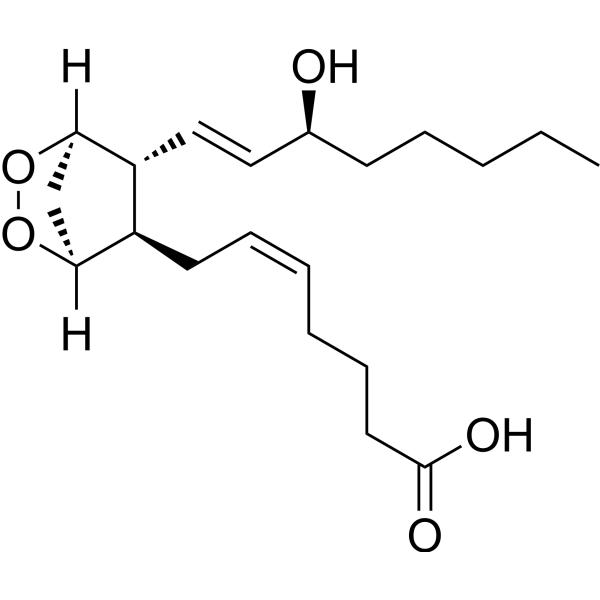
Prostaglandin H2 (PGH2) is an endothelium-derived contracting factor. Prostaglandin H2 can cause vasoconstriction. Prostaglandin H2 is the common precursor of all PGs and is produced by several cells that express cyclooxygen-ases. Prostaglandin H2 can activate PGD2 receptors CRTH2 and DP via interacting directly with the receptors and/or by giving rise to PGD2 after catalytic conversion by plasma proteins. Prostaglandin H2 can induce eosinophils migration and inhibit platelet aggregation. Prostaglandin H2 can accelerate the formation of dimers and higher oligomers of amyloid β1-42. Prostaglandin H2 can be used for the researches of inflammation and neurological disease, such as Alzheimer disease .
loading...
    loading...
Cat. No.: HY-P991342
Synonyms: PCA062 antibody

Target:  

Cadherin

Research Areas:  

Cancer

CQY684 (PCA062 antibody) is a monoclonal antibody targeting CDH3/P-cadherin, which locks P-cadherin in an X-dimer conformation and enhances the stability of this adhesion structure. CQY684 induces P-cadherin phosphorylation and promotes its dissociation from the cytoplasmic region of P-cadherin. As an endocytosis inducer and lysosome-targeting agent, CQY684 facilitates the internalization of the P-cadherin-CQY684 complex and improves the turnover efficiency of P-cadherin. CQY684 serves as a platform for the delivery of intracellular anticancer compounds, which is achieved through the targeted lysosomal transport of the antibody-P-cadherin complex. CQY684 is applicable to the research of breast cancer, esophageal cancer, and head and neck cancer .
loading...
    loading...
Cat. No.: HY-U00265
CAS No.: 20073-24-9
Synonyms: 3-Carbethoxypsoralen; 3-Ethoxycarbonylpsoralen
Target:  

Bacterial

Research Areas:  

Infection

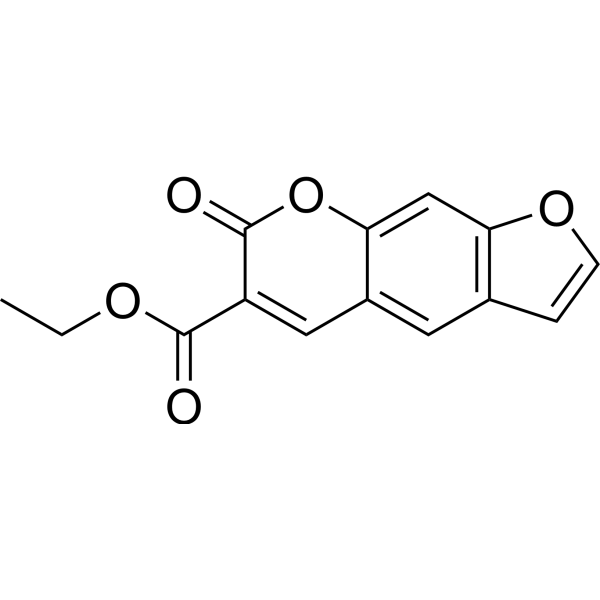
3-CPs is a monofunctional furanocoumarin and a photoprotective agent targeting Staphylococcus aureus DNA, possessesing anti-UVB lethal activity. 3-CPs competitively intercalates into DNA, forming exclusively 4',5'-furan-side mono-adducts upon UVB irradiation, and irreversibly inhibits the formation of cyclobutane pyrimidine dimers. 3-CPs prevents UVB-induced DNA damage by preferentially binding to strong (AT)n sites within the DNA, without inducing lethal interstrand DNA cross-links; the limited number of mono-adducts it induces can be efficiently repaired by bacteria. 3-CPs holds potential for use in the development of photoprotective formulations for skin diseases, as well as in studies investigating bacterial DNA photodamage repair mechanisms and the optimization of photochemotherapy safety .
loading...
    loading...
Cat. No.: HY-187623
CAS No.: 149607-21-6
Target:  

HIV Protease

Research Areas:  

Inflammation/Immunology

U 92163 is an HIV-2 protease inhibitor. It is a synthetic peptidomimetic transition-state analog. U 92163 binds in an extended conformation along the length of the enzyme's binding cleft, and forms hydrogen bonds with the catalytic aspartate pair and other protease residues to block enzyme activity. U 92163 can be used in research on acquired immunodeficiency syndrome (AIDS) .
loading...
    loading...
Cat. No.: HY-P76220
Purity:  ≥ 95%, as determined by reducing SDS-PAGE.
Synonyms: CD247; T3Z; Prev. CD3Z; Tissue Factor-Targeting CAR1 Monomer; TCRZ; Tissue Factor-Targeting CAR1 dimer; T-Cell Surface Glycoprotein CD3 Zeta Chain; CD247 Antigen, Isoform CRA_a; T-Cell Receptor T3 Zeta Chain; CD247 Antigen, Zeta Subunit; CD3-ZETA; CD247 T
Species:  
Human
Source:  
E. coli
loading...
    loading...
Cat. No.: HY-E70699
Target:  

EGFR

Research Areas:  

Cancer

EGFR is a driver of tumorigenesis. EGFR is mainly found in an auto-inhibited, dimerization-incompetent, state at the plasma membrane (PM). Ligand binding promotes receptor dimerization, which determines a series of structural rearrangements that are conveyed to the cytoplasmic domain allowing the formation of asymmetric dimers between the two juxtaposed catalytic domains. EGFR has multiple mutants. EGFR d746-750/T790M/C797S Recombinant Human Active Protein Kinase is a recombinant EGFR d746-750/T790M/C797S protein that can be used to study EGFR d746-750/T790M/C797S-related functions .
loading...
    loading...
Cat. No.: HY-P12114
Research Areas:  

Infection Cancer

S3 peptide is a multifunctional synthetic peptide that acts as a LIMK1 inhibitor with an IC50 of 40 μg/mL. S3 peptide blocks cofilin phosphorylation and SDF-1α (HY-P4911)-induced T cell chemotaxis, and reduces viral particle production of HIV-1 and M-PMV. S3 peptide forms dimers via intermolecular disulfide bonds to bind and disrupt LPS micelles, exerting anti-Gram-negative bacterial activity. S3 peptide serves as a targeting moiety for NKA α1 and is used for the construction of PET tracers. S3 peptide is applicable to research related to HIV-1 infection, M-PMV infection, breast cancer, liver cancer and non-small cell lung cancer .
loading...
    loading...
Cat. No.: HY-P992157
Synonyms: murine version of Bapineuzumab

Target:  

Amyloid-β

Research Areas:  

Neurological Disease

Anti-APP/Amyloid beta Antibody (3D6) (murine version of Bapineuzumab) is an antibody targeting β-amyloid protein () with free Asp1. Anti-APP/Amyloid beta Antibody (3D6) recognizes and binds to the amino acid epitope at positions 1-5 of β-amyloid protein carrying the free Asp1 residue. Anti-APP/Amyloid beta Antibody (3D6) can be used in research related to Alzheimer's disease .
loading...
    loading...
Cat. No.: HY-184873
CAS No.: 463-79-6
Target:  

Others

Research Areas:  

Infection Others

Carbonic acid is a diprotic acid, acidulant and anesthetic. Carbonic acid penetrates living cells more easily than most other acids, exhibits stronger toxicity than inorganic acids at equivalent concentrations, and exacerbates ocean acidification. Carbonic acid binds reversibly to cellular proteins, acidifies cell sap and protoplasmic inclusions, inhibits Paramecium growth and various cellular functions, induces reversible cellular changes, produces lethal effects at high doses, decomposes into carbon dioxide and H2O, and participates in the maintenance of physiological pH balance .
loading...
    loading...
Cat. No.: HY-P3801
CAS No.: 77128-69-9
Synonyms: DiMe-C7
[Glp5,(Me)Phe8,Sar9] Substance P (5-11) (DiMe-C7) is a Substance P (HY-P0201) analogue that has approximately the same effects as Substance P (HY-P0201) on neurokinin 1 receptor (NK1R) in rat brain, but with a much longer duration of action. [Glp5,(Me)Phe8,Sar9] Substance P (5-11) selectively activates dopamine metabolism in the mesencephalon and midbrain cortex of the rat brain. [Glp5,(Me)Phe8,Sar9] Substance P (5-11) also increases motor activity and induces recovery of addictive agent-seeking behavior in rats .
loading...
    loading...
Cat. No.: HY-W040129R
CAS No.: 7059-24-7
Chromomycin A3 (Standard) is the analytical standard of Chromomycin A3 (HY-W040129). This product is intended for research and analytical applications. Chromomycin A3 is an inhibitor that selectively binds to GC-rich DNA sequences. Chromomycin A3 targets the DNA minor groove after forming a dimer with Mg 2+. Chromomycin A3 inhibits DNA replication and transcription, blocks the binding of Sp1 transcription factor to target gene promoters, downregulates the expression of anti-apoptotic proteins such as FLIP, Mcl-1, and XIAP, and induces S-phase cycle arrest and caspase-dependent apoptosis in tumor cells. Chromomycin A3 can antagonize oxidative stress induced by glutathione depletion and neuronal apoptosis induced by Camptothecin (HY-15660). Chromomycin A3 can be used in basic research on malignant tumors such as cholangiocarcinoma, and is a potential chemosensitizer and GC-rich region probe .
loading...
    loading...
Cat. No.: HY-182392
CAS No.: 925644-66-2
Target:  

DNA/RNA Synthesis

Research Areas:  

Inflammation/Immunology

NFYi5 is a nuclear transcription factor-Y (NF-Y) inhibitor. NFYi5 disrupts the binding of NF-Y to DNA, accelerates the ubiquitin-independent degradation of the NF-YA subunit, and reduces the transcriptional activity of NF-Y. As an antimitotic agent, NFYi5 decreases the mRNA levels of NF-Y target genes without affecting the expression of housekeeping genes, and inhibits cell proliferation. NFYi5 can be used in the research of tissue fibrosis .
loading...
    loading...
Cat. No.: HY-P99881
CAS No.: 2095467-44-8
Synonyms: ABBV 176

Research Areas:  

Cancer

Rolinsatamab talirine (ABBV 176) is a prolactin receptor (PRLR)-targeting antibody-drug conjugate (ADC), compoused of Rolinsatamab (HY-P99238) and SGD-1882 (HY-101127). Rolinsatamab talirine binds to PRLR to deliver a cytotoxin to tumor cells. Rolinsatamab talirine induces DNA damage, and exhibits cytotoxicity against multiple breast tumor models, including triple negative and low PRLR-expressing models. Rolinsatamab talirine demonstrates enhanced anti-tumor activity in several breast cancer models. Rolinsatamab talirine can be used for the research of breast cancer, hepatocellular carcinoma, ovarian cancer, endometrial cancer, prostate cancer, colorectal cancer, adrenocortical carcinoma, and solid tumors .
loading...
    loading...
Cat. No.: HY-E70700
Target:  

EGFR

Research Areas:  

Cancer

EGFR is a driver of tumorigenesis. EGFR is mainly found in an auto-inhibited, dimerization-incompetent, state at the plasma membrane (PM). Ligand binding promotes receptor dimerization, which determines a series of structural rearrangements that are conveyed to the cytoplasmic domain allowing the formation of asymmetric dimers between the two juxtaposed catalytic domains. EGFR has multiple mutants. EGFR d746-750/T790M/C797S/L858R Recombinant Human Active Protein Kinase is a recombinant EGFR d746-750/T790M/C797S/L858R protein that can be used to study EGFR d746-750/T790M/C797S/L858R-related functions .
loading...
    loading...

