334 Results for "

isolate

" in MedChemExpress (MCE) Product Catalog:
Products (334)

334 Results for "isolate" in MCE Product Catalog:

Cat. No.: HY-103078R
CAS No.: 5496-35-5
Research Areas:  

Infection

I-XW-053 (Standard) is the analytical standard of I-XW-053 (HY-103078). This product is intended for research and analytical applications. I-XW-053 is a specific anti-HIV-1 capsid inhibitor (IC50=164.2 μM). By binding to the CA NTD-NTD hexamerization interface and the R173 region of CTD (Kd=66.3 μM), I-XW-053 disrupts capsid function and reduces polymerization levels. I-XW-053 effectively blocks HIV-1 uncoating, inhibits reverse transcription and early replication, and exhibits broad-spectrum activity against primary HIV-1 isolates in peripheral blood mononuclear cells. I-XW-053 can be widely used in studies related to HIV-1 infection .
loading...
    loading...
Cat. No.: HY-122058
CAS No.: 1097732-62-1
Target:  

HIV

Research Areas:  

Infection

KRH-3955 is a CXCR4 antagonist with good bioavailability and potent anti-HIV-1 activity. KRH-3955 can effectively inhibit the replication of X4 HIV-1, including clinical isolates from different donors. KRH-3955 also shows activity against recombinant X4 HIV-1 containing reverse transcriptase, protease and tyrosinase resistance mutations. KRH-3955 can inhibit the binding of SDF-1alpha to CXCR4 and calcium ion signaling through this receptor. KRH-3955 inhibits the binding of an antibody against CXCR4 to CXCR4, showing a potent antagonistic effect on CXCR4. KRH-3955 shows an oral bioavailability of 25.6% in rats and can inhibit the replication of X4 HIV-1 in vivo .
loading...
    loading...
Cat. No.: HY-187335
Research Areas:  

Infection

HadAB/InhA=IN-1 is a dual inhibitor of Mycobacterium tuberculosis InhA and HadAB with an InhA IC50 of 0.81 μM. HadAB/InhA=IN-1 inhibits InhA enzymatic activity in the FAS-II pathway of mycolic acid biosynthesis. HadAB/InhA=IN-1 undergoes EthA-mediated activation to covalently bind HadA and inhibit HadAB dehydratase function in the same FAS-II pathway. HadAB/InhA=IN-1 reduces mycolic acid-containing lipid and mycolic acid production, and accumulates standard fatty acids in Mycobacterium tuberculosis. HadAB/InhA=IN-1 exhibits antimycobacterial activity against drug-susceptible, ethA-deficient, and multi-drug-resistant Mycobacterium tuberculosis isolates. HadAB/InhA=IN-1 shows cytotoxic effects against human cancer and immortalized normal lung fibroblast cells. HadAB/InhA=IN-1 can be used for the research of tuberculosis .
loading...
    loading...
Cat. No.: HY-N17896
CAS No.: 123564-49-8
Pinoresinol-4-O-β-D-apiosyl-(1→2)β-D-glucoside is a lignan compound and a melanogenesis inhibitor with low cytotoxicity. Pinoresinol-4-O-β-D-apiosyl-(1→2)β-D-glucoside is isolable from the stem bark of Acer buergerianum (Acer buergerianum). Pinoresinol-4-O-β-D-apiosyl-(1→2)β-D-glucoside effectively inhibits the melanogenesis process in α-MSH (HY-P0252)-stimulated B16 melanoma cells. Pinoresinol-4-O-β-D-apiosyl-(1→2)β-D-glucoside exhibits extremely high safety towards normal cells, and serves as an ideal tool molecule for studying melanoma mechanisms and developing related whitening products .
loading...
    loading...
Cat. No.: HY-106197
CAS No.: 350595-60-7
Target:  

CMV DNA/RNA Synthesis

Research Areas:  

Infection

T-0902611 is an inhibitor targeting the human cytomegalovirus HCMV helicase‑primase complex. T-0902611 covalently modifies its target components, thereby disrupting complex function and inhibiting HCMV DNA replication. T-0902611 can be used in studies related to human cytomegalovirus infection .
loading...
    loading...
Cat. No.: HY-181647
CAS No.: 2762675-42-1
Target:  

Bacterial Elastase

Research Areas:  

Infection

LasB-IN-3 is a protease elastase (LasB) inhibitor of Pseudomonas aeruginosa with an IC50 value of 8.5 nM. LasB-IN-3 shows an IC50 of 58.9 nM for the Met128Val mutant. LasB-IN-3 binds to active sites of wild-type and Met128Val mutant LasB, coordinates zinc ions, forms hydrogen bonds and CH-π interactions, and inhibits LasB proteolytic activity. LasB-IN-3 increases survival rate in LasB-induced acute lung injury mice models. LasB-IN-3 can be used for the research of Pseudomonas aeruginosa infection .
loading...
    loading...
Cat. No.: HY-34439
CAS No.: 123-32-0
Synonyms: NSC 49139
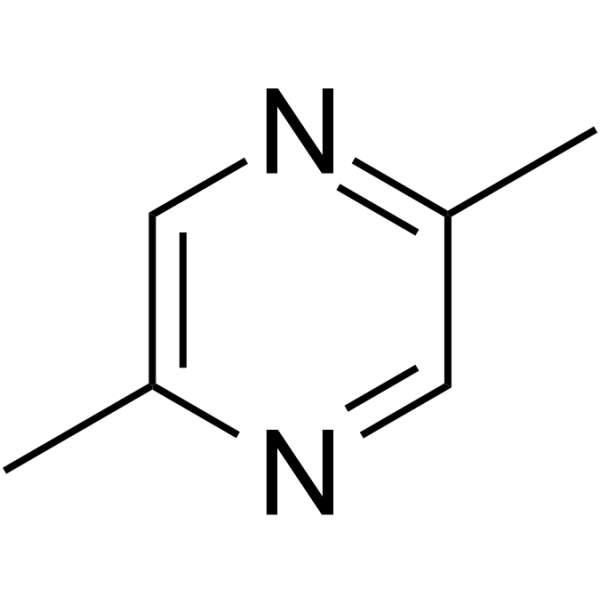
2,5-Dimethylpyrazine (NSC 49139) is a flavor compound. 2,5-Dimethylpyrazine forms in baked foods. It can also be produced by Bacillus subtilis via microbial mechanisms. 2,5-Dimethylpyrazine imparts baking, nutty, earthy, and cocoa-like aroma characteristics to heated foods. In fully fired oolong tea, 2,5-Dimethylpyrazine exhibits a roasted peanut flavor .
loading...
    loading...
Cat. No.: HY-184603
Bovine serum albumin-modified gold nanoclusters (BSA-Au NCs) are nanomaterials combining gold nanoclusters and bovine serum albumin (BSA). Composed of several to dozens of gold atoms forming the core of the gold nanoclusters, BSA acts as a protective ligand, coating the surface of the gold nanoclusters. BSA-Au NCs are widely used due to their high luminescence properties and stability over a wide pH range. When Au(III) ions are introduced into a BSA solution, BSA acts as a scaffold protein, isolating and capturing Au ions, similar to the biomineralization behavior of inorganic ions in organisms in nature. The captured Au ions are then reduced in situ by BSA to form Au NCs. The synthesized Au NCs consist of 25-Au atoms and are stable in BSA as BSA-Au NCs, exhibiting strong red fluorescence. BSA-Au NCs possess good biocompatibility and their surface is easily modified or functionalized, making them attractive for many biomedical applications.
loading...
    loading...
Cat. No.: HY-105148
CAS No.: 174391-92-5
Synonyms: DMP-450
Target:  

HIV Protease HIV

Research Areas:  

Infection

Mozenavir (DMP-450) is an orally active cyclic urea HIV-1 protease inhibitor with an IC50 of 76 nM. Mozenavir inhibits replication by targeting viral protease, blocks viral polyprotein processing, and induces the production of core-uncondensed, immature, non-infectious viral particles in chronically infected cells. Mozenavir is applicable to research related to HIV infection .
loading...
    loading...
Cat. No.: HY-105148A
CAS No.: 177932-89-7
Synonyms: DMP-450 dimethanesulfonate
Target:  

HIV Protease HIV

Research Areas:  

Infection

Mozenavir dimethanesulfonate (DMP-450 dimethanesulfonate) is an orally active cyclic urea HIV-1 protease inhibitor with an IC50 of 76 nM. Mozenavir dimethanesulfonate inhibits replication by targeting viral protease, blocks viral polyprotein processing, and induces the production of core-uncondensed, immature, non-infectious viral particles in chronically infected cells. Mozenavir dimethanesulfonate is applicable to research related to HIV infection .
loading...
    loading...
Cat. No.: HY-183998
CAS No.: 1356814-93-1
Target:  

Bacterial

Research Areas:  

Infection

Antitubercular agent-60 is an orally active antitubercular agent. Antitubercular agent-60 targets the arabinogalactan biosynthesis pathway in Mycobacterium tuberculosis. Antitubercular agent-60 can be used for the research of tuberculosis .
loading...
    loading...
Cat. No.: HY-187914
CAS No.: 2245791-50-6
Target:  

Bacterial

Research Areas:  

Infection

OTB-658 is a conformationally restricted oxazolidinone antibacterial candidate that exhibits bacteriostatic activity against Mycobacterium tuberculosis. OTB-658 enters macrophages and inhibits intracellular M. tuberculosis growth. OTB-658 exhibits dose-dependent antibacterial activity. OTB-658 is used in research related to tuberculosis and drug-resistant tuberculosis .
loading...
    loading...
Cat. No.: HY-B0871
CAS No.: 84087-01-4
Research Areas:  

Others

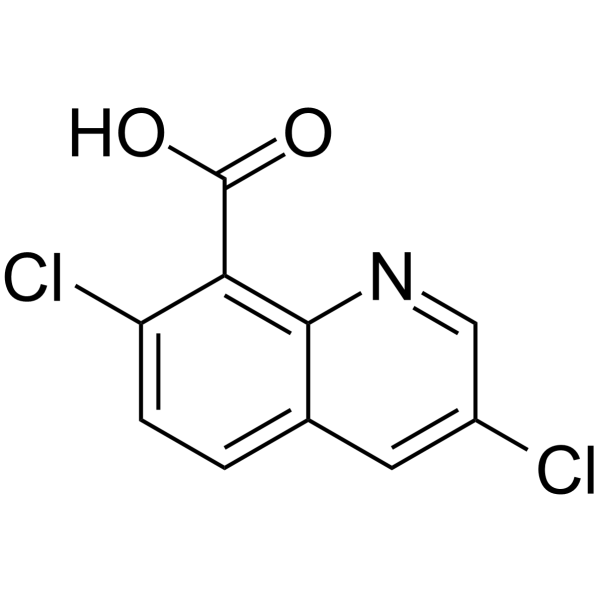
Quinclorac is a highly selective quinoline carboxylic acid synthetic auxin herbicide. Quinclorac weakly inhibits HPPD, accompanied by a transient decrease in carotenoids. Quinclorac upregulates ACC synthase (ACS), leading to the co-accumulation of ethylene and cyanide, while increasing the ABA/IAA ratio, which induces ROS burst, membrane lipid peroxidation (MDA) and lethal growth inhibition. Residual Quinclorac in soil can cause abnormal growth of subsequent tobacco crops. In calli of Phaseolus vulgaris, Quinclorac induces oxidative stress (increased MDA and decreased RGR), but cells after stepwise pressurized acclimation acquire a constitutive antioxidant state, which remains stable after de-acclimation and tolerates oxidative damage caused by Quinclorac. Quinclorac can be used in studies related to herbicide action mechanisms, bioremediation of soil residues, and adaptive responses of plant cells to oxidative stress .
loading...
    loading...
Cat. No.: HY-B0871R
CAS No.: 84087-01-4
Quinclorac (Standard) is the analytical standard of Quinclorac (HY-B0871). This product is intended for research and analytical applications. Quinclorac is a highly selective quinoline carboxylic acid synthetic auxin herbicide. Quinclorac weakly inhibits HPPD, accompanied by a transient decrease in carotenoids. Quinclorac upregulates ACC synthase (ACS), leading to the co-accumulation of ethylene and cyanide, while increasing the ABA/IAA ratio, which induces ROS burst, membrane lipid peroxidation (MDA) and lethal growth inhibition. Residual Quinclorac in soil can cause abnormal growth of subsequent tobacco crops. In calli of Phaseolus vulgaris, Quinclorac induces oxidative stress (increased MDA and decreased RGR), but cells after stepwise pressurized acclimation acquire a constitutive antioxidant state, which remains stable after de-acclimation and tolerates oxidative damage caused by Quinclorac. Quinclorac can be used in studies related to herbicide action mechanisms, bioremediation of soil residues, and adaptive responses of plant cells to oxidative stress .
loading...
    loading...
Cat. No.: HY-B0871S
Quinclorac- 13C is the 13C-labeled Quinclorac (HY-B0871). Quinclorac is a highly selective quinoline carboxylic acid synthetic auxin herbicide. Quinclorac weakly inhibits HPPD, accompanied by a transient decrease in carotenoids. Quinclorac upregulates ACC synthase (ACS), leading to the co-accumulation of ethylene and cyanide, while increasing the ABA/IAA ratio, which induces ROS burst, membrane lipid peroxidation (MDA) and lethal growth inhibition. Residual Quinclorac in soil can cause abnormal growth of subsequent tobacco crops. In calli of Phaseolus vulgaris, Quinclorac induces oxidative stress (increased MDA and decreased RGR), but cells after stepwise pressurized acclimation acquire a constitutive antioxidant state, which remains stable after de-acclimation and tolerates oxidative damage caused by Quinclorac. Quinclorac can be used in studies related to herbicide action mechanisms, bioremediation of soil residues, and adaptive responses of plant cells to oxidative stress .
loading...
    loading...
Cat. No.: HY-L262
4,412 compounds

Natural products are small-molecule compounds produced in nature, derived from animals, plants, and microorganisms, including both primary and secondary metabolites. With their structural diversity and favorable biological activities, natural products have long been an important source for drug discovery. Traditional natural product research has often focused on isolating single active components, whereas metabolomics emphasizes a holistic approach—comprehensively detecting all metabolites in a sample and systematically capturing both known and unknown constituents. Consequently, mass spectrometry‑based metabolomics databases have become a key technological support for screening known components and identifying unknown compounds from natural sources.

MCE Mass Spectrometry Natural Product Library contains 4,412 natural products, covering multiple structural classes, including sugars and glycosides, phenylpropanoids, quinones, flavonoids, terpenoids, etc. All compounds have undergone rigorous quality control by LC/MS and other analytical methods, and can serve as high‑purity reference standards for metabolite identification.

Cat. No.: HY-114533
CAS No.: 104926-84-3
Target:  

Bacterial

Research Areas:  

Infection

GlmU-IN-1 is an inhibitor of the GlmU acetyltransferase domain in Escherichia coli and Haemophilus influenzae. GlmU-IN-1 acts as a competitive inhibitor of AcCoA and a non-competitive inhibitor of GlcN-1-P. GlmU-IN-1 targets the acetyltransferase domain of bacterial GlmU, interferes with the biosynthesis of UDP‑GlcNAc, and impairs bacterial cell wall integrity. GlmU-IN-1 can be used for the research of Gram-negative bacterial infections .
loading...
    loading...
Cat. No.: HY-125159
CAS No.: 187865-22-1
Synonyms: PF-00520904
Target:  

Parasite nAChR

Research Areas:  

Infection

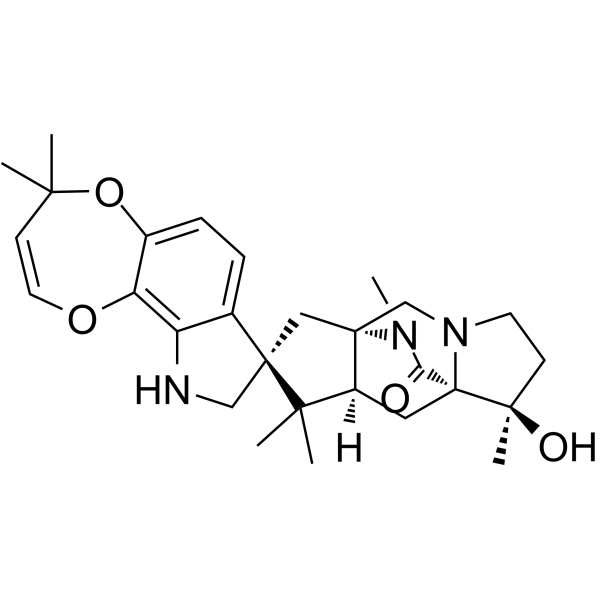
Derquantel, a spirocyclic anthelmintic, is a competitive, orally active nicotinic acetylcholine receptor (nAChR) antagonist. Derquantel inhibits ACh-induced depolarization with an IC50 of 0.22 μM. By selectively antagonizing nAChRs on the somatic muscles of nematodes, Derquantel causes flaccid paralysis of muscles, thereby dislodging parasites from the host's gastrointestinal tract. Derquantel is applicable to research related to Haemonchus contortus infection and Ascaris suum infection .
loading...
    loading...
Cat. No.: HY-182277
CAS No.: 1392118-63-6
Target:  

HIV Integrase HIV

Research Areas:  

Infection

GSK-1264 is an HIV-1 integrase inhibitor. GSK-1264 binds to a site spanning the HIV-1 integrase catalytic core domain and C-terminal domain, mediates formation of an open polymer of HIV-1 integrase dimers via inhibitor-bridged contacts between adjacent dimers. GSK-1264 disrupts late-stage HIV replication by interfering with viral particle assembly. GSK-1264 stimulates inappropriate polymerization of HIV-1 integrase. GSK-1264 can be used for the research of HIV infection .
loading...
    loading...
Cat. No.: HY-N18360
CAS No.: 66081-38-7
Synonyms: Tunicamycin 17:1
Tunicamycin X (Tunicamycin 17:1) is a nucleoside Antibiotic. Tunicamycin X is isolated from Streptomyces xinghaiensis SCSIO S15077. Tunicamycin X acts as a growth inhibitor against bacteria and fungi. Tunicamycin X inhibits the growth of Bacillus thuringiensis strains. Tunicamycin X inhibits the growth of Candida albicans strains .
loading...
    loading...

