334 Results for "

isolate

" in MedChemExpress (MCE) Product Catalog:
Products (334)

334 Results for "isolate" in MCE Product Catalog:

Cat. No.: HY-183872
CAS No.: 851075-79-1
Research Areas:  

Infection

FTR1335 is an Antifungal agent as well as a selective, substrate peptide-competitive, and myristoyl-CoA non-competitive inhibitor of N-myristoyltransferase CaNmt, with an IC50 of 0.49 nM against Candida albicans CaNmt. FTR1335 exhibits fungicidal activity against Candida albicans and inhibits the growth of Candida tropicalis. FTR1335 can be used in research related to Candida albicans infections .
loading...
    loading...
Cat. No.: HY-175724
Research Areas:  

Infection

MBL-IN-6 (Compound 6d) is a Metallo-β-lactamase (MBL) inhibitor with Kis of 2.6 and 0.08 μM for NDM-1 and VIM-2, respectively. MBL-IN-6 has a synergistic activities with Imipenem (HY-B1369A) on MBL-producing clinical isolates (such as E. coli SI-M001, K. pneumonia T2301 and S. marcescens SI-1591) with MICs of 2-64 μg/mL. MBL-IN-6 does not have off-target effects without ACE-1 inhibition activity. MBL-IN-6 can be used for antimicrobial resistance research .
loading...
    loading...
Cat. No.: HY-N10834
CAS No.: 120166-71-4
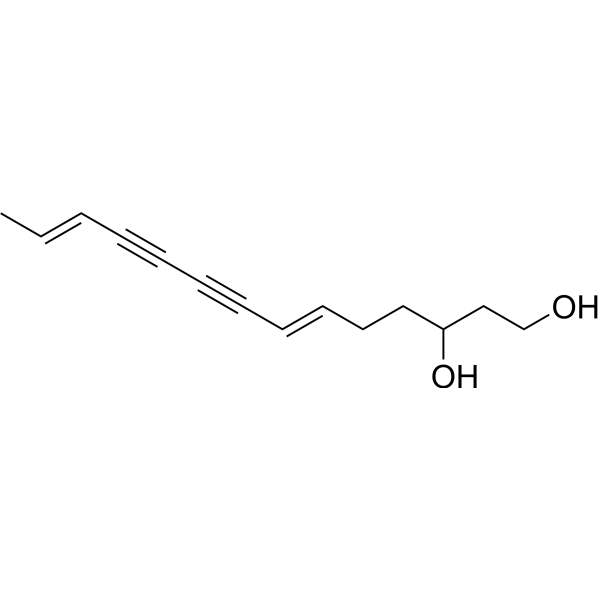
(6E,12E)-Tetradecadiene-8,10-diyne-1,3-diol is an antibacterial compound. (6E,12E)-Tetradecadiene-8,10-diyne-1,3-diol can be isolated from the roots of Atractylodes japonica. (6E,12E)-Tetradecadiene-8,10-diyne-1,3-diol has anti-methicillin-resistant Staphylococcus aureus (MRSA) activity with MIC values of 4-32 μg/mL. (6E,12E)-Tetradecadiene-8,10-diyne-1,3-diol can be used for the research of bacterial infection . (6E,12E)-Tetradecadiene-8,10-diyne-1,3-diol is a click chemistry reagent, it contains an Alkyne group and can undergo copper-catalyzed azide-alkyne cycloaddition (CuAAc) with molecules containing Azide groups.
loading...
    loading...
Cat. No.: HY-185443
CAS No.: 1922152-04-2
Research Areas:  

Infection

UCP1172 is an antibacterial (Antibacterial) agent and Dihydrofolate reductase inhibitor, with an IC50 of 0.0089 μM against Staphylococcus aureus DfrB, 0.22 μM against DfrG, 0.41 μM against DfrA, and 0.030 μM against DfrK. UCP1172 potently inhibits the growth of MRSA/MSSA isolates carrying dfrG and dfrK (MIC values of 0.3125-0.625 μg/mL), shows weak activity against MRSA carrying dfrA (MIC of 5 μg/mL), and exerts extremely potent inhibitory effects on wild-type S. aureus ATCC 43300 (MIC of 0.0098 μg/mL). UCP1172 can be used in studies related to tuberculosis and Staphylococcus aureus infections .
loading...
    loading...
Cat. No.: HY-N12931F
Maackia amurensis Lectin (MAA/MAL II)-Biotinylated is a plant lectin modified by biotin. Maackia amurensis Lectin (MAA/MAL II)-Biotinylated has the activity to recognize specific sugar structures, specifically the alpha-2, 3-linked sialic acid (HY-I0400). Maackia amurensis Lectin (MAA/MAL II)-Biotinylated has a very high affinity with avidin or streptavidin and this interaction can be used to fix it to solid surfaces or bind it to other molecules. Maackia amurensis Lectin (MAA/MAL II)-Biotinylated can be used to isolate and purify proteins or other molecules with specific sugar chain structures in affinity chromatography as well as for disease marker discovery and cancer research .
loading...
    loading...
Cat. No.: HY-N21550
CAS No.: 1292294-32-6
Synonyms: Tricin 4'-O-(threo-β-guaiacylglyceryl)ether
(-)-Salcolin B (Tricin 4'-O-(threo-β-guaiacylglyceryl) ether) is an isomer of Salcolin B (HY-N16766) and anti-inflammatory agent. (-)-Salcolin B is isolable from Njavara. (-)-Salcolin B downregulates the activities of NF-κB and STAT3, reduces the expressions of iNOS and COX-2, activates the ERK signaling pathway, and inhibits LPS-induced NO and ROS production. (-)-Salcolin B induces Apoptosis. (-)-Salcolin B inhibits TPA (HY-18739)-induced ear edema. (-)-Salcolin B possesses antioxidant activity. (-)-Salcolin B can be used in research related to inflammatory diseases, colon adenocarcinoma, ovarian cancer and breast cancer .
loading...
    loading...
Cat. No.: HY-N3185
CAS No.: 86537-66-8
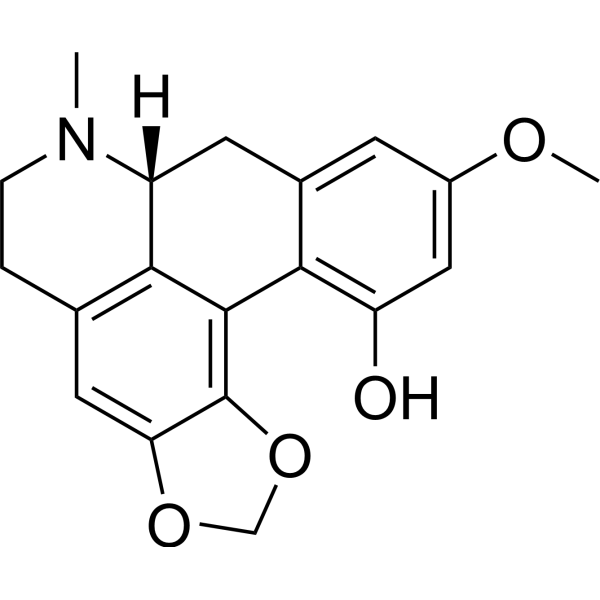
N-Methylcalycinine is a nature product with AChE inhibitory activity. N-Methylcalycinine can be isolated from the roots of Stephania epigaea. N-Methylcalycinine can be used for the research of asthma, cancer, dysentery, fever, hyperglycemia, intestinal complaints, inflammation, sleep disturbances, tuberculosis and so on .
loading...
    loading...
Cat. No.: HY-103078A
CAS No.: 1644644-89-2
Research Areas:  

Infection

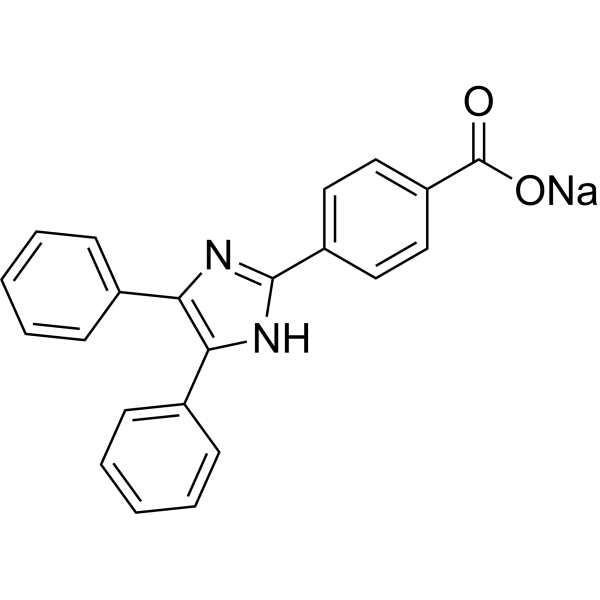
I-XW-053 sodium is a specific anti-HIV-1 capsid inhibitor (IC50=164.2 μM). By binding to the CA NTD-NTD hexamerization interface and the R173 region of CTD (Kd=66.3 μM), I-XW-053 sodium disrupts capsid function and reduces polymerization levels. I-XW-053 sodium effectively blocks HIV-1 uncoating, inhibits reverse transcription and early replication, and exhibits broad-spectrum activity against primary HIV-1 isolates in peripheral blood mononuclear cells. I-XW-053 sodium can be widely used in studies related to HIV-1 infection .
loading...
    loading...
Cat. No.: HY-111964R
CAS No.: 2189684-44-2
Synonyms: GS-6207 (Standard)
Target:  

Reference Standards HIV

Research Areas:  

Infection

Lenacapavir (Standard) is the analytical standard of Lenacapavir (HY-111964). This product is intended for research and analytical applications. Lenacapavir (GS-6207) is an HIV-1 capsid inhibitor. Lenacapavir binds to the interface between capsid hexamers and CA monomers, disrupts capsid assembly and viral maturation, inhibits nuclear translocation of HIV-1 DNA, interferes with CA-mediated protein-protein interactions, reduces the formation of 2-LTR circles and pre-integration proviruses, induces aberrant capsids, and decreases the production of mature HIV-1. Lenacapavir exhibits activity against a variety of HIV-1 subtypes and clinical isolates. Lenacapavir is applicable to research related to human immunodeficiency virus type 1 (HIV-1) infection .
loading...
    loading...
Cat. No.: HY-117845
CAS No.: 122535-63-1
Synonyms: LL-E19085α
Citreamicin alpha (LL-E 19085-alpha) is an antibiotic whose in vitro antimicrobial activity against 429 clinical isolates of Gram-positive cocci has been tested by the agar dilution method. These microorganisms included 313 strains of Staphylococci and 116 strains of Streptococci. The in vitro activity of Citreamicin alpha was compared with that of ampicillin, amoxicillin, ceftriaxone, erythromycin, and vancomycin. For Staphylococci, the MIC values of Citreamicin alpha ranged from 0.12-4.0 μg/ml, and for Streptococcus pyogenes of the genus Streptococcus, it was 0.03-0.12 μg/ml. However, enterococci were relatively resistant, requiring 2.0 μg/ml of the agent to inhibit 64% of the 62 tested strains. The in vitro activity of this antibiotic was much better than that of ampicillin, amoxicillin, ceftriaxone, and erythromycin, but comparable or slightly inferior to that of vancomycin.
loading...
    loading...
Cat. No.: HY-180191
Anti-MRSA agent 42 (Compound 6d) is an anti-methicillin-resistant Staphylococcus aureus (MRSA) agent. Anti-MRSA agent 42 shows strong inhibitory effects on MRSA standard strains and 11 clinical isolates with MIC values of 0.25-0.5 μg/mL. Anti-MRSA agent 42 has low hemolytic activity and minimal cytotoxicity toward mammalian cells. Anti-MRSA agent 42 can suppress biofilm formation, compromise the cell wall, and disrupt the cytoplasmic membrane, which are accompanied by membrane depolarization, enhanced permeability, and loss of membrane integrity. Anti-MRSA agent 42 can induce ROS production and bind to DNA grooves, interfering with nucleic acid function. Anti-MRSA agent 42 can be used for the research of MRSA infection .
loading...
    loading...
Cat. No.: HY-181286
Target:  

Cytochrome P450

Research Areas:  

Infection

ETX1975-3 is an orally active inhibitor and bactericide targeting the bd cytochrome oxidase of Mycobacterium tuberculosis. ETX1975-3 disrupts electron transfer between the b-heme centers of the target enzyme, and in combination with Q203 (HY-101040), exerts bactericidal activity against both replicating and non-replicating Mycobacterium tuberculosis, and reduces bacterial loads in acute mouse models. ETX1975-3 retains activity against clinical isolates of multidrug-resistant/extensively drug-resistant Mycobacterium tuberculosis and non-tuberculous mycobacteria, while possessing favorable preclinical ADMET properties. ETX1975-3 can be used in studies related to tuberculosis and non-tuberculous mycobacterial infections .
loading...
    loading...
Cat. No.: HY-187518
CAS No.: 3134912-65-2
Research Areas:  

Infection

NMT-IN-9 is an arylpyrrolidone-based NMT inhibitor with an IC50 of 93.20 nM and a KD of 5.57 × 10 -9 M against NMT. NMT-IN-9 exhibits broad-spectrum antifungal activity against Candida albicans, Candida glabrata, Candida tropicalis, Cryptococcus neoformans and Aspergillus fumigatus, with an MIC of 2-16 μg/mL, and retains activity against fluconazole-resistant Candida isolates, with an MIC of 8-16 μg/mL. NMT-IN-9 induces intracellular ROS accumulation, mitochondrial membrane depolarization, DNA damage, apoptosis and necrotic cell death in fungal cells, and disrupts fungal cell integrity. NMT-IN-9 can be used for studies on NMT-targeted antifungal mechanisms and fluconazole-resistant Candida infections .
loading...
    loading...
Cat. No.: HY-N19401
CAS No.: 36001-47-5
Vescalagin is a hexahydroxyphenol. Vescalagin is isolable from Camu-camu (Myrciaria dubia) and immature wax apple fruits. Vescalagin exhibits inhibitory activity against a variety of enzymes, with a Ki value of 5.87 nM against AChE, 3.89 nM against BChE, 11.75 nM against hCA I, 16.23 nM against hCA II, and 16.08 nM against α-glucosidase. Vescalagin inhibits hCA I, hCA II and α-glucosidase in a non-competitive manner. Vescalagin downregulates JNK/p38 MAPK to protect pancreatic β-cells and improve insulin secretion in methylglyoxal-treated rats. Vescalagin reduces hyperglycemia and hypertriglyceridemia in rats fed a high-fructose diet. Vescalagin possesses anti-inflammatory and antioxidant properties .
loading...
    loading...
Cat. No.: HY-P990158

Target:  

Inhibitory Antibodies

Research Areas:  

Inflammation/Immunology

Anti-Mouse Ter-119 Antibody (TER-119) is an anti-mouse Ter-119 IgG2b monoclonal antibody. Anti-Mouse Ter-119 Antibody (TER-119) can increase platelet count. Anti-Mouse Ter-119 Antibody (TER-119) can remove red blood cells and their precursor cells to isolate and enrich natural killer (NK) cells. Anti-Mouse Ter-119 Antibody (TER-119) can be used for research on immune thrombocytopenia. Anti-Mouse Ter-119 Antibody (TER-119) can be used to construct a model of immune thrombocytopenic purpura combined with CD41 mAb .
loading...
    loading...
Cat. No.: HY-111964S1
Synonyms: GS-6207-d5
Lenacapavir-d5 (GS-6207-d5) is the deuterium labeled Lenacapavir (HY-111964). Lenacapavir (GS-6207) is an HIV-1 capsid inhibitor. Lenacapavir binds to the interface between capsid hexamers and CA monomers, disrupts capsid assembly and viral maturation, inhibits nuclear translocation of HIV-1 DNA, interferes with CA-mediated protein-protein interactions, reduces the formation of 2-LTR circles and pre-integration proviruses, induces aberrant capsids, and decreases the production of mature HIV-1. Lenacapavir exhibits activity against a variety of HIV-1 subtypes and clinical isolates. Lenacapavir is applicable to research related to human immunodeficiency virus type 1 (HIV-1) infection .
loading...
    loading...
Cat. No.: HY-178949
Research Areas:  

Infection

MRSA antibiotic 3 (Compound C8) is a small-molecule antibiotic active against Methicillin (HY-121544)-resistant Staphylococcus aureus (MRSA), showing a MIC of 0.5 μg/mL against the standard S. aureus strain (ATCC 29213). MRSA antibiotic 3 potently inhibits the ATPase activity of S. aureus DNA gyrase with an IC50 of 0.32 μM. MRSA antibiotic 3 exhibits strong inhibitory activity against five clinical MRSA isolates, with MIC values ranging from 0.5 to 1 μg/mL. MRSA antibiotic 3 demonstrates negligible cytotoxicity at effective antibacterial concentrations and causes no hemolysis in erythrocytes even at extremely high concentrations. MRSA antibiotic 3 shows significant protective effects in both Galleria mellonella infection and murine sepsis models .
loading...
    loading...
Cat. No.: HY-184981
CAS No.: 2243516-99-4
Target:  

Urease Fungal

Research Areas:  

Infection

Urease-IN-24 is a cryptococcal urease inhibitor with a IC50 of 89.96 nM and a Ki of 64.3 nM. Urease-IN-24 acts as a competitive nickel-coordinating inhibitor that coordinates with the nickel center at the catalytic site of the enzyme via its carbonyl group. Urease-IN-24 reduces the capsule thickness of Cryptococcus neoformans and Cryptococcus gattii, increases cell membrane permeability, and inhibits melanin production. Urease-IN-24 exhibits fungicidal activity against Cryptococcus species. Urease-IN-24 can be used in the research of cryptococcosis .
loading...
    loading...
Cat. No.: HY-182675
CAS No.: 2292113-87-0
Target:  

Antibiotic Bacterial

Research Areas:  

Infection

Antibiotic adjuvant 5 (Compound 2) acts as an Antibiotic adjuvant. Antibiotic adjuvant 5 enhances the activity of Azithromycin (HY-17506), Clarithromycin (HY-17508), Doripenem (HY-B0187) and Rifampin (HY-B0272) against *Pseudomonas aeruginosa* PAO1. When used in combination with Azithromycin, Antibiotic adjuvant 5 increases the survival rate of *Galleria mellonella* during *Pseudomonas aeruginosa* PAO1 infection. Antibiotic adjuvant 5 is applicable for the research of *Pseudomonas aeruginosa* infection .
loading...
    loading...
Cat. No.: HY-187213
Research Areas:  

Infection

Anti-MRSA agent 45 is a dihydrofolate reductase (DHFR) inhibitor and membrane-disrupting agent. Anti-MRSA agent 45 disrupts MRSA membrane integrity, increases membrane permeability and induces bacterial morphological damage. Anti-MRSA agent 45 exerts rapid, time- and concentration-dependent bactericidal activity against MRSA, and inhibits MRSA biofilm formation. Anti-MRSA agent 45 is applicable to research related to MRSA infection .
loading...
    loading...

