334 Results for "

isolate

" in MedChemExpress (MCE) Product Catalog:
Products (334)

334 Results for "isolate" in MCE Product Catalog:

Cat. No.: HY-181821
Target:  

Parasite Na+/K+ ATPase

Research Areas:  

Infection

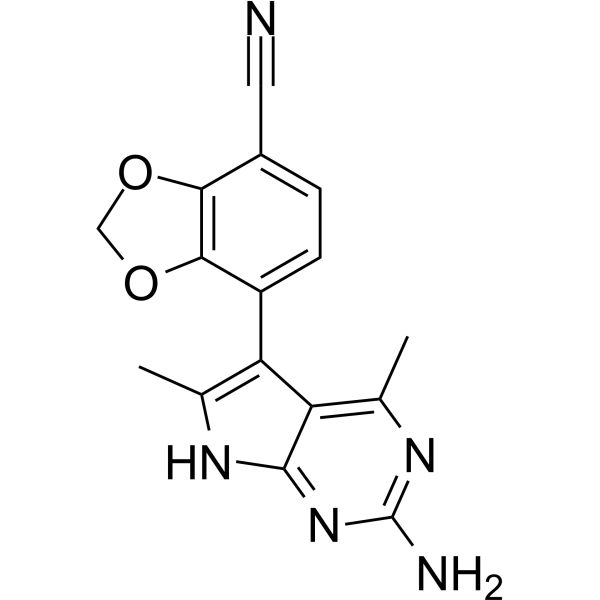
MMV1581361 is a PfATP4 inhibitor and an orally active, transmission-blocking agent with nanomolar activity against Plasmodium falciparum blood-stage isolates. MMV1581361 disrupts sodium ion (Na +) homeostasis in Plasmodium falciparum. MMV1581361 inhibits male gamete exflagellation, reduces oocyst intensity, and blocks transmission of Plasmodium falciparum. MMV1581361 demonstrates efficacy in the humanized Plasmodium falciparum NOD scid IL2Rγ null mouse model. MMV1581361 can be used for the research of malaria .
loading...
    loading...
Cat. No.: HY-W039760
CAS No.: 17773-10-3
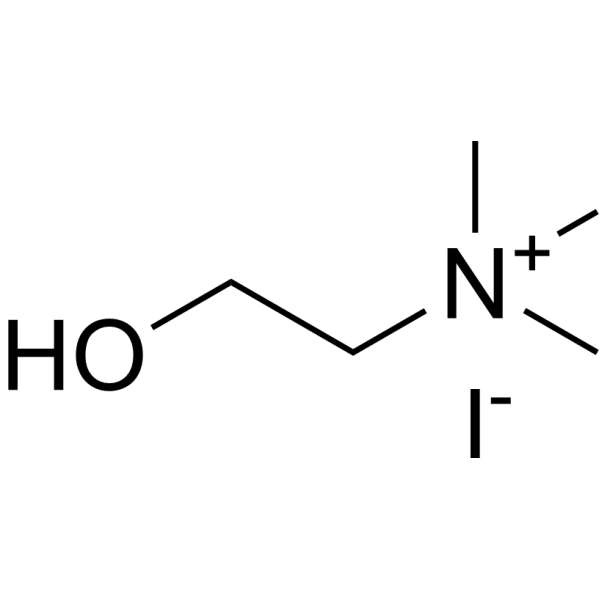
2-Hydroxy-N,N,N-trimethylethan-1-aminium iodide, also known as choline iodide, is a quaternary ammonium salt commonly used in organic synthesis and biochemical research. It is a water-soluble compound derived from choline, an essential nutrient found in many foods. Choline iodide has been used as a source of choline groups in various chemical reactions and in microbiology as a selective agent for isolating bacteria. In addition, its potential role in cognitive impairment and liver disease has also been studied.
loading...
    loading...
Cat. No.: HY-P992083

Target:  

Influenza Virus

Research Areas:  

Infection

Anti-Influenza HA Antibody (CR9114) is an antibody against influenza virus hemagglutinin. Anti-Influenza HA Antibody (CR9114) binds to the conserved hemagglutinin (HA) stalk region of influenza A and B viruses, and mediates cross-subtype neutralization. Anti-Influenza HA Antibody (CR9114) is applicable for influenza-related research .
loading...
    loading...
Cat. No.: HY-107123R
CAS No.: 1000287-05-7
Synonyms: ASC-09 (Standard)
Research Areas:  

Infection

TMC310911 (Standard) (ASC-09 (Standard)) is the analytical standard of TMC310911 (HY-107123). This product is intended for research and analytical applications. TMC310911 is a potent and orally active HIV type-1 (HIV-1) protease inhibitor with EC50 values ranged from 2.2 nM to 14.2 nM for wild-type HIV-1. TMC310911 has potent activity against a wide spectrum of recombinant HIV-1 isolates. TMC310911 has strong antiviral activity .
loading...
    loading...
Cat. No.: HY-114622
CAS No.: 1047981-31-6
Synonyms: API-1252 tosylate; Debio 1452 tosylate
Target:  

Bacterial Antibiotic

Research Areas:  

Infection

AFN-1252 (API-1252) tosylate is an orally active and selective inhibitor of FabI, an essential enzyme in fatty acid biosynthesis in Staphylococcus spp. AFN-1252 tosylate exhibits exquisite and highly selective activity against Staphylococcus spp. AFN-1252 tosylate exhibits typical MIC90 values of 0.015 μg/ml against diverse clinical isolates of S. aureus. AFN-1252 tosylate is efficacious in a mouse model of septicemia providing 100% protection from an otherwise lethal peritoneal infection of S. aureus Smith .
loading...
    loading...
Cat. No.: HY-156562B
CAS No.: 3117303-22-4
Synonyms: 5-Propargyltryptamide TFA
Target:  

Drug Derivative

Research Areas:  

Inflammation/Immunology

5-PT (5-Propargyltryptamide) TFA is an alkyne-functionalized derivative of 5-HT (HY-B1473A) and serotonylation substrate that can be taken up by living cells. After conjugation with biotin, 5-PT TFA enables the identification of serotonylated proteins via copper click chemistry and mass spectrometry. 5-PT TFA can label and isolate serotonylated cells in alveolar epithelial cells for proteomic analysis. 5-PT TFA is applicable to research related to bronchopulmonary dysplasia .
loading...
    loading...
Cat. No.: HY-N15364
CAS No.: 29605-99-0
Imidazoleacetic acid riboside is a metabolite of histamine, belonging to the riboside conjugates of imidazoleacetic acid. Imidazoleacetic acid riboside is generated by dephosphorylation of imidazoleacetic acid ribonucleotide in rats. Imidazoleacetic acid riboside can be detected in the kidney and brain tissue after administration of labeled histamine or histidine, and exists as a urinary metabolite of histamine in both rats and humans. Imidazoleacetic acid riboside is not only excreted in urine, but also can be used to capture and isolate ribose for studying the metabolic pathways of ribose synthesis from glucose or glucuronolactone via the pentose phosphate pathway or the C-6 oxidation pathway in vivo .
loading...
    loading...
Cat. No.: HY-N19220
CAS No.: 49620-14-6
Radiclonic acid acts as an Antibacterial agent, anticancer agent, and root growth promoter. Radiclonic acid is isolable from fungi of the genus Penicillium. Radiclonic acid exhibits antibacterial activity against MRSA with a MIC of 3.13 μg/mL. Radiclonic acid shows anticancer activity against esophageal cancer, bladder cancer, and liver cancer. Radiclonic acid promotes root growth in Chinese cabbage seedlings. Radiclonic acid is inactive against pancreatic cancer and cervical cancer. Radiclonic acid can be used in research related to Staphylococcus aureus infection, bladder cancer, esophageal cancer, and liver cancer .
loading...
    loading...
Cat. No.: HY-P991479
CAS No.: 2839531-84-7
Synonyms: GS-8588

Target:  

HIV CD3

Research Areas:  

Infection

Amtabafusp alfa (GS-8588) is an envelope-targeting bispecific T-cell engager for HIV treatment. Amtabafusp alfa redirects effector T cells by binding to CD3 via a humanized anti-CD3 Fab domain and to HIV envelope proteins via an engineered CD4 domain 1 variant. Amtabafusp alfa exhibits potent, broad-spectrum activity against a variety of HIV isolates and specifically kills HIV-infected cells. Amtabafusp alfa can be used for research on HIV infection .
loading...
    loading...
Cat. No.: HY-W353469
CAS No.: 22160-26-5
Synonyms: Glucosylglycerol
2-O-(α-D-Glucopyranosyl) glycerol (55% w/w in water) (Glucosylglycerol) is a glycerol glycoside and compatible solute. 2-O-(α-D-Glucopyranosyl) glycerol is isolable from the marine cyanobacterium Oscillatoria sp. 2-O-(α-D-Glucopyranosyl) glycerol (55% w/w in water) acts as a salt stress protectant in Synechocystis sp. PCC 6803 ΔggpS cells. It enhances salt tolerance of Synechocystis sp. PCC 6803 ΔggpS cells and maintains cell division under salt stress .
loading...
    loading...
Cat. No.: HY-W773487
CAS No.: 676995-91-8
Target:  

Bacterial

Research Areas:  

Infection

FtsZ-IN-10 is a bacterial division inhibitor that interferes with the normal assembly of FtsZ. FtsZ-IN-10 specifically binds to Bacillus subtilis FtsZ monomers, thereby affecting their polymerization behavior. FtsZ-IN-10 may also activate nucleotide-free archaeal FtsZ to form ordered polymers. FtsZ-IN-10 can hinder the localization of FtsZ in the Z ring and inhibit bacterial cell division. Chlorinated analogs of FtsZ-IN-10 show the ability to inhibit the growth of antibiotic-resistant clinical isolates such as Staphylococcus aureus and Enterococci .
loading...
    loading...
Cat. No.: HY-N11293
CAS No.: 51415-07-7
Momilactone A is a naturally derived diterpene lactone with multiple biological activities including anticancer, antibacterial and antioxidant properties. Momilactone A inhibits inflammatory responses by reducing NO production and iNOS expression. Momilactone A acts as a corrosion inhibitor for mild steel; it forms an isolating film on the metal surface via adsorption between oxygen atoms of the molecule and iron ions, thereby blocking corrosive media. Momilactone A inhibits the growth of fungal and bacterial organisms, and also functions as an allelochemical to inhibit the growth of adjacent competing plants. Momilactone A can be used in studies related to leukemia, fungal infections and bacterial infections .
loading...
    loading...
Cat. No.: HY-N17982
CAS No.: 879627-80-2
Vanillic acid 4-O-β-D-glucopyranoside is a vanillic acid glycoside with moderate antioxidant activity. Vanillic acid 4-O-β-D-glucopyranoside scavenges DPPH free radicals and superoxide anion radicals, and inhibits AAPH-induced lipid peroxidation in the linoleic acid system. The IC50 value of Vanillic acid 4-O-β-D-glucopyranoside against HIV-1 integrase is >100 μg/mL, indicating that it is not an effective HIV-1 integrase inhibitor. Vanillic acid 4-O-β-D-glucopyranoside is isolable from the ethyl acetate extract of Gardeniae Fructus.
loading...
    loading...
Cat. No.: HY-W250187
CAS No.: 15163-30-1
DDMAB, or didodecyldimethylammonium bromide, is a cationic surfactant commonly used in a variety of industrial and research applications. It belongs to the family of quaternary ammonium compounds and has a positively charged head and a hydrophobic tail, which allows it to be used as a detergent, emulsifier and antimicrobial. Known for its ability to disrupt cell membranes, DDMAB is commonly used in microbiology to selectively isolate and identify bacteria. It is also used in nanotechnology to synthesize metal nanoparticles and other materials. In addition, DDMAB has the ability to interact with and penetrate cell membranes, which has potential applications in drug delivery, gene therapy, and other medical fields.
loading...
    loading...
Cat. No.: HY-103645R
CAS No.: 551919-98-3
GW779439X (Standard) is the analytical standard of GW779439X (HY-103645). This product is intended for research and analytical applications. GW779439X is a pyrazolopyridazine identified in an inhibitor of the S. aureus PASTA kinase Stk1. GW779439X potentiates the activity of β-lactam antibiotics against various MRSA and MSSA isolates, some even crossing the breakpoint from resistant to sensitive. GW779439X is an AURKA inhibitor and induces apoptosis by the caspases 3/7 pathway . MRSA:methicillin-resistant S. aureus; MSSA: methicillin-sensitive S. aureus
loading...
    loading...
Cat. No.: HY-187603
CAS No.: 211816-91-0
Target:  

Parasite

Research Areas:  

Infection

CGP 40215 is an S-adenosylmethionine decarboxylase inhibitor with an IC50 of 20.3 μM against Trypanosoma brucei brucei AdoMet decarboxylase. CGP 40215 blocks spermidine production and leads to putrescine accumulation. CGP 40215 inhibits polyamine biosynthesis in intact trypanosomes, acts synergistically with the ornithine decarboxylase inhibitor DFMO (HY-B0744) against CNS model infections, and ameliorates laboratory infections caused by multiple Trypanosoma brucei subspecies and Trypanosoma congolense isolates, including strains tolerant to standard trypanocides. CGP 40215 can be used for research on African trypanosomiasis and Chagas disease .
loading...
    loading...
Cat. No.: HY-B1005R
CAS No.: 148-24-3
Synonyms: 8-Quinolinol (Standard)
Research Areas:  

Cancer

8-Hydroxyquinoline (Standard) is the analytical standard of 8-Hydroxyquinoline. This product is intended for research and analytical applications. 8-Hydroxyquinoline (8-Quinolinol) is a lipophilic metal chelator that can be used as a fungicide .8-Hydroxyquinoline shows the MIC range of 27.56-55.11 μM (4-8 μg/mL) against the clinical isolates of Neisseria gonorrhoeae. 8-Hydroxyquinoline can bind to copper form complexes and transport copper into cells. 8-Hydroxyquinoline increases in the number of micronucleated polychromatic erythrocytes and can also make hair depigmented in mice .
loading...
    loading...
Cat. No.: HY-NP0138
Synonyms: PNA (Fluorescein)
Peanut Agglutinin (PNA) Fluorescein is a fluorescently labeled lectin that specifically binds to glycosylated cells and Haemonchus contortus. Peanut Agglutinin Fluorescein specifically recognizes and binds to the D-Gal-β(1→3)-D-GalNAc disaccharide sequence and terminal D-galactosyl residues on the cell surface; its binding can be inhibited by D-galactose but is not affected by glucose. Peanut Agglutinin Fluorescein specifically labels cone photoreceptor segments and can also be used to distinguish immature thymocytes from lymphocyte subsets, serving as an effective tool for studying cellular glycosylation status and isolating specific cell populations .
loading...
    loading...
Cat. No.: HY-162066
CAS No.: 2868298-43-3
Target:  

Parasite

Research Areas:  

Infection

DNDI-6174 is an orally active Leishmania cytochrome b (Qi site of cytochrome bc1 complex/complex III) inhibitor. DNDI-6174 binds to the Qi site of Leishmania cytochrome b, inhibits cytochrome bc1 complex activity in the parasite's electron transport chain across promastigote and axenic amastigote stages. DNDI-6174 reduces parasite burden in rodent models, inhibits growth of various Leishmania species, drug-resistant clinical isolates, and Trypanosoma cruzi, with marginal activity against Trypanosoma brucei. DNDI-6174 can be used for the research of visceral leishmaniasis, cutaneous leishmaniasis .
loading...
    loading...
Cat. No.: HY-D3179
CAS No.: 1451048-96-6
CDg13 is a fluorescent probe that specifically detects living neural stem/progenitor cells. CDg13 localizes to the endoplasmic reticulum via its dihexyl moiety, with no interaction with endoplasmic reticulum biomolecules. CDg13 undergoes selective efflux by active ABCG2 transporters, with increased intracellular accumulation following ABCG2 inhibition or knockdown. CDg13 isolates and enriches self-renewable neural stem/progenitor cells from embryonic mouse brain tissue, stains neural stem/progenitor cells brightly, and sorts ABCG2low cell populations from heterogeneous populations . (Ex/Em = 520/553 nm)
loading...
    loading...

