398 Results for "

tracking

" in MedChemExpress (MCE) Product Catalog:
Products (398)

398 Results for "tracking" in MCE Product Catalog:

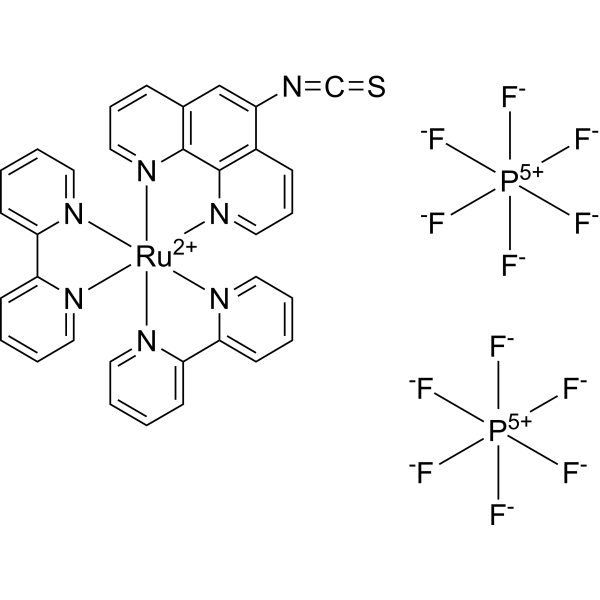
Cat. No.: HY-D0148
CAS No.: 288399-07-5
Target:  

Fluorescent Dye

Research Areas:  

Others

Ru(bpy)2(phen-ITC)(PF6)2 is a multifunctional dye. Dyes are important tools in biological experiments. They can help researchers observe and analyze cell structures, track biomolecules, evaluate cell functions, distinguish cell types, detect biomolecules, study tissue pathology and monitor microorganisms. Their applications range from basic scientific research to clinical A wide range of diagnostics. Dyes are also widely used in traditional fields such as textile dyeing, as well as in emerging fields such as functional textile processing, food pigments and dye-sensitized solar cells.
loading...
    loading...
Cat. No.: HY-D0291
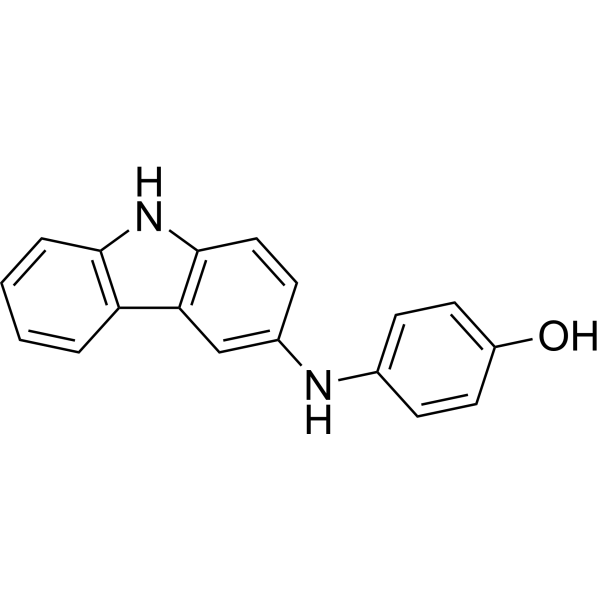
CAS No.: 86-72-6
4-(9H-Carbazol-3-ylamino)phenol is a multifunctional dye. Dyes are important tools in biological experiments. They can help researchers observe and analyze cell structures, track biomolecules, evaluate cell functions, distinguish cell types, detect biomolecules, study tissue pathology and monitor microorganisms. Their applications range from basic scientific research to clinical A wide range of diagnostics. Dyes are also widely used in traditional fields such as textile dyeing, as well as in emerging fields such as functional textile processing, food pigments and dye-sensitized solar cells.
loading...
    loading...
Cat. No.: HY-D0298
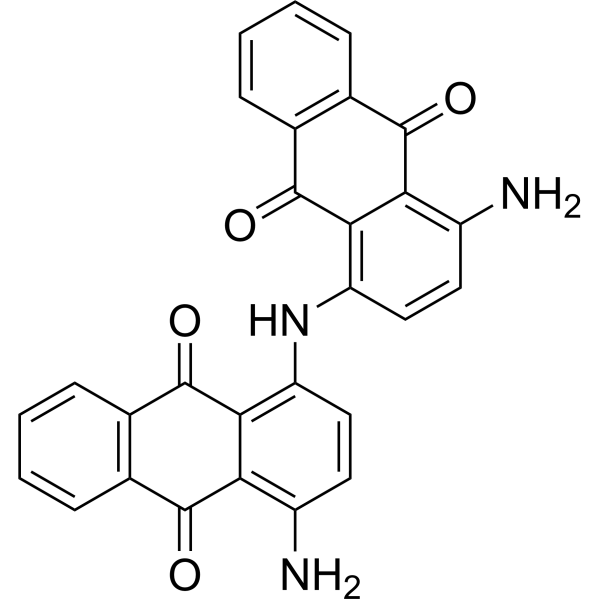
CAS No.: 128-87-0
4,4'-Diamino-1,1'-iminodianthraquinone is a multifunctional dye. Dyes are important tools in biological experiments. They can help researchers observe and analyze cell structures, track biomolecules, evaluate cell functions, distinguish cell types, detect biomolecules, study tissue pathology and monitor microorganisms. Their applications range from basic scientific research to clinical A wide range of diagnostics. Dyes are also widely used in traditional fields such as textile dyeing, as well as in emerging fields such as functional textile processing, food pigments and dye-sensitized solar cells.
loading...
    loading...
Cat. No.: HY-D0299
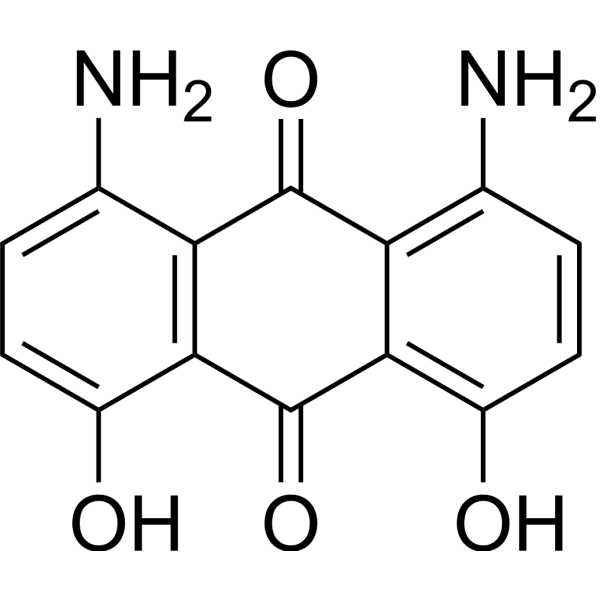
CAS No.: 128-94-9
1,8-Diamino-4,5-dihydroxyanthraquinone is a multifunctional dye. Dyes are important tools in biological experiments. They can help researchers observe and analyze cell structures, track biomolecules, evaluate cell functions, distinguish cell types, detect biomolecules, study tissue pathology and monitor microorganisms. Their applications range from basic scientific research to clinical A wide range of diagnostics. Dyes are also widely used in traditional fields such as textile dyeing, as well as in emerging fields such as functional textile processing, food pigments and dye-sensitized solar cells.
loading...
    loading...
Cat. No.: HY-D0303
CAS No.: 495-54-5
Synonyms: Solvent Orange 3; Chrysoidine Y base
Chrysoidine G (free base) (Solvent Orange 3; Chrysoidine Y base) is a multifunctional dye. Dyes are important tools in biological experiments. They can help researchers observe and analyze cell structures, track biomolecules, evaluate cell functions, distinguish cell types, detect biomolecules, study tissue pathology and monitor microorganisms. Their applications range from basic scientific research to clinical A wide range of diagnostics. Dyes are also widely used in traditional fields such as textile dyeing, as well as in emerging fields such as functional textile processing, food pigments and dye-sensitized solar cells.
loading...
    loading...
Cat. No.: HY-D0313
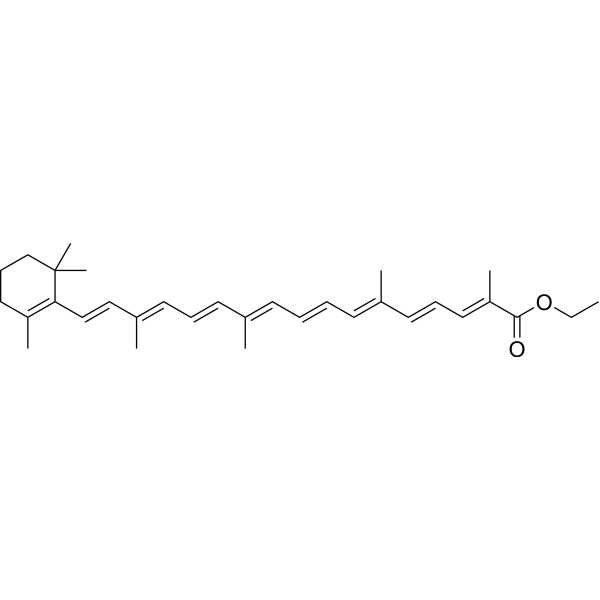
CAS No.: 1109-11-1
Ethyl 8'-apo-caroten-8'-oate is a multifunctional dye. Dyes are important tools in biological experiments. They can help researchers observe and analyze cell structures, track biomolecules, evaluate cell functions, distinguish cell types, detect biomolecules, study tissue pathology and monitor microorganisms. Their applications range from basic scientific research to clinical A wide range of diagnostics. Dyes are also widely used in traditional fields such as textile dyeing, as well as in emerging fields such as functional textile processing, food pigments and dye-sensitized solar cells.
loading...
    loading...
Cat. No.: HY-D0978
CAS No.: 1705572-09-3
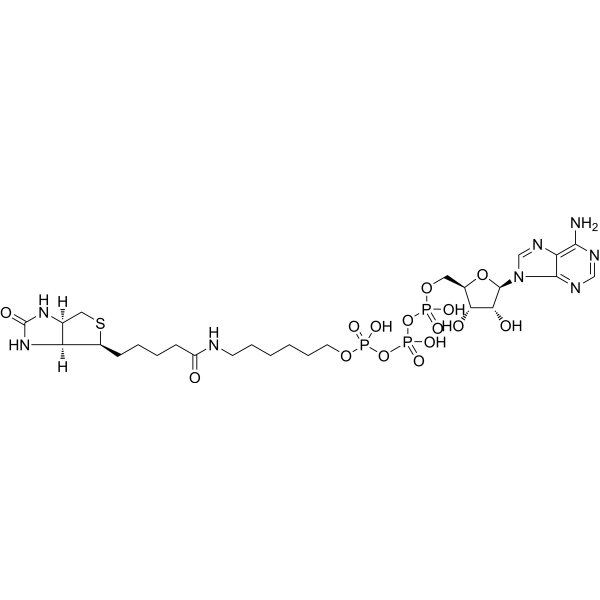
γ-(6-Aminohexyl)-ATP-biotin is a multifunctional dye. Dyes are important tools in biological experiments. They can help researchers observe and analyze cell structures, track biomolecules, evaluate cell functions, distinguish cell types, detect biomolecules, study tissue pathology and monitor microorganisms. Their applications range from basic scientific research to clinical A wide range of diagnostics. Dyes are also widely used in traditional fields such as textile dyeing, as well as in emerging fields such as functional textile processing, food pigments and dye-sensitized solar cells.
loading...
    loading...
Cat. No.: HY-D0979
CAS No.: 2579331-99-8
γ-[(6-Aminohexyl)-imido]-ATP-biotin is a multifunctional dye. Dyes are important tools in biological experiments. They can help researchers observe and analyze cell structures, track biomolecules, evaluate cell functions, distinguish cell types, detect biomolecules, study tissue pathology and monitor microorganisms. Their applications range from basic scientific research to clinical A wide range of diagnostics. Dyes are also widely used in traditional fields such as textile dyeing, as well as in emerging fields such as functional textile processing, food pigments and dye-sensitized solar cells.
loading...
    loading...
Cat. No.: HY-D1272
CAS No.: 2183440-43-7
Synonyms: Sulfo-Cyanine3 amine
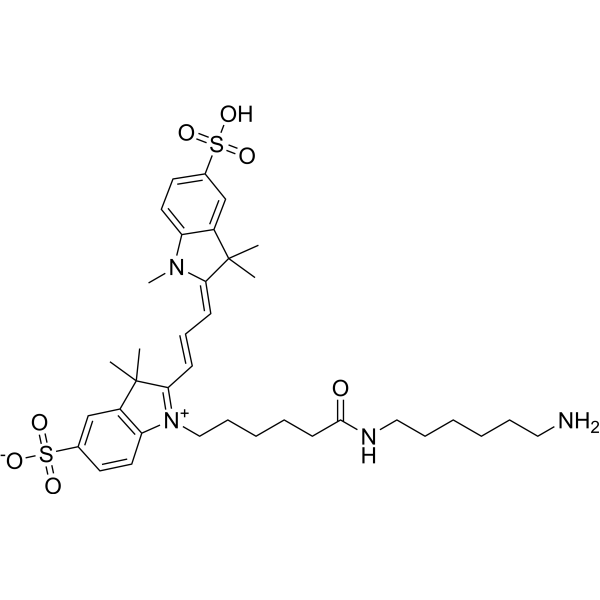
Sulfo-Cy3 amine is a dye derivative of Cyanine 3 (Cy3) (HY-D0822) bearing an amine group. The sulfonate ion increases the water solubility of the compound, making it suitable for use in aqueous solutions. Cy3 is a fluorescent dye with a fluorescence spectrum typically in the green to orange wavelength range. The amine functionality of Sulfo-Cy3 amine can react with carboxyl groups to form covalent bonds. Sulfo-Cy3 amine can bind to biological molecules such as proteins and antibodies to track their location and dynamic changes in biological samples.
loading...
    loading...
Cat. No.: HY-D1318
CAS No.: 1628790-36-2
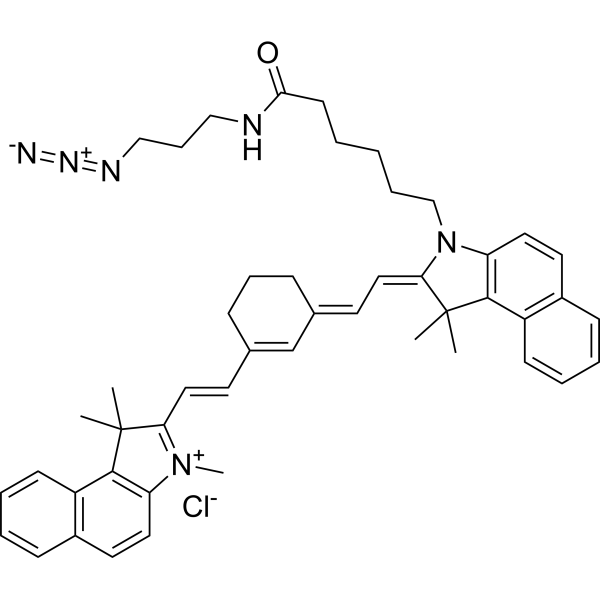
Cyanine7.5 azide chloride is a dye derivative of Cyanine 7.5 (Cy7.5) (HY-D0926) with an azide functional group. Cy7.5 is a near-infrared fluorescent dye commonly used for biolabeling and cell imaging. The azide group of Cyanine7.5 azide chloride can react chemically with molecules containing alkyne functionality, such as alkyne or cyclooctyne, to form covalent bonds. Therefore, Cyanine7.5 azide chloride can bind to biomolecules such as proteins and antibodies to track their location and dynamic changes in biological samples.
loading...
    loading...
Cat. No.: HY-D1864
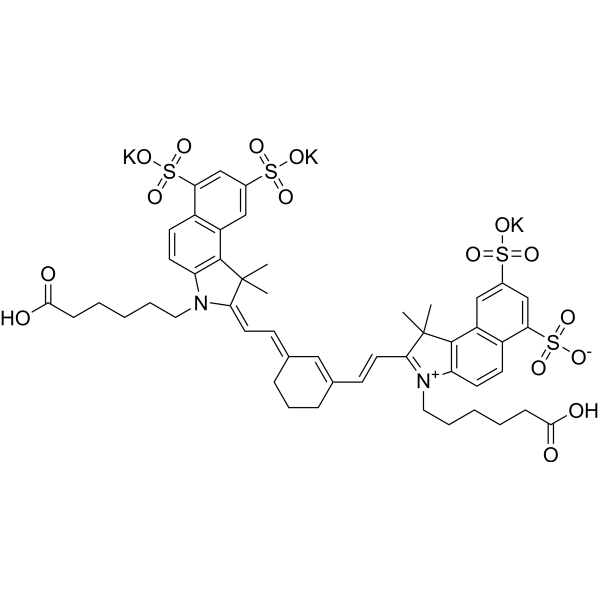
Sulfo-Cy7.5 dicarboxylic acid is a dye derivative of Cyanine 7.5 (Cy7.5) (HY-D0926) with carboxylic acid and sulfonate functional groups. The sulfonate ion increases the water solubility of the compound, making it suitable for use in aqueous solutions. Cy7.5 is a near-infrared fluorescent dye commonly used in biomedical research areas such as biomarkers and cell imaging. Sulfo-Cy7.5 dicarboxylic acid can be covalently bound to some biomolecules (especially antibodies, proteins, etc.) to track their location and dynamic changes in biological samples.
loading...
    loading...
Cat. No.: HY-D2729
CAS No.: 3012597-48-4
Cy3-NO2-Tre is a nitroreductase-responsive cyanine-based fluorescent probe that specifically labels Mycobacterium tuberculosis (Mtb). Cy3-NO2-tre generated fluorescence after activation by a specific nitroreductase, Rv3368c, which is conserved in the Mycobacteriaceae. Cy3-NO2-tre effectively imaged mycobacteria within infected host cells, tracked the infection process, and visualized Mycobacterium smegmatis being endocytosed by macrophages (Ex/Em= 540-550/575-625 nm) .
loading...
    loading...
Cat. No.: HY-D2907
CAS No.: 3091879-39-6
Synonyms: DBCO-Cy5; Cyanine5 dibenzocyclooctyne
Cyanine5 DBCO (DBCO-Cy5) is a low-toxicity azide reactive probe (NIR fluorescent dye), for imaging azide-labeled biomolecules via a copper-free "click-through" reaction. Cyanine5 DBCO has no apparent cytotoxicity or animal toxicity and shows no damage to the physiological functions of cells other than the target cells (azide-labeled cells). Cyanine5 DBCO can be used to label and track cells in vitro and in vivo (Ex=635 nm, Em=650-700 nm) .
loading...
    loading...
Cat. No.: HY-D3160
Target:  

Fluorescent Dye

Research Areas:  

Others

Golgi-hNR is a cell membrane-permeable Golgi-targeted fluorescent probe containing a sulfonamide group. Golgi-hNR selectively accumulates in the Golgi apparatus of living cells, enabling real-time tracking and homeostasis assessment of reversible pH changes in the Golgi apparatus. Golgi-hNR exhibits a pH-dependent "off-on" fluorescence response mechanism within the pH 7.4-3.0 range, and its red fluorescence intensity decreases with increasing pH. The Ex/Em of Golgi-hNR is 560/664 nm and 580/664 nm, with the maximum emission peak located at 615 nm .
loading...
    loading...
Cat. No.: HY-W127770
CAS No.: 569-61-9
Synonyms: Basic red 9
Target:  

Fluorescent Dye

Research Areas:  

Infection

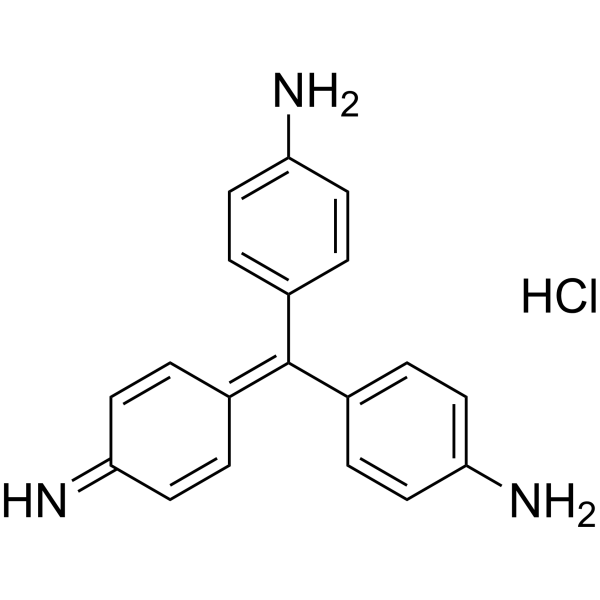
Pararosaniline hydrochloride (Basic red 9) is a pH-responsive basic dye, as a biological stain to track certain proteins. The pH of the acidified Pararosaniline hydrochloride reagent has a significant effect on the color and the maximum absorption wavelength (λmax) of the reaction system, with its optimum pH 0.48 and a λmax at 549 nm. Pararosaniline hydrochloride is also a strong modifier of RNA splicing. Pararosaniline hydrochloride has been used in the analysis of SO2 and formaldehyde and staining of bacteria or other organisms. Pararosaniline hydrochloride is extensively used in industries like textile, printing, paper, cosmetic, and leather .
loading...
    loading...
Cat. No.: HY-K3124

MCE Macrofungal-Derived Extracellular Vesicle Isolation and Purification Kit is specifically optimized for fungal fruiting body samples. The optimized extraction system facilitates the release of EVs from fungal tissues, while the purification system effectively removes polysaccharides, proteins, phenolic compounds, terpenoids, and other non-vesicular components, enabling efficient isolation and purification of fungal EVs. The isolated macrofungal-derived vesicles can be used for downstream applications including transmission electron microscopy (TEM), nanoparticle tracking analysis (NTA), Western blotting, qPCR, cell-based studies, and animal experiments.

loading...
    loading...
Cat. No.: HY-161491
1-(2-Aminoethyl)-1H-pyrazol-4-ylphosphonic acid-linker/OVA is a multifunctional dye. Dyes are important tools in biological experiments. They can help researchers observe and analyze cell structures, track biomolecules, evaluate cell functions, distinguish cell types, detect biomolecules, study tissue pathology and monitor microorganisms. Their applications range from basic scientific research to clinical A wide range of diagnostics. Dyes are also widely used in traditional fields such as textile dyeing, as well as in emerging fields such as functional textile processing, food pigments and dye-sensitized solar cells.
loading...
    loading...
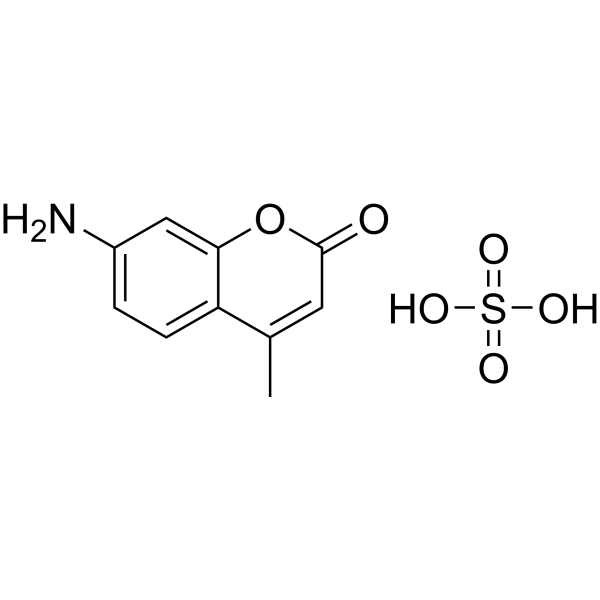
Cat. No.: HY-D0002
CAS No.: 207673-94-7
Synonyms: Coumarin 120 hydrogensulfate; AMC hydrogensulfate
7-Amino-4-methylcoumarin hydrogensulfate (Coumarin 120 hydrogensulfate; AMC hydrogensulfate) is a multifunctional dye. Dyes are important tools in biological experiments. They can help researchers observe and analyze cell structures, track biomolecules, evaluate cell functions, distinguish cell types, detect biomolecules, study tissue pathology and monitor microorganisms. Their applications range from basic scientific research to clinical A wide range of diagnostics. Dyes are also widely used in traditional fields such as textile dyeing, as well as in emerging fields such as functional textile processing, food pigments and dye-sensitized solar cells.
loading...
    loading...
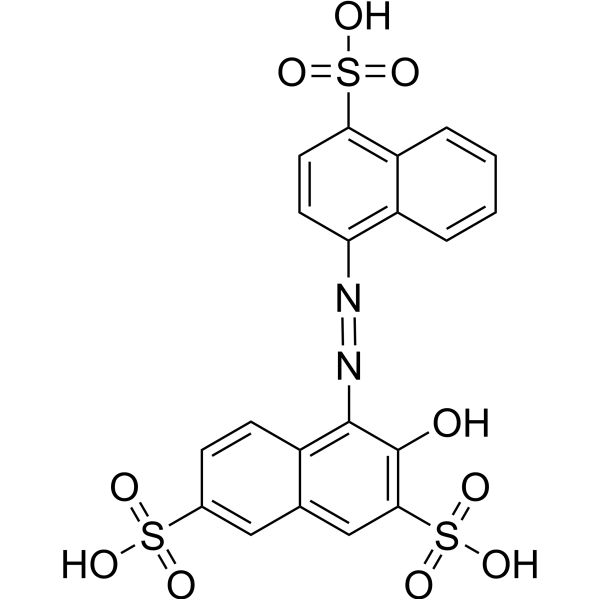
Cat. No.: HY-D0307
CAS No.: 642-59-1
Synonyms: Acid Red 27 free acid; Azorubin S free acid; FD & C Red Dye No. 2 free acid
Amaranth free acid (Acid Red 27 free acid; Azorubin S free acid; FD & C Red Dye No. 2 free acid) is a multifunctional dye. Dyes are important tools in biological experiments. They can help researchers observe and analyze cell structures, track biomolecules, evaluate cell functions, distinguish cell types, detect biomolecules, study tissue pathology and monitor microorganisms. Their applications range from basic scientific research to clinical A wide range of diagnostics. Dyes are also widely used in traditional fields such as textile dyeing, as well as in emerging fields such as functional textile processing, food pigments and dye-sensitized solar cells.
loading...
    loading...
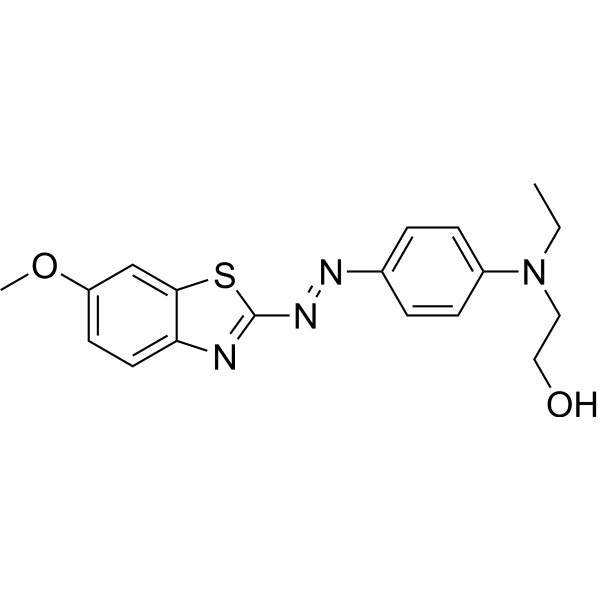
Cat. No.: HY-D0498
CAS No.: 13486-43-6
2-N-Ethyl-p-(6-methoxybenzothiazol-2-yl)azoanilinoethanol is a multifunctional dye. Dyes are important tools in biological experiments. They can help researchers observe and analyze cell structures, track biomolecules, evaluate cell functions, distinguish cell types, detect biomolecules, study tissue pathology and monitor microorganisms. Their applications range from basic scientific research to clinical A wide range of diagnostics. Dyes are also widely used in traditional fields such as textile dyeing, as well as in emerging fields such as functional textile processing, food pigments and dye-sensitized solar cells.
loading...
    loading...