539 Results for "

DNA replication

" in MedChemExpress (MCE) Product Catalog:
Products (539)

539 Results for "DNA replication" in MCE Product Catalog:

24
24 Cited Publications
Cat. No.: HY-16706
CAS No.: 949912-58-7
Research Areas:  

Cancer

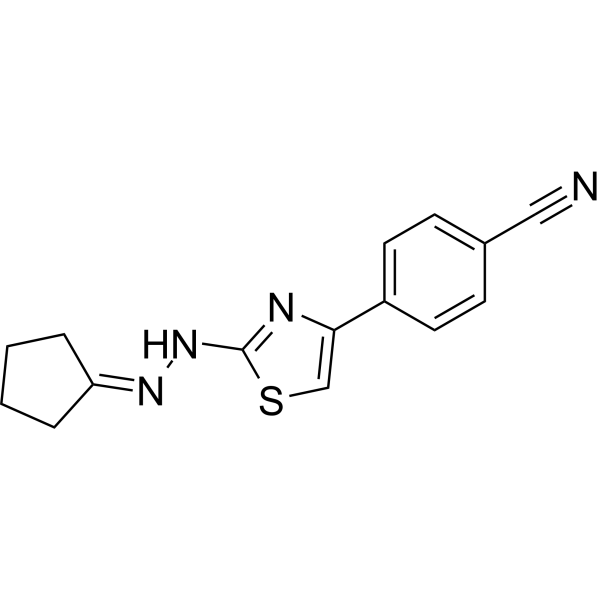
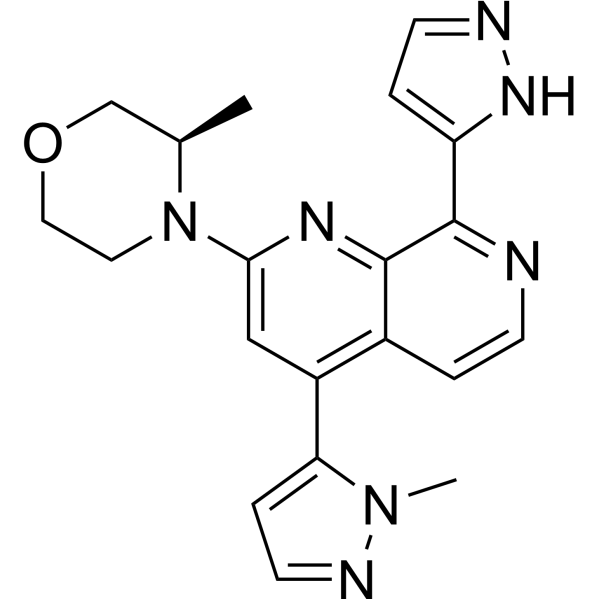
Remodelin is an orally active and selective inhibitor of acetyltransferase NAT10. Remodelin inhibits NAT10 activitity and slows DNA replication and suppresses growth of prostate cancer cells. Remodelin inhibits the growth of prostate cancer and hepatocellular carcinoma in xenograft model. Remodelin enhances the healthspan in hutchinson-gilford progeria syndrome (HGPS) mouse model .
loading...
    loading...
24
24 Cited Publications
Cat. No.: HY-16706A
CAS No.: 1622921-15-6
Research Areas:  

Cancer

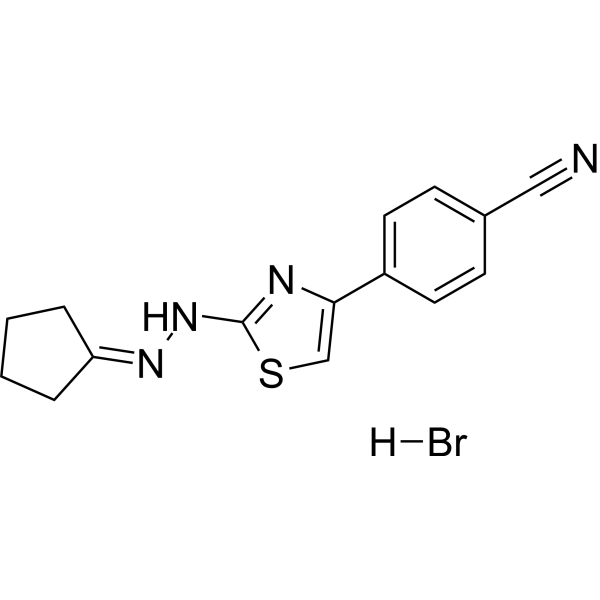
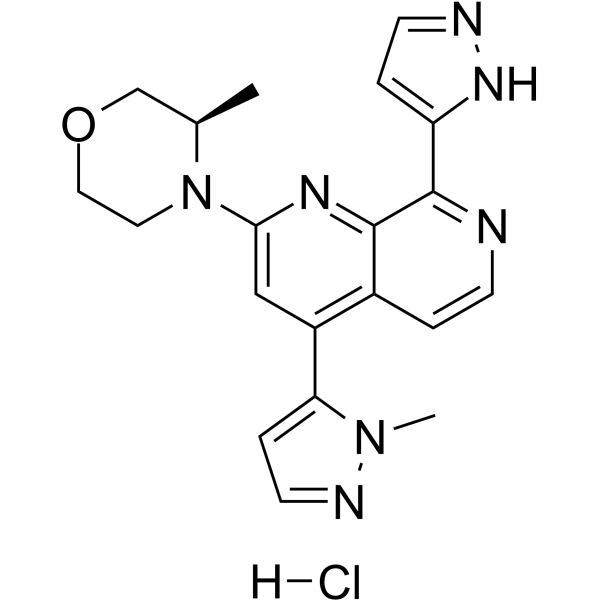
Remodelin hydrobromide is an orally active and selective inhibitor of acetyltransferase NAT10. Remodelin hydrobromide inhibits NAT10 activitity and slows DNA replication and suppresses growth of prostate cancer cells. Remodelin hydrobromide inhibits the growth of prostate cancer and hepatocellular carcinoma in xenograft model. Remodelin hydrobromide enhances the healthspan in hutchinson-gilford progeria syndrome (HGPS) mouse model .
loading...
    loading...
19
19 Cited Publications
Cat. No.: HY-17381
CAS No.: 57852-57-0
Synonyms: 4-Demethoxydaunorubicin hydrochloride
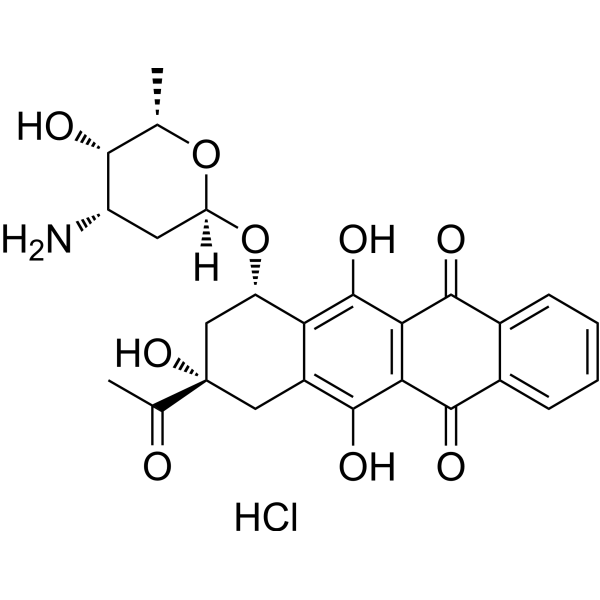
Idarubicin hydrochloride is an anthracycline antileukemic agent. It inhibits the topoisomerase II interfering with the replication of DNA and RNA transcription. Idarubicin hydrochloride inhibits the growth of bacteria and yeasts.
loading...
    loading...
19
19 Cited Publications
Cat. No.: HY-17381A
CAS No.: 58957-92-9
Synonyms: 4-Demethoxydaunorubicin
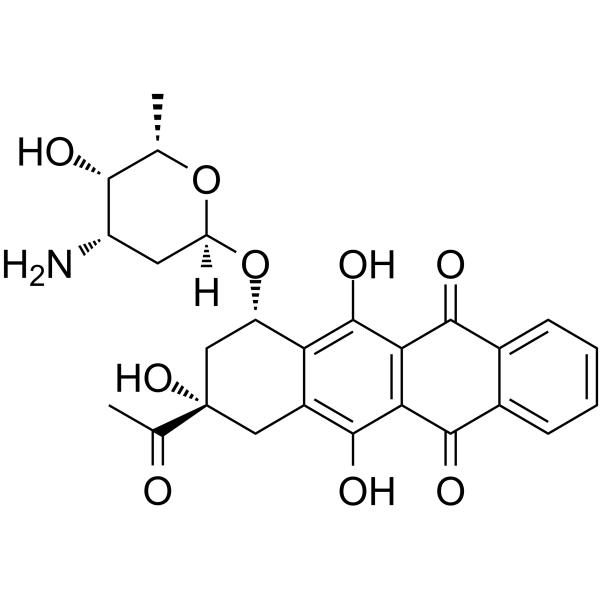
Idarubicin is an orally active and potent anthracycline antileukemic agent. Idarubicin inhibits the topoisomerase II interfering with the replication of DNA and RNA transcription. Idarubicin shows induction of DNA damage. Idarubicin inhibits DNA synthesis and of c-myc expression. Idarubicin inhibits the growth of bacteria and yeasts .
loading...
    loading...
18
18 Cited Publications
Cat. No.: HY-101566
CAS No.: 1876467-74-1
Purity:  99.99%
Synonyms: BAY 1895344
Target:  

ATM/ATR

Research Areas:  

Cancer

Elimusertib (BAY-1895344) is a potent, orally active and selective ATR inhibitor with an IC50 of 7 nM. Elimusertib has anti-tumor activity . Elimusertib can be used for the research of solid tumors and lymphomas .
loading...
    loading...
18
18 Cited Publications
Cat. No.: HY-101566A
Purity:  99.85%
Synonyms: BAY 1895344 hydrochloride
Target:  

ATM/ATR

Research Areas:  

Cancer

Elimusertib (BAY 1895344) hydrochloride is a potent, orally active and selective ATR inhibitor with an IC50 of 7 nM. Elimusertib hydrochloride has anti-tumor activity . Elimusertib hydrochloride can be used for the research of solid tumors and lymphomas .
loading...
    loading...
15
15 Cited Publications
Cat. No.: HY-17438
CAS No.: 113852-37-2
Synonyms: GS 0504; HPMPC; (S)-HPMPC
Research Areas:  

Infection Cancer

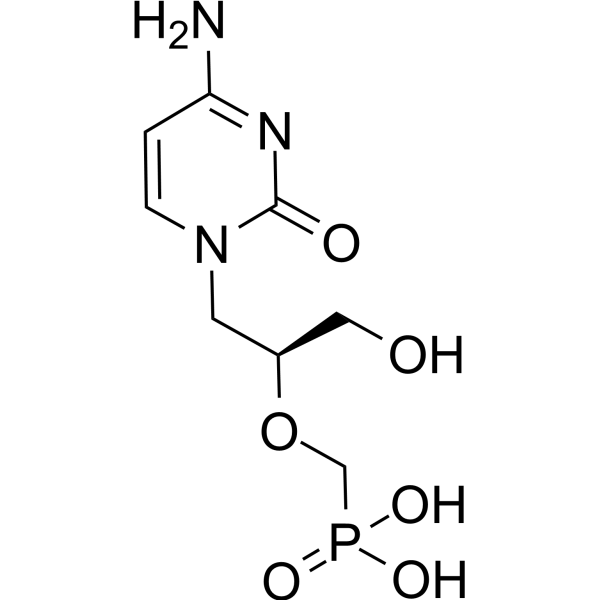
Cidofovir (GS 0504) is an acyclic monophosphate nucleotide analogue and CMV inhibitor with antiviral activity. Cidofovir inhibits cytomegalovirus (CMV) replication by selectively inhibiting viral DNA polymerase. Cidofovir induces apoptosis and can be used in studies of AIDS cytomegalovirus retinitis, herpes, and cancer . Cidofovir also has anti-orthopoxvirus and anti-variola activities .
loading...
    loading...
15
15 Cited Publications
Cat. No.: HY-17438A
CAS No.: 149394-66-1
Synonyms: GS 0504 dihydrate; HPMPC dihydrate; (S)-HPMPC dihydrate
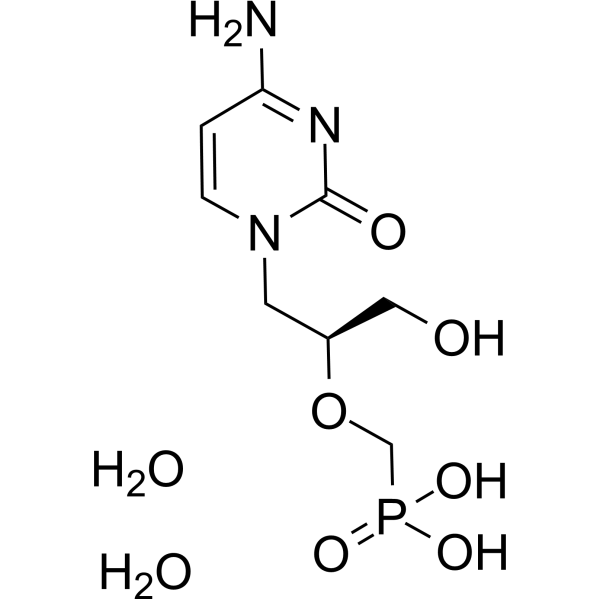
Cidofovir (GS 0504; HPMPC; (S)-HPMPC) dihydrate is an acyclic monophosphate nucleotide analogue and CMV inhibitor with antiviral activity. Cidofovir dihydrate inhibits cytomegalovirus (CMV) replication by selectively inhibiting viral DNA polymerase. Cidofovir dihydrate induces apoptosis and can be used in studies of AIDS cytomegalovirus retinitis, herpes, and cancer . Cidofovir dihydrate also has anti-orthopoxvirus and anti-variola activities .
loading...
    loading...
14
14 Cited Publications
Cat. No.: HY-B1046
CAS No.: 2030-63-9
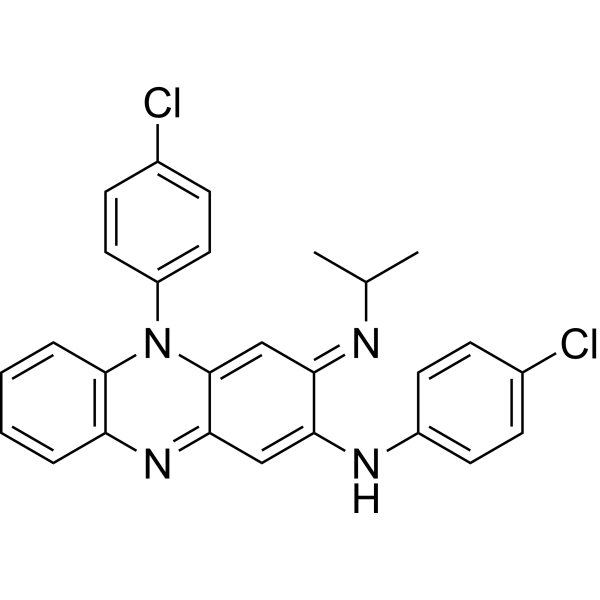
Clofazimine is an orally-active anti-mycobacterial agent with a wide range of anti-mycobacterial activity including leprosy and tuberculosis. Clofazimine exerts anti-inflammatory activities and anti-tumor activities by interfering DNA replication and inhibiting IL2 (IC50 = 1.10 ± 0.26 μM, Jurkat T) production. Clofazimine can be used in mycobacterial and cancer research .
loading...
    loading...
12
12 Cited Publications
Cat. No.: HY-16742B
CAS No.: 1624306-20-2
Research Areas:  

Infection

Gepotidacin mesylate hydrate is an orally active triazaacenaphthylene antibiotic and bacterial type II topoisomerase inhibitor. Gepotidacin mesylate hydrate inhibits bacterial DNA replication by blocking topoisomerase enzymes. Gepotidacin mesylate hydrate selectively inhibits topoisomerase IV and the B subunit of DNA gyrase .
loading...
    loading...
12
12 Cited Publications
Cat. No.: HY-B0307
CAS No.: 54-42-2
Synonyms: 5-Iodo-2′-deoxyuridine; 5-IUdR; IdUrd
Research Areas:  

Infection Cancer

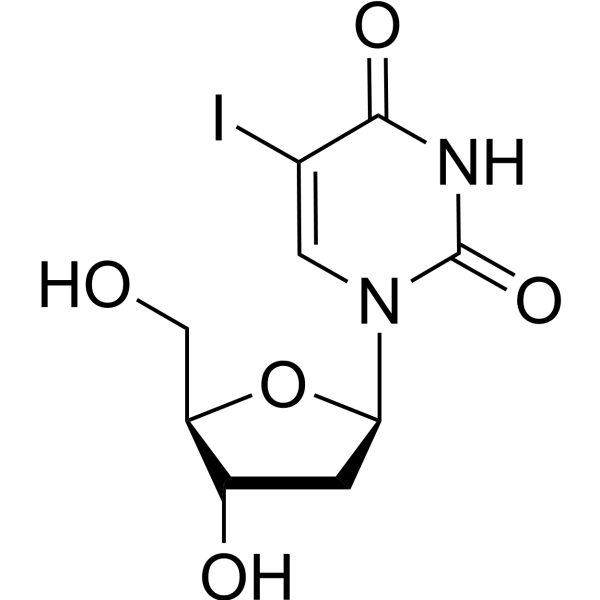
Idoxuridine (5-Iodo-2′-deoxyuridine, 5-IUdR, IdUrd) is an iodinated thymidine analogue that competitively inhibits phosphorylases. Idoxuridine can inhibit viral activity, particularly viral eye infections, including herpes simplex keratitis, by inhibiting DNA polymerase and affecting viral replication. Idoxuridine against feline herpesvirus has the IC50 value of 4.3 μM . Idoxuridine shows anti-orthopoxvirus activity.
loading...
    loading...
11
11 Cited Publications
Cat. No.: HY-103713
CAS No.: 1423715-37-0
Purity:  99.77%
Synonyms: SP-2577
Target:  

Histone Demethylase

Research Areas:  

Cancer

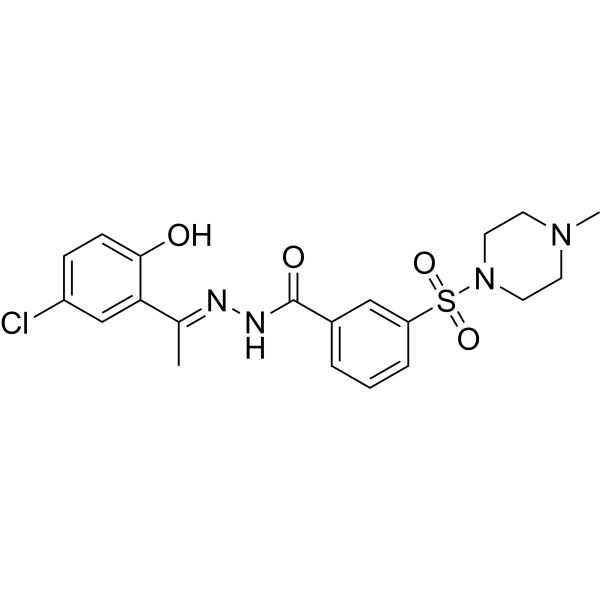
Seclidemstat is a potent noncompetitive and reversible KDM1A (LSD1) inhibitor (Ki=31 nM, IC50=13 nM). Seclidemstat promotes antitumor immunity in switch/sucrose nonfermentable (SWI/SNF) complex mutated ovarian cancer, as well as inhibit virus production, viral DNA replication, and late gene expression. Seclidemstat can be used for the research of Ewing Sarcoma .
loading...
    loading...
11
11 Cited Publications
Cat. No.: HY-103713A
CAS No.: 2044953-70-8
Purity:  99.80%
Synonyms: SP-2577 mesylate
Target:  

Histone Demethylase

Research Areas:  

Cancer

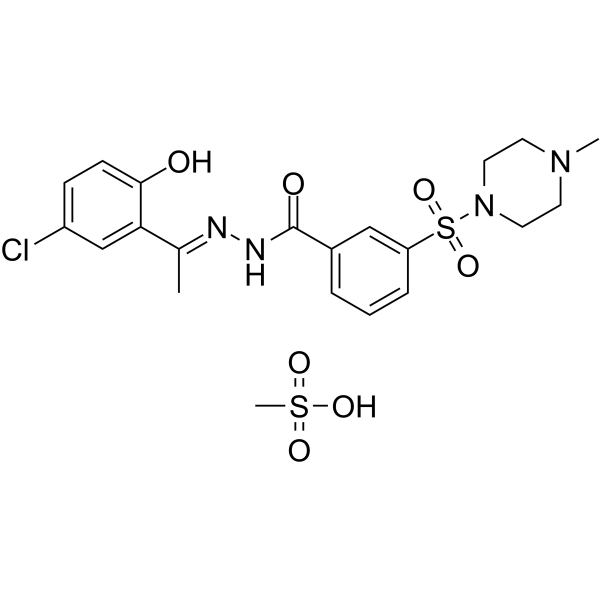
Seclidemstat (SP-2577) mesylate is a potent noncompetitive and reversible KDM1A (LSD1) inhibitor (Ki=31 nM, IC50=13 nM). Seclidemstat mesylate promotes antitumor immunity in switch/sucrose nonfermentable (SWI/SNF) complex mutated ovarian cancer, as well as inhibit virus production, viral DNA replication, and late gene expression. Seclidemstat mesylate can be used for the research of Ewing Sarcoma .
loading...
    loading...
10
10 Cited Publications
Cat. No.: HY-P0109A
CAS No.: 197855-65-5
Synonyms: (1S)-Z-FA-FMK
Research Areas:  

Infection Cancer

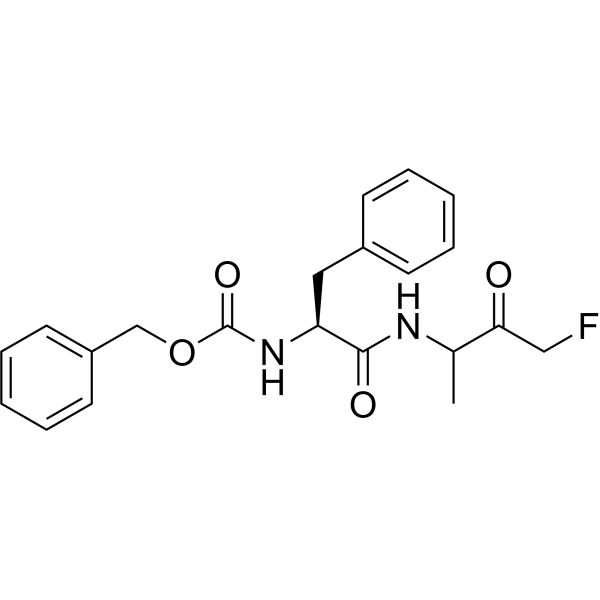
Z-FA-FMK ((1S)-Z-FA-FMK) is a potent Cathepsin B and L inhibitor. Z-FA-FMK blocks the induction of DEVDase activity, DNA fragmentation, and externalization of phosphatidylserine by selective synthetic retinoid-related molecules (RRMs). Z-FA-FMK inhibits apoptosis. Z-FA-FMK inhibits caspase activity and selectively inhibits recombinant effector caspases 2, -3, -6, and -7. Z-FA-FMK is a viral inhibitor. Z-FA-FMK inhibits reovirus replication in a susceptible host .
loading...
    loading...
8
8 Cited Publications
Cat. No.: HY-15260
CAS No.: 1169558-38-6
Purity:  99.76%
Synonyms: BMS-863233
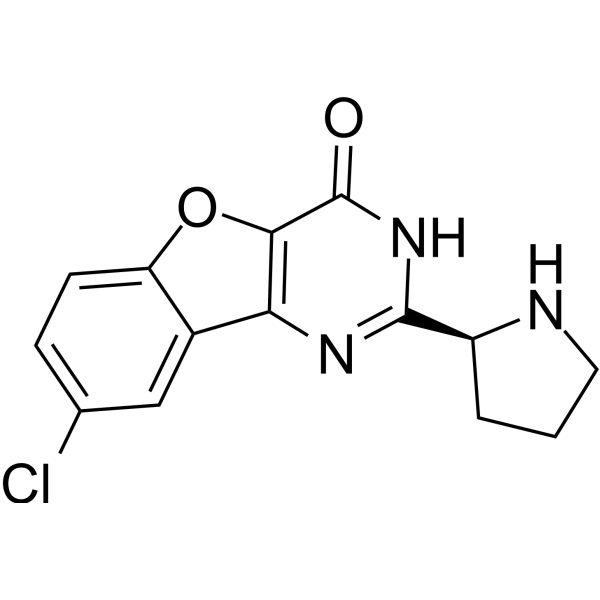
XL413 (BMS-863233) is an orally active, ATP-competitive, selective CDC7 kinase inhibitor. XL413 reduces MCM2 phosphorylation levels, decreases DNA replication origin activation, and inhibits CD69 upregulation in stimulated lymphocytes. XL-413 possesses cell-dependent antiproliferative and pro-apoptotic activities. XL413 attenuates ATR inhibitor-induced excessive origin activation, altered replication fork speed, and antiproliferative effects in sensitive cancer cells. XL413 inhibits SARS-CoV-2 infection. XL413 can be used for research related to cancer and SARS-CoV-2 infection .
loading...
    loading...
8
8 Cited Publications
Cat. No.: HY-15260A
CAS No.: 2062200-97-7
Purity:  99.65%
Synonyms: BMS-863233 monohydrochloride
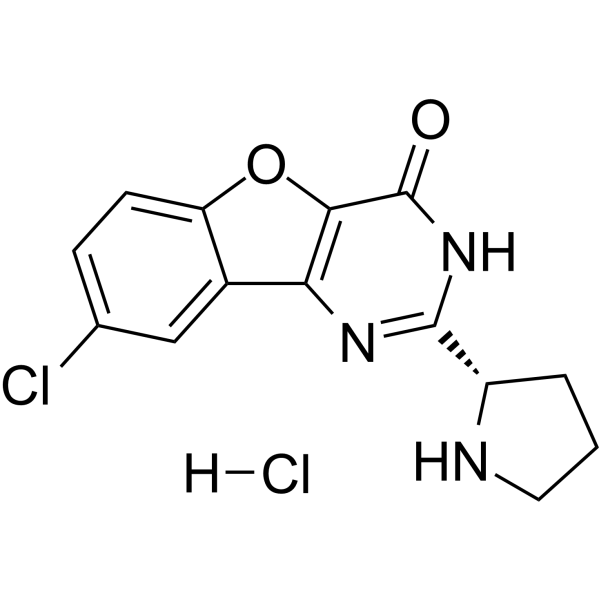
XL413 monohydrochloride (BMS-863233 monohydrochloride) is an orally active, ATP-competitive, selective CDC7 kinase inhibitor. XL413 monohydrochloride reduces MCM2 phosphorylation levels, decreases DNA replication origin activation, and inhibits CD69 upregulation in stimulated lymphocytes. XL-413 possesses cell-dependent antiproliferative and pro-apoptotic activities. XL413 monohydrochloride attenuates ATR inhibitor-induced excessive origin activation, altered replication fork speed, and antiproliferative effects in sensitive cancer cells. XL413 monohydrochloride inhibits SARS-CoV-2 infection. XL413 monohydrochloride can be used for research related to cancer and SARS-CoV-2 infection .
loading...
    loading...
8
8 Cited Publications
Cat. No.: HY-100126
CAS No.: 69-33-0
Purity:  99.24%
Synonyms: 7-Deazaadenosine
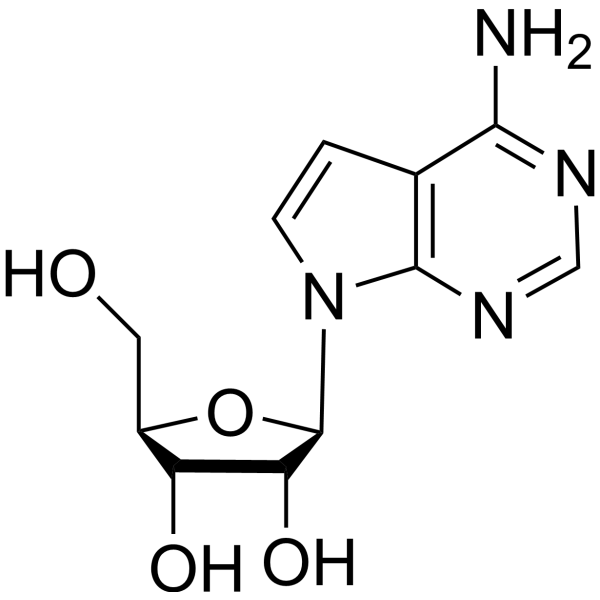
Tubercidin (7-Deazaadenosine) is an antibiotic obtained from Streptomyces tubercidicus. Tubercidin inhibits the growth of Streptococcus faecalis (8043) with an IC50 of 0.02 μM . Tubercidin inhibits polymerases by incorporating DNA or RNA, thereby inhibiting DNA replication, RNA and protein synthesis . Tubercidin is a weak inhibitor of adenosine phosphorylase, and interferes with the phosphorylation of adenosine and AMP . Tubercidin has antiviral activity .
loading...
    loading...
8
8 Cited Publications
Cat. No.: HY-N6666
CAS No.: 24356-66-9
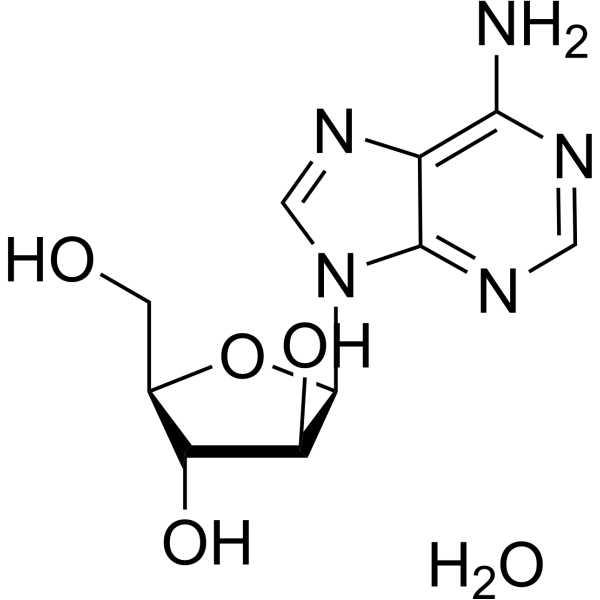
Vidarabine monohydrate is a Purine nucleoside derivative and Antiviral agent. The triphosphate derivative of Vidarabine monohydrate competitively inhibits DNA polymerase, incorporates into the terminus of elongating DNA molecules, and interferes with the early steps of viral DNA synthesis. Vidarabine monohydrate inhibits the replication of herpes simplex virus, varicella-zoster virus, cytomegalovirus, Epstein-Barr virus and vaccinia virus, reduces viral shedding, and accelerates skin healing. Vidarabine monohydrate is metabolized to arabinosyl hypoxanthine, causes minimal impairment of corneal wound healing in rabbit models, and is associated with recurrence of herpes simplex encephalitis. Vidarabine monohydrate can be used in the research of herpetic keratoconjunctivitis, herpes simplex encephalitis, herpetic uveitis, and chronic active hepatitis associated with hepatitis B virus .
loading...
    loading...
8
8 Cited Publications
Cat. No.: HY-B0277
CAS No.: 5536-17-4
Synonyms: Ara-A; Adenine Arabinoside; 9-β-D-Arabinofuranosyladenine
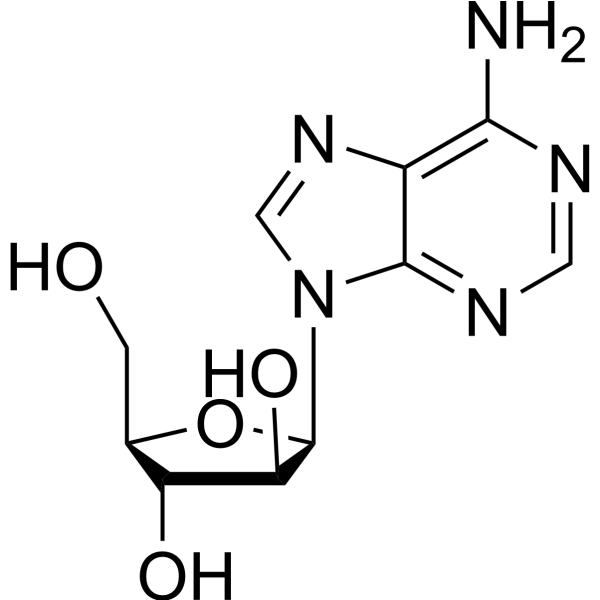
Vidarabine (Ara-A) is a Purine nucleoside derivative and Antiviral agent. The triphosphate derivative of Vidarabine competitively inhibits DNA polymerase, incorporates into the terminus of elongating DNA molecules, and interferes with the early steps of viral DNA synthesis. Vidarabine inhibits the replication of herpes simplex virus, varicella-zoster virus, cytomegalovirus, Epstein-Barr virus and vaccinia virus, reduces viral shedding, and accelerates skin healing. Vidarabine is metabolized to arabinosyl hypoxanthine, causes minimal impairment of corneal wound healing in rabbit models, and is associated with recurrence of herpes simplex encephalitis. Vidarabine can be used in the research of herpetic keratoconjunctivitis, herpes simplex encephalitis, herpetic uveitis, and chronic active hepatitis associated with hepatitis B virus .
loading...
    loading...
8
8 Cited Publications
Cat. No.: HY-13822
CAS No.: 312636-16-1
Purity:  99.25%
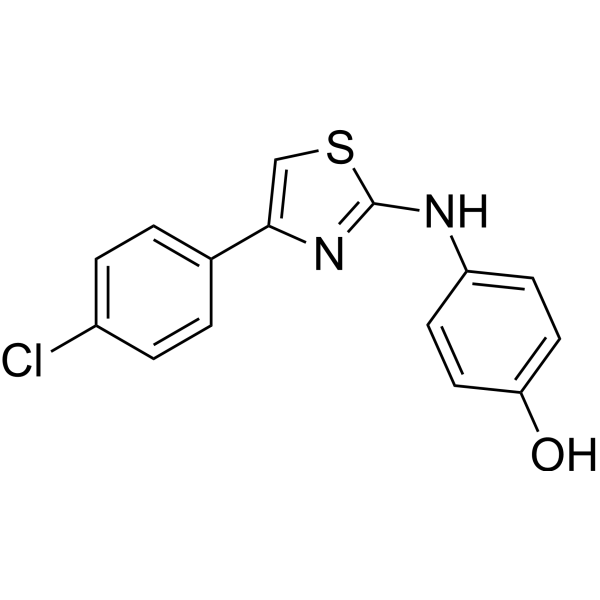
SKI-II is an orally active dual-target inhibitor of SphK1/2 and DES1, with Ki values of 16 µM and 0.3 µM against SphK1 and DES1, respectively. SKI-II activates the PERK-Nrf2 antioxidant pathway by stabilizing Nrf2, and synergizes with Temozolomide (HY-17364) to induce oxidative/endoplasmic reticulum stress and cancer cell death under hypoxic conditions. In vivo, SKI-II inhibits SphK activity, promotes ceramide accumulation and apoptosis, and synergizes with Cisplatin (HY-17394) to reverse drug resistance via the ras/MAPK pathway. SKI-II reduces measles virus replication by inhibiting mTORC1 activity. SKI-II binds to VCP to induce M1 polarization, enhances host tolerance to Staphylococcus aureus infection, and exerts radioprotective effects through Nrf2 activation and accelerated DNA repair. SKI-II can be used in research related to glioblastoma, acute myeloid leukemia, gastric cancer, measles virus infection, Staphylococcus aureus infection, and acute radiation syndrome .
loading...
    loading...

