66 Results for "

MicroRNA;

" in MedChemExpress (MCE) Product Catalog:
Products (66)

66 Results for "MicroRNA;" in MCE Product Catalog:

1
1 Cited Publications
Cat. No.: HY-139290A
Purity:  99.06%
Synonyms: RG4326 sodium
Target:  

MicroRNA

Research Areas:  

Cancer

RGLS4326 sodium is a first-in-class, short oligonucleotide inhibitor of microRNA-17 (miR-17). RGLS4326 sodium can be used for the research of autosomal dominant polycystic kidney disease (ADPKD). RGLS4326 sodium inhibits miR-17 function in HeLa cells with an EC50 value of 28.3 nM .
loading...
    loading...
1
1 Cited Publications
Cat. No.: HY-152226
CAS No.: 2284460-01-9
Purity:  98.71%
Target:  

HDAC Apoptosis

Research Areas:  

Cancer

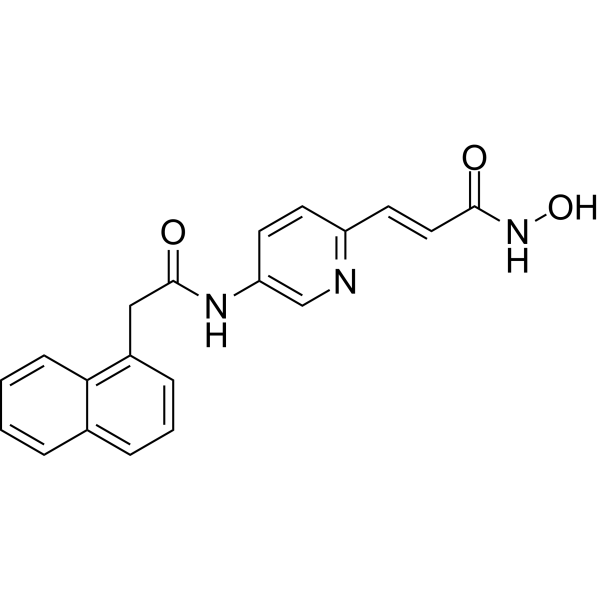
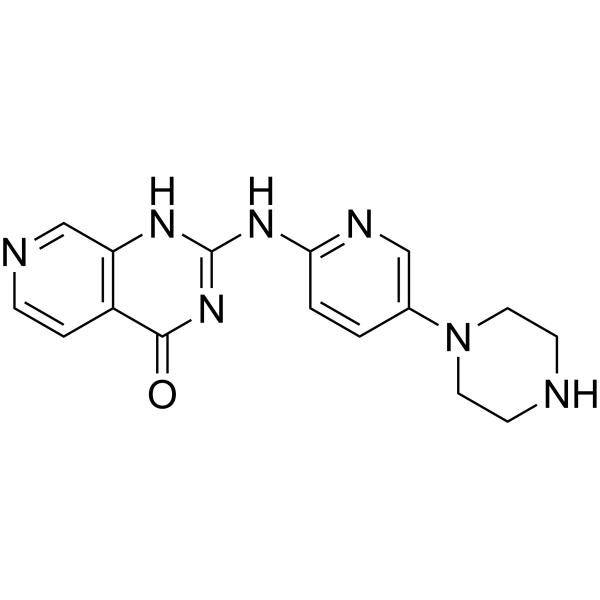
MC2590 is a potent pyridine-containing histone deacetylase (HDAC) inhibitor. MC2590 is a inhibitor of HDAC1-3, -6, -8, and -10 (class I/IIb-selective inhibitor) with IC50s of 0.015 μM-0.156 μM. MC2590 also inhibits HDAC isoforms HDAC4, HDAC5, HDAC7, HDAC9, HDAC11 with IC50s of 1.35 μM-3.98 μM. MC2625 induces G2/M cell cycle arrest and modulates pro- and anti-apoptotic microRNAs towards apoptosis induction .
loading...
    loading...
1
1 Cited Publications
Cat. No.: HY-K0513

MCE MCE Reverse Transcription Kit III is suitable for the conventional synthesis of cDNA from RNA and the stem-loop method for the synthesis of cDNA from microRNA (miRNA).

loading...
    loading...
Cat. No.: HY-P11070
CAS No.: 1927877-75-5
Target:  

Inhibitory Antibodies

Research Areas:  

Others

SDSSD is an osteoblast-targeting peptide. SDSSD selectively binds to periostin on osteoblasts and mediates targeted delivery to these cells. SDSSD can endow calcium phosphate nanocomposites with bone-targeting properties, and these materials exhibit osteointegrative capacity in both in vitro and in vivo models. When conjugated with polyurethane nanomicelles, SDSSD enables targeted delivery of siRNA/microRNA to osteoblasts .
loading...
    loading...
Cat. No.: HY-100574
CAS No.: 913723-61-2
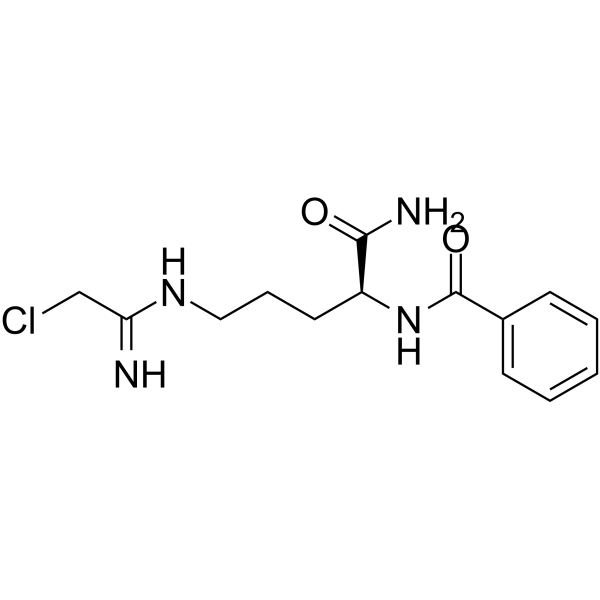
Cl-amidine is an orally active peptidylarginine deminase (PAD) inhibitor, with IC50 values of 0.8 μM, 6.2 μM and 5.9 μM for PAD1, PAD3, and PAD4, respectively. Cl-amidine induces apoptosis in cancer cells. Cl-amidine induces microRNA (miR)-16 (miRNA-16, microRNA-16) expression and causes cell cycle arrest. Cl-Amidine prevents histone 3 citrullination and neutrophil extracellular trap formation, and improves survival in a murine sepsis model .
loading...
    loading...
Cat. No.: HY-B1817A
CAS No.: 557-34-6
Synonyms: Zinc(II) acetate, 99.99% trace metals basis
Zinc (Zinc (II)) acetate, 99.99% trace metals basis is a heme oxygenase 1 (HO-1) activator and apoptosis inducer with cytotoxic and anticancer activities. Zinc acetate, 99.99% trace metals basis enhances HO-1 expression, alters the microRNA profile, and increases the level of caspase-cleaved cytokeratin 18. Zinc acetate, 99.99% trace metals basis also regulates the expression of Cdk2/cyclin E and interferes with cell cycle progression. Zinc acetate, 99.99% trace metals basis effectively inhibits cancer cell proliferation and induces their rapid death, with no significant cytotoxicity to non-tumor tissues. Zinc acetate, 99.99% trace metals basis has been widely used in studies related to hepatocellular carcinoma, prostate cancer, and other conditions .
loading...
    loading...
Cat. No.: HY-14648S
CAS No.: 358731-91-6
Purity:  99.86%
Synonyms: Hexadecadrol-d5; Prednisolone F-d5
Dexamethasone-d5 is the deuterium labeled Dexamethasone. Dexamethasone (Hexadecadrol) is a glucocorticoid receptor agonist. Dexamethasone also significantly decreases CD11b, CD18, and CD62L expression on neutrophils, and CD11b and CD18 expression on monocytes. Dexamethasone is highly effective in the control of COVID-19 infection. Dexamethasone inhibits production of exosomes containing inflammatory microRNA-155 in lipopolysaccharide-induced macrophage inflammatory responses .
loading...
    loading...
Cat. No.: HY-15861
CAS No.: 1049722-30-6
Purity:  98.00%
Synonyms: TGP-210
Target:  

MicroRNA Apoptosis

Research Areas:  

Cancer

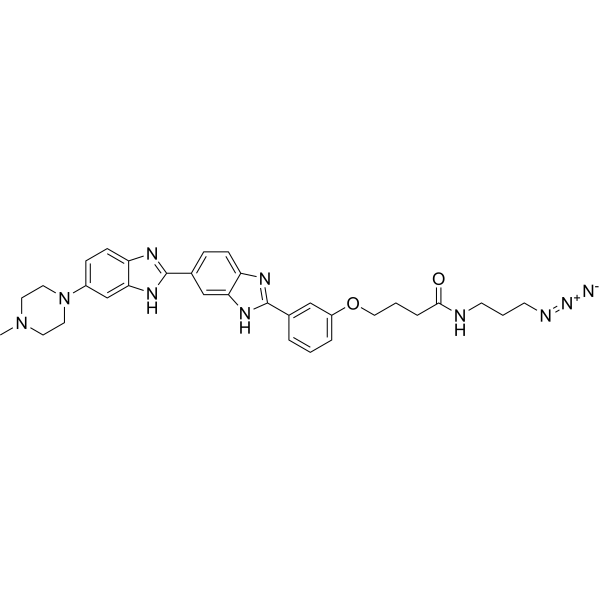
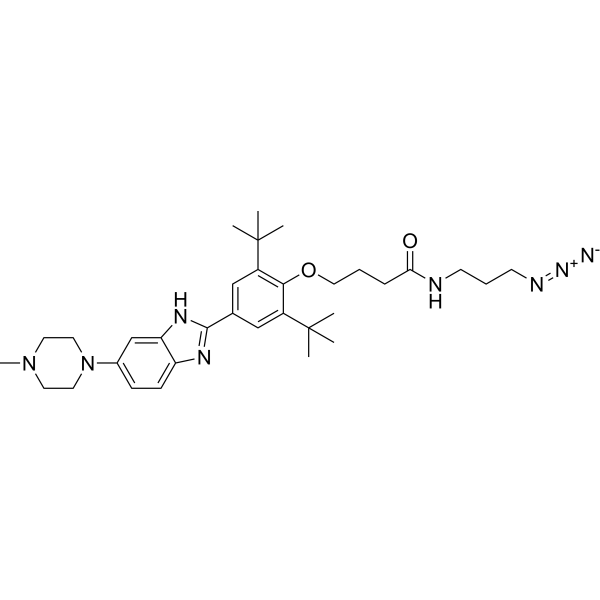
Targapremir-210 (TGP-210) is a potent and selective miR-210 (miRNA-210, microRNA-210) inhibitor. Targapremir-210 inhibits pre-miR-210 processing with high binding affinity (Kd~200 nM) . Targapremir-210 is a click chemistry reagent, it contains an Azide group and can undergo copper-catalyzed azide-alkyne cycloaddition reaction (CuAAc) with molecules containing Alkyne groups. It can also undergo strain-promoted alkyne-azide cycloaddition (SPAAC) reactions with molecules containing DBCO or BCN groups.
loading...
    loading...
Cat. No.: HY-130487
CAS No.: 304880-74-8
Target:  

MicroRNA

Research Areas:  

Cancer

miR-21-IN-2 is a high-affinity miR-21 inhibitor. miR-21-IN-2 binds to the apical loop region of the pre-miR-21 hairpin, inhibits Dicer-mediated processing, and thereby blocks the biosynthesis of mature miR-21. miR-21-IN-2 can be used for the research of microRNA-related diseases .
loading...
    loading...
Cat. No.: HY-115581A
CAS No.: 118675-87-9
Purity:  ≥97.0%
Synonyms: Deoxythymidine 3′,5′-diphosphate tetrasodium; pdTp tetrasodium
Target:  

Apoptosis MicroRNA

Research Areas:  

Cancer

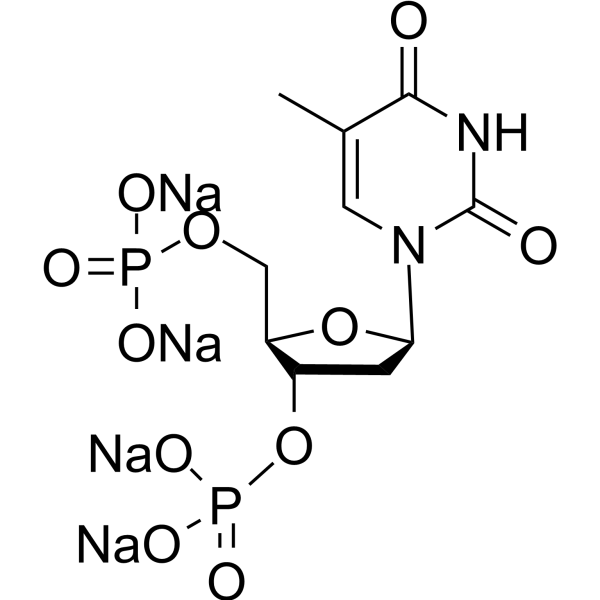
Thymidine 3',5'-diphosphate (Deoxythymidine 3′,5′-diphosphate) tetrasodium is a selective inhibitor of staphylococcal nuclease and tudor domain containing 1 (SND1, the MicroRNA regulatory complex RISC subunit) and [3,5- 2H2] tyrosyl nuclease. Thymidine 3',5'-diphosphate tetrasodium has anti-tumor activity and can also be used as a catalyst in biochemical reactions .
loading...
    loading...
Cat. No.: HY-153534
CAS No.: 2766106-83-4
Purity:  ≥98.0%
Target:  

MicroRNA

Research Areas:  

Cancer

microRNA-21-IN-3 (compound 45) can specifically bind to the precursor of oncogenic and pro-inflammatory microRNA-21 with medium nanomolar affinity, reduce cancer cell proliferation and miR-21 levels, and can be used in antitumor research .
loading...
    loading...
Cat. No.: HY-14648S3
CAS No.: 2483831-63-4
Purity:  ≥99.0%
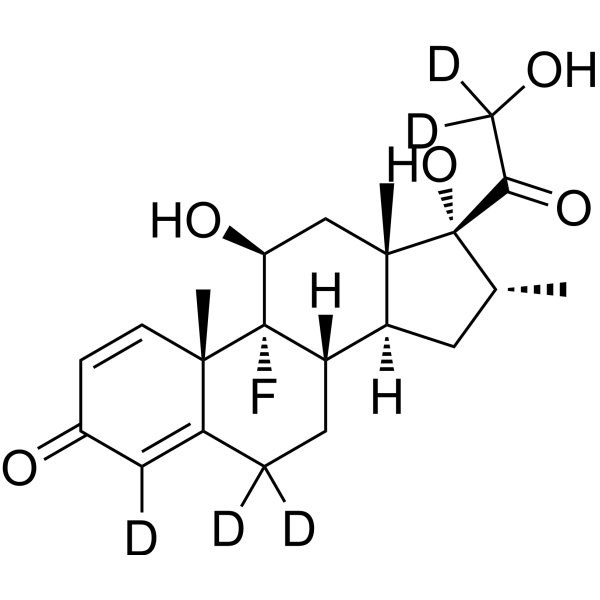
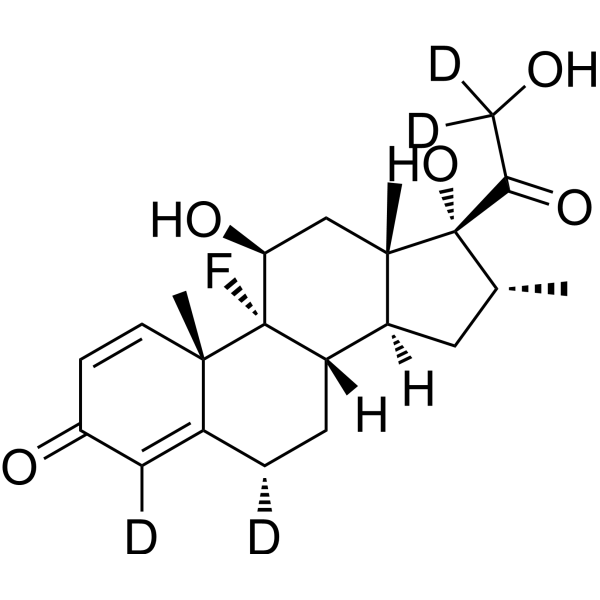
Dexamethasone-4,6α,21,21-d4 is the deuterium labeled Dexamethasone-4,6α,21,21. Dexamethasone (Hexadecadrol) is a glucocorticoid receptor agonist. Dexamethasone also significantly decreases CD11b, CD18, and CD62L expression on neutrophils, and CD11b and CD18 expression on monocytes. Dexamethasone is highly effective in the control of COVID-19 infection. Dexamethasone inhibits production of exosomes containing inflammatory microRNA-155 in lipopolysaccharide-induced macrophage inflammatory responses.
loading...
    loading...
Cat. No.: HY-19731
CAS No.: 522606-67-3
Synonyms: MiR-544 Inhibitor 1
Target:  

MicroRNA Apoptosis

Research Areas:  

Cancer

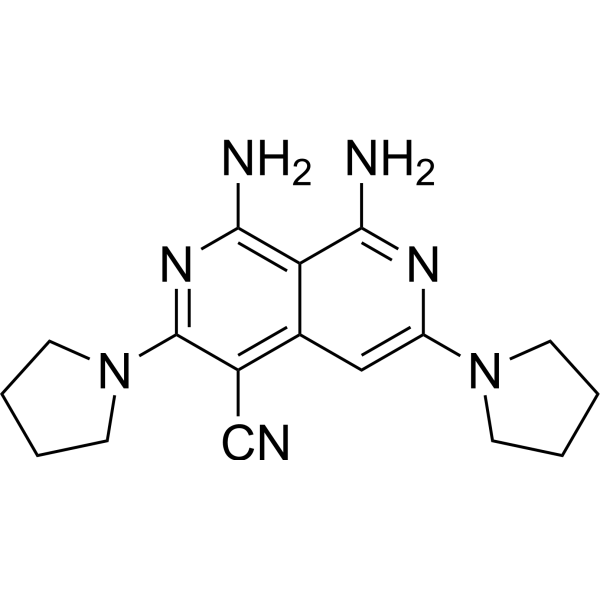
SID 3712249 (MiR-544 Inhibitor 1) is a miR-544 biogenesis inhibitor. SID 3712249 binds directly to the precursor miRNA. SID 3712249 blocks production of the mature microRNA and decreases miR-544, HIF-1α, and ATM transcripts. SID 3712249 can be used in the research of cancers, such as breast cancer .
loading...
    loading...
Cat. No.: HY-RI04602C
Target:  

MicroRNA

Research Areas:  

Others

FAM-MicroRNA Inhibitor Negative Control is a FAM labeled FAM-MicroRNA Inhibitor Negative Control (HY-RI04602). MicroRNA Inhibitor Negative Control is a full-length nucleotide 2'-methoxy modified oligonucleotide, and can be used as a negative control. The sequence of MicroRNA Inhibitor Negative Control is derived from cel-mir-239b. It has minimal sequence identity with miRNAs in human, mouse, and rat.
loading...
    loading...
Cat. No.: HY-14648S5
Purity:  98.02%
Synonyms: Hexadecadrol-d3-1; Prednisolone F-d3-1
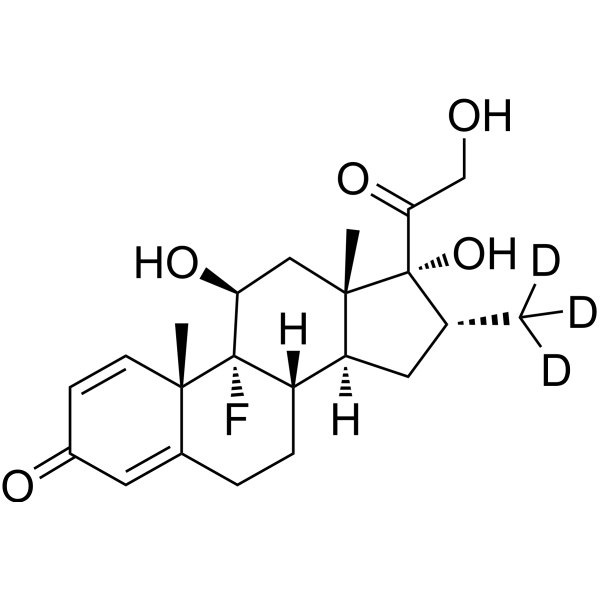
Dexamethasone-d3-1 (Hexadecadrol-d3-1; Prednisolone F-d3-1) is a deuterium labeled Dexamethasone (HY-14648). Dexamethasone (Hexadecadrol) is a glucocorticoid receptor agonist. Dexamethasone also significantly decreases CD11b, CD18, and CD62L expression on neutrophils, and CD11b and CD18 expression on monocytes. Dexamethasone is highly effective in the control of COVID-19 infection. Dexamethasone inhibits production of exosomes containing inflammatory microRNA-155 in lipopolysaccharide-induced macrophage inflammatory responses.
loading...
    loading...
Cat. No.: HY-15843
CAS No.: 1311982-88-3
Purity:  99.57%
Target:  

MicroRNA Apoptosis

Research Areas:  

Cancer

MIR96-IN-1 targets the Drosha site in the miR-96 (miRNA-96, microRNA-96) hairpin precursor, inhibiting its biogenesis, derepressing downstream targets, and triggering apoptosis in breast cancer cells. MIR96-IN-1 binds to RNAs with Kds of 1.3, 9.4, 3.4, 1.3 and 7.4 μM for RNA1, RNA2, RNA3, RNA4 and RNA5, respectively . MIR96-IN-1 is a click chemistry reagent, it contains an Azide group and can undergo copper-catalyzed azide-alkyne cycloaddition reaction (CuAAc) with molecules containing Alkyne groups. It can also undergo strain-promoted alkyne-azide cycloaddition (SPAAC) reactions with molecules containing DBCO or BCN groups.
loading...
    loading...
Cat. No.: HY-16560S
CAS No.: 1329616-37-6
Synonyms: Campathecin-d5; (S)-(+)-Camptothecin-d5; CPT-d5
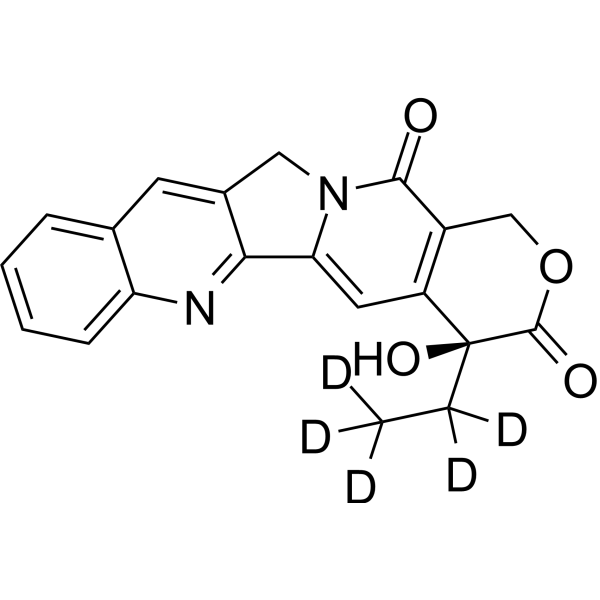
Camptothecin-d5 is the deuterium labeled Camptothecin. Camptothecin (CPT), a kind of alkaloid, is a DNA topoisomerase I (Topo I) inhibitor with an IC50 of 679 nM . Camptothecin (CPT) exhibits powerful antineoplastic activity against colorectal, breast, lung and ovarian cancers, modulates hypoxia-inducible factor-1α (HIF-1α) activity by changing microRNAs (miRNA) expression patterns in human cancer cells .
loading...
    loading...
Cat. No.: HY-R04602F1
Target:  

MicroRNA

Research Areas:  

Cancer

Cy5-MicroRNA Mimic Negative Control is a Cy5 labeled MicroRNA Mimic Negative Control (HY-R04602). MicroRNA Mimic Negative Control is a miRNA mimic of 21-nucleotides, and can be used as a negative control. The sequence of MicroRNA Mimic Negative Control is derived from cel-mir-239b. It has minimal sequence identity with miRNAs in human, mouse, and rat.
loading...
    loading...
Cat. No.: HY-177531
CAS No.: 2796227-17-1
S-Ac7-DOG is a cationic lipid with biodegradability, low immunogenicity and high nucleic acid transfection capacity, which is commonly used to construct lipid nanoparticles for nucleic acid molecule delivery. S-Ac7-DOG can bind to mRNA, microRNA and self-amplifying RNA through electrostatic interaction. Lipid nanoparticles formed by S-Ac7-DOG enter cells via an energy-dependent endocytic pathway, release nucleic acid cargos, induce antigen-specific CD8 + T cell responses, promote the generation of precursor memory T cells, and regulate neuroinflammatory pathways. S-Ac7-DOG can be used in the research of retinal diseases, neuroinflammation and cancer .
loading...
    loading...
Cat. No.: HY-171130
Target:  

MicroRNA

Research Areas:  

Others

Cy3 MicroRNA Antagomir Negative Control is a Cy3-labeled MicroRNA Antagomir Negative Control (HY-RI04602A). The sequence of MicroRNA Antagomir Negative Control is derived from cel-mir-239b. It has minimal sequence identity with miRNAs in human, mouse, and rat .
loading...
    loading...

