40 Results for "

Nitroxide generator

" in MedChemExpress (MCE) Product Catalog:
Products (40)

40 Results for "Nitroxide generator" in MCE Product Catalog:

Cat. No.: HY-W007345
CAS No.: 53981-24-1
Synonyms: 4-Fluoro-2-hydroxyaniline
Research Areas:  

Others

2-Amino-5-fluorophenol is an isomer of aminofluorophenol and also a HONO generator. 2-Amino-5-fluorophenol reacts with nitrogen dioxide (NO2) via two pathways to form nitrous acid (HONO): hydrogen abstraction from the hydroxyl group and hydrogen abstraction from the amino group, with both the amino and hydroxyl groups participating in the reaction in the transition state .
loading...
    loading...
Cat. No.: HY-W776833
CAS No.: 384342-58-9
Synonyms: Otmpmms-15N,d15
MTSSL- 15N,d15-1 (Otmpmms- 15N,d15) is the deuterium and 15N-labeled MTSSL (HY-130509). MTSSL (Otmpmms) is a highly reactive thiol-specific spin label that can be used to label thiol residues in proteins for the determination of protein structure and dynamics, as well as studies on protein-protein interactions. MTSSL serves as a nitroxide labeling reagent for cysteine residues in recombinant mouse prion protein (moPrP C) mutants. MTSSL can be applied in studies of transmissible spongiform encephalopathies (prion diseases) .
loading...
    loading...
Cat. No.: HY-180440
CAS No.: 1203424-93-4
Research Areas:  

Others

PBG-1 is a photobase generator .
loading...
    loading...
Cat. No.: HY-W002004S1
CAS No.: 70588-04-4
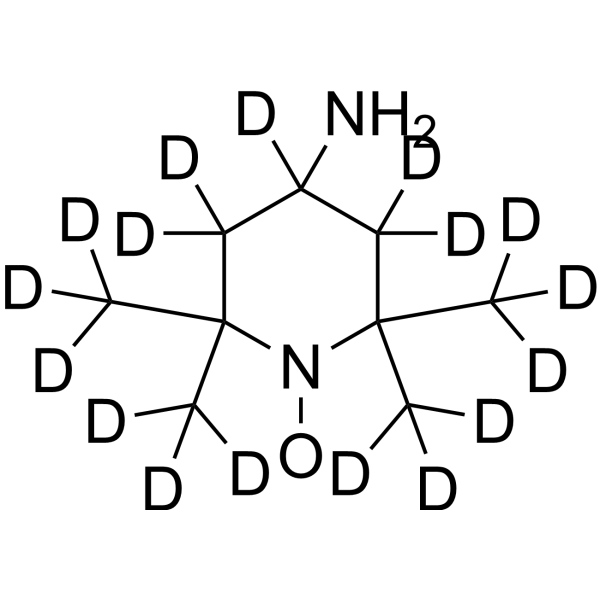
Synonyms: 4-Amino-2,2,6,6-tetramethylpiperidine-1-oxyl-d17
4-Amino-TEMPO-d17 (4-Amino-2,2,6,6-tetramethylpiperidine-1-oxyl-d17) is the deuterium labeled 4-Amino-TEMPO (HY-W002004). 4-Amino-TEMPO (4-Amino-2,2,6,6-tetramethylpiperidine-1-oxyl) is a stable nitroxide radical and N-nucleophile based on TEMPO. 4-Amino-TEMPO has superoxide dismutase-mimetic activity, can protect cells from oxidative damage, and has radioprotective effects. 4-Amino-TEMPO is widely used in fields such as biomedicine, materials science, and industrial production. 4-Amino-TEMPO can be used as a spin label to detect free radicals, an oxidation catalyst in industrial production, and an antioxidant stabilizer for polymers, among others .
loading...
    loading...
Cat. No.: HY-W616806
CAS No.: 45738-97-4
Sodium 6-oxo-3,6-dihydropurin-7-ide, a purine derivative, is a potential free radical generator and could be used as an indicator of hypoxia.
loading...
    loading...
Cat. No.: HY-N0091S3
CAS No.: 1330265-04-7
Synonyms: Purin-6-ol-13C2,15N; Sarcine-13C2,15N
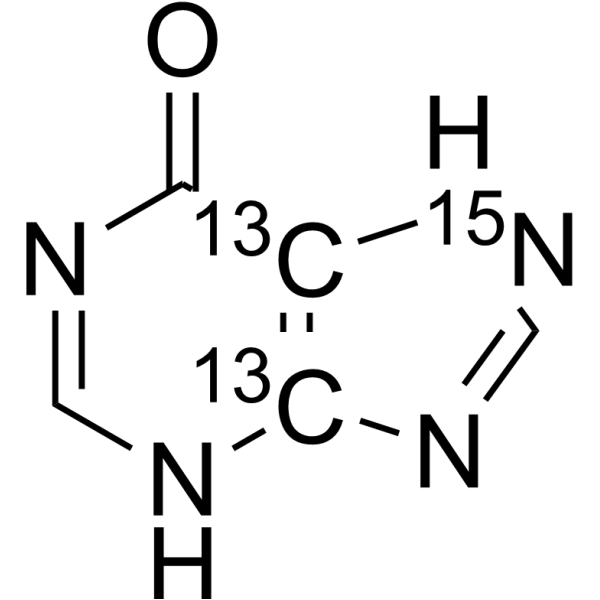
Hypoxanthine- 13C2, 15N is a 15N-labeled and 13C-labled Hypoxanthine (HY-N0091). Hypoxanthine, a purine derivative, is a potential free radical generator and could be used as an indicator of hypoxia.
loading...
    loading...
Cat. No.: HY-N0091S1
CAS No.: 244769-71-9
Synonyms: Purin-6-o-13C,15N2; Sarcine-13C,15N2
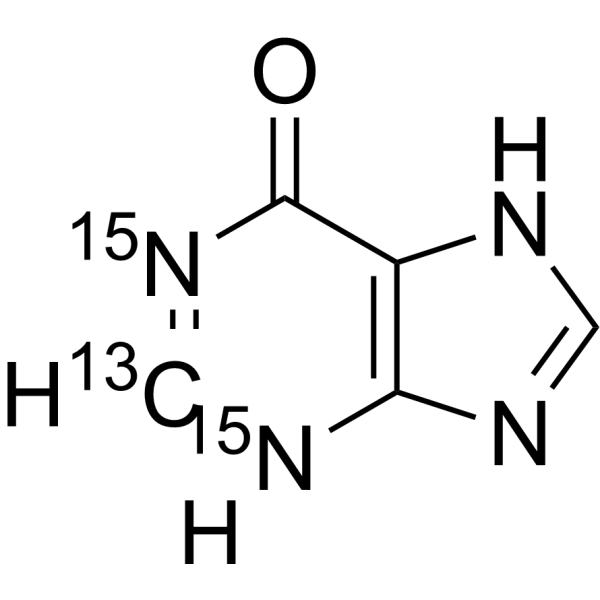
Hypoxanthine- 13C, 15N2 is a 15N-labeled and 13C-labled Hypoxanthine (HY-N0091). Hypoxanthine, a purine derivative, is a potential free radical generator and could be used as an indicator of hypoxia.
loading...
    loading...
Cat. No.: HY-131898R
CAS No.: 18390-00-6
Research Areas:  

Others

PTIO (Standard) is the analytical standard of PTIO. This product is intended for research and analytical applications. PTIO is a specific scavenger of NO and redox mediator. PTIO reacts with •NO to form the corresponding imino nitroxides and •NO2. PTIO enhances organic contaminants oxidation by permanganate .
loading...
    loading...
Cat. No.: HY-N0091S4
CAS No.: 1246820-04-1
Synonyms: Purin-6-ol-13C2,15N-1; Sarcine-13C2,15N-1
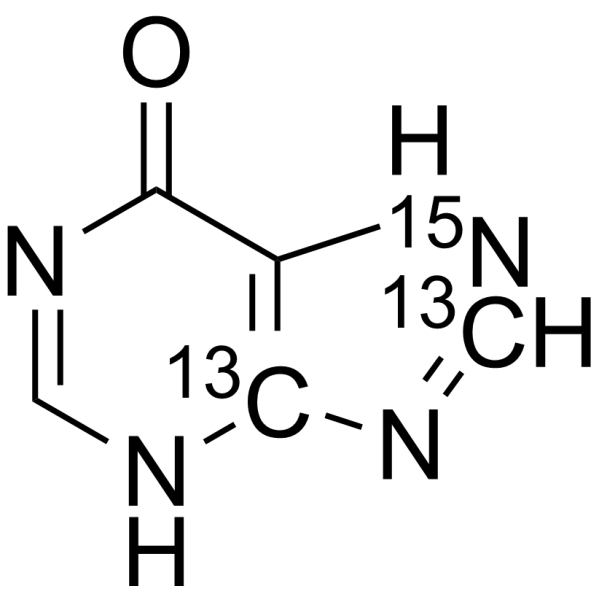
Hypoxanthine- 13C2, 15N-1 is a 15N-labeled and 13C-labled Hypoxanthine (HY-N0091). Hypoxanthine, a purine derivative, is a potential free radical generator and could be used as an indicator of hypoxia.
loading...
    loading...
Cat. No.: HY-P4556
CAS No.: 50572-79-7
Research Areas:  

Others

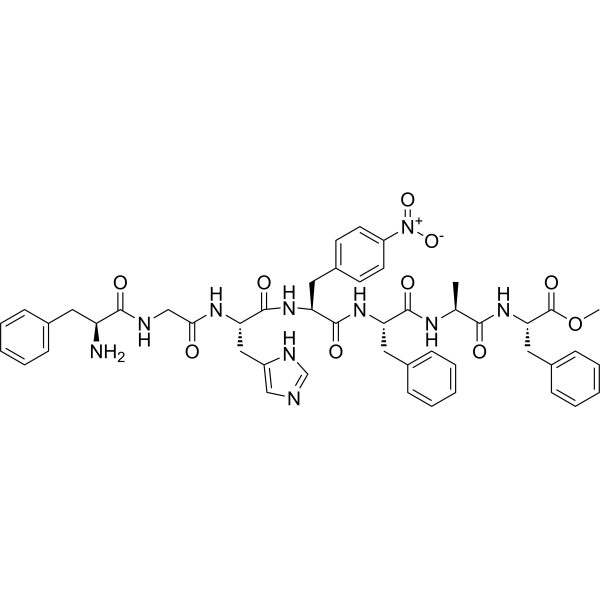
H-Phe-Gly-His-p-nitro-Phe-Phe-Ala-Phe-OMe is a polypeptide that can be hydrolyzed by Rennin (HY-P2810). H-Phe-Gly-His-p-nitro-Phe-Phe-Ala-Phe-OMe is commonly used as a biochemical reaction reagent .
loading...
    loading...
Cat. No.: HY-W004520R
CAS No.: 299-11-6
Synonyms: 5-Methylphenazinium methylsulfate (Standard)
Research Areas:  

Cancer

Phenazine (methylsulfate) (Standard) is the analytical standard of Phenazine (methylsulfate). This product is intended for research and analytical applications. Phenazine methylsulfate is a free radical generator that can act as an electron transfer reactant in cell viability assays. It also has insecticidal properties. Furthermore, Phenazine methylsulfate induces oxidative DNA damage and cell apoptosis, showing antitumor activity[1][2][3].
loading...
    loading...
Cat. No.: HY-129242S1
CAS No.: 36763-53-8
Synonyms: 4-Oxo-Tempo-d16
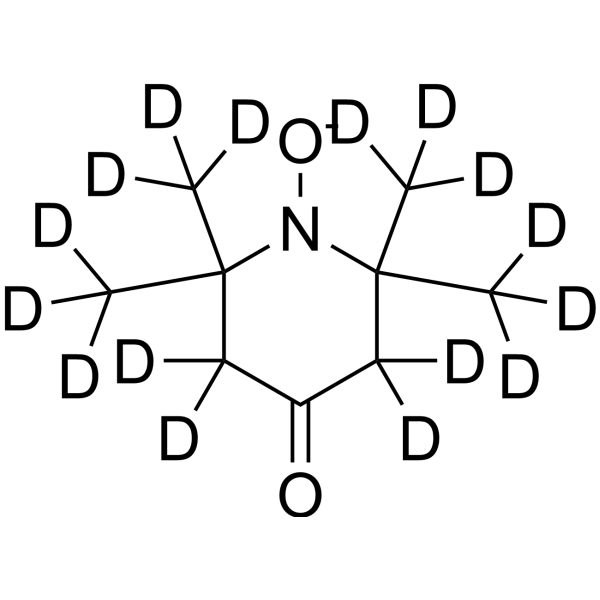
Tempone-d16 (4-Oxo-Tempo-d16) is the deuterated-labeled Tempone (HY-129242). Tempone (4-Oxo-Tempo) is a nitroxide radical spin label and ROS scavenger. Tempone induces cytotoxicity in lymphoma cells. Tempone serves as a substrate for intracellular reduction to hydroxylamine, rapidly equilibrates between intracellular and extracellular compartments, reduces nitroxide radical spin labels at the ubiquinol site of the respiratory chain, and acts as an alternative terminal electron acceptor when electron flow to oxygen is blocked. Tempone serves as a superoxide sensor, a T2-weighted MRI contrast agent, and a dynamic nuclear polarization polarizing agent for 13C. Tempone inhibits superoxide and peroxynitrite, hydroxyl radical generation, nitrotyrosine formation, and poly (ADP-ribose) formation, and alleviates renal dysfunction and injury in ischemia/reperfusion and hydrogen peroxide-induced injury. Tempone can be used for research on ischemia-reperfusion injury, acute renal failure, and lymphoma .
loading...
    loading...
Cat. No.: HY-130509S
CAS No.: 1404308-02-6
Synonyms: Otmpmms-15N
MTSSL- 15N (Otmpmms- 15N) is the 15N-labeled MTSSL (HY-130509). MTSSL (Otmpmms) is a highly reactive thiol-specific spin label that can be used to label thiol residues in proteins for the determination of protein structure and dynamics, as well as studies on protein-protein interactions. MTSSL serves as a nitroxide labeling reagent for cysteine residues in recombinant mouse prion protein (moPrP C) mutants. MTSSL can be applied in studies of transmissible spongiform encephalopathies (prion diseases) .
loading...
    loading...
Cat. No.: HY-128463S
CAS No.: 119391-92-3
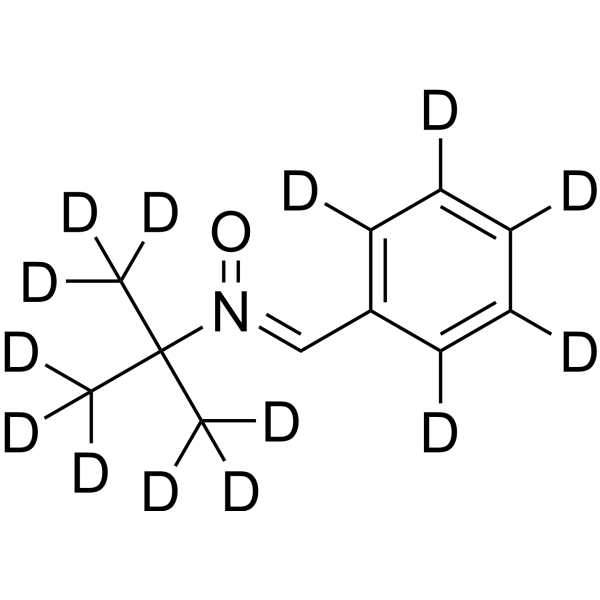
N-tert-Butyl-α-phenylnitrone-d14 is the deuterium labeled N-tert-Butyl-α-phenylnitrone . N-tert-Butyl-α-phenylnitrone is a nitrone-based free radical scavenger that forms nitroxide spin adducts. N-tert-Butyl-α-phenylnitrone inhibits COX2 catalytic activity. N-tert-Butyl-α-phenylnitrone has potent ROS scavenging, anti-inflammatory, neuroprotective, anti-aging and anti-diabetic activities, and can penetrate the blood-brain barrier .
loading...
    loading...
Cat. No.: HY-101200R
CAS No.: 16142-27-1
Synonyms: SIN-1 chloride (Standard)
Linsidomine (hydrochloride) (Standard) is the analytical standard of Linsidomine (hydrochloride). This product is intended for research and analytical applications. Linsidomine hydrochloride (SIN-1 chloride) is a spontaneous ROS/RNS generator and peroxynitrite donor. Linsidomine hydrochloride is a vasodilator and platelet aggregation inhibitor. Linsidomine hydrochloride induces oxidative stress-induced chondrocyte apoptosis and necrosis. Linsidomine hydrochloride inhibits the migration, proliferation and neointima formation of vascular smooth muscle cells by inhibiting the expression of annexin A2. In addition, low doses of Linsidomine hydrochloride shows protective effects on Zn 2+ treated nerve cells .
loading...
    loading...
Cat. No.: HY-W271506
CAS No.: 10135-38-3
Synonyms: 3,3,5,5-Tetramethyl-1-pyrroline 1-oxide
TMPO (3,3,5,5-Tetramethyl-1-pyrroline 1-oxide) is a spin trap targeting free radicals. TMPO is capable of scavenging superoxide, hydroxyl radicals and inhibits thymocyte apoptosis with EC50 values of 19.1 mM (MPS-induced) to 30.7 mM (Etoposide-induced) for inhibiting DNA fragmentation. TMPO reacts with intracellular free radicals to form stable nitroxide radical products, reducing oxidative stress (e.g., decreasing peroxide levels, maintaining glutathione content) and blocking oxidative events in the apoptotic pathway. TMPO is promising for research of apoptosis in immune cells like thymocytes .
loading...
    loading...
Cat. No.: HY-W002004S
CAS No.: 97461-87-5
Synonyms: 4-Amino-2,2,6,6-tetramethylpiperidine-1-oxyl-d17,15N
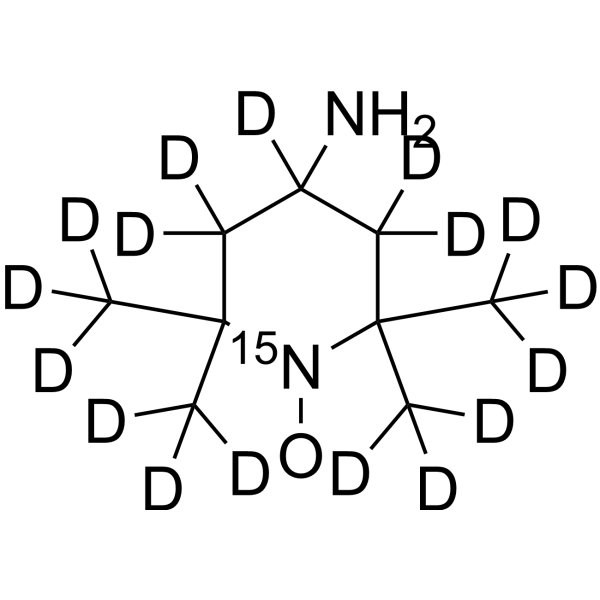
4-Amino-TEMPO-d17, 15N (4-Amino-2,2,6,6-tetramethylpiperidine-1-oxyl-d17, 15N) is the deuterium labeled 4-Amino-TEMPO-d17 (HY-W002004S1). 4-Amino-TEMPO (4-Amino-2,2,6,6-tetramethylpiperidine-1-oxyl) is a stable nitroxide radical and N-nucleophile based on TEMPO. 4-Amino-TEMPO has superoxide dismutase-mimetic activity, can protect cells from oxidative damage, and has radioprotective effects. 4-Amino-TEMPO is widely used in fields such as biomedicine, materials science, and industrial production. 4-Amino-TEMPO can be used as a spin label to detect free radicals, an oxidation catalyst in industrial production, and an antioxidant stabilizer for polymers, among others .
loading...
    loading...
Cat. No.: HY-179316
CAS No.: 22690-04-6
Research Areas:  

Others

4-Phosphonooxy-tempo is an anionic nitroxide spin probe. 4-Phosphonooxy-tempo can be transported by a band 3 protein to permeate the membrane and then react with reductants contained in cytosol. 4-Phosphonooxy-tempo can be used as biomembrane anion channel functional probe .
loading...
    loading...
Cat. No.: HY-126926
CAS No.: 36408-16-9
Synonyms: 5-Deazaflavin mononucleotide
Research Areas:  

Others

5-Deaza-FMN (5-Deazaflavin mononucleotide) is a binder of type II isopentenyl diphosphate: dimethylallyl diphosphate isomerase (IDI-2) with a Kd value of 16 μM. 5-Deaza-FMN acts as a radical generator, forming radicals through photoinduced single-electron transfer of tryptophan. 5-Deaza-FMN finds applications in biocatalysis and photocatalysis .
loading...
    loading...
Cat. No.: HY-W319295
CAS No.: 3637-10-3
TEMPOL-H is the reduced hydroxylamine form of the stable nitroxide radical Tempol (HY-100561), and serves as the active metabolite of OT-551 (HY-W556870). TEMPOL-H acts as a potent antioxidant and free radical scavenger. TEMPOL-H protects retinal pigment epithelial cells from acute light-induced damage, and protects mice from lethal whole-body radiation. TEMPOL-H inhibits lens opacification in mice, prevents glutathione loss in rat lenses under stress, blocks protein leakage in rhesus monkey lenses under stress, and maintains the 3H-choline accumulation capacity of the lens. TEMPOL-H can be used in studies related to light-induced retinal pigment epithelial degeneration and age-related cataract .
loading...
    loading...

