795 Results for "

Protein structure

" in MedChemExpress (MCE) Product Catalog:
Products (795)

795 Results for "Protein structure" in MCE Product Catalog:

2
2 Cited Publications
Cat. No.: HY-P5712
CAS No.: 113-73-5
Synonyms: Gramicidin soviet
Research Areas:  

Infection

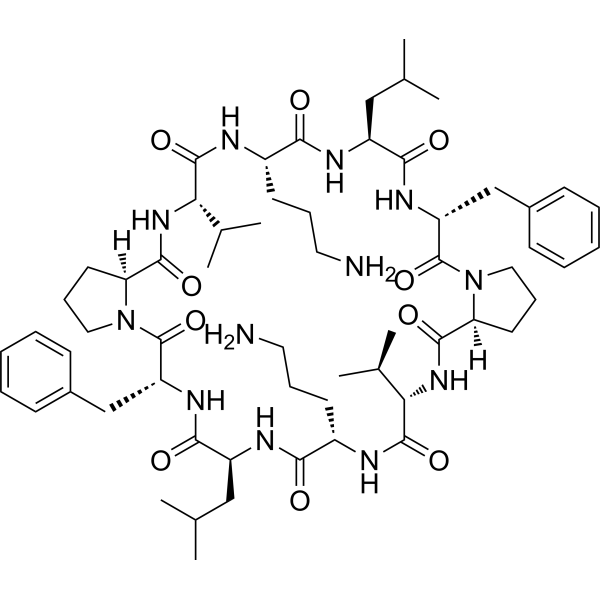
Gramicidin S (Gramicidin soviet) is a cationic cyclic peptide antibiotic that selectively targets bacterial cell membranes and has anticancer activity. Gramicidin S also exerts antibacterial activity by destroying membrane integrity and interfering with membrane protein function. Gramicidin S inserts into the phospholipid bilayer through hydrophobic amino acid residues, specifically binds to negatively charged membrane lipids and disrupts membrane structure, thereby inhibiting cell division and cell wall synthesis, and ultimately causing bacterial death. Gramicidin S also inhibits ion channels, with IC50s of 41 μM, 24 μM, and 3 μM for Na +/K +-ATPase, tobacco leaf plasma membrane Mg 2+/K +-ATPase, and rat heart plasma membrane Ca 2+-ATPase, respectively .
loading...
    loading...
1
1 Cited Publications
Cat. No.: HY-W008990
CAS No.: 25899-70-1
Synonyms: 5'-Xanthylic acid sodium salt
Target:  

DNA/RNA Synthesis

Research Areas:  

Metabolic Disease

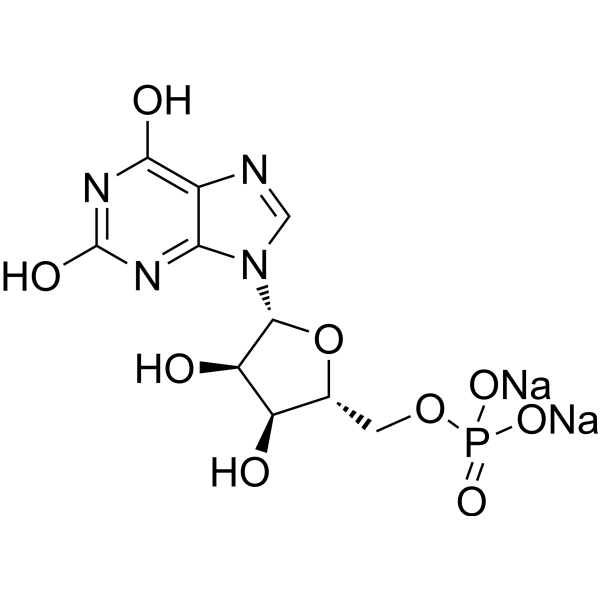
Xanthosine 5'-monophosphate sodium salt (5'-Xanthylic acid sodium salt) is an intermediate in purine metabolism. Xanthosine 5'-monophosphate sodium salt can be used for genetic code, nucleic acid structure, and DNA, RNA and protein synthesis research .
loading...
    loading...
1
1 Cited Publications
Cat. No.: HY-NP160
Recombinant Humanized Type I Collagen is a recombinant humanized collagen protein with has unique immunological features and plays an important role in the structure and function of skin, bones, tendons, etc .
loading...
    loading...
1
1 Cited Publications
Cat. No.: HY-W854445
CAS No.: 80081-06-7
Lewis-b tetrasaccharide is a class of biochemical reagents used in glycobiology research. Glycobiology studies the structure, synthesis, biology, and evolution of sugars. It involves carbohydrate chemistry, enzymology of glycan formation and degradation, protein-glycan recognition, and the role of glycans in biological systems. This field is closely related to basic research, biomedicine, and biotechnology .
loading...
    loading...
1
1 Cited Publications
Cat. No.: HY-P700879
Purity:  ≥ 95%, as determined by Bis-Tris PAGE.
Synonyms: PLVAP; Fenestrated-Endothelial Linked structure Protein; PV-1 Protein; Plasmalemma Vesicle Associated Protein; Fenestrated Endothelial-Linked structure Protein; PV-1; Plasmalemma Vesicle-Associated Protein; FELS; Plasmalemma Vesicle Protein 1; PV1; DIAR10
Species:  
Human
Source:  
HEK293
loading...
    loading...
1
1 Cited Publications
Cat. No.: HY-113061
CAS No.: 1445-07-4
Purity:  99.93%
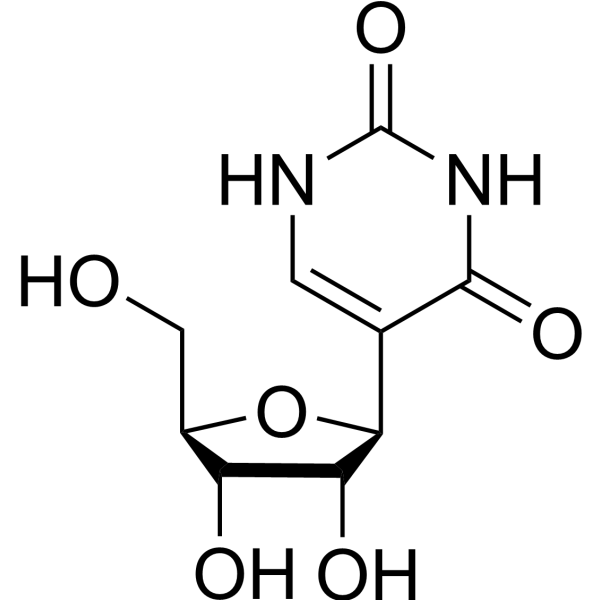
Pseudouridine is an isomer of uridine and the most abundant modified nucleoside in non-coding RNA. It fine-tunes and stabilizes regional structures in rRNA and tRNA, maintaining their functions in mRNA decoding, ribosome assembly, processing, and translation. Pseudouridine-modified tRNA fragments can inhibit aberrant protein synthesis and hold promise for research on myelodysplastic syndrome (MDS)-related leukemia. .
loading...
    loading...
1
1 Cited Publications
Cat. No.: HY-122607
CAS No.: 958233-07-3
Purity:  99.86%
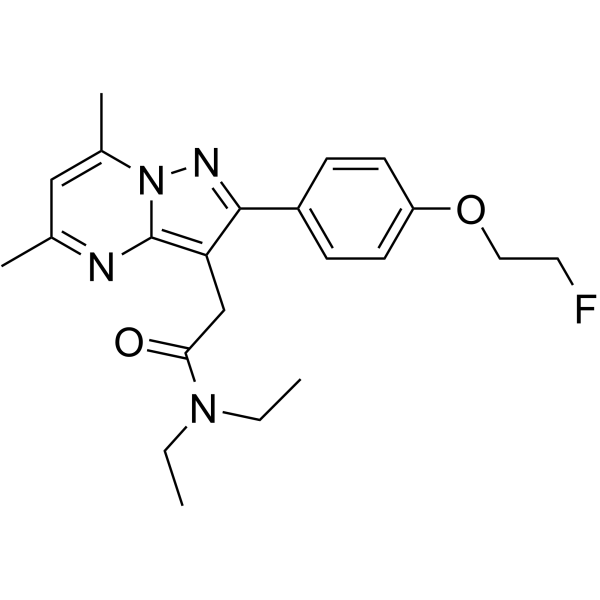
DPA-714 is a high affinity translocator protein (TSPO) ligand (Ki=7 nM), which is designed with a fluorine atom in its structure, allowing labelling with fluorine -18 and in vivo imaging using positron emission tomography. 18FDPA-714 successfully evaluates for the specific imaging of inflammation in various models of neuroinflammation and in a brain tumor model .
loading...
    loading...
1
1 Cited Publications
Cat. No.: HY-113100
CAS No.: 18233-70-0
Purity:  ≥99.0%
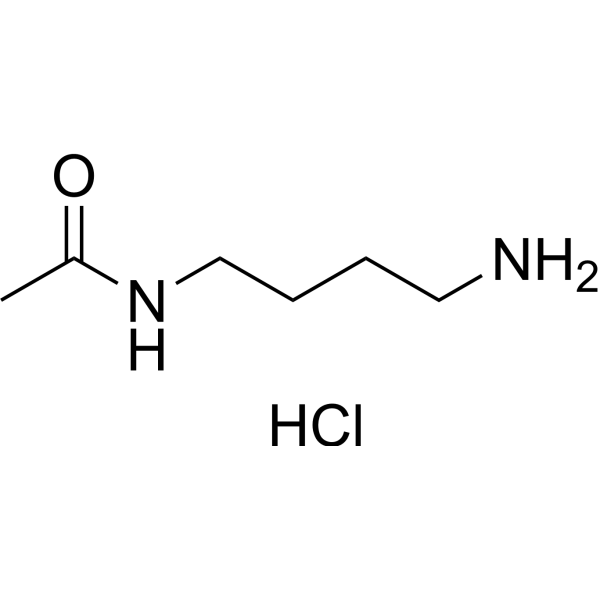
N-Acetylputrescine hydrochloride is a polyamine metabolite that regulates cell proliferation and signal transduction mainly by participating in polyamine acetylation modification. N-Acetylputrescine hydrochloride may reduce the positive charge of polyamines, affect protein-nucleic acid interactions, and promote cell growth. The concentration changes of N-Acetylputrescine hydrochloride can help disease diagnosis (such as early screening and efficacy evaluation of lung cancer) and microbial cell wall structure research. N-Acetylputrescine hydrochloride can be used as a potential biomarker for the progression of squamous cell carcinoma of the lung (SCCL) and Parkinson's disease (PD) .
loading...
    loading...
1
1 Cited Publications
Cat. No.: HY-159688
CAS No.: 104145-95-1
Cefditoren is a broad-spectrum oral active cephalosporin that acts as a penicillin-binding protein (PBP) inhibitor. Cefditoren binds to specific PBPs in Gram-positive and Gram-negative bacteria, thereby inhibiting cell wall synthesis. Cefditoren also reduces serum levels of the inflammatory biomarkers IL-6 and KL-6. Cefditoren can be used in research related to acute exacerbation of chronic bronchitis, pharyngitis-tonsillitis, uncomplicated skin and skin structure infections, respiratory tract infections, acute pyelonephritis, and enterococcal endocarditis .
loading...
    loading...
1
1 Cited Publications
Cat. No.: HY-W342604
CAS No.: 5699-41-2
Synonyms: NAP
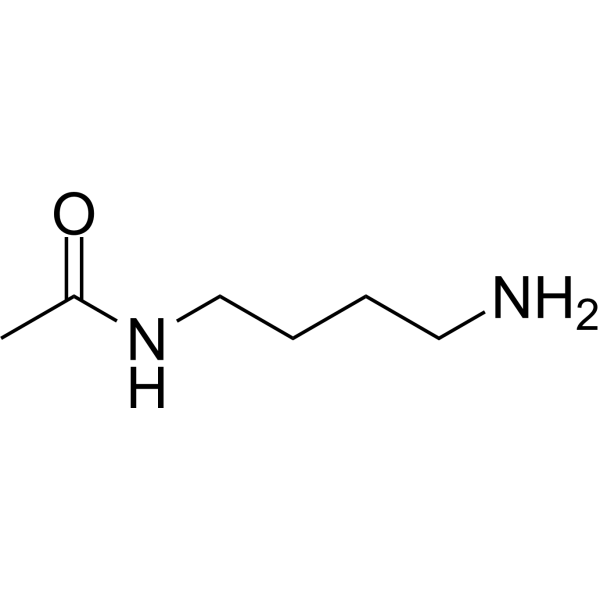
N-Acetylputrescine is a polyamine metabolite that regulates cell proliferation and signal transduction mainly by participating in polyamine acetylation modification. N-Acetylputrescine may reduce the positive charge of polyamines, affect protein-nucleic acid interactions, and promote cell growth. The concentration changes of N-Acetylputrescine can help disease diagnosis (such as early screening and efficacy evaluation of lung cancer) and microbial cell wall structure research. N-Acetylputrescine can be used as a potential biomarker for the progression of squamous cell carcinoma of the lung (SCCL) and Parkinson's disease (PD) .
loading...
    loading...
1
1 Cited Publications
Cat. No.: HY-P3443
Synonyms: PNA
Peanut agglutinin (PNA) is a carbohydrate-recognition protein that binds competitively and irreversibly to cell-surface β-D-Gal (1-3)-GalNAc, and this binding can be inhibited by D-galactose and asialofetuin. Peanut agglutinin recognizes exposed glycoepitopes and reflects the glycosylation status of cells. Peanut agglutinin can label glycoconjugates at neuromuscular junctions to safely visualize synaptic structures. Peanut agglutinin can be used to synthesize dyes to distinguish between normal and tumor tissues. Peanut agglutinin provides support for research on leukemia, Burkitt's tumors, and cutaneous squamous lesions .
loading...
    loading...
1
1 Cited Publications
Cat. No.: HY-14604
CAS No.: 90494-79-4
Purity:  98.57%
Synonyms: SR57746A; SR57746 hydrochloride
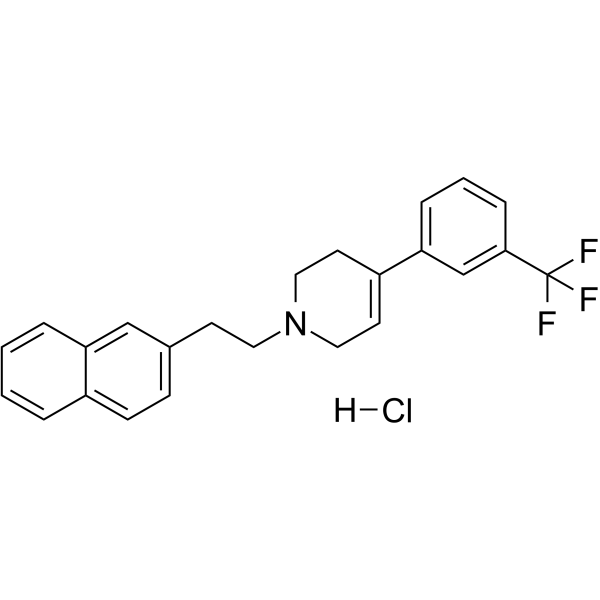
Xaliproden (SR57746) hydrochloride (SR57746A) is an orally active, highly selective 5-HT1A receptor agonist. Xaliproden hydrochloride activates pertussis toxin-sensitive G protein-coupled signaling cascades, as well as the PKC, ERK1/ERK2, Akt and p21 Ras/MEK-1 pathways. Xaliproden hydrochloride also downregulates the JNK/p66/c-Jun signaling pathway, induces phosphorylation of the shc adaptor protein, regulates extracellular dopamine and 5-HT levels, and induces [ 35S]GTPγS labeling in rat brain structures rich in 5-HT1A receptors. Xaliproden hydrochloride exerts neurotrophic, neuroprotective, renoprotective, anti-inflammatory, anti-apoptotic, anti-fibrotic and analgesic effects. Xaliproden hydrochloride also enhances NGF-induced neurite outgrowth, promotes motor neuron survival, attenuates renal tubular injury and inhibits chemotherapy-induced mechanical allodynia, without activating or altering NGF-induced TrkA receptor activation. Xaliproden hydrochloride can be used in the research of motor neuron disease, diabetic nephropathy, chemotherapy-induced peripheral neuropathy, amyotrophic lateral sclerosis, Alzheimer's disease, acute tonic nociceptive pain, inflammatory pain, depression and anxiety .
loading...
    loading...
1
1 Cited Publications
Cat. No.: HY-D1056F
Synonyms: Biotin-LPS, from Escherichia coli (O111:B4)
Biotin-Lipopolysaccharide, from E.coli O111:B4 (Biotin-LPS, from Escherichia coli (O111:B4)) is a biotin-conjugated Lipopolysaccharide (LPS) (HY-D1056A1) that can be coupled with streptavidin protein. Biotin-Lipopolysaccharide, from E.coli O111:B4 can be used to identify Lipopolysaccharide ligands. Lipopolysaccharides, from E. coli O111:B4 (LPS, from Escherichia coli (O111:B4)) are endotoxins and TLR4 activators extracted from Escherichia coli (E. coli O111:B4) and are classified as S (smooth) type LPS. Lipopolysaccharides, from E. coli O111:B4 possess the typical three-part structure: O-antigen, R3-type core oligosaccharide, and lipid A. Lipopolysaccharides, from E. coli O111:B4 activate TLR-4 in immune cells and can cause significant gastric diseases. Lipopolysaccharides, from E. coli O111:B4 can also induce M1-type polarization in mouse macrophages .
It is recommended to prepare a solution with concentration ≥2 mg/mL. Vortex thoroughly for more than 10 minutes. Due to the adsorption characteristics of LPS, silanized container or low adsorption centrifuge tubes should be used for aliquoting and storage, and mix thoroughly before use.
loading...
    loading...
Cat. No.: HY-126377
CAS No.: 15163-36-7
Purity:  ≥98.0%
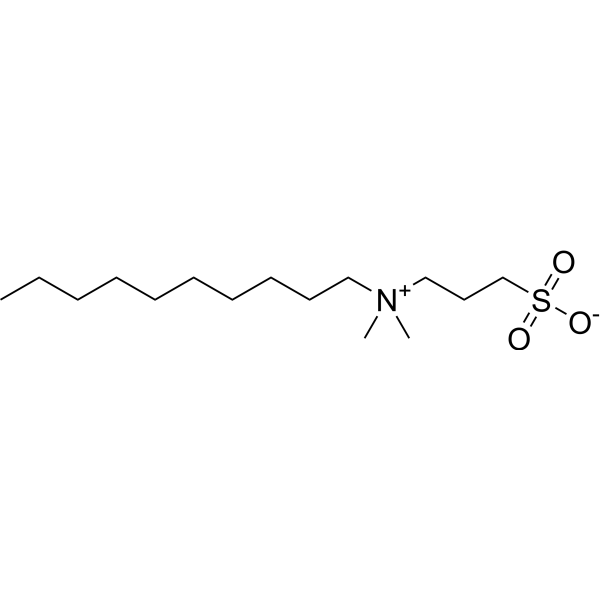
Sulfobetaine 10, is a zwitterionic surfactant commonly used in biochemistry and biophysics. It is commonly used to dissolve membrane proteins and other hydrophobic molecules in aqueous solutions. Sulfobetaine 10 has both positively and negatively charged groups in its structure, which allows it to maintain a neutral charge in solution and reduces its tendency to denature proteins. It is considered a mild, non-denaturing surfactant and is widely used in protein research.
loading...
    loading...
Cat. No.: HY-D0025
CAS No.: 106562-32-7
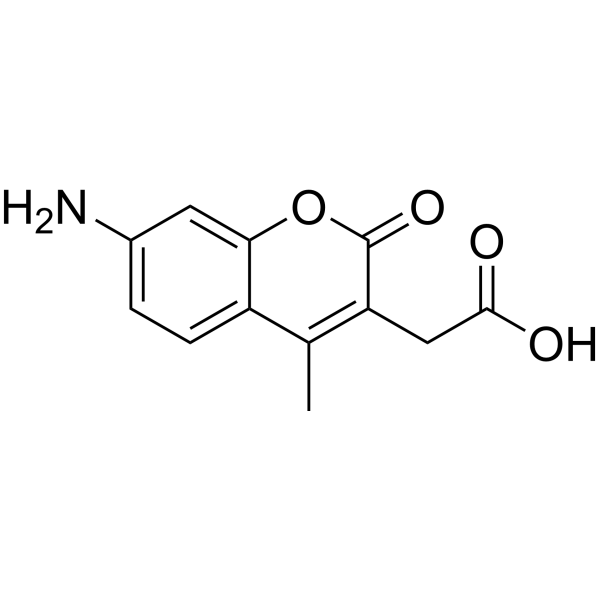
7-Amino-4-methylcoumarin-3-acetic acid (AMCA) serves as the parent structure of coumarin-based blue fluorescent dyes, and its activated form AMCA-NHS can directly conjugate with proteins (Ex/Em ≈ 350/440-460).
loading...
    loading...
Cat. No.: HY-W034566
CAS No.: 296-35-5
Synonyms: Hexaaza-18-crown-6; 1,4,7,10,13,16-Hexaazacyclooctadecane
Hexacyclen is an organic compound with a unique macrocyclic structure composed of six nitrogen-containing rings. It is commonly used as a chelating agent in chemistry and biochemistry due to its ability to bind metal ions. Inhibitors of certain diseases such as cancer. In biochemistry, Hexacyclen is often used to selectively bind metal ions in proteins or enzymes to study their structure and function. Due to its large size and complex structure, Hexacyclen is not widely used in daily products or applications .
loading...
    loading...
Cat. No.: HY-W998680
CAS No.: 2228857-33-6
Synonyms: 5-FITC-Maleimide
Fluorescein-maleimide (5-FITC-Maleimide) is a thiol-reactive fluorescent derivatization reagent and non-specific protein labeling reagent. Fluorescein-maleimide covalently binds to protein thiol groups for protein labeling. Fluorescein-maleimide covalently binds to protein amino and imidazole groups under neutral pH conditions. Fluorescein-maleimide is used for fluorescent labeling of proteins, nucleic acids or other molecules containing one or more thiol groups (Ex/Em = 494/519 nm) .
loading...
    loading...
Cat. No.: HY-130509
CAS No.: 81213-52-7
Synonyms: Otmpmms
Research Areas:  

Infection

MTSSL (Otmpmms) is a highly reactive thiol-specific spin label that can be used to label thiol residues in proteins for the determination of protein structure and dynamics, as well as studies on protein-protein interactions. MTSSL serves as a nitroxide labeling reagent for cysteine residues in recombinant mouse prion protein (moPrP C) mutants. MTSSL can be applied in studies of transmissible spongiform encephalopathies (prion diseases) .
loading...
    loading...
Cat. No.: HY-NP051
Synonyms: Bovine Serum Albumin-FITC
BSA Protein-FITC (Bovine Serum Albumin-FITC) is a bovine Serum albumin conjugated to FITC (Ex=495 nm; Em=525 nm). BSA Protein-FITC can be used as a fluorescent marker to label or detect specific antigens, molecules or cellular structures .
loading...
    loading...
Cat. No.: HY-P10531
CAS No.: 2413353-86-1
Target:  

Inhibitory Antibodies

Research Areas:  

Others

ALFA-tag is a small and stable α-helical structure composed of 15 amino acids. ALFA-tag is highly hydrophilic and can be placed at the N-terminus, C-terminus, or between two independently folded domains of the target protein without affecting the function of the protein. ALFA-tag is widely used as an epitope tag and is used for the detection and manipulation of proteins in living cells .
loading...
    loading...

