65 Results for "

alpha-SMA

" in MedChemExpress (MCE) Product Catalog:
Products (65)

65 Results for "alpha-SMA" in MCE Product Catalog:

Cat. No.: HY-N0136B
CAS No.: 111003-33-9
Synonyms: (-)-Dihydroquercetin
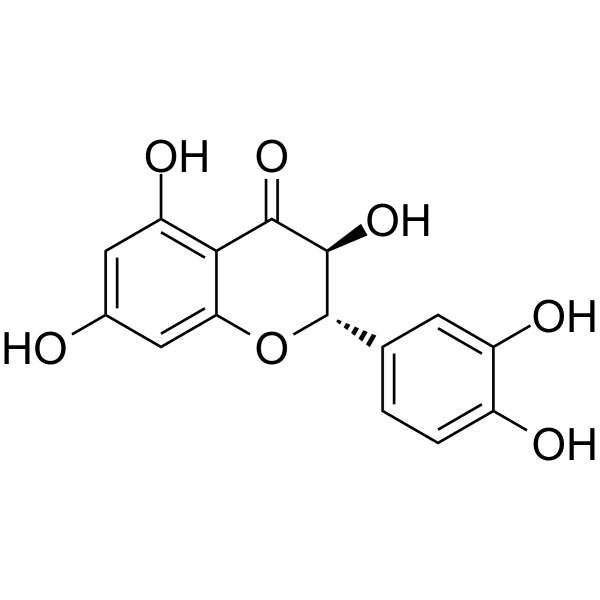
(-)-Taxifolin is the low-activity isomer of Taxifolin. Taxifolin is an orally effective collagenase inhibitor with an IC50 of 193.3 μM. Taxifolin dose-dependently reduces the levels of Smad-2, α-SMA, CTGF, type I collagen, NF-κB and FN in renal tissues, while decreasing serum levels of IL-1β, TNF-α, MDA, Scr and BUN, increasing SOD levels and reversing 27 serum metabolic biomarkers. Taxifolin inhibits the growth of a variety of pathogenic bacteria. Taxifolin can be used in studies related to renal fibrosis .
loading...
    loading...
Cat. No.: HY-162888
CAS No.: 2376694-72-1
Target:  

PDGFR ERK

Research Areas:  

Cardiovascular Disease

WQ-C-401 is an orally active platelet-derived growth factor receptor (PDGFR) inhibitor. WQ-C-401 inhibits cell proliferation by blocking PDGFR autophosphorylation in a concentration-dependent manner, with EC50 values of 3.5 nM for PDGFRα Y849 and 5.8 nM for PDGFRβ Y1021. Additionally, WQ-C-401 can inhibit PASMCs proliferation and migration by blocking PDGF-BB-induced ERK1/2 phosphorylation, reducing collagen I synthesis, and increasing α-SMA expression, thereby preventing pulmonary vascular remodeling. WQ-C-401 holds promise for research in the field of pulmonary arterial hypertension .
loading...
    loading...
Cat. No.: HY-12008S1
CAS No.: 1210610-07-3
Synonyms: CP-358774-13C6 hydrochloride; NSC 718781-13C6 hydrochloride; OSI-774-13C6 hydrochloride
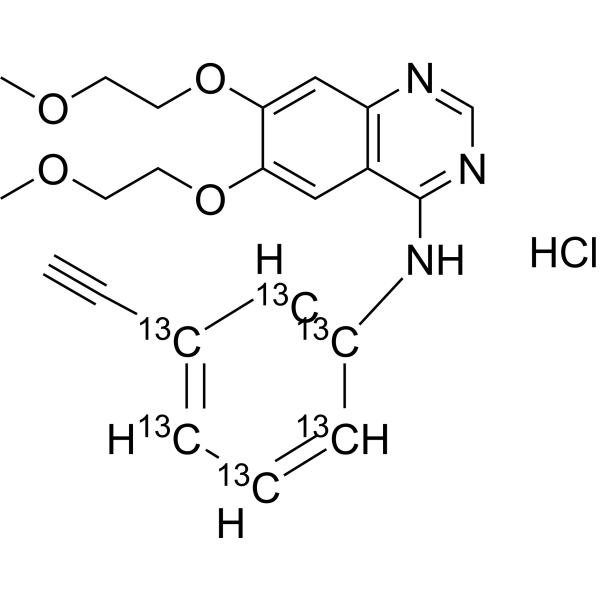
Erlotinib- 13C6 hydrochloride (CP-358774- 13C6 hydrochloride) is the 13C-labeled Erlotinib Hydrochloride (HY-12008). Erlotinib (CP-358774) Hydrochloride is a selective, orally active EGFR tyrosine kinase inhibitor. Erlotinib Hydrochloride also acts as a substrate and inhibitor of OATP2B1, with an IC50 of approximately 0.079 μM for inhibiting OATP2B1-mediated uptake of estrone 3-sulfate. Erlotinib Hydrochloride blocks EGFR phosphorylation, downstream signal transduction, as well as the growth and proliferation of cancer cells. Erlotinib Hydrochloride inhibits MMP-10-mediated renal injury, fibrotic lesions, the ERK1/2, GSK-3β and β-catenin signaling pathways, as well as the deposition of fibronectin, α-SMA, collagen and renal injury markers. Erlotinib Hydrochloride is metabolized via CYP3A to produce the active metabolite OSI-420. Erlotinib Hydrochloride can be used in research related to non-small cell lung cancer, gastric cancer, papillary renal cell carcinoma, EGFR inhibitor resistance and renal fibrosis .
loading...
    loading...
Cat. No.: HY-12008A
CAS No.: 248594-19-6
Synonyms: CP-358774 mesylate; NSC 718781 mesylate; OSI-774 mesylate
Target:  

EGFR OAT ERK GSK-3 β-catenin

Research Areas:  

Endocrinology Cancer

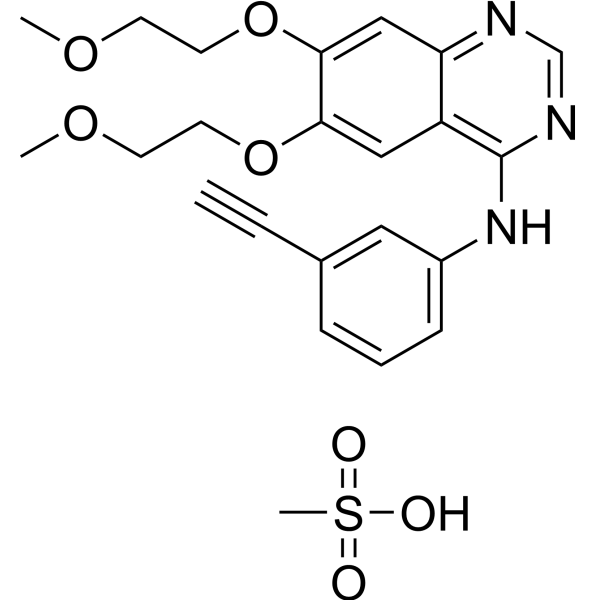
Erlotinib (CP-358774) mesylate is a selective, orally active EGFR tyrosine kinase inhibitor. Erlotinib mesylate also acts as a substrate and inhibitor of OATP2B1, with an IC50 of approximately 0.079 μM for inhibiting OATP2B1-mediated uptake of estrone 3-sulfate. Erlotinib mesylate blocks EGFR phosphorylation, downstream signal transduction, as well as the growth and proliferation of cancer cells. Erlotinib mesylate inhibits MMP-10-mediated renal injury, fibrotic lesions, the ERK1/2, GSK-3β and β-catenin signaling pathways, as well as the deposition of fibronectin, α-SMA, collagen and renal injury markers. Erlotinib mesylate is metabolized via CYP3A to produce the active metabolite OSI-420. Erlotinib mesylate can be used in research related to non-small cell lung cancer, gastric cancer, papillary renal cell carcinoma, EGFR inhibitor resistance and renal fibrosis .
loading...
    loading...
Cat. No.: HY-100446
CAS No.: 815619-12-6
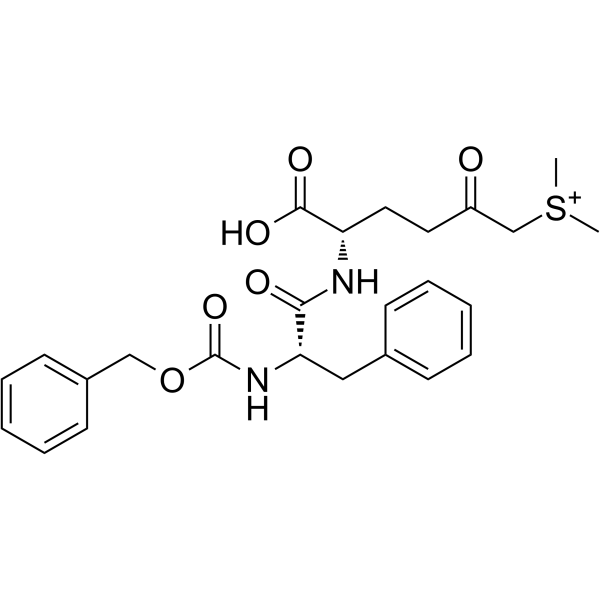
NTU281 is a potent transglutaminase-2 inhibitor. NTU281 can reduce the increases in serum creatinine and albuminuria in diabetic rats. NTU281 can also reduce glomerular collagen I accumulation, Hic-5 and α-SMA expression, and apoptosis. NTU281 can be used for researching glomerulosclerosis caused by diabetes .
loading...
    loading...
Cat. No.: HY-176737
CAS No.: 3097194-50-5
Target:  

TGF-beta/Smad

Research Areas:  

Inflammation/Immunology

TGF-β1/Smad-IN-1 (compound C9) is a potent TGF-β1/Smad inhibitor. TGF-β1/Smad-IN-1 inhibits the expression of fibrosis markers (α-SMA and COL1A1) induced by TGF-β1. TGF-β1/Smad-IN-1 shows antifibrotic effects. TGF-β1/Smad-IN-1 has the potential for the research of hepatic fibrosis .
loading...
    loading...
Cat. No.: HY-P11223
Target:  

TGF-beta/Smad

Research Areas:  

Inflammation/Immunology

CMF9, a cyclic peptide molecule, is an inhibitor of the SMAD2-SMAD4 interaction. CMF9 effectively blocks the formation of the heterodimeric complex of SMAD2 and SMAD4 by inhibiting the phosphorylation of SMAD2. CMF9 has no effect on the phosphorylation of SMAD3 or SMAD1/5/8. CMF9 downregulates the expression of fibrotic markers α-SMA and COL1A1. CMF9 exhibits potent anti-fibrotic effects in mouse models by promoting the degradation of pathological extracellular matrix (ECM) and inhibiting inflammation. CMF9 can be used for the study of liver fibrosis .
loading...
    loading...
Cat. No.: HY-175033
BRD4-IN-11 is an orally active and selective BRD4 inhibitor (IC50 = 26.35 nM (BD1), IC50 = 72.81 nM (BD2)). BRD4-IN-11 is approximately 3- to 18-fold more potent against BRD4 than againstBRD2, BRD3, and BRDT. BRD4-IN-11 enhances H2S release and inhibits the upregulation of fibrotic markers (α-SMA and fibronectin), c-Myc, and CDC25B. BRD4-IN-11 reduces apoptosis in LO2 hepatocytes. BRD4-IN-11 significantly improves liver and lung function in a hepatopulmonary fibrosis model and can be used to study hepatopulmonary fibrosis .
loading...
    loading...
Cat. No.: HY-179042
CAS No.: 3100351-69-4
TGF-β/Smad-IN-3 (Compound 4w) is an effective TGF-β/Smad inhibitor. TGF-β/Smad-IN-3 exerts anti-pulmonary fibrosis activity by simultaneously inhibiting the TGF-β/Smad and MAPK signaling pathways. TGF-β/Smad-IN-3 significantly inhibits collagen deposition induced by TGF-β1, with its IC50 value being 3.21 μM. TGF-β/Smad-IN-3 has an IC₅₀ of 46.77 nM for the autocrine motility factor (ATX). TGF-β/Smad-IN-3 significantly reduces the expression levels of α-SMA, COL1A1 and FN in TGF-β1-induced CCC-HPF-1 cells, and effectively inhibited TGF-β1-induced cell migration. TGF-β/Smad-IN-3 can be used for the study of pulmonary fibrosis .
loading...
    loading...
Cat. No.: HY-N12703
CAS No.: 1519015-73-6
Target:  

Others

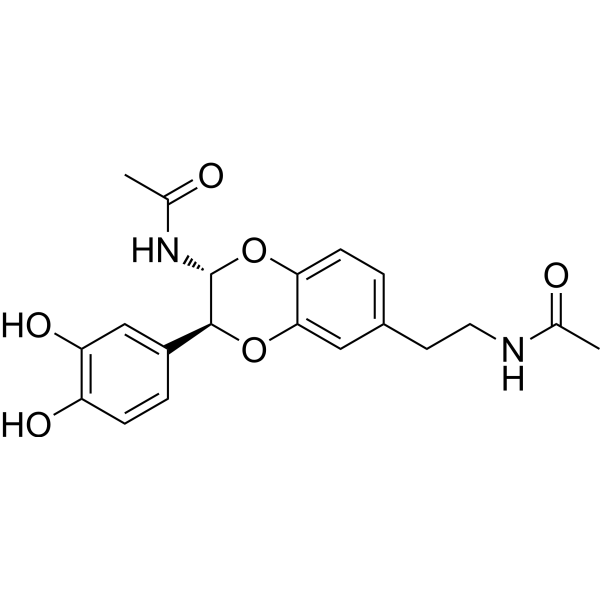
N-Acetyldopamine dimmers A (Compound (+)-2) can be isolated from the cast-off shell of the cicada of Cryptotympana sp. N-Acetyldopamine dimmers A increases collagen and α-SMA expression .
loading...
    loading...
Cat. No.: HY-162929
CAS No.: 2871739-84-1
Target:  

TGF-β Receptor

Research Areas:  

Inflammation/Immunology

TP-DEA2, a predictable-release Triptolide (HY-32735) prodrug, block Bleomycin-induced pulmonary fibrosis and inflammation. TP-DEA2 significantly inhibits α-SMA production .
loading...
    loading...
Cat. No.: HY-170578
Target:  

Sirtuin

Research Areas:  

Neurological Disease

SIRT2-IN-17 (compound Z18) is a potent SIRT2 inhibitor. SIRT2-IN-17 reduces the expression of α-SMA and p-Smad2/3 .
loading...
    loading...
Cat. No.: HY-172105
CAS No.: 3028778-28-8
Target:  

PPAR

Anti-NASH agent 2 (compound 21) is an inhibitor of de novo adipogenesis activity and α-SMA gene expression. Anti-NASH agent 2 improves hepatic steatosis, edema, inflammatory infiltrates, and liver fibrosis in NASH mouse models .
loading...
    loading...
Cat. No.: HY-RS19169
Research Areas:  

Others

Acta2 Mouse Pre-designed siRNA Set A contains three designed siRNAs for Acta2 gene (Mouse), as well as a negative control, a positive control, and a FAM-labeled negative control.

loading...
    loading...
Cat. No.: HY-114366
CAS No.: 2035085-19-7
Target:  

CXCR

Research Areas:  

Others

BC-1485 is a small molecule inhibitor of Fibrosis-inducing E3 ligase 1 (FIEL1). BC-1485 protects PIAS4 from ubiquitin-mediated degradation. BC-1485 decreases α-SMA, BAL and CXCL1. BC-1485 ameliorates fibrotic lung injury in murine models .
loading...
    loading...
Cat. No.: HY-170227
Autotaxin-IN-7 (45), a pyridine-2-carboxylic derivative, demonstrates subnanomolar ATX inhibition (IC50 = 0.086 nM), with a favorable heart safety profile (hERG > 30 μM) and minimal fibroblast toxicity. Autotaxin-IN-7 (45) suppresses the TGF-β/Smad signaling pathway, downregulating α-smooth muscle actin (α-SMA) and extracellular matrix components (ECM). Autotaxin-IN-7 (45) is used in the research for pulmonary fibrosis .
loading...
    loading...
Cat. No.: HY-178328
CAS No.: 3136765-61-9
VDR agonist 4 is an orally active potent VDR agonist. VDR agonist 4 exerts VDR-dependent antifibrotic activity by regulating multiple fibrosis-related genes to suppress α-SMA and collagen I production, thereby inhibiting hepatic stellate cell (HSC) activation. VDR agonist 4 improves CCl4 (HY-RS16594)-induced hepatic fibrosis in mice. VDR agonist 4 can be used for liver fibrosis research .
loading...
    loading...
Cat. No.: HY-175277
Research Areas:  

Inflammation/Immunology

PIM1-IN-8 is a PIM1/p65 pathway inhibitor. PIM1-IN-8 suppresses the expression of α-SMA and collagen I in activated fibroblasts and blocks TGF-β induced migration. PIM1-IN-8 alleviates pulmonary fibrosis in a Bleomycin (BLM) (HY-17565A)-induced pulmonary fibrosis mice model. PIM1-IN-8 can be used for the study of idiopathic pulmonary fibrosis (IPF) .
loading...
    loading...
Cat. No.: HY-162902
CAS No.: 3001361-04-9
Target:  

TGF-β Receptor

Research Areas:  

Cardiovascular Disease

ALK5-IN-82 is a potent and selective inhibitor against activin receptor-like kinase 5 (ALK5) with an IC50 value of 9.1 nM. ALK5-IN-82 inhibits the protein expression of α-smooth muscle actin (α-SMA), collagen I and tissue inhibitor of metalloproteinase 1 (TIMP-1)/matrix metalloproteinase 13 (MMP-13) in transforming growth factor-β-induced human umbilical vein endothelial cells. ALK5-IN-82 is promising for research of cardiac fibrosis .
loading...
    loading...
Cat. No.: HY-170839
CAS No.: 87657-67-8
Target:  

TRP Channel

Research Areas:  

Inflammation/Immunology

TRPV1-IN-3 (compound 14) is a TRPV1 inhibitor that can be used for the research of idiopathic pulmonary fibrosis. TRPV1-IN-3 affects the expression of fibrosis markers collagen I and α-SMA by inhibiting the TGF-β/Smads and MAPK pathways, thereby exerting antifibrotic activity in vitro (IC50=0.51 μM). TRPV1-IN-3 significantly inhibits collagen deposition in lung tissue, improves the alveolar structure, and also increases the survival rate of mice with pulmonary fibrosis induced by Bleomycin (HY-108345) .
loading...
    loading...

