
1042 Results for "

detection

" in MedChemExpress (MCE) Product Catalog:
Products (1042)

1042 Results for "detection" in MCE Product Catalog:

11
11 Cited Publications
Cat. No.: HY-111391
CAS No.: 62758-13-8
Purity:  ≥98.0%
Synonyms: Diazoresorcinol sodium
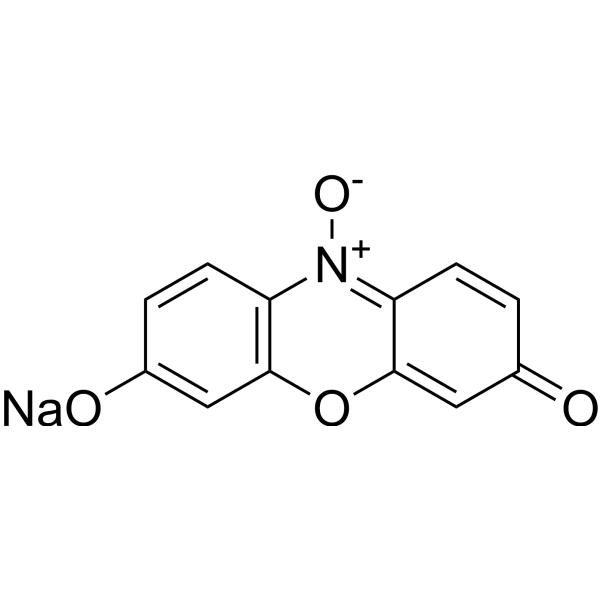
Resazurin sodium (Diazoresorcinol sodium) is a non-toxic, stable, membrane-permeable blue non-fluorescent dye (faintly fluorescent). Resazurin sodium is used as a redox indicator, can be reduced to pink, highly fluorescent Resorufin (Ex=530-560 nm, Em=590 nm) in living cells. Resazurin sodium can be used for the detection of cell viability, toxicity, proliferation, migration and invasion in cells (human, plant and animal, bacterial and fungal) .
loading...
    loading...
8
8 Cited Publications
Cat. No.: HY-107690
CAS No.: 3317-61-1
Purity:  99.98%
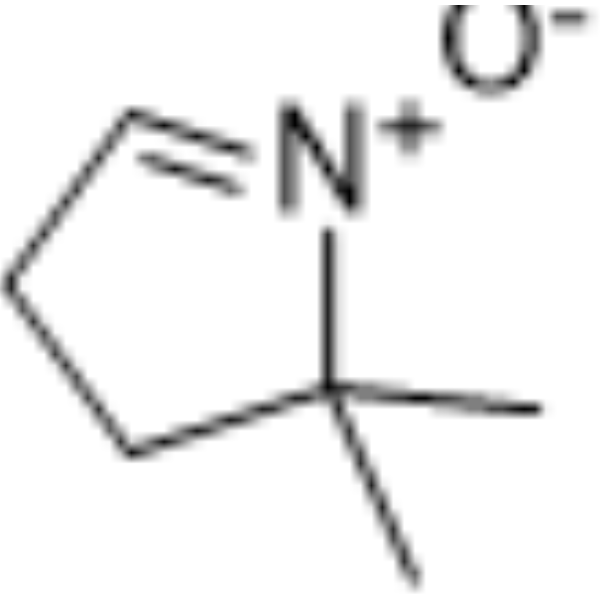
DMPO is a cell permeable hydrophillic spin trap agent for superoxide detection .
loading...
    loading...
8
8 Cited Publications
Cat. No.: HY-D1159
CAS No.: 2138472-08-7
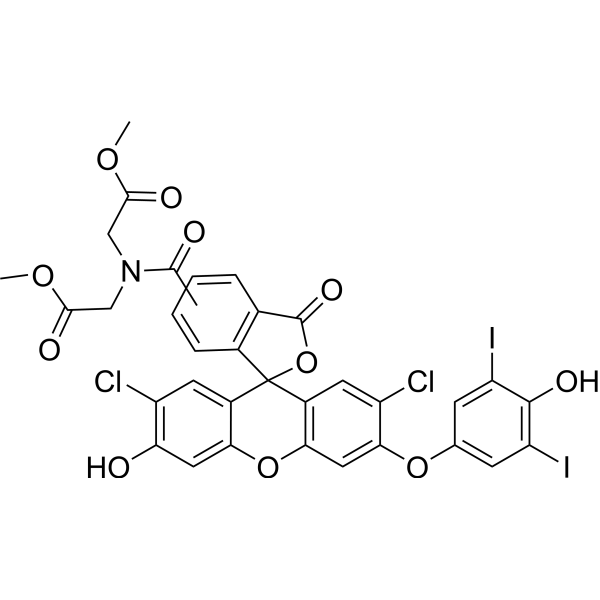
HKOH-1r is a highly sensitive green fluorescent probe for the specific detection of ·OH in living cells with a maximum excitation wavelength and emission wavelength of 500 nm and 520 nm, respectively .
loading...
    loading...
8
8 Cited Publications
Cat. No.: HY-K2006

Sensitive ECL Kit enables low picogram detection of antigen by oxidizing luminol in the presence of HRP and peroxide. This reaction produces a prolonged chemiluminescence which can be visualized on X-ray film or digital imaging systems. The 100 mL is defined as the base specification. All larger sizes correspond to incremental volumes of this base.

loading...
    loading...
8
8 Cited Publications
Cat. No.: HY-15930
CAS No.: 54827-17-7
Synonyms: BM blue; Sure Blue TMB
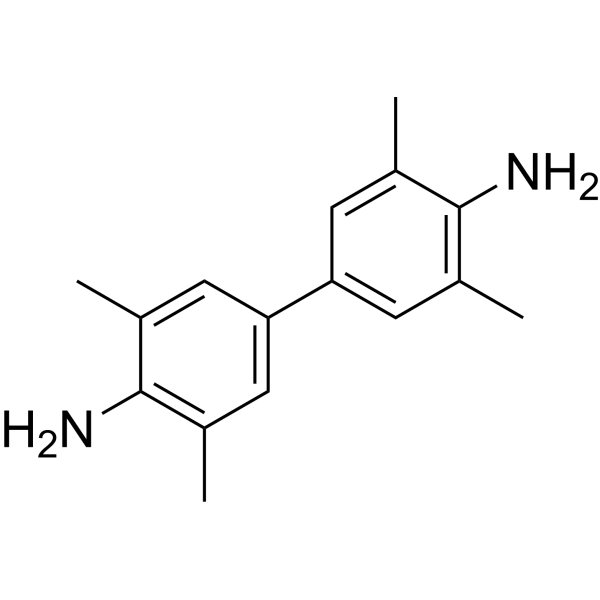
TMB is a non-toxic, non-mutagenic, colorless dye that is also used as a chromogenic agent in enzyme detection systems based on horseradish peroxidase (HRP). TMB can function as a photoacoustic probe for reactive oxygen and nitrogen species (ROS/RNS), reacting with hypochlorite, hydrogen peroxide, singlet oxygen, and nitrogen dioxide to produce blue oxidation products. TMB can detect the singlet oxygen produced by the outer membrane of Escherichia coli ATCC 25922 .
loading...
    loading...
8
8 Cited Publications
Cat. No.: HY-15930A
CAS No.: 64285-73-0
Synonyms: BM blue dihydrochloride; Sure Blue TMB dihydrochloride
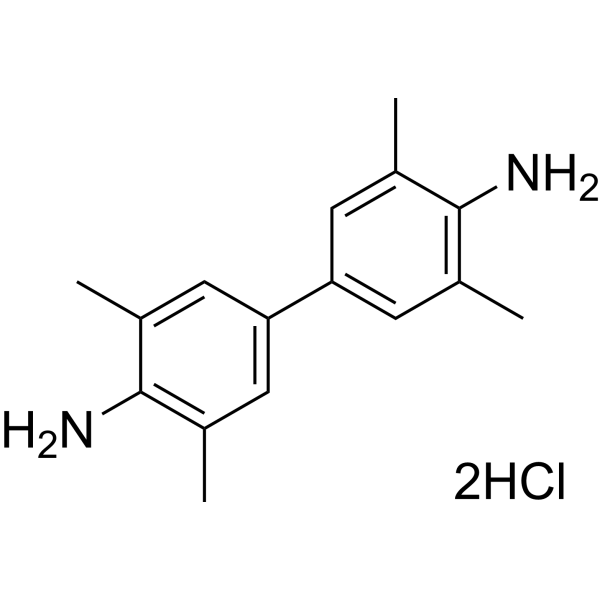
TMB dihydrochloride is the dihydrochloride form of TMB (HY-15930). TMB dihydrochloride is a non-toxic, non-mutagenic, colorless dye that is also used as a chromogenic agent in enzyme detection systems based on horseradish peroxidase (HRP). TMB dihydrochloride can function as a photoacoustic probe for reactive oxygen and nitrogen species (ROS/RNS), reacting with hypochlorite, hydrogen peroxide, singlet oxygen, and nitrogen dioxide to produce blue oxidation products. TMB dihydrochloride can detect the singlet oxygen produced by the outer membrane of Escherichia coli ATCC 25922 .
loading...
    loading...
8
8 Cited Publications
Cat. No.: HY-15930B
CAS No.: 207738-08-7
Synonyms: Sure Blue TMB dihydrochloride x.hydrate
TMB (dihydrochloride x.hydrate) is the dihydrochloride x hydrate form of TMB (HY-15930). TMB (dihydrochloride x.hydrate) is a non-toxic, non-mutagenic, colorless dye that is also used as a chromogenic agent in enzyme detection systems based on horseradish peroxidase (HRP). TMB (dihydrochloride x.hydrate) can function as a photoacoustic probe for reactive oxygen and nitrogen species (ROS/RNS), reacting with hypochlorite, hydrogen peroxide, singlet oxygen, and nitrogen dioxide to produce blue oxidation products. TMB (dihydrochloride x.hydrate) can detect the singlet oxygen produced by the outer membrane of Escherichia coli ATCC 25922 .
loading...
    loading...
8
8 Cited Publications
Cat. No.: HY-15930C
CAS No.: 54827-18-8
Synonyms: BM blue monosulfate; Sure Blue TMB monosulfate
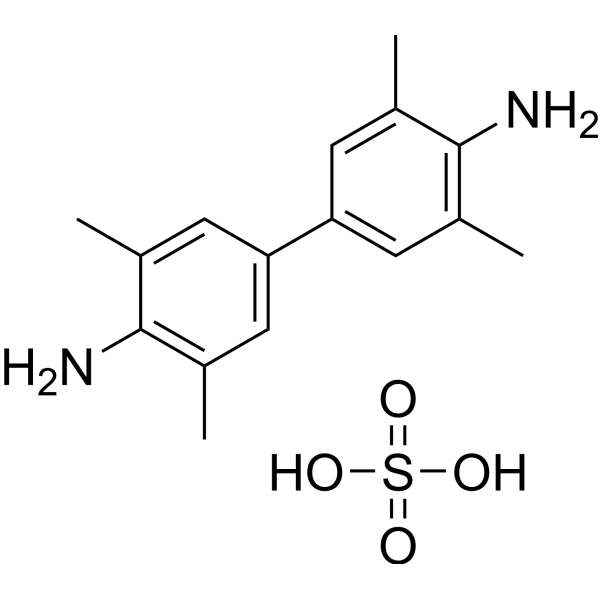
TMB monosulfate is the monosulfate form of TMB (HY-15930). TMB monosulfate is a non-toxic, non-mutagenic, colorless dye that is also used as a chromogenic agent in enzyme detection systems based on horseradish peroxidase (HRP). TMB monosulfate can function as a photoacoustic probe for reactive oxygen and nitrogen species (ROS/RNS), reacting with hypochlorite, hydrogen peroxide, singlet oxygen, and nitrogen dioxide to produce blue oxidation products. TMB monosulfate can detect the singlet oxygen produced by the outer membrane of Escherichia coli ATCC 25922 .
loading...
    loading...
7
7 Cited Publications
Cat. No.: HY-15926
CAS No.: 369-07-3
Synonyms: 2-Nitrophenyl β-D-galactopyranoside
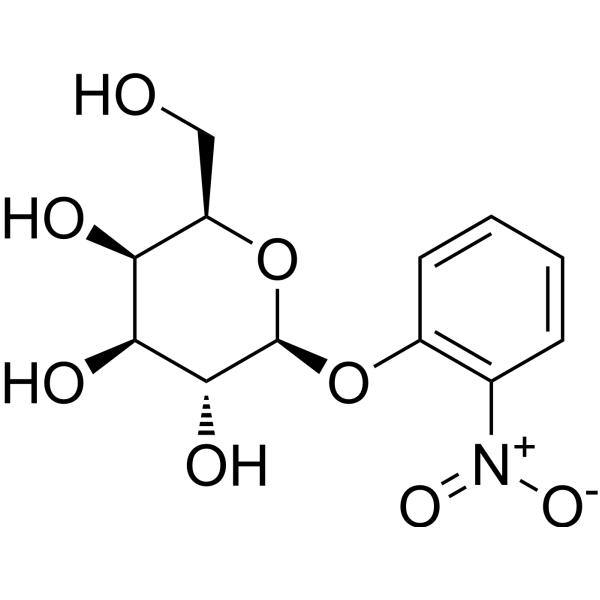
ONPG is a colorimetric and spectrophotometric substrate for detection of β-galactosidase activity.
loading...
    loading...
7
7 Cited Publications
Cat. No.: HY-K0552

MCE Mycoplasma Detection Kit (PCR) is a diagnostic kit that utilizes the PCR method to detect mycoplasma contamination in biological materials such as cultured cells.

loading...
    loading...
7
7 Cited Publications
Cat. No.: HY-K0322

MCE Cell Ferrous Iron (Fe2+) Assay Kit (Fluorometric) utilizes fluorescence detection technology to analyze the levels of ferrous ions (Fe2+) in cells.

loading...
    loading...
7
7 Cited Publications
Cat. No.: HY-K1079

MCE One Step TUNEL Apoptosis Detection Kit (Cyanine 3) provides a rapid and convenient method to detect cell apoptosis. After staining cells with this kit, live cells have no fluorescence, apoptosis cells show red fluorescence.

loading...
    loading...
7
7 Cited Publications
Cat. No.: HY-112641A
CAS No.: 2558205-28-8
Purity:  99.92%
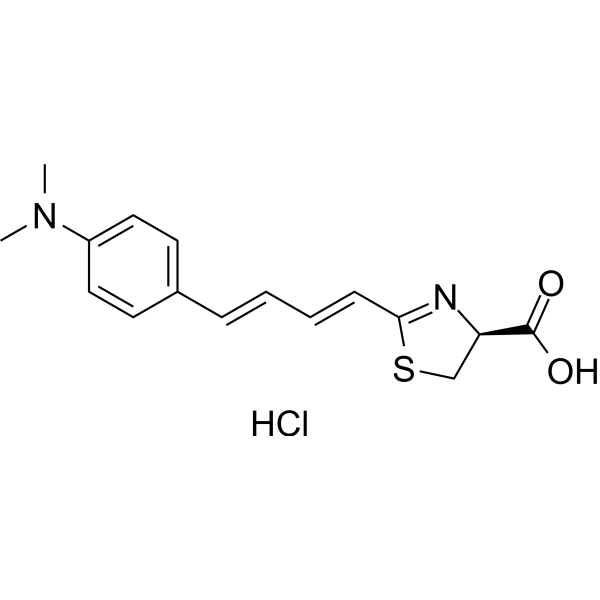
AkaLumine hydrochloride is a D-luciferin (HY-12591A) analogue with a Km of 2.06 μM for recombinant firefly luciferase (Fluc) protein. AkaLumine hydrochloride emits near-infrared (NIR) light (λmax=677 nm) in reactions with native Fluc. AkaLumine hydrochloride has high tissue-penetration and increases detection sensitivity from deep-tissue targets .
loading...
    loading...
7
7 Cited Publications
Cat. No.: HY-128692
CAS No.: 67769-47-5
Purity:  99.67%
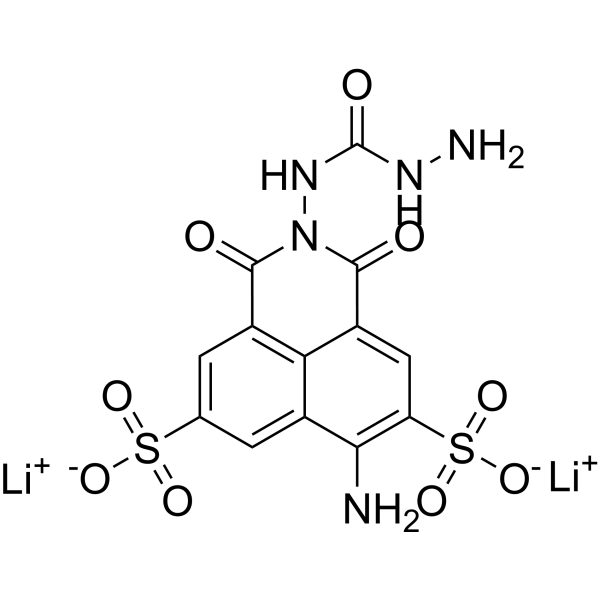
Luc Yellow CH dilithium is a high-intensity fluorescent probe containing free hydrazyl groups. Luc Yellow CH can react with fatty aldehydes at room temperature. Luc Yellow CH serves as a biological tracer to monitor neuronal branching, regeneration, gap junction detection and characterization, and selective ablation of cells after aldehyde fixation. Luc Yellow CH displays the maximum excitation/emission of 430 nm/540 nm, respectively .
loading...
    loading...
7
7 Cited Publications
Cat. No.: HY-W127715
CAS No.: 71206-95-6
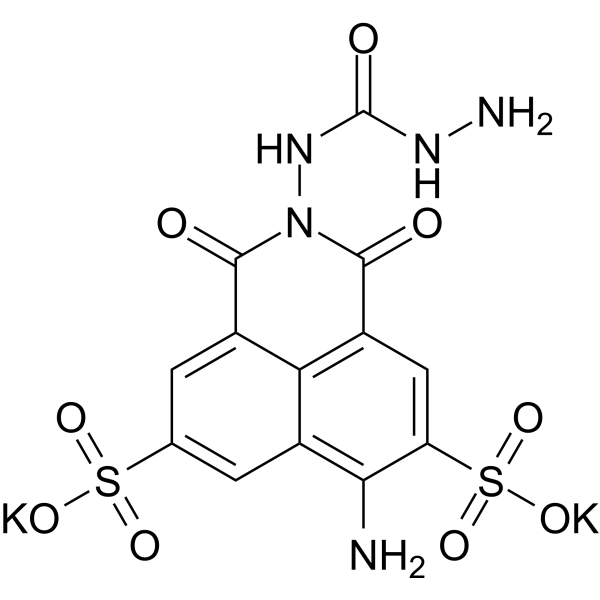
Lucifer Yellow CH dipotassium is a high-intensity fluorescent probe containing free hydrazyl groups. Lucifer Yellow CH can react with fatty aldehydes at room temperature. Lucifer Yellow CH serves as a biological tracer to monitor neuronal branching, regeneration, gap junction detection and characterization, and selective ablation of cells after aldehyde fixation. Lucifer yellow CH displays the maximum excitation/emission of 430 nm/540 nm, respectively .
loading...
    loading...
6
6 Cited Publications
Cat. No.: HY-117695
CAS No.: 148757-94-2
Purity:  ≥95.0%
Synonyms: 6-Aminoquinolyl-N-hydroxysccinimidyl carbamate
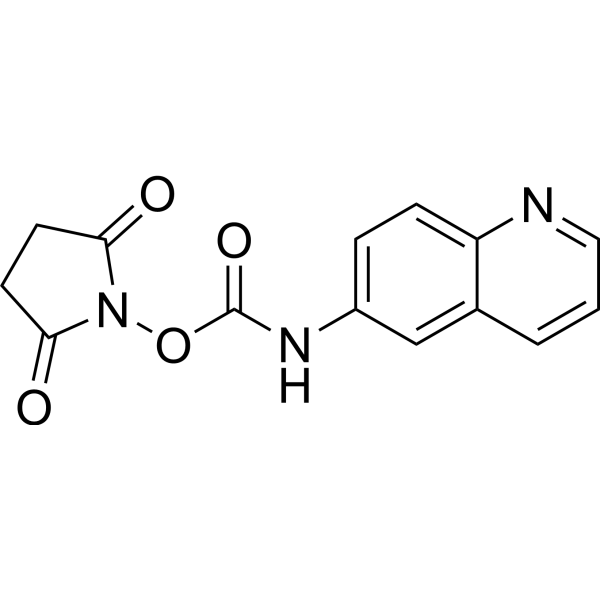
AQC (6-Aminoquinolyl-N-hydroxysccinimidyl carbamate) is a reagent used for amino acid or protein sequence analysis by HPLC with fluorescence detection. AQC reacts with primary and secondary amino acids to yield fluorescent derivates, allowing amino acid detection at under-picomolar levels .
loading...
    loading...
6
6 Cited Publications
Cat. No.: HY-K0246

MCE Anti-GFP Magnetic Agarose Beads can be used for the detection and purification of GFP, EGFP, and their fusion-expressed proteins and IP assays.

loading...
    loading...
6
6 Cited Publications
Cat. No.: HY-18743
CAS No.: 55779-48-1
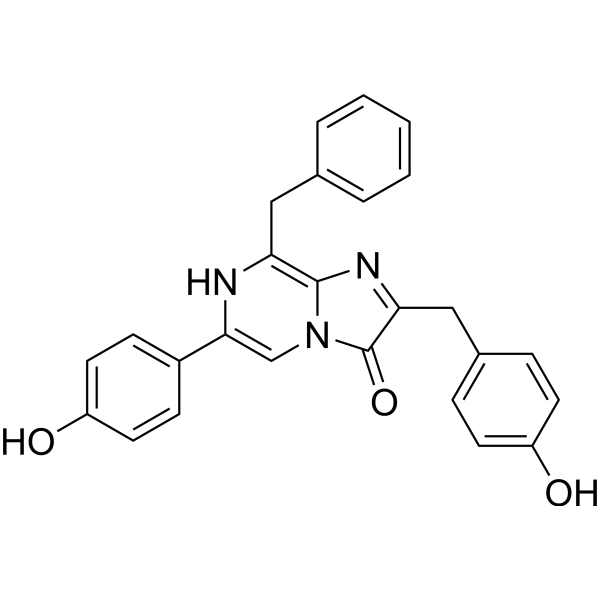
Coelenterazine is a luminescent enzyme substrate for apoaequorin and Renilla luciferase. Renilla luciferase and substrate coelenterazine has been used as the bioluminescence donor in bioluminescence resonance energy transfer (BRET) to detect protein-protein interactions. Coelenterazine is a superoxide anion-sensitive chemiluminescent probe and it can also be used in chemiluminescent detection of peroxynitrite (Ex/Em = 429/466 nm) .
loading...
    loading...
6
6 Cited Publications
Cat. No.: HY-18743A
Research Areas:  

Cancer

Coelenterazine TFA is a luminescent enzyme substrate for apoaequorin and Renilla luciferase. Renilla luciferase and substrate Coelenterazine TFA has been used as the bioluminescence donor in bioluminescence resonance energy transfer (BRET) to detect protein-protein interactions. Coelenterazine TFA is a superoxide anion-sensitive chemiluminescent probe and it can also be used in chemiluminescent detection of peroxynitrite (Ex/Em = 429/466 nm) .
loading...
    loading...
6
6 Cited Publications
Cat. No.: HY-15934
CAS No.: 7240-90-6
Synonyms: BCIG
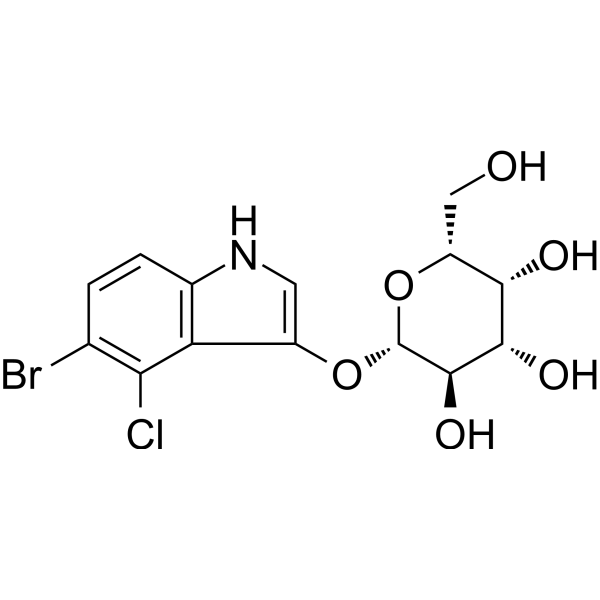
X-GAL (BCIG) is a widely used chromogenic β-galactosidase substrate. X-GAL is a colorless compound until cleaved by β-galactosidase, at which point X-GAL turns to an insoluble and detectable blue compound, making X-GAL particularly useful in techniques such as blue-white screening for cloning in bacteria. X-GAL can also be used for detection of β-galactosidase activity .
loading...
    loading...

