
92 Results for "

malarial

" in MedChemExpress (MCE) Product Catalog:
Products (92)

92 Results for "malarial" in MCE Product Catalog:

1
1 Cited Publications
Cat. No.: HY-131708A
CAS No.: 2641930-61-0
Purity:  98.00%
Target:  

HDAC Parasite

Research Areas:  

Infection

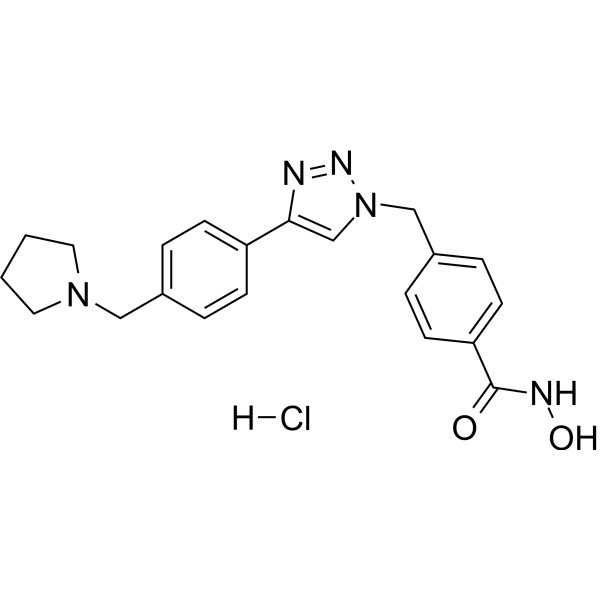
FNDR-20123 is a safe, first-in-class, and orally active anti-malarial HDAC inhibitor with IC50s of 31 nM and 3 nM for Plasmodium and human HDAC, respectively. FNDR-20123 exerts anti-malarial activity against Plasmodium falciparum asexual stage (IC50=41 nM) and sexual blood stage (IC50=190 nM for male gametocytes). FNDR-20123 inhibits HDAC1, HDAC2, HDAC3, HDAC6, and HDAC8 (IC50=25/29/2/11/282 nM, respectively.) and inhibits Class III HDAC isoforms at nanomolar concentrations .
loading...
    loading...
1
1 Cited Publications
Cat. No.: HY-111817
CAS No.: 1984890-99-4
Purity:  96.45%
Target:  

Parasite

Research Areas:  

Infection

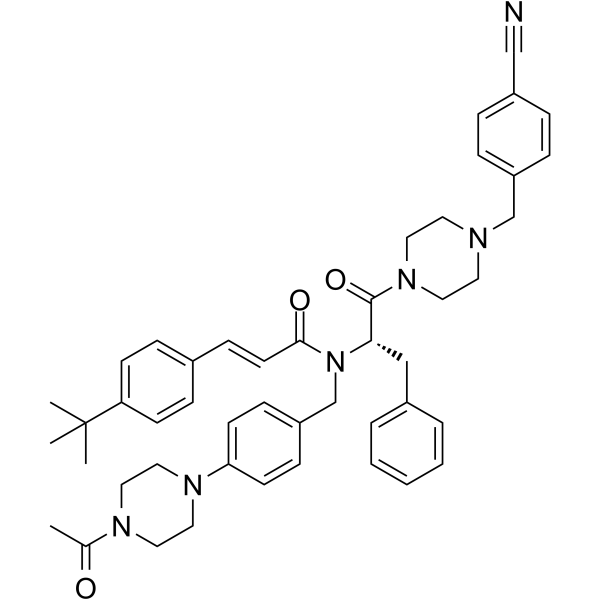
ACT-451840 is an orally active, potent and low-toxicity compound, showing activity against sensitive and resistant plasmodium falciparum strains. ACT-451840 targets all asexual blood stages of the parasite, has a rapid onset of action. ACT-451840 behaves in a way similar to artemisinin derivatives, with very rapid onset of action and elimination of parasite. ACT-451840 can be used for the research of malarial .
loading...
    loading...
1
1 Cited Publications
Cat. No.: HY-117897
CAS No.: 1361004-87-6
Purity:  98.91%
Target:  

Parasite

Research Areas:  

Infection

CK-2-68 is an inhibitor for complex III in protozoan mitochondrial respiratory chain, by targeting the alternative NADH dehydrogenase (NDH2) of the malarial parasite Plasmodium. CK-2-68 exhibits antimalaria efficacy, that inhibits Plasmodium falciparum infected erythrocytes with an IC50 of 40 nM .
loading...
    loading...
Cat. No.: HY-B0439
CAS No.: 2447-57-6
Synonyms: Sulphadoxine
Target:  

Parasite HIV Antibiotic

Research Areas:  

Infection

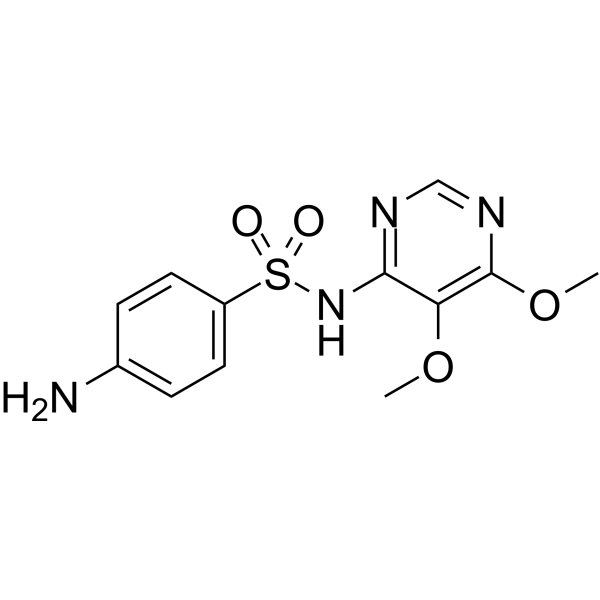
Sulfadoxine(Sulphadoxine) is a long acting sulfonamide that is used, usually in combination with other agents, for respiratory, urinary tract and malarial infections. Sulfadoxine inhibits HIV replication in peripheral blood mononuclear cells.
loading...
    loading...
Cat. No.: HY-15134
CAS No.: 216227-54-2
Purity:  99.21%
Synonyms: OC 144-093; OC 144093
Target:  

P-glycoprotein

Research Areas:  

Infection Cancer

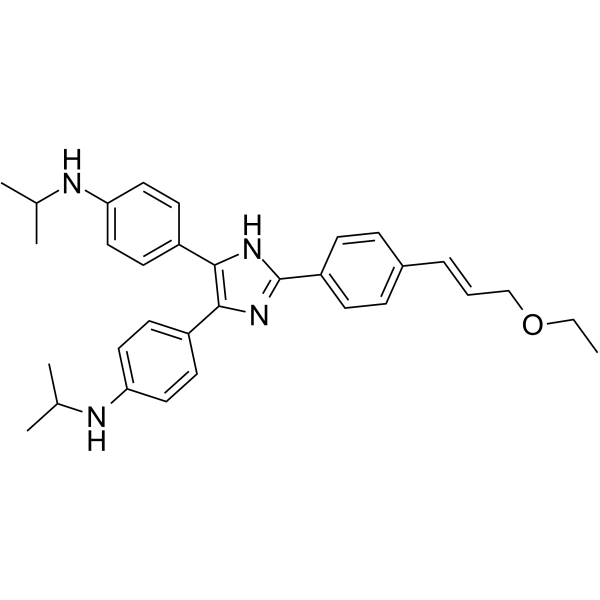
ONT-093 (OC 144-093) is a potent and orally active inhibitor of P-glycoprotein pump. ONT-093 inhibits P-gp-mediated ATPase activity with an IC50 of 0.16 μM. ONT-093 can inhibit drug efflux and increase bioavailability. ONT-093 reverses cancer cells multidrug resistance to chemotherapeutic drugs. ONT-093 can be used for the researches of cancer and infection, such as colon cancer and malarial .
loading...
    loading...
Cat. No.: HY-107566
CAS No.: 546-06-5
Purity:  99.87%
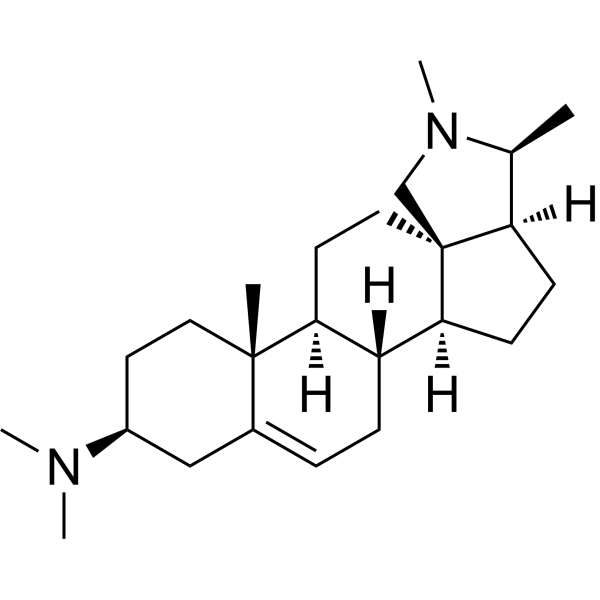
Conessine is an orally active and BBB-penetrable selective histamine H3 receptor antagonist. The pKi values of Conessine for rat and human H3 receptors are 7.61 and 8.27, respectively. Conessine is an inhibitor of the multidrug efflux pump system in Pseudomonas aeruginosa and can enhance the activity of antibiotics. Conessine has antimalarial activity. Conessine can also be used in the research of muscle atrophy .
loading...
    loading...
Cat. No.: HY-42034
CAS No.: 522-66-7
Synonyms: Dihydroquinine
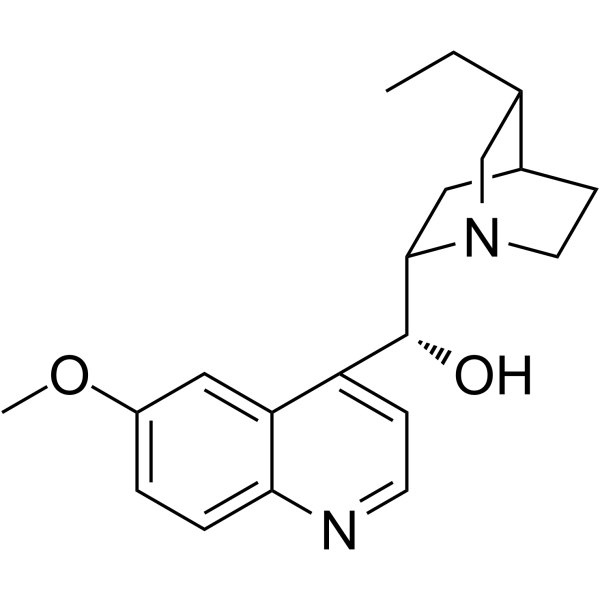
Hydroquinine (Dihydroquinine) is an anti-bacterial agent that inhibits both Gram-positive and Gram-negative bacteria. Hydroquinine inhibits the growth of multidrug-resistant pseudomonas aeruginosa via the suppression of the arginine deiminase pathway genes. Hydroquinine inhibits Plasmodium falciparum and Plasmodium berghei. Hydroquinine displays anti-malarial and demelanizing activities. Hydroquinine effectively induces specific RND-type efflux pump systems in Pseudomonas aeruginosa, particularly the MexCD-OprJ and MexXY efflux pumps. Hydroquinine inhibits Pseudomonas aeruginosa adhesion and biofilm formation. Hydroquinine serves as a precursor for derivatives such as C9 epihydroquinine, 9-acetoxy-10,11-dihydroquinine, and 10,11-dihydroquinine monohydrochloride .
loading...
    loading...
Cat. No.: HY-Y0148
CAS No.: 1679-53-4
Synonyms: NSC 15139; 10-HDAA
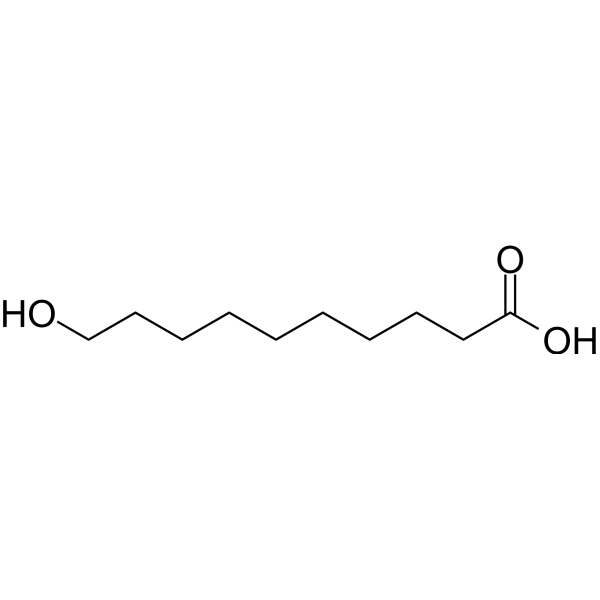
10-Hydroxydecanoic acid (10-HDAA) is a saturated fatty acid derived from 10-hydroxy-trans-2-decenoic acid, which can be isolated from royal jelly. 10-Hydroxydecanoic acid exhibits various biological activities, including anti-inflammatory, insecticidal, anti-malarial, and anti-Leishmania properties, as well as enhancing antigen-specific immune responses. The anti-inflammatory effects of 10-Hydroxydecanoic acid are primarily mediated by inhibiting the activation of NF-κB and the translation of interferon regulatory factor 1 (IRF-1), which reduces the production of interleukin 6 (IL-6) and nitric oxide (NO) in inflammatory cells. Additionally, 10-Hydroxydecanoic acid alleviates neuroinflammatory responses through the p53-autophagy pathway and the p53-NLRP3 pathway. Finally, 10-Hydroxydecanoic acid enhances antigen-specific immune responses by promoting the effective uptake of antigens by microfold cells .
loading...
    loading...
Cat. No.: HY-B0094R
CAS No.: 63968-64-9
Synonyms: Qinghaosu (Standard); NSC 369397 (Standard)
Artemisinin (Standard) is the analytical standard of Artemisinin. This product is intended for research and analytical applications. Artemisinin (Qinghaosu), a sesquiterpene lactone, is an anti-malarial agent isolated from the aerial parts of Artemisia annua L. plants . Artemisinin inhibits AKT signaling pathway by decreasing pAKT in a dose-dependent manner. Artemisinin reduces cancer cell proliferation, migration, invasion, tumorigenesis and metastasis and has neuroprotective effects .
loading...
    loading...
Cat. No.: HY-153932
CAS No.: 2550399-06-7
Research Areas:  

Infection Cancer

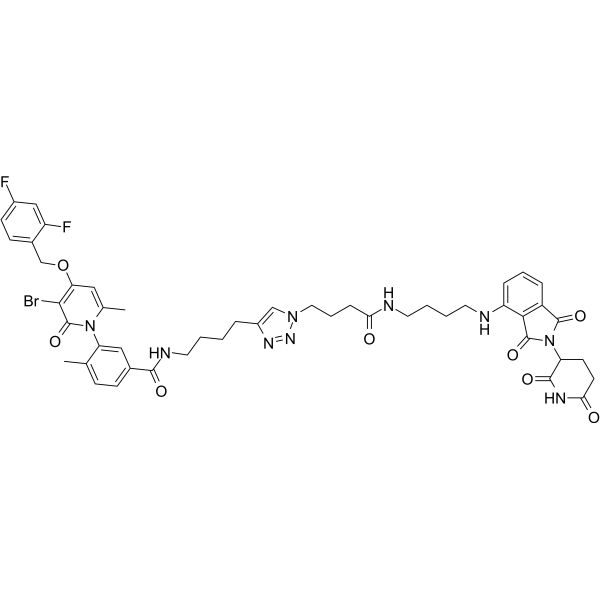
NR-7h is a selective p38α/p38β MAPK PROTAC degrader with multiple activities including anti-leishmanial, anti-malarial, and anti-Mayaro virus properties. NR-7h induces specific degradation of p38α/p38β isoforms and p38-MAPK via the ubiquitin-proteasome system. NR-7h reduces the load of Leishmania donovani, modulates the cytokine profile toward a pro-inflammatory phenotype, and enhances the oxidative burst of macrophages. NR-7h inhibits the growth of Plasmodium falciparum in human red blood cells and merozoite invasion. NR-7h reduces the replication of Mayaro virus and the expression of E1 protein in primary human dermal fibroblasts. NR-7h can be used in studies related to parasitic infections, viral infections, and breast cancer .
loading...
    loading...
Cat. No.: HY-14749
CAS No.: 74847-35-1
Target:  

Parasite

Research Areas:  

Infection Cancer

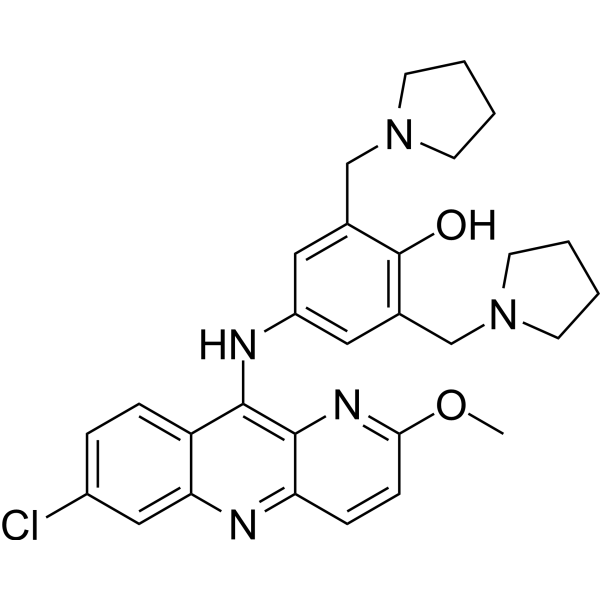
Pyronaridine is an orally active Mannich base anti-malarial agent. Pyronaridine is active against P. falciparum and Echinococcus granulosus infection .
loading...
    loading...
Cat. No.: HY-B0803S1
CAS No.: 2477594-24-2
Synonyms: Benflumetol-d9
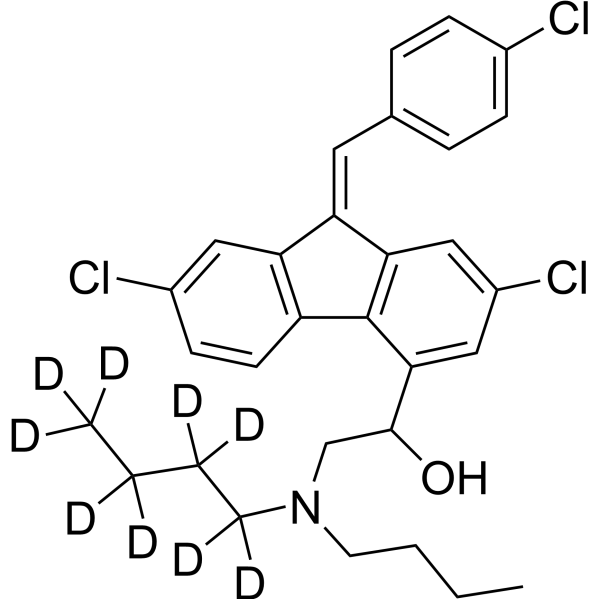
Lumefantrine-d9 is the deuterium labeled Lumefantrine. Lumefantrine is an antimalarial drug, used in combination with Artemether. The artemether-lumefantrine (AL) as the first- and second-line anti-malarial drugs.
loading...
    loading...
Cat. No.: HY-N2281
CAS No.: 97938-31-3
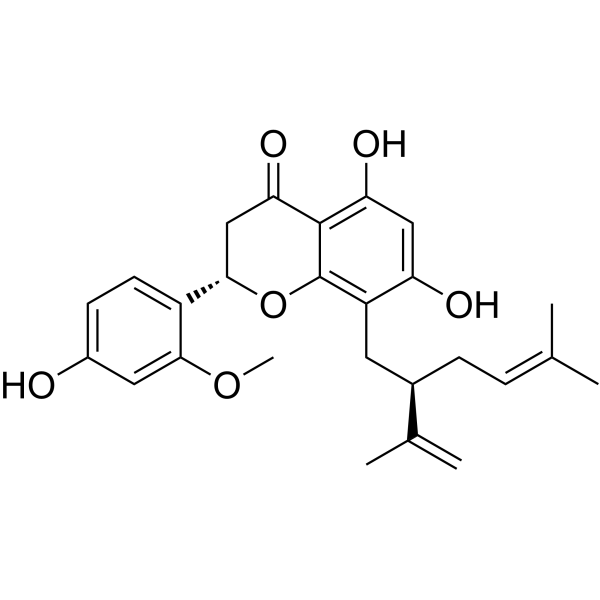
Leachianone A, isolated from Radix Sophorae, has anti-malarial, anti-inflammatory, and cytotoxic potent . Leachianone A induces apoptosis involved both extrinsic and intrinsic pathways .
loading...
    loading...
Cat. No.: HY-D0954
CAS No.: 62851-42-7
Jenner's Stain is a dye that is used in microscopy for staining blood smears. Jenner's Stain can be used for the chromosome stain by C-banding technique. Jenner's Stain can be used for the stain for routine blood examinations and malarial staining .
loading...
    loading...
Cat. No.: HY-N2795
CAS No.: 35349-68-9
Synonyms: Xanthone I
Target:  

Parasite Bacterial

Research Areas:  

Infection

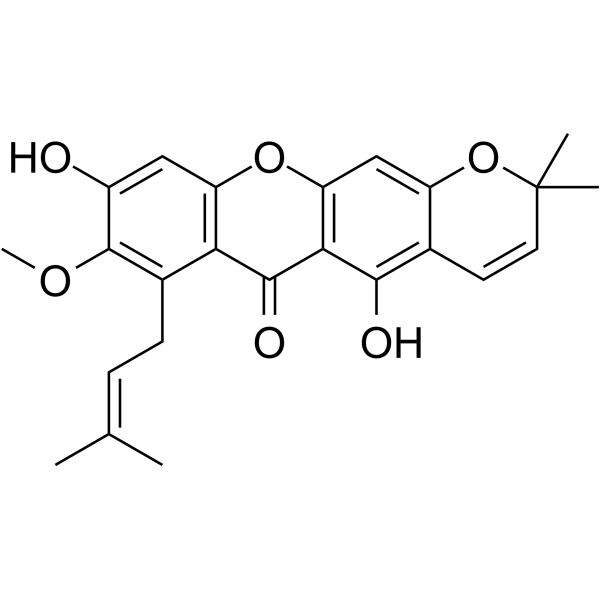
9-Hydroxycalabaxanthone (Xanthone I) is a known xanthone isolated from Garcinia mangostana Linn. 9-Hydroxycalabaxanthone has quorum-sensing inhibitory, anti-microbial, and anti-malarial activities (IC50=1.2-1.5 μM) .
loading...
    loading...
Cat. No.: HY-N5005
CAS No.: 4758-99-0
Synonyms: Atisinium chloride
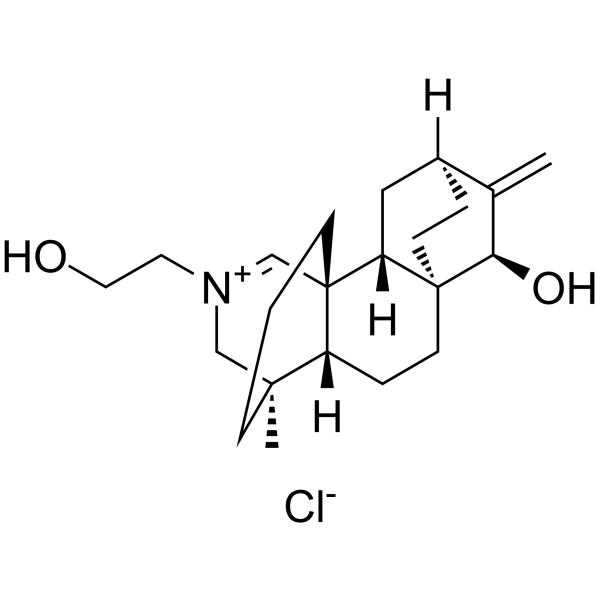
Guanfu base H (Atisinium chloride) is a diterpenoid alkaloid isolated from Aconitum coreanum and has antiplasmodial activity against the malarial Plasmodium falciparum strains TM4/8.2 (wild type) and K1CB1 with IC50 values of 4 μM and 3.6 μM, respectively .
loading...
    loading...
Cat. No.: HY-10529R
CAS No.: 472-15-1
Synonyms: Lupatic acid (Standard); Betulic acid (Standard)
Betulinic acid (Standard) is the analytical standard of Betulinic acid. This product is intended for research and analytical applications. Betulinic acid is a natural pentacyclic triterpenoid, acts as a eukaryotic topoisomerase I inhibitor, with an IC50 of 5 μM, and possesses anti-HIV, anti-malarial, anti-inflammatory and anti-tumor properties . Betulinic acid can cross the blood-brain barrier.
loading...
    loading...
Cat. No.: HY-B1370B
CAS No.: 137433-23-9
Synonyms: (R)-HCQ
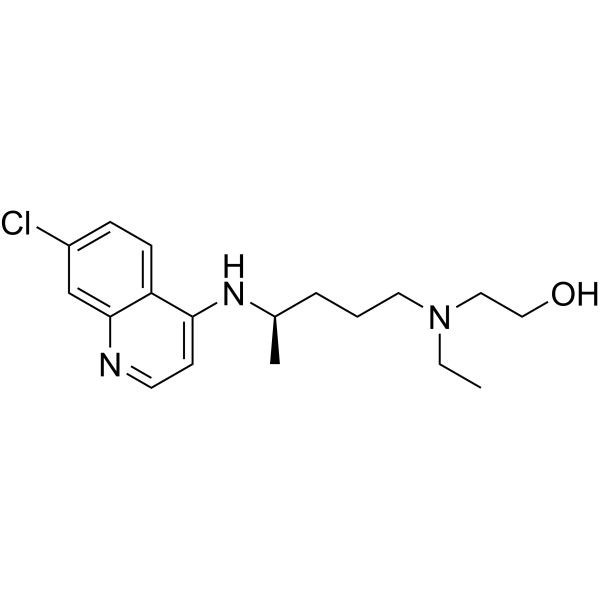
(R)-Hydroxychloroquine is the enantiomer of Hydroxychloroquine . Hydroxychloroquine is a synthetic antimalarial agent which can also inhibit Toll-like receptor 7/9 (TLR7/9) signaling. Hydroxychloroquine is efficiently inhibits SARS-CoV-2 infection in vitro .
loading...
    loading...
Cat. No.: HY-W109038
CAS No.: 2525-02-2
Research Areas:  

Infection

4-Propylcatechol is an Allylpyrocatechol (HY-124127) analog. 4-Propylcatechol shows anti-malarial activity against Plasmodium falciparum CDC-1 with an IC50 of 32 µM .
loading...
    loading...
Cat. No.: HY-N12077
CAS No.: 126260-97-7
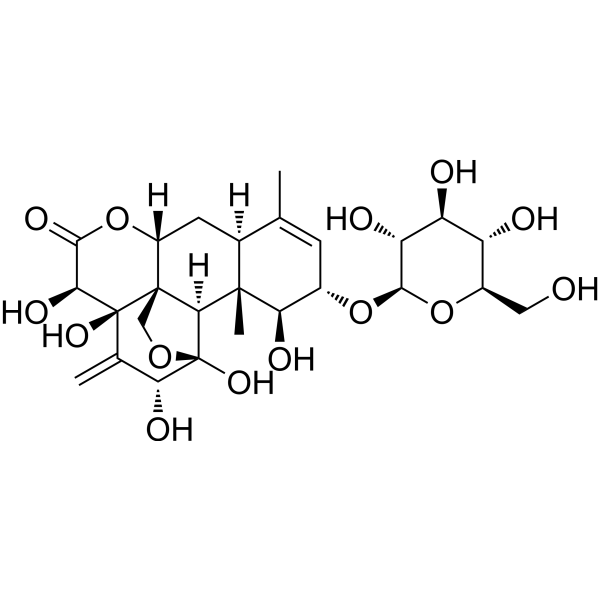
Eurycomanol 2-O-β-D-glucopyranoside (compound 4) is a natural product that can be obtained from Eurycoma longifolia. Eurycomanol 2-O-β-D-glucopyranoside has the potential for anti-malarial research .
loading...
    loading...

