



1095 Results for "

polysaccharide

" in MedChemExpress (MCE) Product Catalog:
Products (1095)

1095 Results for "polysaccharide" in MCE Product Catalog:

1
1 Cited Publications
Cat. No.: HY-K0604

MCE Periodic Acid-Schiff (PAS) Staining Kit is developed based on the classical Periodic Acid–Schiff (PAS) reaction principle and is suitable for the detection of glycogen and polysaccharide-containing substances in paraffin-embedded or frozen tissue sections.

loading...
    loading...
1
1 Cited Publications
Cat. No.: HY-NP091
Synonyms: WGA
Wheat Germ Agglutinin (WGA) is a plant lectin that can be used as a probe to specifically bind biomolecules (such as polysaccharides, peptides, etc.).Wheat Germ Agglutinin (WGA) is a biological material or organic compound that can be used in life science research .
loading...
    loading...
1
1 Cited Publications
Cat. No.: HY-N6612B
CAS No.: 7182-77-6
Target:  

Bacterial

Research Areas:  

Inflammation/Immunology

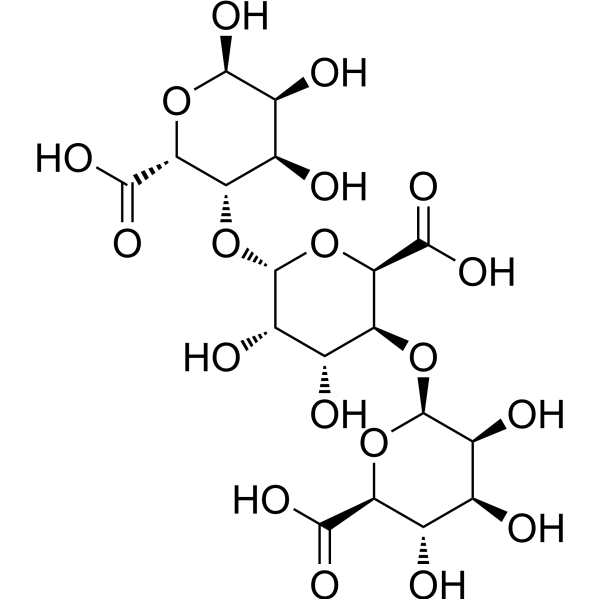
Glucuronic acid sodium is a polysaccharide that exhibits anti-inflammatory activity, supporting the healing of ulcerative colitis. Glucuronic acid sodium also enhances the intestinal barrier by upregulating tight junction proteins like ZO-1 and Occludin. Furthermore, Glucuronic acid sodium plays a role in modulating gut microbiota by increasing beneficial bacterial populations while suppressing harmful ones.
loading...
    loading...
1
1 Cited Publications
Cat. No.: HY-139413
CAS No.: 9041-22-9
Purity:  99.00%
β-D-glucan is a natural non-digestible polysaccharide and high biocompatibility that can be selectively recognized by recognition receptors such as Dectin-1 and Toll-like receptors as well as being easily internalized by murine or human macrophages, which is likely to attribute to a target delivery . β-d-glucan is an enteric delivery vehicle for probiotics .
loading...
    loading...
1
1 Cited Publications
Cat. No.: HY-W127758
CAS No.: 9005-32-7
Alginic acid is a natural polysaccharide, which has been widely concerned and applied due to its excellent water solubility, film formation, biodegradability and biocompatibility. Alginic acid induces oxidative stress-mediated hormone secretion disorder, apoptosis and autophagy in mouse granulosa cells and ovaries. Alginic acid has an inhibitory effect on histamine release. Anti-anaphylactic and anti-inflammatory properties .
loading...
    loading...
1
1 Cited Publications
Cat. No.: HY-W145667
CAS No.: 9036-88-8
Mannan is an orally active polysaccharide compound that binds to the mannose receptor (MR). Mannan promotes bacterial uptake and endosomal degradation by binding to MR, thereby enhancing the production of IL-12 in immune cells. Mannan enhances ROS production. Mannan modulates immunity, inhibits Aflatoxin B1 (HY-N6615)-induced toxicity, and reduces lipid .
loading...
    loading...
1
1 Cited Publications
Cat. No.: HY-W088070A
CAS No.: 9012-36-6
Agarose,Low melting point is a kind of agarose, a kind of polysaccharide that can be derived from seaweed. It is commonly used in molecular biology and biochemistry to isolate and purify DNA and RNA fragments. Agarose,Low melting point is a low melting point agarose, which is suitable for the recovery of large DNA fragments and enzymatic reactions in gels and other applications. In addition, it has been used in various techniques, such as pulsed field gel electrophoresis and capillary electrophoresis for analyzing genetic material.
loading...
    loading...
1
1 Cited Publications
Cat. No.: HY-D1056E
Synonyms: LPS, from Pseudomonas aeruginosa (10)
Lipopolysaccharides from P. aeruginosa (Pseudomonas aeruginosa) 10 are lipopolysaccharide endotoxins and TLR4 activators derived from Pseudomonas aeruginosa 10, and are classified as S-type LPS. Lipopolysaccharides from P. aeruginosa 10 exhibit a typical three-part structure: O-antigen, core oligosaccharide, and lipid A. The lipopolysaccharides of P. aeruginosa 10 have a fatty acid composition distinct from common enterobacteria, an exceptionally high degree of phosphorylation (triphosphate residues have been detected), and a unique outer region of the core oligosaccharide. Additionally, their O-specific side chains are typically rich in novel aminosugars. Lipopolysaccharides from P. aeruginosa 10 demonstrate susceptibility to viruses, with the level of susceptibility determined by the content of high molecular weight polysaccharides in their composition. The absence of high molecular weight polysaccharides increases their sensitivity to bacteriophages .
It is recommended to prepare a solution with concentration ≥2 mg/mL. Vortex thoroughly for more than 10 minutes. Due to the adsorption characteristics of LPS, silanized container or low adsorption centrifuge tubes should be used for aliquoting and storage, and mix thoroughly before use.
loading...
    loading...
1
1 Cited Publications
Cat. No.: HY-D0367
CAS No.: 4193-55-9
Synonyms: Calcofluor White M2R
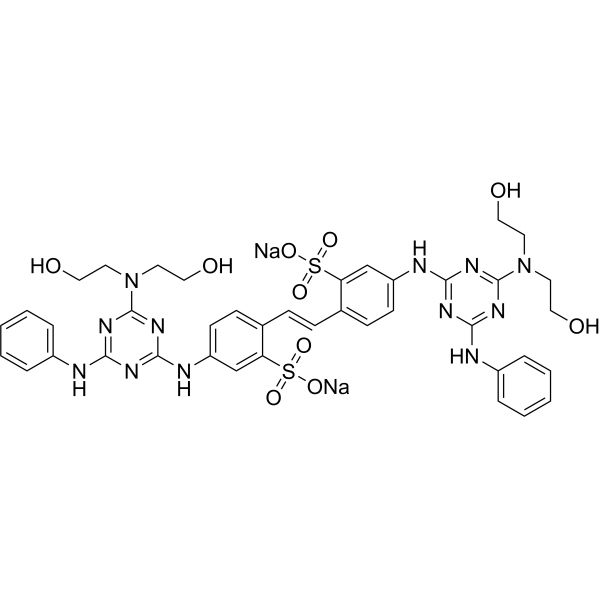
Fluorescent brightener 28 is a fluorescent whitening agent commonly used in the padding process of the textile industry. Fluorescent brightener 28 is capable of staining polysaccharides such as cellulose, and when the plasma membrane ruptures, it also weakly stains the cytoplasm and strongly stains the cell nucleus. Additionally, Fluorescent brightener 28 can be utilized to detect intracellular chitin in living cells. Fluorescent Brightener 28 also is a visible light emitting diode (LED)-light sensitive photoinitiator for free radical photopolymerizations .
loading...
    loading...
1
1 Cited Publications
Cat. No.: HY-W750459
CAS No.: 4404-43-7
Target:  

Fluorescent Dye

Research Areas:  

Others

Fluorescent brightener 28 (Technical Grade) is a fluorescent whitening agent commonly used in the padding process of the textile industry. Fluorescent brightener 28 is capable of staining polysaccharides such as cellulose, and when the plasma membrane ruptures, it also weakly stains the cytoplasm and strongly stains the cell nucleus. Additionally, Fluorescent brightener 28 can be utilized to detect intracellular chitin in living cells. Fluorescent Brightener 28 also is a visible light emitting diode (LED)-light sensitive photoinitiator for free radical photopolymerizations .
loading...
    loading...
1
1 Cited Publications
Cat. No.: HY-113044R
CAS No.: 133-89-1
Synonyms: UDP-D-Glucose (Standard)
Uridine 5′-diphosphoglucose (Standard) (UDP-D-Glucose (Standard)) is the analytical standard of Uridine 5′-diphosphoglucose (HY-113044). This product is intended for research and analytical applications. Uridine 5’-diphosphoglucose (UDP-glucose), secreted by cardiomyocytes during ischemia and reperfu, is a potent agonist of the proinflammatory P2Y14 receptor. It acts an important role in the regulation of inflammation and neutrophil polarization in neutrophils. Uridine 5’-diphosphoglucose is also the precursor of glucose-containing oligosaccharides, polysaccharides, glycoproteins, and glycolipids in animal tissues and in some microorganisms. Uridine 5’-diphosphoglucose is promising for research in counteracting myocardial infarction/reperfusion (MIR)-induced inflammation in the heart tissue.
loading...
    loading...
1
1 Cited Publications
Cat. No.: HY-112624I
CAS No.: 9004-54-0
Synonyms: Dextran 3; Dextran D3; Dextran T3(MW 2400-3600)
Dextran T3 (Dextran 3; Dextran T3(MW 2400-3600)) is a neural tracer and intestinal permeability probe that can move anterogradely and retrogradely in neuronal axons by passive diffusion. Dextran T3 (MW 3,000) is able to permeate across the intestinal epithelial cell membrane in the presence of cholera toxin-induced cytoskeletal disturbance. Dextran T3 (MW 3,000) is used as a fluorescent marker to rapidly label developing neurons (such as Xenopus retinal ganglion cells) and to assess intestinal barrier function. It can be used to study axonal transport in neuroanatomy and permeability changes in intestinal pathophysiology. The Dextran series of compounds are also natural polysaccharide drug carriers that can be connected to drugs through covalent bonding methods such as ester bonds, amide bonds or click chemistry, or self-assembled to form carriers such as nanoparticles and hydrogels. Dextran is biodegradable and biocompatible, and can achieve targeted delivery and controlled release of drugs. Dextran derivatives can prolong the half-life of drugs, increase local concentrations, and reduce the activity of immune clearance .
loading...
    loading...
Cat. No.: HY-W250146
CAS No.: 9000-40-2
Synonyms: Locust bean gum, polysaccharide>75%, 5000-6500 mPa·S
Locust bean gum is a natural polysaccharide derived from the seeds of the carob tree. It is commonly used as a thickening, stabilizing and gelling agent in a variety of foods, including dairy, baked goods and meat products. Locust bean gum has several properties suitable for these applications, including high water retention capacity, ability to form stable gels at low temperatures, and resistance to acidic conditions. Additionally, it can be used as a dietary fiber supplement due to its potential health benefits, including improving digestion and lowering cholesterol levels.
loading...
    loading...
Cat. No.: HY-134181A
CAS No.: 9075-53-0
Tremella polysaccharide, MW<1000000, cosmetic grade, one of the fungus polysaccharides, possesses immunity enhancing capabilities. Polysaccharidase has the potential for leukopenia induced by chemotherapy and radiotherapy research .
loading...
    loading...
Cat. No.: HY-159068
Purity:  95%
Coreopsis tinctoria polysaccharide is a polysaccharide.
loading...
    loading...
Cat. No.: HY-134181
CAS No.: 9075-53-0
Tremella polysaccharide, MW>1000000, cosmetic grade, one of the fungus polysaccharides, possesses immunity enhancing capabilities. Polysaccharidase has the potential for leukopenia induced by chemotherapy and radiotherapy research .
loading...
    loading...
Cat. No.: HY-W763706A
CAS No.: 39386-78-2
Synonyms: Tamarind seed polysaccharide, 98%
Tamarind Gum from Tamarind seed, 98% (Tamarind seed polysaccharide, 98%) can be obtained from Tamarindus Indica L. Tamarind Gum from Tamarind seed is a polysaccharide thickener .
loading...
    loading...
Cat. No.: HY-L216
70 compounds

Polysaccharides are long chains of carbohydrate molecules, consisting of multiple smaller monosaccharides. Polysaccharides are found mainly in natural sources such as plants, microorganisms, algae and animals. Polysaccharides have a large number of active functional groups, different chemical compositions and different molecular weight ranges, which determines their diversity in nature and structure. Also in the field of medical research, polysaccharides act as a class of functional compounds and thus play a role. For example, nanocarrier construction, immunomodulation and vaccine development, new strategies for antitumor therapy, tissue regeneration engineering applications and disease diagnosis. With the advancement of glycomics and synthetic biotechnology, human beings are moving from “knowing polysaccharides” to “designing polysaccharides”, which will provide innovative solutions for materials science, precision medicine and sustainable development.

MCE offers 70 polysaccharides that can be used in biomedical studies.

Cat. No.: HY-N21420
polysaccharide from jujube fruit is a polysaccharide derived from polysaccharide from jujube fruit.
loading...
    loading...
Cat. No.: HY-N20876
Lycopus lucidus turcz.polysaccharide is a polysaccharide derived from Lycopus lucidus turcz.polysaccharide.
loading...
    loading...

