31 Results for "

BCL2/BAX modulator

" in MedChemExpress (MCE) Product Catalog:
Products (31)

31 Results for "BCL2/BAX modulator" in MCE Product Catalog:

Cat. No.: HY-N1423S1
CAS No.: 2170091-95-7
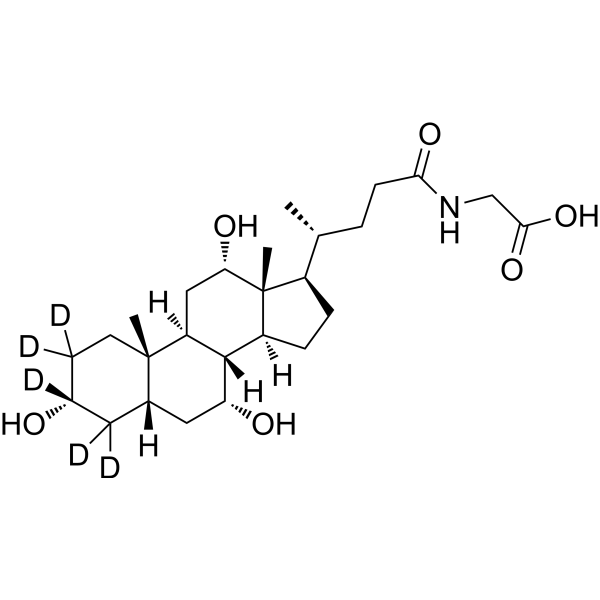
Glycocholic acid-d5 is the deuterium labeled Glycocholic acid (HY-N1423). Glycocholic acid is a bile acid derivative. Glycocholic acid downregulates MDR1, Bcl-2, MRP1, MRP2 and FXR, upregulates Bax, p53, caspase-9, caspase-3, TGR5 and S1PR2. Glycocholic acid inhibits multidrug resistance and efflux pumps, induces mitochondrial apoptosis, and enhances chemosensitivity. Glycocholic acid modulates related bile acid receptor signaling. Glycocholic acid suppresses growth and conjugation of Enterobacteriaceae and increases their antibiotic susceptibility. Glycocholic acid can be used for the research of colon adenocarcinoma and cholangiocarcinoma (CCA).
loading...
    loading...
Cat. No.: HY-N2199
CAS No.: 2608-21-1
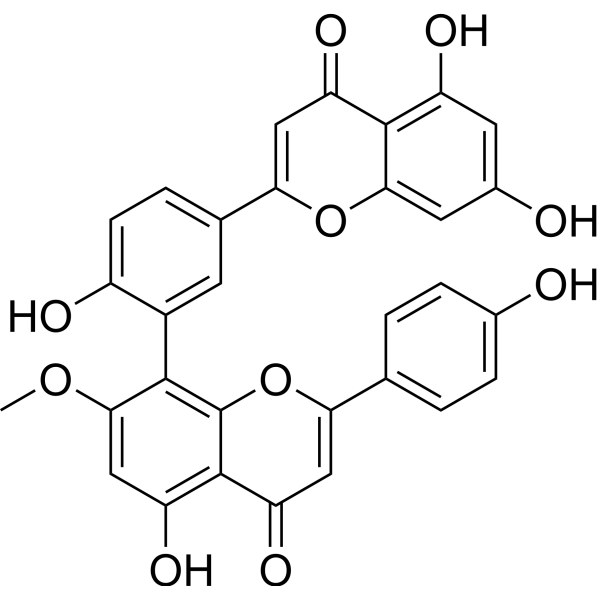
Sotetsuflavone is a flavonoid that can be isolated from Cycas revolute. Sotetsuflavone inhibits phosphorylation of PI3K, Akt, mTOR, JNK, and p38 MAPK; modulates expression of Cyclin D1, CDK4, Bcl-2, Bax, cleaved caspases 3/9, MMP-9, TGF-β, STAT3, and β-catenin. Sotetsuflavone induces G0/G1 cell cycle arrest, apoptosis, autophagy, and intracellular ROS elevation, inhibits cancer cell proliferation. Sotetsuflavone inhibits tumor growth in mouse tumor xenograft models. Sotetsuflavone can be used for the research of non-small cell lung cancer and Crohn’s disease .
loading...
    loading...
Cat. No.: HY-179155
PI3K/mTOR-IN-19 is an orally active, potent, selective PI3K (IC50 = 4.23 nM) and mTOR (IC50 = 2.3 nM) inhibitor. PI3K/mTOR-IN-19 significantly inhibits Eca109 cell viability and induces apoptosis. PI3K/mTOR-IN-19 causes G0/G1 cell cycle arrest, decreased mitochondrial membrane potential, and demonstrates marked telomerase inhibitory activity. PI3K/mTOR-IN-19 modulates the expression of key apoptotic regulators (Bcl-2, Bax, and p53) and downregulates the PI3K/Akt/mTOR signaling pathway. PI3K/mTOR-IN-19 can be used for the study of esophageal cancer .
loading...
    loading...
Cat. No.: HY-170648
Research Areas:  

Cancer

TS-IN-5 (Compound 15) is a thymidylate synthase (TS) inhibitor. TS-IN-5 induces Apoptosis by modulating Bax, BCL-2, PI3K, and STAT1 proteins. TS-IN-5 shows antitumor effects against liver, breast and colon cancers .
loading...
    loading...
Cat. No.: HY-N1423AR
CAS No.: 863-57-0
Glycocholic acid (sodium) (Standard) is the analytical standard of Glycocholic acid sodium (HY-N1423A). This product is intended for research and analytical applications. Glycocholic acid sodium is a bile acid derivative. Glycocholic acid downregulates MDR1, Bcl-2, MRP1, MRP2 and FXR, upregulates Bax, p53, caspase-9, caspase-3, TGR5 and S1PR2. Glycocholic acid sodium inhibits multidrug resistance and efflux pumps, induces mitochondrial apoptosis, and enhances chemosensitivity. Glycocholic acid sodium modulates related bile acid receptor signaling. Glycocholic acid sodium suppresses growth and conjugation of Enterobacteriaceae and increases their antibiotic susceptibility. Glycocholic acid sodium can be used for the research of colon adenocarcinoma and cholangiocarcinoma (CCA).
loading...
    loading...
Cat. No.: HY-W754548
Glycocholic acid- 13C2,d4 is the deuterium labeled and 13C-labeled Glycocholic acid (HY-N1423). Glycocholic acid is a bile acid derivative. Glycocholic acid downregulates MDR1, Bcl-2, MRP1, MRP2 and FXR, upregulates Bax, p53, caspase-9, caspase-3, TGR5 and S1PR2. Glycocholic acid inhibits multidrug resistance and efflux pumps, induces mitochondrial apoptosis, and enhances chemosensitivity. Glycocholic acid modulates related bile acid receptor signaling. Glycocholic acid suppresses growth and conjugation of Enterobacteriaceae and increases their antibiotic susceptibility. Glycocholic acid can be used for the research of colon adenocarcinoma and cholangiocarcinoma (CCA).
loading...
    loading...
Cat. No.: HY-101310R
CAS No.: 31137-74-3
SYM 2081 (Standard) is the analytical standard of SYM 2081 (HY-101310). This product is intended for research and analytical applications. SYM 2081 is a kainate receptor agonist. SYM 2081 is a substrate of EAAT1 (Km of 54 μM). SYM 2081 inhibits EAAT2-mediated glutamate transport (Kb is 3.4 μM in Xenopus oocytes), modulates Apoptotic signaling pathways (increases Bcl-2 and decreases Bax/caspase-3 expression). SYM 2081 exhibits neuroprotective activity. SYM 2081 can be used in the study of hypoxic-ischemic brain damage and inflammatory or neuropathic pain .
loading...
    loading...
Cat. No.: HY-N1255A
CAS No.: 51486-68-1
Synonyms: (-)-Scoulerine hydrochloride; Discretamine hydrochloride
Scoulerine ((-)-Scoulerine; Discretamine) hydrochloride is a multi-target inhibitor with anti-tumor and antioxidant activities. Scoulerine hydrochloride mainly targets the PI3K/Akt/mTOR signaling axis and α1D-adrenergic receptor, disrupts microtubule structure, and induces cell cycle arrest and apoptosis. Scoulerine hydrochloride effectively inhibits mitochondrial dehydrogenase activity, targets GABA receptors and BACE1, and suppresses the proliferation, migration, invasion, epithelial-mesenchymal transition and stem cell properties of cancer cells. Scoulerine hydrochloride also exhibits multiple pharmacological activities including anti-Plasmodium falciparum, antibacterial, antiemetic and antitussive effects, and regulates endoplasmic reticulum stress and mitochondrial function (modulates Bax, Bcl-2 and cytochrome c). Scoulerine hydrochloride is applicable to research related to leukemia, ovarian cancer, and colorectal cancer .
loading...
    loading...
Cat. No.: HY-N17617
CAS No.: 70238-51-6
S-Petasin is a phosphodiesterase (PDE) inhibitor with IC50 values of 25.5 μM and 17.5 μM for PDE3 and PDE4, respectively. S-Petasin inhibits cholesterol side-chain cleavage enzyme, 11β-hydroxylase, PPAR-γ, and iNOS induction at RNA and protein levels. S-Petasin induces apoptosis, activates caspases, cleaves PARP, modulates mitochondrial membrane permeability, and regulates BCL2/BAX, p53, Bcl-XL, MMP-2, MMP-9, p21, CDK4, and cyclin D1 expression. S-Petasin reduces inflammatory cell accumulation, cytokine and IgE levels, and enhances serum IgG2a levels. S-Petasin relaxes isolated sensitized guinea pig trachealis and exhibits gastrointestinal anti-spasmodic activity. S-Petasin reduces tonsillitis severity and asthmatic attack frequency. S-Petasin can be used for the research of prostate cancer, obesity, melanoma, allergic asthma, asthma, and peritonitis .
loading...
    loading...
Cat. No.: HY-182360
Cytisine-Platinum(IV) Prodrug-1 is a Pt(IV) prodrug incorporating the natural compound Cytisine (HY-N0175) with antiproliferative activity against tumor cells. Cytisine-Platinum(IV) Prodrug-1 promotes calcium transfer across the IP3R1-GRP75-VDAC1 axis to drive mitochondrial calcium overload. Cytisine-Platinum(IV) Prodrug-1 initiates unfolded protein response via PERK, eIF2α, ATF4, and CHOP to modulate Bcl-2 and Bax, triggering apoptosis. Cytisine-Platinum(IV) Prodrug-1 induces mitochondrial dysfunction, ROS production, reduced ATP synthesis, DNA damage, and S-phase cell cycle arrest. Cytisine-Platinum(IV) Prodrug-1 activates the cGAS-STING pathway, reduces PD-L1 expression, drives immunogenic cell death. Cytisine-Platinum(IV) Prodrug-1 exhibits high physiological stability, efficient cellular accumulation, and enhanced platinum-DNA binding, and inhibits tumor growth in mouse models with reduced systemic toxicity. Cytisine-Platinum(IV) Prodrug-1 can be used for the research of lung cancer .
loading...
    loading...
Cat. No.: HY-184501
CAS No.: 486440-74-8
Research Areas:  

Cancer

UE01 is an orally active, selective small-molecule modulator targeting both ULK1/ERK1/2. UE01 activates hULK1 with an EC50 of 695.30 nM and a KD of 114.3 nM for ULK1; it inhibits hERK1 with an IC50 of 179.90 nM and a KD of 114 nM for ERK1; it shows weak binding to ERK2 with a KD of 2.8 mM. UE01 induces the conformational transition of ULK1 from an inactive to an active state, enhances the phosphorylation of ULK1 Ser317 and mAtg13 Ser355, and reduces the phosphorylation of ULK1 Ser757. UE01 competitively occupies the ATP-binding pocket of ERK1, inhibits ERK1 kinase activity, and reduces the activity of the ERK1/2 signaling pathway. UE01 induces complete autophagy flux and apoptosis, upregulates Atg5, Atg7, LC3-II/LC3-I, Bax, cytochrome C (Cyt c), Cleaved-Caspase 3, Cleaved-PARP1 and E-cadherin, downregulates p62, Bcl-2, MMP-2 and MMP-9, reduces the phosphorylation of Exo70 Ser250, and promotes the proteasome-dependent degradation of Cav-1, thereby inhibiting EMT-related phenotypes and extracellular matrix degradation. UE01 can be used in studies related to triple-negative breast cancer .
loading...
    loading...

