213 Results for "

RAS-selective lethal 3

" in MedChemExpress (MCE) Product Catalog:
Products (213)

213 Results for "RAS-selective lethal 3" in MCE Product Catalog:

1
1 Cited Publications
Cat. No.: HY-P2460
CAS No.: 172485-26-6
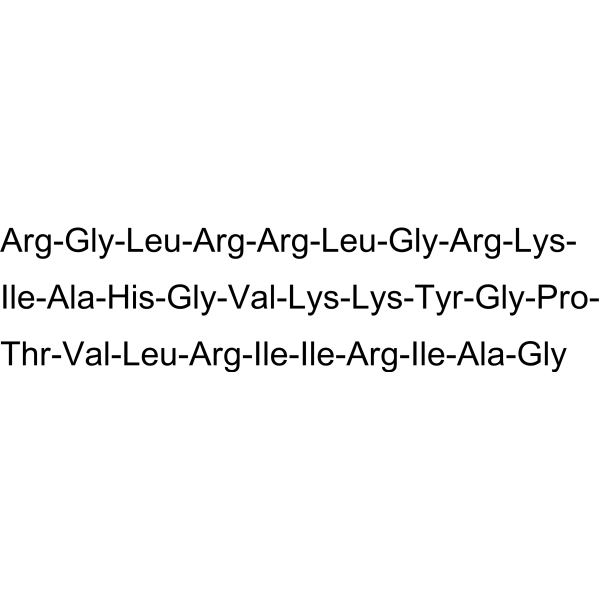
SMAP‑29 is a cathelicidin antimicrobial peptide with LPS‑binding and anti‑inflammatory properties. SMAP‑29 exerts broad‑spectrum antimicrobial activity against bacteria, fungi and multidrug‑resistant isolates. SMAP‑29 kills pathogens by permeabilizing bacterial membranes, inducing depolarization and cell lysis, and also inhibits inflammatory cytokines while reducing lethality in septic shock and pneumonia models. SMAP-29 can be used for research on bacterial infections, drug-resistant infections, septic shock [3] .
loading...
    loading...
1
1 Cited Publications
Cat. No.: HY-N2512
CAS No.: 589-68-4
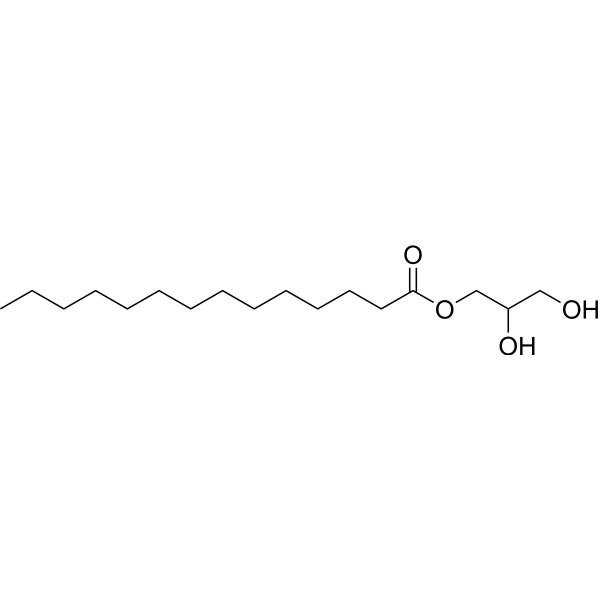
1-Monomyristin acts as an insecticide, enzyme inhibitor, antibacterial and antifungal agent, with an IC50 of 18 μM against rat FAAH and an IC50 of 32 μM against rat MAGL. 1-Monomyristin inhibits 2-oleoylglycerol hydrolysis via MAGL. 1-Monomyristin suppresses the growth of Staphylococcus aureus, Aggregatibacter actinomycetemcomitans and Candida albicans. 1-Monomyristin is lethal to brine shrimp [3]. 1-Monomyristin exhibits marginal cytotoxicity against prostate cancer cells. 1-Monomyristin is applicable to research related to bacterial infections, fungal infections, renal cancer, prostate adenocarcinoma and pancreatic cancer [3].
loading...
    loading...
1
1 Cited Publications
Cat. No.: HY-117146
CAS No.: 173584-44-6
Synonyms: (S)-DPX-JW062
Target:  

Parasite

Research Areas:  

Infection

Indoxacarb ((S)-DPX-JW062) is an oxathiazole insecticide with activity against a wide range of insect pests. Indoxacarb is used in forest pest management to control insect pests, and its toxicity has significant effects on adult individuals of the predatory stink bug Podisus distinctus. Indoxacarb showed high toxicity to P. distinctus at a lethal concentration (LC50 = 2.62 g L-1). Indoxacarb treatment significantly reduced the survival rate of P. distinctus, with the survival rate of individuals exposed to 2.62 g L-1 decreasing to 40.7%. Indoxacarb also reduced the respiration rate of P. distinctus from 18.45 to 14.41 μL CO2 h-1, and inhibited its food intake. P. distinctus showed hyperexcitatory responses after Indoxacarb treatment .
loading...
    loading...
1
1 Cited Publications
Cat. No.: HY-113308AS
CAS No.: 2410279-97-7
Purity:  99.4%
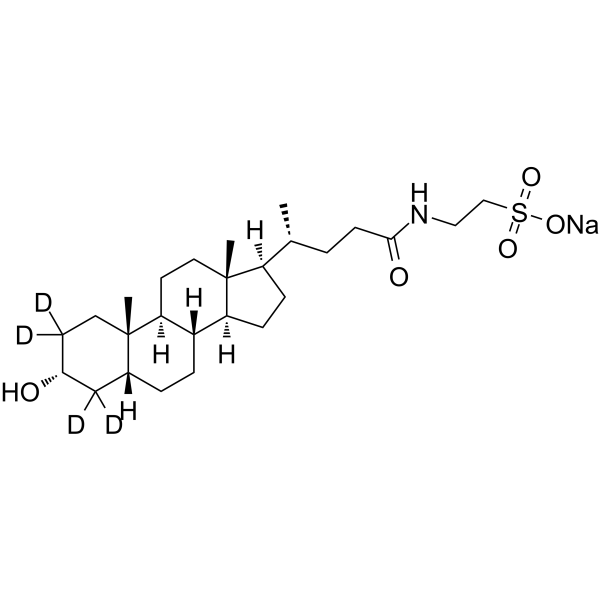
Taurolithocholic acid-d4 (sodium) is the deuterium labeled Taurolithocholic acid (sodium salt). Taurolithocholic acid sodium is an orally active bile acid and antiviral agent. Taurolithocholic acid sodium upregulates FADS2 by activating the TGR5-PI3K/AKT-SREBP2 signaling axis, inhibits SFTSV-induced ferroptosis, viral replication and viral entry of HBV/HDV, while reducing the release of IL-1β, lipid ROS and LDH. While exerting antiviral protective effects, Taurolithocholic acid sodium also stimulates the recycling of hepatocellular membrane transporters, impairs canalicular bile acid secretion function, and induces hepatocyte cholestasis, apoptosis and acute hepatocellular injury. Taurolithocholic acid sodium serves as an experimental model compound for hepatocellular cholestasis. At concentrations ≤200 μM, Taurolithocholic acid sodium shows no cytotoxicity and does not activate the interferon pathway. Taurolithocholic acid sodium not only protects mice from lethal SFTSV infection but also is suitable for studies related to severe fever with thrombocytopenia syndrome and cholestasis [3] .
loading...
    loading...
1
1 Cited Publications
Cat. No.: HY-113308S1
CAS No.: 2410279-96-6
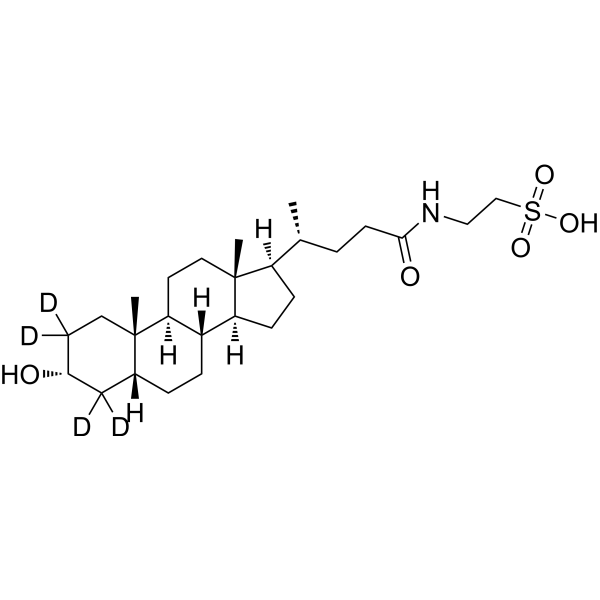
Taurolithocholic acid-d4 is deuterium labeled Taurolithocholic acid. Taurolithocholic acid is an orally active bile acid and antiviral agent. Taurolithocholic acid upregulates FADS2 by activating the TGR5-PI3K/AKT-SREBP2 signaling axis, inhibits SFTSV-induced ferroptosis, viral replication and viral entry of HBV/HDV, while reducing the release of IL-1β, lipid ROS and LDH. While exerting antiviral protective effects, Taurolithocholic acid also stimulates the recycling of hepatocellular membrane transporters, impairs canalicular bile acid secretion function, and induces hepatocyte cholestasis, apoptosis and acute hepatocellular injury. Taurolithocholic acid serves as an experimental model compound for hepatocellular cholestasis. At concentrations ≤200 μM, Taurolithocholic acid shows no cytotoxicity and does not activate the interferon pathway. Taurolithocholic acid not only protects mice from lethal SFTSV infection but also is suitable for studies related to severe fever with thrombocytopenia syndrome and cholestasis [3] .
loading...
    loading...
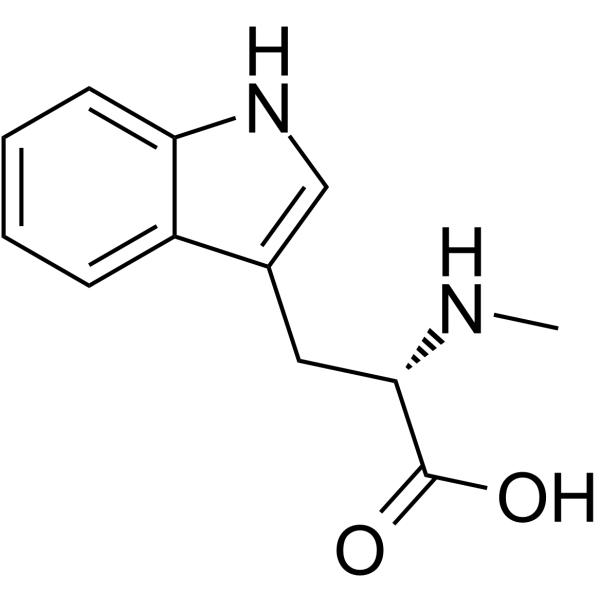
Cat. No.: HY-N1436
CAS No.: 526-31-8
Synonyms: L-Abrine; L-N-Methyltryptophan; N-α-Methyl-L-tryptophan
L-(+)-Abrine, a lethal albumin found in Abrus precatorius seeds, is an acute toxic alkaloid and chemical marker for abrin.
loading...
    loading...
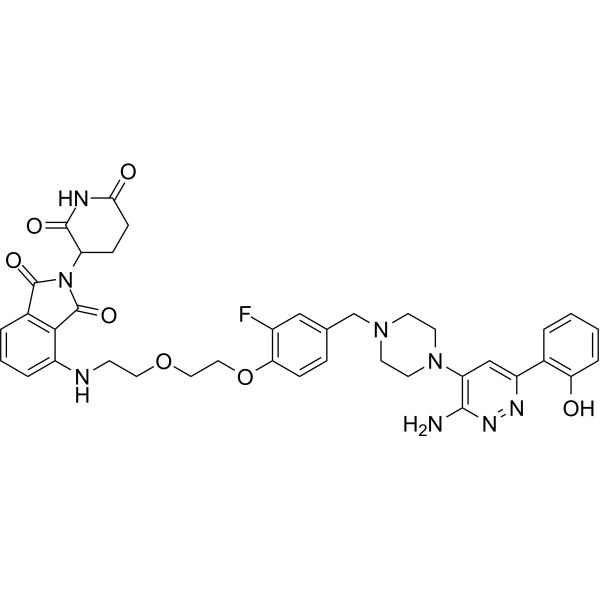
Cat. No.: HY-153361
CAS No.: 2951015-29-3
Purity:  98.80%
Target:  

PROTACs SWI/SNF Complex

Research Areas:  

Inflammation/Immunology Cancer

YD23 is a selective SMARCA2 PROTAC degrader with DC50 values of 64 nM and 297 nM in H1792 cells and H1975 cells. YD23 induces degradation of SMARCA2, which is synthetic lethal to SMARCA4. YD23 reduces chromatin accessibility only in SMARCA4 deficient cells, including cell cycle and cell growth regulatory genes. YD23 selectively inhibits growth of SMARCA4 mutant lung cancer cells. YD23 has potent tumor growth inhibitory activity in SMARCA4-mutant xenografts. YD23 can be used for the study of non-small cell lung cancer (NSCLC) .
loading...
    loading...
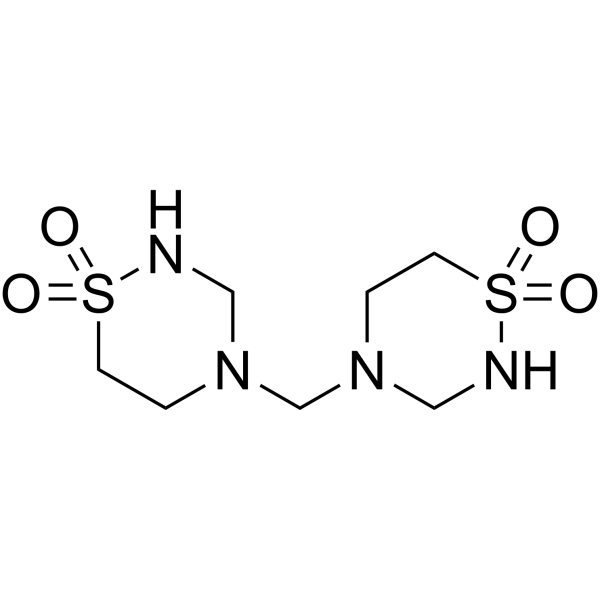
Cat. No.: HY-W011522
CAS No.: 19388-87-5
Research Areas:  

Infection Cancer

Taurolidine is a potent antimicrobial and anticancer agent. Taurolidine inhibits cell proliferation. Taurolidine induces apoptosis and autophagy. Taurolidine rescues mice from sepsis-associated lethality .
loading...
    loading...
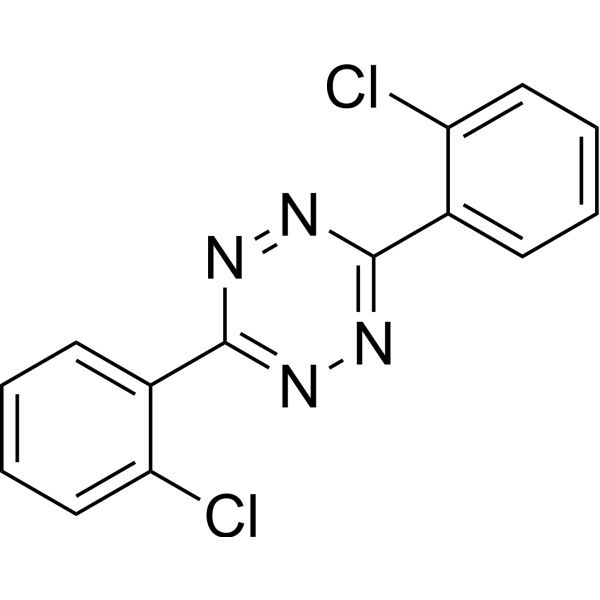
Cat. No.: HY-B2066
CAS No.: 74115-24-5
Research Areas:  

Others

Clofentezine is a growth inhibitor that is highly lethal to mites .
loading...
    loading...
Cat. No.: HY-W011522R
CAS No.: 19388-87-5
Taurolidine (Standard) is the analytical standard of Taurolidine. This product is intended for research and analytical applications. Taurolidine is a potent antimicrobial and anticancer agent. Taurolidine inhibits cell proliferation. Taurolidine induces apoptosis and autophagy. Taurolidine rescues mice from sepsis-associated lethality[1][2].
loading...
    loading...
Cat. No.: HY-N7091S2
CAS No.: 163165-75-1
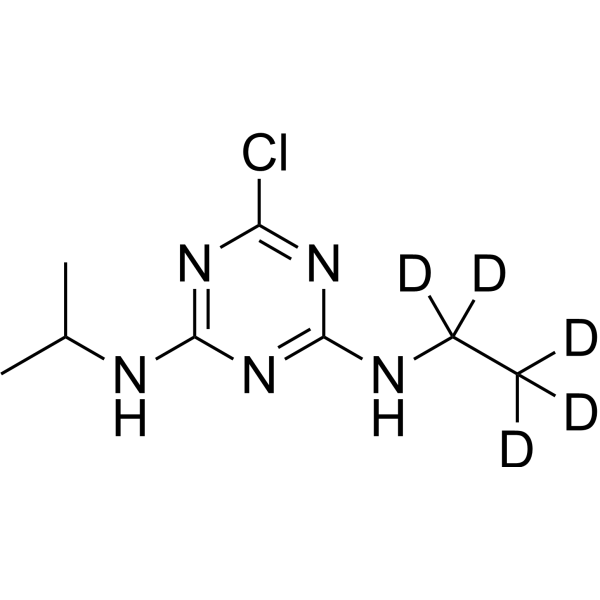
Atrazine-d5 is deuterium labeled Atrazine. Atrazine is principally used for control of certain annual broadleaf and grass weeds. Atrazine inhibits photophosphorylation but typically does not result in lethality or permanent cell damage in the short term .
loading...
    loading...
Cat. No.: HY-148114
CAS No.: 1485521-76-3
Target:  

Autophagy

Research Areas:  

Neurological Disease Cancer

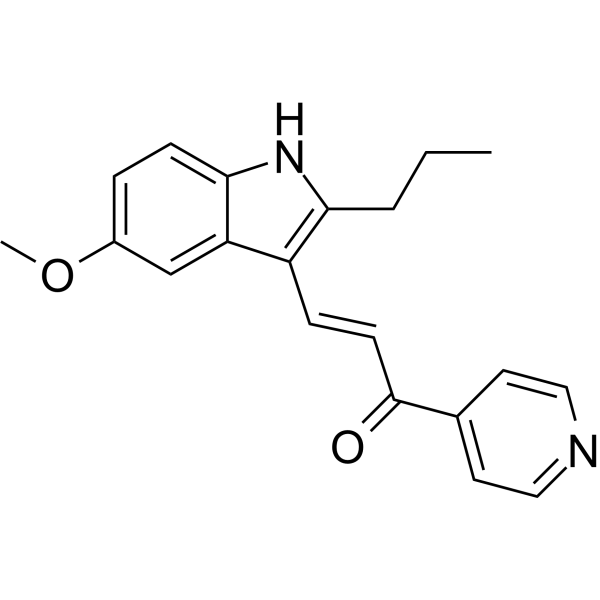
MOPIPP is a novel indolebased chalcone, and vacuolin-1, is a non-lethal vacuoleinducing 2-propyl analog of MOMIPP (HY-119624). MOPIPP induces cellular vacuolization and increases autophagosomes numbers. MOPIPP can be used for the study of glioblastoma cells .
loading...
    loading...
Cat. No.: HY-B0401R
CAS No.: 64-77-7
Research Areas:  

Metabolic Disease Cancer

Tolbutamide (Standard) is the analytical standard of Tolbutamide. This product is intended for research and analytical applications. Tolbutamide is an orally active KATP inhibitor. Tolbutamide inhibits cell proliferation, stimulates exocytosis of glucagon and reduces fetal lethality of mice. Tolbutamide can be used in the research of diabete [3] .
loading...
    loading...
Cat. No.: HY-144691
CAS No.: 3032108-74-7
Purity:  99.99%
Target:  

PROTACs CDK

Research Areas:  

Cancer

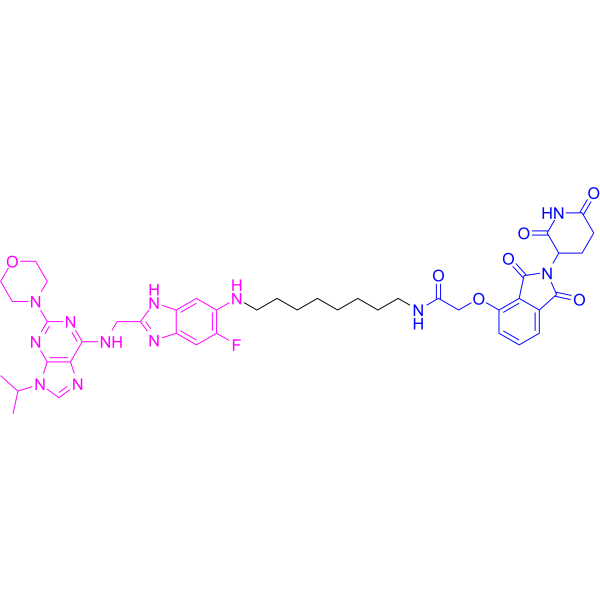
PP-C8 is a potent and selective PROTAC CDK12-Cyclin K degrader. PP-C8 induces CDK12-Cyclin K degradation with DC50s of 416 and 412 nM for CDK12 and Cyclin K, respectively. PP-C8 demonstrates profound synergistic antiproliferative effects with PARP inhibitor in triple-negative breast cancer (TNBC) .
loading...
    loading...
Cat. No.: HY-171160
Target:  

SARS-CoV

Research Areas:  

Infection

WYFA-15 is a sphingomyelin synthase 1 (SMS1) inhibitor that protects mice against lethal SFTSV infection and reduce SARS-CoV-2 replication and pathogenesis. WYFA-15 can be utilized in anti-virus research .
loading...
    loading...
Cat. No.: HY-N7091R
CAS No.: 1912-24-9
Research Areas:  

Metabolic Disease

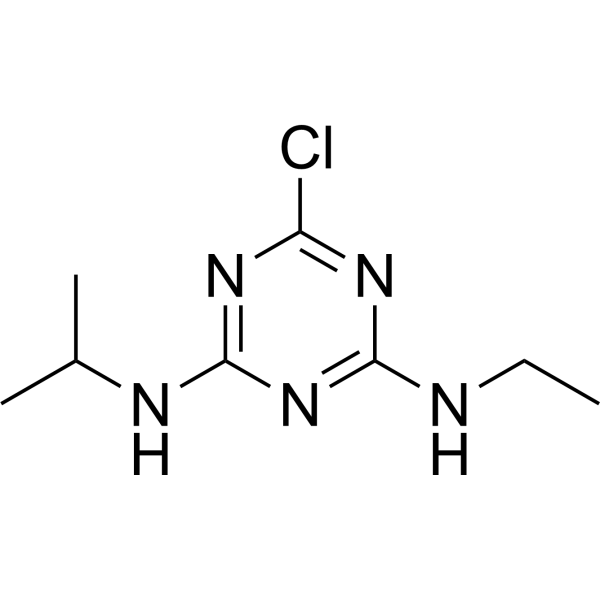
Atrazine (Standard) is the analytical standard of Atrazine. This product is intended for research and analytical applications. Atrazine is principally used for control of certain annual broadleaf and grass weeds. Atrazine inhibits photophosphorylation but typically does not result in lethality or permanent cell damage in the short term .
loading...
    loading...
Cat. No.: HY-155798
CAS No.: 2871057-47-3
Research Areas:  

Cancer

BBI-2779 is a highly selective, orally active CHK1 inhibitor with a CHK1 IC50 of 0.3 nM. BBI-2779 leverages transcription-replication conflicts on extrachromosomal DNA (ecDNA) to induce synthetic lethality, replication stress, DNA damage and cell death in ecDNA-positive tumor cells. BBI-2779 blocks ecDNA-mediated acquired resistance to targeted therapies and inhibits tumor growth in mouse models of gastric cancer. BBI-2779 is applicable to ecDNA-positive cancer-related research .
loading...
    loading...
Cat. No.: HY-157901
CAS No.: 3413-97-6
Synonyms: 2,3-Dihydroxybutyric acid
Target:  

Drug Derivative

Research Areas:  

Cancer

2,3-Dihydroxybutanoic acid is an anticancer agent that can be extracted from the leaves of Corydalis. 2,3-Dihydroxybutanoic acid has anticancer activity both in vitro and in vivo and is lethal to Ehrlich ascites tumor cells .
loading...
    loading...
Cat. No.: HY-103639A
CAS No.: 613263-00-6
Purity:  99.86%
Research Areas:  

Infection

M62812 is a toll-like receptor 4 (TLR4) signaling inhibitor. M62812 inhibits endothelial and leukocyte activation and prevents lethal septic shock in mice. M62812 can reduces LPS-induced coagulation and inflammatory responses. M62812 can be used for the research of sepsis .
loading...
    loading...
Cat. No.: HY-P1010A
CAS No.: 524746-03-0
Target:  

Caspase Apoptosis

Research Areas:  

Neurological Disease Cancer

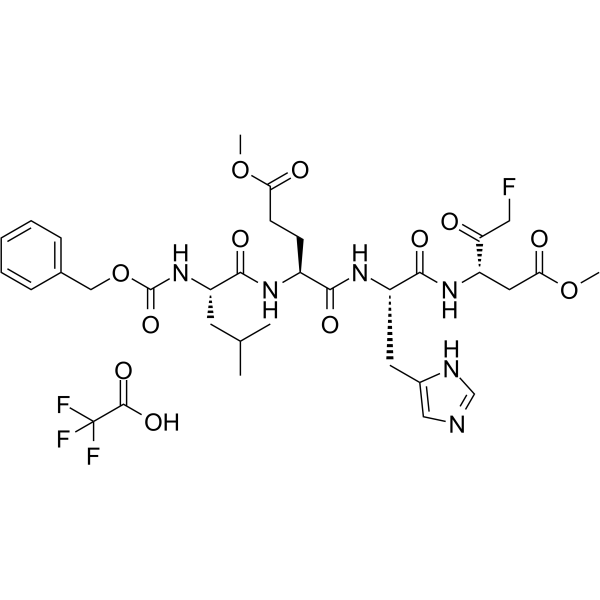
Z-LEHD-FMK TFA is a selective and irreversible inhibitor of caspase-9, protects against lethal reperfusion injury and attenuates apoptosis. Z-LEHD-FMK TFA exhibits the neuroprotective effect in a rat model of spinal cord trauma [3].
loading...
    loading...

