
87 Results for "

cellular systems

" in MedChemExpress (MCE) Product Catalog:
Products (87)

87 Results for "cellular systems" in MCE Product Catalog:

Cat. No.: HY-D1056B4
Synonyms: LPS, from bacterial (Salmonella typhosa)
Lipopolysaccharides, from Salmonella typhosa are lipopolysaccharide endotoxins and TLR-4 activators derived from Salmonella typhosa, classified as S-type LPS, which can activate pathogen-associated molecular patterns (PAMP) of the immune system and induce cellular secretion of migrasomes. Lipopolysaccharides, from Salmonella typhosa exhibit a typical three-part structure: O-antigen, core oligosaccharide, and lipid A. Lipopolysaccharides, from Salmonella typhosa can serve as vaccine adjuvants and demonstrate adjuvant activity targeting B cells in immune responses in vivo .
It is recommended to prepare a solution with concentration ≥2 mg/mL. Vortex thoroughly for more than 10 minutes. Due to the adsorption characteristics of LPS, silanized container or low adsorption centrifuge tubes should be used for aliquoting and storage, and mix thoroughly before use.
loading...
    loading...
Cat. No.: HY-125863C
CAS No.: 9001-40-5
Synonyms: G6PD, Bacillus sp.
Research Areas:  

Metabolic Disease

Glucose-6-phosphate dehydrogenase, Bacillus sp. (G6PD, Bacillus sp.) (EC 1.1.1.49) is an NADP-dependent antioxidant metabolic enzyme. Glucose-6-phosphate dehydrogenase, Bacillus sp. is induced by sublethal doses of Menadione (HY-B0332) and increasing concentrations of NaCl in Bacillus sp. F26. Glucose-6-phosphate dehydrogenase, Bacillus sp. catalyzes the oxidation of glucose-6-phosphate (G6P) to 6-phosphoglucono-δ-lactone, while reducing NADP + to NADPH, providing reducing power for the antioxidant defense system and cellular redox balance of Bacillus sp. F26. Glucose-6-phosphate dehydrogenase, Bacillus sp. is used in research related to diabetic complications .
loading...
    loading...
Cat. No.: HY-P991381
Synonyms: PPMX-T003; TSP-A18
JST‑TfR09 (PPMX‑T003) is a human monoclonal antibody (mAb) targeting transferrin receptor 1 (TfR1/CD71). JST‑TfR09 blocks the binding of transferrin to TfR1, inhibits TfR1 internalization, and suppresses cellular iron uptake. JST‑TfR09 triggers ferritin degradation via activating the autolysosomal system, promotes ROS production and lipid peroxidation, and ultimately induces ferroptosis. JST‑TfR09 exhibits cytotoxicity toward human erythroblasts differentiated from hematopoietic stem cells. JST-TfR09 can be used in leukemia research. Recommended isotype control: Human IgG1 lambda, Isotype Control (HY-P99992) .
loading...
    loading...
Cat. No.: HY-150743A
Purity:  93.84%
Research Areas:  

Inflammation/Immunology

Biotin-labeled ODN 2395 (sodium), a C class oligodeoxynucleotide, is a TLR9 agonist. Biotin-labeled ODN 2395 (sodium) can be used to evaluate CpG ODN cellular uptake and localization using a biotin detection system and light microscopy.
loading...
    loading...
Cat. No.: HY-146245A
Purity:  95.88%
Research Areas:  

Inflammation/Immunology

Biotin-labeled ODN 1826 (sodium), a class B CpG ODN (oligodeoxynucleotide), is a TLR9 agonist. Biotin-labeled ODN 1826 (sodium) can be used to evaluate CpG ODN cellular uptake and localization using a biotin detection system and light microscopy.
loading...
    loading...
Cat. No.: HY-W247098
CAS No.: 217176-83-5
Synonyms: DHR 6G
Research Areas:  

Cancer

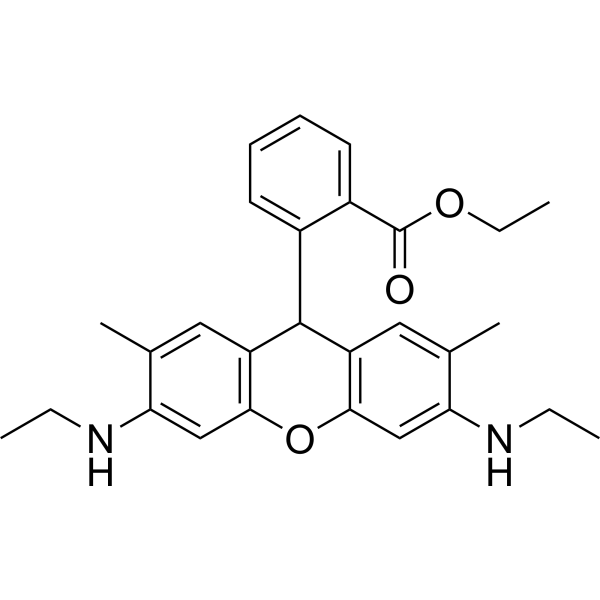
Dihydrorhodamine 6G (DHR 6G) is the reduced form of Rhodamine 6G, which is used as fluorescent mitochondrial dye. It is nonfluorescent, but it readily enters most of the cells and is oxidized by oxidative species or by cellular redox systems to the fluorescent rhodamine 6G that accumulates in mitochondrial membranes. Dihydrorhodamine 6G is useful for detecting reactive oxygen species (ROS) including superoxide .
loading...
    loading...
Cat. No.: HY-D1056C1
Synonyms: LPS, from Salmonella enterica (Serotype enteritidis)
Lipopolysaccharides, from S. enterica (Salmonella enterica) serotype enteritidis are lipopolysaccharide endotoxins and TLR-4 activators derived from the enteritidis serotype of S. enterica, classified as S-type LPS, which can activate pathogen-associated molecular patterns (PAMP) of the immune system and induce cellular secretion of migrasomes. Lipopolysaccharides, from S. enterica serotype enteritidis exhibit a typical three-part structure: O-antigen, core oligosaccharide, and lipid A. Lipopolysaccharides, from S. enterica serotype enteritidis can induce systemic inflammatory responses, increasing levels of TNF-α, IFN-γ, IL-6, IL-10, and nitrate in plasma .
It is recommended to prepare a solution with concentration ≥2 mg/mL. Vortex thoroughly for more than 10 minutes. Due to the adsorption characteristics of LPS, silanized container or low adsorption centrifuge tubes should be used for aliquoting and storage, and mix thoroughly before use.
loading...
    loading...
Cat. No.: HY-W040055R
CAS No.: 2009-64-5
Synonyms: D-(+)-Neopterin (Standard); D-erythro-Neopterin (Standard)
Neopterin (Standard) is the analytical standard of Neopterin. This product is intended for research and analytical applications. Neopterin (D-(+)-Neopterin), a catabolic product of guanosine triphosphate (GTM), serves as a marker of cellular immune system activation.
loading...
    loading...
Cat. No.: HY-146244A
Purity:  97.23%
Research Areas:  

Inflammation/Immunology

Biotin-labeled agatolimod (sodium), a class B CpG ODN (oligodeoxynucleotide), is a TLR9 agonist. Biotin-labeled agatolimod (sodium) can be used to evaluate CpG ODN cellular uptake and localization using a biotin detection system and light microscopy.
loading...
    loading...
Cat. No.: HY-113313R
CAS No.: 52-39-1
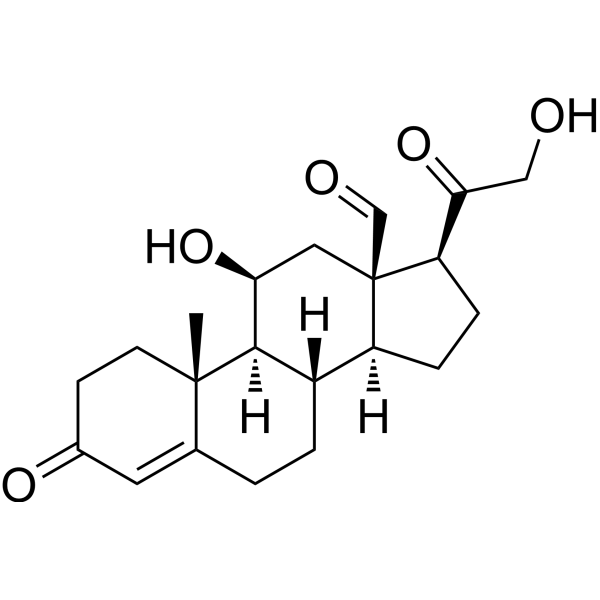
Aldosterone (Standard) is the analytical standard of Aldosterone. This product is intended for research and analytical applications. Aldosterone is the primary mineralocorticoid. Aldosterone is a steroid hormone, and it is synthesized and secreted in response to renin-angiotensin system activation (RAS) or high dietary potassium by the zona glomerulosa (ZG) of the adrenal cortex. Aldosterone activity is dependent by the binding and activation of the cytoplasmic/nuclear mineralocorticoid receptor (MR) at cellular level .
loading...
    loading...
Cat. No.: HY-144874
CAS No.: 2756333-42-1
Purity:  98.03%
Target:  

PARP

Research Areas:  

Neurological Disease Cancer

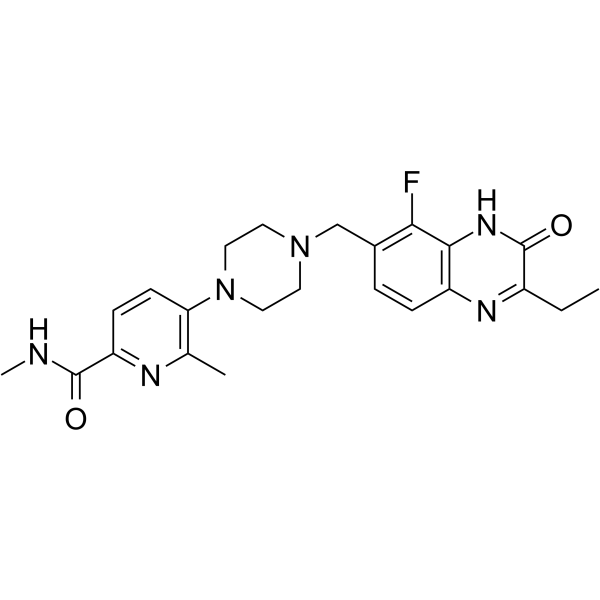
AZ3391 is a potent inhibitor of PARP. AZ3391 is a quinoxaline derivative. PARP family of enzymes play an important role in a number of cellular processes, such as replication, recombination, chromatin remodeling, and DNA damage repair. AZ3391 has the potential for the research of diseases and conditions occurring in tissues in the central nervous system, such as the brain and spinal cord (extracted from patent WO2021260092A1, compound 23) .
loading...
    loading...
Cat. No.: HY-D1056B2
Synonyms: LPS, from bacterial (Proteus mirabilis)
Lipopolysaccharides, from Proteus mirabilis are lipopolysaccharide endotoxins and TLR-4 activators derived from Proteus mirabilis, classified as S-type LPS, which can activate pathogen-associated molecular patterns (PAMP) of the immune system and induce cellular secretion of migrasomes. Lipopolysaccharides, from Proteus mirabilis exhibit a typical three-part structure: O-antigen, core oligosaccharide, and lipid A. Proteus mirabilis is a major pathogen causing urinary tract infections and may also contribute to rheumatoid arthritis. Lipopolysaccharides, from Proteus mirabilis also exhibit potential anti-tumor effects, demonstrating in vivo inhibitory activity against solid tumors such as meningosarcoma and Walker carcinosarcoma .
It is recommended to prepare a solution with concentration ≥2 mg/mL. Vortex thoroughly for more than 10 minutes. Due to the adsorption characteristics of LPS, silanized container or low adsorption centrifuge tubes should be used for aliquoting and storage, and mix thoroughly before use.
loading...
    loading...
Cat. No.: HY-150741A
Research Areas:  

Inflammation/Immunology

Biotin-labeled ODN 2216 (sodium) is a human-specific TLR9 (toll-like receptor 9) ligand or agonist. Biotin-labeled ODN 2216 (sodium) can be used to evaluate CpG ODN cellular uptake and localization using a biotin detection system and light microscopy.
loading...
    loading...
Cat. No.: HY-173599
Target:  

Molecular Glues PNPLA3

Research Areas:  

Metabolic Disease

NUV-244 is a molecular glue degrader of PNPLA3 I148M. NUV-244 induces degradation via the ubiquitin-proteasome system involving the E3 ligase BFAR. NUV-244 promotes 26S proteasome-dependent degradation of PNPLA3 I148M. NUV-244 restores lipid droplet morphology and cellular fitness in hepatocytes expressing PNPLA3 I148M. NUV-244 can be used in the research of metabolic dysfunction-associated fatty liver disease .
loading...
    loading...
Cat. No.: HY-185057
CAS No.: 41656-56-8
Synonyms: S-Lactylglutathione; (R)-S-Lactoylglutathione
S-D-Lactoylglutathione (S-Lactylglutathione; (R)-S-Lactoylglutathione) is a multifunctional metabolic intermediate of the glyoxalase system. S-D-Lactoylglutathione activates K + efflux in bacteria by displacing inhibitory glutathione from KefGB channels, thereby acidifying the cytoplasm. In eukaryotic cells, S-D-Lactoylglutathione mediates S-glutathionylation as a substrate of glyoxalase 2. S-D-Lactoylglutathione serves as a sensitive metabolic biomarker for neodymium nitrate neurotoxicity; when used in combination with MSCs-exo, it upregulates glutathione levels, downregulates lactate dehydrogenase and Glo2 levels, and inhibits cellular inflammatory responses and pyroptosis. S-D-Lactoylglutathione can be used in research related to prostate cancer, breast cancer, non-small cell lung cancer, sepsis-associated encephalopathy, and neurotoxicity .
loading...
    loading...
Cat. No.: HY-125863A
CAS No.: 9001-40-5
Synonyms: G6PD (Leuconostoc sp., recombinant)
Research Areas:  

Metabolic Disease

Glucose-6-phosphate dehydrogenase (Leuconostoc sp., recombinant) (G6PD (Leuconostoc sp., recombinant)) (EC 1.1.1.49) is an NADP-dependent antioxidant metabolic enzyme. Glucose-6-phosphate dehydrogenase (Leuconostoc sp., recombinant) can be induced by sublethal doses of Menadione (HY-B0332) and increasing concentrations of NaCl. Glucose-6-phosphate dehydrogenase (Leuconostoc sp., recombinant) catalyzes the oxidation of glucose-6-phosphate (G6P) to 6-phosphoglucono-δ-lactone, while reducing NADP + to NADPH, providing reducing power for the antioxidant defense system and cellular redox balance of bacteria. Glucose-6-phosphate dehydrogenase (Leuconostoc sp., recombinant) is used in research related to diabetic complications .
loading...
    loading...
Cat. No.: HY-177728
CAS No.: 2413733-73-8
Research Areas:  

Cancer

MG degrader 3 is a molecular glue degrader that induces the degradation of multiple proteins including GSPT1, ZFP91 and CK1α via the ubiquitin-proteasome system, regulates protein stability and cellular signaling networks, and exhibits anti-proliferative activity against multiple myeloma cells. MG degrader 3 can be applied in the research of multiple myeloma .
loading...
    loading...
Cat. No.: HY-P1803
CAS No.: 120253-69-2
Synonyms: PKCε; PRKCE ; Peptide Epsilon
Protein Kinase C Peptide Substrate is targeted to a specific cellular compartment in a manner dependent on second messengers and on specific adapter proteins in response to extracellular signals that activate G-protein-coupled receptors, tyrosine kinase receptors, or tyrosine kinase-coupled receptors. Protein Kinase C Peptide Substrate then regulates various physiological functions including the activation of nervous, endocrine, exocrine, inflammatory, and immune systems .
loading...
    loading...
Cat. No.: HY-174086
CAS No.: 3071165-43-7
Research Areas:  

Cancer

PROTAC GPX4 degrader-4 is a potent GPX4 PROTAC degrader, with DC50 values of 1366.67 nM and 475.15 nM in T24 and RT4 cells, respectively. PROTAC GPX4 degrader-4 targets and degrades GPX4 protein via the ubiquitin-proteasome system, thereby inducing cellular ferroptosis. PROTAC GPX4 degrader-4 can be used for research on bladder cancer .
loading...
    loading...
Cat. No.: HY-40118
CAS No.: 59936-29-7
Synonyms: Boc-L-proline methyl ester
Target:  

Liposome

Research Areas:  

Others

Boc-Pro-OMe (Boc-L-proline methyl ester) is a lipid compound that can be used for liposome preparation. Liposomes are the main component of vesicles with concentric phospholipid bilayer membranes, which can be used to construct drug delivery systems for anti-cancer and anti-infection fields. Highly polar water-soluble loads can be captured in the internal aqueous space of liposomes, while lipophilic loads can be distributed into the lipid bilayer and become part of the lipid bilayer. Especially for the delivery of antisense oligonucleotides, it can overcome the problems of inefficient cellular uptake and rapid loss in the body.
loading...
    loading...

