45 Results for "

non-replicating persistence

" in MedChemExpress (MCE) Product Catalog:
Products (45)

45 Results for "non-replicating persistence" in MCE Product Catalog:

Cat. No.: HY-12485R
CAS No.: 1257426-19-9
Research Areas:  

Infection

TBA-354 (Standard) is the analytical standard of TBA-354 (HY-12485). This product is intended for research and analytical applications. TBA-354 is an orally active, blood-brain barrier permeable anti-tuberculosis compound . TBA-354 acts on replicating, non-replicating and drug-resistant Mycobacterium tuberculosis, retains its activity in the presence of serum proteins or albumin, and induces moderate, reversible neurotoxicity at effective dose levels. TBA-354 can be used in the research of tuberculosis and multidrug-resistant tuberculosis .
loading...
    loading...
Cat. No.: HY-130511
CAS No.: 86737-06-6
Target:  

Bacterial

Research Areas:  

Infection

FCE 22250 is a 3-azinomethylrifamycin with long-term in vivo persistence and good oral absorption. FCE 22250 shows superior efficacy against a broad antimicrobial spectrum including mycobacteria .
loading...
    loading...
Cat. No.: HY-108050
CAS No.: 55648-39-0
Target:  

Bacterial

Research Areas:  

Infection Inflammation/Immunology

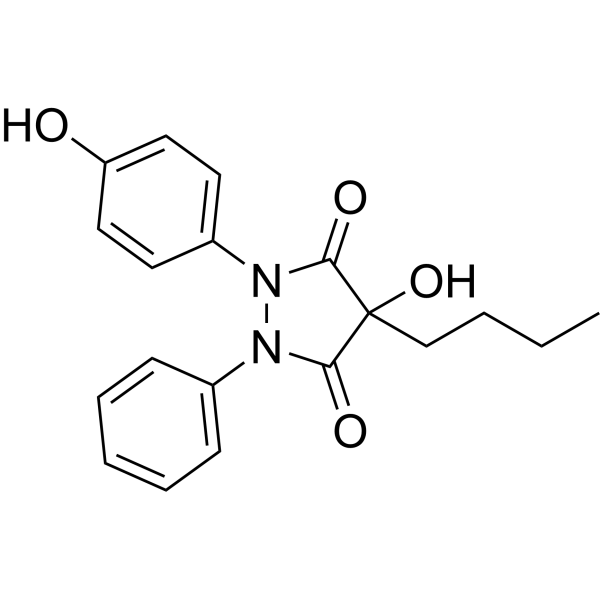
4-Hydroxyoxyphenbutazone kills both replicating and nonreplicating (NR) Mycobacterium tuberculosis (Mtb), including Mtb resistant to standard agents. 4-Hydroxyoxyphenbutazone is a potent inhibitor of cytokine production. 4-Hydroxyoxyphenbutazone is an immunosuppressive agent and has the potential for rheumatoid arthritis research .
loading...
    loading...
Cat. No.: HY-129886
CAS No.: 728886-01-9
Target:  

Antibiotic

Research Areas:  

Others

PKUMDL-LTQ-301 is a HipA toxin inhibitor discovered through structure-based virtual screening, which has the activity of significantly reducing the persistence of Escherichia coli. Its most effective compounds have certain KD and EC50 values when screened against different antibiotics in vitro and in vivo.
loading...
    loading...
Cat. No.: HY-Y1718S2
Synonyms: N-Tridecanoic acid-d9
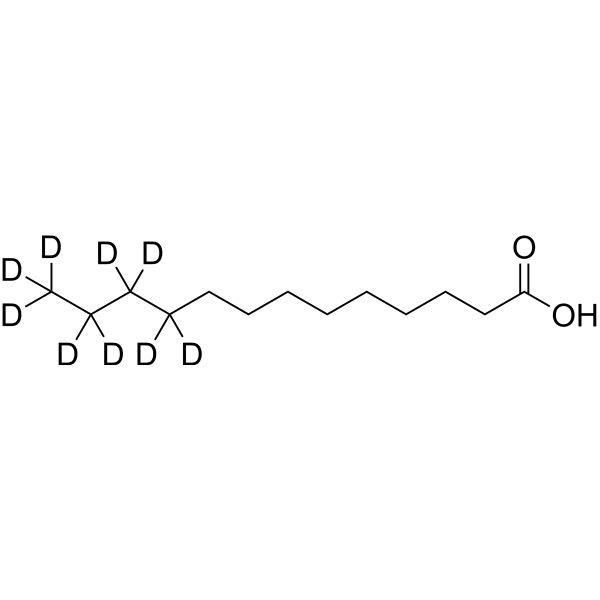
Tridecanoic acid-d9 is the deuterium labeled Tridecanoic acid. Tridecanoic acid (N-Tridecanoic acid), a 13-carbon medium-chain saturated fatty acid, can serve as an antipersister and antibiofilm agent that may be applied to research bacterial infections. Tridecanoic acid inhibits Escherichia coli persistence and biofilm formation .
loading...
    loading...
Cat. No.: HY-Y1718R
CAS No.: 638-53-9
Synonyms: N-Tridecanoic acid (Standard)
Tridecanoic acid (Standard) is the analytical standard of Tridecanoic acid. This product is intended for research and analytical applications. Tridecanoic acid (N-Tridecanoic acid), a 13-carbon medium-chain saturated fatty acid, can serve as an antipersister and antibiofilm agent that may be applied to research bacterial infections. Tridecanoic acid inhibits Escherichia coli persistence and biofilm formation .
loading...
    loading...
Cat. No.: HY-B1849S
CAS No.: 1219804-22-4
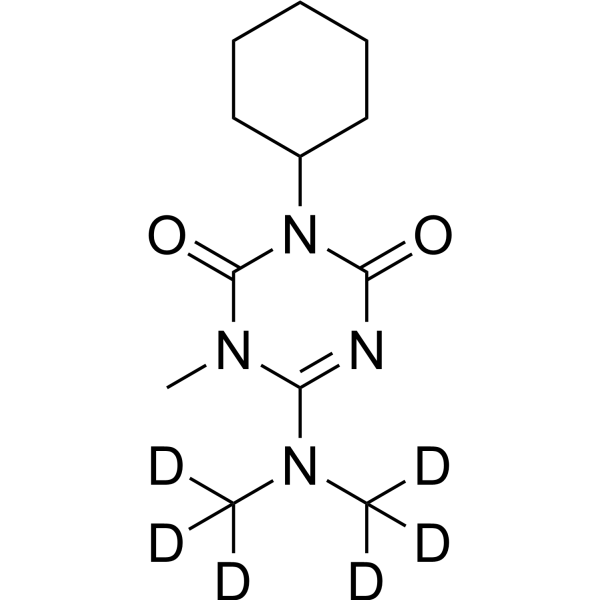
Hexazinone-d6 is the deuterium labeled Hexazinone. Hexazinone is a triazinone herbicide with high mobility and persistence in soil. Hexazinone is mainly degraded by soil microorganisms, and its degradation and mineralization processes are significantly affected by soil texture (faster in clay loam) and application method (mixed application can improve its bioavailability and mineralization rate). Hexazinone exhibits mild to moderate acute oral toxicity and has significant eye irritation .
loading...
    loading...
Cat. No.: HY-B1972R
CAS No.: 15299-99-7
Synonyms: Napropamid (Standard)
Research Areas:  

Others

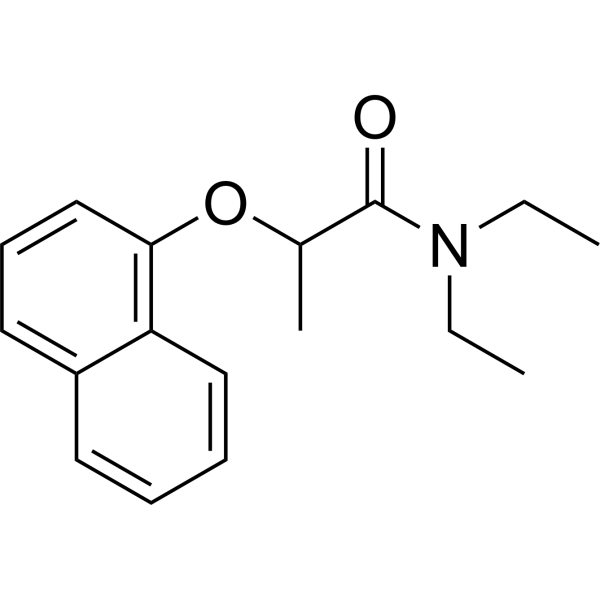
Napropamide (Standard) (Napropamid (Standard)) is the analytical standard of Napropamide (HY-B1972). This product is intended for research and analytical applications. Napropamide (Napropamid) is an amide herbicide that can be used to control weeds in fruits, vegetables, tobacco, and ornamental plants. Napropamide mainly exerts its effect by inhibiting DNA synthesis and cell division. Napropamide has moderate to high persistence in the field, with a half-life of 24-131 days, and is prone to photodegradation.
loading...
    loading...
Cat. No.: HY-B2015S
CAS No.: 1189903-75-0
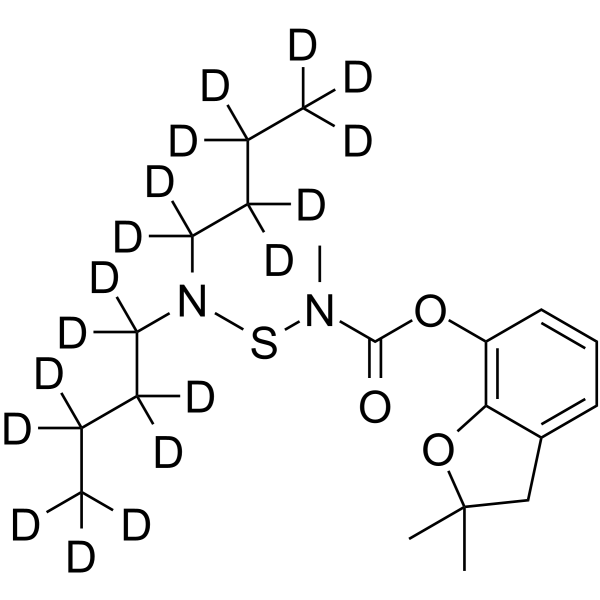
Carbosulfan-d18 is the deuterium labeled Carbosulfan. Carbosulfan is an orally active AChE inhibitor that hydrolyzes to Carbofuran in organisms to exert insecticidal effects. Carbosulfan exhibits broad-spectrum insecticidal activity, and it also induces severe oxidative stress by enhancing lipid peroxidation and impairing the antioxidant defense system. Carbosulfan causes reproductive toxicity in male rats and developmental disorders in their offspring. Carbosulfan shows persistence in paddy field environments and potential hazards to non-target organisms, and it is commonly used in studies related to reproductive toxicity and environmental risk assessment .
loading...
    loading...
Cat. No.: HY-B2015R
CAS No.: 55285-14-8
Carbosulfan (Standard) is the analytical standard of Carbosulfan. This product is intended for research and analytical applications. Carbosulfan is an orally active AChE inhibitor that hydrolyzes to Carbofuran in organisms to exert insecticidal effects. Carbosulfan exhibits broad-spectrum insecticidal activity, and it also induces severe oxidative stress by enhancing lipid peroxidation and impairing the antioxidant defense system. Carbosulfan causes reproductive toxicity in male rats and developmental disorders in their offspring. Carbosulfan shows persistence in paddy field environments and potential hazards to non-target organisms, and it is commonly used in studies related to reproductive toxicity and environmental risk assessment .
loading...
    loading...
Cat. No.: HY-N21898
CAS No.: 1793054-28-0
Diazaquinomycin H is an Antibacterial agent. Diazaquinomycin H is isolated from the fermentation broth of strain B026. Diazaquinomycin H exhibits bactericidal activity against replicating and non-replicating Mycobacterium tuberculosis under normoxic conditions. Diazaquinomycin H is used in the research of tuberculosis .
loading...
    loading...
Cat. No.: HY-184408
CAS No.: 3033990-94-9
Research Areas:  

Infection

AAP-SO2 is a Bactericide and Mycobacterium tuberculosis RNA polymerase (Mtb RNAP) inhibitor, with an IC50 of 0.025 μM against Mtb RNAP. AAP-SO2 allosterically slows the nucleotide addition rate during transcriptional elongation and enhances transcription termination efficiency. AAP-SO2 exhibits increased activity against β S450L-type Mtb, possesses activity against non-replicating Mtb, and shows whole-cell activity against Mtb and related mycobacterial species. AAP-SO2 reduces the overall emergence rate of Rifampicin (HY-B0272) tolerance in Mtb, alters the mutation spectrum, and decreases the proportion of β S450L-type Rifampicin-resistant mutants. AAP-SO2 acts synergistically with Rifampicin to kill non-replicating Mtb in a rabbit caseous necrosis model. AAP-SO2 can be used for the research of tuberculosis .
loading...
    loading...
Cat. No.: HY-W162231
CAS No.: 91216-38-5
Target:  

Bacterial

Research Areas:  

Infection Metabolic Disease

HC102A is an Antibacterial agent and an inhibitor of DosS and DosT histidine sensor kinases, with an IC50 of 1.9 μM against Mycobacterium tuberculosis DosS. HC102A does not alter the heme redox state of sensor kinases. HC102A reduces triacylglycerol synthesis and accumulation, decreases the survival rate of Mtb under non-replicating persistent and hypoxic conditions, and enhances the sensitivity of Mtb to Isoniazid (HY-B0329). HC102A can be used in research related to tuberculosis .
loading...
    loading...
Cat. No.: HY-181286
Target:  

Cytochrome P450

Research Areas:  

Infection

ETX1975-3 is an orally active inhibitor and bactericide targeting the bd cytochrome oxidase of Mycobacterium tuberculosis. ETX1975-3 disrupts electron transfer between the b-heme centers of the target enzyme, and in combination with Q203 (HY-101040), exerts bactericidal activity against both replicating and non-replicating Mycobacterium tuberculosis, and reduces bacterial loads in acute mouse models. ETX1975-3 retains activity against clinical isolates of multidrug-resistant/extensively drug-resistant Mycobacterium tuberculosis and non-tuberculous mycobacteria, while possessing favorable preclinical ADMET properties. ETX1975-3 can be used in studies related to tuberculosis and non-tuberculous mycobacterial infections .
loading...
    loading...
Cat. No.: HY-138276
CAS No.: 119738-06-6
Target:  

Herbicide

Research Areas:  

Others

Quizalofop-p-tefuryl is an aryloxyphenoxypropionate herbicide. Quizalofop-p-tefuryl exhibits medium-high persistence in distilled water .
loading...
    loading...
Cat. No.: HY-W705486
CAS No.: 143701-75-1
Target:  

HPPD

Research Areas:  

Infection

RPA 202248 is a p-hydroxy phenyl pyruvate dioxygenase (HPPD) inhibitor and degradation product of Isoxaflutole (HY-116139). RPA 202248 demonstrates environmental persistence and undergoes transport through soil matrix and macropores to subsurface drain flow in agricultural field settings .
loading...
    loading...
Cat. No.: HY-W724357
Synonyms: Napropamid-d10
Napropamide-d10 (Napropamid-d10) is the deuterium labeled Napropamide (HY-B1972). Napropamide (Napropamid) is an amide herbicide that can be used to control weeds in fruits, vegetables, tobacco, and ornamental plants. Napropamide mainly exerts its effect by inhibiting DNA synthesis and cell division. Napropamide has moderate to high persistence in the field, with a half-life of 24-131 days, and is prone to photodegradation .
loading...
    loading...
Cat. No.: HY-180412
CAS No.: 226072-63-5
Synonyms: BB-3644
Target:  

MMP

Research Areas:  

Cancer

Solimastat (BB-3644) is a potent metalloproteinase (MMP) inhibitor that blocks constitutive and antibody-stimulated CD30 shedding from cell surfaces with an IC50 of 180 nM. Solimastat enhances persistence of anti-CD30 antibody Ki-3 on cells and favors its internalization. Solimastat enhances cytotoxic activity of Ki-3.dgA towards CD30 + L540 cells. Solimastat can be used for the research of CD30 + malignancies .
loading...
    loading...
Cat. No.: HY-21197S
CAS No.: 2328024-55-9
Synonyms: Perfluoroheptanoic acid-13C4; Tridecafluoroheptanoic acid-13C4; PFHpA-13C4
Perfluoroenanthic acid- 13C4 (Perfluoroheptanoic acid- 13C4) is the 13C-labeled Perfluoroenanthic acid (HY-21197). Perfluoroenanthic acid (Perfluoroheptanoic acid) is a kind of perfluoroalkyl carboxylic acid organic pollutant. Perfluoroenanthic acid has environmental persistence and bioaccumulation, and exposure can occur via oral, dermal and other routes. Perfluoroenanthic acid exhibits reproductive toxicity, neurotoxicity, hepatotoxicity, immunotoxicity and endocrine-disrupting effects. Perfluoroenanthic acid exerts definite adverse effects on development, spermatogenesis, neuronal activity and liver tissue .
loading...
    loading...
Cat. No.: HY-179649
CAS No.: 484026-63-3
Target:  

Bacterial

Research Areas:  

Infection

sALT629 is an orally active antitubercular agent with potent intramacrophage activity (EC50 = 1.5 μM). sALT629 shows broad-spectrum anti-Mycobacterium tuberculosis (Mtb) activities across four carbon sources, equipotent efficacy against drug-resistant Mtb, and activity against both slow-replicating and nonreplicating Mtb. sALT629 exhibits synergistic activity when combined with oxazolidinone drugs, such as Linezolid (HY-10394) and Sutezolid (HY-10392). sALT629 can be used for the research of tuberculosis .
loading...
    loading...

