39 Results for "

oxidative polymerization

" in MedChemExpress (MCE) Product Catalog:
Products (39)

39 Results for "oxidative polymerization" in MCE Product Catalog:

Cat. No.: HY-N0488R
CAS No.: 2068-78-2
Synonyms: Leurocristine sulfate (Standard); NSC-67574 sulfate (Standard); 22-Oxovincaleukoblastine sulfate (Standard)
Vincristine (sulfate) (Standard) is the analytical standard of Vincristine (sulfate). This product is intended for research and analytical applications. Vincristine sulfate (Leurocristine; NSC-67574; 22-Oxovincaleukoblastine) is a microtubule inhibitor that disrupts microtubule polymerization by binding to β-tubulin (with a Ki of 85 nM in bovine), arrests the cell cycle and induces apoptosis. Vincristine sulfate inhibits cell replication, tumor blood flow and the proliferation of various cancer cells, while triggering effects such as oxidative stress, inflammation, calcium overload, epithelial-mesenchymal transition and peripheral neuropathic pain. Vincristine sulfate upregulates the expression of various transporters and nuclear receptors, and enriches gastric cancer stem-like cells. Vincristine sulfate is used in research related to various tumors including acute lymphoblastic leukemia, lymphoma, melanoma, gastric cancer, solid tumors and sarcomas .
loading...
    loading...
Cat. No.: HY-W088448
CAS No.: 791-31-1
Synonyms: Triphenylsilylhydroxide
Research Areas:  

Others

Triphenylsilanol (Triphenylsilylhydroxide) is a Silanol. Triphenylsilanol is an effective as an active catalyst component .
loading...
    loading...
Cat. No.: HY-119987
CAS No.: 2051-85-6
Synonyms: SOG
Sudan orange G is an azo dye. Sudan orange G, after enzymatic oxidation, generates oligomers and even polymers through free radical coupling reactions .
loading...
    loading...
Cat. No.: HY-119987R
CAS No.: 2051-85-6
Synonyms: SOG (Standard)
Sudan orange G (Standard) is the analytical standard of Sudan orange G. This product is intended for research and analytical applications. Sudan orange G is an azo dye. Sudan orange G, after enzymatic oxidation, generates oligomers and even polymers through free radical coupling reactions .
loading...
    loading...
Cat. No.: HY-W099538R
CAS No.: 123-28-4
Synonyms: Dilauryl 3,3'-Thiodipropionate (Standard)
Research Areas:  

Others

Dilauryl thiodipropionate (Standard) is the analytical standard of Dilauryl thiodipropionate. This product is intended for research and analytical applications. Dilauryl thiodipropionate (DLTDP), which is a sulfur-containing antioxidant commonly used to stabilize polymers and plastics against degradation caused by heat, oxygen, and UV light, acts to scavenge free radicals and others that may cause polymer chain scission and cross-linked active substances, in addition, DLTDP has been used as an additive to lubricants, oils and other industrial fluids to improve their oxidation stability, the long hydrocarbon chain in DLTDP makes it low volatility and compatible with many materials and Good compatibility with substrates.
loading...
    loading...
Cat. No.: HY-146006
CAS No.: 3034896-75-5
Target:  

Microtubule/Tubulin MMP

Research Areas:  

Cancer

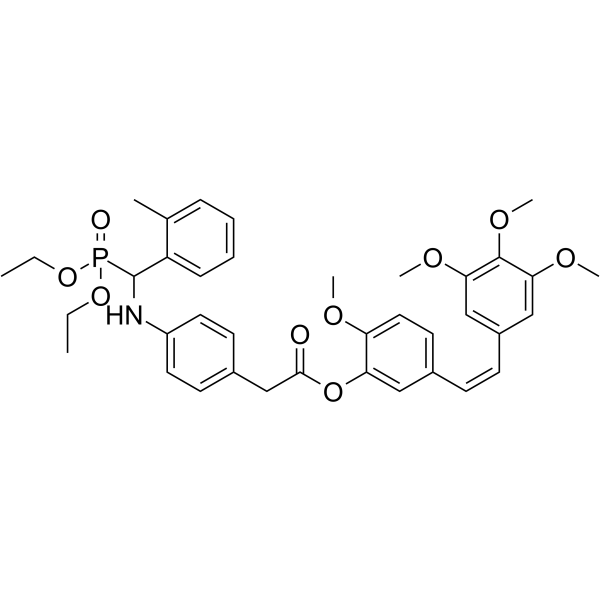
Tubulin/MMP-IN-1 (compound 15g) is a potent inhibitor of tubulin and MMP. Tubulin/MMP-IN-1 has the potential for the research of cancer diseases. Tubulin/MMP-IN-1 suppresses tubulin polymerization, induces cell cycle arrest at the G2/M phase, leads to reactive oxidative stress (ROS) generation of HepG2 cells, and results in apoptosis by the mitochondrial-dependent apoptotic pathway .
loading...
    loading...
Cat. No.: HY-146261
CAS No.: 2411548-90-6
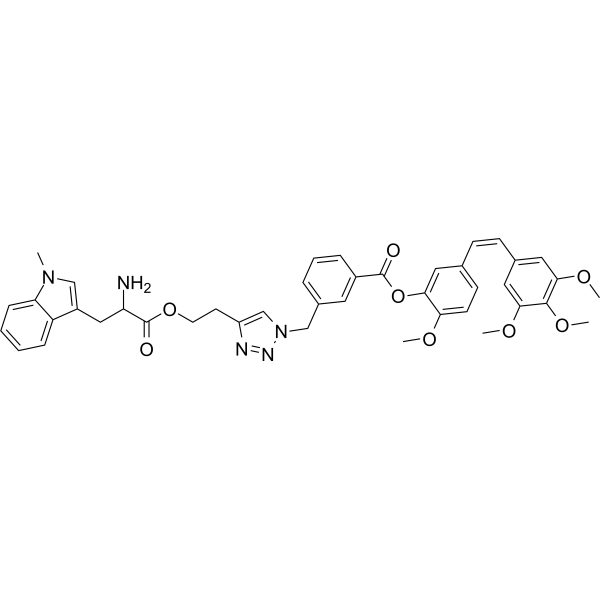
HI5 is a potent tublin and IDO inhibitor, with an IC50 value of 70 nM in HeLa cells. HI5 inhibit IDO expression and decrease kynurenine production, leading to stimulating T cells activation and proliferation. HI5 can inhibit tubulin polymerization and cell migration, cause G2/M phase arrest, and induce apoptosis via the mitochondrial dependent apoptosis pathway and cause reactive oxidative stress generation in HeLa cells. HI5 can be used for researching anticancer .
loading...
    loading...
Cat. No.: HY-W002004S
CAS No.: 97461-87-5
Synonyms: 4-Amino-2,2,6,6-tetramethylpiperidine-1-oxyl-d17,15N
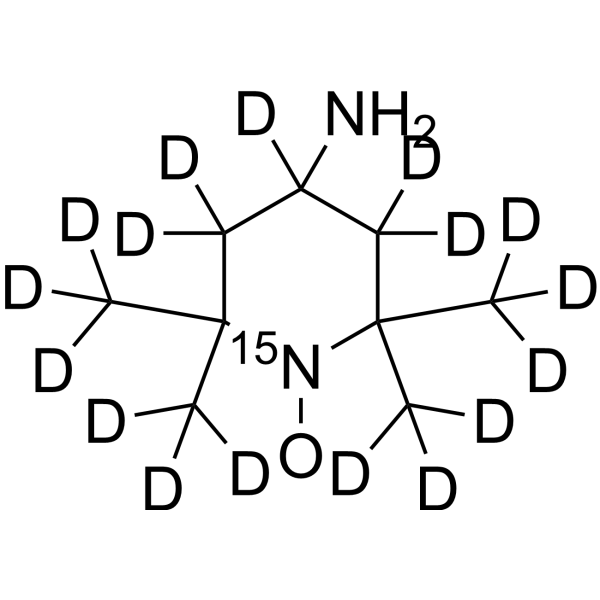
4-Amino-TEMPO-d17, 15N (4-Amino-2,2,6,6-tetramethylpiperidine-1-oxyl-d17, 15N) is the deuterium labeled 4-Amino-TEMPO-d17 (HY-W002004S1). 4-Amino-TEMPO (4-Amino-2,2,6,6-tetramethylpiperidine-1-oxyl) is a stable nitroxide radical and N-nucleophile based on TEMPO. 4-Amino-TEMPO has superoxide dismutase-mimetic activity, can protect cells from oxidative damage, and has radioprotective effects. 4-Amino-TEMPO is widely used in fields such as biomedicine, materials science, and industrial production. 4-Amino-TEMPO can be used as a spin label to detect free radicals, an oxidation catalyst in industrial production, and an antioxidant stabilizer for polymers, among others .
loading...
    loading...
Cat. No.: HY-B1498A
CAS No.: 5982-56-9
Synonyms: 1,2-Ethylenedisulfonic acid dihydrate
Research Areas:  

Others

Ethylenedisulfonic acid dihydrate (1,2-Ethylenedisulfonic acid dihydrate) acts as a structure-forming agent and organic modifier. Ethylenedisulfonic acid dihydrate forms hydrogen-bonded polymer structures via in situ two-component reactions with pyridine-containing compounds. Ethylenedisulfonic acid dihydrate can coat molybdenum oxide supported on carbon nanotubes for oxidative desulfurization. Ethylenedisulfonic acid dihydrate serves as a biochemical reagent for relevant research in various fields such as organic synthesis .
loading...
    loading...
Cat. No.: HY-183401
CAS No.: 137593-43-2
Synonyms: GS-Mal
Target:  

Apoptosis

Research Areas:  

Cancer

Glutathione maleimide (GS-Mal) is a glutathione depletor and oxidative stress inducer that reduces intracellular GSH levels in cancer cells and induces apoptosis. Glutathione maleimide can selectively extract and quantify GSH from complex biological samples, and the polymeric micelles prepared from it also inhibit the growth of cancer cells in a concentration-dependent manner. Glutathione maleimide has broad applications in breast cancer and related fields .
loading...
    loading...
Cat. No.: HY-W268106
CAS No.: 6874-60-8
Research Areas:  

Others

Decylphosphonic acid is a metal oxide surface modifier and corrosion inhibitor. Decylphosphonic acid is promising for research of metal protection, anti-corrosion coatings, and emulsion polymerization .
loading...
    loading...
Cat. No.: HY-76217
CAS No.: 823-82-5
Synonyms: 2,5-Diformylfuran
Target:  

Drug Derivative

2,5-Furandicarboxaldehyde (2,5-Diformylfuran), a furan derivative, is a volatile organic compound. 2,5-Furandicarboxaldehyde the aerobic oxidation product of 5-Hydroxymethylfurfural (HY-Y0051), and can be used in organic synthesis and functional polymer manufacture, such as fluorescent material, surfactants, and vitrimer .
loading...
    loading...
Cat. No.: HY-N20701
CAS No.: 60449-48-1
Eucomic acid is a derivative of Malic acid (HY-Y1311). Eucomic acid also acts as an anti-plasmodial inhibitor, pigment inducer and antioxidant. Eucomic acid inhibits the growth of Plasmodium falciparum. Eucomic acid promotes the production of black pigments in mature soybean pods and seed coats through oxidation or polymerization, while exerting antioxidant effects. Eucomic acid can be isolated from the roots of Eriosema montanum and the bulbs of Eucomis punctata. Eucomic acid can be used in research on malaria, antioxidation, etc .
loading...
    loading...
Cat. No.: HY-184625
Polyethyleneimine (PEI)-modified magnetic iron(III) oxide (Fe3O4) nanoparticles are a composite nanomaterial that combines the properties of magnetic nanoparticles and polyethyleneimine. Polyethyleneimine is a highly branched polymer with a high density of amino groups. These amino groups stabilize the Fe3O4 nanoparticles and provide sites for further functionalization. The amino groups of PEI impart a high surface positive charge to the Fe3O4 nanoparticles, which helps enhance their interaction with negatively charged cell membranes.
loading...
    loading...
Cat. No.: HY-184639
Carboxylated magnetic microspheres (low nonspecificity) are functionalized nano- or micron-sized magnetic particles with abundant carboxyl functional groups on their surface. Special chemical treatments reduce the likelihood of nonspecific adsorption. This 1μm carboxylated magnetic microsphere features a core-shell structure: a PS core, an outer layer of iron oxide (Fe3O4), and an outermost encapsulation layer. The carboxyl groups are obtained through polymer modification. Exhibiting low nonspecific adsorption, these microspheres can covalently couple with bioligands such as peptides, proteins, antibodies, and oligonucleotides using specific chemical reagents (e.g., EDC), making them particularly suitable for cell sorting, affinity chromatography, and immunoassay.
loading...
    loading...
Cat. No.: HY-184641
Aminated magnetic microspheres are superparamagnetic magnetic particles with amino functional groups modified on their surface, widely used in biomedical and molecular biology research. This 1μm aminated magnetic microsphere is composed of polystyrene and nano-iron oxide, exhibiting hydrophilicity and good biocompatibility. The aminated magnetic microspheres possess superparamagnetism, fast magnetic response, good monodispersity, ensuring reaction uniformity and detection consistency. The unique rough surface structure and polymer modification give the aminated magnetic microspheres a high amino density, allowing them to covalently couple with bioligands such as peptides, proteins, oligonucleotides, drug molecules, and glycoproteins through the action of special chemical reagents (such as glutaraldehyde). They serve as excellent coating materials and are important carrier tools in medical and biomolecular research.
loading...
    loading...
Cat. No.: HY-184756
CAS No.: 25212-74-2
Synonyms: Polyphenylene sulfide; PPS
Research Areas:  

Others

Poly (1,4-phenylene sulfide) (Polyphenylene sulfide; PPS) is a semicrystalline high-performance engineering plastic and also a thermoplastic aromatic sulfide polymer, which possesses multiple properties including high temperature stability, flame retardancy, chemical resistance, favorable mechanical and electrical properties, and inertness to singlet oxygen. Poly (1,4-phenylene sulfide) can be applied to relevant research in fields such as machinery and industrial manufacturing .
loading...
    loading...
Cat. No.: HY-N0488AR
CAS No.: 57-22-7
Synonyms: Leurocristine (Standard); NSC-67574 (Standard); 22-Oxovincaleukoblastine (Standard)
Vincristine (Standard) is the analytical standard of Vincristine (HY-N0488A). This product is intended for research and analytical applications. Vincristine (Leurocristine; NSC-67574; 22-Oxovincaleukoblastine) is a microtubule inhibitor that disrupts microtubule polymerization by binding to β-tubulin (with a Ki of 85 nM in bovine), arrests the cell cycle and induces apoptosis. Vincristine inhibits cell replication, tumor blood flow and the proliferation of various cancer cells, while triggering effects such as oxidative stress, inflammation, calcium overload, epithelial-mesenchymal transition and peripheral neuropathic pain. Vincristine upregulates the expression of various transporters and nuclear receptors, and enriches gastric cancer stem-like cells. Vincristine is used in research related to various tumors including acute lymphoblastic leukemia, lymphoma, melanoma, gastric cancer, solid tumors and sarcomas .
loading...
    loading...
Cat. No.: HY-184600
Reactive oxygen species responsive hydrogels are a novel class of smart hydrogels, formed by the cross-linking of ROS-responsive modules through covalent, coordination, or supramolecular interactions. Due to the introduction of these ROS-responsive modules, these hydrogels exhibit a sensitive response to the oxidative stress microenvironment present in organisms. PVA-TSPBA hydrogel is a hydrogel formed by the cross-linking polymerization of polyvinyl alcohol (PVA) and the reactive oxygen species-sensitive cross-linking agent N1-(4-benzyl borate)-N3-(4-phenyl borate)N1,N1,N3,N3-tetramethyl-1,3-propanediamine (TSPBA). This hydrogel consists of two parts: a boric acid precursor (TSPBA) and an aqueous solution of PVA. The boric acid bonds on TSPBA and the hydroxyl groups on PVA rapidly cross-link to form borate ester bonds, thus forming the hydrogel.
loading...
    loading...

