431 Results for "

iBH3 profiling

" in MedChemExpress (MCE) Product Catalog:
Products (431)

431 Results for "iBH3 profiling" in MCE Product Catalog:

Cat. No.: HY-183335
Research Areas:  

Cancer

Anticancer agent 321 is a Smoothened (SMO) inhibitor with a human IC50 of 0.12 μM, enhanced aqueous solubility, good plasma and metabolic stability, moderate therapeutic index, preliminary safety profile, and moderate oral bioavailability in rats.Anticancer agent 321 binds to SMO’s 7-transmembrane helical channel, forming hydrogen bonds with Asp384 and hydrophobic/π-π interactions with His470, Phe391, Tyr394, stabilizing SMO’s inactive conformation to inhibit Hedgehog/GLI signaling.Anticancer agent 321 inhibits proliferation, suppresses colony formation, induces apoptosis, and downregulates Hedgehog/GLI pathway target genes GLI1, GLI2, Ptch1, HHip in cancer cells.Anticancer agent 321 inhibits tumor growth, downregulates Ki67 and SOX2, and upregulates cleaved-caspase 3 in tumor tissues.Anticancer agent 321 can be used for the research of cutaneous squamous cell carcinoma .
loading...
    loading...
Cat. No.: HY-19309
CAS No.: 223756-43-2
Synonyms: A-216546 hydrochloride
ABT-546 (A-216546) hydrochloride is an orally active ETA receptor antagonist, with Ki values of 0.46 nM and 13000 nM for human ETA and ETB receptors, respectively, and exhibits >25000-fold selectivity over the ETB receptor. ABT-546 hydrochloride effectively inhibits ET-1 (HY-P0202)-induced phosphoinositide hydrolysis (IC50 = 0.59 nM) and arachidonic acid release (IC50 = 3.03 nM), and antagonizes ET-1-induced contraction in isolated vascular rings. ABT-546 hydrochloride crosses the placental barrier but shows extremely low fetal exposure, with a favorable safety profile. ABT-546 hydrochloride inhibits ET-1-induced pressor response and downregulates the NLRP3/ROS/GSDMD-mediated pyroptosis pathway. ABT-546 hydrochloride can be used for research on abdominal aortic aneurysm [3] .
loading...
    loading...
Cat. No.: HY-P991510

Target:  

TNF Receptor

Research Areas:  

Cancer

CDX-1140 is a fully human IgG monoclonal antibody and CD40 agonist, with a Kd value of 0.01 nM against human targets. The epitope of CDX-1140 locates at CD40 CRD1 and avoids the CD40L binding site. It activates DCs and B cells, drives NF-κB reporter gene activation, exhibits agonist activity independent of FcR cross-linking, and shows a synergistic effect with recombinant CD40L . CDX-1140 does not induce systemic cytokine release, exerts direct and immune-mediated anti-tumor activity in tumor xenografts, and has favorable safety profiles. When used as a local vaccine adjuvant in combination with 6MHP+mBRAF+poly-ICLC, CDX-1140 increases the number of DC-LAMP + DCs and induces Th1 CD4 + responses in high-risk melanoma. CDX-1140 can be used in studies related to B-cell lymphoma, bladder cancer and high-risk melanoma .
loading...
    loading...
Cat. No.: HY-153932
CAS No.: 2550399-06-7
Research Areas:  

Infection Cancer

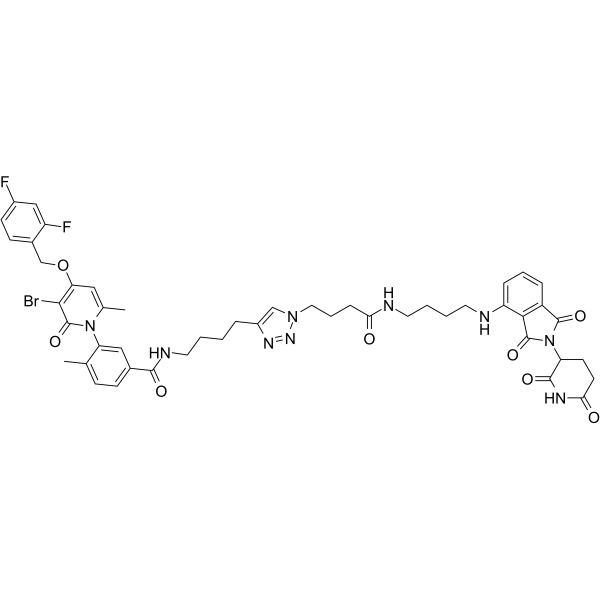
NR-7h is a selective p38α/p38β MAPK PROTAC degrader with multiple activities including anti-leishmanial, anti-malarial, and anti-Mayaro virus properties. NR-7h induces specific degradation of p38α/p38β isoforms and p38-MAPK via the ubiquitin-proteasome system. NR-7h reduces the load of Leishmania donovani, modulates the cytokine profile toward a pro-inflammatory phenotype, and enhances the oxidative burst of macrophages. NR-7h inhibits the growth of Plasmodium falciparum in human red blood cells and merozoite invasion. NR-7h reduces the replication of Mayaro virus and the expression of E1 protein in primary human dermal fibroblasts. NR-7h can be used in studies related to parasitic infections, viral infections, and breast cancer [3].
loading...
    loading...
Cat. No.: HY-173033
CAS No.: 2530027-71-3
MI-883 is orally active constitutive androstane receptor (CAR) (EC50 of 73 nM) agonist and pregnane X Receptor (PXR) (IC50 of 100 nM) antagonist. MI-883 binds to CAR and PXR ligand-binding domains, promotes CAR LBD assembly, activates CAR3 variant, stimulates CAR cytoplasmic-nuclear translocation, upregulates CAR target genes, recruits coactivators NCOA1, NCOA2, NCOA3, inhibits basal and agonist-induced PXR activation, downregulates PXR target genes, disrupts PXR-NCOR2 interaction, blocks agonist-mediated PXR-NCOA1 recruitment. MI-883 reduces plasma total cholesterol, LDL cholesterol, and hepatic free cholesterol levels, increases fecal bile acid excretion, regulates genes involved in xenobiotic metabolism, cholesterol homeostasis, and bile acid homeostasis. MI-883 exhibits metabolic stability, liver-predominant distribution, a safety profile with no observed toxicity, and does not stimulate human hepatocyte hypertrophy or hyperplasia. MI-883 can be used for the research of diet-induced hypercholesterolemia .
loading...
    loading...
Cat. No.: HY-30004
CAS No.: 22059-21-8
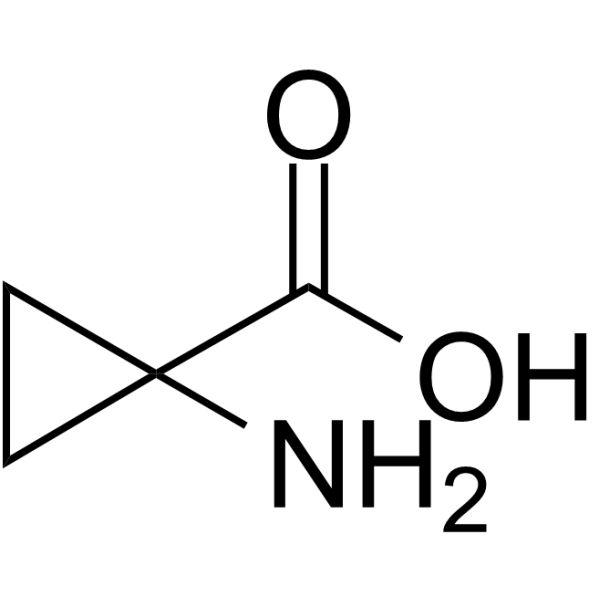
1-Aminocyclopropane-1-carboxylic acid is an endogenous metabolite. In the presence of low concentrations (1 μM) of glutamate, 1-Aminocyclopropane-1-carboxylic acid acts as a small molecule agonist of NMDA receptors with an EC50 of 0.7-0.9 μM. At high concentrations (10 μM) of glutamate, 1-Aminocyclopropane-1-carboxylic acid acts as a competitive antagonist of NMDA receptors with an EC50 of 81.6 nM. 1-Aminocyclopropane-1-carboxylic acid exerts neuroprotective activity by moderately activating NMDA receptors to prevent neuronal cell death in ischemic animal models. Additionally, 1-Aminocyclopropane-1-carboxylic acid is an antagonist of NMDA receptors, inducing blood pressure reduction and antioxidant effects in stroke-prone hypertensive rats. 1-Aminocyclopropane-1-carboxylic acid enhances object recognition memory and cognitive flexibility dependent on the prefrontal cortex, but does not affect impulsivity nor exhibit an antipsychotic-like profile. 1-Aminocyclopropane-1-carboxylic acid shows promise for research in the field of neurotoxicity. [3].
loading...
    loading...
Cat. No.: HY-L105S
867 compounds

Peptides, composed of amino acids, serve as crucial building blocks for proteins and have gained significant attention in drug development over the past decade. The advancements in production, modification, and analytical technologies have led to a surge in the potential applications of peptides in medicine. Peptides offer a number of advantages over small molecule drugs, including: greater target specificity and efficacy, more predictable metabolic profiles, easier delivery to where they are needed in the body, and fewer side effects. Peptides are increasingly appearing in all branches of medicine as components of innovative drugs, imaging agents, diagnostic agents, and other complex drugs such as peptide-drug conjugates. To date, more than 80 peptide drugs have been approved to treat a variety of diseases, including microbial infections, obesity, anti-diabetes, and cancer, as well as to develop cell targeting platforms and improve cell penetration properties.

MCE designs a unique collection of 867 peptide compounds. HY-L105S is a peptide compound library that can be provided with solution form based on HY-L105, and can be applied to peptides-based drug development.

Cat. No.: HY-164729
FZ-AD005 is a DLL3-targeting antibody-drug conjugate (ADC) with high selectivity, composed of the anti-DLL3 antibody FZ-A038 (HY-P990896), a dipeptide linker (Val-Ala), and DXd (HY-13631D). The Kd value of FZ-AD005 for human DLL3 ranges from 13.29 to 58.3 pmol/L. After binding to DLL3 on the cell surface, FZ-AD005 mediates endocytosis, and the payload DXd is released via cleavage by lysosomal cathepsins. DXd inhibits topoisomerase TopI to induce double-strand DNA breaks, cell cycle arrest and apoptosis, and FZ-AD005 exhibits bystander killing activity against adjacent DLL3-negative cells. FZ-AD005 shows stable circulation in vivo, has good tolerance and acceptable pharmacokinetic profiles in rats and cynomolgus monkeys, and effectively inhibits the growth of DLL3-expressing tumor cells. FZ-AD005 serves as a promising candidate molecule for research on small cell lung cancer and human neuroendocrine prostate cancer .
loading...
    loading...
Cat. No.: HY-180525
Target:  

Influenza Virus

Research Areas:  

Infection

PB2-IN-2 is an orally active PB2 inhibitor with RNA-dependent RNA Polymerase (RNP) IC50 = 0.2 nM, LRA (Ligand Receptor Assay) EC50 = 0.8 nM, Cytopathic Effect (CPE) EC50 = 0.1 nM. PB2-IN-2 exhibits broad-spectrum, nanomolar antiviral potency against a panel of influenza A strains (including H1N1pdm09, Lyon/1337/2007/H1N1, Tex12-Like/H3N2, PR/8/34/H1N1, WSN/1933/H1N1, rPR8(H1N1)/H7N9 with EC50 = 1.5, 3.6, 3.7, 13.8, 2.9 and 9.8 nM and all the CC50 values > 2 μM. PB2-IN-2 possesses an excellent pharmacokinetic profile and metabolic stability. PB2-IN-2 can be used for anti-influenza research .
loading...
    loading...
Cat. No.: HY-30004R
CAS No.: 22059-21-8
1-Aminocyclopropane-1-carboxylic acid (Standard) is the analytical standard of 1-Aminocyclopropane-1-carboxylic acid. This product is intended for research and analytical applications. 1-Aminocyclopropane-1-carboxylic acid is an endogenous metabolite. In the presence of low concentrations (1 μM) of glutamate, 1-Aminocyclopropane-1-carboxylic acid acts as a small molecule agonist of NMDA receptors with an EC50 of 0.7-0.9 μM. At high concentrations (10 μM) of glutamate, 1-Aminocyclopropane-1-carboxylic acid acts as a competitive antagonist of NMDA receptors with an EC50 of 81.6 nM. 1-Aminocyclopropane-1-carboxylic acid exerts neuroprotective activity by moderately activating NMDA receptors to prevent neuronal cell death in ischemic animal models. Additionally, 1-Aminocyclopropane-1-carboxylic acid is an antagonist of NMDA receptors, inducing blood pressure reduction and antioxidant effects in stroke-prone hypertensive rats. 1-Aminocyclopropane-1-carboxylic acid enhances object recognition memory and cognitive flexibility dependent on the prefrontal cortex, but does not affect impulsivity nor exhibit an antipsychotic-like profile. 1-Aminocyclopropane-1-carboxylic acid shows promise for research in the field of neurotoxicity. [3].
loading...
    loading...
Cat. No.: HY-L929
2,527 compounds

In drug discovery and development (R&D) area, target binding and druggability optimization are core processes. Among these attributes, high solubility is critical for a compound to achieve druggability, as it directly impacts the progress of drug R&D. Superior solubility ensures the rapid dissolution and uniform distribution of drug molecules in vivo, thereby enhancing bioavailability and effectively mitigating issues such as suboptimal efficacy, increased dosage requirements, or exacerbated toxic and side effects arising from insufficient solubility.

From the perspective of medicinal chemistry, high-solubility drug fragments serve as high-quality "molecular building blocks". Based on these fragments, lead compounds with potential druggability can be rapidly screened out, which significantly shortens the drug R&D cycle and reduces R&D costs. Meanwhile, the high-solubility drug fragment library can provide diverse options for drug development in different therapeutic areas, offer solutions for the solubility defects of existing clinical drugs, and facilitate the development of novel, highly effective targeted drugs with higher bioavailability and better safety profiles.

MCE has collected and compiled 2,527 experimentally validated small-molecule fragments with high solubility. These fragments can be directly used for drug molecular design, providing high-quality pre-validated solubility fragments that significantly improve the efficiency of lead compound screening and accelerate the progress of drug R&D.

