5209 Results for "

phytotoxic effect

" in MedChemExpress (MCE) Product Catalog:
Products (5209)

5209 Results for "phytotoxic effect" in MCE Product Catalog:

Cat. No.: HY-B0527AR
CAS No.: 549-18-8
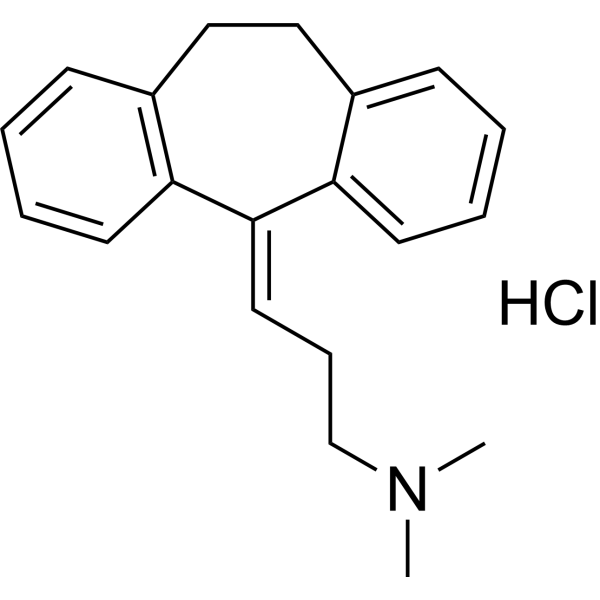
Amitriptyline hydrochloride (Standard) is the analytical standard of Amitriptyline hydrochloride (HY-B0527A). This product is intended for research and analytical applications. Amitriptyline hydrochloride is an orally active tricyclic antidepressant (TCA). Amitriptyline hydrochloride mainly exerts its antidepressant effect by blocking SERT (Ki = 3.45 nM) and NET (Ki = 13.3 nM), thereby increasing the concentrations of 5-hydroxytryptamine (5-HT) and norepinephrine (NE) in the synaptic cleft. Amitriptyline hydrochloride is also an agonist at α2A and TrkA/TrkB receptors, thereby exerting analgesic and neurotrophic activities (inhibiting cell apoptosis). Amitriptyline hydrochloride can reduce inflammation, angiogenesis and fibrosis. Amitriptyline hydrochloride binds to DAT (with Ki = 2.58 μM). Amitriptyline hydrochloride has high affinity for a series of receptors and can antagonize muscarinic cholinergic receptors (M1/M2/M3/M4/M5 receptors) (Ki = 11-24 nM), H1 receptors (Ki = 0.5-1.1 nM), adrenergic α1 receptors (Ki = 4.4 nM), etc., resulting in a series of side effects. Amitriptyline hydrochloride can block sodium channels and hERG potassium channel (IC50 = 4.78 μM) and it has cardiotoxicity.
loading...
    loading...
Cat. No.: HY-B0527AS
CAS No.: 203645-63-0
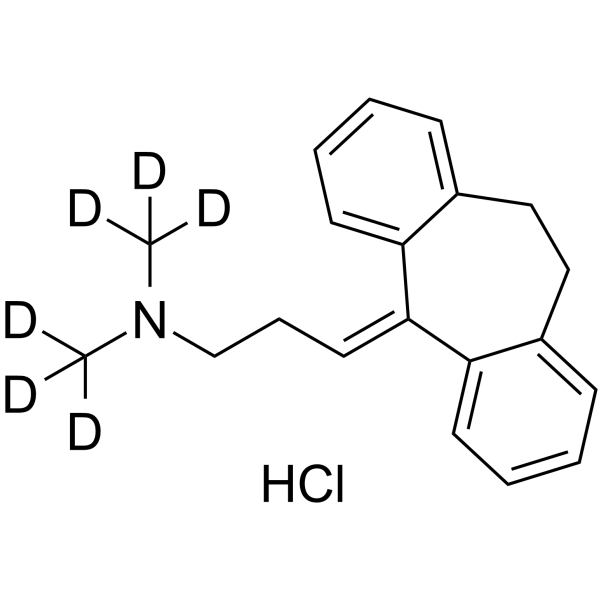
Amitriptyline-d6 hydrochloride is the deuterium labeled Amitriptyline hydrochloride (HY-B0527A). Amitriptyline hydrochloride is an orally active tricyclic antidepressant (TCA). Amitriptyline hydrochloride mainly exerts its antidepressant effect by blocking SERT (Ki = 3.45 nM) and NET (Ki = 13.3 nM), thereby increasing the concentrations of 5-hydroxytryptamine (5-HT) and norepinephrine (NE) in the synaptic cleft. Amitriptyline hydrochloride is also an agonist at α2A and TrkA/TrkB receptors, thereby exerting analgesic and neurotrophic activities (inhibiting cell apoptosis). Amitriptyline hydrochloride can reduce inflammation, angiogenesis and fibrosis. Amitriptyline hydrochloride binds to DAT (with Ki = 2.58 μM). Amitriptyline hydrochloride has high affinity for a series of receptors and can antagonize muscarinic cholinergic receptors (M1/M2/M3/M4/M5 receptors) (Ki = 11-24 nM), H1 receptors (Ki = 0.5-1.1 nM), adrenergic α1 receptors (Ki = 4.4 nM), etc., resulting in a series of side effects. Amitriptyline hydrochloride can block sodium channels and hERG potassium channel (IC50 = 4.78 μM) and it has cardiotoxicity.
loading...
    loading...
Cat. No.: HY-D1056A5
Synonyms: LPS, from Escherichia coli (K-235)
Lipopolysaccharides, from E. coli (Escherichia coli) K-235 are lipopolysaccharide endotoxins and TLR-4 activators derived from E. coli, classified as S-type LPS, which can activate pathogen-associated molecular patterns (PAMP) of the immune system and induce cellular secretion of migrasomes. Lipopolysaccharides, from E. coli K-235 exhibit a typical three-part structure: O-antigen (O-antigen), core oligosaccharide (core oligosaccharide), and lipid A (Lipid A). Lipopolysaccharides, from E. coli K-235 have a mitogenic effect on C57BL/10ScN spleen cells. Additionally, LPS purified using butanol and deoxycholic acid methods stimulates spleen cells in C57BL/10ScCR and C3H/HeJ mice .
It is recommended to prepare a solution with concentration ≥2 mg/mL. Vortex thoroughly for more than 10 minutes. Due to the adsorption characteristics of LPS, silanized container or low adsorption centrifuge tubes should be used for aliquoting and storage, and mix thoroughly before use.
loading...
    loading...
Cat. No.: HY-N0515R
CAS No.: 945619-74-9
Ophiopogonin D (Standard) is the analytical standard of Ophiopogonin D. This product is intended for research and analytical applications. Ophiopogonin D can be isolated from the tubers of Ophiopogon japonicus, is a rare naturally occurring C29 steroidal glycoside. Ophiopogonin D is a CYP2J3 inducer that significantly inhibits Ang II induced NF-κB nuclear translocation, IκBα down-regulation, intracellular Ca2+ overload and activation of pro-inflammatory cytokines by increasing the expression of CYP2J2/EETs and PPARα in human umbilical vein endothelial cells (HUVECs). Ophiopogonin D can inhibit isteoclastic differentiation in RAW264.7 cells. Ophiopogonin D has protective effect as an antioxidant in H2O2-induced endothelial injury. Ophiopogonin D blocks ERK signaling cascades. Ophiopogonin D alleviates high-fat diet-induced metabolic syndrome and changes the structure of gut microbiota in mice. Ophiopogonin D has been used against inflammatory, metabolic and cardiovascular diseases .
loading...
    loading...
Cat. No.: HY-P990688
CAS No.: 2559056-68-5
Synonyms: AMG-509

Target:  

CD3

Research Areas:  

Cancer

Xaluritamig (AMG-509) is a bispecific T cell engager and cytolytic agent with a Kd of 27.6 nM for human CD3ε. Xaluritamig binds to CD3ε via an anti-CD3 single-chain variable fragment (scFv) domain, and to STEAP1 via a bispecific anti-STEAP1 antigen-binding fragment (Fab) domain, thereby recruiting and activating T cells and forming a bridge between T cells and STEAP1-expressing cancer cells. Xaluritamig induces T cell-mediated redirected cytotoxicity, tumor cell lysis, cytokine release, CD8 + T cell activation and expansion, as well as tumor stasis or regression. Xaluritamig contains an Fc domain with no effector function, which prolongs serum half-life, exhibits only minimal activity against cells with low STEAP1 expression and normal cells, and shows extremely low target-related off-tumor toxicity in cynomolgus monkeys. Xaluritamig is used in STEAP1×CD3 XmAb 2+1 immunotherapy and in research on metastatic castration-resistant prostate cancer and Ewing sarcoma .
loading...
    loading...
Cat. No.: HY-P990801
Anti-Mouse CD11a/LFA-1α Antibody (M17/4) is an anti-mouse CD11a/LFA-1α IgG2a monoclonal antibody. Anti-Mouse CD11a/LFA-1α Antibody (M17/4) can reduce the recruitment of effector memory CD8 T cells. Anti-Mouse CD11a/LFA-1α Antibody (M17/4) promotes the formation of xenograft tumors by reducing immune rejection reactions. Anti-Mouse CD11a/LFA-1α Antibody (M17/4) can be used for researches on cancer, infection conditions and immunology such as glioblastoma, parasitic and bacterial infections. The recommend isotype control of Anti-Mouse CD11a/LFA-1α Antibody (M17/4): Rat IgG2a kappa, Isotype Control (HY-P990679) .
loading...
    loading...
Cat. No.: HY-Y0850U5
CAS No.: 9002-89-5
Synonyms: Polyvinyl alcohol (Mw 27000, 98-99% hydrolyzed, ~600 polymerization); Poly(Ethenol) (Mw 27000, 98-99% hydrolyzed, ~600 polymerization)
PVA (Polyvinyl alcohol) (Mw 27000, 98-99% hydrolyzed, ~600 polymerization) is a nonionic ethanol homopolymer with hydrophilicity, water solubility and biodegradability. PVA (Mw 27000, 98-99% hydrolyzed, ~600 polymerization) exhibits biocompatibility, non-toxicity and non-carcinogenicity, as well as antibacterial activity against Gram-positive bacteria, Gram-negative bacteria and fungal strains. PVA (Mw 27000, 98-99% hydrolyzed, ~600 polymerization) can serve as a solubilizer, stabilizer, mucoadhesive agent and sustained-release agent, and has a synergistic solubilizing effect on voriconazole/sulfobutyl ether β-cyclodextrin complexes. By stabilizing such complexes, PVA (Mw 27000, 98-99% hydrolyzed, ~600 polymerization) forms freeze-thaw hydrogels with high mucoadhesion, sustained drug release and ex vivo corneal permeability. When compounded with hyaluronic acid hydrogels, PVA (Mw 27000, 98-99% hydrolyzed, ~600 polymerization) supports chondrocyte growth in vitro, and also forms complexes with Cu 2+, Co 2+, Ni 2+ and Zn 2+ ions. PVA (Mw 27000, 98-99% hydrolyzed, ~600 polymerization) can be used in studies related to fungal keratitis, bacterial infections and fungal infections .
loading...
    loading...
Cat. No.: HY-L132
257 compounds

Chemokines, or chemotactic cytokines, are small cytokines or signaling proteins secreted by cells. They are a component of intercellular communication, controlling the directional movement of immune cells especially leukocytes, as well as other cell types, for instance, endothelial and epithelial cells, which are essential to maintain human health and the function of the immune system.

The biological effects of chemokines are achieved by binding to chemokine receptors, which are G protein-coupled receptors found on the surface of leukocytes. Some chemokine receptors are involved in directing tumor metastasis and over-expression by certain tumors. So inhibiting the interaction between chemokine and chemokine receptors on the surface of tumor cells may be a new possible therapeutic approach. Some chemokine receptors are coreceptors for HIV entry, and related inhibitors have been approved by the FDA to treat patients with HIV. Obviously, chemokines and chemokine receptors have become new targets for studying cancer, HIV, inflammation, and other diseases.

MCE supplies a unique collection of 257 chemokine or chemokine receptor inhibitors and activators, all of which have the identified inhibitory or activated effect on chemokine or chemokine receptors. MCE Chemokine Library is a useful tool for drug research related to cancer, AIDS, and wound therapy.

Cat. No.: HY-L214
227 compounds

Liposomes are spherical or multilayered spherical vesicles formed by the self-assembly of diacyl chain phospholipids (lipid bilayers) in aqueous solutions, which can be made from natural or synthetic phospholipids and exhibit good biocompatibility and low toxicity. They can serve as delivery carriers for various bioactive substances (such as drugs, proteins, nucleic acids, etc.) and are widely used in biomedical and chemical research. The main advantages of liposomes include 1) Protective effect: Their bilayer structure can protect encapsulated molecules from enzymatic degradation, oxidation, and other influences, extending stability and activity; 2) Active targeting: Surface modifications enable active targeting, enhancing the concentration of drugs or molecules in specific tissues or cells; 3) Customizability: The composition and structure of liposomes can be adjusted according to needs, such as altering phospholipid types or adding targeting ligands. These properties make liposomes highly valuable in developing novel drug delivery systems, serving as nucleic acid carriers for gene transfection, studying cellular uptake mechanisms and drug release kinetics, as well as developing functional food additives to improve the bioavailability of nutritional components.

MCE contains 227 liposome compounds, which is a good tool for drug delivery-related studies.

Cat. No.: HY-L083
3,806 compounds

Mutations in oncogenes and tumor suppressor genes can modify multiple signaling pathways and in turn cell metabolism, which facilitates tumorigenesis. The paramount hallmark of tumor metabolism is “aerobic glycolysis” or the Warburg effect, coined by Otto Warburg in 1926, in which cancer cells produce most of energy from glycolysis pathway regardless of whether in aerobic or anaerobic condition. Usually, cancer cells are highly glycolytic (glucose addiction) and take up more glucose than do normal cells from outside. The increased uptake of glucose is facilitated by the overexpression of several isoforms of membrane glucose transporters (GLUTs). Likewise, the metabolic pathways of glutamine, amino acid and fat metabolism are also altered. Recent trends in anti-cancer drug discovery suggests that targeting the altered metabolic pathways of cancer cells result in energy crisis inside the cancer cells and can selectively inhibit cancer cell proliferation by delaying or suppressing tumor growth.

MCE provides a unique collection of 3,806 compounds which cover various tumor metabolism-related signaling pathways. These compounds can be used for anti-cancer metabolism targets identification, validation as well anti-cancer drug discovery.

Cat. No.: HY-L133
446 compounds

Copper is an important co-factor of all biological enzymes, but if the concentration exceeds the threshold of maintaining the homeostasis mechanism, copper will lead to cytotoxicity. This death mechanism has been named "Cuproptosis".

The mechanism of cuproptosis distinct from all other known mechanisms of regulated cell death, including apoptosis, pyroptosis, necroptosis, and ferroptosis.

Copper combine with the lipoylated components of the tricarboxylic acid cycle (TCA), leading to lipoylated protein aggregation and subsequent loss of iron-sulfur cluster proteins, ultimately resulting in protein toxicity stress and cell death. Studies have shown that the necessary factors for cuproptosis include the presence of glutathione, mitochondrial metabolism of galactose and pyruvate, and glutamine metabolism.

Targeted regulation of cuproptosis is a potential choice to treat cancer, rheumatoid arthritis, and other diseases. For example, up-regulation of LIPT1 may inhibit the occurrence and development of tumors by destroying TCA in mitochondria and then inducing cuproptosis.

MCE supplies a unique collection of 446 cuproptosis-related compounds, all of which act on the targets or signaling pathways related to cuproptosis and may have in inhibitory or activated effect on cuproptosis. MCE Cuproptosis Library is a useful tool for drug research related to cancer, rheumatoid arthritis, and other diseases.

Cat. No.: HY-116028
CAS No.: 85235-11-6
Purity:  ≥98.0%
Synonyms: 15-Deoxy-Δ12,14-PGD2
15-deoxy-Δ12,14-Prostaglandin D2 (15-Deoxy-Δ12,14-PGD2) is a metabolite of prostaglandin D₂ (PGD₂) (HY-101988), which can undergo further dehydration metabolism to 15-deoxy-Δ12,14-PGJ₂. 15-deoxy-Δ12,14-Prostaglandin D2 is a highly selective agonist for DP2 receptor and PPARγ. 15-deoxy-Δ12,14-Prostaglandin D2 causes morphological changes in eosinophils and migration of type II innate lymphoid cells (ILC2). 15-deoxy-Δ12,14-Prostaglandin D2 has a growth inhibitory effect on prostate cancer cells expressing PPARγ, induces cell cycle arrest and promotes apoptosis. 15-deoxy-Δ12,14-Prostaglandin D2 can be used in related research on asthma and prostate cancer .
loading...
    loading...
Cat. No.: HY-116497
CAS No.: 1627843-95-1
Target:  

FAK

Research Areas:  

Cancer

PH11 is a novel focal adhesion kinase (FAK) inhibitor that rapidly induces apoptosis in TRAIL-resistant PANC-1 cells when combined with TRAIL, but has no effect on normal human fibroblasts. The study found that PH11 downregulates c-FLIP through inhibition of FAK and phosphatidylinositol-3-kinase (PI3K)/AKT pathways, thereby restoring the TRAIL apoptotic pathway, suggesting that this combination therapy may provide an attractive therapeutic strategy for the safe and effective treatment of pancreatic cancer. PH11 selectively inhibits c-FLIP expression by modulating upstream signaling pathways and may represent an innovative therapeutic strategy. Although further work is needed to fully elucidate the mechanism of PH11-induced TRAIL sensitization, we believe that our results will provide a new approach to target c-FLIP without the risk of interfering with caspase-8 processing, which could potentially lead to TRAIL resistance. This study also suggests a role for the FAK/AKT signaling pathway in regulating c-FLIP expression in TRAIL-induced apoptosis, and this understanding will provide important clues to control the resistance mechanism to optimize the potential of TRAIL-based pancreatic cancer treatment.
loading...
    loading...
Cat. No.: HY-15244G
CAS No.: 1217486-61-7
Alpelisib GMP is Alpelisib (HY-15244) produced by using GMP guidelines. GMP small molecules works appropriately as an auxiliary reagent for cell therapy manufacture. Alpelisib (BYL-719) is an orally active PI3Kα-selective inhibitor that blocks the conversion of PIP2 to PIP3, thereby inhibiting pathways including PI3K/AKT/mTOR, MAPK/ERK, Notch and JAK-STAT. Alpelisib also induces apoptosis, G0/G1 phase arrest and senescence; it significantly inhibits the proliferation, self-renewal, stemness and epithelial-mesenchymal transition (EMT) of tumor cells, reduces cancer stem cell populations and decreases the expression of stem cell markers. Alpelisib not only enhances the sensitivity to Eribulin (HY-13442) and exerts a synergistic effect with Paclitaxel (HY-B0015), but may also induce drug resistance by upregulating the SGK3/GSK3β/β-catenin signaling pathway. Alpelisib can be applied to research related to breast cancer, gastric cancer and lipomas associated with PTEN hamartoma tumor syndrome .
loading...
    loading...
Cat. No.: HY-15244R
CAS No.: 1217486-61-7
Synonyms: BYL-719 (Standard)
Alpelisib (BYL-719) (Standard) is the analytical standard of Alpelisib (HY-15244). This product is intended for research and analytical applications. Alpelisib (BYL-719) is an orally active PI3Kα-selective inhibitor that blocks the conversion of PIP2 to PIP3, thereby inhibiting pathways including PI3K/AKT/mTOR, MAPK/ERK, Notch and JAK-STAT. Alpelisib also induces apoptosis, G0/G1 phase arrest and senescence; it significantly inhibits the proliferation, self-renewal, stemness and epithelial-mesenchymal transition (EMT) of tumor cells, reduces cancer stem cell populations and decreases the expression of stem cell markers. Alpelisib not only enhances the sensitivity to Eribulin (HY-13442) and exerts a synergistic effect with Paclitaxel (HY-B0015), but may also induce drug resistance by upregulating the SGK3/GSK3β/β-catenin signaling pathway. Alpelisib can be applied to research related to breast cancer, gastric cancer and lipomas associated with PTEN hamartoma tumor syndrome .
loading...
    loading...
Cat. No.: HY-169385
CAS No.: 2925060-81-5
Research Areas:  

Cancer

ATC-324 is an bivalent AR (Androgen Receptor) degrader based on the protein degradation technology platform AUTOphagy-TArgeting Chimera (AUTOTAC). ATC-324 induces the formation of AR/p62 complex, leading to autophagy-lysosomal degradation of AR. ATC-324 can reduce nuclear AR levels and downregulate target gene expression of AR and AR-v7, and also has a degradation effect on common AR mutants in PCa . ATC-324 is composed of target-binding ligand (TBL) Enzalutamide (HY-70002) and p62/SQSTM1 autophagy-targeting ligand (ATL) YT 6-2 analog-1 (HY-169386), connected by Boc-NH-PEG4-CH2CH2NH2 (HY-W008352). Among them, the active control of the target protein ligand is Enzalutamide carboxylic acid (HY-70002B), and the conjugate composed of the autophagy-targeting ligand and the linker is YT 6-2-PEG3-C2-NH2 (HY-169387).
loading...
    loading...
Cat. No.: HY-174469
CAS No.: 3070438-79-5
PROTAC PI3K/110β degrader-2 is a VHL-recruiting PI3K/110β PROTAC degrader, with DC50 values of 1.258 μM and 2.185 μM in MCF-7/ADM and A549/DDP cells, respectively. PROTAC PI3K/110β degrader-2 induces proteasomal degradation of PI3K/110β, inhibits phosphorylation of AKT and expression of Bcl-2, while suppressing the activity and expression of P-gp. It also induces endoplasmic reticulum stress and mitochondrial apoptosis via the PERK/CHOP pathway. PROTAC PI3K/110β degrader-2 exerts anti-tumor activity against multidrug-resistant cancer cells both in vitro and in vivo, and produces a synergistic effect when combined with Doxorubicin (HY-15142A) or Cisplatin (HY-17394), making it applicable for the research of multidrug-resistant cancers .
loading...
    loading...
Cat. No.: HY-W585442
CAS No.: 105528-25-4
5,9,14,18,23,27,32,36-Octabutoxy-2,3-naphthalocyanine is a photosensitive material with excellent light absorption and electron conduction activity. 5,9,14,18,23,27,32,36-Octabutoxy-2,3-naphthalocyanine is widely used in optoelectronic devices and is considered to be an effective photocatalyst. 5,9,14,18,23,27,32,36-Octabutoxy-2,3-naphthalocyanine can be used to improve the performance of solar cells and increase the photoelectric conversion efficiency. 5,9,14,18,23,27,32,36-Octabutoxy-2,3-naphthalocyanine also has potential anti-tumor activity and can inhibit the proliferation of certain cancer cells. 5,9,14,18,23,27,32,36-Octabutoxy-2,3-naphthalocyanine exhibits excellent fluorescence properties in medical imaging, which helps to improve the clarity and accuracy of imaging. 5,9,14,18,23,27,32,36-Octabutoxy-2,3-naphthalocyanine is studied as a component of a novel compound delivery system to improve the targeting and release effect of the compound.
loading...
    loading...
Cat. No.: HY-117947
CAS No.: 1809336-19-3
Research Areas:  

Cancer

(R)-OR-S1 is an isomer of OR-S1. The dual ZH1/2 inhibitors OR-S1 and OR-S2 exhibit strong inhibitory activity against both EZH1 and EZH2. OR-S1 and OR-S2 are highly selective methyltransferase inhibitors against EZH1 and EZH2, and they have very similar molecular features. Therefore, we investigated the effect of OR-S1 on acute myeloid leukemia (AML). We found that OR-S1 was able to induce cell differentiation and apoptosis in AML cells. These findings encouraged us to investigate whether functional LT-HSCs could survive PRC2-targeted therapy with OR-S1 or OR-S1 combined with cytarabine. The results showed that OR-S1 did not cause significant myelosuppression, and BM cells treated with the combination therapy were able to undergo normal hematopoiesis even 4 months after treatment. Therefore, temporary inhibition of EZH1 and EZH2 is clinically tolerable, making this combination therapy suitable for AML patients. AML is generally believed to originate from myeloid progenitor cells that inherit a large number of biological properties.
loading...
    loading...
Cat. No.: HY-156466
CAS No.: 2848664-42-4
Purity:  99.95%
Research Areas:  

Inflammation/Immunology

QL-1200186 is a selective, orally active, allosteric inhibitor targeting the tyrosine kinase TYK2 pseudokinase domain JH2 (IC50=0.06 nM, TYK2 JH2), with 164-fold selectivity over TYK1 JH2 (IC50=9.85 nM,TYK1 JH2). QL-1200186 first stabilizes the TYK2 JH2 conformation, inhibits the activity of the JH1 catalytic domain, and blocks the IFNα, IL-12/IL-23-mediated JAK-STAT signaling pathway. QL-1200186 can inhibit the production of Th1/Th17 cell-related cytokines (such as IFNγ, IL-23), reduce immune cell activation, and has no significant effect on JAK1/2/3 kinase activity. QL-1200186 can significantly improve skin inflammation in the Imiquimod (HY-B0180)-induced psoriasis mouse model and reduce the Psoriasis Area and Severity Index (PASI) score. QL-1200186 can be used in the study of autoimmune diseases such as psoriasis and systemic lupus erythematosus (SLE) .
loading...
    loading...

