529 Results for "

oxidative damage

" in MedChemExpress (MCE) Product Catalog:
Products (529)

529 Results for "oxidative damage" in MCE Product Catalog:

Cat. No.: HY-N0735R
CAS No.: 104112-82-5
Phellodendrine chloride (Standard) is the analytical standard of Phellodendrine chloride (HY-N0735). Phellodendrine chloride is an orally active plant alkaloid. Phellodendrine chloride inhibits the proliferation of KRAS-mutated pancreatic cancer cells by suppressing macropinocytosis and glutamine metabolism, inducing ROS accumulation and mitochondrial apoptosis. Phellodendrine chloride promotes autophagy by activating the AMPK/mTOR pathway, alleviating intestinal damage in ulcerative colitis. Phellodendrine chloride can alleviate gouty arthritis by inhibiting the IL-6/STAT3 signaling pathway. Phellodendrine chloride suppresses allergic reactions by altering the conformation of MRGPRB3/MRGPRX2 protein, thereby inhibiting the activation of PKC and subsequent downstream MAPK and NF-κB signaling. Phellodendrine chloride inhibits the AKT/NF-κB pathway and down-regulates the expression of COX-2, thereby protecting zebrafish embryos from oxidative stress. Phellodendrine chloride has an anti-major depressive disorder (MDD) effect by down-regulating CHRM1, HTR1A, and the PI3K/Akt signaling pathway.
loading...
    loading...
Cat. No.: HY-N12060
CAS No.: 90045-36-6
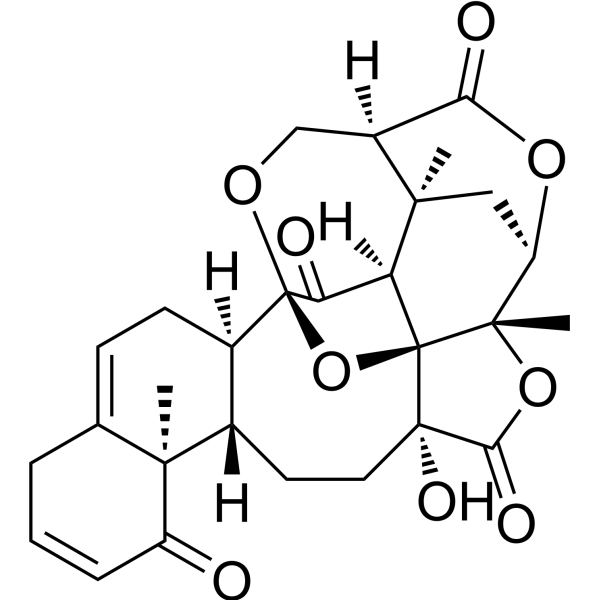
Ginkgo biloba extract is a natural product that can be isolated from Ginkgo biloba leaves . Ginkgo biloba extract alleviates oxidative stress-induced neuronal apoptosis (Apoptosis) by stabilizing mitochondrial function, regulating Bcl-2 family proteins and inhibiting caspase activation. Ginkgo biloba extract alleviates testicular injury by upregulating SKP2 and inhibiting Beclin1-independent autophagy (Autophagy) . Ginkgo biloba extract alleviates various types of neuronal damage in animal models. Ginkgo biloba extract reduces behavioral sensitization in rats. Ginkgo biloba extract counteracts Aβ-induced neurotoxicity by blocking a series of Aβ-triggered events, including glucose uptake, ROS accumulation, AKT activation, mitochondrial dysfunction, JNK and ERK 1/2 pathways, and apoptosis, and also interferes with the formation of Aβ oligomers. Ginkgo biloba extract is applicable to research related to cerebral hypoperfusion, testicular injury, Alzheimer's disease, Parkinson's disease, multi-infarct dementia, stroke, traumatic brain injury and amyotrophic lateral sclerosis .
loading...
    loading...
Cat. No.: HY-121337R
CAS No.: 61213-25-0
Synonyms: R-40244 (Standard)
Flurochloridone (Standard) (R-40244 (Standard)) is the analytical standard of Flurochloridone (HY-121337). This product is intended for research and analytical applications. Flurochloridone (R-40244) is an orally active herbicide and an inducer of ER stress, apoptosis, and cytotoxicity. Flurochloridone upregulates GRP78 and activates the PERK-eIF2α-ATF4 UPR axis, ATF6, CHOP, Bax, and Bim. Flurochloridone decreases Akt, p-Akt, GSK3β, and p-GSK3β levels, and induces ROS, oxidative stress, γ-glutamyl cycle activation, and GSH accumulation. Flurochloridone inhibits mitochondrial respiration and ATP production while enhancing glycolysis and cell viability inhibition. Flurochloridone inhibits spermatogonial proliferation, spermatocyte meiosis, and sperm mitochondrial membrane potential, and induces Sertoli cell apoptosis and mitochondrial damage. Flurochloridone non-competitively binds phytoene desaturase, blocking phytoene desaturation and carotenoid synthesis, leading to leaf bleaching and phytotoxicity. Flurochloridone can be used for research on male reproductive toxicity, hepatotoxicity, and as a herbicide .
loading...
    loading...
Cat. No.: HY-N19083
Category:  

Extract

Target:  

Bacterial

Tecomella undulata Extract, also known as Rohida extract, is a valuable botanical extract derived from the bark and leaves of the Tecomella undulata plant native to the Indian Thar Desert and is rich in bioactive compounds such as flavonoids, quinones, triterpenoids, and other phytochemicals that contribute to its diverse therapeutic properties. This extract is widely recognized for its hepatoprotective effects demonstrated through its ability to protect against liver damage induced by toxins such as paracetamol and carbon tetrachloride by normalizing elevated liver enzyme levels reducing oxidative stress and improving liver function. Additionally, it exhibits significant anti-inflammatory activity comparable to standard drugs like indomethacin and has been used to treat conditions like ascites and hepatosplenomegaly while also showing immunomodulatory effects by enhancing both humoral and cell-mediated immune responses and possessing antimicrobial properties that make it effective against various pathogens. Recent research suggests that Tecomella undulata may have potential in managing nonalcoholic steatohepatitis (NASH) by reducing body weight insulin resistance and improving liver function markers making it a versatile natural remedy with significant applications in hepatoprotection anti-inflammation and immune support.
loading...
    loading...
Cat. No.: HY-N20682
CAS No.: 2866266-56-8
1-Hydroxy-4αH-1,10-secoeudesma-5(6),10(14),11(13)-trien-12,8β-olide is a neuroprotective agent. 1-Hydroxy-4αH-1,10-secoeudesma-5(6),10(14),11(13)-trien-12,8β-olide reduces the protein expression levels of iNOS and COX-2, blocks the DNA-binding activity of NF-κB, and inhibits nitric oxide production. 1-Hydroxy-4αH-1,10-secoeudesma-5(6),10(14),11(13)-trien-12,8β-olide promotes the polarization of microglia to the M2 phenotype by inducing the production of Arg-1, and alleviates cell damage induced by H2O2 and 6-Hydroxydopamine (HY-B1081) .
loading...
    loading...
Cat. No.: HY-W015777
CAS No.: 105-13-5
Synonyms: P-Methoxy-benzyl alcoho; (4-Methoxyphenyl)methanol
4-Methoxybenzyl alcohol (P-Methoxy-benzyl alcoho; (4-Methoxyphenyl) methanol) is a naturally derived volatile aromatic compound. 4-Methoxybenzyl alcohol upregulates the phosphorylation level of PI3K/Akt pathway proteins, downregulates the expression of pro-inflammatory factors, increases the content of tight junction proteins occludin and claudin-5, and alleviates structural damage to the blood-brain barrier. 4-Methoxybenzyl alcohol improves the decrease in viability and NO level of cerebral microvascular endothelial cells induced by oxygen-glucose deprivation/reperfusion, and reduces the release of lactate dehydrogenase. 4-Methoxybenzyl alcohol serves as a substrate in the two-phase persulfate-mediated electro-oxidation system, where it is directionally oxidized to p-anisaldehyde. 4-Methoxybenzyl alcohol acts as a substrate for wild-type fungal aryl alcohol oxidase. 4-Methoxybenzyl alcohol can be used in studies related to ischemic stroke, as well as in research across various fields such as chemical synthesis, including the synthesis of fragrances and flavorings .
loading...
    loading...
Cat. No.: HY-N7695
CAS No.: 23133-56-4
Physalin B is an orally active anti-inflammatory and anticancer agent. Physalin B can be isolated from Physalis alkekengi L. var. Franchetii. Physalin B inhibits the activation of the NF-κB, NLRP3 inflammasome, STAT3, PI3K/Akt and Hedgehog signaling pathways, regulates the phosphorylation levels of GSK-3β, p38 MAPK, ERK1/2 and JNK, and promotes the nuclear translocation of NRF2. Physalin B reduces the levels of pro-inflammatory cytokines and factors, induces mitochondrial reactive oxygen species (mito-ROS) production, Apoptosis, G2/M cell cycle arrest and incomplete Autophagy, alters cytoskeleton structure and alleviates oxidative stress. Physalin B reduces cancer cell viability, ameliorates liver and lung tissue damage and alleviates liver fibrosis. Physalin B can be used in research related to ulcerative colitis, breast cancer, acute lung injury, colon cancer, non-alcoholic steatohepatitis, liver fibrosis, lung cancer, pancreatic cancer, lymphoma, ovarian cancer, sarcoma and leukemia .
loading...
    loading...
Cat. No.: HY-W015777R
CAS No.: 105-13-5
Synonyms: P-Methoxy-benzyl alcoho (Standard); (4-Methoxyphenyl)methanol (Standard)
4-Methoxybenzyl alcohol (Standard) (P-Methoxy-benzyl alcoho (Standard); (4-Methoxyphenyl)methanol (Standard)) is the analytical standard of 4-Methoxybenzyl alcohol (HY-W015777). This product is intended for research and analytical applications. 4-Methoxybenzyl alcohol (P-Methoxy-benzyl alcoho; (4-Methoxyphenyl) methanol) is a naturally derived volatile aromatic compound. 4-Methoxybenzyl alcohol upregulates the phosphorylation level of PI3K/Akt pathway proteins, downregulates the expression of pro-inflammatory factors, increases the content of tight junction proteins occludin and claudin-5, and alleviates structural damage to the blood-brain barrier. 4-Methoxybenzyl alcohol improves the decrease in viability and NO level of cerebral microvascular endothelial cells induced by oxygen-glucose deprivation/reperfusion, and reduces the release of lactate dehydrogenase. 4-Methoxybenzyl alcohol serves as a substrate in the two-phase persulfate-mediated electro-oxidation system, where it is directionally oxidized to p-anisaldehyde. 4-Methoxybenzyl alcohol acts as a substrate for wild-type fungal aryl alcohol oxidase. 4-Methoxybenzyl alcohol can be used in studies related to ischemic stroke, as well as in research across various fields such as chemical synthesis, including the synthesis of fragrances and flavorings .
loading...
    loading...
Cat. No.: HY-D1056A3
Synonyms: LPS, from Escherichia coli (O26:B6)
Lipopolysaccharides, from E. coli (Escherichia coli) O26:B6 are lipopolysaccharide endotoxins and TLR-4 activators derived from E. coli, classified as S-type LPS, which can activate pathogen-associated molecular patterns (PAMP) of the immune system and induce cellular secretion of migrasomes. Lipopolysaccharides, from E. coli O26:B6 exhibit a typical three-part structure: O-antigen, core oligosaccharide, and lipid A, and can be recognized by the core-specific monoclonal antibody MAb J8-4C10. Lipopolysaccharides, from E. coli O26:B6 can promote an increase in pro-inflammatory cytokines in plasma, thereby triggering hypothalamic-pituitary-adrenal (HPA) activation and leading to adrenal oxidative damage. The pathogenic effects of Lipopolysaccharides, from E. coli O26:B6 can be used to construct various models, such as cellular inflammation models, sepsis, acute lung injury models, adrenal dysfunction models, and bladder infection models, etc .
It is recommended to prepare a solution with concentration ≥2 mg/mL. Vortex thoroughly for more than 10 minutes. Due to the adsorption characteristics of LPS, silanized container or low adsorption centrifuge tubes should be used for aliquoting and storage, and mix thoroughly before use.
loading...
    loading...

