588 Results for "

progression

" in MedChemExpress (MCE) Product Catalog:
Products (588)

588 Results for "progression" in MCE Product Catalog:

Cat. No.: HY-B1451A
CAS No.: 89371-37-9
Synonyms: TA-6366 free base
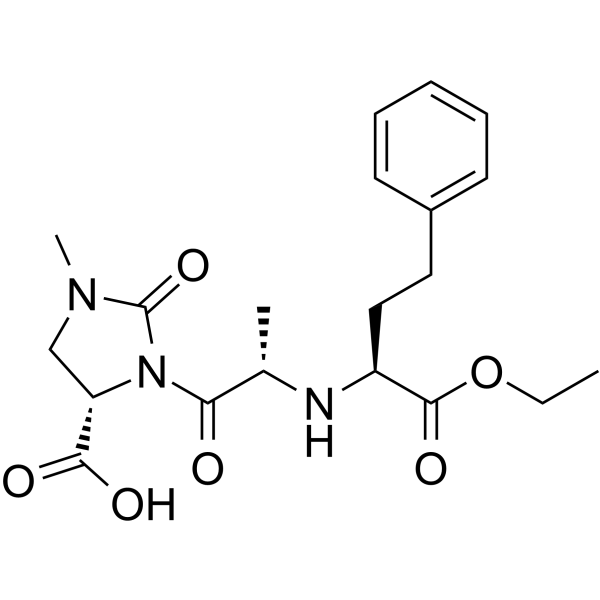
Imidapril (TA-6366 free base) is an orally active dual inhibitor of angiotensin-converting enzyme (ACE) and MMP-9. Imidapril inhibits lipopolysaccharide-induced phosphorylation of c-Jun, MKK4 and JNK in monocytes, and downregulates the production of specific inflammatory factors such as TNF-α and IP-10, thereby exerting anti-inflammatory activity. Imidapril also effectively ameliorates mesangial expansion and reduces urinary albumin excretion by inhibiting angiotensin AngII production, lowering glomerular pressure and oxidative stress, thus delaying disease progression. Imidapril can also directly bind to the active site of MMP-9 to inhibit gelatinase activity, and suppress the enlargement of cerebral aneurysms without altering systemic blood pressure. Imidapril is widely applicable to related studies on autoimmune glomerulonephritis, diabetic nephropathy, cerebral aneurysms and other conditions .
loading...
    loading...
Cat. No.: HY-P10427
DV1 is a CXCR4 inhibitor with anti-proteolytic properties that specifically blocks the binding of SDF-1α to its receptor. DV1 inhibits the migration of breast cancer cells and enables the targeted delivery of avidin-PLGA nanoparticles to CXCR4-expressing cancer cells. DV1 not only effectively suppresses the progression of metastatic breast cancer in mouse models, but also preferentially accumulates in brain tumor tissues rather than normal brain tissues, showing potential for inhibiting intracranial tumor metastasis. As a humoral immune stimulant, DV1 induces the production of specific IgG, neutralizing antibodies and cellular immune responses, thereby providing the host with protection against lethal challenges. DV1 has been applied to studies on CXCR4-expressing cancers, glioblastoma, dengue fever and other related diseases .
loading...
    loading...
Cat. No.: HY-L231
25 compounds

The TCA cycle (tricarboxylic acid cycle)—is also known as the Krebs cycle or the citric acid cycle (CAC). The TCA cycle is a series of chemical reactions that release stored energy through the oxidation of acetyl-CoA in carbohydrates, fats, and proteins.

For decades, the TCA cycle has been considered as the central pathway for cell oxidative phosphorylation to produce energy and biosynthesis. Research shows that TCA cycle is associated with many diseases, especially cancer. In colon carcinoma, liver cancer and other cancers, there are mutations that lead to the imbalance of TCA cycle metabolites, indicating that TCA cycle may be related to the occurrence of cancer. Understanding the role and molecular mechanism of TCA cycle in inhibiting or promoting cancer progression will promote the development of new metabolite-based cancer treatment methods in the future.

MCE supplies a unique collection of 25 key intermediates of the TCA cycle, which can be utilized for TCA-related research and metabolomics identification studies.

Cat. No.: HY-L201
3,628 compounds

Cell proliferation, the increase in cell numbers resulting from cell division, is a complex and tightly regulated process. Cell proliferation is regulated by coordinated entry into the cell cycle, and changes in proliferation are closely linked to disease development. Evolutionary dynamics links tumor growth and progression with cell proliferation, cell death, and mutation rates. In addition, cell proliferation is central to degenerative diseases, the development of which is often accompanied by accelerated multiplication of cancer cells. Therefore, assays of cell proliferation levels are frequently used for laboratory research purposes and increasingly for clinical assessment of tumor aggressiveness and potentially to guide care. It has been shown that multiple key targets are collectively involved in regulating the process of cell proliferation, such as CDK, E2F, pRB, β-Catenin, and others.

MCE collects 3,628 compounds that target and regulate key targets of cell proliferation, which can be used in studies of cell proliferation mechanisms and drug discovery.

Cat. No.: HY-L100
147 compounds

Cancer is a multi-step process which involves initiation, promotion and progression. Chemical carcinogens can alter any of these processes to induce their carcinogenic effects. People are continuously exposed exogenously to varying amounts of chemicals that have been shown to have carcinogenic or mutagenic properties in experimental systems. Exposure can occur exogenously when these agents are present in food, air or water, and also endogenously when they are products of metabolism or pathophysiologic states such as inflammation. The administration of chemical carcinogens is one of the most commonly used methods to induce tumors in several organs in laboratory animals in order to study oncologic diseases of humans. MCE offers a unique collection of 147 chemical carcinogens which have been identified with carcinogenic activity either in humans or in animal models. MCE Tumorigenesis-Related Compound Library is a powerful tool for studying oncologic diseases of humans. Standard opration based on safety data sheet will not cause harm to the body.

Cat. No.: HY-L004
3,522 compounds

DNA is prone to numerous forms of damage that can injure cells and impair fitness. Cells have developed an array of mechanisms to repair these injuries. Proliferating cells are especially vulnerable to DNA damage due to the added demands of cellular growth and division. Cell cycle checkpoints represent integral components of DNA repair that coordinate cooperation between the machinery of the cell cycle and several biochemical pathways that respond to damage and restore DNA structure. By delaying progression through the cell cycle, checkpoints provide more time for repair before the critical phases of DNA replication, when the genome is replicated, and of mitosis, when the genome is segregated. Loss or attenuation of checkpoint function may increase spontaneous and induced gene mutations and chromosomal aberrations by reducing the efficiency of DNA repair.

MCE owns a unique collection of 3,522 cell cycle/DNA damage-related compounds which can be used in the research of the same.

Cat. No.: HY-L148
72 compounds

The TCA cycle (tricarboxylic acid cycle)—is also known as the Krebs cycle or the citric acid cycle (CAC). The TCA cycle is a series of chemical reactions that release stored energy through the oxidation of acetyl-CoA in carbohydrates, fats, and proteins.

For decades, the TCA cycle has been considered as the central pathway for cell oxidative phosphorylation to produce energy and biosynthesis. Research shows that TCA cycle is associated with many diseases, especially cancer. In colon carcinoma, liver cancer and other cancers, there are mutations that lead to the imbalance of TCA cycle metabolites, indicating that TCA cycle may be related to the occurrence of cancer. Understanding the role and molecular mechanism of TCA cycle in inhibiting or promoting cancer progression will promote the development of new metabolite-based cancer treatment methods in the future.

MCE supplies a unique collection of 72 compounds related to the TCA cycle. MCE TCA Cycle Compound Library is a useful tool for the TCA cycle related research and anti-cancer drug development.

Cat. No.: HY-101448R
CAS No.: 287403-39-8
Synonyms: WAY-171318 (Standard)
TMI-1 (Standard) is the analytical standard of TMI-1 (HY-101448). This product is intended for research and analytical applications. TMI-1 (WAY-171318) inhibits TNF converting enzyme (TACE) (IC50 of 8.4 nM), ADAM-TS-4, ADAM-17 and various MMPs with oral activity. TMI-1 significantly suppresses the secretion of TNF-α , alleviating collagen-induced arthritis in mice. TMI-1 inhibits cancer cell proliferation, induces apoptosis through a caspase-dependent pathway. TMI-1 also reverses TRPV1 upregulation and lowers the levels of inflammatory factors (TNF-α、IL-1β、IL-6) in nerve cells, protecting against paclitaxel-induced neurotoxicity. TMI-1 leads to changes in pro-atherogenic lipoprotein profiles, but does not affect the progression of early lesions .
loading...
    loading...
Cat. No.: HY-102069R
CAS No.: 956025-83-5
Research Areas:  

Others

3MB-PP1 (Standard) is the analytical standard of 3MB-PP1 (HY-102069). This product is intended for research and analytical applications. 3MB-PP1, a bulky purine analog, is a Polo-like kinase 1 (Plk1) inhibitor. 3MB-PP1 blocks mitotic progression and cell division arise through target Plk1 in in cells expressing analog-sensitive Plk1 alleles. 3MB-PP1 specifically inhibits the activity of analog-sensitive Ssn3 (Cdk8). 3MB-PP1 inhibits Leu93 Mutant Zipper-interacting protein kinase (Leu93-ZIPK; IC50=2 μM). 3MB-PP1 can be used for the research of hypha formation of Candida albicans and cell division .
loading...
    loading...
Cat. No.: HY-103430B
CAS No.: 164265-49-0
SKF-83566 hydrochloride is an orally active, blood-brain barrier-permeable D1/D5 dopamine receptor antagonist with a Ki value of approximately 0.4-0.56 nM. SKF-83566 hydrochloride modulates locomotor behavior and spatial memory by blocking D1 receptors and inhibits glioblastoma progression by targeting the DRD1/c-Myc/UHRF1 pathway. SKF-83566 hydrochloride acts as an inhibitor of the dopamine transporter (DAT) and adenylyl cyclase 2 (AC2). SKF-83566 hydrochloride competitively binds to DAT to inhibit dopamine reuptake and non-competitively inhibits AC2 activity, thereby reducing cAMP accumulation. SKF-83566 hydrochloride is used in research areas such as dopaminergic system mechanisms, learning and memory, targeted intervention for glioblastoma, AC2 pathophysiology, antiparasitic drug screening, and synaptic plasticity (the "gating effect") .
loading...
    loading...
Cat. No.: HY-113205S
CAS No.: 2738376-66-2
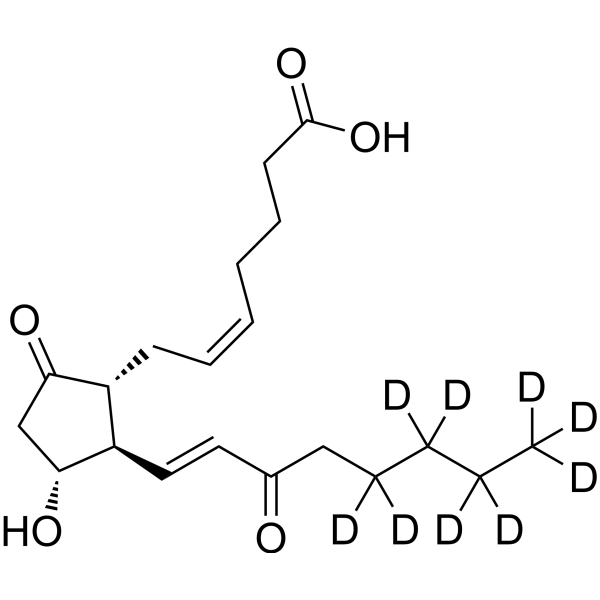
15-Keto-prostaglandin E2-d9 is the d9 labeled 15-keto-Prostaglandin E2 (HY-113205). 15-keto-Prostaglandin E2 (15-keto-PGE2) is an endogenous PGE2 metabolite. 15-keto-Prostaglandin E2 inhibits STAT3 activation by binding to the Cys259 residue of STAT3. 15-keto-Prostaglandin E2 binds to and stabilizes EP2 and EP4 receptors. 15-keto-Prostaglandin E2 inhibits the growth and progression of breast cancer cells. 15-keto-Prostaglandin E2 activates PPAR-γ and promotes fungal growth. 15-keto-Prostaglandin E2 disrupts glomerular vascularization during zebrafish development and reduces the surface area of the glomerular filtration barrier .
loading...
    loading...
Cat. No.: HY-113205S1
CAS No.: 2738376-85-5
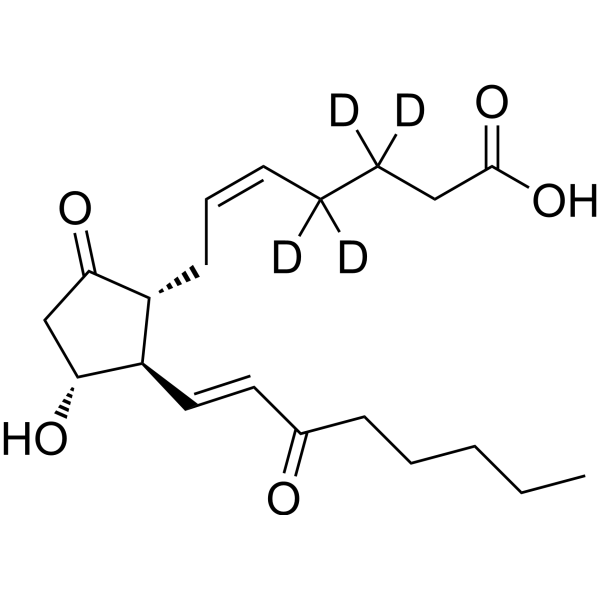
15-Keto-prostaglandin E2-d4 is the d4 labeled 15-keto-Prostaglandin E2 (HY-113205). 15-keto-Prostaglandin E2 (15-keto-PGE2) is an endogenous PGE2 metabolite. 15-keto-Prostaglandin E2 inhibits STAT3 activation by binding to the Cys259 residue of STAT3. 15-keto-Prostaglandin E2 binds to and stabilizes EP2 and EP4 receptors. 15-keto-Prostaglandin E2 inhibits the growth and progression of breast cancer cells. 15-keto-Prostaglandin E2 activates PPAR-γ and promotes fungal growth. 15-keto-Prostaglandin E2 disrupts glomerular vascularization during zebrafish development and reduces the surface area of the glomerular filtration barrier .
loading...
    loading...
Cat. No.: HY-123715
CAS No.: 1983924-20-4
Target:  

Apoptosis

Research Areas:  

Cancer

Anticancer agent 255 is a monocarbonylated curcumin-1,2,3-oxazole conjugate with significant anticancer activity. The IC50 values of Anticancer agent 255 in prostate cancer cells PC-3 and DU-145 are 8.8μM and 9.5μM respectively. The IC50 values of Anticancer agent 255 against breast cancer cells MCF-7, MDA-MB-231 and 4T1 are 6μM, 10μM and 6.4μM, showing good anti-cancer activity Effect. Anticancer agent 255 can induce mitochondria-mediated apoptosis in cancer cells and prevent cell cycle progression. Anticancer agent 255 down-regulated the cell proliferation marker PCNA and inhibited the activation of cell survival proteins. Anticancer agent 255 up-regulated the pro-apoptotic protein Bax and down-regulated the anti-apoptotic protein Bcl-2 .
loading...
    loading...
Cat. No.: HY-125101A
CAS No.: 1257792-42-9
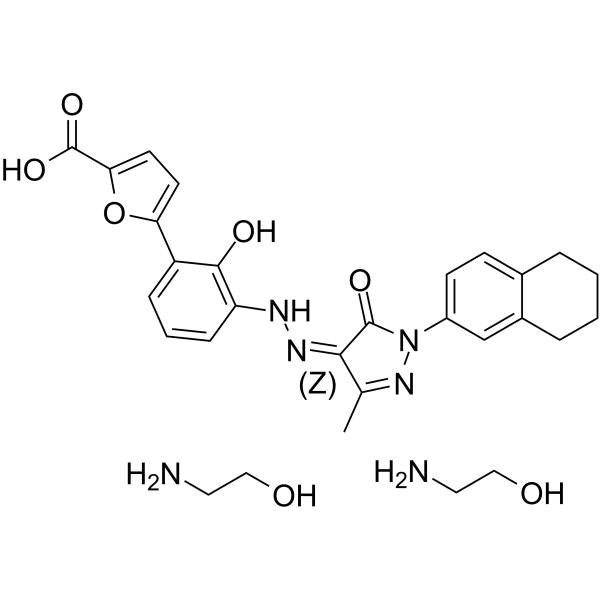
Rafutrombopag (Hetrombopag) diolamine is an orally active nonpeptide thrombopoietin receptor (TPOR/MPL) agonist. Rafutrombopag diolamine can chelate iron and alleviate iron overload while promoting haematopoiesis. Rafutrombopag diolamine specifically stimulates proliferation and differentiation of human TPOR-expressing cells, including 32D-MPL and human hematopoietic stem cells through stimulation of STAT, PI3K and ERK signalling pathways. Rafutrombopag diolamine effectively up-regulates G1-phase-related proteins, including p-RB, Cyclin D1 and CDK4/6, normalizes progression of the cell cycle, and prevents apoptosis by modulating BCL-XL/BAK expression in 32D-MPL cells. Rafutrombopag diolamine protects cardiomyocyte survival from oxidative stress damage as an enhancer of stem cells. Rafutrombopag diolamine can be used for the study of immune thrombocytopenia and oxidative stress-related cardiovascular disease .
loading...
    loading...
Cat. No.: HY-183480
CAS No.: 80841-47-0
Synonyms: CI-921; NSC 343499
Target:  

Topoisomerase

Research Areas:  

Cancer

Asulacrine (CI-921) is an orally active DNA intercalating topoisomerase II inhibitor. Asulacrine binds to DNA via intercalation, with its acridine chromophore intercalated between base pairs and substituents located in the major/minor grooves, which stabilizes DNA against acid denaturation. Asulacrine acts as a cell cycle inhibitor, disruptor, and arrest inducer, slowing cell progression in late S/G2 phase, causing G2 phase arrest and inducing unbalanced growth. Asulacrine inhibits cell growth, clonogenicity, and colony formation, and leads to histological destruction of tumor cells. Compared to cells in exponential growth phase, Asulacrine exhibits lower toxicity to quiescent cells; its activity depends on cationic properties, and it has better water solubility and metabolic stability. Asulacrine can be used in research related to leukemia, lung cancer, colon cancer, breast cancer, melanoma, adriamycin-resistant mammary adenocarcinoma, and mouse solid tumors .
loading...
    loading...
Cat. No.: HY-184290
CAS No.: 3062852-59-6
Research Areas:  

Neurological Disease Cancer

PRMT5-IN-56 is a PRMT5⋅MTA complex inhibitor with an IC50 of 0.2 nM, oral activity, and blood-brain barrier penetration. PRMT5-IN-56 inhibits PRMT5 methyltransferase activity in an MTA-cooperative manner, suppresses symmetrical dimethylarginine levels in MTAP-deficient cells. PRMT5-IN-56 suppresses proliferation of MTAP-deleted cancer cells with high selectivity over MTAP-wild type cells. PRMT5-IN-56 induces dose-dependent tumor growth inhibition in subcutaneous xenograft models, inhibits intracranial tumor progression, and prolongs survival in orthotopic brain xenograft models. PRMT5-IN-56 exhibits high intrinsic permeability, good oral bioavailability, and a high brain-to-plasma ratio. PRMT5-IN-56 can be used for the research of MTAP-deleted cancers and glioblastoma .
loading...
    loading...
Cat. No.: HY-B1451R
CAS No.: 89396-94-1
Synonyms: TA-6366 (Standard)
Imidapril (hydrochloride) (Standard) is the analytical standard of Imidapril (hydrochloride). This product is intended for research and analytical applications. Imidapril hydrochloride (TA-6366) is an orally active dual inhibitor of angiotensin-converting enzyme (ACE) and MMP-9. Imidapril hydrochloride inhibits lipopolysaccharide-induced phosphorylation of c-Jun, MKK4 and JNK in monocytes, and downregulates the production of specific inflammatory factors such as TNF-α and IP-10, thereby exerting anti-inflammatory activity. Imidapril hydrochloride also effectively ameliorates mesangial expansion and reduces urinary albumin excretion by inhibiting angiotensin AngII production, lowering glomerular pressure and oxidative stress, thus delaying disease progression. Imidapril hydrochloride can also directly bind to the active site of MMP-9 to inhibit gelatinase activity, and suppress the enlargement of cerebral aneurysms without altering systemic blood pressure. Imidapril hydrochloride is widely applicable to related studies on autoimmune glomerulonephritis, diabetic nephropathy, cerebral aneurysms and other conditions .
loading...
    loading...
Cat. No.: HY-B1451S
CAS No.: 1356017-30-5
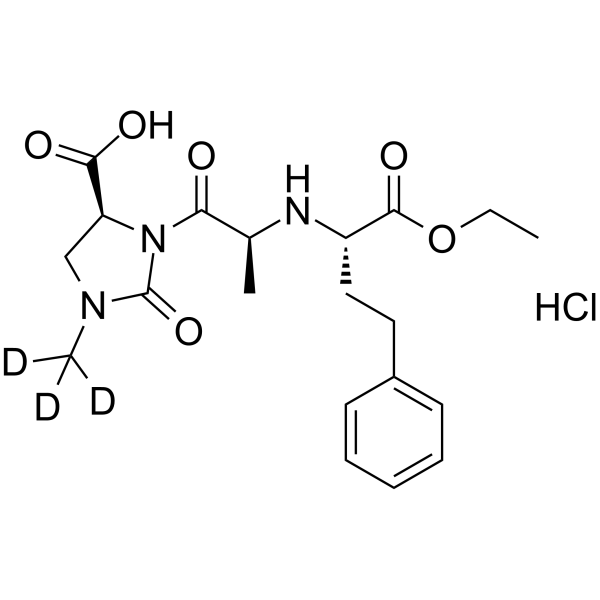
Imidapril-d3 hydrochloride (TA-6366-d3) is the deuterium labeled Imidapril hydrochloride. Imidapril hydrochloride (TA-6366) is an orally active dual inhibitor of angiotensin-converting enzyme (ACE) and MMP-9. Imidapril hydrochloride inhibits lipopolysaccharide-induced phosphorylation of c-Jun, MKK4 and JNK in monocytes, and downregulates the production of specific inflammatory factors such as TNF-α and IP-10, thereby exerting anti-inflammatory activity. Imidapril hydrochloride also effectively ameliorates mesangial expansion and reduces urinary albumin excretion by inhibiting angiotensin AngII production, lowering glomerular pressure and oxidative stress, thus delaying disease progression. Imidapril hydrochloride can also directly bind to the active site of MMP-9 to inhibit gelatinase activity, and suppress the enlargement of cerebral aneurysms without altering systemic blood pressure. Imidapril hydrochloride is widely applicable to related studies on autoimmune glomerulonephritis, diabetic nephropathy, cerebral aneurysms and other conditions .
loading...
    loading...
Cat. No.: HY-N0181A
CAS No.: 474-69-1
Synonyms: 9β,10α-Ergosterol
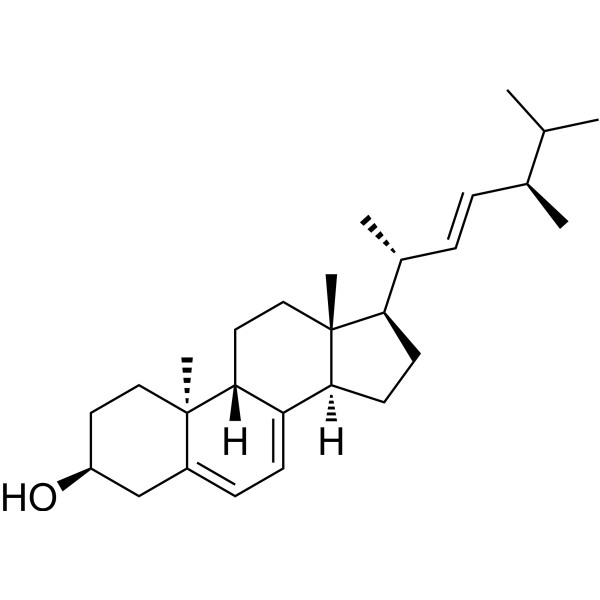
Lumisterol (9β,10α-Ergosterol) is a photoproduct of 7-dehydrocholesterol, present in the skin, and acts as an orally active VDR non-genomic modulator and ROR inverse agonist. Lumisterol binds to the SARS-CoV-2 Mpro substrate-binding pocket and the RdRP active site, inhibiting enzyme activity. Lumisterol induces NRF2-regulated antioxidant responses, p53 phosphorylation and nuclear translocation, and intracellular free radical scavenging. Lumisterol inhibits the proliferation of epidermal keratinocytes and melanoma cells, modulates cell cycle progression, and suppresses basal and TNFα-induced NFκB transcriptional activity. Lumisterol inhibits RORγ transcriptional activity and IL-17 production. Lumisterol is used in research on UVB-induced skin damage, melanoma, psoriasis, vitamin D deficiency, and COVID-19 .
loading...
    loading...
Cat. No.: HY-P10427A
Target:  

CXCR Dengue Virus

Research Areas:  

Infection

DV1 TFA is a CXCR4 inhibitor with anti-proteolytic properties that specifically blocks the binding of SDF-1α to its receptor. DV1 TFA inhibits the migration of breast cancer cells and enables the targeted delivery of avidin-PLGA nanoparticles to CXCR4-expressing cancer cells. DV1 TFA not only effectively suppresses the progression of metastatic breast cancer in mouse models, but also preferentially accumulates in brain tumor tissues rather than normal brain tissues, showing potential for inhibiting intracranial tumor metastasis. As a humoral immune stimulant, DV1 TFA induces the production of specific IgG, neutralizing antibodies and cellular immune responses, thereby providing the host with protection against lethal challenges. DV1 TFA has been applied to studies on CXCR4-expressing cancers, glioblastoma, dengue fever and other related diseases .
loading...
    loading...

