68 Results for "

ascorbic acid

" in MedChemExpress (MCE) Product Catalog:
Products (68)

68 Results for "ascorbic acid" in MCE Product Catalog:

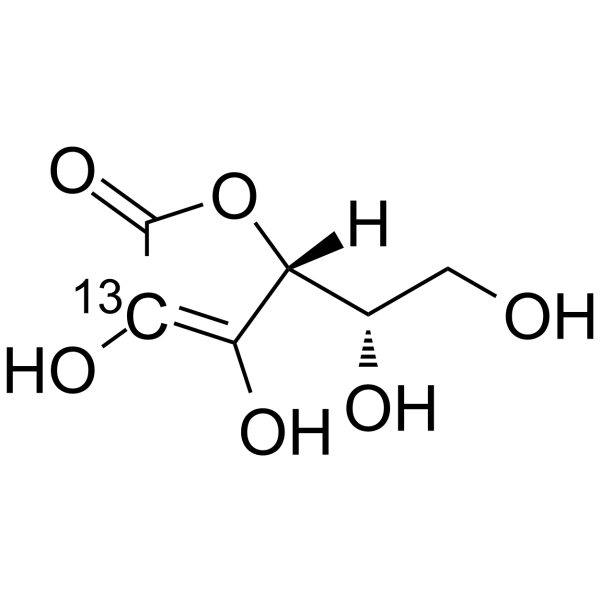
Cat. No.: HY-B0166S2
CAS No.: 178101-89-8
Synonyms: L-Ascorbate-13C-1; Vitamin C-13C-1
L-Ascorbic acid- 13C-1 is the 13C labeled L-Ascorbic acid. L-Ascorbic acid (L-Ascorbate), an electron donor, is an endogenous antioxidant agent. L-Ascorbic acid inhibits selectively Cav3.2 channels with an IC50 of 6.5 μM. L-Ascorbic acid is also a collagen
loading...
    loading...
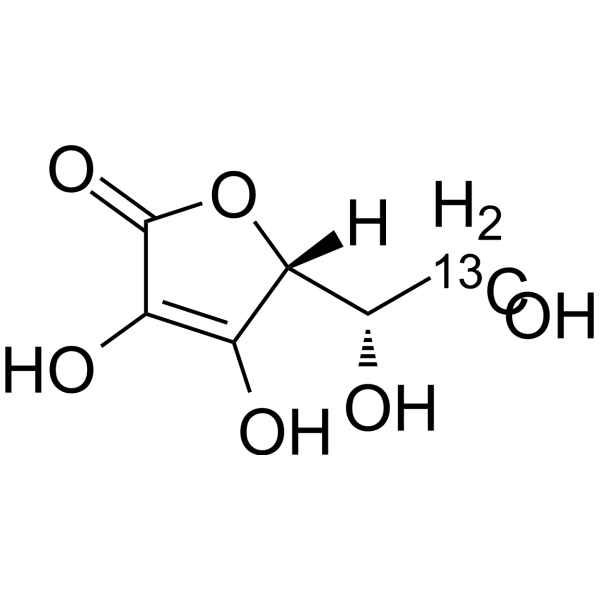
Cat. No.: HY-B0166S5
CAS No.: 149153-08-2
Synonyms: L-Ascorbate-13C-4; Vitamin C-13C-4
L-Ascorbic acid- 13C-4 is the 13C labeled L-Ascorbic acid. L-Ascorbic acid (L-Ascorbate), an electron donor, is an endogenous antioxidant agent. L-Ascorbic acid inhibits selectively Cav3.2 channels with an IC50 of 6.5 μM. L-Ascorbic acid is also a collag
loading...
    loading...
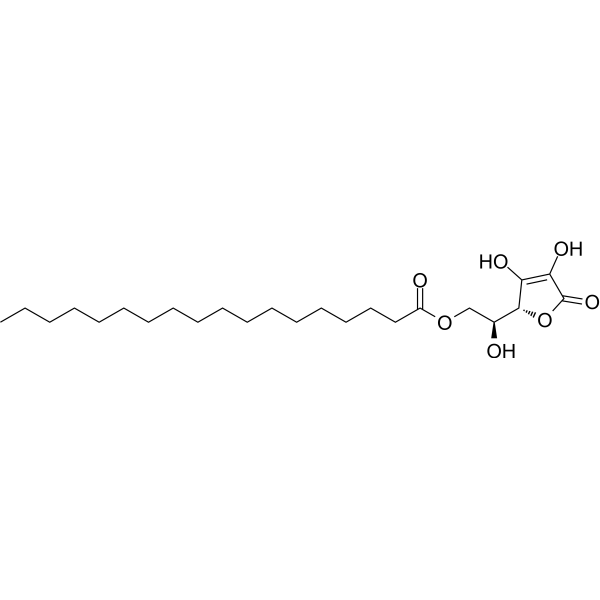
Cat. No.: HY-W127738
CAS No.: 10605-09-1
Synonyms: Vitamin C stearate; ascorbic acid 6-stearate; Ascorbyl stearate
6-O-Staroyl-L-ascorbic acid is an organic compound commonly used in cosmetics and skin care products. It can be used as an antioxidant and whitening agent, and is widely used in anti-aging, moisturizing and skin repairing. In addition, this compound is used as a catalyst or buffer in certain chemical reactions.
loading...
    loading...
Cat. No.: HY-P2742B
CAS No.: 9029-44-1
Target:  

Endogenous Metabolite

Research Areas:  

Metabolic Disease

Ascorbate oxidase, acremonium sp is a member of the multicopper blue oxidase family and primarily exists in plants as a free enzyme in the cytoplasm or bound to the cell wall. Ascorbate oxidase, acremonium sp has a high activity in catalyzing the oxidation of ascorbic acid to dehydroascorbic acid, regulating various cellular processes related to plant growth, protection, and development. Ascorbate oxidase, acremonium sp can be used to detect hydrogen peroxide .
loading...
    loading...
Cat. No.: HY-B1400R
CAS No.: 83-73-8
Synonyms: Iodoquinol (Standard); 5,7-Diiodo-8-hydroxyquinoline (Standard); 5,7-Diiodo-8-quinolinol (Standard)
Diiodohydroxyquinoline (Standard) is the analytical standard of Diiodohydroxyquinoline. This product is intended for research and analytical applications. Diiodohydroxyquinoline (Iodoquinol, 5,7-Diiodo-8-hydroxyquinoline, 5,7-Diiodo-8-quinolinol) has an orally active and satisfactory antiparasitic properties. Diiodohydroxyquinoline exhibits mutagenic potential in mice and potent anti-SARS-CoV-2 activity with an EC50 value of 1.38 μM in VeroE6 cells. Diiodohydroxyquinoline's antimutagen is ascorbic acid. Diiodohydroxyquinoline is promising for research in inflammationin, testinal amebiasis, amebic liver abscess and chronic nonspecific diarrheas .
loading...
    loading...
Cat. No.: HY-107837R
CAS No.: 66170-10-3
Synonyms: 2-Phospho-L-ascorbic acid trisodium (Standard)
L-Ascorbic acid 2-phosphate (trisodium) (Standard) is the analytical standard of L-Ascorbic acid 2-phosphate (trisodium). This product is intended for research and analytical applications. L-Ascorbic acid 2-phosphate trisodium (2-Phospho-L-ascorbic acid trisodium) is a long-acting vitamin C derivative that can stimulate collagen formation and expression[1]. L-Ascorbic acid 2-phosphate trisodium (2-Phospho-L-ascorbic acid trisodium) can be used as a culture medium supplement for the osteogenic differentiation of human adipose stem cells (hASCs). L-Ascorbic acid 2-phosphate trisodium (2-Phospho-L-ascorbic acid trisodium) increases alkaline phosphatase (ALP) activity and expression of runx2A in hASCs during the osteogenic differentiation[2][3].
loading...
    loading...
Cat. No.: HY-N6821R
CAS No.: 129499-78-1
Research Areas:  

Cancer

2-O-α-D-Glucopyranosyl-L-ascorbic Acid (Standard) is the analytical standard of 2-O-α-D-Glucopyranosyl-L-ascorbic Acid. This product is intended for research and analytical applications. 2-O-α-D-Glucopyranosyl-L-ascorbic Acid is a glucoside derivative of ascorbic acid, shows anti-cancer activity after enzymatic hydrolysis to ascorbic acid .
loading...
    loading...
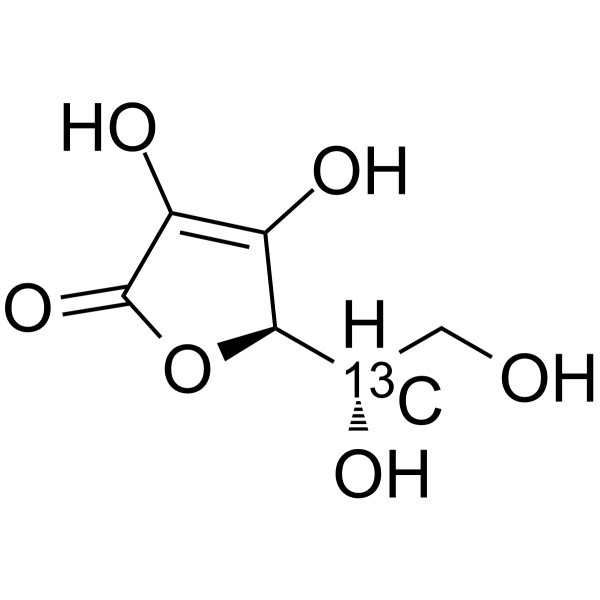
Cat. No.: HY-B0166S4
Synonyms: L-Ascorbate-13C-3; Vitamin C-13C-3
L-Ascorbic acid- 13C-3 is the 13C labeled L-Ascorbic acid. L-Ascorbic acid (L-Ascorbate), an electron donor, is an endogenous antioxidant agent. L-Ascorbic acid inhibits selectively Cav3.2 channels with an IC50 of 6.5 μM. L-Ascorbic acid is also a collagen
loading...
    loading...
Cat. No.: HY-B0166CR
CAS No.: 5743-28-2
Synonyms: L-Ascorbate calcium dihydrate (Standard); Vitamin C calcium dihydrate (Standard)
L-Ascorbic acid (calcium dihydrate) (Standard) is the analytical standard of L-Ascorbic acid (calcium dihydrate). This product is intended for research and analytical applications. L-Ascorbic acid (calcium dihydrate) (L-Ascorbate (calcium dihydrate); Vitamin C (calcium dihydrate)) is a biochemical reagent that can be used as a biological material or organic compound for life science related research.
loading...
    loading...
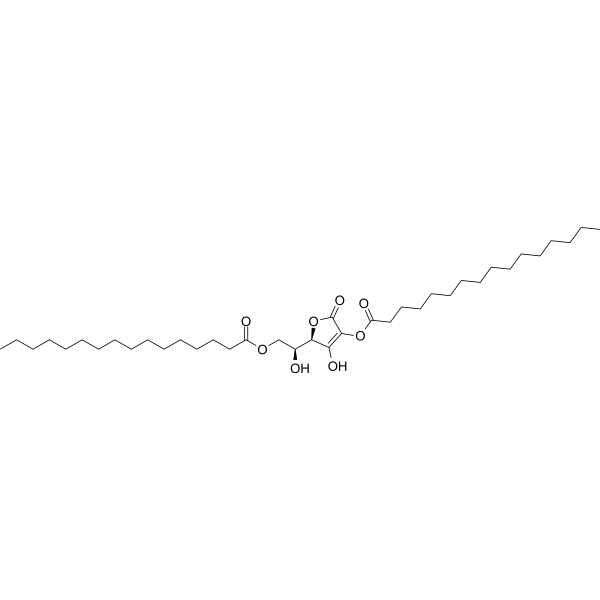
Cat. No.: HY-W127735
CAS No.: 4218-81-9
Synonyms: L-Ascorbyl 2,6-dipalmitate
2,6-Di-O-palmitoyl-L-ascorbic Acid is a biochemical reagent that can be used as a biological material or organic compound for life science related research.
loading...
    loading...
Cat. No.: HY-133794R
CAS No.: 910297-52-8
Research Areas:  

Cancer

L-Ascorbic acid (GMP Like) (Standard) is the analytical standard of L-Ascorbic acid (GMP Like). This product is intended for research and analytical applications. L-Ascorbic acid (GMP Like) is the GMP Like class L-Ascorbic acid (HY-B0166). L-Ascorbic acid (L-Ascorbate, Vitamin C), an electron donor, is an endogenous antioxidant agent. L-Ascorbic acid inhibits selectively Cav3.2 channels with an IC50 of 6.5 μM. L-Ascorbic acid is also a collagen deposition enhancer and an elastogenesis inhibitor . L-Ascorbic acid exhibits anti-cancer effects through the generation of reactive oxygen species (ROS) and selective damage to cancer cells .
loading...
    loading...
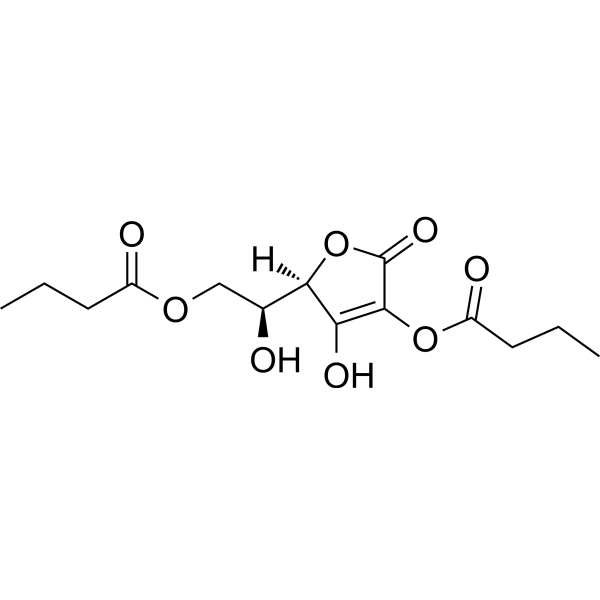
Cat. No.: HY-W127734
CAS No.: 4337-04-6
Synonyms: 2,6-Di-O-butyryl-L-ascorbic acid
L-Ascorbyl 2,6-Dibutyrate is a biochemical reagent that can be used as a biological material or organic compound for life science related research.
loading...
    loading...
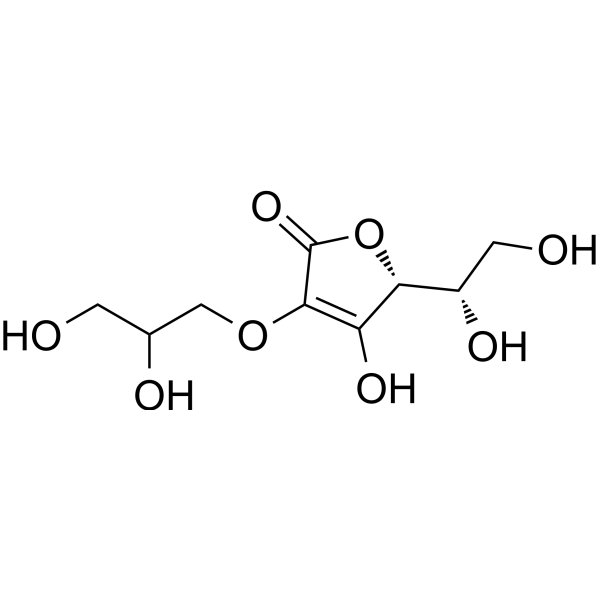
Cat. No.: HY-W127733
CAS No.: 1120360-13-5
Synonyms: 2-O-(2,3-Dihydroxypropyl)-L-ascorbic acid
Glyceryl Ascorbate is a biochemical reagent that can be used as a biological material or organic compound for life science related research.
loading...
    loading...
Cat. No.: HY-W016628R
CAS No.: 1128-23-0
Synonyms: L-Gulonolactone (Standard)
L-Gulono-1,4-lactone (L-Gulonolactone) (Standard) is the analytical standard of L-Gulono-1,4-lactone. This product is intended for research and analytical applications. L-Gulono-1,4-lactone is a biosynthetic precursor of L-Ascorbic acid (Vitamin C) (HY-B0166). L-Gulono-1,4-lactone can be enzymatically converted to L-Ascorbic acid via the animal uronic acid pathway, while species such as humans lack the key oxidase that catalyzes this step, resulting in the disruption of this pathway and the necessity to obtain Vitamin C from diet. L-Gulono-1,4-lactone is a putative intermediate in an alternative biosynthetic pathway of L-Ascorbic acid in Arabidopsis thaliana.
loading...
    loading...
Cat. No.: HY-N13182
CAS No.: 21764-41-0
Taxoquinone is an antioxidant derived from Metasequoia glyptostroboides and belongs to the diterpenoid class of compounds. At a concentration of 150 μg/mL, Taxoquinone exhibits a maximum inhibition of DPPH radicals of 81.29%, demonstrating superior antioxidant activity compared to Ascorbic acid and α-tocopherol at the same concentration .
loading...
    loading...
Cat. No.: HY-N0153A
CAS No.: 132203-74-8
Synonyms: Naringoside hydrate
Research Areas:  

Cancer

Niacinamide ascorbate is a vitamin complex that combines niacinamide (vitamin B3) and ascorbic acid (vitamin C). Niacinamide ascorbate reduces the risk of radiation-induced acute leukemia, breast cancer, thyroid cancer, and other somatic and genetic mutations following exposure to ionizing radiation doses .
loading...
    loading...
Cat. No.: HY-112678
CAS No.: 945008-17-3
Purity:  99.51%
Research Areas:  

Cardiovascular Disease

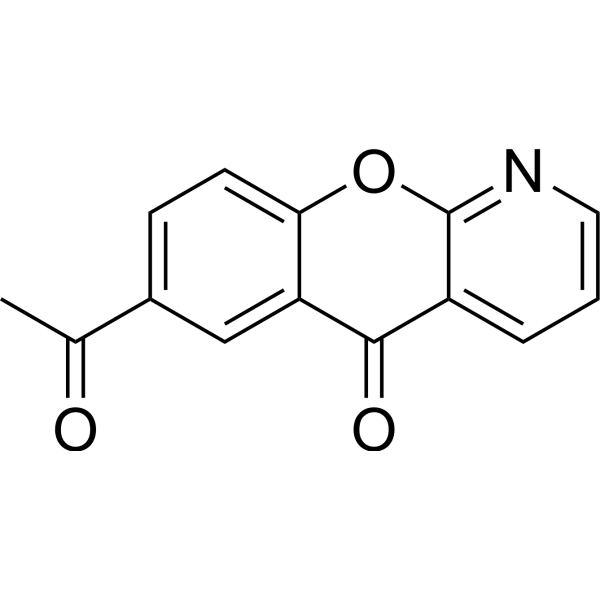
TM6008 is a potent and orally active prolyl hydroxylase (PHD) inhibitor. TM6008 chelats transition metal (copper) and inhibits the autoxidation of ascorbic acid with an IC50 value is 0.57 μM. TM6008  exerts organ protection against ischemia in vivo and can be used for cerebrovascular disease research .
loading...
    loading...
Cat. No.: HY-148854
CAS No.: 53910-28-4
Research Areas:  

Others

L-Ascorbate-2-sulfate disodium (page 46) is a pharmacologically acceptable salt of the L-Ascorbic acid (HY-B0166G) derivative. L-Ascorbate-2-sulfate disodium stimulates collagen synthesis and possess skin-care functions including an elimination function of active oxygen .
loading...
    loading...
Cat. No.: HY-W768934
Synonyms: L-Gulonolactone-13C6
L-Gulono-1,4-lactone- 13C6 (L-Gulonolactone- 13C6) is the 13C-labeled L-Gulono-1,4-lactone (HY-W016628). L-Gulono-1,4-lactone is a substrate of L-gulono-1,4-lactone oxidoreductase, which catalyzes the last step of the biosynthesis of L-ascorbic (Vatamin) C. In other words, L-Gulono-1,4-lactone is a direct precursor of vitamin C in animals, in plants and in some protists.
loading...
    loading...
Cat. No.: HY-123013
CAS No.: 53944-40-4
Research Areas:  

Inflammation/Immunology

Y 9000 is an orally active antiallergic and anti-inflammatory compound. Y 9000 targets mast cells, inhibits the release of allergic mediators, stimulates the adrenal glands, exhibits glucocorticoid-like activity, and reduces adrenal ascorbic acid content. Y 9000 inhibits IgE-mediated and IgG-mediated allergic reactions as well as active systemic anaphylaxis in mice. Y 9000 inhibits allergic wheezing in passively sensitized guinea pigs and protects against active systemic anaphylactic shock in mice. Y 9000 inhibits non-immune responses in rats, including dextran-induced histamine release, anaphylactoid reactions and paw swelling. Y 9000 can be used in the research of allergic diseases (asthma, allergic rhinitis, urticaria, etc.) .
loading...
    loading...

