63 Results for "

interferon response

" in MedChemExpress (MCE) Product Catalog:
Products (63)

63 Results for "interferon response" in MCE Product Catalog:

Cat. No.: HY-130116A
CAS No.: 2243079-27-6
Target:  

STING

Research Areas:  

Cancer

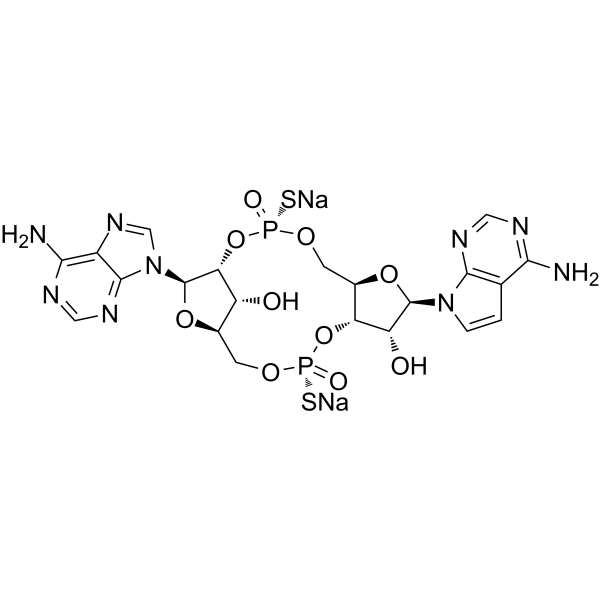
IACS-8779 disodium is a highly potent stimulator of interferon genes (STING) agonist with robust systemic antitumor efficacy. IACS-8779 disodium shows robust activation of the STING pathway in vitro and a superior systemic anti-tumor response in the B16 murine model of melanoma .
loading...
    loading...
Cat. No.: HY-163704
Research Areas:  

Inflammation/Immunology Cancer

KRN7000 analog 1 exhibits good Th1-biased immune response through induction of interferon-γ (IFN-γ) and reduction of interleukin-4 (IL-4). KRN7000 analog 1 is potential as an antitumor agent and vaccine adjuvant .
loading...
    loading...
Cat. No.: HY-162861
Target:  

Antibiotic Bacterial

Research Areas:  

Infection Inflammation/Immunology

3-Methyl-chuangxinmycin is an antibiotic. 3-Methyl-chuangxinmycin can affect the translation process in bacteria and mammalian cells by inhibiting the enzyme that synthesizes tryptophan tRNA (TrpRS). 3-Methyl-chuangxinmycin can downregulate genes related to interferon, TNF, and inflammatory responses in RDEB_L1 cells .
loading...
    loading...
Cat. No.: HY-168491
CAS No.: 3067908-20-4
Research Areas:  

Cancer

Enpp-1-IN-25 (Compound 30) is an ENPP1 inhibitor with an IC50 of 8.05 nM and low oral bioavailability. Enpp-1-IN-25 can effectively activate the intracellular STING pathway by inhibiting cGAMP degradation. Enpp-1-IN-25 can enhance immune cell infiltration in the tumor microenvironment and type I interferon responses, and potentiate the antitumor efficacy of the anti-PD-L1 antibody. Enpp-1-IN-25 can be used in the research of cancer immunotherapy .
loading...
    loading...
Cat. No.: HY-Y0148R
CAS No.: 1679-53-4
Synonyms: NSC 15139 (Standard); 10-HDAA (Standard)
10-Hydroxydecanoic acid (Standard) is the analytical standard of 10-Hydroxydecanoic acid. This product is intended for research and analytical applications. 10-Hydroxydecanoic acid (10-HDAA) is a saturated fatty acid derived from 10-hydroxy-trans-2-decenoic acid, which can be isolated from royal jelly. 10-Hydroxydecanoic acid exhibits various biological activities, including anti-inflammatory, insecticidal, anti-malarial, and anti-Leishmania properties, as well as enhancing antigen-specific immune responses. The anti-inflammatory effects of 10-Hydroxydecanoic acid are primarily mediated by inhibiting the activation of NF-κB and the translation of interferon regulatory factor 1 (IRF-1), which reduces the production of interleukin 6 (IL-6) and nitric oxide (NO) in inflammatory cells. Additionally, 10-Hydroxydecanoic acid alleviates neuroinflammatory responses through the p53-autophagy pathway and the p53-NLRP3 pathway. Finally, 10-Hydroxydecanoic acid enhances antigen-specific immune responses by promoting the effective uptake of antigens by microfold cells[1][2][3][4][5].
loading...
    loading...
Cat. No.: HY-N7781R
CAS No.: 39025-24-6
Synonyms: (E)-Guggulsterone (Standard)
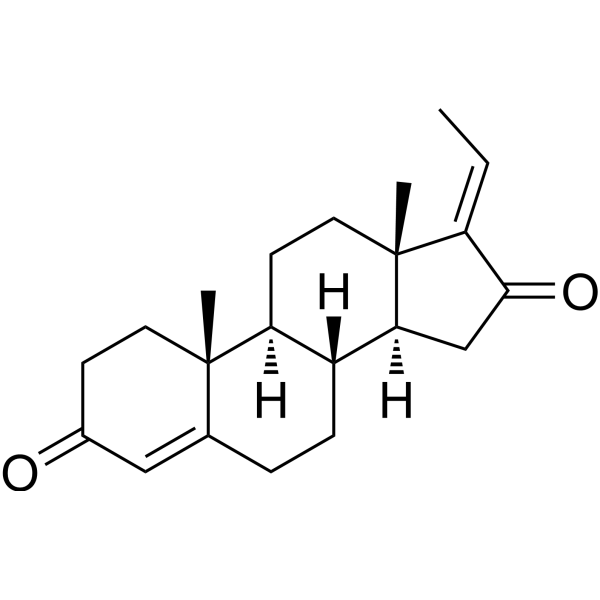
(-)-(E) -guggulsterone (Standard) is the analytical standard for (-)-(E) -guggulsterone ((E)-Guggulsterone) (HY-N7781). (-)-(E)-Guggulsterone is an orally active natural stereoisomer of Guggulsterone (HY-107738). (-)-(E)-Guggulsterone is an antagonist for the Farnesoid X Receptor (FXR) with an IC50 of 24.06 μM and possesses potent hypolipidemic properties. (-)-(E)-Guggulsterone suppresses dengue virus (DENV) replication by upregulating antiviral interferon responses by inducing HO-1 expression via Nrf2 activation. (-)-(E)-Guggulsterone exhibits antibacterial activities against Bacillus subtilis, Staphylococcus aureus and Pseudomonas aeruginosa. (-)-(E)-Guggulsterone has cardiac protective and antioxidant activities in rats.
loading...
    loading...
Cat. No.: HY-130625
CAS No.: 2393983-76-9
Target:  

PD-1/PD-L1

Research Areas:  

Inflammation/Immunology Cancer

PD-1/PD-L1-IN 6 (compound A13) is a potent PD-1/PD-L1 interaction inhibitor, with an IC50 of 132.8 nM. PD-1/PD-L1-IN 6 exhibits outstanding immunoregulatory activity. PD-1/PD-L1-IN 6 significantly elevates interferon-γ secretion in a Hep3B/OS-8/hPD-L1 and CD3 T cell co-culture model, without significant toxic effect. PD-1/PD-L1-IN 6 restores the immune response in a T cell-tumor co-culture model .
loading...
    loading...
Cat. No.: HY-12512R
CAS No.: 849214-04-6
Synonyms: Cyclic GMP-AMP (Standard); 3',3'-cGAMP (Standard)
Research Areas:  

Inflammation/Immunology

cGAMP (Standard) is the analytical standard of cGAMP (HY-12512). This product is intended for research and analytical applications. cGAMP (Cyclic GMP-AMP) functions as an endogenous second messenger in metazoans and triggers interferon production in response to cytosolic DNA. cGAMP activates stimulator of interferon genes (STING), which activates a signaling cascade leading to the production of type I interferons and other immune mediators .
loading...
    loading...
Cat. No.: HY-P706005
Purity:  ≥ 90%, as determined by reducing SDS-PAGE.
Synonyms: STING1; HSTING; Prev. TMEM173; N-Terminal Methionine-Proline-Tyrosine-Serine Plasma Membrane Tetraspanner; Transmembrane Protein 173; Stimulator Of interferon response CGAMP Interactor-DeltaC; STING; Stimulator Of interferon response CGAMP Interactor-Delt
Species:  
Human
Source:  
P. pastoris
loading...
    loading...
Cat. No.: HY-181526
CAS No.: 3099101-40-0
Target:  

IFNAR STING

Research Areas:  

Inflammation/Immunology

Sim-9 is a covalent allosteric inhibitor of interferon regulatory factor 3 (IRF3). Sim-9 binds covalently to the Cys222 residue of IRF3, induces its conformational change, blocks its interactions with TRIF, MAVS and STING, and inhibits IRF3 homodimerization and type I interferon response. Sim-9 exhibits significant anti-inflammatory, organ-protective and survival benefits in mouse models of sepsis and acute pancreatitis. Sim-9 can be used for research related to inflammatory diseases .
loading...
    loading...
Cat. No.: HY-179524
CAS No.: 332874-88-1
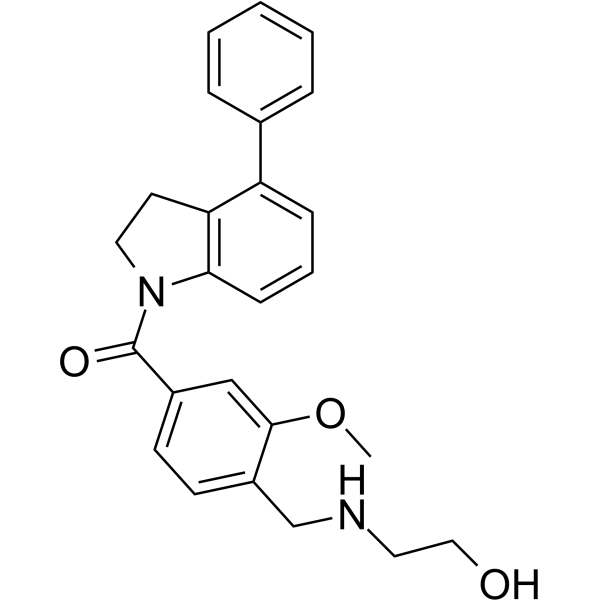
ISR activator 2 is a selective ISR activator. ISR activator 2 can preferentially activate the ISR through the binding of the cytosolic pattern recognition receptor RIG-I, which subsequently activates the heme-regulated inhibitor (HRI) ISR kinase independent of an interferon response. ISR activator 2 can be used for the study of pancreatic cancer .
loading...
    loading...
Cat. No.: HY-182926
Research Areas:  

Cancer

Topoisomerase I/II-IN-9 is a topoisomerase I/II inhibitor (IC50<10 μM) and a DNA damage inducer. Topoisomerase I/II-IN-9 blocks the interaction between the enzyme and DNA by binding to the DNA-binding pocket of the enzyme. Topoisomerase I/II-IN-9 activates the cGAS-STING pathway and promotes the accumulation of cytoplasmic double-stranded DNA. This further drives the production of type I interferons, CCL5, CXCL10 and interferon-stimulated genes, and induces anti-tumor immune responses in vivo. Topoisomerase I/II-IN-9 can be applied to the research of related diseases such as triple-negative breast cancer, colorectal cancer and gastric cancer .
loading...
    loading...
Cat. No.: HY-100564AR
CAS No.: 2734858-36-5
Synonyms: 2'-3'-cyclic GMP-AMP sodium (Standard)
2',3'-cGAMP sodium (Standard) is the analytical standard of 2',3'-cGAMP sodium (HY-100564A). This product is intended for research and analytical applications. 2',3'-cGAMP sodium (2'-3'-cyclic GMP-AMP sodium) is a endogenous cGAMP in mammalian cells. 2',3'-cGAMP sodium binds to STING with a high affinity and is a potent inducer of interferon-β (IFNβ). 2',3'-cGAMP sodium is produced in mammalian cells in response to DNA in the cytoplasm .
loading...
    loading...
Cat. No.: HY-100564R
CAS No.: 1441190-66-4
Synonyms: 2'-3'-cyclic GMP-AMP (Standard)
2',3'-cGAMP (Standard) is the analytical standard of 2',3'-cGAMP (HY-100564). This product is intended for research and analytical applications. 2',3'-cGAMP (2'-3'-cyclic GMP-AMP) is a endogenous cGAMP in mammalian cells. 2',3'-cGAMP binds to STING with a high affinity and is a potent inducer of interferon-β (IFNβ). 2',3'-cGAMP is produced in mammalian cells in response to DNA in the cytoplasm .
loading...
    loading...
Cat. No.: HY-182722
CAS No.: 2388536-21-6
Target:  

Androgen Receptor JAK STAT

Research Areas:  

Cancer

UT-105 is an orally active, selective androgen receptor (AR) degrader. UT-105 binds to the N-terminal domain of AR, inhibits the transactivation of AR, blocks the recruitment of AR to androgen response elements, and induces AR degradation. UT-105 inhibits the JAK-STAT signaling pathway, including reducing the expression of interferon-stimulated genes, inhibiting the phosphorylation of STAT1 and STAT3, and blocking the recruitment of STAT1 to response elements. UT-105 exhibits anticancer activity against AR-positive triple-negative breast cancer (TNBC). UT-105 can be used in the research of selective androgen receptor modulator-resistant ER-positive breast cancer and triple-negative breast cancer .
loading...
    loading...
Cat. No.: HY-181165
CAS No.: 3111225-79-4
Target:  

PKC SARS-CoV IFNAR

Research Areas:  

Infection

SB2960 is a receptor for activated protein C kinase 1 (RACK1) binder with a human KD of 5.65 μM. SB2960 can promote stress granule (SG) formation and exhibit potent antiviral activity across diverse viral species. SB2960 suppresses viral replication with minimal cytotoxicity by modulating host antiviral immune responses. SB2960 increases the thermal stability of RACK1 and reduces SARS-CoV-2 N protein levels. SB2960 enhances type I interferon (IFN-β) expression and inhibits RIG-I, ISG56, and RANTES expression. SB2960 can be used for the research of virus infection .
loading...
    loading...
Cat. No.: HY-W682115
CAS No.: 30811-80-4
Synonyms: Polycytidylic acid
Poly(C) (Polycytidylic acid) is a pleiotropic immunostimulant that specifically binds to TLR3, RIG-I and MDA5 receptors. Poly (C) recruits adaptor proteins to activate downstream signaling pathways and induce the production of type I interferons and inflammatory cytokines. Poly (C) triggers cancer cell apoptosis via the intrinsic or extrinsic caspase pathway, thereby exerting inhibitory effects on tumor growth and metastasis. Poly (C) acts as a vaccine adjuvant to modify the tumor microenvironment, regulate the expression of endothelial adhesion molecules and induce virus-like immune responses. Poly (C) can be applied to research related to melanoma, various solid tumors, hematological malignancies and autoimmune insulin-dependent diabetes mellitus .
loading...
    loading...
Cat. No.: HY-L237
338 compounds

Pattern Recognition Receptors (PRRs) are a crucial class of protein molecules expressed in cells of the innate immune system. The core function of Pattern Recognition Receptors is to recognize Pathogen-Associated Molecular Patterns (PAMPs) and Damage-Associated Molecular Patterns (DAMPs). Upon recognizing and binding to PAMPs or DAMPs, PRRs rapidly initiate intracellular signaling pathways (such as the NF-κB, IRF, and inflammasome pathways). This triggers the production of inflammatory factors, chemokines, and type I interferons, thereby initiating inflammatory responses to eliminate pathogens or repair damage. PRRs represent the body's first line of defense against infection, and the rapidity and broad specificity of their response are crucial for host survival. However, aberrant activation of PRR signaling is also a cause of many chronic inflammatory diseases, autoimmune disorders, and neurodegenerative diseases. Therefore, precisely regulating PRR activity has become a key therapeutic strategy for these conditions.

MCE has cataloged 338 inhibitors targeting key PRRs, such as NLRs, TLRs, C-type Lectin Receptors (CLRs), and cGAS, to support drug discovery efforts for chronic inflammatory diseases.

Cat. No.: HY-184899
Target:  

Sirtuin CXCR Dengue Virus

Research Areas:  

Infection Inflammation/Immunology

Sirt1/CXCR3-IN-1 is a dual Sirt1/CXCR3 inhibitor with an IC50 of 0.77 μM against Sirt1. Sirt1/CXCR3-IN-1 inhibits dengue virus replication, upregulates the expression of interferon-stimulated genes, and enhances the antiviral defense capacity of the host. Sirt1/CXCR3-IN-1 suppresses CXCR3-mediated T cell chemotaxis and cytokine release, thereby reducing immune activation and inflammatory responses. Sirt1/CXCR3-IN-1 is applicable to research related to dengue virus infection .
loading...
    loading...
Cat. No.: HY-P86536
Synonyms: AIF 1; AIF-1; Aif1; AIF1 protein; AIF1_HUMAN; Allograft inflammatory factor 1; Allograft inflammatory factor 1 splice variant G; allograft inflammatory factor-1 splice variant Hara-1; balloon angioplasty responsive transcription; BART 1; G1; G1 putative splice variant of allograft inflamatory factor 1; IBA 1; IBA1; interferon gamma responsive transcript; interferon responsive transcript 1; interferon responsive transcript factor 1; Ionized calcium binding adapter molecule 1; Ionized calcium-binding adapter molecule 1; ionized calcium-binding adapter molecule; IRT 1; IRT1; Microglia response factor; MRF1; Protein g1;

Host:  

Rabbit

Application:  

WB, IHC-P, ICC/IF, IP, ELISA

Reactivity:  

Human, Mouse, Rat

loading...
    loading...

