172 Results for "

protac ternary complex

" in MedChemExpress (MCE) Product Catalog:
Products (172)

172 Results for "protac ternary complex" in MCE Product Catalog:

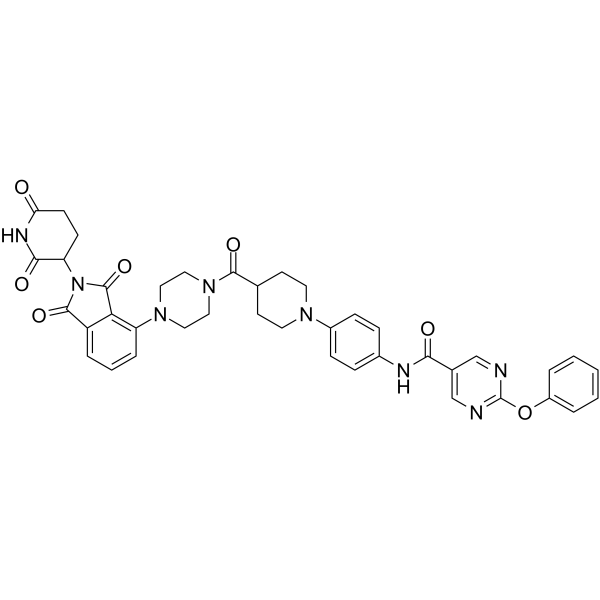
Cat. No.: HY-139972
CAS No.: 2761281-50-7
Purity:  99.42%
PROTAC (H-PGDS)-7 is a selective, linker-free H-PGDS PROTAC degrader with a DC50 of 17.3 pM. PROTAC (H-PGDS)-7 binds to CRBN and forms a ternary complex with H-PGDS, inducing the degradation of H-PGDS via the ubiquitin-proteasome system through polyubiquitination and proteasomal degradation processes. PROTAC (H-PGDS)-7 inhibits the upregulated expression of TNFα, IL-1β, TGFβ1 and CD11b in mice with cardiac hypertrophy models. PROTAC (H-PGDS)-7 can be used in studies related to Duchenne muscular dystrophy and allergic diseases .
loading...
    loading...
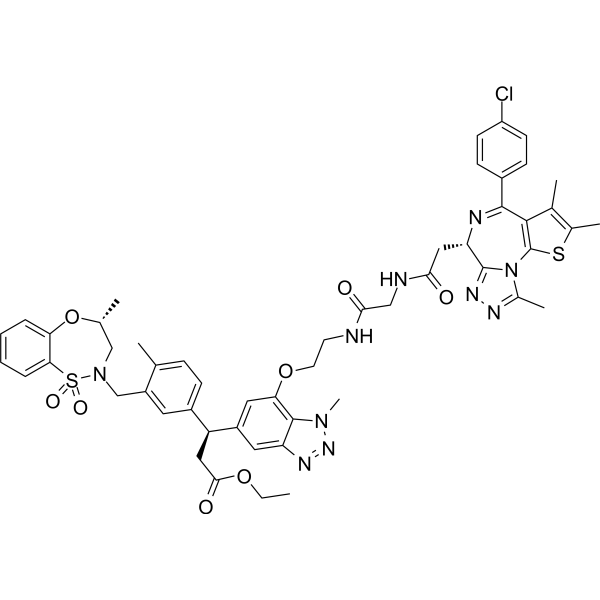
Cat. No.: HY-139620
CAS No.: 2762181-19-9
Research Areas:  

Cancer

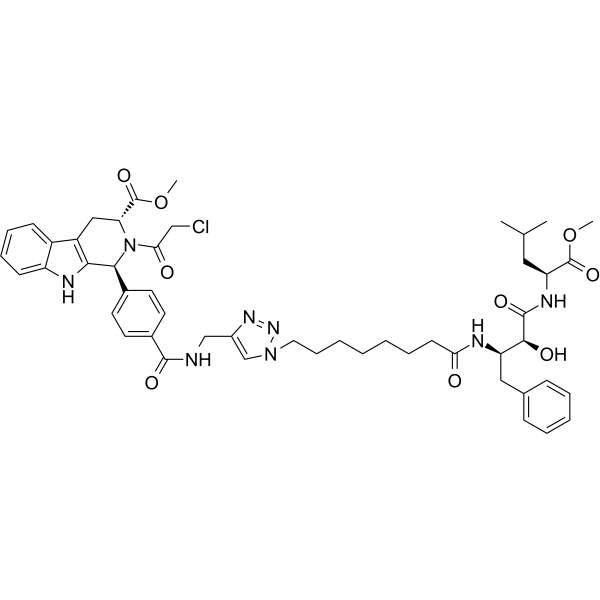
MS83 is a selective degrader of BRD4/BRD3 belonging to the PROTAC class. MS83 hijacks the KEAP1-dependent CUL3 ligase complex by binding to KEAP1 and forming a ternary complex with BRD4/BRD3. MS83 induces polyubiquitination and degradation of BRD4/BRD3 in a concentration-, time- and ubiquitin-proteasome system-dependent manner. MS83 inhibits c-MYC protein levels and suppresses the proliferation of triple-negative breast cancer cells .
loading...
    loading...
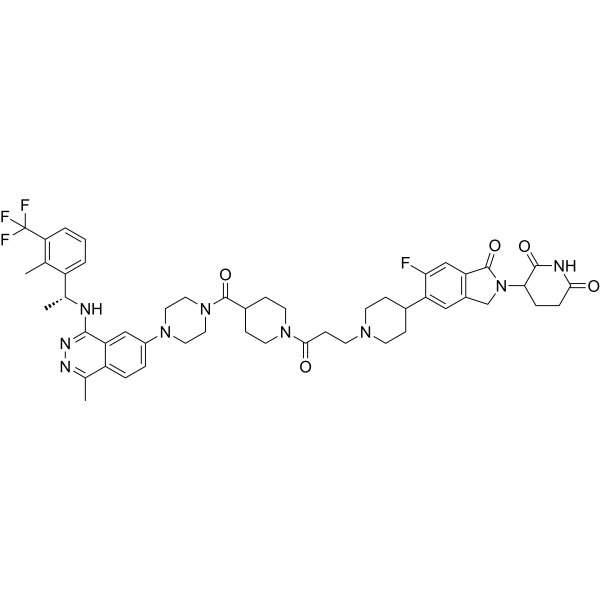
Cat. No.: HY-175281
CAS No.: 2933135-82-9
Target:  

PROTACs Src

Research Areas:  

Cancer

SJ11646 is a LCK PROTAC degrader with a DC50 value of 0.00838 pM against LCK. SJ11646 recruits CRBN and LCK to form a ternary complex, inducing cereblon-mediated proteasomal degradation of LCK. SJ11646 induces cytotoxicity in T-ALL cells, but such cytotoxicity is reduced in cells harboring the LCK T316I mutation. SJ11646 can be used in studies related to T-cell acute lymphoblastic leukemia .
loading...
    loading...
Cat. No.: HY-161233
Target:  

PROTACs SOS1 ERK p38 MAPK

Research Areas:  

Cancer

BTX-6654 is a SOS1 PROTAC degrader. BTX-6654 induces ubiquitination and degradation of SOS1 via the proteasomal pathway by bridging SOS1 with the E3 ligase CRBN to form a ternary complex, thereby blocking KRAS activation and downregulating the MAPK signaling pathway (pERK/pS6), and ultimately inhibiting tumor growth. BTX-6654 can be used in research on various cancers driven by KRAS mutations .
loading...
    loading...
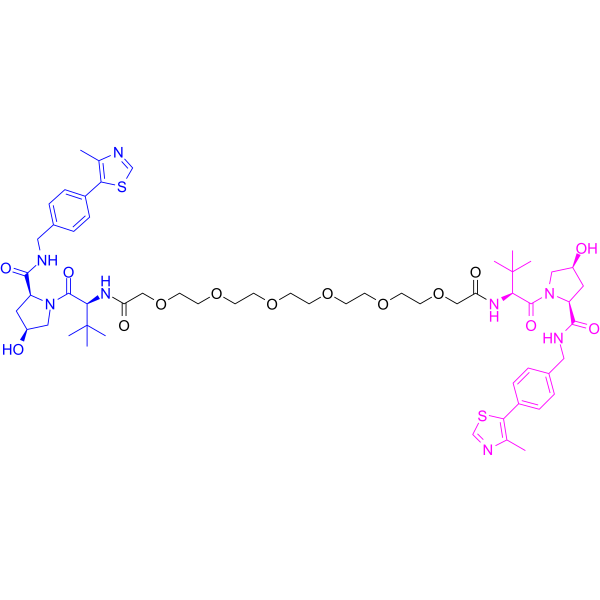
Cat. No.: HY-136257
CAS No.: 2244684-50-0
Purity:  99.72%
Target:  

PROTACs

Research Areas:  

Others

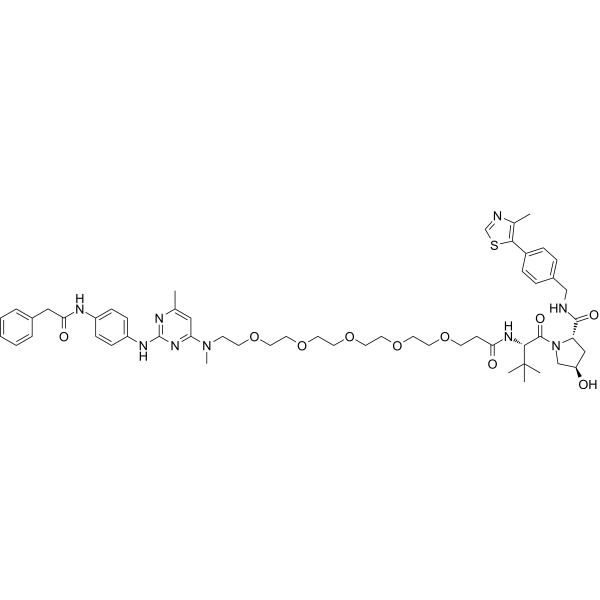
CMP98 is a homologous PROTAC that serves as a negative control compound for CM11, a pVHL30 PROTAC degrader. CMP98 does not induce VHL protein degradation, bind to the VCB complex, or form a ternary VCB complex .
loading...
    loading...
Cat. No.: HY-174401
Research Areas:  

Inflammation/Immunology

PROTAC HDAC6 degrader 5 is a selective HDAC6 PROTAC degrader with an IC50 of 43 nM. PROTAC HDAC6 degrader 5 induces proteasome-dependent degradation of HDAC6 by bridging HDAC6 and CRBN to form a ternary complex. PROTAC HDAC6 degrader 5 is applicable to research related to pulmonary fibrosis .
loading...
    loading...
Cat. No.: HY-179060
Target:  

PROTACs LAG-3

Research Areas:  

Cancer

LAG-3 PROTAC-1 is a lymphocyte activation gene-3 (LAG-3) PROTAC degrader with a DC50 of 0.27 μM. LAG-3 PROTAC-1 induces the formation of a ternary complex with LAG-3 and CRL4 CRBN, promoting proteasomal degradation. LAG-3 PROTAC-1 is applicable for cancer-related research .
loading...
    loading...
Cat. No.: HY-168634
Research Areas:  

Cancer

SJ46421 is a BRD3BD2 PROTAC degrader. SJ46421 induces a cooperative ternary complex of KLHDC2 and BRD3BD2 with an IC50 of 7.8 nM. SJ46421 binds to the substrate-binding pocket of KLHDC2, forms cooperative ternary complexes with BRD3BD2, BRD2BD2 and BRD4BD2, disrupts the autoinhibitory tetramer assembly of KLHDC2, drives selective ubiquitination of BRD3BD2, and inhibits the ubiquitination of endogenous KLHDC2 diglycine substrates. SJ46421 can be used in cancer research .
loading...
    loading...
Cat. No.: HY-162835
CAS No.: 2409844-88-6
Target:  

PROTACs SWI/SNF Complex

Research Areas:  

Cancer

PROTAC SMARCA2/4 degrader-28 is a heterobifunctional PROTAC degrader targeting SMARCA2 and SMARCA4. PROTAC SMARCA2/4 degrader-28 forms a ternary complex with CRL2VHL E3 ligase and SMARCA2 or SMARCA4, mediating the ubiquitination and degradation of SMARCA2, while acting as a partial degrader of SMARCA4. PROTAC SMARCA2/4-degrader-28 can be used in cancer-related research .
loading...
    loading...
Cat. No.: HY-174877
CAS No.: 3068162-16-0
Target:  

PROTACs HDAC

Research Areas:  

Cancer

PROTAC HDAC6 degrader 6 is a HDAC6 PROTAC degrader that recruits CRBN, and also a photoactivatable photochemical targeting chimeric (PHOTAC). PROTAC HDAC6 degrader 6 switches between cis and trans conformations upon illumination, in which the cis conformation binds HDAC6 and CRBN to form a ternary complex, and induces HDAC6 degradation via ubiquitin-like modification, polyubiquitination and proteasomal pathways. PROTAC HDAC6 degrader 6 can be used in the research of multiple myeloma .
loading...
    loading...
Cat. No.: HY-175240
Research Areas:  

Cancer

PROTAC BRD4 Degrader-38 is a BRD4 PROTAC degrader with DC50 values of 86 nM and 106 nM against the short and long isoforms of BRD4, respectively. PROTAC BRD4 Degrader-38 covalently binds to the Cys232 residue of TRIM28 to form a ternary complex containing BRD4, thereby promoting the ubiquitination and degradation of BRD4. PROTAC BRD4 Degrader-38 can be used in the research of acute myeloid leukemia .
loading...
    loading...
Cat. No.: HY-162106
CAS No.: 3035509-76-0
PROTAC GPX4 degrader-2 is a cIAP-recruiting GPX4 PROTAC degrader with a DC50 of 1.68 μM. PROTAC GPX4 degrader-2 forms a ternary complex with GPX4 and cIAP, and induces GPX4 degradation via the ubiquitin-proteasome system pathway. PROTAC GPX4 degrader-2 induces Mitochondrial depolarization and Ferroptosis. PROTAC GPX4 degrader-2 exhibits antiproliferative effects in cancer cells. PROTAC GPX4 degrader-2 can be used for the research of fibrosarcoma .
loading...
    loading...
Cat. No.: HY-178510
Research Areas:  

Cancer

JQ1-S (GlcNAc) Cq is a sugar-modified BRD4 PROTAC degrader with a DC50 of 2.1 μM. JQ1-S (GlcNAc) Cq inhibits the formation of the ternary complex between CRBN and BRD4 (BD1/BD2). JQ1-S (GlcNAc) Cq serves as a substrate for O-GlcNAcase, which cleaves its O-GlcNAc domain to restore binding ability with CRBN, thereby forming a BRD4-containing ternary complex and triggering ubiquitination and proteasomal degradation of BRD4. JQ1-S (GlcNAc) Cq is applicable for cancer research .
loading...
    loading...
Cat. No.: HY-156401
Research Areas:  

Cancer

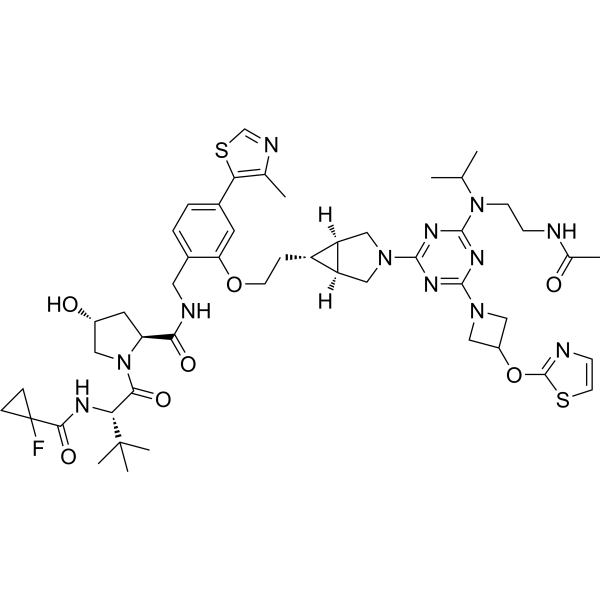
BRD9 Degrader-1 is a selective BRD9 PROTAC degrader with a DC50 of 108 nM. BRD9 Degrader-1 induces the formation of a ternary complex between BRD9 and VHL, with an EC50 of 17 nM, and shows no hook effect at high concentrations. BRD9 Degrader-1 can be used for the research of synovial sarcoma .
loading...
    loading...
Cat. No.: HY-174858
Target:  

PROTACs ASK1 p38 MAPK

Research Areas:  

Inflammation/Immunology

dASK1-VHL is an ASK1 PROTAC degrader that recruits VHL. dASK1-VHL induces ubiquitination and proteasomal degradation of ASK1 by forming a ternary complex, and inhibits the downstream p38 MAPK signaling pathway. dASK1-VHL can be used in studies of metabolic dysfunction-associated steatohepatitis .
loading...
    loading...
Cat. No.: HY-180907
Target:  

PROTACs Deubiquitinase

Research Areas:  

Cancer

PROTAC USP39 Degrader-1 is a USP39 PROTAC degrader with Kd values of 136 nM and 232 nM, and a DC50 value of 1.06 nM (24 h). PROTAC USP39 Degrader-1 binds to the VHL E3 ubiquitin ligase, forms a ternary complex with USP39, mediates USP39 ubiquitination and proteasomal degradation dependent on VHL recruitment, modulates splicing activity and induces 5' splice site-specific splicing patterns. PROTAC USP39 Degrader-1 can be used in the research of cervical cancer .
loading...
    loading...
Cat. No.: HY-155643
CAS No.: 3033465-55-0
Target:  

PROTACs Glutaminase

Research Areas:  

Cancer

PROTAC TG2 degrader-1 is a tissue transglutaminase (TG2) PROTAC degrader with a Kd of 68.9 μM. PROTAC TG2 degrader-1 recruits the VHL E3 ubiquitin ligase to the fibronectin-binding site of TG2, forms a ternary complex, and induces proteasome-dependent degradation of TG2. PROTAC TG2 degrader-1 inhibits ovarian cancer cell migration and adhesion to fibronectin, without producing a significant inhibitory effect on cell proliferation. PROTAC TG2 degrader-1 can be used in related research on ovarian cancer .
loading...
    loading...
Cat. No.: HY-178964
CAS No.: 2760847-82-1
Research Areas:  

Cancer

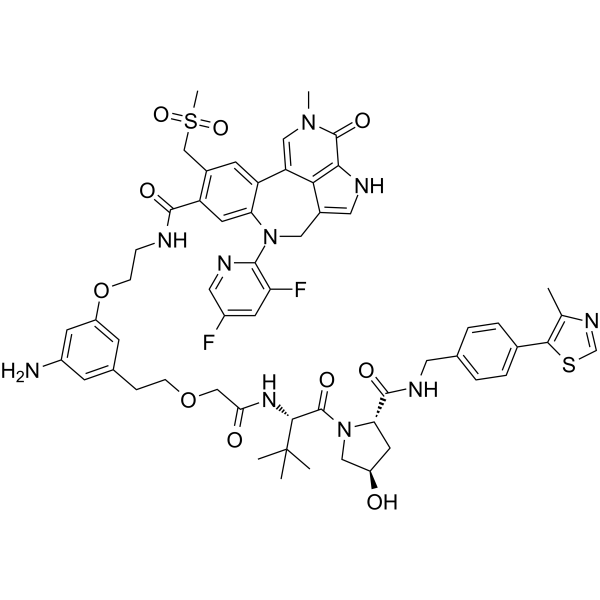
PROTAC RET Degrader 1 is an orally active, blood-brain barrier-penetrant RET PROTAC degrader with a DC50 of 1.7 nM. PROTAC RET Degrader 1 binds to CRBN and forms a ternary complex with RET, mediating proteasomal degradation of RET, while also selectively mediating the degradation of SALL4. PROTAC RET Degrader 1 inhibits the RET signaling pathway, hERG channel activity, and Cyp3A4 enzyme activity; it suppresses cancer cell growth and induces tumor regression. PROTAC RET Degrader 1 can be used in research related to RET-driven cancers .
loading...
    loading...
Cat. No.: HY-139294
CAS No.: 2417370-67-1
Research Areas:  

Cancer

PROTAC BRD4 Degrader-15 is a BRD4 PROTAC degrader with a DC50 of 2.1 nM. PROTAC BRD4 Degrader-15 forms a ternary complex with BRD4 and VHL ubiquitin ligase to induce degradation. PROTAC BRD4 Degrader-15 inhibits the transcription level of the MYC gene. PROTAC BRD4 Degrader-15 suppresses human megakaryocytopoiesis and exhibits antigen-dependent tumor growth inhibition in xenograft models of prostate cancer and acute myeloid leukemia. PROTAC BRD4 Degrader-15 can be used in studies related to prostate cancer and acute myeloid leukemia .
loading...
    loading...
Cat. No.: HY-173082
CAS No.: 2765058-89-5
Target:  

PROTACs FKBP

Research Areas:  

Cancer

10-SLF is an FKBP12 PROTAC degrader. 10-SLF covalently interacts with the cysteine residue of FBXW7 R465C, forms a ternary complex with FKBP12, and promotes FBXW7-R465C-dependent proteasomal degradation of FKBP12. 10-SLF can be used for the research of pancreatic cancer .
loading...
    loading...

