62 Results for "

ADR

" in MedChemExpress (MCE) Product Catalog:
Products (62)

62 Results for "ADR" in MCE Product Catalog:

Cat. No.: HY-176719
CAS No.: 2632263-80-8
Research Areas:  

Cancer

AKR1B1/STAT3/SLC7A11-regulator-1 (5a) is an AKR1B1/STAT3/SLC7A11 regulator that reverses DOX resistance in MCF-7/ADR cells by enhancing ferroptosis activity. AKR1B1/STAT3/SLC7A11-regulator-1 can be used in breast cancer research .
loading...
    loading...
Cat. No.: HY-173182
CAS No.: 3046118-64-0
Research Areas:  

Cancer

Antitumor agent-200 (Compound 2g) is a microtubule synthesis inhibitor. By binding to the colchicine site of tubulin, it causes G2/M cell cycle arrest and generates reactive oxygen species (ROS). Antitumor agent-200 exhibits significant inhibitory activity against MCF7/ADR and KBV200 cell lines with overexpression of P-glycoprotein (P-gp), with drug resistance indices (DRI) of 0.83 and 0.58 respectively. In the MCF-7 xenograft model, Antitumor agent-200 (25 mg/kg, intraperitoneal injection) can achieve a tumor growth inhibition rate of 57.2%. Antitumor agent-200 can be used in the research of the anti-cancer field .
loading...
    loading...
Cat. No.: HY-175638
Research Areas:  

Cancer

Carbonic anhydrase-IN-35 is a selective carbonic anhydrase (CA) inhibitor. Carbonic anhydrase-IN-35 potently inhibits tumor-associated hCA IX (Ki = 0.6 nM) and hCA XII (Ki = 2.2 nM). Carbonic anhydrase-IN-35 induces apoptosis in MCF-7 cells by elevating Bax, reducing Bcl-2, and downregulating CDK4/6. Carbonic anhydrase-IN-35 exhibits potent cytotoxicity against MCF-7 (IC50 = 0.3975 μM normoxic/0.6575 μM hypoxic), MCF-7-ADR (IC50> = 0.3975 μM normoxic/4.488 μM hypoxic), MDA-MB-231, and 4T1 breast cancer cells. Carbonic anhydrase-IN-35 can be used for the study of breast cancer .
loading...
    loading...
Cat. No.: HY-124242
CAS No.: 1246776-22-6
Target:  

Drug Derivative

Research Areas:  

Cancer

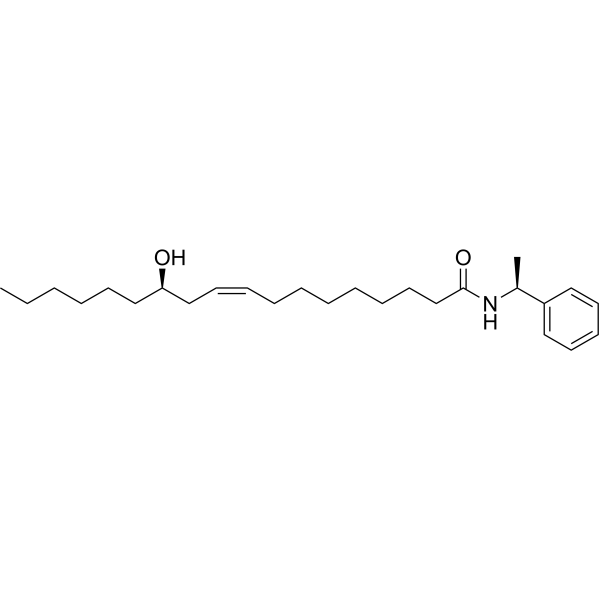
(S)-α-Methylbenzyl ricinoleamide (compound (R,S)-3d) is a fatty acid amide. (S)-α-Methylbenzyl ricinoleamide shows antiproliferative activity, inhibits the growth of human ovarian cancer cells NCI-ADR/RES and glioma cells U251 with GI50s of 1.9 μg/mL and 3.6 μg/mL, respectively .
loading...
    loading...
Cat. No.: HY-157464
Target:  

Drug Derivative

Research Areas:  

Cancer

[Ru(phen)2(4-Me-Sal)]BF4 (compound 10), a Ru(II)-based polypyridyl complexe, displays outstanding antiproliferative activity against drug-sensitive CCRF-CEM and multidrug-resistant CEM/ADR5000 leukemia cells (IC50=0.52 μM and 5.56 μM, respectively) .
loading...
    loading...
Cat. No.: HY-N1665
CAS No.: 129724-43-2
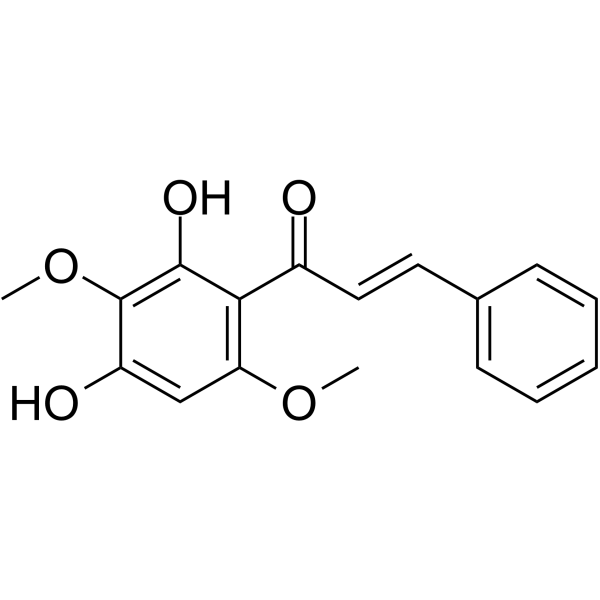
2',4'-Dihydroxy-3',6'-dimethoxychalcone is a natural product that can be isolated from Polygonum Lapathifolium. 2',4'-Dihydroxy-3',6'-dimethoxychalcone inhibits the growth of CCRF-CEM leukaemia cells and CEM/ADR5000 cells, with IC50 values of 10.67 and 18.60 μM, respectively .
loading...
    loading...
Cat. No.: HY-169476
CAS No.: 3140-51-0
Target:  

Drug Derivative

Research Areas:  

Cancer

Pyrrolidine linoleamide is a derivative of linoleic acid amide with anticancer activity. Pyrrolidine linoleamide exhibits antiproliferative activity against a range of cancer cell lines, with IC50 values of 12.0, 27.5, 7.7, 21.9, 36.6, 32.6, and 33.9 μg/mL against U251, MCF-7, NCI-ADR/RES, 786-0, NCI-H460, PC-3, and OVCAR-3 cell lines, respectively .
loading...
    loading...
Cat. No.: HY-173132
CAS No.: 3114057-78-9
Research Areas:  

Cancer

AKR1Cs-IN-1 (Compound 29) is a potent and broad-spectrum inhibitor targeting members of the Aldo-Keto Reductase 1C family (AKR1C1-1C4). By simultaneously occupying the SP2 and SP3 pockets, it effectively inhibits multiple isoforms and disrupts metabolic pathways associated with drug resistance. In enzymatic activity assays, AKR1Cs-IN-1 exhibited significant inhibitory potency, with IC50 values of 0.09, 0.28, 0.05, and 0.51 µM against AKR1C1, AKR1C2, AKR1C3, and AKR1C4, respectively. In the doxorubicin (DOX)-resistant breast cancer cell line MCF-7/ADR, AKR1Cs-IN-1 showed remarkable resensitization effects and significantly enhanced the cytotoxicity of DOX. AKR1Cs-IN-1 holds promise for research on overcoming drug resistance in breast cancer .
loading...
    loading...
Cat. No.: HY-116628
CAS No.: 138559-57-6
Target:  

Drug Derivative

Research Areas:  

Others

(R)-ADR 882 is an active compound.
loading...
    loading...
Cat. No.: HY-149388
CAS No.: 2954795-29-8
Target:  

Microtubule/Tubulin

Research Areas:  

Cancer

Anticancer agent 139 (Compound 6h) has potent anticancer activity. Anticancer agent 139 displayed a π–cationic interaction with the residue Lys352 of Tublin. Anticancer agent 139 has good anticancer activity against SNB-19, OVCAR-8, and NCI-H40 with PGIs of 86.61, 85.26, and 75.99, respectively. Anticancer agent 139 also has moderate anticancer activity against HOP-62, SNB-75, ACHN, NCI/ADR-RES, 786-O, A549/ATCC, HCT-116, and MDA-MB-231 with PGIs of 67.55, 65.46, 59.09, 59.02, 57.88, 56.88, 56.53, 56.4, and 51.88 respectively .
loading...
    loading...
Cat. No.: HY-P81338
Synonyms: AR; ADR; ALR2; ALDR1

Host:  

Mouse

Application:  

WB

Reactivity:  

Human, Mouse, Rat

loading...
    loading...
Cat. No.: HY-P81338A
Synonyms: AR; ADR; ALR2; ALDR1

Host:  

Mouse

Application:  

WB

Reactivity:  

Human, Mouse, Rat

loading...
    loading...
Cat. No.: HY-P85558
Synonyms: ADR; AKR1B 1; Akr1b1; Aldehyde reductase 1; Aldehyde reductase; Aldo keto reductase family 1, member B1; Aldo-keto reductase family 1 member B1; aldo-keto reductase family 1, member B1; aldose reductase; Aldose reductase; aldr 1; ALDR_HUMAN; ALDR1; ALR2; AR; Lii5 2 CTCL tumor antigen; Low Km aldose reductase; MGC1804.

Host:  

Mouse

Application:  

WB

Reactivity:  

Human, Mouse, Rat

loading...
    loading...
Cat. No.: HY-L140
232 compounds

Withdrawal or delisting drugs refer to drugs that are recalled or discontinued from the market due to low efficiency, serious side effects, financial and regulatory problems and other reasons. Once the drug is withdrawn from the market, it will cause heavy losses to the original research company that invested a lot of time, finance and other costs to develop the drug.

Adverse drug reaction (ADR) is the main reason for drug withdrawal from the market. ADR refers to the unexpected effects caused by the reasons such as the target-directed interaction during the treatment. However, studying the mechanism of these ADRs may just be a breakthrough in finding new indications. For example, thalidomide, the protagonist of the drug damage event that caused numerous "seal babies" deformed infants, was found to be due to the degradation of a transcription factor - SALL4 after delisting, which made thalidomide have a new clinical application. In 1998, it was approved by FDA for the treatment of leprosy nodular erythema, and in 2006, it was approved for the treatment of multiple myeloma. ADR study of delisted drugs can not only avoid the loss of drug development in advance but also bring hope to new indications.

MCE has sorted out 232 drug compounds withdrawn from the market through FDA, EMA and other authoritative platforms. Each compound has withdrawal records in at least one country/market. It is a useful tool for conducting research on drug side effects or drug toxicity mechanisms and discovering new indications of drugs.

Cat. No.: HY-182052
CAS No.: 3063042-21-4
Synonyms: anti-NSCLC agent-2
Ferroptosis inducer-16 (anti-NSCLC agent-2) is a nitric oxide (NO) donor and a ferroptosis inducer. Ferroptosis inducer-16 inhibits DNA synthesis and colony formation. Ferroptosis inducer-16 disrupts lysosomal integrity by releasing NO, triggers iron overload and oxidative stress, downregulates the SLC7A11-GPX4 axis, depletes GSH, and accumulates lipid peroxides. Ferroptosis inducer-16 inhibits tumor growth in an OVCAR8/ADR xenograft mouse model without obvious toxicity, and can be used in the study of non-small cell lung cancer and drug-resistant ovarian cancer .
loading...
    loading...
Cat. No.: HY-L225
260 compounds

Drug development is both expensive and time-consuming, with approximately one-third of drug discontinuations caused by severe adverse drug reactions (ADRs). Among these, drug-induced cardiotoxicity (DICT) is one of the primary reasons for late-stage clinical drug failures and market withdrawals. To date, cardiotoxicity has been observed in multiple drug classes, such as anticancer drugs, antipsychotics, antidepressants, antibiotics, and neurodegenerative disease medications. To reduce cardiac ADRs, it is crucial to determine the clinical relevance of DICT to treatment, elucidate the underlying molecular mechanisms, identify reliable biomarkers, and develop new diagnostic and therapeutic approaches.

MCE offers 260 cardiotoxicity compounds, including some FDA-approved drugs as well as inhibitors/blockers of the hERG potassium channel.

Cat. No.: HY-P74728
Purity:  ≥ 90%, as determined by reducing SDS-PAGE.
Synonyms: Influenza A H1N2 (A/swine/Italy/191985/2009) Neuraminidase / NA (HEK293, His)
Species:  
Virus
Source:  
HEK293
loading...
    loading...
Cat. No.: HY-P990876A
Synonyms: PF-06480605; RVT-3101
Target:  

TNF Receptor NF-κB IFNAR

Research Areas:  

Inflammation/Immunology

Afimkibart (PF-06480605; RVT-3101) is a humanized monoclonal antibody targeting TL1A (TNFSF15). Afimkibart blocks the TL1A‑DR3 signaling axis by neutralizing the TL1A ligand, inhibits the release of pro-inflammatory cytokines, suppresses NF-κB activation and IFN-γ production, and simultaneously attenuates fibroblast activation and fibrosis progression associated with this pathway. Afimkibart is applicable to research on immune inflammation-related conditions, such as ulcerative colitis .
loading...
    loading...
Cat. No.: HY-101986R
CAS No.: 246146-55-4
Synonyms: AR-H 053591 (Standard)
BIIE-0246 (Standard) is the analytical standard of BIIE-0246 (HY-101986). This product is intended for research and analytical applications. BIIE-0246 (AR-H 053591) is a potent and selective NPY2R (neuropeptide Y receptor 2) antagonist with an IC50 value of 15 nM for rat [125I]PYY3-36. BIIE-0246 decreases the expression of p-AKT S473, P-p44/42 MAPK under the NPY-stimulated. BIIE-0246 reduces albuminuria in ADR nephropathy .
loading...
    loading...
Cat. No.: HY-N10621
CAS No.: 108352-70-1
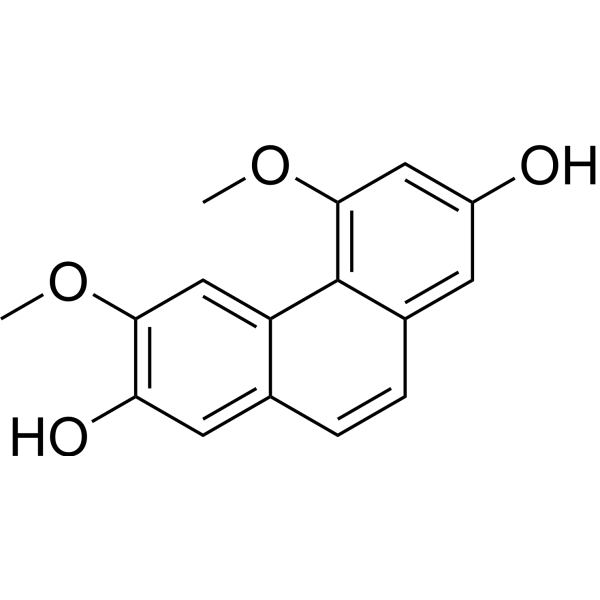
3,5-Dimethoxy-2,7-phenanthrenediol (compound 2) is a phenanthrene compound isolated from the roots of Combretum laxum. 3,5-Dimethoxy-2,7-phenanthrenediol is cytotoxic to human cancer cell lines 786-0, MCF-7 and NCI/ADR-RES, with IC50s of 73.26 μM, 118.40 μM and 83.99 μM respectively. 3,5-Dimethoxy-2,7-phenanthrenediol also has free radical scavenging activity with an IC50 of 20.4 μM .
loading...
    loading...