655 Results for "

root

" in MedChemExpress (MCE) Product Catalog:
Products (655)

655 Results for "root" in MCE Product Catalog:

Cat. No.: HY-18778C
CAS No.: 866399-89-5
Synonyms: TA-8995 hemicalcium; DEZ-001 hemicalcium; AMG-899 hemicalcium
Target:  

CETP PCSK9 LDLR

Research Areas:  

Inflammation/Immunology

Obicetrapib hemicalcium (TA-8995 hemicalcium) is an orally active cholesteryl ester transfer protein (CETP) inhibitor. Obicetrapib hemicalcium shifts the plasma lipoprotein profile toward more HDL-C particles, reduces circulating PCSK9 levels, increases hepatic LDLR expression and LDLR mRNA levels, and promotes hepatic clearance of VLDL remnants. Obicetrapib hemicalcium increases the number of large HDL particles, reduces the number and area of atherosclerotic lesions and alleviates lesion severity, increases the proportion of unaffected arterial segments, improves lesion stability, and promotes regression of aortic root lesions. Obicetrapib hemicalcium also exerts a synergistic effect with Ezetimibe (HY-17376) to reduce non-HDL-C levels and improve atherosclerosis. Obicetrapib hemicalcium can be used in studies related to atherosclerosis and dyslipidemia .
loading...
    loading...
Cat. No.: HY-N18080
CAS No.: 508-59-8
Parthenin is a pseudoguaianolide-type sesquiterpene lactone present in Parthenium hysterophorus L. Parthenin induces chromosomal aberrations, mainly chromatid breaks, in human peripheral blood lymphocytes. Parthenin exhibits toxicity against Salmonella typhimurium and Escherichia coli strains, with reduced toxicity in the presence of a metabolic activation system (S9). Parthenin acts as an antifeedant against the 6th instar larvae of the tobacco cutworm (Spodoptera litura). Parthenin shows insecticidal activity against adult cowpea weevils (Callosobruchus maculatus). Parthenin inhibits seed germination and seedling growth of sicklepod (Cassia tora). Parthenin possesses nematicidal activity against the 2nd instar larvae of the southern root-knot nematode (Meloidogyne incognita). Parthenin serves as a research agent for studies related to cancer, malaria, amoebiasis, inflammatory diseases, and bacterial infections .
loading...
    loading...
Cat. No.: HY-N1964A
CAS No.: 77-06-5
Gibberellic acid, suitable for plant cell culture (GA3, suitable for plant cell culture) is a natural plant growth regulator with oral bioactivity. Gibberellic acid, suitable for plant cell culture governs multiple plant developmental events, including seed germination, cell elongation, floral organ formation, and rice spikelet fertility. Gibberellic acid, suitable for plant cell culture optimizes root morphology and secondary metabolite production in Echinacea purpurea hairy roots, and serves as a bioactive seed priming agent to improve chilling stress tolerance in chickpea. Gibberellic acid, suitable for plant cell culture mediates modulation of enzyme activity and secondary metabolism in plants and exerts tissue-specific regulatory effects on antioxidant systems and lipid peroxidation in rats. Gibberellic acid, suitable for plant cell culture can be used in studies of plant growth, metabolism, and abiotic stress responses .
loading...
    loading...
Cat. No.: HY-N1964B
Synonyms: GA3 Sterile Solution (1 mg/ml)
Gibberellic acid Sterile Solution (1 mg/mL) (GA3 Sterile Solution (1 mg/mL)) is a natural plant growth regulator with oral bioactivity. Gibberellic acid Sterile Solution (1 mg/mL) governs multiple plant developmental events, including seed germination, cell elongation, floral organ formation, and rice spikelet fertility. Gibberellic acid Sterile Solution (1 mg/mL) optimizes root morphology and secondary metabolite production in Echinacea purpurea hairy roots, and serves as a bioactive seed priming agent to improve chilling stress tolerance in chickpea. Gibberellic acid Sterile Solution (1 mg/mL) mediates modulation of enzyme activity and secondary metabolism in plants and exerts tissue-specific regulatory effects on antioxidant systems and lipid peroxidation in rats. Gibberellic acid Sterile Solution (1 mg/mL) can be used in studies of plant growth, metabolism, and abiotic stress responses .
loading...
    loading...
Cat. No.: HY-W170614
CAS No.: 597-44-4
Citramalic acid is an organic acid and soil phosphorus-solubilizing agent. Citramalic acid can be secreted by beet roots, and low phosphorus conditions promote its secretion .
loading...
    loading...
Cat. No.: HY-165459
CAS No.: 401907-57-1
Synonyms: MK-056
Target:  

TRP Channel

Research Areas:  

Infection Inflammation/Immunology

KJM429 (MK-056) is a high-affinity ligand for the rat vanilloid receptor rTRPV1 (Ki=30-63 nM) with a unique dual regulatory function. KJM429 acts as a competitive antagonist to inhibit TRPV1 receptor activation induced by Capsaicin (HY-10448), resiniferatoxin, thermal stimulation and weak acid (pH 6.0), and switches to a TRPV1 agonist under strong acid conditions (pH<5.5). KJM429 effectively blocks calcium influx induced by Capsaicin and partial thermal stimulation, and triggers calcium uptake under low pH conditions, with minimal effects on non-TRPV1-mediated calcium signaling. KJM429 can be used for research on the mechanisms of pain-related diseases such as postherpetic neuralgia, diabetic neuropathy, cluster headache, osteoarthritis and pruritus .
loading...
    loading...
Cat. No.: HY-182500
CAS No.: 3020765-69-6
Research Areas:  

Neurological Disease

SARM1-IN-9 (Compound MY-13B) is a stereoselective SARM1 inhibitor. SARM1-IN-9 is applicable to research related to axon degeneration-dependent neurological diseases .
loading...
    loading...
Cat. No.: HY-116136
CAS No.: 119290-87-8
Synonyms: NP1302
Acanthoic acid (NP1302) is an orally active pimarane-type diterpenoid. Acanthoic acid is isolated from the root bark of Araliaceae family plant Eleutherococcus senticosus (Siberian ginseng). Acanthoic acid activates LXR and FXR. Acanthoic acid activates the AMPK-LKB1, SIRT1, and p38 MAPK signaling pathways and increases the phosphorylation level of ACC. Acanthoic acid downregulates the expression of SREBP-1, CYP2E1, HIF-1α, and PPARγ, and upregulates the expression of PPARα. Acanthoic acid induces Apoptosis by activating Caspase-3, promoting PARP cleavage, and downregulating Bcl-xL. Acanthoic acid exhibits antioxidant, anti-fibrotic, and hepatoprotective effects. It reduces lipid accumulation and lipogenesis. Acanthoic acid is used in studies on non-alcoholic fatty liver disease, alcoholic liver disease, acute promyelocytic leukemia, and Acetaminophen-induced hepatotoxicity .
loading...
    loading...
Cat. No.: HY-W002038R
CAS No.: 56613-80-0
Synonyms: D-Phenylglycinol (Standard); (-)-Phenylglycinol (Standard)
(R)-(-)-2-Phenylglycinol (Standard) (D-Phenylglycinol (Standard); (-)-Phenylglycinol (Standard)) is the analytical standard of (R)-(-)-2-Phenylglycinol (HY-W002038). This product is intended for research and analytical applications. (R)-(-)-2-Phenylglycinol (D-Phenylglycinol; (-)-Phenylglycinol) is a chiral β-amino alcohol, a starting material for chiral synthesis, and a potential nematicide. (R)-(-)-2-Phenylglycinol exhibits nematicidal and egg hatching inhibitory activity against the southern root-knot nematode (Meloidogyne incognita), and is also an upregulated metabolite in the fermentation broth of Streptomyces aquilus JXGZ01. (R)-(-)-2-Phenylglycinol can be used as a framework for constructing zwitterionic bicyclic lactams and multi-substituted piperidine/piperidine acid drugs. (R)-(-)-2-Phenylglycinol can be used in drug synthesis and nematode infection-related research .
loading...
    loading...
Cat. No.: HY-Y0070
CAS No.: 420-04-2
Cyanamide is a cell division and plant growth inhibitor, as well as an allelochemical derived from Vicia villosa. Cyanamide inhibits root growth and biomass accumulation in a dose-dependent manner by disrupting the formation of mitotic spindles and phragmoplast complexes, reducing the number of mitotic cells and blocking the cell cycle. The effects of Cyanamide are partially reversible after removal from low-concentration environments. Cyanamide is also a specific inhibitor of aldehyde dehydrogenase (ALDH). Although Cyanamide has no direct effect on tumor growth, it can significantly enhance the anti-tumor efficacy of Cyclophosphamide (HY-17420) at non-toxic doses by inhibiting the inactivation of Cyclophosphamide. Cyanamide enables Cyclophosphamide to exert equivalent therapeutic effects at lower doses, effectively inhibiting the growth of primary and metastatic tumors and prolonging the lifespan of tumor-bearing mice. Cyanamide is commonly used in studies related to ha-1 hepatoma and rls lymphosarcoma .
loading...
    loading...
Cat. No.: HY-W250721C
CAS No.: 9007-20-9
Synonyms: CBM 941
Carbomer 941 (CBM 941) is an acrylic acid polymer, which can be used as a thickening agent. Carbomer 941 provides a stable gel matrix, exhibits good heat, light and microbial contamination resistance. Carbomer 941 facilitates the drug release and local application, which can be used in the pharmaceutical industry .
loading...
    loading...
Cat. No.: HY-W727209
CAS No.: 1254304-22-7
Target:  

Parasite

Research Areas:  

Infection

Fluazaindolizine is a fluorinated nematicide. Fluazaindolizine induces mortality in second-stage juveniles (J2) of Meloidogyne incognita and Tylenchulus semipenetrans in vitro. Fluazaindolizine impacts plant-parasitic nematode parasitism. Fluazaindolizine can be used for the research of plant-parasitic nematode infestation .
loading...
    loading...
Cat. No.: HY-12761
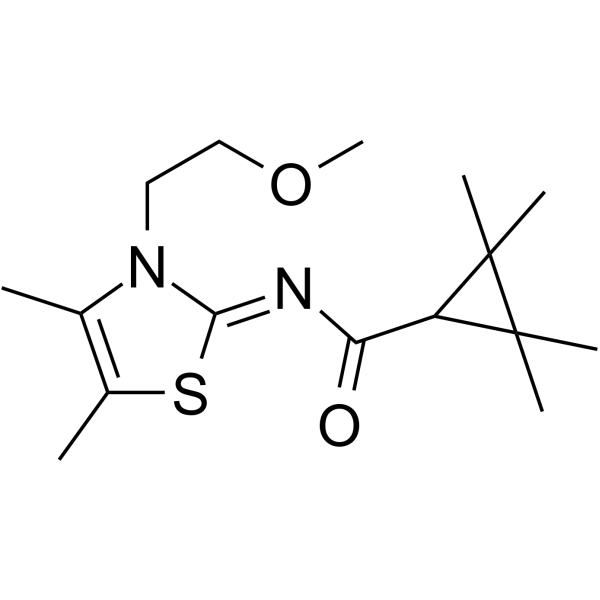
CAS No.: 959746-77-1
Purity:  99.84%
A-836339 is a selective CB2 receptor agonist, with Ki values of 0.4 nM and 0.8 nM in humans and rats, respectively. A-836339 exhibits multiple effects such as analgesia, gastric protection, anti-inflammation, and antioxidant activity. A-836339 produces antinociceptive and analgesic activities by activating CB2 receptors in the dorsal root ganglia and spinal cord. A-836339 can also exert gastric protective effects through anti-inflammatory mechanisms (reducing TNF-α and IL-1β) and antioxidant mechanisms (enhancing the activities of CAT and SOD, and reducing H2O2). Radioactively labeled A-836339 can serve as a CB2-specific radioligand for autoradiography and PET imaging. A-836339 can be used in research on inflammatory pain, neuropathic pain, gastric ulcers, cerebral ischemia, etc .
loading...
    loading...
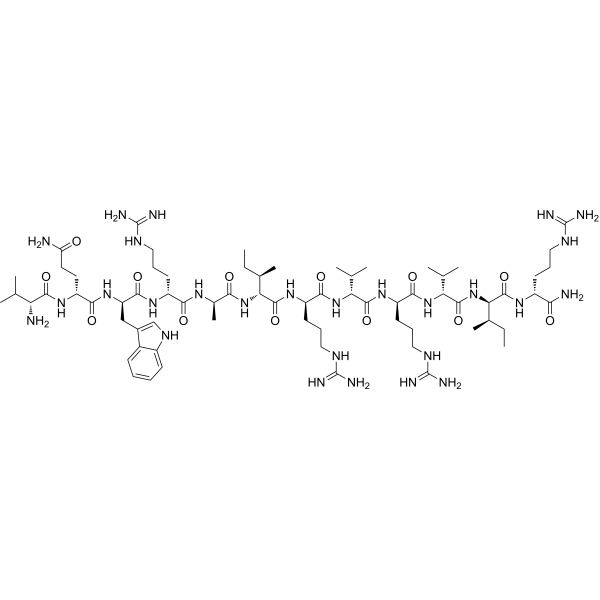
Cat. No.: HY-P10159
CAS No.: 1809102-71-3
Target:  

Antibiotic Bacterial

Research Areas:  

Infection

DJK-5 is an antimicrobial peptide that targets and degrades guanosine pentaphosphate and tetraphosphate (pppGpp and ppGpp). DJK-5 kills bacteria within dentinal tubules, dental plaque and preformed oral biofilms, delays biofilm recovery, reduces the abundance of extracellular polysaccharides and the structural integrity of biofilm matrices, and inhibits the formation and biomass accumulation of dental plaque biofilms. DJK-5 permeabilizes bacterial membranes, induces bacterial morphological changes, inhibits bacterial growth, and exerts a synergistic effect on bacterial biofilms when used in combination with traditional antibiotics and Colistin (HY-113678). DJK-5 exhibits protease resistance and broad-spectrum antibiofilm activity, though its activity decreases in fetal bovine serum. DJK-5 can be used in studies of pulpitis, mixed biofilm infections, skin abscesses, dental caries, infections associated with failed root canal therapy, and Pseudomonas aeruginosa biofilm-related respiratory tract infections .
loading...
    loading...
Cat. No.: HY-187641
CAS No.: 299419-24-2
Target:  

Bacterial

Research Areas:  

Infection

ST056083 is a small-molecule inhibitor of the c-di-AMP synthase DisA. The apparent KD of ST056083 binding to DisA is 21 μM. ST056083 reduces c-di-AMP production in Enterococcus faecalis ATCC 29212, and inhibits bacterial growth, biofilm formation, bacterial viability within biofilms, and the synthesis of water-insoluble extracellular polysaccharides. ST056083 is applicable to studies on bacterial c-di-AMP signaling and E. faecalis-associated infections .
loading...
    loading...
Cat. No.: HY-N17580
CAS No.: 150415-40-0
Lyciumin D acts as an angiotensin-converting enzyme inhibitor and renin inhibitor. Lyciumin D can be used for the research of hypertension .
loading...
    loading...
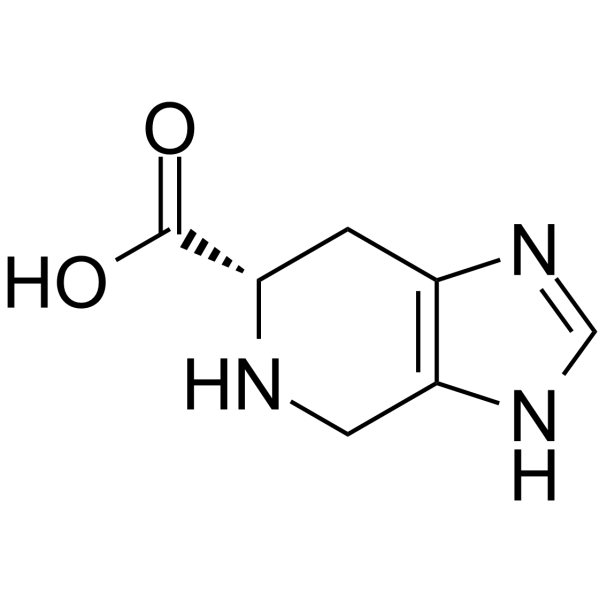
Cat. No.: HY-W067716
CAS No.: 59981-63-4
Synonyms: (S)-Spinacine
Spinacine ((S)-Spinacine) is a GABA uptake inhibitor. Spinacine enhances synaptic GABA effects via inhibition of gamma-aminobutyric acid uptake in cerebral cortex slices. Spinacine inhibits reflex responses of ventral roots in isolated spinal cord. Spinacine inhibits motor activity and reduces approaches to water dispensers in conflict situations. Spinacine raises pain sensitivity threshold via subarachnoidal injection .
loading...
    loading...
Cat. No.: HY-17609A
CAS No.: 2413256-25-2
Synonyms: CR-845 hydrochloride; FE-202845 hydrochloride
Difelikefalin hydrochloride (CR-845 hydrochloride; FE-202845 hydrochloride) is an orally active peripherally acting kappa opioid receptor agonist. Difelikefalin hydrochloride reduces acute kidney injury, decreases oliguria, maintains urine flow, inhibits cytokine expression, and improves survival in endotoxemia after ischemia/reperfusion. Difelikefalin hydrochloride suppresses pruritus signals and exhibits neuromodulatory antipruritic activity. Difelikefalin hydrochloride can be used in research related to acute kidney injury, chronic kidney disease-associated pruritus, and atopic dermatitis .
loading...
    loading...
Cat. No.: HY-17609C
CAS No.: 2803411-76-7
Synonyms: CR-845 acetate; FE-202845 acetate
Difelikefalin acetate (CR-845 acetate; FE-202845 acetate) is an orally active peripherally acting kappa opioid receptor agonist. Difelikefalin acetate reduces acute kidney injury, decreases oliguria, maintains urine flow, inhibits cytokine expression, and improves survival in endotoxemia after ischemia/reperfusion. Difelikefalin acetate suppresses pruritus signals and exhibits neuromodulatory antipruritic activity. Difelikefalin acetate can be used in research related to acute kidney injury, chronic kidney disease-associated pruritus, and atopic dermatitis .
loading...
    loading...
Cat. No.: HY-17609S
Synonyms: CR-845-d5; FE-202845-d5
Difelikefalin-d5 (CR-845-d5; FE-202845-d5) is the deuterated-labeled Difelikefalin (HY-17609). Difelikefalin (CR-845; FE-202845) is an orally active peripherally acting kappa opioid receptor agonist. Difelikefalin reduces acute kidney injury, decreases oliguria, maintains urine flow, inhibits cytokine expression, and improves survival in endotoxemia after ischemia/reperfusion. Difelikefalin suppresses pruritus signals and exhibits neuromodulatory antipruritic activity. Difelikefalin can be used in research related to acute kidney injury, chronic kidney disease-associated pruritus, and atopic dermatitis .
loading...
    loading...

