655 Results for "

root

" in MedChemExpress (MCE) Product Catalog:
Products (655)

655 Results for "root" in MCE Product Catalog:

Cat. No.: HY-N17336
CAS No.: 36449-99-7
7-Ketostigmasterol is a sterol present in the hull of Oryza sativa(rice) .
loading...
    loading...
Cat. No.: HY-120751A
CAS No.: 2751591-42-9
Research Areas:  

Neurological Disease

(S)-TROX-1 is the S-enantiomer of TROX-1 (HY-120751). TROX-1 is a selective, orally active and brain-penetrant N-type calcium channel (Cav2.2) inhibitor with an IC50 value of 0.11 μM. TROX-1 exerts state-dependent and use-dependent inhibition, preferentially targets open/inactivated channels, blocks depolarization-associated calcium influx, and fully blocks calcium influx in rat dorsal root ganglion neurons. TROX-1 reverses inflammatory-induced hyperalgesia, nerve injury-induced allodynia. TROX-1 can be used for the research of pain .
loading...
    loading...
Cat. No.: HY-N12486A
CAS No.: 2962060-53-1
(3S,8R,9R)-Isofalcarintriol is a natural polyacetylene compound found in carrot root parts. (3S,8R,9R)-Isofalcarintriol is a potent longevity promoter that improves glucose metabolism and has anti-tumor activity. (3S,8R,9R)-Isofalcarintriol can affect cellular respiration, interact with the α subunit of mitochondrial ATP synthase, and promote mitochondrial biogenesis. (3S,8R,9R)-Isofalcarintriol can be used in the study of neurodegenerative diseases, metabolic diseases, and aging .
loading...
    loading...
Cat. No.: HY-10402A
CAS No.: 1246654-84-1
Synonyms: GSK-AHAB hydrochloride; GW856553X hydrochloride; SB856553 hydrochloride
Losmapimod (GSK-AHAB; GW856553X) hydrochloride is an orally active p38α/β MAPK inhibitor, with pKi values of 8.1 and 7.6 for p38α and p38β, respectively. Losmapimod hydrochloride reduces DUX4 expression, thus exerting efficacy in facioscapulohumeral muscular dystrophy. By inhibiting MAPK/NF-κB, Losmapimod hydrochloride reduces apoptosis of epileptiform hippocampal neurons, and exhibits anti-allodynia and anti-hyperalgesic activities. Losmapimod hydrochloride blocks the entry and fusion of Lassa fever virus (LASV). Losmapimod hydrochloride overcomes tyrosine kinase inhibitor resistance in non-small cell lung cancer (NSCLC). Losmapimod hydrochloride inhibits myocardial senescence and inflammation, and possesses cardioprotective activity against cardiotoxicity .
loading...
    loading...
Cat. No.: HY-10402R
CAS No.: 585543-15-3
Synonyms: GSK-AHAB (Standard); GW856553X (Standard); SB856553 (Standard)
Losmapimod (GSK-AHAB; GW856553X) (Standard) is the analytical standard of Losmapimod (HY-10402). This product is intended for research and analytical applications. Losmapimod (GSK-AHAB; GW856553X) is an orally active p38α/β MAPK inhibitor, with pKi values of 8.1 and 7.6 for p38α and p38β, respectively. Losmapimod reduces DUX4 expression, thus exerting efficacy in facioscapulohumeral muscular dystrophy. By inhibiting MAPK/NF-κB, Losmapimod reduces apoptosis of epileptiform hippocampal neurons, and exhibits anti-allodynia and anti-hyperalgesic activities. Losmapimod blocks the entry and fusion of Lassa fever virus (LASV). Losmapimod overcomes tyrosine kinase inhibitor resistance in non-small cell lung cancer (NSCLC). Losmapimod inhibits myocardial senescence and inflammation, and possesses cardioprotective activity against cardiotoxicity .
loading...
    loading...
Cat. No.: HY-135258
CAS No.: 1217474-91-3
Purity:  ≥98.0%
Target:  

Galectin Fungal

Research Areas:  

Others

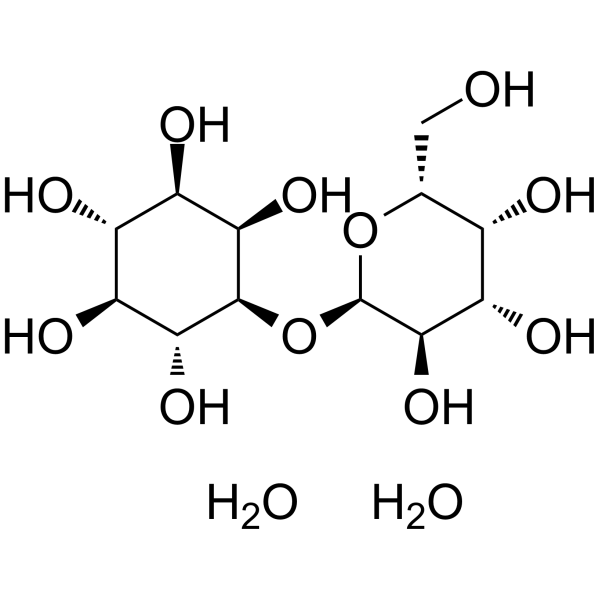
Galactinol dihydrate is a disaccharide carbohydrate serving as a galactosyl donor, which belongs to the raffinose family oligosaccharide pathway and acts as an important osmoprotectant. Galactinol dihydrate not only induces disease resistance in plants against fungal and bacterial pathogens, but also significantly enhances plant tolerance to abiotic stresses such as drought, high salinity, low temperature and oxidative damage. In addition, Galactinol dihydrate has the ability to scavenge hydroxyl radicals, can act as a signaling component for root colonization-induced systemic resistance, and is positively correlated with seed longevity in various crops, making it a potential biomarker for evaluating seed vigor. Therefore, Galactinol dihydrate can be used in the research of various plant diseases including fungal leaf spot, bacterial angular leaf spot, gray mold and soft rot .
loading...
    loading...
Cat. No.: HY-168758
CAS No.: 567-72-6
Target:  

GABA Receptor

Research Areas:  

Neurological Disease

Delta3,5-cholestadien-7-one is an oxysterol and a negative allosteric modulator of GABAA receptors. Delta3,5-cholestadien-7-one reduces GABA-induced currents in HEK cells expressing α1β1γ2 or α4β3γ2 subunit-containing GABAA receptors with IC50 values of 1.5 and 1 µM, respectively. Delta3,5-cholestadien-7-one reduces GABA-induced depolarization of peptidergic and non-peptidergic nociceptors, C-LTMRs, and cold thermosensors in isolated mouse dorsal root ganglion (DRG) neurons .
loading...
    loading...
Cat. No.: HY-184601
Glycyrrhizic acid (GA) is a saponin derived from the root of the traditional Chinese medicine licorice. It possesses various pharmacological effects, such as anti-inflammatory, antioxidant, immunomodulatory, and antiviral activity. In addition to its own pharmacological activity, GA can form complexes with many drugs and other natural products. Structurally, glycyrrhizic acid is an amphiphilic molecule; its hydrophilic portion consists of glucuronic acid residues, while its hydrophobic portion is composed of glycyrrhizic acid residues. It can aggregate in water to form self-assembled micelles. Glycyrrhizic acid encapsulates hydrophobic drugs through self-assembly into host-guest complexes, thereby increasing drug solubility and inhibiting precipitation. These complexes can also achieve sustained and controlled release of encapsulated drugs. Therefore, glycyrrhizic acid micelles can serve as drug carriers to improve the absorption of hydrophobic drugs.
loading...
    loading...
Cat. No.: HY-N0373R
CAS No.: 58749-23-8
Licochalcone B (Standard) is the analytical standard of Licochalcone B. This product is intended for research and analytical applications. Licochalcone B is an extract from the root of Glycyrrhiza uralensis. Licochalcone B inhibits amyloid β (42) self-aggregation (IC50=2.16 μM) and disaggregate pre-formed Aβ42 fibrils, reduce metal-induced Aβ42 aggregation through chelating metal ionsLicochalcone B inhibits phosphorylation of NF-κB p65 in LPS signaling pathway. Licochalcone B inhibits growth and induces apoptosis of NSCLC cells. Licochalcone B specifically inhibits the NLRP3 inflammasome by disrupting NEK7‐NLRP3 interaction .
loading...
    loading...
Cat. No.: HY-N1964R
CAS No.: 77-06-5
Synonyms: Gibberellin A3 (Standard)
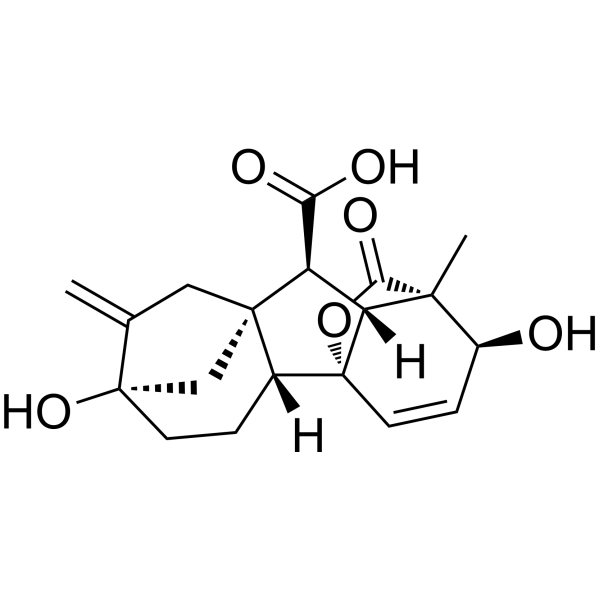
Gibberellic acid (Standard) is the analytical standard of Gibberellic acid (GA3) (HY-N1964). This product is intended for research and analytical applications. Gibberellic acidis a natural plant growth regulator with oral bioactivity. Gibberellic acid governs multiple plant developmental events, including seed germination, cell elongation, floral organ formation, and rice spikelet fertility. Gibberellic acid optimizes root morphology and secondary metabolite production in Echinacea purpurea hairy roots, and serves as a bioactive seed priming agent to improve chilling stress tolerance in chickpea. Gibberellic acid mediates modulation of enzyme activity and secondary metabolism in plants and exerts tissue-specific regulatory effects on antioxidant systems and lipid peroxidation in rats. Gibberellic acid can be used in studies of plant growth, metabolism, and abiotic stress responses .
loading...
    loading...
Cat. No.: HY-N9497
CAS No.: 3687-64-7
Category:  

Natural Products

Target:  

Galectin Fungal

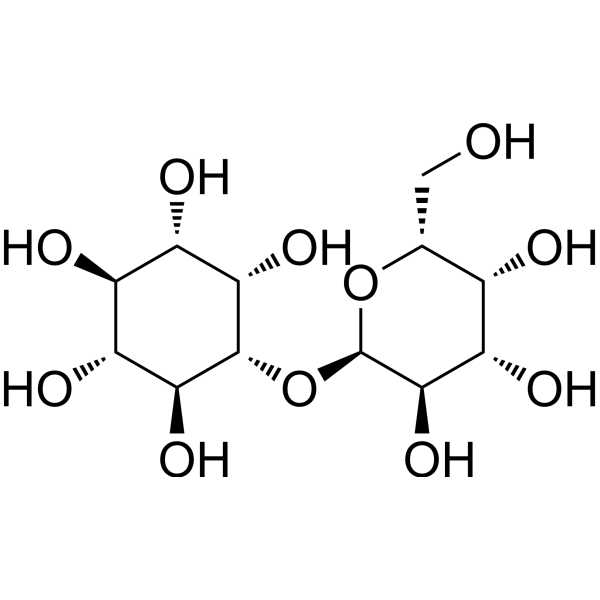
Galactinol is a disaccharide carbohydrate serving as a galactosyl donor, which belongs to the raffinose family oligosaccharide pathway and acts as an important osmoprotectant. Galactinol not only induces disease resistance in plants against fungal and bacterial pathogens, but also significantly enhances plant tolerance to abiotic stresses such as drought, high salinity, low temperature and oxidative damage. In addition, Galactinol has the ability to scavenge hydroxyl radicals, can act as a signaling component for root colonization-induced systemic resistance, and is positively correlated with seed longevity in various crops, making it a potential biomarker for evaluating seed vigor. Therefore, Galactinol can be used in the research of various plant diseases including fungal leaf spot, bacterial angular leaf spot, gray mold and soft rot .
loading...
    loading...
Cat. No.: HY-W116336D
CAS No.: 1314-13-2
Zinc oxide, <100 nm particle size is a nitrate reductase modulator and growth promoter with plant stress resistance activity and oral toxicity. Zinc oxide, <100 nm particle size acts as a nutrient source for maize plants. By enhancing nitrate reductase activity and reducing free proline levels, it significantly improves plant height, root length and dry matter weight of maize, and its growth-promoting effect is comparable to that of traditional zinc sulfate fertilizer. Zinc oxide, <100 nm particle size induces anemia-related and persistent tissue inflammatory damage, leading to obvious histopathological adverse reactions in the stomach, pancreas, eyes and prostate of rats. Zinc oxide, <100 nm particle size acts as a non-toxic antibacterial agent and selective cytotoxin against multiple bacteria, fungi and spores .
loading...
    loading...
Cat. No.: HY-D3384
AM4-65 is a red fluorescing styryl dye. AM4-65 can incorporate int plasma membranes to outline cell periphery and nascent cell plates .
loading...
    loading...
Cat. No.: HY-E71366
Research Areas:  

Metabolic Disease

Endo-1,4-β-D-glucanase is a glycoside hydrolase that cleaves internal β-1,4-glycosidic bonds in cellulose and related β-D-glucans (β-D-Glucan) (HY-139413). Endo-1,4-β-D-glucanase randomly cuts long, insoluble cellulose polymer chains into shorter, soluble fragments such as oligosaccharides, thereby paving the way for further digestion into glucose .
loading...
    loading...
Cat. No.: HY-N21606
CAS No.: 53823-08-8
Cascaroside A is a naturally occurring anthraquinone glycoside compound. Cascaroside A can be hydrolyzed to yield barbaloin, which upon reaction with ferric chloride produces Aloe emodin (HY-N0189). Cascaroside A serves as a marker compound for the quantitative determination of anthraquinone content in the bark extract of Rhamnus purshiana DC. .
loading...
    loading...
Cat. No.: HY-W115721
CAS No.: 523-21-7
Synonyms: Sodium rhodizonate dibasic
Rhodizonic acid disodium (Sodium rhodizonate dibasic) is a transition metal-dependent pro-oxidant and lead detection agent that induces reactive oxygen species generation, DNA damage, and inhibits Aconitase activity. Rhodizonic acid disodium generates superoxide anion radicals in an iron (II)-dependent manner, leading to aconitase inactivation. Rhodizonic acid disodium also triggers hydroxyl radical-mediated DNA strand breaks and 8-OHdG formation via copper ion reduction. Rhodizonic acid disodium reacts with lead to form a scarlet precipitate, with the color intensity proportional to lead content, enabling qualitative or quantitative analysis of lead. Rhodizonic acid disodium can also be used for real-time visualization of the dynamic process of lead sequestration in the plant rhizosphere and evaluation of the effects of environmental factors such as soil type on the stability of lead-sequestering structures .
loading...
    loading...
Cat. No.: HY-101241B
Target:  

mGluR

Research Areas:  

Neurological Disease

MPPG TFA, phenylglycine analogue, is a potent and selective metabotropic glutamate receptor (mGluR) antagonist with a kD value of 9.2 μM. MPPG TFA antagonizes both L-AP4 (HY-100781A)- and (1 S,3S)-ACPD-induced depressions of the monosynaptic excitation .
loading...
    loading...
Cat. No.: HY-134773
CAS No.: 1688-45-5
Sigma-1 receptor modulator-1 is a sigma-1 receptor modulator and acetylcholinesterase (AChE) inhibitor. Sigma-1 receptor modulator-1 binds to sigma-1 receptors in guinea pigs with a Ki of 1.8 nM. Sigma-1 receptor modulator-1 modulates chaperone proteins, restores calcium homeostasis, and controls ROS production. Sigma-1 receptor modulator-1 inhibits AChE activity and scavenges free radicals. Sigma-1 receptor modulator-1 can be used for research on neurodegenerative diseases .
loading...
    loading...
Cat. No.: HY-182710
CAS No.: 1081317-31-8
Target:  

Sodium Channel

Research Areas:  

Neurological Disease

DA-0218 is a Nav1.7 inhibitor. DA-0218 exerts state-dependent inhibitory effects. DA-0218 alleviates formalin-induced inflammatory pain behavior and Paclitaxel-induced mechanical hyperalgesia in mice. DA-0218 inhibits Histamine-induced acute pruritus and lymphoma-induced chronic pruritus in mice. DA-0218 can be used in research related to inflammatory pain, neuropathic pain, acute pruritus and chronic pruritus .
loading...
    loading...
Cat. No.: HY-186188
CAS No.: 202815-29-0
Licoagrocarpin is an isoprenylated pterocarpan, a type of naturally occurring flavonoid found in the roots of Glycyrrhiza glabra. Licoagrocarpin serves as a precursor in the biosynthetic pathway of Glabridin (HY-N0393) .
loading...
    loading...

