722 Results for "

LATE

" in MedChemExpress (MCE) Product Catalog:
Products (722)

722 Results for "LATE" in MCE Product Catalog:

Cat. No.: HY-N6801S
CAS No.: 911392-40-0
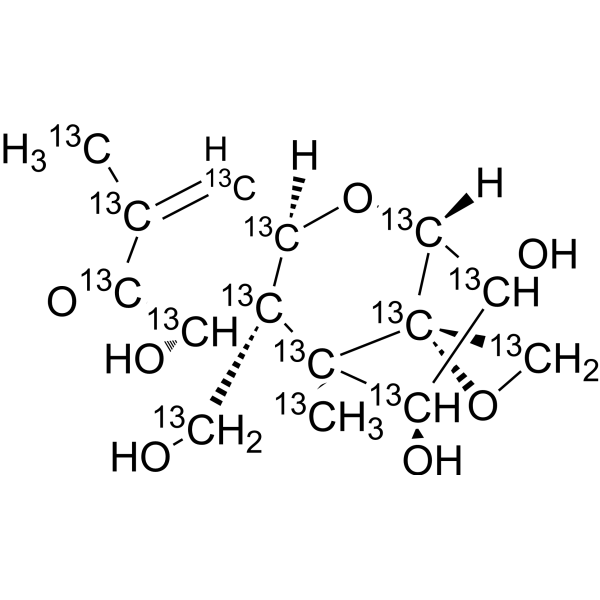
Nivalenol- 13C15 is the 13C labeled Nivalenol (HY-N6801) . Nivalenol, a trichothecene mycotoxin that can be produced by Fusarium graminearum, is a fungal metabolite present in agricultural product. Nivalenol modulates apoptotic pathway, cell cycle regulation, Bax, ERK, caspase-3, and poly-ADP-ribose synthase activity in macrophages. Nivalenol inhibits ribosomal peptidyltransferase site, protein synthesis, DNA synthesis, and cell proliferation. Nivalenol induces late-stage apoptotic morphological changes, reduces cellular metabolism, and decreases cell proliferation in erythroleukemia cells. Nivalenol induces lymphocyte apoptosis in murine thymus, spleen, and Peyer's patches. Nivalenol can be used for the research of erythroleukemia.
loading...
    loading...
Cat. No.: HY-110155R
CAS No.: 1243259-19-9
LM11A-31 dihydrochloride (Standard) is the analytical standard of LM11A-31 (dihydrochloride) (HY-110155). This product is intended for research and analytical applications. LM11A-31 dihydrochloride, a non-peptide p75NTR (neurotrophin receptor p75) modulator, is an orally active and potent proNGF (nerve growth factor) antagonist. LM11A-31 dihydrochloride is an amino acid derivative with high blood-brain barrier permeability and blocks p75-mediated cell death. LM11A-31 dihydrochloride reverses cholinergic neurite dystrophy in Alzheimer's disease mouse models with mid- to late-stage disease progression .
loading...
    loading...
Cat. No.: HY-186001
CAS No.: 2922732-38-3
Synonyms: RM-044
Target:  

Ras β-catenin

Research Areas:  

Cancer

RMC-9945 (RM-044) is a selective, covalent, and orally active RAS (ON) G12D inhibitor. RMC-9945 enhances the transcriptional activity of β-Catenin/TCF. RMC-9945 induces cell state transition, forcing metastatic colorectal cancer cells to switch from the Emp1 + state to the Lgr5 + stem cell-like state. RMC-9945 achieves durable disease control in preclinical models of colorectal cancer with early liver metastasis, but shows reduced activity in late-stage metastasis models. RMC-9945 can be used in research related to metastatic colorectal cancer and pancreatic ductal adenocarcinoma .
loading...
    loading...
Cat. No.: HY-N6801R
CAS No.: 23282-20-4
Nivalenol (Standard) is the analytical standard of Nivalenol (HY-N6801). This product is intended for research and analytical applications. Nivalenol, a trichothecene mycotoxin that can be produced by Fusarium graminearum, is a fungal metabolite present in agricultural product. Nivalenol modulates apoptotic pathway, cell cycle regulation, Bax, ERK, caspase-3, and poly-ADP-ribose synthase activity in macrophages. Nivalenol inhibits ribosomal peptidyltransferase site, protein synthesis, DNA synthesis, and cell proliferation. Nivalenol induces late-stage apoptotic morphological changes, reduces cellular metabolism, and decreases cell proliferation in erythroleukemia cells. Nivalenol induces lymphocyte apoptosis in murine thymus, spleen, and Peyer's patches. Nivalenol can be used for the research of erythroleukemia.
loading...
    loading...
Cat. No.: HY-W017424
CAS No.: 136-95-8
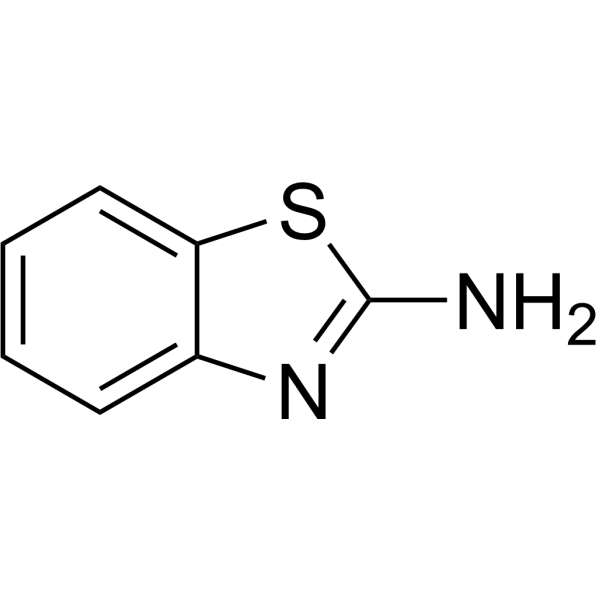
2-Aminobenzothiazole acts as a caspase 3/7 activator, an anticancer cytotoxic agent, and also exhibits neurotoxicity. 2-Aminobenzothiazole drives the apoptotic pathway by activating caspase 3/7, induces mitochondrial inner membrane depolarization, and triggers both early and late apoptosis via a caspase-dependent pathway. In zebrafish models, 2-Aminobenzothiazole induces oxidative damage in brain tissues and inhibits genes related to GABA and 5-HT synthesis pathways. Long-term exposure to 2-Aminobenzothiazole impairs motor ability, social behavior, anxiety-like state and cognitive function. 2-Aminobenzothiazole can be used in studies of human laryngeal carcinoma and related neurotoxicity .
loading...
    loading...
Cat. No.: HY-L225
260 compounds

Drug development is both expensive and time-consuming, with approximately one-third of drug discontinuations caused by severe adverse drug reactions (ADRs). Among these, drug-induced cardiotoxicity (DICT) is one of the primary reasons for late-stage clinical drug failures and market withdrawals. To date, cardiotoxicity has been observed in multiple drug classes, such as anticancer drugs, antipsychotics, antidepressants, antibiotics, and neurodegenerative disease medications. To reduce cardiac ADRs, it is crucial to determine the clinical relevance of DICT to treatment, elucidate the underlying molecular mechanisms, identify reliable biomarkers, and develop new diagnostic and therapeutic approaches.

MCE offers 260 cardiotoxicity compounds, including some FDA-approved drugs as well as inhibitors/blockers of the hERG potassium channel.

Cat. No.: HY-P70257
Purity:  ≥ 95%, as determined by reducing SDS-PAGE.
Synonyms: ITGB1; Very LATE Activation Protein, Beta Polypeptide; Prev. MSK12; Integrin VLA-4 Beta Subunit; Prev. FNRB; VLA-4 Subunit Beta; Prev. MDF2; Integrin Beta 1; GPIIA; Integrin Beta; Integrin Beta-1; CD29 Antigen; CD29; VLA-BETA; Integrin, Beta 1 (Fibronecti
Species:  
Human
Source:  
HEK293
loading...
    loading...
Cat. No.: HY-P73872
Purity:  ≥ 95%, as determined by reducing SDS-PAGE.
Synonyms: ITGA5; Integrin Alpha-F; Prev. FNRA; CDNA FLJ50382, Moderately Similar To Integrin Alpha-5; CD49e; Very LATE Activation Protein 5, Alpha Subunit; Integrin, Alpha 5 (Fibronectin Receptor, Alpha Polypeptide); Fibronectin Receptor, Alpha Subunit; Fibronectin
Species:  
Human
Source:  
HEK293
loading...
    loading...
Cat. No.: HY-P78542
Purity:  ≥ 95%, as determined by Bis-Tris PAGE.
Synonyms: APOE; Apolipoprotein E3; Prev. AD2; APO-E; Alzheimer Disease 2 (APOE*E4-Associated, LATE Onset); ApoE4; Apolipoprotein E Isoform 4; Apo-E; Apolipoprotein E Isoform 5; LPG; Apolipoprotein E Isoform 2; Apolipoprotein E; LDLCQ5
Species:  
Human
Source:  
HEK293
loading...
    loading...
Cat. No.: HY-P700755
Purity:  ≥ 95%, as determined by reducing SDS-PAGE.
Synonyms: ITGA5; Integrin Alpha-F; Prev. FNRA; CDNA FLJ50382, Moderately Similar To Integrin Alpha-5; CD49e; Very LATE Activation Protein 5, Alpha Subunit; Integrin, Alpha 5 (Fibronectin Receptor, Alpha Polypeptide); Fibronectin Receptor, Alpha Subunit; Fibronectin
Species:  
Human
Source:  
HEK293
loading...
    loading...
Cat. No.: HY-P701094
Purity:  ≥ 90%, as determined by reducing SDS-PAGE.
Synonyms: APOE; Apolipoprotein E3; Prev. AD2; APO-E; Alzheimer Disease 2 (APOE*E4-Associated, LATE Onset); ApoE4; Apolipoprotein E Isoform 4; Apo-E; Apolipoprotein E Isoform 5; LPG; Apolipoprotein E Isoform 2; Apolipoprotein E; LDLCQ5
Species:  
Human
Source:  
HEK293
loading...
    loading...
Cat. No.: HY-P704977
Purity:  ≥ 90%, as determined by reducing SDS-PAGE.
Synonyms: APOE; Apolipoprotein E3; Prev. AD2; APO-E; Alzheimer Disease 2 (APOE*E4-Associated, LATE Onset); ApoE4; Apolipoprotein E Isoform 4; Apo-E; Apolipoprotein E Isoform 5; LPG; Apolipoprotein E Isoform 2; Apolipoprotein E; LDLCQ5
Species:  
Human
Source:  
HEK293
loading...
    loading...
Cat. No.: HY-P704978
Purity:  ≥ 90%, as determined by reducing SDS-PAGE.
Synonyms: APOE; Apolipoprotein E3; Prev. AD2; APO-E; Alzheimer Disease 2 (APOE*E4-Associated, LATE Onset); ApoE4; Apolipoprotein E Isoform 4; Apo-E; Apolipoprotein E Isoform 5; LPG; Apolipoprotein E Isoform 2; Apolipoprotein E; LDLCQ5
Species:  
Human
Source:  
HEK293
loading...
    loading...
Cat. No.: HY-P704979
Purity:  ≥ 90%, as determined by reducing SDS-PAGE.
Synonyms: APOE; Apolipoprotein E3; Prev. AD2; APO-E; Alzheimer Disease 2 (APOE*E4-Associated, LATE Onset); ApoE4; Apolipoprotein E Isoform 4; Apo-E; Apolipoprotein E Isoform 5; LPG; Apolipoprotein E Isoform 2; Apolipoprotein E; LDLCQ5
Species:  
Human
Source:  
HEK293
loading...
    loading...
Cat. No.: HY-121303
CAS No.: 6236-97-1
CK-102 is an interleukin-1 (IL-1) inhibitor. CK-102 reduces mRNA synthesis. CK-102 does not inhibit DNA synthesis. CK-102 only slightly inhibits protein synthesis, or has no effect on it. CK-102 delays wound healing after ophthalmic surgery and prolongs the failure time of trabeculectomy fistulas. CK-102 inhibits lens protein-induced ocular inflammation at both early and late stages. CK-102 inhibits endotoxin-induced uveitis. CK-102 does not inhibit interleukin-1-induced uveitis. CK-102 can be used in research related to glaucoma filtration failure and uveitis .
loading...
    loading...
Cat. No.: HY-165426
CAS No.: 3031522-14-9
Research Areas:  

Inflammation/Immunology

HB-230 is a Transglutaminase-2 (TG2) (human IC50 = 4.9 μM) inhibitor and a selective fluorescent imaging probe for active TG2 localization. HB-230 modifies TG2 Cys277 to sustain the enzyme open conformation. HB-230 forms a ternary complex with TG2 and α2-macroglobulin, undergoes receptor-mediated endocytosis, and trafficks directly to lysosomes without early/late endosome fusion. HB-230 exhibits TG2 activity-dependent and α2-macroglobulin-dependent uptake. HB-230 can be used for the research of celiac disease, (Ex/Em = 649/665 nm) .
loading...
    loading...
Cat. No.: HY-182924
Target:  

PROTACs Enterovirus

Research Areas:  

Infection

Jun15702 is a PROTAC degrader targeting the capsid protein VP1 of enterovirus D68. Jun15702 recruits the Cereblon (CRBN) E3 ligase and activates the ubiquitin-proteasome pathway. Jun15702 inhibits viral entry and exerts inhibitory effects during the early, middle and late stages of viral replication. Jun15702 exhibits antiviral activity against multiple wild-type enterovirus D68 strains, and also shows submicromolar antiviral activity against the Pleconaril (HY-19952)-resistant enterovirus D68 variant rMO-VP1 F159V. Jun15702 can be used in studies related to enterovirus D68 (EV-D68) infection .
loading...
    loading...
Cat. No.: HY-N0757R
CAS No.: 6926-14-3
8-O-Acetylharpagide (Standard) is the analytical standard of 8-O-Acetylharpagide. This product is intended for research and analytical applications. 8-O-Acetylharpagide is an iridoid glycoside compound. 8-O-Acetylharpagide exhibits anti-aging activity at low doses and anticancer activity at high doses. 8-O-Acetylharpagide induces late-stage apoptosis and necrosis-like death in cancer cells, and downregulates anti-apoptotic proteins such as Akt, p-Akt and Bcl-2. 8-O-Acetylharpagide is mainly metabolized in rats via demethylation, hydrolysis and glucuronidation, and its active metabolites downregulate the AKT/NF-κB/MMP9 signaling axis. 8-O-Acetylharpagide exerts vasoconstrictive effects by activating vascular α-adrenoceptor.
loading...
    loading...
Cat. No.: HY-L187
2,196 compounds

Fragment-based drug development (FBDD) is a strategy for drug discovery that can be applied both academically and commercially to enhance the identification of some non-drug targets. Fragment-based drug development has identified low molecular weight molecules (<300 Da) capable of binding to related macromolecules. These fragments can cover a wide chemical space and are easy to optimize later. Currently, several fragment-based drugs have entered clinical trials, of which two drugs, Vemurafenib and Venetoclax, have been approved for marketing.

Based on Tanimoto coefficient, MCE uses similarity algorithm to carefully select 2,196 high-structurally diverse 'RO3' compliant fragment molecules from large-scale fragment molecules, which can be applied to fragment based drug development.

Cat. No.: HY-162927
CAS No.: 1054506-59-0
Target:  

MDM-2/p53 Apoptosis

Research Areas:  

Cancer

p53-MDM2-IN-6 (Compound 10a), a LSM-83177 hydrazone analog, is a potent p53-MDM2 inhibitor with an IC50 value of 11.08 µg/mL. p53-MDM2-IN-6 arrests the cell cycle in the S phase and induces early and late Apoptosis with antiproliferative activity against HT29 cell lines with an IC50 value of 10.44 µg/mL. p53-MDM2-IN-6 inhibits p53-MDM2 interaction with increment in p-53 level and decrease the expression of GST enzymes. p53-MDM2-IN-6 is promising for research of colorectal cancer .
loading...
    loading...

