

101 Results for "

central neuron

" in MedChemExpress (MCE) Product Catalog:
Products (101)

101 Results for "central neuron" in MCE Product Catalog:

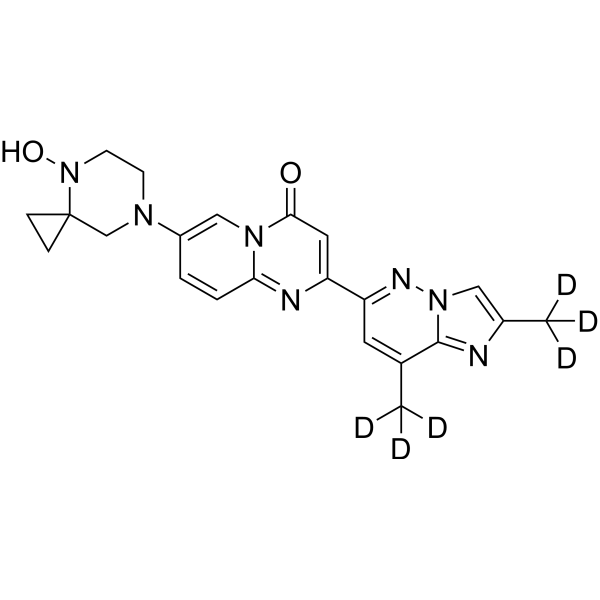
Cat. No.: HY-109101AS2
Risdiplam-hydroxylate-d6 is a Risdiplam-hydroxylate tritium substitute. Risdiplam (RG7916) is an orally administered, centrally and peripherally distributed SMN2 pre-mRNA splicing modifier that increases survival motor neuron (SMN) protein levels .
loading...
    loading...
Cat. No.: HY-174594
Target:  

mRNA

Research Areas:  

Metabolic Disease

Human ISL1 mRNA encodes the human ISL LIM homeobox 1 (ISL1) protein, a member of the LIM/homeodomain family of transcription factors. ISL1 is central to the development of pancreatic cell lineages and may also be required for motor neuron generation.
loading...
    loading...
Cat. No.: HY-118706
CAS No.: 108351-90-2
Target:  

Dopamine Receptor

Research Areas:  

Neurological Disease

PD 118440 is an orally active dopamine (DA) agonist. PD 118440 has significant central nervous system effects, including inhibition of striatal DA synthesis, suppression of DA neuron firing, and reversal of Reserpine (HY-N0480)-induced depression in rats .
loading...
    loading...
Cat. No.: HY-E70813
Target:  

CaMK

Research Areas:  

Neurological Disease

CaMKK2 is a serine/threonine protein kinase and the central component of a Ca 2+-calmodulin activated signalling pathway. CaMKK2 is highly enriched in brain neurons and regulates energy metabolism and neuronal processes. CAMKK2 Recombinant Human Active Protein Kinase is obtained by expressing CAMKK2 proteins .
loading...
    loading...
Cat. No.: HY-P2084
CAS No.: 149665-72-5
Target:  

Inhibitory Antibodies

Research Areas:  

Neurological Disease

WWamide-1 is a neuropeptide, which can be isolated form Achatina fulica. WWamide-1 inhibits central neurons of snails, regulates the snail muscle contraction. WWamide-1 inhibits the contraction of anterior byssus retractor muscle (ABRM), enhances the contraction of the radular traction muscle, through effects on presynaptic and postsynaptic membrane of the muscle .
loading...
    loading...
Cat. No.: HY-P3517
CAS No.: 77761-27-4
Synonyms: β-EP (6-31), human
Target:  

Opioid Receptor

Research Areas:  

Neurological Disease Endocrinology

β-Endorphin, an endogenous opioid neuropeptide, is an opioid receptor agonist. β-Endorphin binds preferentially to μ-opioid receptors and is produced in certain neurons of the central and peripheral nervous system and is one of three endorphins produced in humans. β-Endorphin can be used to reduce stress and maintain homeostasis in the body and is involved in neurological pain perception regulation .
loading...
    loading...
Cat. No.: HY-B1833S
Synonyms: HQ-495-d7
Afloqualone-d7 (HQ-495-d7) is deuterium labeled Afloqualone. Afloqualone (HQ-495) is an orally active central muscle relaxant and antivertiginous agent that can increase the sensitivity of GABA receptors in neurons of the lateral vestibular nucleus. Afloqualone (HQ-495) can be used in the research of low back pain and neck-arm-shoulder syndrome .
loading...
    loading...
Cat. No.: HY-P2025
CAS No.: 113137-57-8
Research Areas:  

Neurological Disease

JMV 236 is a cholecystokinin antagonist with appetite-suppressing activity. JMV 236 affects the regulation of food intake through the interaction of the intestinal endogenous peptide PrRP and the CCK1 receptor. The administration of JMV 236 activates PrRP neurons located in the NTS, thereby enhancing its appetite-suppressing effect. JMV 236 has significant effects on areas of the central nervous system associated with food intake, especially during states of starvation .
loading...
    loading...
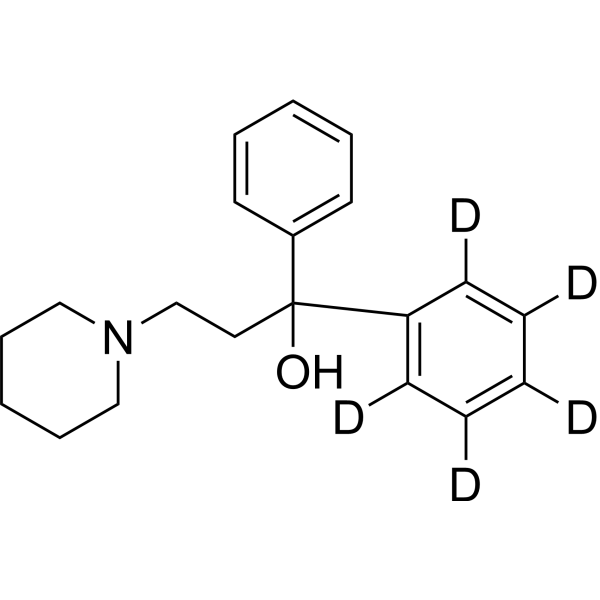
Cat. No.: HY-B1343AS
Pridinol-d5 is deuterium labeled Pridinol (HY-B1343A) . Pridinol is an orally active, blood-brain permeable, muscarinic acetylcholine receptor (mAChR)-directed muscle relaxant. Pridinol reduces the conduction of impulses to spinal motor neurons and exerts muscle relaxant activity. Pridinol inhibits skeletal muscle contractures in diseases of both central and peripheral origin and can be used in research in the field of musculoskeletal diseases .
loading...
    loading...
Cat. No.: HY-P5869
Research Areas:  

Neurological Disease

Kurtoxin is a selective Cav3 (T-type) voltage-gated Ca 2+ channel gating inhibitor with a Kd of 15 nM for Cav3.1 (α1G T-type) Ca 2+ channel. Kurtoxin can interact with high affinity with native neuronal high-threshold L-type, N-type, and P-type Ca 2+ channels in central and peripheral neurons. Kurtoxin also shows cross-reactivity with voltage-gated Na + channel .
loading...
    loading...
Cat. No.: HY-N0666E
CAS No.: 845744-47-0
L-Aspartic acid monocesium (monocesium L-aspartate) is a NMDA receptor agonist and acidic amino acid. L-Aspartic acid monocesium has no independent analgesic activity. L-Aspartic acid monocesium can antagonize the analgesic effects of D-Aspartic acid and Morphine. L-Aspartic acid monocesium regulates polymorph transformation, crystal growth/aggregation and nucleation processes of calcium carbonate, and can serve as a biomineralization template. L-Aspartic acid monocesium promotes burst firing of central neurons. L-Aspartic acid monocesium can be used in studies related to cerebral ischemia and epilepsy .
loading...
    loading...
Cat. No.: HY-B0002BR
CAS No.: 99614-02-5
Synonyms: GR 38032 (Standard); SN 307 (Standard)
Ondansetron (Standard) is the analytical standard of Ondansetron (HY-B0002B). This product is intended for research and analytical applications. Ondansetron (GR 38032; SN 307) is a highly selective 5-HT3 receptor antagonist with an IC50 value of 103 pM. Ondansetron exerts its antiemetic effect by antagonizing 5-HT receptors located in localized neurons in the peripheral and central nervous systems. Ondansetron can inhibit nausea and vomiting induced by chemotherapy and radiotherapy .
loading...
    loading...
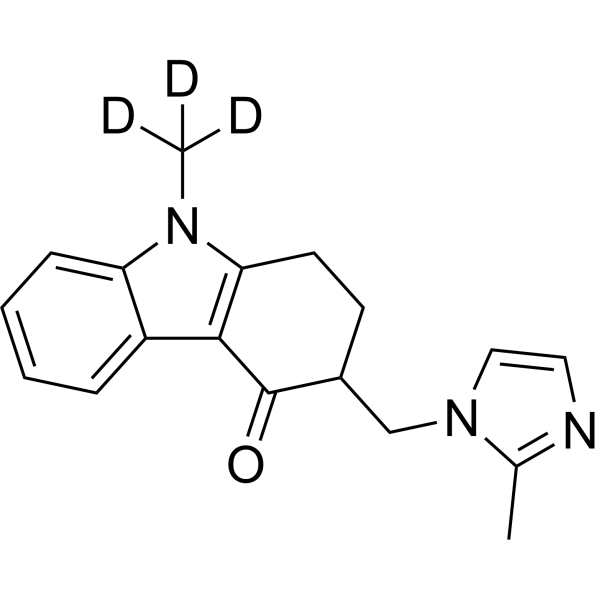
Cat. No.: HY-B0002BS1
CAS No.: 1132757-82-4
Synonyms: GR 38032-d3; SN 307-d3
Ondansetron-d3 is the deuterium labeled Ondansetron (HY-B0002B ). Ondansetron (GR 38032; SN 307) is a highly selective 5-HT3 receptor antagonist with an IC50 value of 103 pM. Ondansetron exerts its antiemetic effect by antagonizing 5-HT receptors located in localized neurons in the peripheral and central nervous systems. Ondansetron can inhibit nausea and vomiting induced by chemotherapy and radiotherapy .
loading...
    loading...
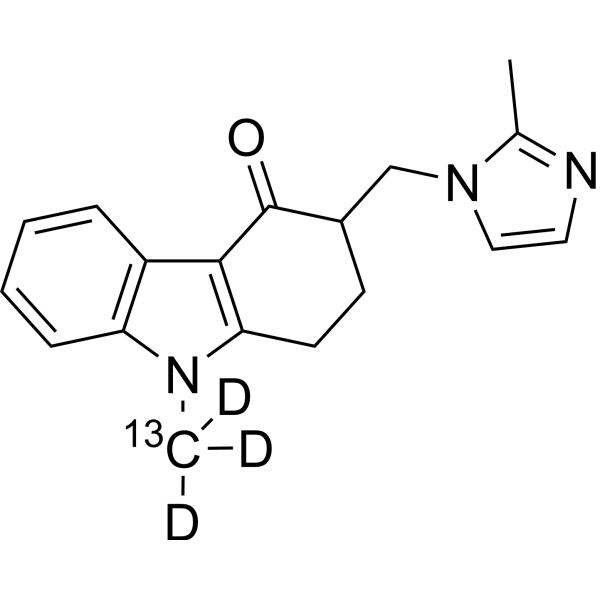
Cat. No.: HY-B0002BS2
CAS No.: 2699607-85-5
Synonyms: GR 38032-13C,d3; SN 307-13C,d3
Ondansetron- 13C,d3 is the 13C- and deuterium labeled Ondansetron (HY-B0002B). Ondansetron (GR 38032; SN 307) is a highly selective 5-HT3 receptor antagonist with an IC50 value of 103 pM. Ondansetron exerts its antiemetic effect by antagonizing 5-HT receptors located in localized neurons in the peripheral and central nervous systems. Ondansetron can inhibit nausea and vomiting induced by chemotherapy and radiotherapy .
loading...
    loading...
Cat. No.: HY-N0666AR
CAS No.: 1115-63-5
L-Aspartic acid potassium (Standard) is the analytical standard of L-Aspartic acid potassium (HY-N0666A). This product is intended for research and analytical applications. L-Aspartic acid potassium (potassium L-aspartate) is a NMDA receptor agonist and acidic amino acid. L-Aspartic acid potassium has no independent analgesic activity. L-Aspartic acid potassium can antagonize the analgesic effects of D-Aspartic acid and Morphine. L-Aspartic acid potassium regulates polymorph transformation, crystal growth/aggregation and nucleation processes of calcium carbonate, and can serve as a biomineralization template. L-Aspartic acid potassium promotes burst firing of central neurons. L-Aspartic acid potassium can be used in studies related to cerebral ischemia and epilepsy .
loading...
    loading...
Cat. No.: HY-N0666S9
CAS No.: 1308264-52-9
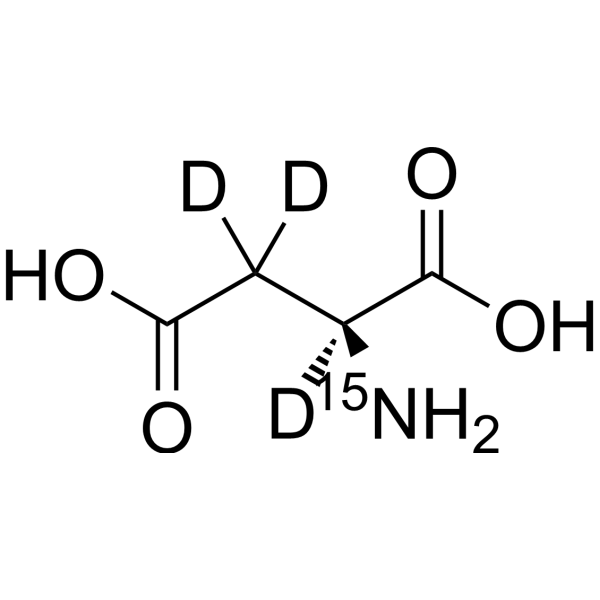
L-Aspartic acid- 15N,d3 is the 15N, deuterated-labeled L-Aspartic acid (HY-N0666). L-Aspartic acid is a NMDA receptor agonist and acidic amino acid. L-Aspartic acid has no independent analgesic activity. L-Aspartic acid can antagonize the analgesic effects of D-Aspartic acid and Morphine. L-Aspartic acid regulates polymorph transformation, crystal growth/aggregation and nucleation processes of calcium carbonate, and can serve as a biomineralization template. L-Aspartic acid promotes burst firing of central neurons. L-Aspartic acid can be used in studies related to cerebral ischemia and epilepsy .
loading...
    loading...
Cat. No.: HY-N0815R
CAS No.: 465-39-4
Synonyms: Bufogenin (Standard); Recibufogenin (Standard)
Resibufogenin (Standard) is the analytical standard of Resibufogenin. This product is intended for research and analytical applications. Resibufogenin is an orally active anticancer agent. Resibufogenin can be extracted from toad venom. Resibufogenin blocks signaling pathways such as PI3K/Akt, NF-κB, AP-1, activates GSK-3β, and regulates cyclin D1. Resibufogenin can activate central neurons. Resibufogenin has anti-inflammatory activity. Resibufogenin has anti-tumor effects on a variety of tumors such as multiple myeloma, renal cancer, colorectal cancer, pancreatic cancer, and glioma .
loading...
    loading...
Cat. No.: HY-N0666CR
CAS No.: 3792-50-5
Synonyms: Sodium L-aspartate (Standard)
L-Aspartic aicd sodium (Standard) (Sodium L-aspartate (Standard)) is the analytical standard of L-Aspartic aicd sodium (HY-N0666C). This product is intended for research and analytical applications. L-Aspartic acid sodium (Sodium L-aspartate) is a NMDA receptor agonist and acidic amino acid. L-Aspartic acid sodium has no independent analgesic activity. L-Aspartic acid sodium can antagonize the analgesic effects of D-Aspartic acid and Morphine. L-Aspartic acid sodium regulates polymorph transformation, crystal growth/aggregation and nucleation processes of calcium carbonate, and can serve as a biomineralization template. L-Aspartic acid sodium promotes burst firing of central neurons. L-Aspartic acid sodium can be used in studies related to cerebral ischemia and epilepsy .
loading...
    loading...
Cat. No.: HY-N0666S10
CAS No.: 68261-19-8
Synonyms: [3-13C]Aspartic acid
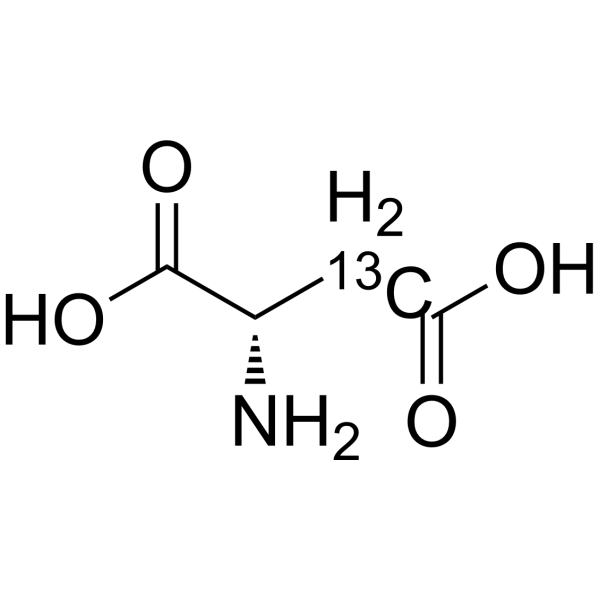
L-Aspartic acid- 13C-1 ([3- 13C]Aspartic acid) is the 13C-labeled L-Aspartic acid (HY-N0666). L-Aspartic acid is a NMDA receptor agonist and acidic amino acid. L-Aspartic acid has no independent analgesic activity. L-Aspartic acid can antagonize the analgesic effects of D-Aspartic acid and Morphine. L-Aspartic acid regulates polymorph transformation, crystal growth/aggregation and nucleation processes of calcium carbonate, and can serve as a biomineralization template. L-Aspartic acid promotes burst firing of central neurons. L-Aspartic acid can be used in studies related to cerebral ischemia and epilepsy .
loading...
    loading...
Cat. No.: HY-N0666S5
CAS No.: 1217475-13-2
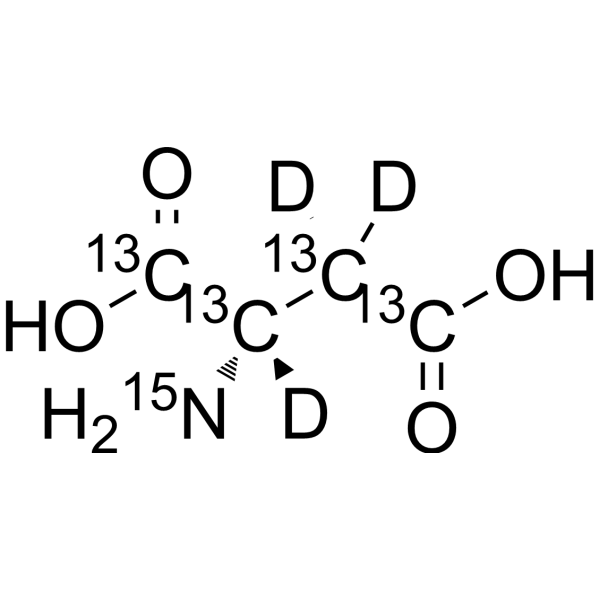
L-Aspartic acid- 13C4, 15N,d3 is the 15N, deuterated, 13C-labeled L-Aspartic acid (HY-N0666). L-Aspartic acid is a NMDA receptor agonist and acidic amino acid. L-Aspartic acid has no independent analgesic activity. L-Aspartic acid can antagonize the analgesic effects of D-Aspartic acid and Morphine. L-Aspartic acid regulates polymorph transformation, crystal growth/aggregation and nucleation processes of calcium carbonate, and can serve as a biomineralization template. L-Aspartic acid promotes burst firing of central neurons. L-Aspartic acid can be used in studies related to cerebral ischemia and epilepsy .
loading...
    loading...

