
879 Results for "

recognition

" in MedChemExpress (MCE) Product Catalog:
Products (879)

879 Results for "recognition" in MCE Product Catalog:

Cat. No.: HY-W754400
Synonyms: 1,6-Anhydro-β-D-mannopyranose-13C6
Mannosan,95%- 13C6 (1,6-Anhydro-β-D-mannopyranose- 13C6) is the 13C-labeled Mannosan,95% (HY-124095). Mannosan,95% (1,6-Anhydro-β-D-mannopyranose,95%) is a class of biochemical reagents used in glycobiology research. Glycobiology studies the structure, synthesis, biology, and evolution of sugars. It involves carbohydrate chemistry, enzymology of glycan formation and degradation, protein-glycan recognition, and the role of glycans in biological systems. This field is closely related to basic research, biomedicine, and biotechnology .
loading...
    loading...
Cat. No.: HY-139664A
CAS No.: 2170140-50-6
Purity:  98.97%
Target:  

DNA Methyltransferase

Research Areas:  

Cancer

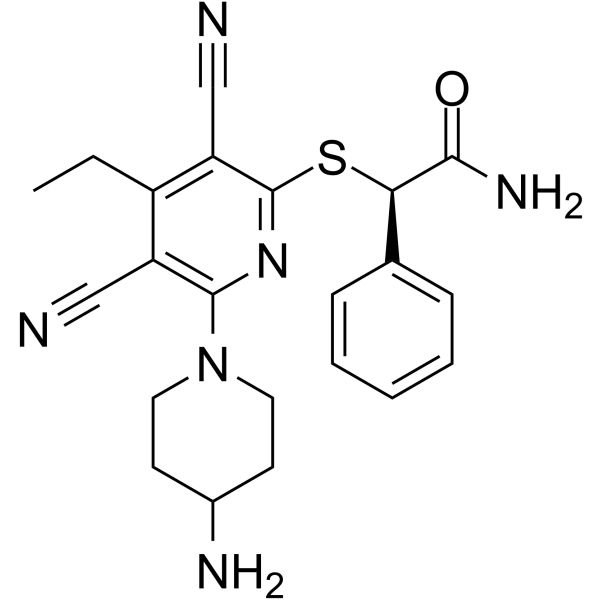
(R)-GSK-3685032 is the R-enantiomer of GSK-3685032 (HY-139664) and is a potent, non-covalent, reversible DNMT1-selective inhibitor with an IC50 of 0.036 μM against DNMT1. (R)-GSK-3685032 preferentially binds DNMT1 in a hemimethylated DNA context, inhibits DNA methylation maintenance by occupying the DNMT1 active site loop that inserts into DNA and by interacting with the target recognition domain, thereby inducing DNA hypomethylation and transcriptional activation. (R)-GSK-3685032 is useful for research on DNMT1, acute myeloid leukemia, and B cell humoral immunity .
loading...
    loading...
Cat. No.: HY-181684
PDE5/CA-IN-1 is a dual PDE5 and carbonic anhydrase (CA) inhibitor, with IC50 values of 0.41, 38.4, and 9.1 nM against PDE5, hCA II, and hCA VA, respectively. PDE5/CA-IN-1 inhibits multiple hCA subtypes associated with Alzheimer's disease. As a cytoprotective agent and oxidative stress alleviator, PDE5/CA-IN-1 reduces oxidative stress, and prevents recognition memory and working memory impairments. PDE5/CA-IN-1 is available for the research of Alzheimer's disease .
loading...
    loading...
Cat. No.: HY-183149
CAS No.: 3120759-70-5
BPN-37440 is a blood-brain barrier-permeable, selective, and orally active EP2 receptor inhibitor with an IC50 of 53-60 nM. BPN-37440 inhibits the expression of inflammatory mediators IL-1β and COX-2, with an IC50 of 21 nM for IL-1β and 42 nM for COX-2. BPN-37440 reduces microgliosis in key brain regions of mice with pilocarpine (HY-B0726A)-induced status epilepticus and reverses their working memory and recognition memory deficits. BPN-37440 can be used for research on status epilepticus .
loading...
    loading...
Cat. No.: HY-N0307R
CAS No.: 114902-16-8
Ciwujianoside B (Standard) is the analytical standard of Ciwujianoside B. This product is intended for research and analytical applications. Ciwujianoside B is an orally active, blood-brain barrier penetrable radioprotective agent and memory enhancer. Ciwujianoside B reduces radiation-induced DNA damage, cell cycle arrest and apoptosis, downregulates NF-κB and the Bax/Bcl-2 ratio, and enhances the proliferative capacity of bone marrow cells. Ciwujianoside B enhances object recognition memory in normal mice and induces dendritic extension in primary cultured cortical neurons. Ciwujianoside B can be used in studies related to hematopoietic system radiation injury and memory enhancement.
loading...
    loading...
Cat. No.: HY-P1745
CAS No.: 163364-16-7
Synonyms: Insulin B chain (9-23)
Target:  

MHC Insulin Receptor IFNAR

Research Areas:  

Inflammation/Immunology

InsB (9-23) (Insulin B chain (9-23)) is an HLA-DQ8-restricted insulin B-chain peptide composed of amino acid residues 9-23. InsB (9-23) serves as a major MHC II class-restricted antigen. InsB (9-23) supports the recognition and activation of T cells, stimulates the secretion of IFN-γ and cytokines, and induces cross-reactive immune responses. InsB (9-23)-specific CD4 T cells can initiate diabetes . InsB (9-23) can be used in research related to type 1 diabetes and autoimmune diabetes .
loading...
    loading...
Cat. No.: HY-W145545
CAS No.: 138906-41-9
Synonyms: 4-Methoxyphenyl 3,4,6-Tri-O-acetyl-2-deoxy-2-phthalimido-beta-D-glucopyranoside
4-Methoxyphenyl 3,4, 6-tri-o-acetyl-2-deoxy-2-phthalimido-β-d-Glucopyranoside (4-methoxyphenyl) 3,4, 6-tri-o-acetyl-2-deoxy-2-phthalimido-beta-d-Glucopyranoside is a class of biochemical reagents used in glycobiology research. Glycobiology studies the structure, synthesis, biology, and evolution of sugars. It deals with carbohydrate chemistry, glycan formation and degradation enzymology, protein-glycan recognition, and the role of glycans in biological systems. The field is closely related to basic research, biomedicine and biotechnology .
loading...
    loading...
Cat. No.: HY-P75677
Purity:  ≥ 90%, as determined by reducing SDS-PAGE.
Synonyms: CLEC4F; C-Type Lectin Domain Family 4, Member F; Prev. CLECSF13; C-Type Lectin 13; KCLR; CLEC4F Protein; C-Type (Calcium Dependent, Carbohydrate-recognition Domain) Lectin, Superfamily Member 13; KCR; FLJ39110; C-Type Lectin Domain Family 4 Member F; C-Ty
Species:  
Mouse
Source:  
HEK293
loading...
    loading...
Cat. No.: HY-P76268
Purity:  ≥ 95%, as determined by reducing SDS-PAGE.
Synonyms: CLEC4F; C-Type Lectin Domain Family 4, Member F; Prev. CLECSF13; C-Type Lectin 13; KCLR; CLEC4F Protein; C-Type (Calcium Dependent, Carbohydrate-recognition Domain) Lectin, Superfamily Member 13; KCR; FLJ39110; C-Type Lectin Domain Family 4 Member F; C-Ty
Species:  
Rat
Source:  
HEK293
loading...
    loading...
Cat. No.: HY-P76269
Purity:  ≥ 95%, as determined by reducing SDS-PAGE.
Synonyms: CLEC5A; C-Type (Calcium Dependent, Carbohydrate-recognition Domain) Lectin, Superfamily Member 5; Prev. CLECSF5; MDL1; C-Type Lectin Domain Family 5 Member A; C-Type Lectin Domain Family 5, Member A; MDL-1; Myeloid DAP12-Associating Lectin-1; C-Type Lecti
Species:  
Rat
Source:  
HEK293
loading...
    loading...
Cat. No.: HY-P77337
Purity:  ≥ 95%, as determined by reducing SDS-PAGE.
Synonyms: CLEC5A; C-Type (Calcium Dependent, Carbohydrate-recognition Domain) Lectin, Superfamily Member 5; Prev. CLECSF5; MDL1; C-Type Lectin Domain Family 5 Member A; C-Type Lectin Domain Family 5, Member A; MDL-1; Myeloid DAP12-Associating Lectin-1; C-Type Lecti
Species:  
Rhesus Macaque
Source:  
HEK293
loading...
    loading...
Cat. No.: HY-P77338
Purity:  ≥ 90%, as determined by reducing SDS-PAGE.
Synonyms: CLEC5A; C-Type (Calcium Dependent, Carbohydrate-recognition Domain) Lectin, Superfamily Member 5; Prev. CLECSF5; MDL1; C-Type Lectin Domain Family 5 Member A; C-Type Lectin Domain Family 5, Member A; MDL-1; Myeloid DAP12-Associating Lectin-1; C-Type Lecti
Species:  
Rhesus Macaque
Source:  
HEK293
loading...
    loading...
Cat. No.: HY-P77632
Purity:  ≥ 95%, as determined by Bis-Tris PAGE.
Synonyms: CLEC5A; C-Type (Calcium Dependent, Carbohydrate-recognition Domain) Lectin, Superfamily Member 5; Prev. CLECSF5; MDL1; C-Type Lectin Domain Family 5 Member A; C-Type Lectin Domain Family 5, Member A; MDL-1; Myeloid DAP12-Associating Lectin-1; C-Type Lecti
Species:  
Human
Source:  
HEK293
loading...
    loading...
Cat. No.: HY-P77906
Purity:  ≥ 95%, as determined by Bis-Tris PAGE.
Synonyms: CLEC5A; C-Type (Calcium Dependent, Carbohydrate-recognition Domain) Lectin, Superfamily Member 5; Prev. CLECSF5; MDL1; C-Type Lectin Domain Family 5 Member A; C-Type Lectin Domain Family 5, Member A; MDL-1; Myeloid DAP12-Associating Lectin-1; C-Type Lecti
Species:  
Mouse
Source:  
HEK293
loading...
    loading...
Cat. No.: HY-P703963
Purity:  ≥ 95%, as determined by Bis-Tris PAGE.
Synonyms: CLEC5A; C-Type (Calcium Dependent, Carbohydrate-recognition Domain) Lectin, Superfamily Member 5; Prev. CLECSF5; MDL1; C-Type Lectin Domain Family 5 Member A; C-Type Lectin Domain Family 5, Member A; MDL-1; Myeloid DAP12-Associating Lectin-1; C-Type Lecti
Species:  
Mouse
Source:  
HEK293
loading...
    loading...
Cat. No.: HY-P704543
Purity:  ≥ 95%, as determined by reducing SDS-PAGE.
Synonyms: CLEC5A; C-Type (Calcium Dependent, Carbohydrate-recognition Domain) Lectin, Superfamily Member 5; Prev. CLECSF5; MDL1; C-Type Lectin Domain Family 5 Member A; C-Type Lectin Domain Family 5, Member A; MDL-1; Myeloid DAP12-Associating Lectin-1; C-Type Lecti
Species:  
Human
Source:  
HEK293
loading...
    loading...
Cat. No.: HY-P87390
Synonyms: C type (calcium dependent, carbohydrate recognition domain) lectin, superfamily member 13 antibody; C-type lectin 13 antibody; C-type lectin domain family 4 member F antibody; C-type lectin superfamily member 13 antibody; CLC4F_HUMAN antibody; Clec4f antibody; CLECSF13 antibody; KCLR antibody

Host:  

Mouse

Application:  

WB, FC

Reactivity:  

Human

loading...
    loading...
Cat. No.: HY-177797
CAS No.: 30439-19-1
Research Areas:  

Neurological Disease

5-Methoxytryptoline acts as a modulator of the Serotonin transporter complex, as well as a ligand for the 5-HT2A and 5-HT2C receptors, with Ki values of 130 nM and 140 nM for the 5-HT2A and 5-HT2C receptors, respectively. 5-Methoxytryptoline inhibits the active uptake of Serotonin (HY-B1473A) and Tryptamine (HY-B2132) in platelets. 5-Methoxytryptoline induces behavioral excitation, cortical electroencephalographic desynchronization, and dose-dependent elevation of plasma prolactin, followed by behavioral sedation and partial recovery of cortical electroencephalographic voltage. 5-Methoxytryptoline antagonizes Reserpine (HY-N0480)-induced sedation, reduced locomotor activity, and hypothermia. 5-Methoxytryptoline exerts dose-dependent effects on behavior and cortical electroencephalographic activity in freely moving rats. 5-Methoxytryptoline can be used in depression-related research .
loading...
    loading...
Cat. No.: HY-D3602
CAS No.: 2558211-88-2
Target:  

Fluorescent Dye

Research Areas:  

Others

Mito-CS1 is a fluorescent probe for imaging and reversible detection of the exchangeable mitochondrial Cu + pool in living cells. Mito-CS1 combines a Cu +-responsive fluorescent platform with a mitochondria-targeted triphenylphosphonium group, which localizes the probe to mitochondria via a proton gradient. Mito-CS1 contains a thioether-rich receptor for the selective recognition and binding of Cu +, triggering a fluorescence turn-on response by inhibiting photoinduced electron transfer. The apo-form of Mito-CS1 has excitation/emission wavelengths of 555/569 nm, while those of Mito-CS1 after binding to Cu + are 550/558 nm .
loading...
    loading...
Cat. No.: HY-DY2032
Research Areas:  

Others

Methyl Green Staining Solution (Chloroform-Extracted, 1%) is a basic dye stock solution with differential nucleic acid binding activity that distinguishes double-stranded DNA from RNA, and it can be used for assays related to nucleic acid distribution and DNA localization. Methyl Green Staining Solution (Chloroform-Extracted, 1%) functions by competitively binding to the phosphate groups of nucleic acids and stably binds to intact double-stranded DNA; RNA within the oocyte-specific ribonucleoprotein complex specifically binds to this dye, and RNase completely blocks this binding reaction. The nucleic acid recognition of Methyl Green Staining Solution (Chloroform-Extracted, 1%) depends on the size of the dye cation and the intact double-helical structure of DNA .
loading...
    loading...

