907 Results for "

Inactive

" in MedChemExpress (MCE) Product Catalog:
Products (907)

907 Results for "Inactive" in MCE Product Catalog:

Cat. No.: HY-P75281
Purity:  ≥ 95%, as determined by reducing SDS-PAGE.
Synonyms: DPP10; DPP X; Dipeptidyl Peptidase Like 10; CDNA FLJ55490, Highly Similar To Inactive Dipeptidyl Peptidase 10; DPRP3; Dipeptidyl-Peptidase 10 (Non-Functional); DPL2; Dipeptidyl-Peptidase 10, Isoform CRA_b; DPPY; Uncharacterized Protein DPP10; Dipeptidyl P
Species:  
Human
Source:  
HEK293
loading...
    loading...
Cat. No.: HY-P701723
Purity:  ≥ 90%, as determined by reducing SDS-PAGE.
Synonyms: CAMKK1; DKFZp761M0423; Calcium/Calmodulin Dependent Protein Kinase Kinase 1; CaM-KK Alpha; CAMKKA; MGC34095; Calcium/Calmodulin-Dependent Protein Kinase Kinase Alpha; CaM-KK 1; Calcium/Calmodulin-Dependent Protein Kinase Kinase 1, Alpha; CaMKK 1; Calcium/
Species:  
Human
Source:  
Sf9 insect cells
loading...
    loading...
Cat. No.: HY-P705883
Purity:  ≥ 90%, as determined by reducing SDS-PAGE.
Synonyms: STK16; TSF1; Serine/Threonine Kinase 16; HPSK; PKL12; Protein Kinase Expressed In Day 12 Fetal Liver; MPSK; Non-Specific Serine/Threonine Protein Kinase; Myristoylated And Palmitoylated Serine/Threonine-Protein Kinase; TSF-1; Serine/Threonine-Protein Kina
Species:  
Human
Source:  
E. coli
loading...
    loading...
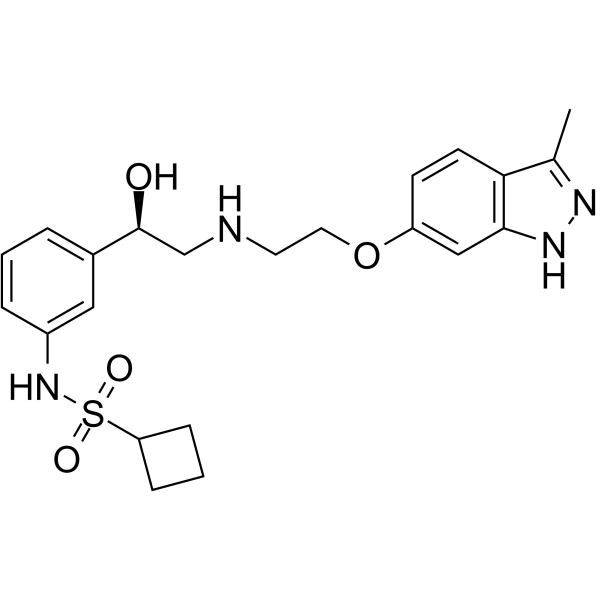
Cat. No.: HY-101514
CAS No.: 1283125-73-4
Target:  

Adrenergic Receptor

β3-AR agonist 1 (compound 15) is a highly potent, selective, and orally available β3-adrenergic receptor (β3-AR) agonist (EC50=18 nM), being inactive to β1-, β2-, and α1A-AR (β1/β3, β2/β3, and α1A/β3>556-fold) .
loading...
    loading...
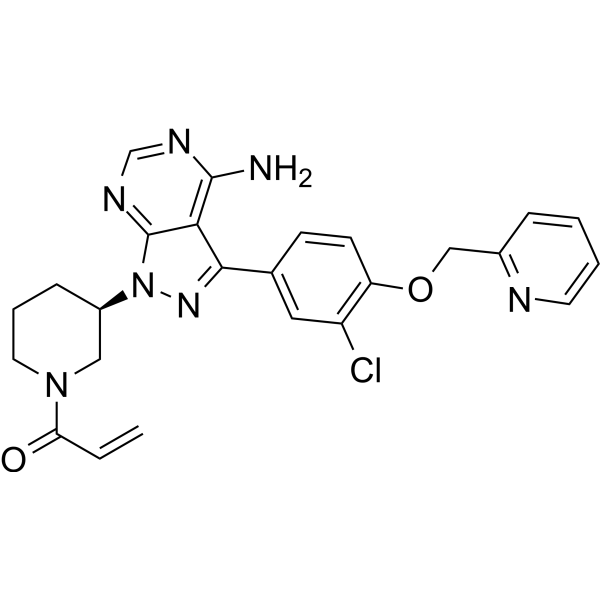
Cat. No.: HY-101522
CAS No.: 2089381-40-6
Purity:  99.75%
Target:  

EGFR BMX Kinase Btk MEK

Research Areas:  

Cancer

CHMFL-EGFR-202 is a potent, irreversible inhibitor of epidermal growth factor receptor (EGFR) mutant kinase, with IC50s of 5.3 nM and 8.3 nM for drug-resistant mutant EGFR T790M and WT EGFR kinases, respectively. CHMFL-EGFR-202 exhibits ~10-fold selectivity for EGFR L858R/T790M against the EGFR wild-type in cells. CHMFL-EGFR-202 adopts a covalent “DFG-in-C-helix-out” inactive binding conformation with EGFR, with strong antiproliferative effects against EGFR mutant-driven nonsmall-cell lung cancer (NSCLC) cell lines .
loading...
    loading...
Cat. No.: HY-103658R
CAS No.: 15809-19-5
Synonyms: Miramistin (Standard)
Myramistin (Miramistin) (Standard) is the analytical standard of Myramistin (HY-103658). This product is intended for research and analytical applications. Myramistin is a cationic surfactant and disinfectant preservative. Myramistin exhibits high bactericidal activity against Staphylococcus aureus and Escherichia coli, shows lower activity against yeasts and fungi, and is active against HIV, measles virus, mumps virus, as well as influenza viruses of the H3N2 and H5N1 subtypes. Myramistin adsorbs to the negatively charged microbial cell membrane, leading to increased membrane permeability and disruption of membrane integrity, which ultimately results in leakage of intracellular contents, enzyme inactivation, and the death of bacteria/fungi/enveloped viruses .
loading...
    loading...
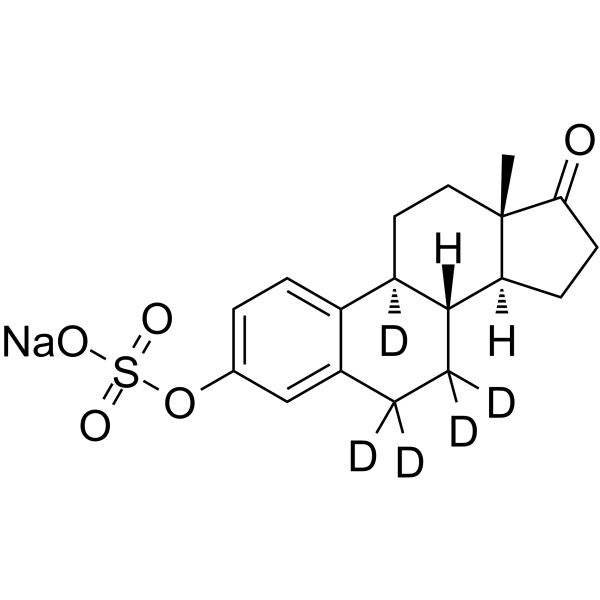
Cat. No.: HY-113293BS
CAS No.: 2734919-86-7
Estrone sulfate-d5 sodium is the deuterium labeled Estrone sulfate sodium (HY-113293B). Estrone sulfate sodium is an inactive endogenous estrogen that can be converted into Estrone (HY-B0234) and Estradiol (HY-B0141). Estrone sulfate sodium is also a substrate of the OATP1B3 transporter. Estrone sulfate sodium can be converted into Estrone and Estradiol in normal mammary parenchymal cells. Estrone sulfate sodium stimulates the growth of nitrosomethylurea-induced mammary tumors in ovariectomized rats and the colony formation of dispersed nitrosomethylurea mammary cells, with conversion into Estrone and Estradiol occurring both in vivo and in vitro during this process. Estrone sulfate sodium is applicable to breast cancer-related research .
loading...
    loading...
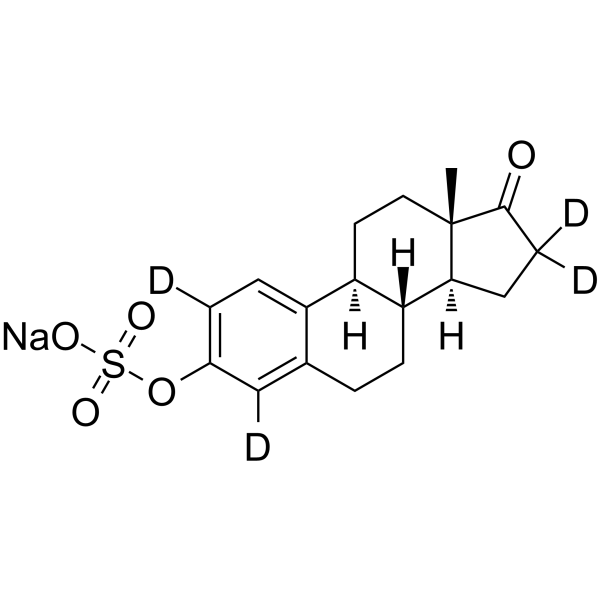
Cat. No.: HY-113293BS1
CAS No.: 285979-80-8
Purity:  99.38%
Estrone sulfate-d4 sodium is the deuterium labeled Estrone sulfate sodium (HY-113293B). Estrone sulfate sodium is an inactive endogenous estrogen that can be converted into Estrone (HY-B0234) and Estradiol (HY-B0141). Estrone sulfate sodium is also a substrate of the OATP1B3 transporter. Estrone sulfate sodium can be converted into Estrone and Estradiol in normal mammary parenchymal cells. Estrone sulfate sodium stimulates the growth of nitrosomethylurea-induced mammary tumors in ovariectomized rats and the colony formation of dispersed nitrosomethylurea mammary cells, with conversion into Estrone and Estradiol occurring both in vivo and in vitro during this process. Estrone sulfate sodium is applicable to breast cancer-related research .
loading...
    loading...
Cat. No.: HY-158107A
CAS No.: 2893809-52-2
Target:  

Drug Isomer Ras

Research Areas:  

Cancer

(4R)-BBO-8520 (Compound 314), an isomer of BBO-8520 (HY-158107), is a selective KRAS G12C inhibitor. BBO-8520 has the characteristics of KRAS G12C (OFF) inhibitor and the function of blocking KRAS G12C (ON) signal. BBO-8520 inhibits cell proliferation by inhibiting KRAS G12C (ON) by binding GTP protein. BBO-8520 can block RAS-RAF1 interaction and return KRAS G12C to the inactive (OFF) state. (4R)-BBO-8520 can be used for the research of cancer .
loading...
    loading...
Cat. No.: HY-181965
CAS No.: 3023465-20-2
Target:  

Ras ERK p38 MAPK

Research Areas:  

Cancer

KRAS G12C-IN-78 is a selective SWII-binding KRASG12C dual inhibitor targeting both inactive and active states. KRAS G12C-IN-78 rapidly inhibits ERK1/2 phosphorylation, induces covalent adduct formation with endogenous KRASG12C, suppresses MAPK pathway gene expression, and inhibits cellular proliferation in KRASG12C mutant cells. KRAS G12C-IN-78 can be used for the research of KRASG12C mutant solid tumors, including pancreatic ductal adenocarcinoma and non-small cell lung cancer .
loading...
    loading...
Cat. No.: HY-B1128B
CAS No.: 58648-57-0
Synonyms: Cephamandole lithium
Target:  

Antibiotic Bacterial

Research Areas:  

Infection

Cefamandole (Cephamandole) lithium is a semi-synthetic second-generation cephalosporin antibiotic with broad-spectrum antimicrobial activity. Cefamandole lithium is resistant to hydrolysis by β-lactamases produced by some Gram-negative bacteria. Cefamandole lithium kills Gram-positive cocci and various Gram-negative bacilli mainly by inhibiting cell wall synthesis, but it is inactive against Pseudomonas, Proteus vulgaris and Providencia stuartii, and its efficacy is affected by inoculum size. The plasma elimination half-life of Cefamandole lithium in rats is only 0.4 h, it is mainly excreted in urine in biologically active form, and it hardly penetrates the non-inflamed blood-brain barrier. Cefamandole lithium is widely used in studies related to bacterial infections .
loading...
    loading...
Cat. No.: HY-B1167A
CAS No.: 4410-48-4
Synonyms: Cardiorythmine hydrochloride; (+)-Ajmaline hydrochloride
Ajmaline hydrochloride is a Class Ia antiarrhythmic agent. It inhibits HERG potassium channels with IC50s of 1.0 μmol/l and 42.3 μmol/l in HEK cells and moth spider oocytes respectively. The inhibitory effect of Ajmaline hydrochloride is rapid, reversible, and positive frequency dependent. It acts primarily on the open state of the HERG channel and may also be combined with the inactivated state. The inhibitory effect of ajmaline hydrochloride is dependent on aromatic residues in the S6 domain, and the sensitivity is significantly reduced in the inactivation-deficient HERG S620T channel. It can also slightly affect the activation voltage of HERG channels. Ajmaline hydrochloride's inhibitory effect on HERG channels may contribute to both its potent antiarrhythmic effects and its potential proarrhythmic risk.
loading...
    loading...
Cat. No.: HY-P0112
CAS No.: 1027141-02-1
Target:  

Deubiquitinase

Research Areas:  

Neurological Disease Cancer

Z-VAE (OMe)-FMK is a selective inhibitor of UCHL1, with better selectivity over UCHL3 and UCHL5. Z-VAE (OMe)-FMK binds to the active site cleft, covalently modifies the active site cysteine C90 to form a thioether bond, binds to inactive UCHL1 with a misaligned catalytic triad, and acts via a two-step addition-folding/migration/displacement mechanism. Z-VAE (OMe)-FMK stabilizes interactions through hydrogen bonding with oxyanion hole residues and van der Waals interactions with surrounding residues. Z-VAE (OMe)-FMK can be used in research related to colorectal cancer, lung cancer, pancreatic cancer, and Alzheimer's disease .
loading...
    loading...
Cat. No.: HY-P2310
CAS No.: 148093-65-6
Defensin HNP-1 human is a type of human neutrophil peptide (HNPs). Defensin HNP-1 human possesses immunomodulatory functions and can delay the apoptosis of neutrophils. Defensin HNP-1 human inhibits DNA/RNA/protein synthesis and interferes with metabolic pathways, thus exhibiting broad antibacterial activity. Defensin HNP-1 human has direct inactivation effects on HIV, HSV-1, HSV-2, CMV, influenza virus, etc. Defensin HNP-1 human has antileishmanial activity. Defensin HNP-1 human is involved in endothelial cell dysfunction during the early development of atherosclerosis .
loading...
    loading...
Cat. No.: HY-W747060
CAS No.: 2724427-09-0
Synonyms: Benzyl Paraben-13C6
Benzyl 4-hydroxybenzoate- 13C6 (Benzyl Paraben- 13C6) is the 13C-labeled Benzyl 4-hydroxybenzoate (HY-W013482). Benzyl 4-hydroxybenzoate is a prominent material. Benzyl 4-hydroxybenzoate can be used as an excipient, such as bacteriostatic agent, preservative. Pharmaceutical excipients, or pharmaceutical auxiliaries, refer to other chemical substances used in the pharmaceutical process other than pharmaceutical ingredients. Pharmaceutical excipients generally refer to inactive ingredients in pharmaceutical preparations, which can improve the stability, solubility and processability of pharmaceutical preparations. Pharmaceutical excipients also affect the absorption, distribution, metabolism, and elimination (ADME) processes of co-administered drugs .
loading...
    loading...
Cat. No.: HY-W929472
CAS No.: 87984-82-5
13 (S)-HOTrE is an oxylipin metabolite of α-Linolenic acid (HY-N0728). 13 (S)-HOTrE mediates the inactivation of the NLRP3 inflammasome through the PPAR-γ pathway to exert anti-inflammatory effects. 13 (S)-HOTrE inhibits NF-κB nuclear translocation, ROS production, autophagy and IL-1β levels, induces apoptosis, and increases IL-10 levels. 13 (S)-HOTrE alleviates LPS-induced inflammatory responses in macrophages, prolongs the survival time of septic mice, and regulates the immunometabolic phenotype in parenteral nutrition mouse models. 13 (S)-HOTrE can be used in the research of immune and inflammation-related diseases .
loading...
    loading...
Cat. No.: HY-P701706
Purity:  ≥ 85%, as determined by reducing SDS-PAGE.
Synonyms: AURKA; Non-Specific Serine/Threonine Protein Kinase; Prev. STK15; Serine/Threonine Protein Kinase 15; Prev. STK6; Serine/Threonine-Protein Kinase 15; BTAK; Ipl1- And Aurora-Related Kinase 1; ARK1; Serine/Threonine Kinase 15; AIK; Serine/Threonine Kinase 6
Species:  
Human
Source:  
Sf9 insect cells
loading...
    loading...
Cat. No.: HY-P701730
Purity:  ≥ 90%, as determined by reducing SDS-PAGE.
Synonyms: MAPK11; Mitogen-Activated Protein Kinase P38-2; Prev. PRKM11; Stress-Activated Protein Kinase 2b; P38-2; Stress-Activated Protein Kinase-2; SAPK2; Mitogen-Activated Protein Kinase; P38Beta; P38BETA2; Mitogen-Activated Protein Kinase P38 Beta; MAPK 11; MAP
Species:  
Human
Source:  
Sf9 insect cells
loading...
    loading...
Cat. No.: HY-P703396
Purity:  ≥ 95%, as determined by reducing SDS-PAGE.
Synonyms: STKLD1; Sugen Kinase 071; Prev. C9orf96; Probable Inactive Protein Kinase-Like Protein SgK071; SGK071; Chromosome 9 Open Reading Frame 96; Serine/Threonine Kinase-Like Domain-Containing Protein STKLD1; Sk521; Serine/Threonine Kinase-Like Domain-Containing
Species:  
Human
Source:  
Sf9 insect cells
loading...
    loading...
Cat. No.: HY-P705859
Purity:  ≥ 90%, as determined by reducing SDS-PAGE.
Synonyms: PLK1; STPK13; Prev. PLK; Cell Cycle Regulated Protein Kinase; Serine/Threonine-Protein Kinase PLK1; Polo-Like Kinase (Drosophila); Polo-Like Kinase 1; Polo (Drosophia)-Like Kinase; Serine/Threonine-Protein Kinase 13; Polo Like Kinase 1; PLK-1
Species:  
Human
Source:  
sf9 insect cells
loading...
    loading...

