889 Results for "

LPS

" in MedChemExpress (MCE) Product Catalog:
Products (889)

889 Results for "LPS" in MCE Product Catalog:

Cat. No.: HY-N0113BR
CAS No.: 6027-23-2
Synonyms: Ordenina hydrochloride (Standard); Peyocactine hydrochloride (Standard)
Hordenine hydrochloride (Standard) (Ordenina hydrochloride (Standard); Peyocactine hydrochloride (Standard)) is the analytical standard of Hordenine hydrochloride (HY-N0113B). This product is intended for research and analytical applications. Hordenine hydrochloride (Ordenina hydrochloride; Peyocactine hydrochloride) is a multifunctional alkaloid with oral activity and blood-brain barrier penetration. Hordenine hydrochloride inhibits LPS-induced phosphorylation of p38, JNK, ERK1/2, p65, IκB, and AKT, prevents p65 nuclear translocation, and suppresses inflammatory cytokines and mediators. Hordenine hydrochloride inhibits melanin synthesis in melanocytes and reconstructed epidermis. Hordenine hydrochloride activates the Wnt/β-catenin signaling pathway. Hordenine hydrochloride activates DRD2, acts as a D3R partial agonist, α2A-AR full agonist, and 5-HT2A-R antagonist, and inhibits SERT and DAT. Hordenine hydrochloride inhibits α-synuclein accumulation and ameliorates motor deficits in Parkinson's disease models. Hordenine hydrochloride limits alcohol intake, reduces relapse drinking behavior. Hordenine hydrochloride can be used for research on mastitis, skin pigmentation, acute lung injury, foodborne diseases, hair loss, Parkinson's disease, bacterial infections, and alcohol use disorder .
loading...
    loading...
Cat. No.: HY-N0113BS
Synonyms: Ordenina-d6 hydrochloride; Peyocactine-d6 hydrochloride
Hordenine-d6 hydrochloride (Ordenina-d6 hydrochloride; Peyocactine-d6 hydrochloride) is the deuterated-labeled Hordenine hydrochloride (HY-N0113B). Hordenine hydrochloride (Ordenina hydrochloride; Peyocactine hydrochloride) is a multifunctional alkaloid with oral activity and blood-brain barrier penetration. Hordenine hydrochloride inhibits LPS-induced phosphorylation of p38, JNK, ERK1/2, p65, IκB, and AKT, prevents p65 nuclear translocation, and suppresses inflammatory cytokines and mediators. Hordenine hydrochloride inhibits melanin synthesis in melanocytes and reconstructed epidermis. Hordenine hydrochloride activates the Wnt/β-catenin signaling pathway. Hordenine hydrochloride activates DRD2, acts as a D3R partial agonist, α2A-AR full agonist, and 5-HT2A-R antagonist, and inhibits SERT and DAT. Hordenine hydrochloride inhibits α-synuclein accumulation and ameliorates motor deficits in Parkinson's disease models. Hordenine hydrochloride limits alcohol intake, reduces relapse drinking behavior. Hordenine hydrochloride can be used for research on mastitis, skin pigmentation, acute lung injury, foodborne diseases, hair loss, Parkinson's disease, bacterial infections, and alcohol use disorder .
loading...
    loading...
Cat. No.: HY-W015490S
CAS No.: 26473-08-5
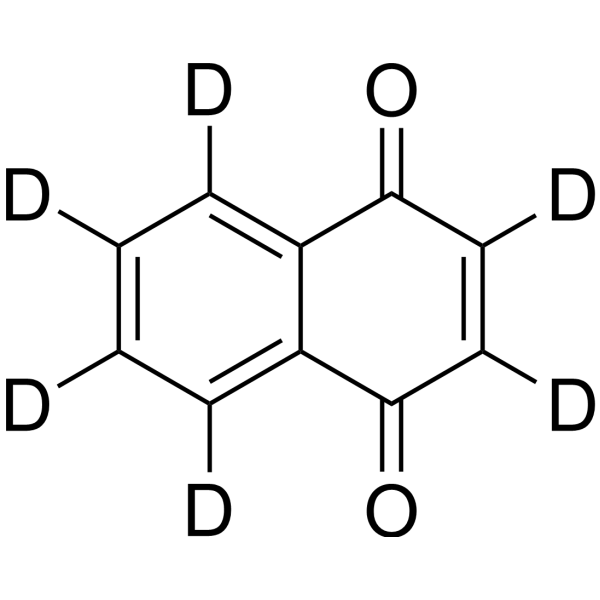
1,4-Naphthoquinone-d6 is the deuterium labeled 1,4-Naphthoquinone. 1,4-Naphthoquinone is an inhibitor with broad-spectrum inhibitory activity targeting DNA polymerase, NF-κB and monoamine oxidase (MAO-A/B), with antibacterial and anti-biofilm efficacy. 1,4-Naphthoquinone is a competitive inhibitor of MAO-B (Ki=1.4 μM) and a non-competitive inhibitor of MAO-A (Ki=7.7 μM). 1,4-Naphthoquinone inhibits DNA polymerase pol α, β, γ, δ, ε, λ with IC50 ranging from 5.57-128 μM. 1,4-Naphthoquinone inhibits tumor cell proliferation, induces apoptosis and necrosis, and has anti-angiogenic and anti-inflammatory activities by inducing oxidative stress, depleting glutathione (GSH), inhibiting DNA polymerase-mediated DNA synthesis and blocking NF-κB nuclear translocation. 1,4-Naphthoquinone can be used in anti-bacterial , anti-tumor and anti-inflammatory studies, including inhibition of melanoma and colon cancer cell growth and endothelial cell function, as well as LPS-induced inflammation models .
loading...
    loading...
Cat. No.: HY-124529
CAS No.: 37116-80-6
Lunularin is an inhibitor of 11β-hydroxysteroid dehydrogenase 1, with an IC50 of 45.44 μM and a Ki of 35.8 μM against human 11β-HSD1, and an IC50 of 17.39 μM and a Ki of 10.31 μM against rat 11β-HSD1. Lunularin upregulates the transcription levels of Sirt1 and Hmox1 genes in the liver. Lunularin reduces food intake and body weight gain, and decreases blood glucose levels in mice fed a high-fat diet. Lunularin inhibits LPS-induced TLR4-mediated NF-κB pathway activation and nitric oxide production. Lunularin inhibits the proliferation and colony formation of renal cancer and colon cancer cells, and exhibits cancer cell-specific cytotoxicity. Lunularin binds to the steroid-binding site of human 11β-HSD1 and the steroid/NADPH-binding region of rat 11β-HSD1, but does not inhibit 11β-HSD2 or mouse 11β-HSD1. Lunularin can be used in research related to diet-induced obesity, renal cancer, colorectal cancer, inflammatory diseases and metabolic syndrome .
loading...
    loading...
Cat. No.: HY-P72674
Purity:  ≥ 95%, as determined by reducing SDS-PAGE.
Synonyms: CXCR4; SDF-1 Receptor; C-X-C Motif Chemokine Receptor 4; CD184 Antigen; LESTR; LAP-3; Fusin; NPYRL; HM89; FB22; C-X-C Chemokine Receptor Type 4; LCR1; D2S201E; Seven-Transmembrane-Segment Receptor, Spleen; NPYY3R; Chemokine (C-X-C Motif), Receptor 4 (Fusin); HSY3RR; Seven Transmembrane Helix Receptor; NPY3R; Neuropeptide Y Receptor Y3; CD184; Neuropeptide Y3 Receptor; NPYR; Chemokine Receptor 4; Leukocyte-Derived Seven Transmembrane Domain Receptor; WHIMS1; Lipopolysaccharide-Associated Protein 3; CXCR-4; Stromal Cell-Derived Factor 1 Receptor; CXC-R4; Chemokine (C-X-C Motif) Receptor 4; WHIMS; LPS-Associated Protein 3; WHIM
Species:  
Human
Source:  
HEK293
loading...
    loading...
Cat. No.: HY-N0493R
CAS No.: 520-12-7
Pectolinarigenin (Standard) is the analytical standard of Pectolinarigenin. This product is intended for research and analytical applications. Pectolinarigenin is an orally active dual inhibitor of COX-2/5-LOX with anti-inflammatory, antioxidant, antitumor and neuroprotective activities. Pectolinarigenin exerts neuroprotective and anti-inflammatory effects on astrocyte inflammation via the NFκB and MAPK pathways. Pectolinarigenin inhibits LPS-induced phosphorylation of ERK1/2, N-FκB and p38MAPK, directly inhibits the enzymatic activity or binding of COX-2, 5-LOX and HIF-1α, and reduces the level of XIAP. Pectolinarigenin modifies Keap1 to promote nuclear accumulation of Nrf2, induces ARE-mediated antioxidant enzyme expression, and possesses direct free radical scavenging activity. Pectolinarigenin reduces the release of NO, proinflammatory mediators and leukotrienes, and increases the level of IL-10. Pectolinarigenin induces G2/M cell cycle arrest, apoptosis (Apoptosis) and autophagy (Autophagy) via the PI3K/AKT/mTOR signaling pathway. Pectolinarigenin reduces renal crystal deposition and inhibits melanin synthesis. Pectolinarigenin inhibits inflammation and alleviates allergy in mouse models of inflammation. Pectolinarigenin alleviates renal injury, inflammation and oxidative stress in mice by inhibiting HIF-1α activity. Pectolinarigenin can be used for the research of neurodegenerative diseases, inflammatory/allergic diseases, calcium oxalate nephrocalcinosis, gastric cancer, melasma, post-inflammatory diseases and chloasma.
loading...
    loading...
Cat. No.: HY-N2259R
CAS No.: 19431-84-6
Synonyms: (+)-Curcumenol (Standard)
Curcumenol (Standard) ((+)-Curcumenol (Standard)) is the analytical standard of Curcumenol (HY-N2259). This product is intended for research and analytical applications. Curcumenol ((+)-Curcumenol) is a natural compound with oral efficacy, exhibiting an IC50 of 12.6 μM and a Ki of 10.8 μM against human CYP3A4. Curcumenol inhibits TNFα-induced phosphorylation/degradation of IκBα, phosphorylation/nuclear translocation of NF-κB p65, as well as the upregulation of MMP3, MMP9, MMP13, TRAF3, IL1RL1, TNFα and IL-1β. Curcumenol suppresses LPS-induced phosphorylation of Akt and p38 MAPK, as well as the production of pro-inflammatory mediators/proteins, and downregulates the SLC7A11/NF-κB/TGF-β pathway. Curcumenol binds to and inhibits the activation of Fyn and Lyn, blocks the function of downstream FcεRI signaling components, and reduces the release of allergic mediators/cytokines. Curcumenol upregulates the expression of KDM6B, and promotes chondrocyte proliferation and cartilage repair. Curcumenol induces ferroptosis and apoptosis, regulates the EMT process, and inhibits tumor growth and metastasis of triple-negative breast cancer. Curcumenol possesses anti-inflammatory, neuroprotective, antioxidant, antitumor, antiviral and hepatoprotective activities. Curcumenol can be used in research related to intervertebral disc degeneration, cancer, inflammation, central nervous system neurodegenerative diseases, allergic reactions and knee osteoarthritis .
loading...
    loading...
Cat. No.: HY-P703083
Purity:  ≥ 85%, as determined by reducing SDS-PAGE.
Synonyms: HSP90AA1; Heat Shock 86 KDa; Prev. HSPC1; FLJ31884; Prev. HSPCA; HSP90A; Prev. HSPCAL4; HSP 86; HSP90N; HSP86; Hsp89; LAP-2; Hsp90; Heat Shock Protein 90kDa Alpha Family Class A Member 1; Heat Shock Protein 90kDa Alpha (Cytosolic), Class A Member 1; Heat Shock 90kD Protein 1, Alpha-Like 4; Epididymis Secretory Sperm Binding Protein Li 65p; Heat Shock 90kD Protein, Alpha-Like 4; Epididymis Luminal Secretory Protein 52; HSP90AA1 Protein; Lipopolysaccharide-Associated Protein 2; HSPCAL1; Heat Shock Protein Family C Member 1; HSP89A; Heat Shock 90kDa Protein 1, Alpha; Hsp103; Renal Carcinoma Antigen NY-REN-38; EL52; Heat Shock 90kD Protein 1, Alpha; HSPN; Heat Shock Protein HSP 90-Alpha; LAP2; LPS-Associated Protein 2; Heat Shock Protein 90 Alpha Family Class A Member 1; HEL-S-65p
Species:  
Human
Source:  
E. coli
loading...
    loading...
Cat. No.: HY-P706229
Purity:  ≥ 90%, as determined by reducing SDS-PAGE.
Synonyms: HSP90AA1; Heat Shock 86 KDa; Prev. HSPC1; FLJ31884; Prev. HSPCA; HSP90A; Prev. HSPCAL4; HSP 86; HSP90N; HSP86; Hsp89; LAP-2; Hsp90; Heat Shock Protein 90kDa Alpha Family Class A Member 1; Heat Shock Protein 90kDa Alpha (Cytosolic), Class A Member 1; Heat Shock 90kD Protein 1, Alpha-Like 4; Epididymis Secretory Sperm Binding Protein Li 65p; Heat Shock 90kD Protein, Alpha-Like 4; Epididymis Luminal Secretory Protein 52; HSP90AA1 Protein; Lipopolysaccharide-Associated Protein 2; HSPCAL1; Heat Shock Protein Family C Member 1; HSP89A; Heat Shock 90kDa Protein 1, Alpha; Hsp103; Renal Carcinoma Antigen NY-REN-38; EL52; Heat Shock 90kD Protein 1, Alpha; HSPN; Heat Shock Protein HSP 90-Alpha; LAP2; LPS-Associated Protein 2; Heat Shock Protein 90 Alpha Family Class A Member 1; HEL-S-65p
Species:  
Human
Source:  
E. coli
loading...
    loading...

