994 Results for "

sequence

" in MedChemExpress (MCE) Product Catalog:
Products (994)

994 Results for "sequence" in MCE Product Catalog:

Cat. No.: HY-W008806
CAS No.: 143537-62-6
Synonyms: OHHL; N-(3-Oxohexanoyl)homoserine lactone
Target:  

Bacterial

Research Areas:  

Infection Inflammation/Immunology

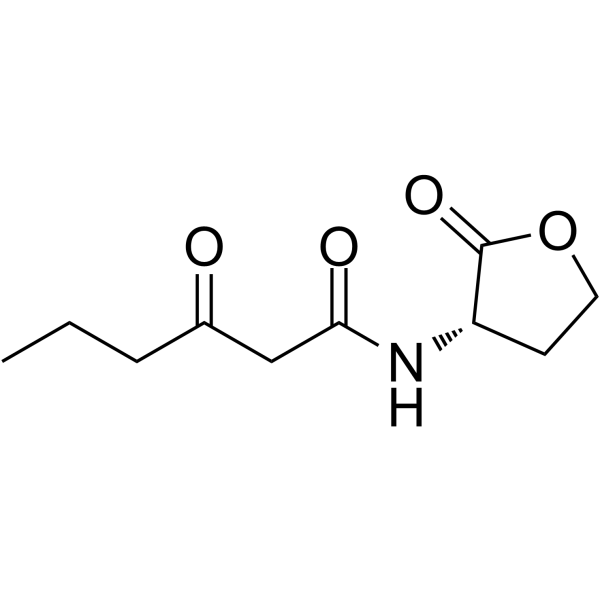
N-(3-Oxohexanoyl)-L-homoserine lactone (OHHL; N-(3-Oxohexanoyl)homoserine lactone) is a specific agonist of LuxR-type transcription factor CarR with a Kd of 1.8 μM. N-(3-Oxohexanoyl)-L-homoserine lactone activates CarR by inducing protein multimerization, promoting its binding to target DNA sequences in the carR-carA intergenic region, thereby upregulating the transcription of carbapenem biosynthesis genes. N-(3-Oxohexanoyl)-L-homoserine lactone acts as a quorum sensing signal molecule, enabling bacteria to coordinate the production of carbapenem antibiotics in a cell density-dependent manner. N-(3-Oxohexanoyl)-L-homoserine lactone is used to study bacterial quorum sensing mechanisms, especially the secondary metabolism and virulence factor regulatory pathways of Erwinia carotovora and Yersinia enterocolitica .
loading...
    loading...
Cat. No.: HY-P71639
Purity:  ≥ 90%, as determined by reducing SDS-PAGE.
Synonyms: C1QTNF3; C1q And Tumor Necrosis Factor Related Protein 3; C1q And TNF Related 3; Secretory Protein CORS26; CTRP3; 2310005P21Rik; Cors-26; Cartonectin; Corcs; CORS26; Cors; Collagenous Repeat-Containing sequence Of 26-KDa; Complement C1q Tumor Necrosis Fac
Species:  
Mouse
Source:  
E. coli
loading...
    loading...
Cat. No.: HY-P87378
Synonyms: 1810017N16Rik antibody; Chromosome 3p21.1 gene sequence antibody; HUMAGCGB antibody; huOTT3 antibody; One twenty two protein 3 antibody; One-twenty two protein 3 antibody; OTT3 antibody; Putative RNA binding protein 15B antibody; Putative RNA-binding protein 15B antibody; RB15B_HUMAN antibody

Host:  

Mouse

Application:  

WB

Reactivity:  

Human, Mouse, Rat

loading...
    loading...
Cat. No.: HY-P811765
Synonyms: FACT80, SSRP1, FACT complex subunit SSRP1, Chromatin-specific transcription elongation factor 80 kDa subunit, Facilitates chromatin transcription complex 80 kDa subunit, Facilitates chromatin transcription complex subunit SSRP1, Recombination signal sequence recognition protein 1, Structure-specific recognition protein 1, T160, FACT 80 kDa subunit, FACTp80, hSSRP1

Host:  

Rabbit

Application:  

WB, IHC-P, ICC/IF, IP, FC

Reactivity:  

Human, Mouse, Rat

loading...
    loading...
Cat. No.: HY-137697
CAS No.: 66004-77-1
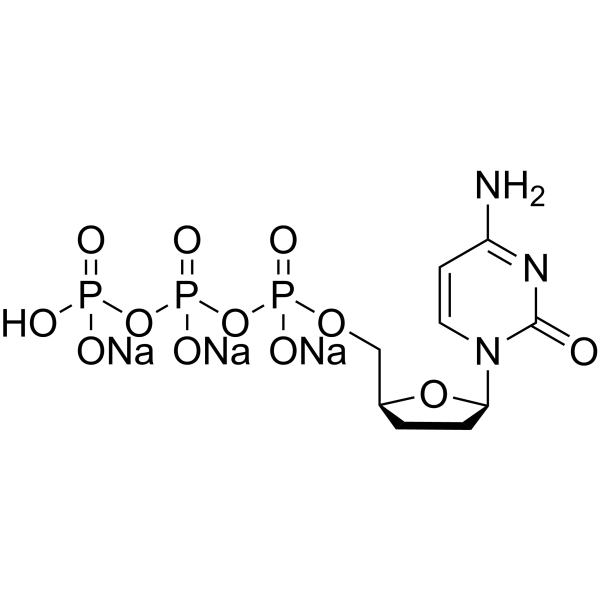
ddCTP is a type of chain-terminating deoxynucleotide. ddCTP can be incorporated into the extension primer chain that lacks the 3'-hydroxyl group, thereby terminating primer extension, viral genome replication, and DNA synthesis. ddCTP can distinguish almost identical RNA through distinguishable extension products in primer extension inhibition experiments. ddCTP is the active metabolite of Zalcitabine (HY-17392), which can competitively inhibit HIV reverse transcriptase, terminate the synthesis of viral DNA chains, and thereby inhibit HIV replication .
loading...
    loading...
Cat. No.: HY-137697B
CAS No.: 93939-77-6
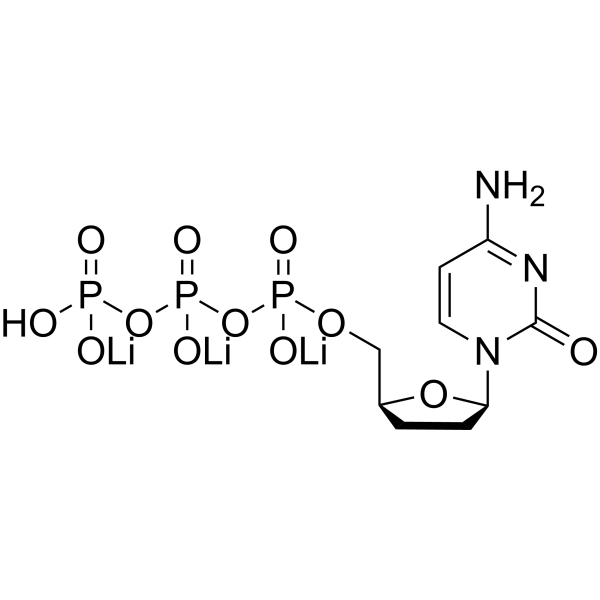
ddCTP trilithium is a type of chain-terminating deoxynucleotide. ddCTP trilithium can be incorporated into the extension primer chain that lacks the 3'-hydroxyl group, thereby terminating primer extension, viral genome replication, and DNA synthesis. ddCTP trilithium can distinguish almost identical RNA through distinguishable extension products in primer extension inhibition experiments. ddCTP trilithium is the active metabolite of Zalcitabine (HY-17392), which can competitively inhibit HIV reverse transcriptase, terminate the synthesis of viral DNA chains, and thereby inhibit HIV replication .
loading...
    loading...
Cat. No.: HY-137697D
Purity:  ≥98.0%
ddCTP trilithium solution (100 mM) is a chain-terminating dideoxynucleotide. ddCTP trilithium is a type of chain-terminating deoxynucleotide. ddCTP trilithium can be incorporated into the extension primer chain that lacks the 3'-hydroxyl group, thereby terminating primer extension, viral genome replication, and DNA synthesis. ddCTP trilithium can distinguish almost identical RNA through distinguishable extension products in primer extension inhibition experiments. ddCTP trilithium is the active metabolite of Zalcitabine (HY-17392), which can competitively inhibit HIV reverse transcriptase, terminate the synthesis of viral DNA chains, and thereby inhibit HIV replication .
loading...
    loading...
Cat. No.: HY-D1725
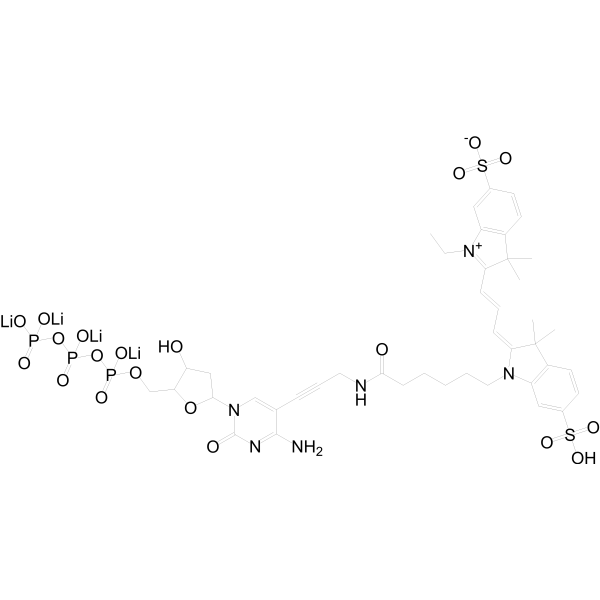
Cy3-dCTP is a directly fluorescently labeled deoxyribonucleotide, in which Cy3 is a cyanine fluorescent dye. Cy3-dCTP is used for direct enzymatic labeling of DNA and cDNA: with the aid of DNA polymerases, this modified nucleotide is incorporated into the extending DNA strand during processes such as reverse transcription, PCR, nick translation or random primer labeling .
loading...
    loading...
Cat. No.: HY-153805
CAS No.: 1373391-77-5
Target:  

Molecular Glues

Research Areas:  

Others

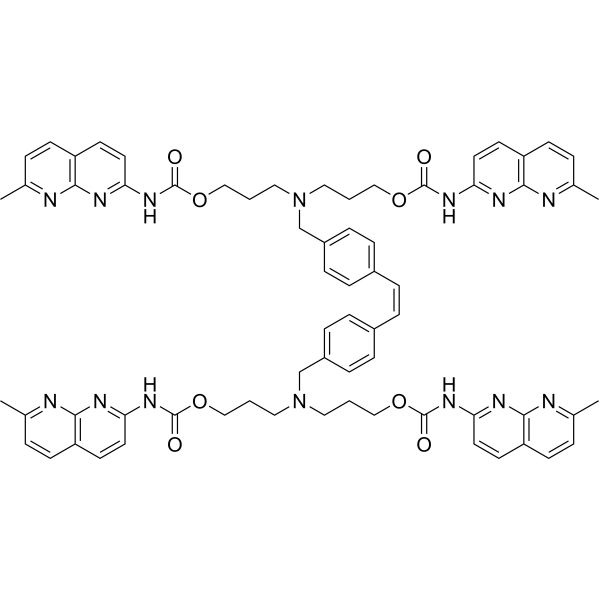
Z-NCTS is a small molecule that binds to mismatched RNA, recognizes the 5'-r (XGG)-3'/5'-r (XGG)-3' sequence, and acts as an RNA molecular glue. Z-NCTS induces the formation of tertiary structures in ribozymes and activates their RNA cleavage activity. As an RNA molecular glue, Z-NCTS enables small molecule-based strategies for regulating RNA structure and function. Z-NCTS binds to d (CGG)/d (CGG) double-stranded DNA, recognizes four guanine bases via hydrogen bonding, and stabilizes the double-stranded DNA. Z-NCTS binds to r (GGG)/r (GGG) double-stranded RNA and enhances the thermodynamic stability of the RNA duplex. Z-NCTS acts as a translation inhibitor by inducing the formation of stable hairpin structures in the 5'-UTR region of engineered mRNA, thereby blocking ribosomal access to the binding site .
loading...
    loading...
Cat. No.: HY-15594
CAS No.: 942936-75-6
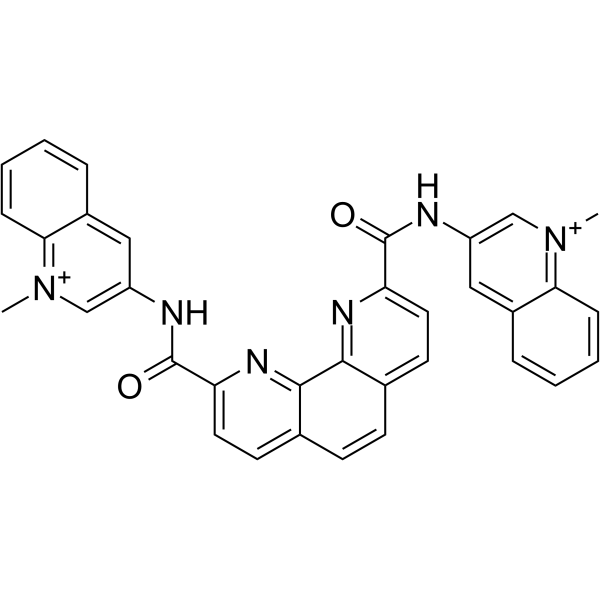
Phen-DC3 is a bisquinolinium G-quadruplex (G4) ligand. Phen-DC3 selectively binds to and stabilizes the hybrid quadruplex-duplex hybrid (QDH) derived from the PIM1 promoter. Phen-DC3 also binds to the c-myc promoter Pu24T G4 via extensive π-stacking, and induces polymerase stalling at α-synuclein DNA and RNA G4 sequences. Phen-DC3 Trifluoromethanesulfonate (HY-15594A) downregulates LPS (HY-D1056)-induced TNFRSF21, RIPK3 and p-MLKL in VECs, and ameliorates CLP-induced pulmonary vascular leakage in septic rats. Phen-DC3 can be used in studies related to neurodegenerative diseases and sepsis-associated vascular injury .
loading...
    loading...
Cat. No.: HY-P5325
CAS No.: 505070-05-3
Target:  

Bcl-2 Family

Research Areas:  

Others

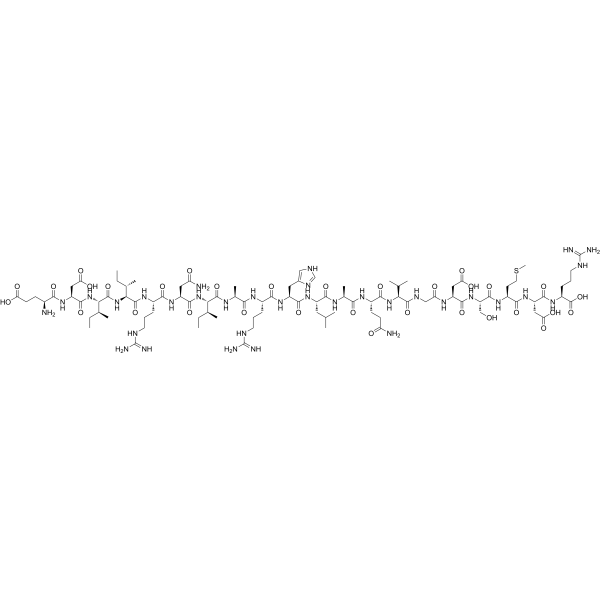
Bid BH3 (80-99) is a biological active peptide. (BID is a pro-apoptotic member of the 'BH3-only' (BOPS) subset of the BCL-2 family of proteins that constitute a critical control point in apoptosis. Bid is the first of the BOPs reported to bind and activate Bcl-2, Bax, and Bak. Bid serves as a death-inducing ligand that moves from the cytosol to the mitochondrial membrane to inactivate Bcl-2 or to activate Bax.Pyroglutamyl (pGlu) peptides may spontaneously form when either Glutamine (Q) or Glutamic acid (E) is located at the sequence N-terminus. The conversion of Q or E to pGlu is a natural occurrence and in general it is believed that the hydrophobic γ-lactam ring of pGlu may play a role in peptide stability against gastrointestinal proteases. Pyroglutamyl peptides are therefore considered a normal subset of such peptides and are included as part of the peptide purity during HPLC analysis.)
loading...
    loading...
Cat. No.: HY-P5325A
Target:  

Bcl-2 Family

Research Areas:  

Others

Bid BH3 (80-99) acetate is a biological active peptide. (BID is a pro-apoptotic member of the 'BH3-only' (BOPS) subset of the BCL-2 family of proteins that constitute a critical control point in apoptosis. Bid is the first of the BOPs reported to bind and activate Bcl-2, Bax, and Bak. Bid serves as a death-inducing ligand that moves from the cytosol to the mitochondrial membrane to inactivate Bcl-2 or to activate Bax.Pyroglutamyl (pGlu) peptides may spontaneously form when either Glutamine (Q) or Glutamic acid (E) is located at the sequence N-terminus. The conversion of Q or E to pGlu is a natural occurrence and in general it is believed that the hydrophobic γ-lactam ring of pGlu may play a role in peptide stability against gastrointestinal proteases. Pyroglutamyl peptides are therefore considered a normal subset of such peptides and are included as part of the peptide purity during HPLC analysis.)
loading...
    loading...
Cat. No.: HY-P991959

Target:  

CTLA-4

Research Areas:  

Inflammation/Immunology Cancer

JMW-3B3 is a humanized IgG1λ monoclonal antibody targeting CTLA-4. JMW-3B3 selectively binds the unique C-terminal sequence of sCTLA-4 to block its immunoregulatory and immunosuppressive activity without cross-reacting with full-length CTLA-4 receptor. JMW-3B3 enhances cytokine profiles in PBMC cultures responding to lupus autoantigen-derived peptides. JMW-3B3 enhances IFN-γ production in anti-CD3 stimulated PBMC from melanoma patients at low anti-CD3 doses. JMW-3B3 can be used for the research of systemic lupus erythematosus and malignant melanoma.
loading...
    loading...
Cat. No.: HY-W004812
CAS No.: 161660-94-2
Synonyms: (1S,3S)-3-[(tert-Butoxycarbonyl)amino]cyclopentanecarboxylic acid
Research Areas:  

Infection

BOC-(1R,3S)-3-aminocyclopentane carboxylic acid ((1S,3S)-3-[(tert-Butoxycarbonyl)amino]cyclopentanecarboxylic acid) is a conformationally constrained peptide building block and a key component of SARS-CoV-2 main protease (Mpro) inhibitors. When incorporated into macrocyclic peptides, BOC-(1R,3S)-3-aminocyclopentane carboxylic acid not only helps generate high-affinity Mpro inhibitors by preorganizing the secondary structure of peptides, but also exerts sequence-dependent functional inhibition on the hydrolytic activity of Mpro. BOC-(1R,3S)-3-aminocyclopentane carboxylic is widely used in COVID-19-related research .
loading...
    loading...
Cat. No.: HY-W040129R
CAS No.: 7059-24-7
Chromomycin A3 (Standard) is the analytical standard of Chromomycin A3 (HY-W040129). This product is intended for research and analytical applications. Chromomycin A3 is an inhibitor that selectively binds to GC-rich DNA sequences. Chromomycin A3 targets the DNA minor groove after forming a dimer with Mg 2+. Chromomycin A3 inhibits DNA replication and transcription, blocks the binding of Sp1 transcription factor to target gene promoters, downregulates the expression of anti-apoptotic proteins such as FLIP, Mcl-1, and XIAP, and induces S-phase cycle arrest and caspase-dependent apoptosis in tumor cells. Chromomycin A3 can antagonize oxidative stress induced by glutathione depletion and neuronal apoptosis induced by Camptothecin (HY-15660). Chromomycin A3 can be used in basic research on malignant tumors such as cholangiocarcinoma, and is a potential chemosensitizer and GC-rich region probe .
loading...
    loading...
Cat. No.: HY-P71648
Purity:  ≥ 90%, as determined by reducing SDS-PAGE.
Synonyms: C1QTNF3; C1q And Tumor Necrosis Factor Related Protein 3; C1q And TNF Related 3; Secretory Protein CORS26; CTRP3; 2310005P21Rik; Cors-26; Cartonectin; Corcs; CORS26; Cors; Collagenous Repeat-Containing sequence Of 26-KDa; Complement C1q Tumor Necrosis Fac
Species:  
Human
Source:  
E. coli
loading...
    loading...
Cat. No.: HY-P72018
Purity:  ≥ 90%, as determined by reducing SDS-PAGE.
Synonyms: KLRK1; CD314; Prev. D12S2489E; Killer Cell Lectin-Like Receptor Subfamily K, Member 1; NKG2D; NKG2-D-Activating NK Receptor; NKG2-D Type II Integral Membrane Protein; DNA Segment On Chromosome 12 (Unique) 2489 Expressed sequence; NK Cell Receptor D; Kille
Species:  
Human
Source:  
HEK293
loading...
    loading...
Cat. No.: HY-P72504
Purity:  ≥ 95%, as determined by reducing SDS-PAGE.
Synonyms: KLRK1; CD314; Prev. D12S2489E; Killer Cell Lectin-Like Receptor Subfamily K, Member 1; NKG2D; NKG2-D-Activating NK Receptor; NKG2-D Type II Integral Membrane Protein; DNA Segment On Chromosome 12 (Unique) 2489 Expressed sequence; NK Cell Receptor D; Kille
Species:  
Cynomolgus
Source:  
HEK293
loading...
    loading...
Cat. No.: HY-P73319
Purity:  ≥ 90%, as determined by reducing SDS-PAGE.
Synonyms: KLRK1; CD314; Prev. D12S2489E; Killer Cell Lectin-Like Receptor Subfamily K, Member 1; NKG2D; NKG2-D-Activating NK Receptor; NKG2-D Type II Integral Membrane Protein; DNA Segment On Chromosome 12 (Unique) 2489 Expressed sequence; NK Cell Receptor D; Kille
Species:  
Human
Source:  
Sf9 insect cells
loading...
    loading...
Cat. No.: HY-P75940
Purity:  ≥ 95%, as determined by reducing SDS-PAGE.
Synonyms: KLRK1; CD314; Prev. D12S2489E; Killer Cell Lectin-Like Receptor Subfamily K, Member 1; NKG2D; NKG2-D-Activating NK Receptor; NKG2-D Type II Integral Membrane Protein; DNA Segment On Chromosome 12 (Unique) 2489 Expressed sequence; NK Cell Receptor D; Kille
Species:  
Rhesus Macaque
Source:  
Sf9 insect cells
loading...
    loading...

