10855 Results for "

membrane integrity,membrane function

" in MedChemExpress (MCE) Product Catalog:
Products (10855)

10855 Results for "membrane integrity,membrane function" in MCE Product Catalog:

Art. -Nr.: HY-W067056
CAS. Nr.: 1754-62-7
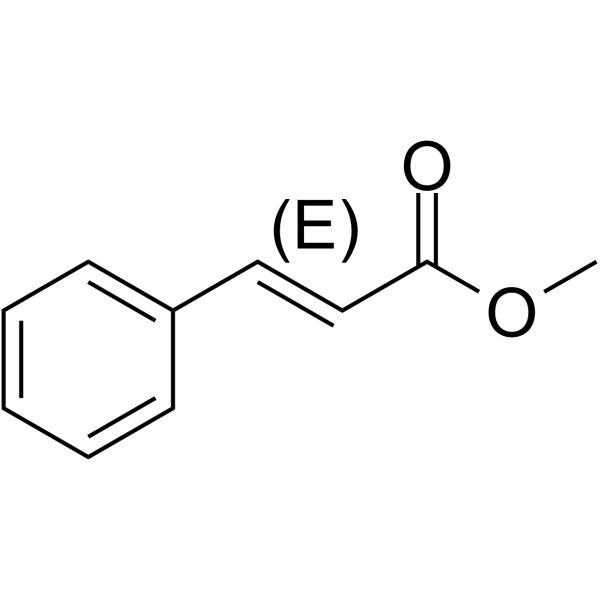
Synonyms: Methyl (E)-3-phenylpropenoate
Methyl (E)-cinnamate (Methyl (E)-3-phenylpropenoate) is a natural flavor compound with anti-inflammatory properties found in Alpinia katsumadai Hayata. Methyl (E)-cinnamate induces apoptosis via reduced anti-apoptotic protein expression, increased TUNEL-positive cells, and apoptotic morphological changes. Methyl (E)-cinnamate can be used for the research of abnormalities of osteoblast function in bone diseases .
loading...
    loading...
Art. -Nr.: HY-W075903
CAS. Nr.: 10534-89-1
Synonyms: Cobalt hexammine trichloride; Hexaamminecobalt trichloride
Hexaamminecobalt (III) chloride is an orally active cobalt coordination compound. Hexaamminecobalt (III) chloride restores the activities of liver antioxidant enzymes (SOD, Catalase) and detoxification enzyme GST. Hexaamminecobalt (III) chloride restores GSH content and reduces DAG. Hexaamminecobalt (III) chloride impairs renal function. Hexaamminecobalt (III) chloride exerts anti-carcinogenic effects in Diethylnitrosamine (HY-N7434)-induced hepatocarcinoma .
loading...
    loading...
Art. -Nr.: HY-W782567
CAS. Nr.: 71491-01-5
5-Amino-6-(5-phospho-D-ribitylamino)uracil is a substance that enhances oxidative phosphorylation or mitochondrial respiration. 5-Amino-6-(5-phospho-D-ribitylamino)uracil can enhance mitochondrial oxidative function. 5-Amino-6-(5-phospho-D-ribitylamino)uracil can be used in the research of cancer .
loading...
    loading...
Art. -Nr.: HY-Y0271R
CAS. Nr.: 57-13-6
Synonyms: Carbonyl diamide (Standard)
Urea (Standard) is the analytical standard of Urea. This product is intended for research and analytical applications. Urea is a powerful protein denaturant via both direct and indirect mechanisms . A potent emollient and keratolytic agent . Used as a diuretic agent. Blood urea nitrogen (BUN) has been utilized to evaluate renal function . Widely used in fertilizers as a source of nitrogen and is an important raw material for the chemical industry.
loading...
    loading...
Art. -Nr.: HY-Y0271S
CAS. Nr.: 2067-80-3
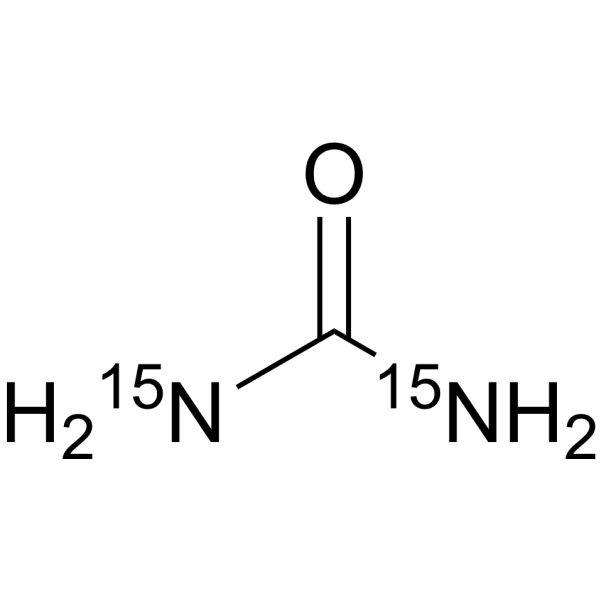
Synonyms: Carbonyl diamide-15N2
Urea- 15N2 is the 15N-labeled Urea. Urea is a powerful protein denaturant via both direct and indirect mechanisms . A potent emollient and keratolytic agent . Used as a diuretic agent. Blood urea nitrogen (BUN) has been utilized to evaluate renal function . Widely used in fertilizers as a source of nitrogen and is an important raw material for the chemical industry.
loading...
    loading...
Art. -Nr.: HY-Y0493
CAS. Nr.: 28230-32-2
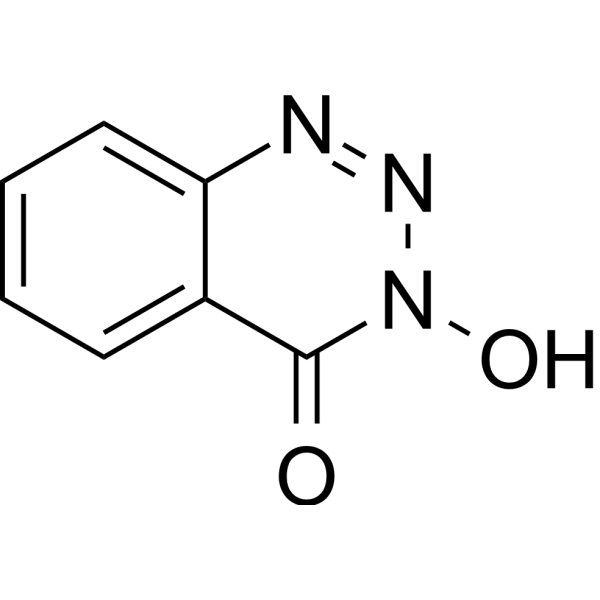
Synonyms: HOOBt
Target:  

STAT HIV

Forschungsgebiete:  

Infection Cancer

HODHBt (HOOBt) inhibits STAT5-SUMO interaction by blocking SUMOylation of phosphorylated STAT5. HODHBt enhances the magnitude of IL-15 signaling and significantly increases the natural killer (NK) cell cytotoxicity phenotype and function and the generation of cytokine-induced memory-like (CIML) natural killer (NK) cells. HODHBt can be used for research of HIV-infection and cancer .
loading...
    loading...
Art. -Nr.: HY-Y0519R
CAS. Nr.: 289-95-2
Pyrimidine (Standard) is the analytical standard of Pyrimidine (HY-Y0519). This product is intended for research and analytical applications. Pyrimidine is a nitrogen-containing heterocyclic compound that serves as a scaffold for numerous natural and synthetic derivatives. As a pharmacophore, pyrimidine interacts with the synthesis and function of nucleic acids. Pyrimidine derivatives are used in research related to pancreatic cancer, triple-negative breast cancer, colon cancer, and leukemia .
loading...
    loading...
Art. -Nr.: HY-K6304

MCE Human iPSC/ESC Hepatocyte Induction Differentiation Kit enables the efficient generation of hepatocyte-like cells with a high degree of maturation within 21 d. The resulting cells stably express multiple key hepatic functional markers, including albumin (ALB), cytochrome P450 (CYP) family enzymes, and other liver-specific functional molecules, and exhibit typical hepatocellular phenotypes and functions.

loading...
    loading...
Art. -Nr.: HY-145425
CAS. Nr.: 2771006-54-1
Target:  

IRE1 Apoptosis FGFR

Forschungsgebiete:  

Inflammation/Immunology

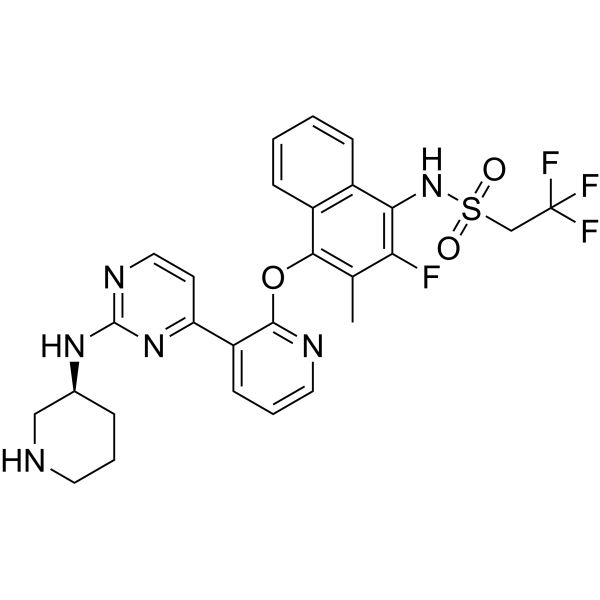
PAIR2 is a highly selective inhibitor targeting the kinase domain of human IRE1α, with a Ki value of 8.8 nM against human IRE1α. PAIR2 fully occupies the ATP-binding site of the IRE1α kinase domain, partially antagonizes the ribonuclease activity of IRE1α, specifically inhibits regulated IRE1α-dependent decay (RIDD) and its mediated substrate cleavage, while preserving the splicing function of Xbp1 mRNA. PAIR2 also promotes the differentiation of B cells into plasma cells, blocks IRE1α-induced cell apoptosis, and restores the expression of Fgfr2 mRNA in AT2 cells. PAIR2 effectively reaches a steady-state concentration in the lung tissues of Mus musculus, and serves as an important tool for investigating the function of the IRE1α signaling pathway in diseases such as pulmonary fibrosis .
loading...
    loading...
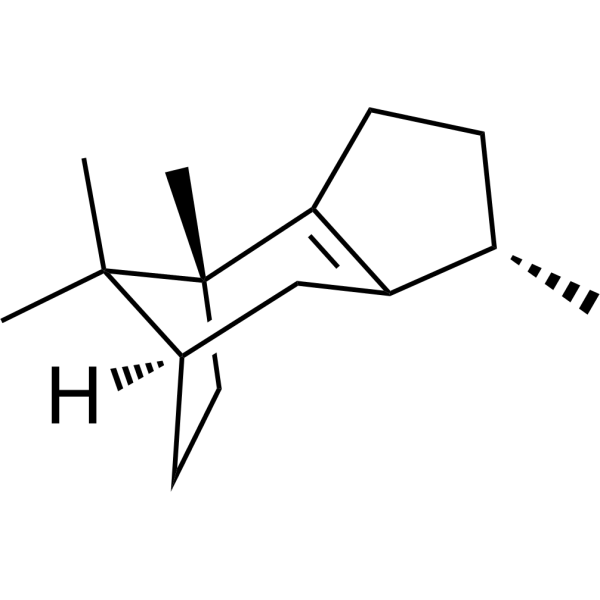
Art. -Nr.: HY-N12378
CAS. Nr.: 514-51-2
β-Patchoulene is an orally active anti-inflammatory, antioxidant, and anti-apoptotic agent. β-Patchoulene inhibits the NF-κB, TLR4, and cAMP/PKA/CREB signaling pathways; activates the Sirt1/Nrf2 and AMPK signaling pathways; and targets Fas/FasL, Caspase-3, ERK1/2, ROCK1/MLC2 for inhibition. β-Patchoulene regulates cytokine secretion, inflammatory cell infiltration, lipid peroxidation, cell polarization, gut microbiota, and lipid metabolism, restores barrier function, mitochondrial function, and cell viability, and exhibits repellent activity against Spodoptera exigua larvae. β-Patchoulene can be used in research related to various inflammatory, ischemic, fibrosis-associated diseases, as well as hepatocellular carcinoma .
loading...
    loading...
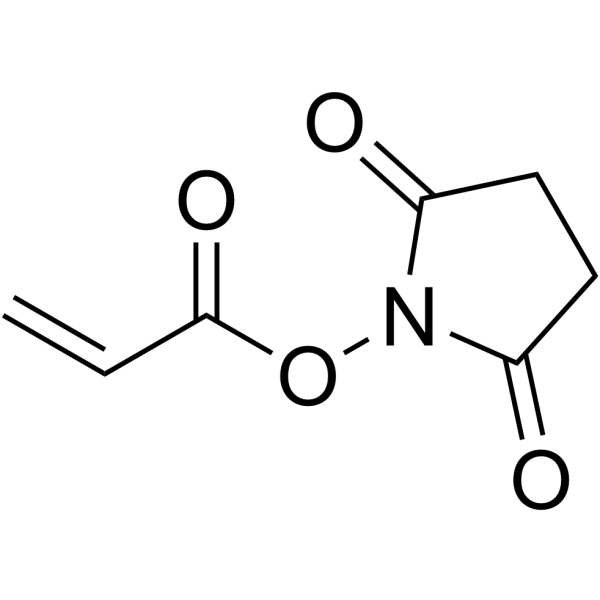
Art. -Nr.: HY-W043748
CAS. Nr.: 38862-24-7
Synonyms: N-Succinimidyl acrylate
Forschungsgebiete:  

Others

2,5-Dioxopyrrolidin-1-yl acrylate (N-Succinimidyl acrylate) is a lysine residue modifier and coupling monomer. 2,5-Dioxopyrrolidin-1-yl acrylate covalently modifies the primary amines of lysine residues on monoclonal anti-horseradish peroxidase IgG antibodies, neutralizes positive charges and replaces them with low-affinity acrylate groups. 2,5-Dioxopyrrolidin-1-yl acrylate inhibits the formation of rapid hard coronas on citrate-coated gold nanoparticles, induces antibody unfolding and loss of antigen-binding function, but does not affect the antigen-binding function of antibodies in free solution. 2,5-Dioxopyrrolidin-1-yl acrylate reacts with the ε-amino groups on lysine residues of L-asparaginase, introduces vinyl groups and generates N-hydroxysuccinimide. 2,5-Dioxopyrrolidin-1-yl acrylate regulates the activity of L-asparaginase .
loading...
    loading...
Art. -Nr.: HY-L227
195 compounds

Amino acids are the fundamental components that sustain life activities, playing roles in ATP generation, promoting nucleotide synthesis, and maintaining cellular redox balance. Moreover, dysregulation of amino acid consumption is a significant potential regulatory mechanism leading to impaired anti-tumor immunity in immune cells. The normal functioning of immune cells relies on amino acid metabolic pathways to obtain energy and materials, and upon activation, they reprogram their metabolism to support growth, proliferation, and effector functions. Additionally, metabolic disorders of specific amino acids (such as branched-chain amino acids, glutamine, and arginine) can exacerbate mitochondrial dysfunction and oxidative stress, thereby promoting myocardial fibrosis and cardiac cell damage. Therefore, conducting research related to amino acid metabolism holds promise for discovering potential drugs for diseases related to cancer, immunity, and metabolism.

MCE can provide 195 kinds of metabolites of amino acid metabolic pathways, which can be used for drug screening in various diseases such as cancer, immune disorders, metabolic diseases, mitochondrial-targeted diseases

Art. -Nr.: HY-L047
908 compounds

The endocrine system is a chemical messenger system comprising feedback loops of the hormones released by internal glands of an organism directly into the circulatory system, regulating distant target organs. Hormones are chemicals that serve to communicate between organs and tissues for physiological regulation and behavioral activities. Hormones affect distant cells by binding to specific receptor proteins in the target cell, resulting in a change in cell function.

The endocrine system is concerned with the integration of developmental events proliferation, growth, and differentiation, and the psychological or behavioral activities of metabolism, growth and development, tissue function, sleep, digestion, respiration, excretion, mood, stress, lactation, movement, reproduction, and sensory perception caused by hormones. Irregulated hormone release, inappropriate response to signaling or lack of a gland can lead to endocrine disease.

MCE offers a unique collection of 908 endocrinology related compounds targeting varieties of hormone receptors such as thyroid hormone receptor, TSH receptor, GNRH receptor, adrenergic receptor, etc. MCE Endocrinology Compound Library is a useful tool for the discovery of endocrinology drugs.

Art. -Nr.: HY-L055
1,824 compounds

Medicine Food Homology (MFH) means that some food themselves are medicines and there is no absolute boundary between them. MFH theory combines the function of food and medicine together scientifically and MFH materials can be used both for food and medicine. Besides nutritional value, MFH materials also have the functions in the prevention and treatment of disease and many other healthcare effects. Food as medicines has many benefits because of their safety while taking drugs will bring inevitable side effect to people. In order to ensure the safe use of functional food, National Health Commission of People's Republic of China made specific provisions on MFH items. More than 100 kinds of widely used MFH materials have been released.

Based on MFH items released by National Health Commission, PRC, MCE carefully designs a unique collection of 1,824 Medicine Food Homology Compounds with high safety that can be used for high throughput and high content screening for drug discovery.

Art. -Nr.: HY-L054
379 compounds

Endoplasmic reticulum (ER) contributes to the production and folding of approximately one third of cellular proteins, and is thus inextricably linked to the maintenance of cellular homeostasis and the fine balance between health and disease. However, some adverse factors negatively impact ER functions and protein synthesis, resulting in the activation of Endoplasmic reticulum stress (ER stress, ERS) and unfolded protein response (UPR) signaling pathways. The UPR is triggered when ER protein folding capacity is overwhelmed by cellular demand and the UPR initially aims to restore ER homeostasis and normal cellular functions. However, if this fails, then the UPR triggers cell death. Chronic ER stress and defects in UPR signaling are emerging as key contributors to a growing list of human diseases, including diabetes, neurodegeneration and cancer.

MCE Endoplasmic Reticulum Stress Compound Library contains 379 ER stress-related compounds that mainly target PERK, IRE1, ATF6, etc. MCE ER stress library is a useful tool for researching ER stress and related diseases.

Art. -Nr.: HY-117991
CAS. Nr.: 1804982-31-7
Target:  

VEGFR

Forschungsgebiete:  

Cancer

DW10075 is a highly selective and orally active VEGFR inhibitor targeting the VEGF/VEGFR pathway. DW10075 selectively inhibits VEGFR-1, VEGFR-2, and VEGFR-3, but has no effect on FGFR and PDGFR. DW10075 inhibits VEGF-induced HUVEC proliferation, migration, and tube formation. And DW10075 inhibits angiogenesis in both the rat aortic ring model and the chick chorionic membrane model. DW10075 also exhibits antiproliferative activity against human cancer cell lines, with IC50s of 2.2 μM and 22.2 μM against U87-MG human glioblastoma cells and A375 melanoma cells, respectively. In the nude mouse U87-MG xenograft tumor model, DW10075 (po) significantly inhibits tumor growth and reduces the expression of CD31 and Ki67 in tumor tissues.
loading...
    loading...
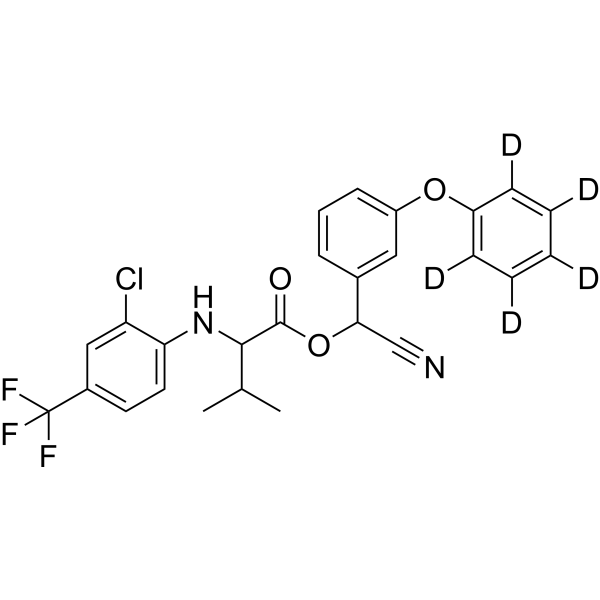
Art. -Nr.: HY-123320S
Fluvalinate-d5 is the deuterated-labeled Fluvalinate (HY-123320). Fluvalinate is an orally active acaricide classified as a sodium channel inhibitor. Fluvalinate delays sodium channel closure, prolongs cell membrane depolarization, inhibits the excitability of honeybee brain neurons, and exerts a central nervous system inhibitory effect. Fluvalinate negatively affects the learning ability, memory ability, sucrose responsiveness, and survival of honeybees. Fluvalinate potentiates pentobarbital-induced hypnosis, reduces spontaneous activity in mice, and decreases the total white blood cell count and absolute lymphocyte count in mice. Fluvalinate induces acute toxic symptoms in rats, acts as a cholinergic stimulant, and induces the production of hepatic enzymes in rats. Fluvalinate causes the death of Varroa jacobsoni sensitive to τ-Fluvalinate (HY-B2021). Fluvalinate can be used in studies related to mite pest control .
loading...
    loading...
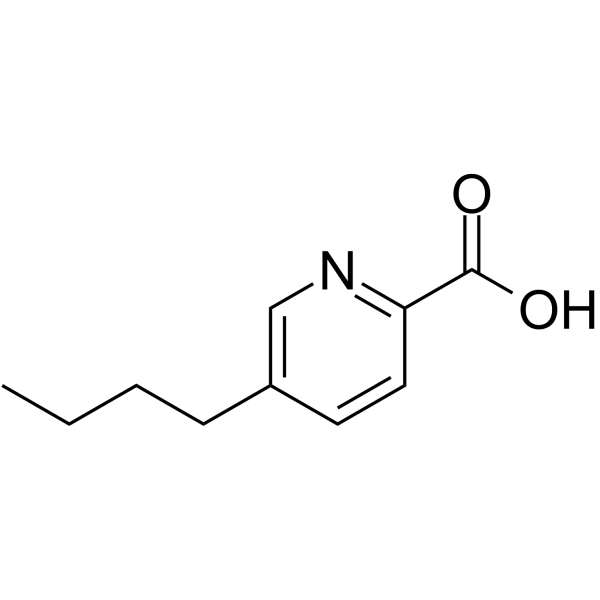
Art. -Nr.: HY-128483
CAS. Nr.: 536-69-6
Reinheit:  99.94%
Fusaric acid is an orally active multi-pathway inhibitor with the activity of inducing oxidative stress and apoptosis. Fusaric acid can chelate divalent metal cations, damage mitochondrial membrane structure, and activate apoptosis-related proteases such as Caspase-3/7, -8, and -9. Fusaric acid also regulates Bax/Bcl-2 protein, inhibits fibrosis-related signaling pathways such as NF-κB, TGF-β1/SMADs, and PI3K/AKT/mTOR, and reduces collagen deposition. Fusaric acid is also a dopamine β-hydroxylase inhibitor, which reduces endogenous levels of norepinephrine and epinephrine in the brain, heart, spleen, and adrenal glands. Fusaric acid can play a role in myocardial fibrosis and improve cardiac hypertrophy in heart disease, and can also be used in the study of esophageal cancer and liver cancer .
loading...
    loading...
Art. -Nr.: HY-145507S
Synonyms: 1-Palmitoyl-2-hydroxy-sn-glycero-3-PG-d31 ammonium; 16:0 Lyso PG-d31 ammonium; PG(16:0/0:0)-d31 ammonium; 1-Hexadecanoyl-sn-glycero-3-phospho-(1'racglycerol)-d31 ammonium
1-Palmitoyl-2-hydroxy-sn-glycero-3-phospho-(1'-rac-glycerol)-d31 ammonium (1-Palmitoyl-2-hydroxy-sn-glycero-3-PG-d31 ammonium) is the deuterium labeled 1-Palmitoyl-2-hydroxy-sn-glycero-3-phospho-(1'-rac-glycerol) ammonium (HY-145507). 1-Palmitoyl-2-hydroxy-sn-glycero-3-phospho-(1'-rac-glycerol) (16:0 Lyso PE) sodium is a lysophospholipid containing palmitic acid (16:0) at the sn-1 position. It can be used in the generation of micelles, liposomes, and other types of artificial membranes, including lipid-based drug carrier systems.
loading...
    loading...
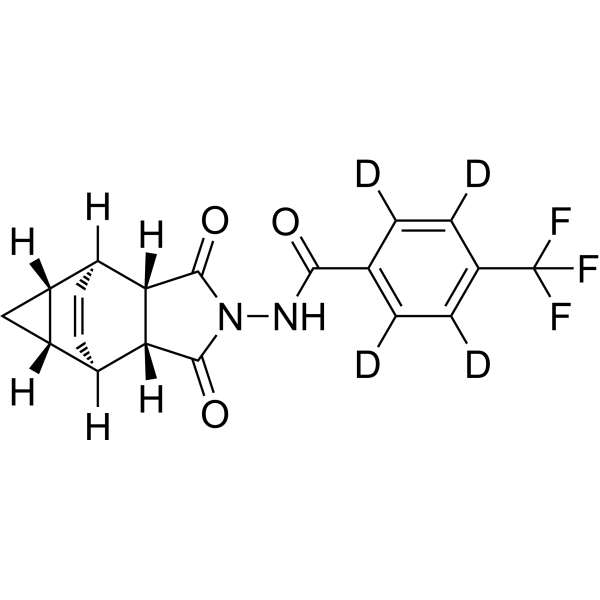
Art. -Nr.: HY-14805S
CAS. Nr.: 2923753-84-6
Reinheit:  99.14%
Synonyms: ST-246-d4
Tecovirimat-d4 (ST-246-d4) is a deuterium-labelled Tecovirimat (HY-14805). Tecovirimat is an orally bioavailable and selective compound against orthopoxviruses [including vaccinia, monkeypox, camelpox, cowpox, ectromelia (mousepox), smallpox and variola viruses]. Tecovirimat is evaluated against vaccinia, cowpox virus, ectromelia virus with EC50 values of 0.01 μM, 0.48 μM and 0.05 μM, respectively. Tecovirimat targets the orthopoxvirus protein VP37 which is necessary for membrane envelopment of intracellular mature virus particles to form enveloped virus. Tecovirimat exerts antiviral activity on the target of the cowpox virus V061 gene, which is homologous to vaccinia virus F13L, encoding a major envelope protein (p37) required for production of extracellular virus. Tecovirimat could be used in the study for orthopoxvirus-induced diseases .
loading...
    loading...

