
138 Results for "

hypersensitivity

" in MedChemExpress (MCE) Product Catalog:
Products (138)

138 Results for "hypersensitivity" in MCE Product Catalog:

Cat. No.: HY-103368R
CAS No.: 461000-66-8
Eact (Standard) is the analytical standard of Eact (HY-103368). This product is intended for research and analytical applications. Eact is a selective and potent activator of TMEM16A, directly activates the TRPV1 channels in sensory nociceptors and produces itch, acute nociception and thermal hypersensitivity .
loading...
    loading...
Cat. No.: HY-N18367
CAS No.: 29946-61-0
Synonyms: Wgx-50
Lemairamin (Wgx-50) is a hydroxylamine compound. Lemairamin can be isolated from the pericarps of the Zanthoxylum plants. Lemairamin activates α7nAChR, stimulates the expression of IL-10 and POMC. Lemairamin shows a decrease in Akt. Lemairamin attenuates DSS-induced intestinal inflammation. Lemairamin alleviates pain hypersensitivity .
loading...
    loading...
Cat. No.: HY-106856R
CAS No.: 126100-97-8
Synonyms: NT-11624 (Standard)
Research Areas:  

Cancer

Dimiracetam (Standard) (NT-11624 (Standard)) is the analytical standard of Dimiracetam (HY-106856). This product is intended for research and analytical applications. Dimiracetam is an orally active compound, with anti-neuropathic activity. Dimiracetam inhibits hypersensitivity and neurological alterations, and inhibits Sorafenib (HY-10201)-induced neuropathy in cold stimulation rat models .
loading...
    loading...
Cat. No.: HY-101440
CAS No.: 202844-10-8
Synonyms: CHF-3381 free base
Target:  

iGluR Monoamine Oxidase

Research Areas:  

Neurological Disease

Indantadol (the free base of CHF-3381) is an orally active, non-selective NMDA antagonist and MAO inhibitor. Indantadol blocks the binding of [³H]-MK-801 to NMDA receptors in a non-competitive manner, with an IC50 of 8.1 μM. Indantadol completely inhibits dopamine release caused by NMDA. Indantadol protects neurons, with an ED₅₀ of 35 μM. Indantadol has anticonvulsant and anti-high pain hypersensitivity activities .
loading...
    loading...
Cat. No.: HY-182777
CAS No.: 3118852-74-4
HDAC6-IN-80 is an orally active, selective HDAC6 inhibitor with an IC50 of 8.5 nM. HDAC6-IN-80 inhibits lipopolysaccharide-induced microglial activation, reduces the levels of iNOS, COX-2, TNF-α and IL-6, and alleviates sensory hypersensitivity behaviors. HDAC6-IN-80 can be used for the research of inflammatory pain and chemotherapy-induced peripheral neuropathy .
loading...
    loading...
Cat. No.: HY-100375R
CAS No.: 1577222-14-0
Synonyms: ALKS 8700 (Standard); BIIB098 (Standard)
Research Areas:  

Inflammation/Immunology

Diroximel fumarate (Standard) is the analytical standard of Diroximel fumarate (HY-100375). This product is intended for research and analytical applications. Diroximel fumarate (ALKS 8700) is an orally-active and well-tolerated monomethyl fumarate (MMF) proagent in a controlled-release formulation. Diroximel fumarate is considered as active equivalent to its active metabolite dimethyl fumarate (DMF). Diroximel fumarate has a favorable safety and efficacy profile, has the potential for the study of multiple sclerosis (MS). Diroximel fumarate is a Nrf2 activator that alleviate MGO-induced pain hypersensitivity .
loading...
    loading...
Cat. No.: HY-178926
CAS No.: 3034560-21-6
RAGE406R is an orally active RAGE-DIAPH1 interaction antagonist. RAGE406R can bind to ctRAGE and prevent the formation of the RAGE-DIAPH1 complex and inhibit its interaction. RAGE406R can reduce the expression of CCL2, TNF, and IL-6 in THP1 cells. RAGE406R suppresses delayed-type hypersensitivity in T2D mice. RAGE406R can be used for the study of diabetes .
loading...
    loading...
Cat. No.: HY-136026
CAS No.: 1621164-74-6
Purity:  99.94%
Synonyms: BLU-5937
Target:  

P2X Receptor

Research Areas:  

Inflammation/Immunology

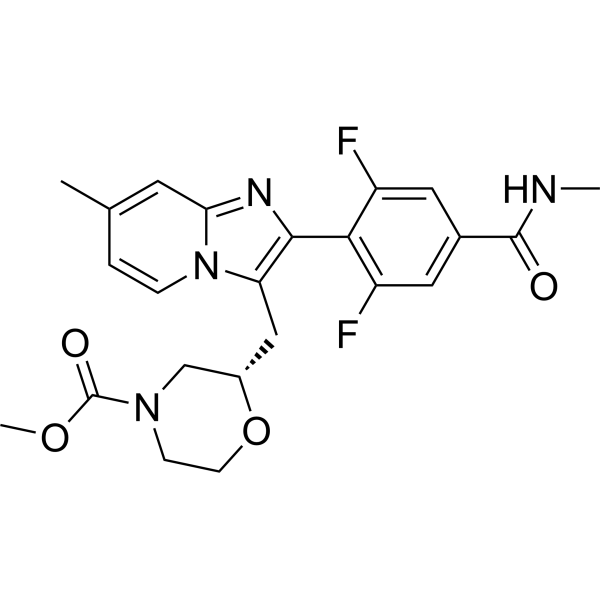
Camlipixant (BLU-5937) a potent, selective, non-competitive and orally active P2X3 homotrimeric receptor antagonist with an IC50 of 25 nM against hP2X3 homotrimeric. Camlipixant shows potent anti-tussive effect and no taste alteration. Camlipixant can be used for the research of unexplained, refractory chronic cough .
loading...
    loading...
Cat. No.: HY-P1726
CAS No.: 1416983-77-1
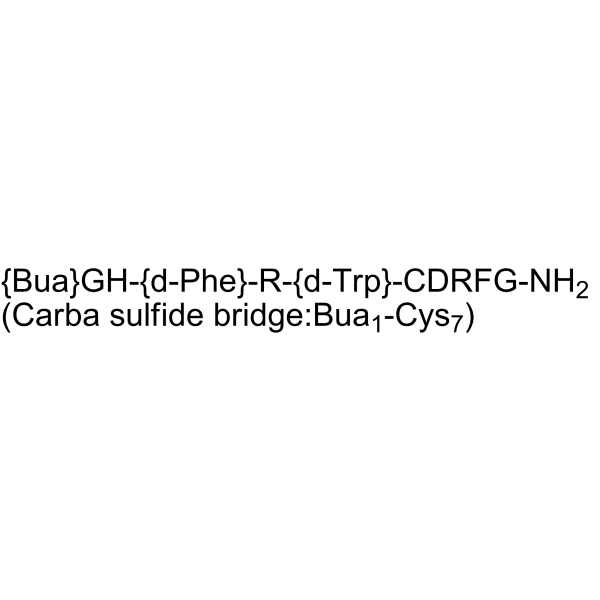
MSG606 is a selective melanocortin 1 receptor (MC1R) antagonist. MSG606 can abolish the neuroprotective effects of BMS-470539 (HY-15616) (MC1R agonist). MSG606 can inhibit cancer cell proliferation and transition from the G1 to the S phase. MSG606 can delay pain hypersensitivity and reduce cholesterol levels. MSG606 can be used for the researches of cancer, inflammation, neurological and metabolic disease, such as breast cancer and subarachnoid hemorrhage (SAH) .
loading...
    loading...
Cat. No.: HY-109065
CAS No.: 1184662-54-1
Synonyms: DSP-6952 free base
Target:  

5-HT Receptor

Research Areas:  

Endocrinology

Minesapride (DSP-6952 free base) is an orally active, selective 5-HT4 receptor partial agonist. Minesapride enhances gastrointestinal motility, colonic transit and defecation function, and inhibits visceral hypersensitivity. Minesapride does not inhibit/induce cytochrome P450 isozymes, has no significant affinity for hERG, and does not trigger the risk of cardiac ischemia via coronary vasoconstriction. Minesapride can be used in research related to constipation-predominant irritable bowel syndrome, chronic constipation, atonic constipation, spastic constipation, functional constipation and functional dyspepsia .
loading...
    loading...
Cat. No.: HY-109065A
CAS No.: 1184661-33-3
Synonyms: DSP-6952 hydrobromide
Target:  

5-HT Receptor

Research Areas:  

Endocrinology

Minesapride hydrobromide (DSP-6952 hydrobromide) is an orally active, selective 5-HT4 receptor partial agonist. Minesapride hydrobromide enhances gastrointestinal motility, colonic transit and defecation function, and inhibits visceral hypersensitivity. Minesapride hydrobromide does not inhibit/induce cytochrome P450 isozymes, has no significant affinity for hERG, and does not trigger the risk of cardiac ischemia via coronary vasoconstriction. Minesapride hydrobromide can be used in research related to constipation-predominant irritable bowel syndrome, chronic constipation, atonic constipation, spastic constipation, functional constipation and functional dyspepsia .
loading...
    loading...
Cat. No.: HY-184081
CAS No.: 5118-17-2
Target:  

Bacterial

Research Areas:  

Infection

Furazolium hydrochloride is a broad-spectrum antibacterial agent with inhibitory activity against a variety of Gram-positive and Gram-negative Bacterial strains. In a gelatin-acacia complex coacervate system, Furazolium hydrochloride exhibits protein-binding properties, where protein binding dominates at low concentrations, while micellization occurs at high concentrations. Furazolium hydrochloride does not alter the water permeability of cellulose membranes, and it can induce delayed-type hypersensitivity reactions in guinea pigs, with cross-reactivity observed in animals sensitized with aflatoxin B1. Furazolium hydrochloride can be used in studies related to bacterial infections and local wound infections .
loading...
    loading...
Cat. No.: HY-P1726A
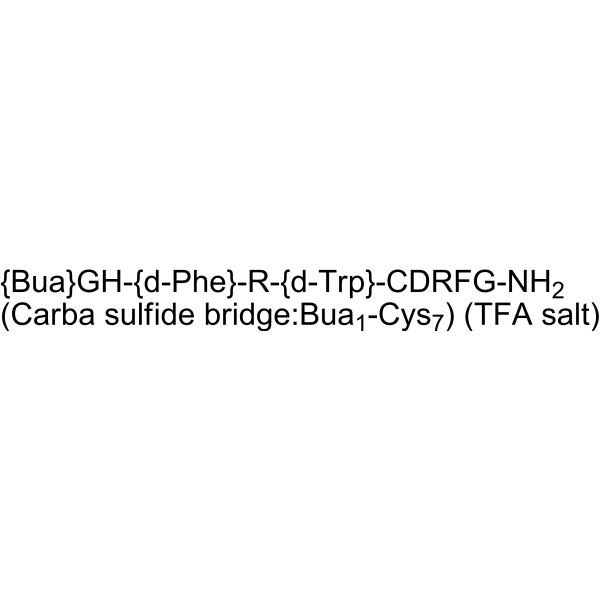
MSG606 TFA is a selective melanocortin 1 receptor (MC1R) antagonist. MSG606 TFA can abolish the neuroprotective effects of BMS-470539 (HY-15616) (MC1R agonist). MSG606 TFA can inhibit cancer cell proliferation and transition from the G1 to the S phase. MSG606 TFA can delay pain hypersensitivity and reduce cholesterol levels. MSG606 TFA can be used for the researches of cancer, inflammation, neurological and metabolic disease, such as breast cancer and subarachnoid hemorrhage (SAH) .
loading...
    loading...
Cat. No.: HY-107928A
CAS No.: 9004-66-4
Iron-Dextran is an injectable complex of iron and dextran, a complex carbohydrate. It is often used to improve iron deficiency anemia, a condition characterized by low levels of iron in the blood due to insufficient dietary intake or malabsorption. Iron-glucan works by providing a source of supplemental iron that the body can use to produce hemoglobin, the protein responsible for carrying oxygen in the blood. However, caution should be exercised when taking iron dextran because it may cause hypersensitivity reactions, including anaphylaxis, and may also increase the risk of infection or other adverse reactions. Therefore, it should only be administered under the supervision of a qualified healthcare provider in a clinical setting.
loading...
    loading...
Cat. No.: HY-118935
CAS No.: 666256-06-0
Target:  

Adrenergic Receptor

Research Areas:  

Inflammation/Immunology

NGD9002 free base is a new generation of selective corticotropin-releasing factor-1 (CRF-1) receptor antagonist with inhibitory activity on CRF-induced colonic function stimulation. NGD9002 free base can reduce CRF-induced fecal output response and show an inhibitory IC50 value of 4.3 mg/kg. NGD9002 free base can effectively block CRF-induced colonic secretory motility stimulation at the highest dose and reduce acute water avoidance-induced defecation. NGD9002 free base can also prevent the occurrence of pain hypersensitivity reactions to repeated colonic distension .
loading...
    loading...
Cat. No.: HY-17484R
CAS No.: 99464-64-9
Synonyms: CP 65703 (Standard)
Target:  

Reference Standards

Research Areas:  

Inflammation/Immunology

Ampiroxicam (Standard) is the analytical standard of Ampiroxicam. This product is intended for research and analytical applications. Ampiroxicam is an orally active prodrug of non-steroidal anti-inflammatory drug (NSAID). Ampiroxicam inhibits paw swelling in adjuvant-induced arthritis and acute inflammation models, and suppresses phenylbenzoquinone-induced stretching responses in mice. Ampiroxicam is rapidly and completely converted to Piroxicam (HY-B0253) via non-specific esterases and first-pass metabolism. Ampiroxicam induces contact hypersensitivity and photosensitivity reactions through photoproducts generated by UVA. Ampiroxicam can be used in research related to photosensitivity, adjuvant-induced arthritis, rheumatism, osteoarthritis and other inflammatory diseases.
loading...
    loading...
Cat. No.: HY-160761
CAS No.: 1816990-29-0
Target:  

Opioid Receptor

Research Areas:  

Inflammation/Immunology

K-Opioid receptor agonist-1 (Compound 5a) is an agonist for κ-Opioid receptor with Ki of 0.25 nM and EC50 of 2 nM. K-Opioid receptor agonist-1 is blood brain barrier (BBB) penetrate (brain/plasma ratios of 0.50 to 0.65). K-Opioid receptor agonist-1 exhibits anti-inflammatory activity in dermatitis models induced by Arachidonic acid (HY-109590) or oxazolidinone .
loading...
    loading...
Cat. No.: HY-171096
CAS No.: 2378159-28-3
PAR2 modulator-1 is a biased protease-activated receptor 2 (PAR2) inhibitor. PAR2 modulator-1 blocks the PAR2-dependent MAPK signaling pathway with an IC50 value of 8.5 μM, without altering the PAR2-dependent Ca 2+ signaling pathway. PAR2 modulator-1 blocks pain responses induced by PAR2 agonists. PAR2 modulator-1 can be used in the research of chronic pain .
loading...
    loading...
Cat. No.: HY-134098
CAS No.: 6938-94-9
Purity:  ≥98.0%
Synonyms: Adipic acid diisopropyl ester
Research Areas:  

Others

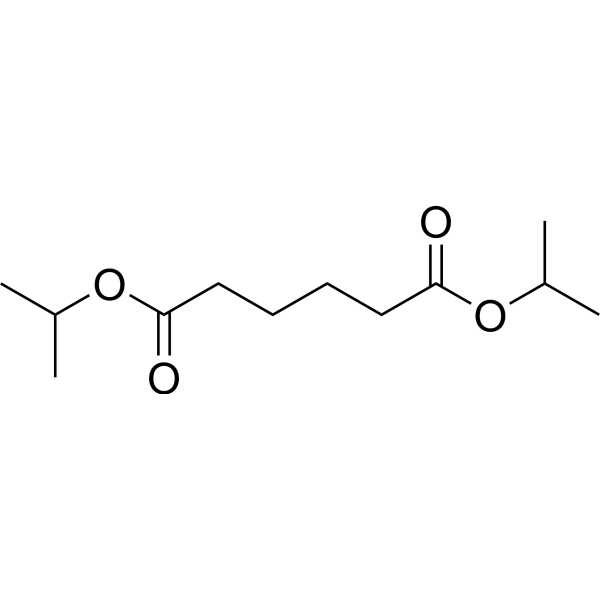
Diisopropyl adipate is an alternative plasticizer and a TRPA1 activator. Diisopropyl adipate activates TRPA1 and enhances FITC-induced contact hypersensitivity (CHS).Diisopropyl adipate also serves as an ingredient in cosmetics and drug formulations topically applied to the skin. Diisopropyl adipate can be used as an excipient, such as emollients, plasticizers. Pharmaceutical excipients, or pharmaceutical auxiliaries, refer to other chemical substances used in the pharmaceutical process other than pharmaceutical ingredients. Pharmaceutical excipients generally refer to inactive ingredients in pharmaceutical preparations, which can improve the stability, solubility and processability of pharmaceutical preparations. Pharmaceutical excipients also affect the absorption, distribution, metabolism, and elimination (ADME) processes of co-administered drugs .
loading...
    loading...
Cat. No.: HY-168166
CAS No.: 2489231-47-0
Target:  

Endogenous Metabolite

Research Areas:  

Neurological Disease

CHET3 is a sex-selective activator with potent analgesic activity. CHET3 was discovered to be a highly selective omnidirectional modulator of TASK-3-containing K2P channels, including TASK-3 homologues and TASK-3/TASK-1 heterologues. CHET3 exhibited significant analgesic effects in multiple acute and chronic pain models in mice, which could be abolished by pharmacological means or genetic knockout of TASK-3. CHET3 is able to functionally modulate the membrane excitability of specific small sensory neurons, which supports its analgesic effects on thermal hypersensitivity and mechanical hyperalgesia in chronic pain .
loading...
    loading...

