127 Results for "

STING activator

" in MedChemExpress (MCE) Product Catalog:
Products (127)

127 Results for "STING activator" in MCE Product Catalog:

  • Categories Recommended:
    More
Cat. No.: HY-10249R
CAS No.: 937174-76-0
Research Areas:  

Cancer

GSK-690693 (Standard) is the analytical standard of GSK-690693 (HY-10249). This product is intended for research and analytical applications. GSK-690693 is an ATP-competitive pan-Akt inhibitor with IC50s of 2 nM, 13 nM, 9 nM for Akt1, Akt2 and Akt3, respectively. GSK-690693 is also an AMPK inhibitor, affects Unc-51-like autophagy activating kinase 1 (ULK1) activity and robustly inhibits STING-dependent IRF3 activation .
loading...
    loading...
Cat. No.: HY-189632
Research Areas:  

Cancer

YS3074 is a selective ENPP1 inhibitor with an IC50 of 4.23 nM. YS3074 inhibits ENPP1-mediated hydrolysis of extracellular cGAMP, thereby preserving cGAMP to activate the STING signaling pathway. YS3074 exhibits antitumor effects both as a single agent and in combination with anti-PD-1 antibodies, enhancing tumor growth inhibition and prolonging survival. YS3074 can be used for research on colorectal cancer .
loading...
    loading...
Cat. No.: HY-12885AR
CAS No.: 1638750-95-4
Synonyms: ADU-S100 disodium salt (Standard); MIW815 disodium salt (Standard); ML RR-S2 CDA disodium salt (Standard)
Research Areas:  

Inflammation/Immunology Cancer

2’3’-c-di-AM(PS)2 (Rp,Rp) disodium salt (Standard) is the analytical standard of 2’3’-c-di-AM(PS)2 (Rp,Rp) disodium salt (HY-12885A). This product is intended for research and analytical applications. 2’3’-c-di-AM(PS)2 (Rp,Rp) disodium salt (ADU-S100 disodium salt) is an activator of stimulator of interferon genes (STING).
loading...
    loading...
Cat. No.: HY-L031
831 compounds

Immuno-Oncology is a type of immunotherapy that has the specific purpose of treating cancer. It works by stimulating our immune system to fight back. Normally, our immune system is able to destroy cancer cells in our body, however sometimes cancer cells can adapt and mutate, effectively hiding from our immune system. This is when tumors can develop and become a threat to our health. Immuno-oncology involves mobilizing lymphocytes to recognize and eliminate cancer cells using the body’s immune system. There are several immuno-oncology treatments available, including Immune cell therapy (CAR-T), monoclonal antibodies (mABs) and checkpoint inhibitors, cytokines and cancer vaccines.

MCE Small Molecule Immuno-Oncology Compound Library offers 831 bioactive tumor immunology compounds that target some important checkpoints such as PD1/PD-L1, CXCR, Sting, IDO, TLR, etc. This library is a useful tool for Immuno-oncology research.

Cat. No.: HY-12885R
CAS No.: 1638241-89-0
Synonyms: ADU-S100 (Standard); MIW815 (Standard); ML RR-S2 CDA (Standard)
Research Areas:  

Cancer

2’3’-c-di-AM(PS)2 (Rp,Rp) (Standard) is the analytical standard of 2’3’-c-di-AM(PS)2 (Rp,Rp) (HY-12885). This product is intended for research and analytical applications. 2’3’-c-di-AM(PS)2 (Rp,Rp) (ADU-S100), an activator of stimulator of interferon genes (STING), leads to potent and systemic tumor regression and immunity .
loading...
    loading...
Cat. No.: HY-162944
CAS No.: 3031762-97-4
Research Areas:  

Cancer

NA-Ir is a Ferroptosis inducer. NA-Ir targets mitochondrial DNA (mtDNA) and activates the cGAS-STING pathway to induce ferritinophagy (Autophagy), while also generating reactive oxygen species (ROS) through photodynamic therapy (PDT), depleting glutathione (GSH), and downregulating glutathione peroxidase 4 (GPX4), thereby triggering lipid peroxidation and Ferroptosis. NA-Ir exhibits higher anticancer activity under light exposure and selectively inhibits cancer cells with high H2S levels .
loading...
    loading...
Cat. No.: HY-181667
Research Areas:  

Cancer

Enpp-1-IN-30 (compound 44a) is an orally active ENPP1 inhibitor with a human IC50 of 13.1 nM. Enpp-1-IN-30 prevents cGAMP degradation, activates the STING pathway. Enpp-1-IN-30 induces cytokine release to enhance innate immune response. Enpp-1-IN-30 exerts antitumor efficacy in syngeneic mouse models. Enpp-1-IN-30 can be used for the research of colon carcinoma .
loading...
    loading...
Cat. No.: HY-175478
CAS No.: 3105103-33-8
Enpp-1-IN-27 is a selective ENPP1 inhibitor with an IC50 of 14.68 nM, exhibiting approximately 410-fold selectivity against ENPP2 and 10-fold selectivity against ENPP3. Enpp-1-IN-27 stabilizes cGAMP levels and activates the STING pathway, promoting cytokine release and enhancing innate immune responses. Enpp-1-IN-27 induces ISRE activation and amplified cGAMP-mediated immune responses and shows the desired antitumor efficacy in the 4T1 and CT26 syngeneic mouse models. Enpp-1-IN-27 can used for the studies of breast cancer and colon cancer .
loading...
    loading...
Cat. No.: HY-168491
CAS No.: 3067908-20-4
Research Areas:  

Cancer

Enpp-1-IN-25 (Compound 30) is an ENPP1 inhibitor with an IC50 of 8.05 nM and low oral bioavailability. Enpp-1-IN-25 can effectively activate the intracellular STING pathway by inhibiting cGAMP degradation. Enpp-1-IN-25 can enhance immune cell infiltration in the tumor microenvironment and type I interferon responses, and potentiate the antitumor efficacy of the anti-PD-L1 antibody. Enpp-1-IN-25 can be used in the research of cancer immunotherapy .
loading...
    loading...
Cat. No.: HY-184200
Research Areas:  

Cancer

Enpp-1-IN-32 is an orally active, selective ENPP-1 inhibitor with an IC50 of 9.5 nM. Enpp-1-IN-32 shows selectivity over ENPP2/ENPP3. Enpp-1-IN-32 blocks cGAMP hydrolysis, and activates the STING pathway. Enpp-1-IN-32 exhibits antitumor effects in syngeneic mouse models. Enpp-1-IN-32 can be used for the research of triple-negative breast carcinoma .
loading...
    loading...
Cat. No.: HY-148488
CAS No.: 2412492-09-0
Purity:  ≥95.0%
Target:  

Liposome STING

Research Areas:  

Inflammation/Immunology Cancer

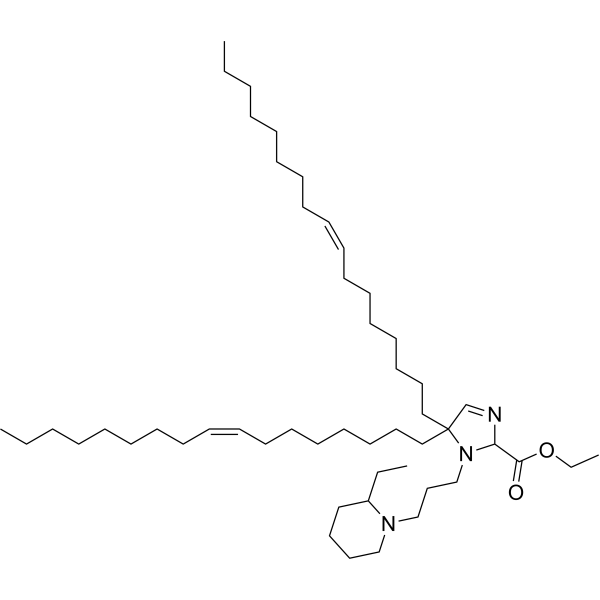
A18-Iso5-2DC18 (Compound A18) is a cyclic lipidoid. A18-Iso5-2DC18 partially activates STING. A18-Iso5-2DC18 promotes mRNA protein expression and induces a strong immune response. A18-Iso5-2DC18 can be used in melanoma research .
loading...
    loading...
Cat. No.: HY-183748
CAS No.: 3082173-75-6
Research Areas:  

Cancer

Polθ-IN-11 is an orally active DNA polymerase θ (Polθ) ATPase inhibitor with an IC50 of 4.3 nM against human targets. Polθ-IN-11 activates the cGAS-STING pathway. Polθ-IN-11 upregulates the expression of PD-L1 in HR-deficient cancer cells. Polθ-IN-11 acts synergistically with PARP inhibition in HR-deficient cancer cells and in vivo xenograft models. Polθ-IN-11 can be used in studies related to HR-deficient cancers .
loading...
    loading...
Cat. No.: HY-184662
Ferroptosis inducer-17 is a ferroptosis inducer that downregulates GPX4 and activates the CTSB and cGAS-STING pathways. Ferroptosis inducer-17 exhibits cytotoxicity against cancer cells but low toxicity toward normal cells. Ferroptosis inducer-17 accumulates in mitochondria and lysosomes, thereby inducing ROS production, lipid peroxidation, mitochondrial membrane depolarization, lysosomal iron accumulation, increased membrane permeability, and enhanced oxidative stress. Ferroptosis inducer-17 inhibits tumor growth in cisplatin-resistant xenograft models. Ferroptosis inducer-17 can be used for cancer-related research .
loading...
    loading...
Cat. No.: HY-164919
CAS No.: 2847102-44-5
Synonyms: XMT-2056
Calotatug ginistinag (XMT-2056) is an antibody-drug conjugate (ADC) targeting HER2, linked to a payload composed of XMT-1519 conjugate-1 (HY-148067) and STING agonist-20 (HY-148068). Calotatug ginistinag activates the STING signaling pathway in tumor cells and tumor-resident immune cells, induces the production of type I interferons and cytokines (CXCL10, IFN-β, IL-6, TNF-α, triggers innate anti-tumor immune responses, and exerts a bystander effect. Calotatug ginistinag exhibits efficacy against HER2-expressing cancer cells in co-culture with PBMCs. Calotatug ginistinag induces tumor regression and reduces systemic inflammation in various tumor models. Combination treatment with Calotatug ginistinag, Trastuzumab (HY-P9907) and T-DXd (HY-138298) yields benefits. Calotatug ginistinag can be used in studies related to HER2-expressing solid tumors such as breast cancer, gastric cancer and ovarian cancer .
loading...
    loading...
Cat. No.: HY-13902R
CAS No.: 1232416-25-9
Synonyms: VE-822 (Standard); VX-970 (Standard); M6620 (Standard)
Berzosertib (Standard) is the analytical standard of Berzosertib (HY-13902). This product is intended for research and analytical applications. Berzosertib (VE-822) is an orally active, CNS-penetrant, and selective ATR Kinase inhibitor. Berzosertib blocks ATR Kinase activity, abrogates G2/M cell cycle checkpoint, impairs DNA damage repair. Berzosertib induces apoptosis, inhibnits conlony migration, inhibits cell proliferation, and activates cGAS-STING axes in cancer cells. Berzosertib can be used for the research of cancers, such as head and neck squamous cell carcinoma, and colorectal cancer .
loading...
    loading...
Cat. No.: HY-181850
CAS No.: 3094716-52-3
Telomeric G4s ligand 2 is an orally active, selective ligand of telomeric G-quadruplex (G4), with an IC50 of 0.4 μM. Telomeric G4s ligand 2 binds to dimeric telomeric G4, inhibits the activities of DHX36 and BLM helicases. Telomeric G4s ligand 2 activates cGAS-STING and TERRA-ZBP1 pathways, inducing autophagy and G2/M cell cycle arrest, and exhibits antiproliferative effects across cancer cell lines. Telomeric G4s ligand 2 can be used for the study of colorectal cancer .
loading...
    loading...
Cat. No.: HY-182758
Topoisomerase I-IN-21 is a promising topoisomerase I inhibitor with an IC50 of 18.79 μM. Topoisomerase I-IN-21 shows higher selectivity toward cancer cells over normal CD8 + cells. Topoisomerase I-IN-21 induces G0/G1 cell cycle arrest and apoptosis. Topoisomerase I-IN-21 activates the cGAS-STING pathway, leading to enhanced immune gene expression. Topoisomerase I-IN-21 can be used for research on leukemia, non-small-cell lung, colon, central nervous system, melanoma, ovarian, renal, prostate, and breast cancers .
loading...
    loading...
Cat. No.: HY-182926
Research Areas:  

Cancer

Topoisomerase I/II-IN-9 is a topoisomerase I/II inhibitor (IC50<10 μM) and a DNA damage inducer. Topoisomerase I/II-IN-9 blocks the interaction between the enzyme and DNA by binding to the DNA-binding pocket of the enzyme. Topoisomerase I/II-IN-9 activates the cGAS-STING pathway and promotes the accumulation of cytoplasmic double-stranded DNA. This further drives the production of type I interferons, CCL5, CXCL10 and interferon-stimulated genes, and induces anti-tumor immune responses in vivo. Topoisomerase I/II-IN-9 can be applied to the research of related diseases such as triple-negative breast cancer, colorectal cancer and gastric cancer .
loading...
    loading...
Cat. No.: HY-189386
CAS No.: 3081319-75-4
Pyroptosis inducer-1 is a pyroptosis inducer. Pyroptosis inducer-1 promotes STING phosphorylation, NF-κB activation, caspase-1-dependent pyroptosis, GSDMD cleavage, mitochondrial membrane potential disruption, ROS production, S phase cell cycle arrest, ER stress, calcium release, and immunogenic cell death accompanied by CRT exposure, HMGB1 release, and ATP secretion. Pyroptosis inducer-1 enters cancer cells via endocytosis and accumulates in mitochondria and endoplasmic reticulum. Pyroptosis inducer-1 increases dendritic cells and CD8 + T cells while decreasing regulatory T cells. Pyroptosis inducer-1 can be used for breast cancer research .
loading...
    loading...
Cat. No.: HY-15136B
CAS No.: 193275-86-4
Synonyms: Sch66336 racemate
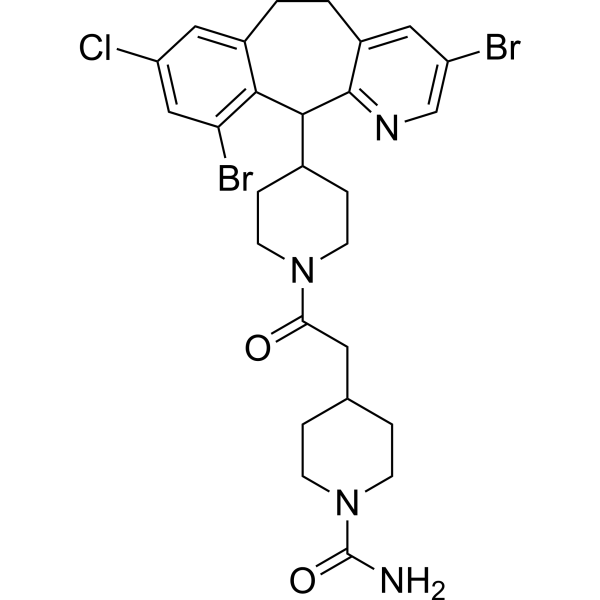
(Rac)-Lonafarnib (Sch66336 racemate) is an isomer of Lonafarnib (HY-15136). Lonafarnib (Sch66336) is an orally active, blood-brain barrier penetrant farnesyltransferase (FPTase) inhibitor. Lonafarnib increases the phosphorylation levels of Akt, CaMKII and CREB, upregulates BDNF expression in the hippocampus, elevates the content of α7nAChR on cell membranes, and blocks the isoprenylation of H-Ras. Lonafarnib repairs synapses and reverses spatial memory deficits in Aβ1-42 model mice. Lonafarnib inhibits RSV fusion and replication, and alleviates virus-induced lung injury. Lonafarnib activates the lysosomal and autophagic pathways, and reduces the phosphorylation and aggregation of tau. Lonafarnib acts synergistically with Sorafenib (HY-10201) to promote apoptosis, and inhibits the proliferation and invasion of melanoma cells. Lonafarnib inhibits the farnesylation of progerin, repairs nuclear membrane defects, and activates the cGAS-STING-STAT1 signaling pathway. Lonafarnib can be used in research related to diseases including Alzheimer's disease, viral infections, melanoma, and progeria .
loading...
    loading...

