






Scientific Reviews
Product Guides
Blogs
Topics
Targeted therapy! The Capetin Prize winning "Click Chemistry" can be used like this!Targeted therapy! The Nobel Prize winning "Click Chemistry" can be used like this!2025-02-06



174 Results for "liver function" in MCE Product Catalog:
Target:
Research Areas:
Mitochondria, as the main place of energy supply in life, is essential to maintain normal life activities. Mitochondrial dysfunction is associated with common diseases, such as cardiovascular diseases, neurodegenerative diseases, diabetes and cancer. The heart, brain and liver rely heavily on mitochondrial function as the main organs for drug metabolism. In addition, mitochondria is also a target of many drugs, some of which induce organotoxicity by inducing mitochondrial toxicity.
MCE contains 545 mitochondrial toxic compounds, which can be used as tool compounds for drug development and disease mechanism research.
Diarrhea is a disease symptom, and the pathophysiologic basis of diarrhea is a disturbance in intestinal water and electrolyte balance, which may be due to increased secretion of osmotically active electrolytes (secretory diarrhea) or increased intake of osmotically active substances (osmotic diarrhea). Food poisoning, pathogenic bacterial infections, and intestinal-related diseases can all contribute to the development of diarrhea. Traditional Chinese Medicine (TCM) considers diarrhea to be a symptom of an imbalance in the body's systems, particularly related to the functions of the spleen and stomach. Spleen qi deficiency, dampness-heat, liver and spleen disharmony are closely related to diarrhea. Many types of Chinese herbs regulate the function of diarrhea, such as: Dysosmae Verspiellis Rhixoma Et Radix, Ginkgo Semen, Forsythiae Fructus, and Campsis Flos.
MCE can provide 2,478 active monomers that can be obtained from TCM herbs with diarrhea-regulating functions, which can be applied to drug development and disease mechanism research.
Target:
Research Areas:
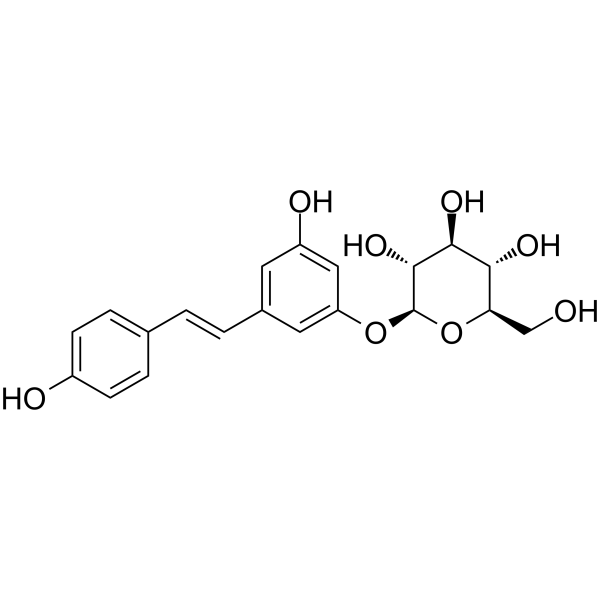
Stilbenes Polygonaceae Reynoutria japonica Houtt. Phenols Polyphenols Plants Disease Research Fields Inflammation/Immunology
Cholesterol is a crucial lipid that maintains cell membrane structure, serves as a precursor for the synthesis of steroid hormones and bile acids, and plays an important role in cell signal transduction and membrane function regulation. Intracellular cholesterol levels are precisely controlled by multiple processes, including synthesis, uptake, transport, esterification, storage, and efflux. Dysregulation of cholesterol metabolism is closely associated with diseases such as atherosclerosis, fatty liver disease, metabolic syndrome, and various cancers.
The Cholesterol Metabolism Compound Library contains 558 compounds and focuses on cholesterol metabolism and homeostatic regulation. It provides an efficient tool for mechanistic studies of cholesterol metabolism and for drug discovery in metabolism‑related diseases.

Scientific Reviews
Product Guides
Blogs
Topics
Targeted therapy! The Capetin Prize winning "Click Chemistry" can be used like this!Targeted therapy! The Nobel Prize winning "Click Chemistry" can be used like this!2025-02-06
Protocols
Targeted therapy! The Capetin Prize winning "Click Chemistry" can be used like this!Targeted therapy! The Nobel Prize winning "Click Chemistry" can be used like this!2025-02-06



