

174 Results for "

liver function

" in MedChemExpress (MCE) Product Catalog:
Products (174)

174 Results for "liver function" in MCE Product Catalog:

Cat. No.: HY-165126
CAS No.: 9050-67-3
Synonyms: SPG
Schizophyllan (SPG) is an orally active extracellular β-glucan produced by the fungus Schizophyllum commune. Schizophyllan improves mitochondrial function and protects against metabolic liver injury by activating the SIRT3 pathway. Schizophyllan inhibits osteoclastogenesis and promotes osteoblast differentiation by suppressing the phosphorylation of JNK/p38, as well as downregulating PGC1β/PPARγ, c-Fos and NFATc1. Recognized via Dectin-1, schizophyllan enables precise delivery of oligonucleotide drugs and antigens to antigen-presenting cells, thus holding great potential in the treatment of inflammatory diseases and vaccine development .
loading...
    loading...
Cat. No.: HY-187712
CAS No.: 3056281-16-1
Target:  

PD-1/PD-L1

Research Areas:  

Cancer

PD-1/PD-L1-IN-68 is a PD-L1 inhibitor based on a tetrahydroisoquinoline scaffold, with a KD of 21.31 μM for binding to hPD-L1, and it blocks the PD-1/PD-L1 interaction. PD-1/PD-L1-IN-68 restores T cell immune function, thereby promoting the death of PD-L1 + cancer cells. PD-1/PD-L1-IN-68 can be used in studies related to liver cancer .
loading...
    loading...
Cat. No.: HY-189143
Target:  

Xanthine Oxidase

Research Areas:  

Metabolic Disease

Xanthine oxidase-IN-24 is an orally active mixed-type inhibitor of xanthine oxidase, with an IC50 of 0.051 μM and a Ki of 0.162 μM. Xanthine oxidase-IN-24 interacts with both free xanthine oxidase and the xanthine-xanthine oxidase complex, and reduces uric acid production in vivo. In a rat model of hyperuricemia induced by Potassium oxonate (HY-17511), Xanthine oxidase-IN-24 dose-dependently lowers serum uric acid levels, improves renal function-related biochemical parameters such as creatinine and urea nitrogen, and alleviates histopathological damage to liver and kidney tissues. Xanthine oxidase-IN-24 can be used in the research of hyperuricemia .
loading...
    loading...
Cat. No.: HY-50876R
CAS No.: 658084-64-1
Synonyms: FK866 (Standard); APO866 (Standard)
Daporinad (Standard) is the analytical standard of Daporinad (HY-50876). This product is intended for research and analytical applications. Daporinad (FK866) is a non-competitive inhibitor of nicotinamide phosphoribosyltransferase (Nampt), with a Ki value of 0.3 nM. Daporinad depletes NAD+ and ATP levels, inhibits mTORC1 and MAPK/ERK pathways, and activates TFEB to induce autophagy. Daporinad causes the depletion of the endoplasmic reticulum Ca²⁺ pool, ultimately weakening the mitogen-induced Ca²⁺ signal and the activation and function of T cells. Daporinad induces cell cycle arrest and apoptosis, and inhibits cell proliferation. Daporinad can be used for the study of myeloma, liver cancer, and immunosuppression .
loading...
    loading...
Cat. No.: HY-N19420
CAS No.: 89013-69-4
Theasinensin C is an orally effective renin inhibitor and gut microbiota modulator, with an IC50 of 40.21 μM against renin activity. Theasinensin C selectively enriches Akkermansia muciniphila in the gut microbiota, enhances the Akkermansia muciniphila-mediated hydrolysis of the PTS domain of mucin, drives the accumulation of luminal glutamine and serine, and regulates the gut-kidney-liver glutamine/serine metabolic signaling pathway to promote creatine biosynthesis. Theasinensin C improves cognitive function, reduces pro-inflammatory cytokines, alleviates neuropathological changes and restores intestinal barrier integrity. Theasinensin C can be used in research related to hypertension and neuroinflammation induced by high-fructose diet .
loading...
    loading...
Cat. No.: HY-145581S
Synonyms: AZD4831-d3
Mitiperstat-d3 (AZD4831-d3) is the deuterated -labeled Mitiperstat (HY-145581).Mitiperstat (AZD4831) is an effective oral inhibitor of myeloperoxidase (MPO). Mitiperstat inhibits MPO and thyroid peroxidase (TPO) with IC50s of 1.5 nM and 0.69 μM. Mitiperstat exhibits a weak inhibitory activity against CYP3A4 with an IC50 of 6 μM. Mitiperstat can reduce inflammation and improve microvascular function, and it can be used in studies related to heart failure, preserved or mildly reduced ejection fraction, non-alcoholic fatty liver disease, and chronic obstructive pulmonary disease .
loading...
    loading...
Cat. No.: HY-50662R
CAS No.: 844499-71-4
Research Areas:  

Metabolic Disease

A-769662 (Standard) is the analytical standard of A-769662 (HY-50662). This product is intended for research and analytical applications. A-769662 is a AMP-activated protein Kinase (AMPK) activator. A-769662 inhibits the function of the 26S proteasome by an AMPK-independent mechanism and leads to cell cycle arrest. A-769662 directly stimulates partially purified rat liver AMPK (EC50 = 0.8 μM) and inhibits fatty acid synthesis in primary rat hepatocytes (IC50 = 3.2 μM). A-769662 can alleviate the symptoms of metabolic diseases such as type 2 diabetes .
loading...
    loading...
Cat. No.: HY-N0046
CAS No.: 88105-29-7
Synonyms: Notoginseng triterpenes; Ginsenoside Mb
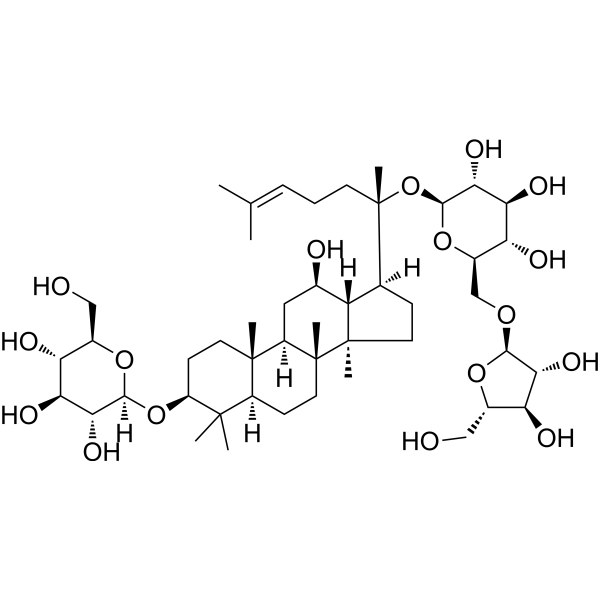
Notoginsenoside Fe (Notoginseng triterpenes; Ginsenoside Mb) is a saponin with anti-obesity and anti-neuroblastoma activities. Notoginsenoside Fe can be isolated from leaves of Panax notoginseng. Notoginsenoside Fe specifically activates paraventricular nucleus neurons in the hypothalamus, effectively reducing body weight, improving fasting blood glucose and protecting liver function by decreasing food intake, increasing resting metabolic rate and enhancing energy expenditure. Notoginsenoside Fe also inhibits the c-Src signaling pathway, blocks the proliferation and viability of human neuroblastoma cells, while improving mitochondrial dysfunction and alleviating apoptosis. Notoginsenoside Fe can be used in studies related to diet-induced obesity and neuroblastoma .
loading...
    loading...
Cat. No.: HY-N2424
CAS No.: 525-82-6
Synonyms: 2-Phenyl-4-chromone
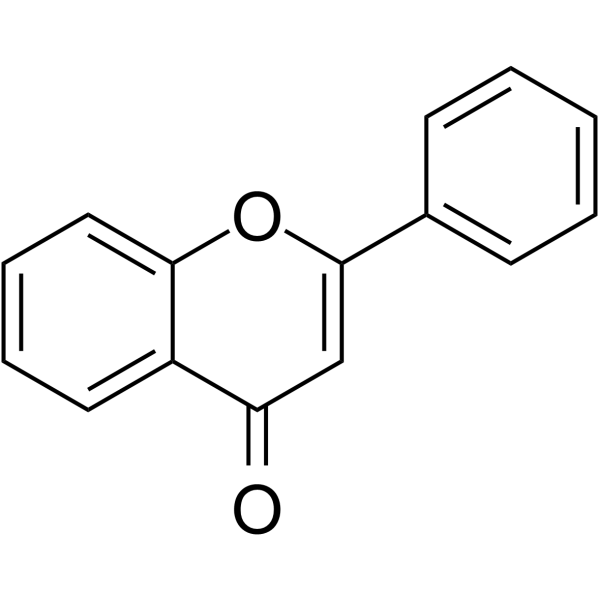
Flavone is an anti-tumor compound that targets cell cycle regulatory proteins (such as cyclin B1) and apoptosis-related factors (such as p21waf1, PIG3). Flavone selectively induces mitochondrial-mediated apoptosis pathways in tumor cells, inhibits cyclin B1 protein expression, upregulates p21waf1, and activates p63/p73 proteins. Flavone has immunomodulatory functions that enhance natural killer cell (NK cell) activity and lymphocyte proliferation. Flavone is used in cancer research, especially for its inhibitory potential in solid tumor models such as esophageal cancer and liver cancer .
loading...
    loading...
Cat. No.: HY-P11489
CAS No.: 252731-57-0
RN-0001 is a cyclophilin (Cyp) inhibitor with Ki values of 4.1 nM and 12.0 nM against CypA and CypD, respectively, and an EC50 of 916 nM for CypD. RN-0001 binds directly to CypD, inhibits the peptidyl-prolyl cis-trans isomerase activities of CypD and CypA, and prevents CypD-dependent mitochondrial permeability transition pore opening. RN-0001 improves mitochondrial function, reduces ROS production, inhibits the expression of lipogenic markers, blocks the nuclear translocation of NF-κB p65, and decreases the release of activated caspase-3 and cytochrome c. RN-0001 can be used in the research of alcohol-associated liver disease .
loading...
    loading...
Cat. No.: HY-P99152
CAS No.: 140608-64-6
Synonyms: Muromanab-CD3

Research Areas:  

Inflammation/Immunology Cancer

Muromonab (Muromonab-CD3; OKT3) is a mouse monoclonal antibody targeting the CD3 antigen. Muromonab specifically binds to the CD3 antigen on the surface of human and higher primate T cells. Muromonab blocks the function of T cell receptors to recognize foreign antigens and inhibits T cell-mediated immune responses, including cell-mediated lymphocyte lysis and T cell proliferation responses. Muromonab can be used to study acute kidney, liver, heart and combined kidney-pancreas transplant rejection, and can also be used to study graft-versus-host disease in bone marrow transplant patients .
loading...
    loading...
Cat. No.: HY-124350R
CAS No.: 134-05-4
10-Formylfolic acid (Standard) is the analytical standard of 10-Formylfolic acid (HY-124350). This product is intended for research and analytical applications. 10-Formylfolic acid is a potent inhibitor of dihydrofolate reductase, with an IC50 of 80 nM against the rat enzyme. 10-Formylfolic acid also acts as an orally active folate source and a growth factor for specific bacteria. 10-Formylfolic acid supports growth and increases plasma folate levels; its absorption and metabolism patterns are similar to those of folic acid, but its liver retention is slightly higher. It exhibits high folate activity in microbial assays, serves as a growth factor for Enterococcus faecalis and Lactobacillus casei, aids folate nutrient supply, and may exert cell regulatory functions .
loading...
    loading...
Cat. No.: HY-124350S
CAS No.: 461426-41-5
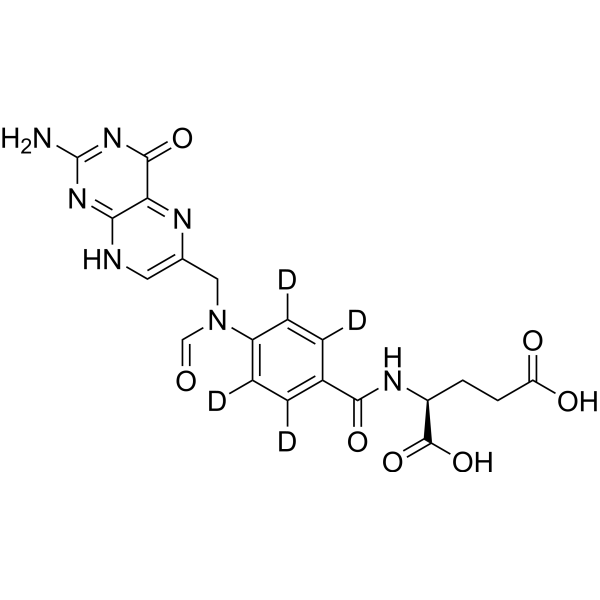
10-Formylfolic acid-d4 is the deuterated-labeled 10-Formylfolic acid (HY-124350). 10-Formylfolic acid is a potent inhibitor of dihydrofolate reductase, with an IC50 of 80 nM against the rat enzyme. 10-Formylfolic acid also acts as an orally active folate source and a growth factor for specific bacteria. 10-Formylfolic acid supports growth and increases plasma folate levels; its absorption and metabolism patterns are similar to those of folic acid, but its liver retention is slightly higher. It exhibits high folate activity in microbial assays, serves as a growth factor for Enterococcus faecalis and Lactobacillus casei, aids folate nutrient supply, and may exert cell regulatory functions .
loading...
    loading...
Cat. No.: HY-160475
CAS No.: 1804942-56-0
AD-9308 is an orally active, highly selective aldehyde dehydrogenase 2 (ALDH2) activator. AD-9308 alleviates oxidative stress, improves mitochondrial function, restores cell viability, reduces renal tubular injury, fibrosis and inflammatory responses, reverses ventricular remodeling, restores the activities of Dicer and superoxide dismutase, inhibits the IL-6 signaling pathway, reduces the accumulation of 4-HNE-protein adducts, and improves glucose homeostasis. AD-9308 can be used in studies related to acrolein-induced kidney injury, diabetes, cardiomyopathy, heart failure, diet-induced obesity, fatty liver, insulin resistance and glucose intolerance .
loading...
    loading...
Cat. No.: HY-A0003A
CAS No.: 1243329-97-6
Synonyms: CC-5013 hydrochloride
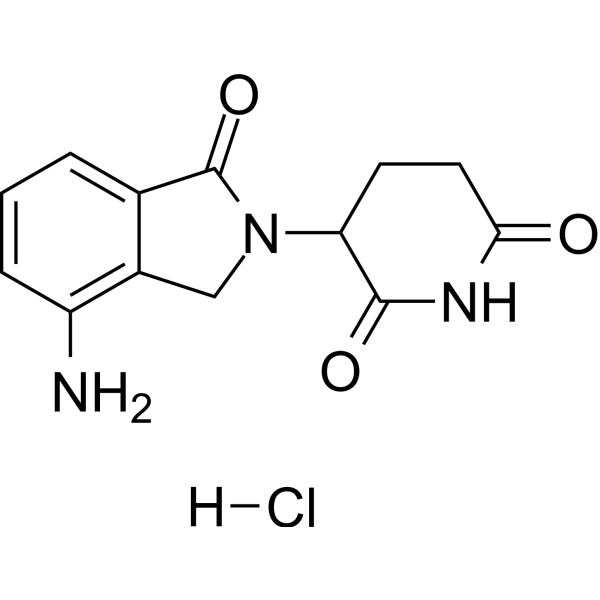
Lenalidomide hydrochloride (CC-5013 hydrochloride) is an orally active immunomodulatory agent that binds CRBN as a molecular glue to alter substrate specificity, inducing ubiquitination and proteasome-dependent degradation of IKZF1, IKZF3 and CK1α. Lenalidomide hydrochloride induces apoptosis by degrading IKZF1/3, and activates p53 by degrading CK1α. Lenalidomide hydrochloride promotes IL-2 release and effector functions of CD8 + T/NK cells, while inhibiting TNF-α secretion and M1-type pyroptosis. Lenalidomide hydrochloride can be used in research related to hematological malignancies, acute liver failure and acute kidney injury .
loading...
    loading...
Cat. No.: HY-N0310R
CAS No.: 51330-27-9
Soyasaponin Bb (Standard) is the analytical standard of Soyasaponin Bb (HY-N0310). This product is intended for research and analytical applications. Soyasaponin Bb is an orally active, covalent inducer of heme oxygenase HO-1 and an inhibitor of aldose reductase AKR1B1. Soyasaponin Bb can regulate oxidative stress pathways, enhance antioxidant capacity, reduce reactive oxygen species (ROS) generation, and inhibit lipid peroxidation and hepatocyte apoptosis. Soyasaponin Bb improves alcohol-induced hepatocyte membrane damage and liver function abnormalities, and improves Scopolamine (HY-N0296)-induced memory impairment. Soyasaponin Bb has antioxidant, hepatoprotective, and neuroprotective activities .
loading...
    loading...
Cat. No.: HY-119578
CAS No.: 72963-72-5
Target:  

Cytochrome P450

Research Areas:  

Cancer

Imiprothrin is an inducer that induces CYP1A2 and metallothionein 1a, with significant genotoxicity and cytotoxicity. In rat hepatocytes, Imiprothrin initiates detoxification responses by triggering the overexpression of these two genes. Imiprothrin induces chromosomal aberrations and micronucleus formation in rat bone marrow cells, and causes DNA damage in hepatocytes. Imiprothrin triggers oxidative stress in rats, leading to lipid peroxidation, excessive reactive oxygen species production and redox imbalance, which in turn impairs liver and kidney functions and causes tissue damage. Imiprothrin inhibits weight gain in mice, and even causes high mortality in female mice at high doses. However, it shows no carcinogenicity in rat experiments; among relevant indicators, aspartate aminotransferase and total protein are identified as sensitive toxicity biomarkers .
loading...
    loading...
Cat. No.: HY-150097
Purity:  ≥99.0%
Recombinant Human Serum Albumin (rHSA) is a non-glycosylated monomeric plasma protein that acts as a core factor for maintaining plasma colloid osmotic pressure. Recombinant Human Serum Albumin (rHSA) possesses multiple physiological functions including carrier, metabolic regulation, detoxification, antioxidation and enzyme mimicking. Recombinant Human Serum Albumin (rHSA) not only scavenges reactive oxygen and nitrogen species via specific residues and binds a variety of endogenous and exogenous compounds to maintain redox homeostasis, but also serves as a biomarker for multiple diseases such as cancer and inflammation. Recombinant Human Serum Albumin (rHSA) broadly supports the development of implantable materials, surgical adhesives and ligand capture, and can be used for research on critical illnesses including hypovolemia, liver failure, severe sepsis and various types of trauma resuscitation .
loading...
    loading...
Cat. No.: HY-153149
CAS No.: 945457-84-1
Synonyms: FM101
LJ-2698 (FM101) is an orally active adenosine A3 receptor (Adenosine A3 Receptor) antagonist . LJ-2698 blocks adenosine A3 receptor-dependent pro-inflammatory JNK, ERK, and NF-κB signaling pathways. LJ-2698 prevents alveolar cavity enlargement, restores pulmonary function, and inhibits matrix metalloproteinase activity and pulmonary cell apoptosis (apoptosis) in mice . LJ-2698 induces mitochondrial dysfunction, necroptosis, and intrinsic apoptosis. LJ-2698 ameliorates renal injury in mice with diabetic nephropathy, and alleviates diet-induced hepatic inflammation and fibrosis. LJ-2698 can be used in the research of emphysema, diabetic nephropathy, and metabolic dysfunction-associated steatotic liver disease .
loading...
    loading...
Cat. No.: HY-175033
BRD4-IN-11 is an orally active and selective BRD4 inhibitor (IC50 = 26.35 nM (BD1), IC50 = 72.81 nM (BD2)). BRD4-IN-11 is approximately 3- to 18-fold more potent against BRD4 than againstBRD2, BRD3, and BRDT. BRD4-IN-11 enhances H2S release and inhibits the upregulation of fibrotic markers (α-SMA and fibronectin), c-Myc, and CDC25B. BRD4-IN-11 reduces apoptosis in LO2 hepatocytes. BRD4-IN-11 significantly improves liver and lung function in a hepatopulmonary fibrosis model and can be used to study hepatopulmonary fibrosis .
loading...
    loading...

