175 Results for "

liver function

" in MedChemExpress (MCE) Product Catalog:
Products (175)

175 Results for "liver function" in MCE Product Catalog:

Cat. No.: HY-14353
CAS No.: 928035-84-1
Target:  

LXR

GSK-9772 is a Liver X Receptor (LXR) modulator of the N-phenyl tertiary amine class (NPTAs) with high affinity for LXR β ligand (IC50=30 nM). GSK-9772 has anti-inflammatory activity by binding to LXR, specifically by interacting with the region associated with the transcriptional repression function of the receptor, thereby inhibiting the expression of pro-inflammatory genes. GSK-9772 can be used in the study of inflammatory and neurodegenerative diseases .
loading...
    loading...
Cat. No.: HY-B1393R
CAS No.: 81-23-2
Synonyms: Dehydrocholate (Standard)
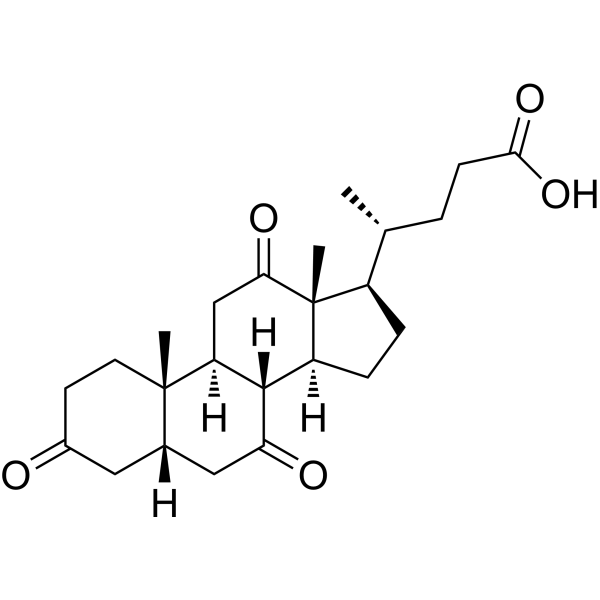
Dehydrocholic acid (Dehydrocholate) (Standard) is the analytical standard of Dehydrocholic acid (HY-B1393). This product is intended for research and analytical applications. Dehydrocholic acid (Dehydrocholate) is an orally active hydrocholeretic agent. Dehydrocholic acid modulates Autophagy, reduces serum amylase and lipase levels. Dehydrocholic acid has the effects of promoting choleretic function, protecting the liver, reducing pancreatic damage, and regulating cholesterol metabolism. Dehydrocholic acid can be used in the study of acute biliary pancreatitis and obstructive jaundice .
loading...
    loading...
Cat. No.: HY-N7860
CAS No.: 93772-82-8
Δ2-cis Eicosenoic acid is an α,β-unsaturated fatty acid that has been extracted from fresh water clams and purified. A related compound, 2-octadecenoic acid, has been shown to improve liver function and decrease blood sugar in streptozocin-induced diabetic rats. Δ2-cis Eicosenoic acid and its salts have potential medicinal use for treating diabetes and improving lipid metabolism.
loading...
    loading...
Cat. No.: HY-143712R
CAS No.: 2276-94-0
Allolithocholic acid (Standard) is the analytical standard of Allolithocholic acid (HY-143712). This product is intended for research and analytical applications. Allolithocholic acid is an orally active metabolite of Lithocholic acid (HY-B0172). Allolithocholic acid is a dual GPBAR1 agonist (EC50 = 2.7 μM) and RORγt inverse agonist (IC50 = 3.4 μM). Allolithocholic acid modulates immune and metabolic pathways, regulates immune cell polarization, prevents M1 macrophage and Th17 CD4 cell polarization. Allolithocholic acid improves insulin sensitivity, reduces liver lipid accumulation, reverses liver immunological, inflammatory and metabolic signaling dysregulation, restores bile acid homeostasis, adipose tissue histopathology/function, and intestinal microbiota composition, modulates intestinal immunity. Allolithocholic acid can be used for the researches of cancer, inflammayion, immunology and metabolic disease .
loading...
    loading...
Cat. No.: HY-173150
CAS No.: 106928-29-4
Hapalindole Q (Compound (+)-1) is an autophagy (Autophagy) inhibitor targeting YAP1. Hapalindole Q binds to the Hippo pathway transcription factor YAP1 with a Kd of 9.13 μM and induces its degradation via the chaperone-mediated autophagy (CMA) pathway. This process inhibits Rab7-mediated fusion of autophagosomes and lysosomes, thereby reducing overall autophagy levels without affecting lysosomal function. Hapalindole Q holds promise for research in cancer (e.g., liver cancer, breast cancer, etc.) .
loading...
    loading...
Cat. No.: HY-W014120R
CAS No.: 92-85-3
Thianthrene (Standard) is the analytical standard of Thianthrene. This product is intended for research and analytical applications. Thianthrene is a potent and orally active inhibitor of Leishmania donovani pteridine reductase 1 (PTR1). Thianthrene is a sulfur-containing tricyclic molecule distributed widely within the macro-structure of hydrocarbon fossil fuels. Thianthrene inhibits the intracellular amastigotes of Leishmania donovani (IC50 = 23 μM). Thianthrene has a moderate anthelmintic activity. Thianthrene appears to inhibit RNA function and subsequent protein production. Thianthrene can stimulate liver regeneration in vivo .
loading...
    loading...
Cat. No.: HY-N17992
CAS No.: 1443433-27-9
Gypenoside UL5 (Compound UL5) is a dammarane-type triterpene saponin found in Gynostemma pentaphyllum. Gypenoside UL5 shows liver injury-inhibiting, anti-inflammatory and antioxidant properties. Gypenoside UL5 can be used for the research of hepatitis, fatty liver, and liver fibrosis .
loading...
    loading...
Cat. No.: HY-FL0007
CAS No.: 4320-30-3
Synonyms: L-Arginine (L-glutamate) solution
Target:  

Others

Research Areas:  

Metabolic Disease

Arginine Glutamate solution is mainly composed of arginine-glutamic acid (HY-N0455B). It can promote the liver's ornithine cycle (urea cycle), reduce blood ammonia, and improve liver function.
loading...
    loading...
Cat. No.: HY-N18744
CAS No.: 93165-22-1
Category:  

Extract

Target:  

Others

Eclipta alba extract is a versatile plant extract derived from the whole plant of Wedelia candel. It is rich in various bioactive compounds, such as eclipta lactone, wedelia saponins, ursolic acid, oleanolic acid, luteolin, and apigenin. Eclipta alba extract is a potent hepatoprotective agent, helping to improve liver function and protect the liver from damage.
loading...
    loading...
Cat. No.: HY-114118C
CAS No.: 2924330-56-1
Semaglutide sodium is a long-acting, selective, competitive GLP-1R agonist that can penetrate the blood-brain barrier. After activating GLP-1R, Semaglutide sodium promotes insulin secretion, inhibits gastric emptying and appetite, and at the same time enhances autophagy, inhibits oxidative stress and apoptosis. Semaglutide sodium also regulates mitochondrial function and lipid metabolism (such as reducing de novo lipogenesis in the liver). Semaglutide sodium has activities such as lowering blood sugar, reducing weight, neuroprotection (such as improving motor function in Parkinson's disease models, reducing α-synuclein aggregation) and improving hepatic steatosis. Semaglutide sodium can be used for the study of neurodegenerative diseases and liver diseases such as type 2 diabetes, obesity, Parkinson's disease, metabolic associated fatty liver disease (MASLD), and cancer .
loading...
    loading...
Cat. No.: HY-N19083
Category:  

Extract

Target:  

Bacterial

Tecomella undulata Extract, also known as Rohida extract, is a valuable botanical extract derived from the bark and leaves of the Tecomella undulata plant native to the Indian Thar Desert and is rich in bioactive compounds such as flavonoids, quinones, triterpenoids, and other phytochemicals that contribute to its diverse therapeutic properties. This extract is widely recognized for its hepatoprotective effects demonstrated through its ability to protect against liver damage induced by toxins such as paracetamol and carbon tetrachloride by normalizing elevated liver enzyme levels reducing oxidative stress and improving liver function. Additionally, it exhibits significant anti-inflammatory activity comparable to standard drugs like indomethacin and has been used to treat conditions like ascites and hepatosplenomegaly while also showing immunomodulatory effects by enhancing both humoral and cell-mediated immune responses and possessing antimicrobial properties that make it effective against various pathogens. Recent research suggests that Tecomella undulata may have potential in managing nonalcoholic steatohepatitis (NASH) by reducing body weight insulin resistance and improving liver function markers making it a versatile natural remedy with significant applications in hepatoprotection anti-inflammation and immune support.
loading...
    loading...
Cat. No.: HY-123004
CAS No.: 143199-54-6
Research Areas:  

Metabolic Disease

S 4404 is a prolyl-4-hydroxylase inhibitor. S 4404 functions as a non-substrate of hepatobiliary transport systems. S 4404 undergoes metabolic breakdown into fluorescent and red-colored metabolites. S 4404 can be used for the research of liver fibrosis .
loading...
    loading...
Cat. No.: HY-L076
641 compounds

Drug-induced liver injury (DILI; also known as drug-induced hepatotoxicity) is caused by medications (prescription or OTC), herbal and dietary supplements (HDS), or other xenobiotics that result in abnormalities in liver tests or in hepatic dysfunction that cannot be explained by other causes. Drugs are an important cause of liver injury. Drug-induced hepatic injury is the most common reason cited for withdrawal of an approved drug.

DILI is thought to occur via several different mechanisms. Among these are direct impairment of the structural (e.g., mitochondrial dysfunction) and functional integrity of the liver; production of a metabolite that alters hepatocellular structure and function; production of a reactive drug metabolite that binds to hepatic proteins to produce new antigenic drug-protein adducts, which are targeted by hosts’ defenses (the hapten hypothesis); and initiation of a systemic hypersensitivity response (i.e., drug allergy) that damages the liver.

MCE Drug-induced Liver Injury (DILI) Compound Library contains a unique collection of 641 hepatotoxicity causing compounds and is a powerful tool to research DILI and other drug toxicities. This library can be used to understand the mechanisms of DILI, identify biomarkers for early DILI prediction, and allow timely recognition during drug development, thus finally achieving successful DILI prevention and assessment in the pre-marketing phase.

Cat. No.: HY-N18066
CAS No.: 854381-37-6
Esculeogenin A is the sapogenol of tomato saponin Esculeoside A (HY-N18067). Esculeogenin A is an orally active hepatoprotective, hypolipidemic, and antioxidant agent. Esculeogenin A regulates molecular targets like PPARα, SREBP1, Nrf2, NF-κB, ACAT1/ACAT2 to promote hepatic fatty acid oxidation, suppress de novo lipogenesis, enhance antioxidant defense, and inhibit inflammation. Esculeogenin A improves liver function, alleviates hyperlipidemia, and inhibits hepatic steatosis and foam cell formation, preventing nonalcoholic fatty liver disease in high-fat-diet-fed rats and reducing atherosclerotic lesions in apoE-deficient mice. Esculeogenin A can be used for the research of nonalcoholic fatty liver disease, atherosclerosis, and hyperlipidemia .
loading...
    loading...
Cat. No.: HY-187122
CAS No.: 1420-88-8
Research Areas:  

Others

N,S-Diacetylcysteamine is an N-acetylcysteamine thioester (SNAc) derivative that serves as an acetyl donor, substrate, substrate inhibitor, condensing agent, and acyl donor. N,S-Diacetylcysteamine acts as an acetyl donor in the INH (Isoniazid) (HY-B0329) acetylation reaction in rhesus monkey liver homogenate, functions as a substrate for pigeon liver arylamine acetylase, and exhibits substrate inhibition against both systems at excessively high concentrations. N,S-Diacetylcysteamine acts as a substrate for peptidoglycan O-acetyltransferase B (PatB) to mediate the acetylation modification of peptidoglycan, and serves as a thioester model for the thioester groups of acetyl-CoA and acyl carrier protein .
loading...
    loading...
Cat. No.: HY-182097
Target:  

Liposome

Research Areas:  

Inflammation/Immunology

DSPE-PEG1000-GNYTCEVTELTREGETIIELK is a PEG compound which composed of DSPE and a peptide mimicking the function of CD47 (GNYTCEVTELTREGETIIELK). Modifying the surface of LNPs with GNYTCEVTELTREGETIIELK significantly reduced the recognition and clearance of LNPs by the mononuclear phagocytic system (MPS), and decreased their accumulation in non-target tissues such as the liver and spleen. DSPE-PEG1000-GNYTCEVTELTREGETIIELK can be used for drug delivery .
loading...
    loading...
Cat. No.: HY-K6304

MCE Human iPSC/ESC Hepatocyte Induction Differentiation Kit enables the efficient generation of hepatocyte-like cells with a high degree of maturation within 21 d. The resulting cells stably express multiple key hepatic functional markers, including albumin (ALB), cytochrome P450 (CYP) family enzymes, and other liver-specific functional molecules, and exhibit typical hepatocellular phenotypes and functions.

loading...
    loading...
Cat. No.: HY-182097A
Target:  

Liposome

Research Areas:  

Inflammation/Immunology

DSPE-PEG3400-GNYTCEVTELTREGETIIELK is a PEG compound which composed of DSPE and a peptide mimicking the function of CD47 (GNYTCEVTELTREGETIIELK). Modifying the surface of LNPs with GNYTCEVTELTREGETIIELK significantly reduced the recognition and clearance of LNPs by the mononuclear phagocytic system (MPS), and decreased their accumulation in non-target tissues such as the liver and spleen. DSPE-PEG3400-GNYTCEVTELTREGETIIELK can be used for drug delivery .
loading...
    loading...
Cat. No.: HY-182097B
Target:  

Liposome

Research Areas:  

Inflammation/Immunology

DSPE-PEG5000-GNYTCEVTELTREGETIIELK is a PEG compound which composed of DSPE and a peptide mimicking the function of CD47 (GNYTCEVTELTREGETIIELK). Modifying the surface of LNPs with GNYTCEVTELTREGETIIELK significantly reduced the recognition and clearance of LNPs by the mononuclear phagocytic system (MPS), and decreased their accumulation in non-target tissues such as the liver and spleen. DSPE-PEG5000-GNYTCEVTELTREGETIIELK can be used for drug delivery .
loading...
    loading...
Cat. No.: HY-181091
Target:  

Glycosidase

Research Areas:  

Metabolic Disease

α-Glucosidase-IN-109 is an orally active α-glucosidase inhibitor with an IC50 of 0.0136 μM. α-Glucosidase-IN-109 modulates carbohydrate and lipid metabolism, reduces fasting blood glucose levels, alleviates weight loss, and exhibits protective effects on liver and kidney function. α-Glucosidase-IN-109 can be used in research related to type 2 diabetes .
loading...
    loading...

