1197 Results for "

nanoparticles.

" in MedChemExpress (MCE) Product Catalog:
Products (1197)

1197 Results for "nanoparticles." in MCE Product Catalog:

Cat. No.: HY-187243B
Synonyms: DMG-PEG3400-Cys-SRNLIDC
Research Areas:  

Cancer

DMG-PEG3400-LyP-1 (DMG-PEG3400-Cys-SRNLIDC) is a functionalized PEGylated lipid conjugate composed of three modular components: dimyristoylglycerol (DMG) as the lipid anchoring group, PEG, and LyP-1 peptide (CGNKRTRGC) (HY-P2526) as the terminal targeting/functional ligand. LyP-1 is a cyclic 9-amino acid peptide that specifically binds to p32/gC1qR protein, which is highly expressed on tumor-associated macrophages, lymphatic endothelial cells, and certain tumor cells. DMG-PEG3400-LyP-1 can be incorporated into liposomes, lipid nanoparticles (LNPs), or other nanocarriers to confer ligand-directed targeting capability against p32/gC1qR protein on the surface of lymphatic vessels, tumor-associated macrophages, and tumor cells.
loading...
    loading...
Cat. No.: HY-187243C
Synonyms: DMG-PEG5000-Cys-SRNLIDC
Research Areas:  

Cancer

DMG-PEG5000-LyP-1 (DMG-PEG5000-Cys-SRNLIDC) is a functionalized PEGylated lipid conjugate composed of three modular components: dimyristoylglycerol (DMG) as the lipid anchoring group, PEG, and LyP-1 peptide (CGNKRTRGC) (HY-P2526) as the terminal targeting/functional ligand. LyP-1 is a cyclic 9-amino acid peptide that specifically binds to p32/gC1qR protein, which is highly expressed on tumor-associated macrophages, lymphatic endothelial cells, and certain tumor cells. DMG-PEG5000-LyP-1 can be incorporated into liposomes, lipid nanoparticles (LNPs), or other nanocarriers to confer ligand-directed targeting capability against p32/gC1qR protein on the surface of lymphatic vessels, tumor-associated macrophages, and tumor cells.
loading...
    loading...
Cat. No.: HY-187318
Synonyms: DOPE-PEG1000-Cys-SRNLIDC
Research Areas:  

Cancer

DOPE-PEG1000-LyP-1 (DOPE-PEG1000-Cys-SRNLIDC) is a functionalized PEGylated lipid conjugate composed of three modular components: dioleoylphosphatidylethanolamine (DOPE) as the lipid anchoring group, PEG, and LyP-1 peptide (CGNKRTRGC) (HY-P2526) as the terminal targeting/functional ligand. LyP-1 is a cyclic 9-amino acid peptide that specifically binds to p32/gC1qR protein, which is highly expressed on tumor-associated macrophages, lymphatic endothelial cells, and certain tumor cells. DOPE-PEG1000-LyP-1 can be incorporated into liposomes, lipid nanoparticles (LNPs), or other nanocarriers to confer ligand-directed targeting capability against p32/gC1qR protein on the surface of lymphatic vessels, tumor-associated macrophages, and tumor cells.
loading...
    loading...
Cat. No.: HY-187318A
Synonyms: DOPE-PEG2000-Cys-SRNLIDC
Research Areas:  

Cancer

DOPE-PEG2000-LyP-1 (DOPE-PEG2000-Cys-SRNLIDC) is a functionalized PEGylated lipid conjugate composed of three modular components: dioleoylphosphatidylethanolamine (DOPE) as the lipid anchoring group, PEG, and LyP-1 peptide (CGNKRTRGC) (HY-P2526) as the terminal targeting/functional ligand. LyP-1 is a cyclic 9-amino acid peptide that specifically binds to p32/gC1qR protein, which is highly expressed on tumor-associated macrophages, lymphatic endothelial cells, and certain tumor cells. DOPE-PEG2000-LyP-1 can be incorporated into liposomes, lipid nanoparticles (LNPs), or other nanocarriers to confer ligand-directed targeting capability against p32/gC1qR protein on the surface of lymphatic vessels, tumor-associated macrophages, and tumor cells.
loading...
    loading...
Cat. No.: HY-187318B
Synonyms: DOPE-PEG3400-Cys-SRNLIDC
Research Areas:  

Cancer

DOPE-PEG3400-LyP-1 (DOPE-PEG3400-Cys-SRNLIDC) is a functionalized PEGylated lipid conjugate composed of three modular components: dioleoylphosphatidylethanolamine (DOPE) as the lipid anchoring group, PEG, and LyP-1 peptide (CGNKRTRGC) (HY-P2526) as the terminal targeting/functional ligand. LyP-1 is a cyclic 9-amino acid peptide that specifically binds to p32/gC1qR protein, which is highly expressed on tumor-associated macrophages, lymphatic endothelial cells, and certain tumor cells. DOPE-PEG3400-LyP-1 can be incorporated into liposomes, lipid nanoparticles (LNPs), or other nanocarriers to confer ligand-directed targeting capability against p32/gC1qR protein on the surface of lymphatic vessels, tumor-associated macrophages, and tumor cells.
loading...
    loading...
Cat. No.: HY-187318C
Synonyms: DOPE-PEG5000-Cys-SRNLIDC
Research Areas:  

Cancer

DOPE-PEG5000-LyP-1 (DOPE-PEG5000-Cys-SRNLIDC) is a functionalized PEGylated lipid conjugate composed of three modular components: dioleoylphosphatidylethanolamine (DOPE) as the lipid anchoring group, PEG, and LyP-1 peptide (CGNKRTRGC) (HY-P2526) as the terminal targeting/functional ligand. LyP-1 is a cyclic 9-amino acid peptide that specifically binds to p32/gC1qR protein, which is highly expressed on tumor-associated macrophages, lymphatic endothelial cells, and certain tumor cells. DOPE-PEG5000-LyP-1 can be incorporated into liposomes, lipid nanoparticles (LNPs), or other nanocarriers to confer ligand-directed targeting capability against p32/gC1qR protein on the surface of lymphatic vessels, tumor-associated macrophages, and tumor cells.
loading...
    loading...
Cat. No.: HY-P10427A
Target:  

CXCR Dengue Virus

Research Areas:  

Infection

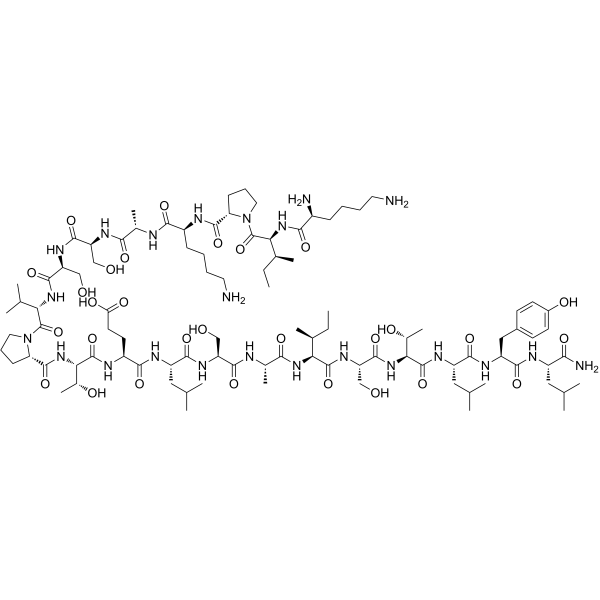
DV1 TFA is a CXCR4 inhibitor with anti-proteolytic properties that specifically blocks the binding of SDF-1α to its receptor. DV1 TFA inhibits the migration of breast cancer cells and enables the targeted delivery of avidin-PLGA nanoparticles to CXCR4-expressing cancer cells. DV1 TFA not only effectively suppresses the progression of metastatic breast cancer in mouse models, but also preferentially accumulates in brain tumor tissues rather than normal brain tissues, showing potential for inhibiting intracranial tumor metastasis. As a humoral immune stimulant, DV1 TFA induces the production of specific IgG, neutralizing antibodies and cellular immune responses, thereby providing the host with protection against lethal challenges. DV1 TFA has been applied to studies on CXCR4-expressing cancers, glioblastoma, dengue fever and other related diseases .
loading...
    loading...
Cat. No.: HY-P5832
CAS No.: 836606-84-9
Target:  

TGF-beta/Smad RUNX

Research Areas:  

Metabolic Disease

BMP2-derived peptide is an osteogenic inducer and BMP receptor ligand. BMP2-derived peptide binds to BMP receptors on the cell surface to form a complex, activates the downstream Smad signaling pathway, and regulates the expression of osteogenic transcription factors. BMP2-derived peptide effectively promotes the adhesion, proliferation, osteogenic differentiation and mineralization of bone marrow mesenchymal stem cells, significantly up-regulates the mRNA levels of OCN, Runx2 and type I collagen, and increases alkaline phosphatase activity and calcium deposition. BMP2-derived peptide induces osteoblast differentiation and ectopic bone regeneration, and improves cranial bone defect repair. Meanwhile, BMP2-derived peptide enhances the cytocompatibility of mesoporous silica nanoparticles, synergistically increases osteogenic activity with Dexamethasone (HY-14648), serving as an important tool for bone defect repair research .
loading...
    loading...
Cat. No.: HY-W043748
CAS No.: 38862-24-7
Synonyms: N-Succinimidyl acrylate
Research Areas:  

Others

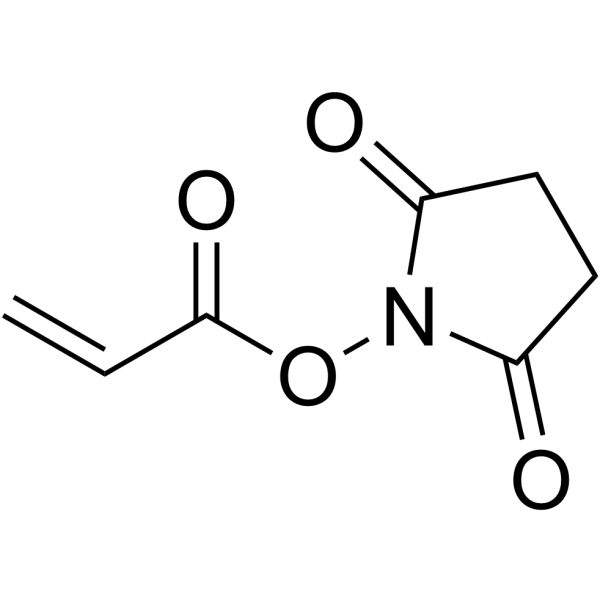
2,5-Dioxopyrrolidin-1-yl acrylate (N-Succinimidyl acrylate) is a lysine residue modifier and coupling monomer. 2,5-Dioxopyrrolidin-1-yl acrylate covalently modifies the primary amines of lysine residues on monoclonal anti-horseradish peroxidase IgG antibodies, neutralizes positive charges and replaces them with low-affinity acrylate groups. 2,5-Dioxopyrrolidin-1-yl acrylate inhibits the formation of rapid hard coronas on citrate-coated gold nanoparticles, induces antibody unfolding and loss of antigen-binding function, but does not affect the antigen-binding function of antibodies in free solution. 2,5-Dioxopyrrolidin-1-yl acrylate reacts with the ε-amino groups on lysine residues of L-asparaginase, introduces vinyl groups and generates N-hydroxysuccinimide. 2,5-Dioxopyrrolidin-1-yl acrylate regulates the activity of L-asparaginase .
loading...
    loading...
Cat. No.: HY-165603
CAS No.: 3006860-57-4
Si5-N14 is a key component of siloxane-incorporated lipid nanoparticles (SiLNP), possessing pro-vascular repair and anti-tumor activities. In the transgenic GFP mouse model, Si5-N14 can mediate CRISPR-Cas9 editing. In the Lewis lung carcinoma (LLC) tumor-bearing mouse model, Si5-N14 can knock out the expression of Vascular Endothelial Growth Factor Receptor 2 (VEGFR2) to exert an anti-tumor effect. In a mouse model of lung injury induced by viral infection, the delivery of Fibroblast Growth Factor-2 (FGF-2) mRNA via Si5-N14 can promote vascular repair, increase blood oxygen levels, and improve lung function. Si5-N14 shows promise for research in the fields of oncology, pneumonia, and cardiovascular diseases .
loading...
    loading...
Cat. No.: HY-112624B
CAS No.: 9004-54-0
Synonyms: Dextran 70; Dextran D70; Dextran T70(MW 64000-76000)
Dextran 70,000 is a high molecular weight polysaccharide formed by glucose linked by α-(1→6) glycosidic bonds. Dextran 70,000 can expand blood volume through colloidal osmotic pressure effect and inhibit cell adhesion and platelet aggregation through steric hindrance. At the same time, Dextran 70,000 can be used as a drug carrier to achieve targeted delivery through endocytosis. Dextran 70,000 is biologically inert and has low immunogenicity. It can be used for clinical blood volume expansion, anti-thrombotic research, and evaluation of vascular permeability in in vitro experiments. It can also be combined with fluorescent dyes for cell tracking and drug delivery research. The Dextran series of compounds are also natural polysaccharide drug carriers that can be connected to drugs through covalent bonding methods such as ester bonds, amide bonds or click chemistry, or self-assembled to form carriers such as nanoparticles and hydrogels. Dextran is biodegradable and biocompatible, and can achieve targeted delivery and controlled release of drugs. Dextran derivatives can prolong the half-life of drugs, increase local concentrations, and reduce the activity of immune clearance.
loading...
    loading...
Cat. No.: HY-112624H
CAS No.: 9004-54-0
Synonyms: Dextran 2; Dextran D2; Dextran T2(MW 1600-2400)
Dextran T2 (Dextran 2; Dextran T2(MW 1600-2400)) is a natural high molecular weight polysaccharide, the glycosidic bonds in its structure can be recognized by endo-dextranase and exo-dextranase. Dextran T2 (MW 2,000) breaks the glycosidic bonds in the enzymatic hydrolysis mechanism, releasing products such as D-glucose, Isomaltose (IM2), and Isomaltotriose (IM3). Dextran T2 (MW 2,000) can be used as a model substrate to characterize the catalytic properties of dextranase (such as optimal pH, temperature and product specificity), and to study enzymatic mechanism research and polysaccharide degradation pathways in glycobiology. The Dextran series of compounds are also a natural polysaccharide drug carrier, which can be connected to drugs through covalent bonding methods such as ester bonds, amide bonds or click chemistry, or self-assembled to form carriers such as nanoparticles and hydrogels. Dextran is biodegradable and biocompatible, and can achieve targeted delivery and controlled release of drugs. Dextran derivatives can prolong drug half-life, increase local concentration and reduce immune clearance activity .
loading...
    loading...
Cat. No.: HY-W075770
CAS No.: 1313-99-1
Synonyms: Nickel monoxide
Nickel(II) oxide (nickel monoxide) is a chemical warfare agent that can enter the body through the respiratory tract and other routes, distributing to organs such as the lungs and testes. The nanoparticle form of nickel(II) oxide (NiO NPs) exhibits antibacterial, anti-leishmanial, anti-diabetic, and anti-cancer activities. NiO NPs can be activated by ultraviolet and visible light, generating reactive oxygen species (ROS). Nickel(II) oxide induces oxidative stress by generating reactive oxygen species, activating the TGF-β1-mediated MAPK and PI3K/AKT pathways, disrupting the MMPs/TIMPs balance, and upregulating the expression of inflammatory factors (IL-1β, IL-6) and apoptosis-related molecules (Bax, caspase-3, p53), while inhibiting the activity of the anti-apoptotic molecule Bcl-2. Nickel(II) oxide induces cytotoxicity, promotes fibrosis, triggers inflammatory responses, and causes apoptosis. Nickel(II) oxide can be applied in research on the safety assessment of nanomaterials, such as in the context of pulmonary fibrosis and reproductive system toxicity .
loading...
    loading...
Cat. No.: HY-W583868R
CAS No.: 26662-94-2
Synonyms: 1,2-POPE (Standard); 16:0-18:1 PE (Standard)
Research Areas:  

Others

1-Palmitoyl-2-oleoyl-sn-glycero-3-PE (Standard) (1,2-POPE (Standard)) is the analytical standard of 1-Palmitoyl-2-oleoyl-sn-glycero-3-PE (HY-W583868). This product is intended for research and analytical applications. 1-Palmitoyl-2-oleoyl-sn-glycero-3-PE is a phosphatidylethanolamine (PE) lipid. 1-Palmitoyl-2-oleoyl-sn-glycero-3-PE can induce lipid bilayer to form a hexagonal phase (HII) structure in an acidic environment and promote membrane fusion. 1-Palmitoyl-2-oleoyl-sn-glycero-3-PE can enhance the endosomal escape ability of lipid nanoparticles (LNPs) and improve the cellular delivery efficiency of nucleic acid drugs such as mRNA. 1-Palmitoyl-2-oleoyl-sn-glycero-3-PE can be used for LNP carrier targeting of gene therapy and mRNA vaccines .
loading...
    loading...
Cat. No.: HY-W583868S
Synonyms: 1,2-POPE-d62; 16:0-18:1 PE-d62
1-Palmitoyl-2-oleoyl-sn-glycero-3-PE-d62 (1,2-POPE-d62) is the deuterium labeled 1-Palmitoyl-2-oleoyl-sn-glycero-3-PE. 1-Palmitoyl-2-oleoyl-sn-glycero-3-PE (1,2-POPE; 16:0-18:1 PE) is a phosphatidylethanolamine (PE) lipid. 1-Palmitoyl-2-oleoyl-sn-glycero-3-PE can induce lipid bilayer to form a hexagonal phase (HII) structure in an acidic environment and promote membrane fusion. 1-Palmitoyl-2-oleoyl-sn-glycero-3-PE can enhance the endosomal escape ability of lipid nanoparticles (LNPs) and improve the cellular delivery efficiency of nucleic acid drugs such as mRNA. 1-Palmitoyl-2-oleoyl-sn-glycero-3-PE can be used for LNP carrier targeting of gene therapy and mRNA vaccines .
loading...
    loading...
Cat. No.: HY-L251
93 compounds

Ionizable lipids are a class of specialized, functional lipid molecules with pH-sensitive charge characteristics. They are primarily divided into two major categories: ionizable cationic lipids and ionizable anionic lipids, though the term typically specifies ionizable cationic lipids within the biomedical field. Structurally, these lipids consist of an ionizable hydrophilic headgroup, a biodegradable linker, and hydrophobic tails. Their primary application is serving as the key delivery vehicle in lipid nanoparticles (LNPs) to encapsulate negatively charged nucleic acid macromolecules, such as mRNA vaccines, siRNA therapeutics, and CRISPR gene-editing components. In a physiological, neutral environment, they remain electrically neutral to minimize systemic toxicity and prolong circulation time. Upon entering the acidic microenvironment of cellular endosomes, however, they undergo protonation to become positively charged, thereby inducing membrane fusion and enabling the highly efficient intracellular release of the nucleic acid cargo. Consequently, they serve as the technological cornerstone for bringing nucleic acid therapies into clinical application.

To accelerate the translational process of cutting-edge nucleic acid drugs, MCE has meticulously constructed an ionizable lipid compound library containing 93 high-performance molecules, aiming to provide researchers and pharmaceutical professionals with a high-throughput, multi-dimensional lipid screening platform.

Cat. No.: HY-148775
Purity:  ≥95.0%
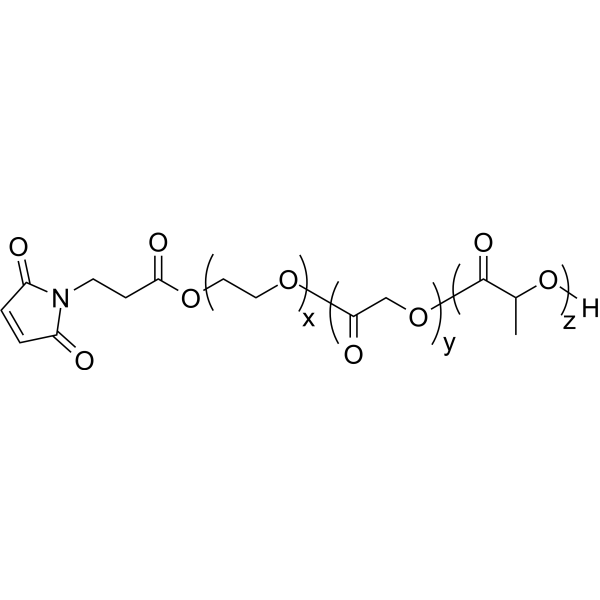
PLGA-PEG-MAL (60kDa-3.4kDa, LA:GA ratio 75:25) is a biodegradable amphipathic polymeric nanocarrier of poly (lactic-co-glycolic acid)-block-poly (ethylene glycol) (PLGA-PEG-Mal) that allows covalent modification of functional molecules. PLGA-PEG-MAL (60kDa-3.4kDa, LA:GA ratio 75:25) modified with Angiopep-2 can cross the blood-brain barrier and exhibits targeting selectivity for glioblastoma cells. PLGA-PEG-MAL (60kDa-3.4kDa, LA:GA ratio 75:25) can capture tumor-derived protein antigens, and exerts immunomodulatory effects when conjugated with anti-OX40 antibody; when used in combination with A2-CL/Dbait nanoparticles and radiotherapy, it prolongs survival time and reduces tumor volume in glioblastoma mouse models. PLGA-PEG-MAL (60kDa-3.4kDa, LA:GA ratio 75:25) can be used for studies related to bacterial wound infections and glioblastoma .
loading...
    loading...

