1197 Results for "

nanoparticles.

" in MedChemExpress (MCE) Product Catalog:
Products (1197)

1197 Results for "nanoparticles." in MCE Product Catalog:

Cat. No.: HY-188109
Target:  

mRNA

Research Areas:  

Inflammation/Immunology

Cas9-T2A-GFP mRNA (N1-Methylpseudo-UTP)-LNP is a lipid nanoparticle (LNP) encapsulating Cas9-T2A-GFP mRNA (N1-Methylpseudo-UTP). Cas9-T2A-GFP mRNA (N1-Methylpseudo-UTP) encodes a Cas9 nuclease gene with two nuclear localization signals (NLS) and green fluorescent protein (GFP), which can be used for genome engineering experiments. N1-Methylpseudo-UTP can reduce the immunogenicity of the generated mRNA.
loading...
    loading...
Cat. No.: HY-N2362S9
CAS No.: 221080-39-3
Synonyms: DL-2-Aminopropionic acid-13C2,15N2
DL-Alanine- 13C2, 15N (DL-2-Aminopropionic acid- 13C2, 15N) is 13C and 15N labeled DL-Alanine. DL-alanine, an orally active amino acid, is the racemic compound of L- and D-alanine. DL-alanine is employed both as a reducing and a capping agent, used with silver nitrate aqueous solutions for the production of nanoparticles. DL-alanine can be used for the research of transition metals chelation, such as Cu(II), Zn(II), Cd(11). DL-alanine, a sweetener, is classed together with glycine and sodium saccharin. DL-alanine plays a key role in the glucose-alanine cycle between tissues and liver .
loading...
    loading...
Cat. No.: HY-144012H
CAS No.: 474922-84-4
Synonyms: 16:0 PEG5000 PE; 1,2-Dipalmitoyl-sn-glycero-3-phosphoethanolamine-N-[methoxy(polyethylene glycol)-5000] ammonium
Target:  

Liposome

Research Areas:  

Others

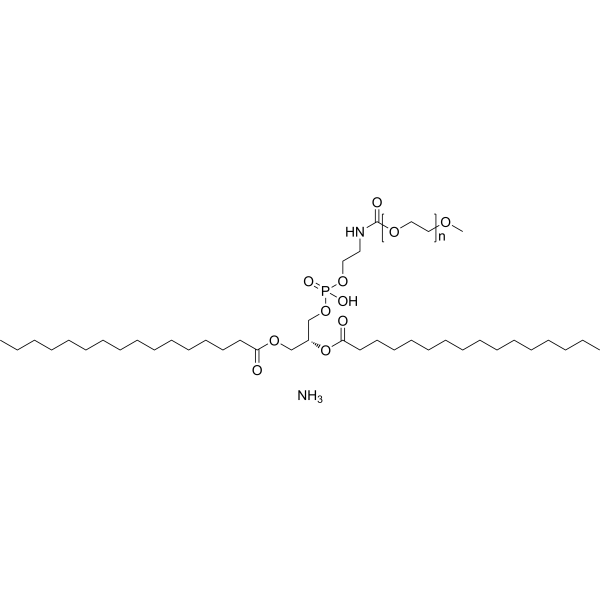
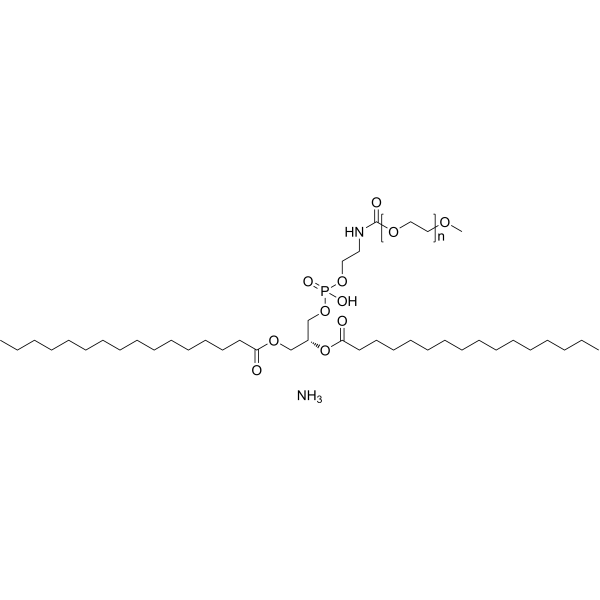
DPPE-PEG5000 (16:0 PEG5000 PE) is a polymer-lipid conjugate and LipoParticle stabilizer with a PEG chain of 5,000 g/mol molecular weight attached to its polar head, and it can be internalized by biological membranes. DPPE-PEG5000 enables LipoParticle to maintain colloidal stability after 20-fold dilution in PBS or cell culture medium, and prevents aggregate formation during lyophilization and rehydration. DPPE-PEG5000 helps enhance the non-cytotoxic property of LipoParticle formulations against human osteoblasts. DPPE-PEG5000 serves as a PEG lipid functional end group for synthesizing liposomes (LPs), is used in the design of conjugated polymer nanoparticles, and applies to research related to bone and joint infections .
loading...
    loading...
Cat. No.: HY-154636
CAS No.: 8012-95-1
Research Areas:  

Endocrinology

Liquid Paraffin is a petroleum-derived mixture of saturated hydrocarbons and an orally active fecal lubricant. Liquid Paraffin is widely used in studies of constipation and fecal incontinence in children through its lubricating effect and the osmotic effect generated by its conversion to hydroxy fatty acids. Liquid Paraffin has high safety, is non-carcinogenic, and does not affect fat-soluble vitamin levels with long-term use. Liquid Paraffin does not cause abdominal pain or electrolyte disorders, but may lead to lipoid pneumonia and granulomas caused by rectal administration. Liquid Paraffin can also be used as a phase change material for thermal energy storage, or combined with nanoparticles to form a protective boundary film to reduce mechanical wear .
loading...
    loading...
Cat. No.: HY-159751
Research Areas:  

Inflammation/Immunology

HS101 is a vaccine adjuvant and a key component in vaccines. Adjuvants can be divided into immunostimulants and delivery systems. Adjuvants can not only enhance the intensity and durability of immune responses, but also affect the type of immune responses. On the one hand, immunostimulants promote the production of antigen signals and co-stimulatory signals by targeting Toll-like receptors (TLRs) and other pattern recognition receptors (PRRs), leading to the maturation and activation of antigen presenting cells (APCs), thereby enhancing adaptive immune responses; on the other hand, delivery systems are carrier materials that promote antigen delivery by prolonging the bioavailability of loaded antigens and targeting antigens to lymph nodes or APCs. Several common adjuvants include: saponins, TLRs agonists, polysaccharides, nanoparticles, cytokines, and mucosal adjuvants .
loading...
    loading...
Cat. No.: HY-159753
Research Areas:  

Inflammation/Immunology

HS105 is a vaccine adjuvant and a key component in vaccines. Adjuvants can be divided into immunostimulants and delivery systems. Adjuvants can not only enhance the intensity and durability of immune responses, but also affect the type of immune responses. On the one hand, immunostimulants promote the production of antigen signals and co-stimulatory signals by targeting Toll-like receptors (TLRs) and other pattern recognition receptors (PRRs), leading to the maturation and activation of antigen presenting cells (APCs), thereby enhancing adaptive immune responses; on the other hand, delivery systems are carrier materials that promote antigen delivery by prolonging the bioavailability of loaded antigens and targeting antigens to lymph nodes or APCs. Several common adjuvants include: saponins, TLRs agonists, polysaccharides, nanoparticles, cytokines, and mucosal adjuvants .
loading...
    loading...
Cat. No.: HY-181967
Research Areas:  

Cancer

PROTAC PARP1 degrader-5 is a PARP1 PROTAC degrader with a DC50 of 0.12 μM. PROTAC PARP1 degrader-5 hijacks the ubiquitin-proteasome system via catalytic ternary complex formation to drive sustained PARP1 degradation. PROTAC PARP1 degrader-5 induces DNA damage, drives marginal cytosolic double-stranded DNA accumulation in tumor cells, and up-regulates PD-L1 surface expression in tumor cells. PROTAC PARP1 degrader-5 shows tumor growth inhibition activity in murine melanoma models when encapsulated in lipid nanoparticles. PROTAC PARP1 degrader-5 can be used for the research of cancer, such as melanoma .
loading...
    loading...
Cat. No.: HY-185985
CAS No.: 3113145-60-8
Target:  

Liposome

Research Areas:  

Neurological Disease

Am-Ka12K4 is a weakly positively charged peptide-based ionizable lipid. Am-Ka12K4 induces membrane disruption under endosomal pH conditions and possesses high lipid fusion capacity. Am-Ka12K4 forms tightly packed, stable lipid nanoparticles. Am-Ka12K4 mediates in vivo mRNA delivery, exhibits inherent liver tropism, and can be modified to adjust organ tropism, enabling selective mRNA delivery to the spleen, lung, or thymus. Am-Ka12K4 is applicable to research related to repetitive mild traumatic brain injury .
loading...
    loading...
Cat. No.: HY-N2362S7
CAS No.: 144476-54-0
Synonyms: DL-2-Aminopropionic acid-13C3-4
DL-Alanine- 13C3-4 (DL-2-Aminopropionic acid- 13C3-4) is the 13C-labeled DL-Alanine (HY-N2362). DL-Alanine, an orally active amino acid, is the racemic compound of L- and D-alanine. DL-alanine is employed both as a reducing and a capping agent, used with silver nitrate aqueous solutions for the production of nanoparticles. DL-alanine can be used for the research of transition metals chelation, such as Cu(II), Zn(II), Cd(11). DL-alanine, a sweetener, is classed together with glycine and sodium saccharin. DL-alanine plays a key role in the glucose-alanine cycle between tissues and liver .
loading...
    loading...
Cat. No.: HY-P11902
Research Areas:  

Cancer

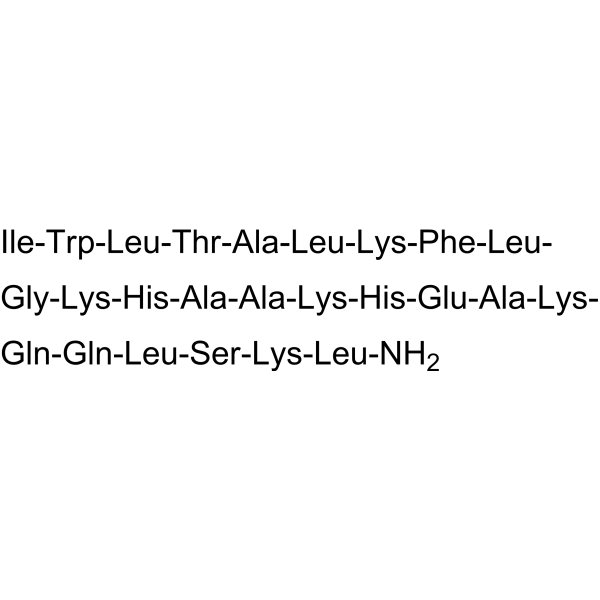
IRS1 is an integrin-targeted, ROS-responsive self-assembling peptide prodrug molecule with selective anti-cancer activity against integrin-overexpressing tumor cells. IRS1 contains an RGD motif for integrin binding, can covalently bind to DR4/DR5, and promotes DR4/DR5 aggregation. After oxidation by ROS, IRS1 undergoes a morphological transition from nanoparticles to nanofibers, exposes the pharmacophore of Chlorambucil (HY-13593), disrupts cell membrane integrity, activates the extrinsic apoptosis pathway, and can penetrate and inhibit the three-dimensional uveal melanoma spheroid model. IRS1 can be used for the research of uveal melanoma .
loading...
    loading...
Cat. No.: HY-P4121
CAS No.: 1898254-09-5
Target:  

Potassium Channel

Research Areas:  

Inflammation/Immunology Cancer

L17E is an attenuated cationic amphiphilic lytic (ACAL) peptide that can be used to deliver a variety of macromolecules, including proteins, antibodies, and DNA nanostructures. L17E inserts and cleaves the membrane structure through electrostatic interaction, enabling intracellular escape. The efficiency of L17E-mediated delivery is strongly correlated with the expression level of KCNN4 (the gene encoding the calcium-activated potassium channel KCa3.1). L17E also promotes the cellular uptake of macromolecules by inducing micropinocytosis. L17E can be further optimized and improved through dimerization strategies and in combination with other delivery systems, such as nuclear localization signal peptides and cell membrane-coated nanoparticles .
loading...
    loading...
Cat. No.: HY-W013078R
CAS No.: 998-07-2
Synonyms: DMPE (Standard)
1,2-Dimyristoyl-sn-glycero-3-phosphoethanolamine (DMPE) (Standard) is the analytical standard of 1,2-Dimyristoyl-sn-glycero-3-phosphoethanolamine (DMPE) (HY-W013078). This product is intended for research and analytical applications. 1,2-Dimyristoyl-sn-glycero-3-phosphoethanolamine (DMPE) is a zwitterionic saturated phosphatidylethanolamine bearing two myristoyl (C14:0) chains, and serves as a model membrane component, a neutral lipid component of lipid nanoparticles, and a cocoa butter crystallization nucleating agent. 1,2-Dimyristoyl-sn-glycero-3-phosphoethanolamine is used in nucleic acid delivery, construction of artificial cell membrane models, and research on urothelial carcinoma .
loading...
    loading...
Cat. No.: HY-W013078S
CAS No.: 326495-41-4
Synonyms: DMPE-d54
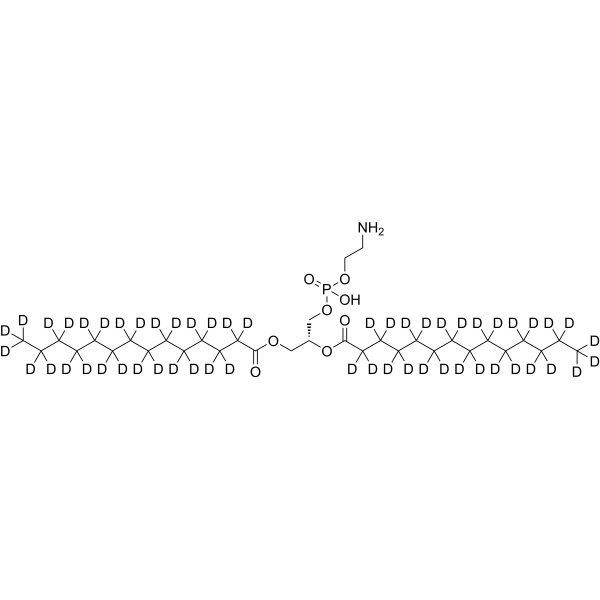
1,2-Dimyristoyl-sn-glycero-3-phosphoethanolamine (DMPE)-d54 is the deuterated-labeled 1,2-Dimyristoyl-sn-glycero-3-phosphoethanolamine (DMPE) (HY-W013078). 1,2-Dimyristoyl-sn-glycero-3-phosphoethanolamine (DMPE) is a zwitterionic saturated phosphatidylethanolamine bearing two myristoyl (C14:0) chains, and serves as a model membrane component, a neutral lipid component of lipid nanoparticles, and a cocoa butter crystallization nucleating agent. 1,2-Dimyristoyl-sn-glycero-3-phosphoethanolamine is used in nucleic acid delivery, construction of artificial cell membrane models, and research on urothelial carcinoma .
loading...
    loading...
Cat. No.: HY-W440913
Research Areas:  

Cancer

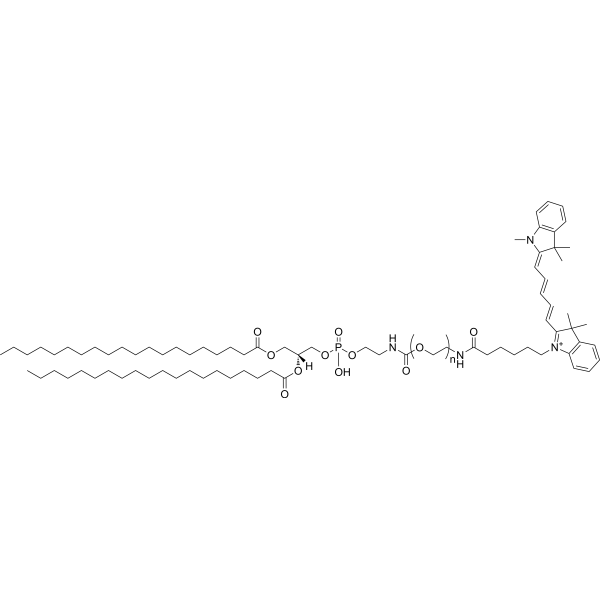
DSPE-PEG5000-Cy5 is a fluorescently labeled PEGylated phospholipid. After intravenous injection, DSPE-PEG5000-Cy5 shows only extremely low fluorescence accumulation at tumor sites in orthotopic tumor-bearing mice, and can be used as a negative control for evaluating tumor accumulation of nanoparticles. DSPE-PEG5000-Cy5 can serve as a fluorescent marker to prepare Cy5-labeled NPs-DPPA and NPs-DPPA (C3F8) for pharmacokinetic and biodistribution studies in mice. DSPE-PEG5000-Cy5 is widely applicable to research in fields related to triple-negative breast cancer, hepatocellular carcinoma and so on .
loading...
    loading...
Cat. No.: HY-144012
CAS No.: 474922-84-4
Purity:  99.83%
Synonyms: 16:0 PEG2000 PE ammonium; 1,2-Dipalmitoyl-sn-glycero-3-phosphoethanolamine-N-[methoxy(polyethylene glycol)-2000] ammonium
Target:  

Liposome

Research Areas:  

Others

DPPE-PEG2000 ammonium (16:0 PEG5000 PE) is a polymer-lipid conjugate and LipoParticle stabilizer with a PEG chain of 5,000 g/mol molecular weight attached to its polar head, and it can be internalized by biological membranes. DPPE-PEG2000 ammonium enables LipoParticle to maintain colloidal stability after 20-fold dilution in PBS or cell culture medium, and prevents aggregate formation during lyophilization and rehydration. DPPE-PEG2000 ammonium helps enhance the non-cytotoxic property of LipoParticle formulations against human osteoblasts. DPPE-PEG2000 ammonium serves as a PEG lipid functional end group for synthesizing liposomes (LPs), is used in the design of conjugated polymer nanoparticles, and applies to research related to bone and joint infections .
loading...
    loading...
Cat. No.: HY-148775A
CAS No.: 743423-15-6
MPEG-PLGA (21500-26500) is a biodegradable amphipathic polymeric nanocarrier of poly (lactic-co-glycolic acid)-block-poly (ethylene glycol) (PLGA-PEG-Mal) that allows covalent modification of functional molecules. MPEG-PLGA (21500-26500) modified with Angiopep-2 can cross the blood-brain barrier and exhibits targeting selectivity for glioblastoma cells. MPEG-PLGA (21500-26500) can capture tumor-derived protein antigens, and exerts immunomodulatory effects when conjugated with anti-OX40 antibody; when used in combination with A2-CL/Dbait nanoparticles and radiotherapy, it prolongs survival time and reduces tumor volume in glioblastoma mouse models. MPEG-PLGA (21500-26500) can be used for studies related to bacterial wound infections and glioblastoma .
loading...
    loading...
Cat. No.: HY-178721
CAS No.: 2768690-22-6
Lithocholic amide-C2-N(didecane) (Compound LC10) is a Lithocholic acid (HY-B0172) analogue. Lithocholic amide-C2-N(didecane) can form lipid nanoparticles spontaneously in the aqueous milieu, permeate through the skin, penetrate the deeper dermal layers, and exert anti-inflammatory effects against psoriasis-like chronic skin inflammations. Lithocholic amide-C2-N(didecane) can inhibit abnormal proliferation of keratinocytes, downregulate the mRNA expression of the psoriasis-associated receptor EphA2 and reduce serum levels of multiple pro-inflammatory factors such as IL-1α, IL-1β, and IFN-γ by inhibiting activation of the Th17/Th2 inflammatory pathway .
loading...
    loading...
Cat. No.: HY-184605
Metal nanoclusters, containing anywhere from a few to hundreds of atoms, bridge the gap between nanoparticles and molecular compounds, typically exhibiting molecular-like electrical and optical properties. Furthermore, metal nanoclusters possess advantages such as significant Stokes scattering and size- and ligand-dependent fluorescence characteristics, making them an emerging class of materials for constructing fluorescence platforms. Current research primarily focuses on the synthesis and application of noble metal nanoclusters like gold and silver. However, copper, belonging to the same group as gold and silver in the periodic table, is inexpensive, environmentally friendly, readily available, has a simple preparation process, and low toxicity, making it widely applicable in industry. In addition, copper nanoclusters exhibit better photostability than organic dyes and better environmental friendliness than semiconductor quantum dots, making them suitable for trace detection.
loading...
    loading...

