1288 Results for "

EGF-R

" in MedChemExpress (MCE) Product Catalog:
Products (1288)

1288 Results for "EGF-R" in MCE Product Catalog:

Cat. No.: HY-112609
CAS No.: 2207569-08-0
Purity:  99.95%
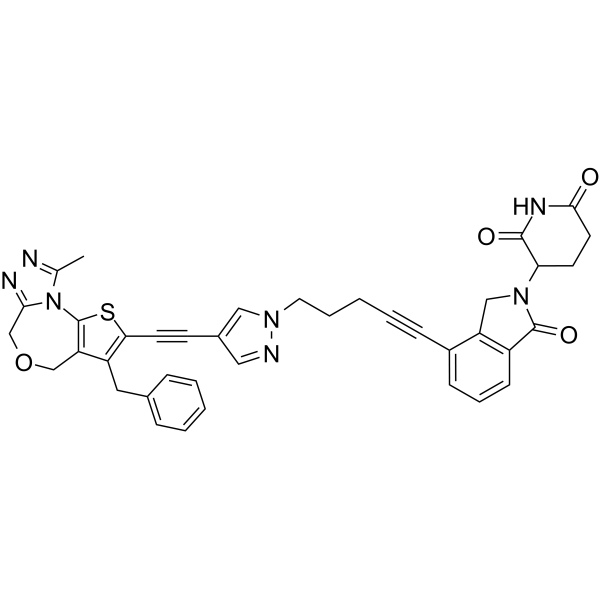
QCA570 is a pan-BET-BRD PROTAC degrader. QCA570 degrades BRD2/3/4 and BRDT via cereblon and the ubiquitin-proteasome pathway, inhibits the expression of c-MYC, EZH2 and Mcl-1, induces tumor cell apoptosis, cycle arrest and regression, and exerts a synergistic inhibitory effect on Osimertinib (HY-15772)-resistant EGFR-mutant non-small cell lung cancer. QCA570 can be used in the research of acute myeloid leukemia, acute lymphoblastic leukemia, bladder cancer and non-small cell lung cancer .
loading...
    loading...
Cat. No.: HY-178004
Target:  

VEGFR Apoptosis

Research Areas:  

Cancer

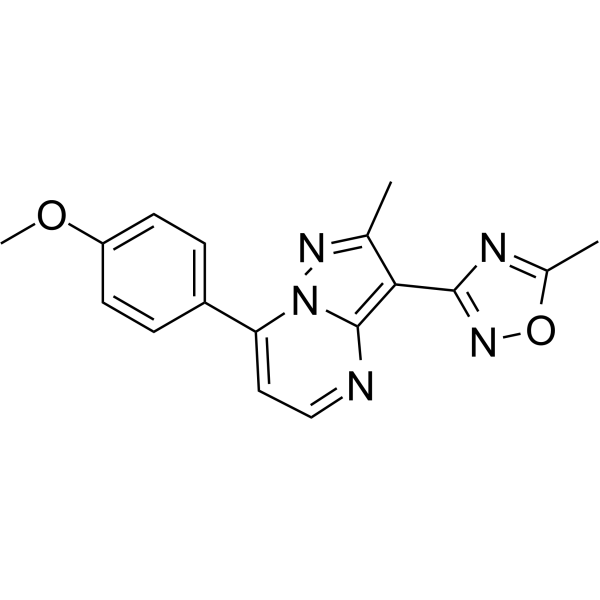
VEGFR-2-IN-73 is a potent and selective VEGFR-2 inhibitor, showing selectively inhibition of VEGFR-2 (IC50 = 0.0787 μM) over EGFR (IC50 = 1.31 μM). VEGFR-2-IN-73 demonstrates potent antiproliferative activity across multiple cancer cell lines. VEGFR-2-IN-73 induces G2/M and Pre-G1 phase arrest and significantly enhances apoptosis. VEGFR-2-IN-73 can be used in cancer research, such as colorectal carcinoma, hepatocellular carcinoma, and breast cancer .
loading...
    loading...
Cat. No.: HY-189200
CAS No.: 3006101-94-3
Target:  

YAP Hippo (MST)

Research Areas:  

Cancer

AZ'4331 is an orally active pan-TEAD family inhibitor, with an IC50 of 0.381 μM against TEAD1, 0.020 μM against TEAD2, 0.014 μM against TEAD3, and 0.031 μM against TEAD4. AZ'4331 slows cell cycle progression. AZ'4331 exerts effects in cancer xenograft models with dysregulated Hippo pathway. AZ'4331 can be used to study cancers with altered Hippo pathways, including mesothelioma, head and neck squamous cell carcinoma, and EGFR-mutant non-small cell lung cancer .
loading...
    loading...
Cat. No.: HY-N20662
CAS No.: 2779545-15-0
(+)-Neoalbaconol is a selective Akt/PDK1 inhibitor (with an IC50 of 10 μM against hPDK1). (+)-Neoalbaconol selectively inhibits cancer cell proliferation, and induces energy depletion, apoptosis, autophagy and necroptosis in cancer cells. In addition, (+)-Neoalbaconol downregulates cIAP1/2 and TRAFs to activate non-canonical NF-κB and promote TNFα transcription, blocks EGFR-mediated VEGF production and receptor activation, and mediates cell necrosis via the RIPK3-ROS-dependent pathway. (+)-Neoalbaconol can be used in research related to nasopharyngeal carcinoma, melanoma, breast cancer and gastric cancer .
loading...
    loading...
Cat. No.: HY-N2441
CAS No.: 74805-90-6
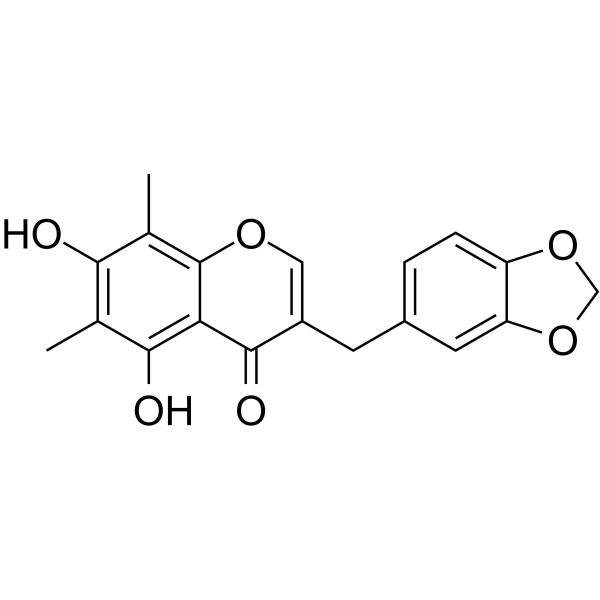
Methylophiopogonone A is a homoisoflavonoid compound found in the tuberous roots of Ophiopogon japonicus. Methylophiopogonone A inhibits lipopolysaccharide-induced NO production in mouse microglia with an IC50 of 19.2 μM. Methylophiopogonone A blocks the proliferation of LX-2 hepatic stellate cells and downregulates TGF-β1-induced expressions of type I collagen and α-SMA. Methylophiopogonone A blocks RELA/EGFR-mediated hepatic stellate cell activation, inhibits the MAPK12 pathway to reduce extracellular matrix accumulation, and simultaneously suppresses inflammatory signal transduction. Methylophiopogonone A can be used in studies related to chronic hepatitis B-associated hepatic fibrosis and neuroinflammation .
loading...
    loading...
Cat. No.: HY-P991748

Target:  

EGFR ERK

Research Areas:  

Cancer

Anti-Human/Mouse Amphiregulin Antibody (AR37) is an antibody targeting amphiregulin (AREG), with a Kd value of 3.24 nM for the human protein and 6.40 nM for the mouse protein. Anti-Human/Mouse Amphiregulin Antibody (AR37) blocks the autocrine activation of the AREG-EGFR-ERK axis. Anti-Human/Mouse Amphiregulin Antibody (AR37) inhibits the proliferation and migration of ovarian cancer cells. Anti-Human/Mouse Amphiregulin Antibody (AR37) prolongs the survival of immunocompetent mice bearing syngeneic ovarian cancer tumors. Anti-Human/Mouse Amphiregulin Antibody (AR37) is applicable to ovarian cancer-related research .
loading...
    loading...
Cat. No.: HY-P706169
Purity:  ≥ 95%, as determined by reducing SDS-PAGE.
Synonyms: EGFR; Epidermal Growth Factor Receptor Variant EX12_14del; Prev. ERBB; Cell Proliferation-Inducing Protein 61; ERBB1; Cell Growth Inhibiting Protein 40; ERRP; Receptor Protein-Tyrosine Kinase; Receptor Tyrosine-Protein Kinase ErbB-1; Alternative Protein E
Species:  
Others
Source:  
E. coli
loading...
    loading...
Cat. No.: HY-L080
106 compounds

Targeted cancer therapies are drugs or other substances that block the growth and spread of cancer by interfering with specific molecular targets that are involved in the growth, progression, and spread of cancer.

There are several different types of targeted therapy. The most common types are small-molecule drugs and monoclonal antibodies. Small-molecule drugs are small enough to enter cells easily, so they are used for targets that are inside cells, while monoclonal antibodies are usually used for targets that are located outside the cells. Because of high specificity, low side effect and potent anticancer activity, targeted therapy has become the mainstream of new anti-tumor drugs. Various targeted therapies have been approved by FDA and used in the treatment of diseases.

MCE carefully collects a unique of 106 targeted therapy drugs used in cancer treatment. MCE Targeted therapy drug library is a useful tool for the research of targeted therapy.

Cat. No.: HY-122585
CAS No.: 2138321-18-1
Target:  

MMP Src FAK

Research Areas:  

Cancer

proMMP-9 inhibitor-3c (compound 3c) is a potent proMMP-9 inhibitor. proMMP-9 inhibitor-3c is specific for binding to the proMMP-9 hemopexin-like domain (Kd=320 nM). proMMP-9 inhibitor-3c disruption of MMP-9 homodimerization prevents association of proMMP-9 with both α4β1 integrin and CD44 and results in the dissociation of EGFR. This disruption results in decreased phosphorylation of Src and its downstream target proteins focal adhesion kinase (FAK) and paxillin (PAX) .
loading...
    loading...
Cat. No.: HY-124398
CAS No.: 591242-70-5
Target:  

PAK

Research Areas:  

Cancer

GL-1196 is an inhibitor of PAK4. GL-1196 can suppress the proliferation and invasion of gastric cancer cells. GL-1196 inhibits PAK4-mediated signaling pathways. GL-1196 can hinder the proliferation of human gastric cancer cells through suppressing PAK4/c-Src/EGFR/CyclinD1 and CDK4/6. GL-1196 can reduce filamentous pseudopodia formation and induce filamentous pseudopodia formation and promote cell elongation in SGC7901 and BGC823 cells. GL-1196 can be studied in anti-cancer research .
loading...
    loading...
Cat. No.: HY-156470
CAS No.: 3009081-73-3
Multi-kinase-IN-6 (compound 10e) is a multikinase inhibitor that shows good enzyme inhibitory activity against TrkA, ALK2, c-KIT, EGFR, PIM1, CK2α, CHK1, and CDK2. Multi-kinase-IN-6 reveals antiproliferative activity against MCF7, HCT116 and EKVX with IC50 values of 3.36 μM, 1.40 μM and 3.49 μM, respectively. Multi-kinase-IN-6 shows cell cycle arrest at the G1/S phase and G1 phase in MCF7 and HCT116 cells with good apoptotic effect .
loading...
    loading...
Cat. No.: HY-170704
CAS No.: 1480940-53-1
Target:  

Liposome

Research Areas:  

Metabolic Disease Cancer

DSPE-PEG2000-TCO is a click chemistry coupling partner. DSPE-PEG2000-TCO undergoes a reverse electron-demand Diels-Alder click reaction to form a covalent linkage with tetrazine-modified Cetuximab (HY-P9905). DSPE-PEG2000-TCO maintains the stability of lipid nanoparticles (LNPs) and has high mRNA encapsulation efficiency, which supports cellular uptake and mRNA transfection. DSPE-PEG2000-TCO is used to prepare EGFR-targeted and APN-targeted mRNA-loaded LNPs, mediating receptor-dependent endocytosis, mRNA delivery, and intestinal epithelial transcytosis .
loading...
    loading...
Cat. No.: HY-179098
Research Areas:  

Cancer

Multi-target kinase-IN-8 (3d) is an anti-cancer agent. Multi-target kinase-IN-8 exhibits inhibitory activity against various protein kinases (B-Raf V600E (IC50 = 0.078 µg/mL), c-Met (IC50 = 0.405 µg/mL), Pim-1 (IC50 = 1.053 µg/mL), EGFR WT (IC50 = 0.177 µg/mL), VEGFR-2 (IC50 = 0.275 µg/mL)). Multi-target kinase-IN-8 can induce cell cycle arrest and promote early and late apoptosis. Multi-target kinase-IN-8 is commonly used in cancer research .
loading...
    loading...
Cat. No.: HY-187240
Research Areas:  

Cancer

DMG-PEG1000-GE11 is a functionalized PEGylated lipid conjugate composed of three modular components: dimyristoylglycerol (DMG) as the lipid anchoring group, a polyethylene glycol (PEG) spacer arm with a molecular weight of 1000 Da, and GE11 peptide (YHWYGYTPQNVI) (HY-P10128) as the terminal targeting/functional ligand. DMG-PEG1000-GE11 can be incorporated into liposomes, lipid nanoparticles (LNPs), or other nanocarriers to confer ligand-directed targeting capability against EGFR (HER1) on the surface of various epithelial tumor cells (lung cancer, breast cancer, colorectal cancer, head and neck cancer).
loading...
    loading...
Cat. No.: HY-187240A
Research Areas:  

Cancer

DMG-PEG2000-GE11 is a functionalized PEGylated lipid conjugate composed of three modular components: dimyristoylglycerol (DMG) as the lipid anchoring group, a polyethylene glycol (PEG) spacer arm with a molecular weight of 2000 Da, and GE11 peptide (YHWYGYTPQNVI) (HY-P10128) as the terminal targeting/functional ligand. DMG-PEG2000-GE11 can be incorporated into liposomes, lipid nanoparticles (LNPs), or other nanocarriers to confer ligand-directed targeting capability against EGFR (HER1) on the surface of various epithelial tumor cells (lung cancer, breast cancer, colorectal cancer, head and neck cancer).
loading...
    loading...
Cat. No.: HY-187240B
Research Areas:  

Cancer

DMG-PEG3400-GE11 is a functionalized PEGylated lipid conjugate composed of three modular components: dimyristoylglycerol (DMG) as the lipid anchoring group, a polyethylene glycol (PEG) spacer arm with a molecular weight of 3400 Da, and GE11 peptide (YHWYGYTPQNVI) (HY-P10128) as the terminal targeting/functional ligand. DMG-PEG3400-GE11 can be incorporated into liposomes, lipid nanoparticles (LNPs), or other nanocarriers to confer ligand-directed targeting capability against EGFR (HER1) on the surface of various epithelial tumor cells (lung cancer, breast cancer, colorectal cancer, head and neck cancer).
loading...
    loading...
Cat. No.: HY-187240C
Research Areas:  

Cancer

DMG-PEG5000-GE11 is a functionalized PEGylated lipid conjugate composed of three modular components: dimyristoylglycerol (DMG) as the lipid anchoring group, a polyethylene glycol (PEG) spacer arm with a molecular weight of 5000 Da, and GE11 peptide (YHWYGYTPQNVI) (HY-P10128) as the terminal targeting/functional ligand. DMG-PEG5000-GE11 can be incorporated into liposomes, lipid nanoparticles (LNPs), or other nanocarriers to confer ligand-directed targeting capability against EGFR (HER1) on the surface of various epithelial tumor cells (lung cancer, breast cancer, colorectal cancer, head and neck cancer).
loading...
    loading...
Cat. No.: HY-187312
Research Areas:  

Cancer

DOPE-PEG1000-GE11 is a functionalized PEGylated lipid conjugate composed of three modular components: dioleoylphosphatidylethanolamine (DOPE) as the lipid anchoring group, a polyethylene glycol (PEG) spacer arm with a molecular weight of 1000 Da, and GE11 peptide (YHWYGYTPQNVI) (HY-P10128) as the terminal targeting/functional ligand. DSG-PEG2000-GE11 can be incorporated into liposomes, lipid nanoparticles (LNPs), or other nanocarriers to confer ligand-directed targeting capability against EGFR (HER1) on the surface of various epithelial tumor cells (lung cancer, breast cancer, colorectal cancer, head and neck cancer).
loading...
    loading...
Cat. No.: HY-187312A
Research Areas:  

Cancer

DOPE-PEG2000-GE11 is a functionalized PEGylated lipid conjugate composed of three modular components: dioleoylphosphatidylethanolamine (DOPE) as the lipid anchoring group, a polyethylene glycol (PEG) spacer arm with a molecular weight of 2000 Da, and GE11 peptide (YHWYGYTPQNVI) (HY-P10128) as the terminal targeting/functional ligand. DOPE-PEG2000-GE11 can be incorporated into liposomes, lipid nanoparticles (LNPs), or other nanocarriers to confer ligand-directed targeting capability against EGFR (HER1) on the surface of various epithelial tumor cells (lung cancer, breast cancer, colorectal cancer, head and neck cancer).
loading...
    loading...
Cat. No.: HY-187312B
Research Areas:  

Cancer

DOPE-PEG3400-GE11 is a functionalized PEGylated lipid conjugate composed of three modular components: dioleoylphosphatidylethanolamine (DOPE) as the lipid anchoring group, a polyethylene glycol (PEG) spacer arm with a molecular weight of 3400 Da, and GE11 peptide (YHWYGYTPQNVI) (HY-P10128) as the terminal targeting/functional ligand. DOPE-PEG3400-GE11 can be incorporated into liposomes, lipid nanoparticles (LNPs), or other nanocarriers to confer ligand-directed targeting capability against EGFR (HER1) on the surface of various epithelial tumor cells (lung cancer, breast cancer, colorectal cancer, head and neck cancer).
loading...
    loading...

