
156 Results for "

artificial

" in MedChemExpress (MCE) Product Catalog:
Products (156)

156 Results for "artificial" in MCE Product Catalog:

Cat. No.: HY-W011053GL
CAS No.: 165450-17-9
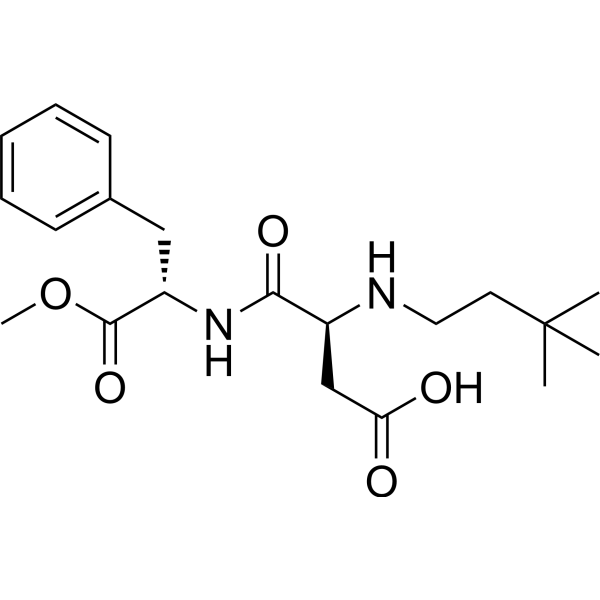
Neotame (GMP Like) is the GMP Like class Neotame (HY-W011053) that can be used as pharmaceutical excipients. Neotame is a derivative of Aspartame (HY-B0361) and is a flavor enhancer and low-caloric, non-nutritive, high-intensity artificial sweetener that is 7000-13,000 times sweeter than sugar. Neotame causes intestinal epithelial cell death at high concentrations. Neotame induces Apoptosis of Caco-2 cells .
loading...
    loading...
Cat. No.: HY-W011053R
CAS No.: 165450-17-9
Neotame (Standard) is the analytical standard of Neotame (HY-W011053). This product is intended for research and analytical applications. Neotame is a derivative of Aspartame (HY-B0361) and is a flavor enhancer and low-caloric, non-nutritive, high-intensity artificial sweetener that is 7000-13,000 times sweeter than sugar. Neotame causes intestinal epithelial cell death at high concentrations. Neotame induces Apoptosis of Caco-2 cells .
loading...
    loading...
Cat. No.: HY-W099547
CAS No.: 2197-63-9
Target:  

Liposome

Research Areas:  

Others

Dihexadecyl hydrogen phosphateIt is an organic compound belonging to phospholipids. It's often used as an emulsifier, which means it helps mix two substances together that don't usually mix well, such as oil and water. Dihexadecyl hydrogen phosphateIt has several applications in the food industry, especially in the production of processed foods where it improves texture and stability. Additionally, it has applications in the pharmaceutical industry where it can be used ain the generation of micelles, liposomes, and other types of artificial membranes.
loading...
    loading...
Cat. No.: HY-P3186A
CAS No.: 9028-53-9
Synonyms: GDH-NAD
Research Areas:  

Metabolic Disease

NAD-dependent glucose dehydrogenase (GDH-NAD) is an oxidoreductase that uses NAD + as a coenzyme, specifically catalyzes the dehydrogenation of glucose to gluconolactone, and reduces NAD + to NADH. NAD-dependent glucose dehydrogenase exhibits favorable substrate selectivity and stability, and is not affected by oxygen .
loading...
    loading...
Cat. No.: HY-161860
Target:  

Bacterial

Research Areas:  

Cancer

Antibacterial agent 233 (Compound 7c) exhibits inhibitory efficacy against Helicobacter pylori with MIC of 0.4-1.6 μg/mL. Antibacterial agent 233 inhibits jack bean urease (IC50 is 0.27 μg/mL), changes the permeability of H. pylori cell membrane, causes the leakage of cellular contents. Antibacterial agent 233 exhibits metabolic stability in whole blood and artificial gastric fluid. Antibacterial agent 233 exhibits antitumor efficacy against U2OS in mice .
loading...
    loading...
Cat. No.: HY-P4371
CAS No.: 177942-21-1
Research Areas:  

Inflammation/Immunology

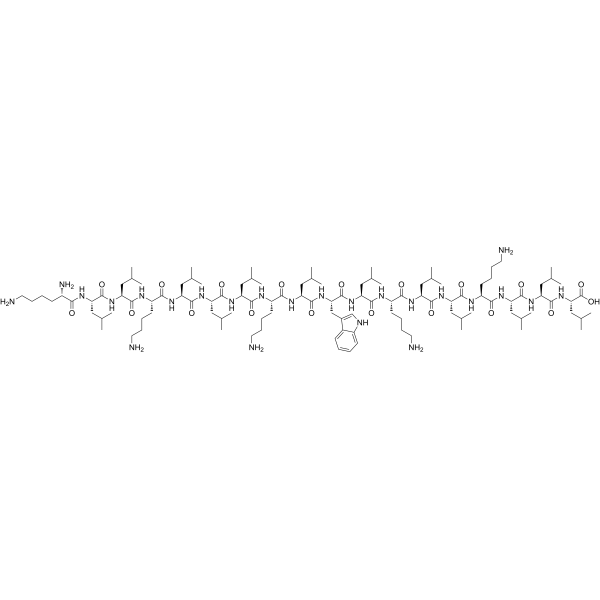
Hel 13-5 is a monomeric, lipophilic, basic amphipathic α-helical synthetic peptide composed of 18 amino acid residues. Hel 13-5 is designed as a substitute for proteins in artificial pulmonary surfactants, and it mimics the interaction between the N-terminal fragment of human pulmonary surfactant protein B and lipids. Hel 13-5 can bind to phospholipids for the development of pulmonary surfactant model systems. Hel 13-5 can be used in studies related to respiratory distress syndrome .
loading...
    loading...
Cat. No.: HY-W013078
CAS No.: 998-07-2
Synonyms: DMPE
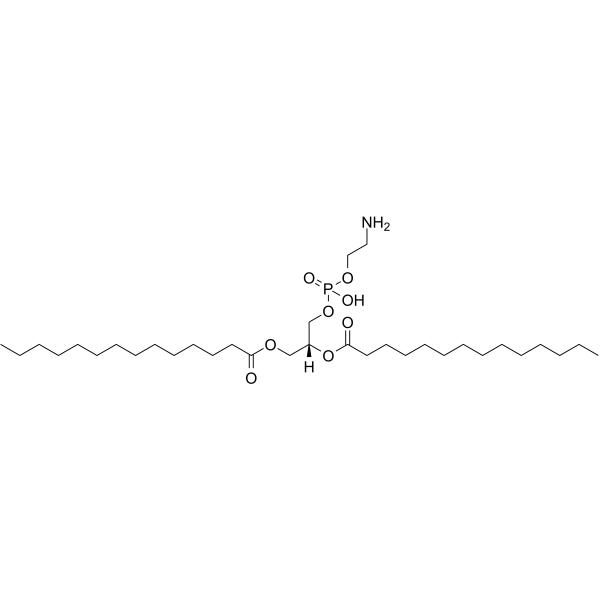
1,2-Dimyristoyl-sn-glycero-3-phosphoethanolamine (DMPE) is a zwitterionic saturated phosphatidylethanolamine bearing two myristoyl (C14:0) chains, and serves as a model membrane component, a neutral lipid component of lipid nanoparticles, and a cocoa butter crystallization nucleating agent. 1,2-Dimyristoyl-sn-glycero-3-phosphoethanolamine is used in nucleic acid delivery, construction of artificial cell membrane models, and research on urothelial carcinoma .
loading...
    loading...
Cat. No.: HY-W116335A
CAS No.: 21645-51-2
Dried aluminum hydroxide gel, United States Pharmacopeia (USP) Reference Standard is a commonly used antacid with remarkable compound adhesion and release activity. Dried aluminum hydroxide gel, United States Pharmacopeia (USP) Reference Standard can effectively neutralize gastric acid and relieve stomach discomfort. Dried aluminum hydroxide gel, United States Pharmacopeia (USP) Reference Standard is also often used as an adjuvant in vaccines to enhance immune responses. Dried aluminum hydroxide gel, United States Pharmacopeia (USP) Reference Standard can improve the stability and bioavailability of compounds in preparations .
loading...
    loading...
Cat. No.: HY-108298R
CAS No.: 306-94-5
Synonyms: PP 5 (Standard); Perfluorodecahydronaphthalene (Standard)
Research Areas:  

Others

Perfluorodecalin (Standard) is the analytical standard of Perfluorodecalin (HY-108298). This product is intended for research and analytical applications. Perfluorodecalin liquids are largrly used in vitreoretinal surgery. Perfluorodecalin with tamponade lasting more than two days is detrimental to the retina in the case of rabbit. Perfluorodecalin can be used for the research of giant retinal tears . Perfluorodecalin is a non-toxic, non-flammable, thermally stable, non-bio-accumulating O2-carrier and used as artificial blood . Perfluorodecalin enhances bone regeneration and cell viability .
loading...
    loading...
Cat. No.: HY-W714524A
CAS No.: 40290-44-6
Synonyms: 16:0-18:1 PS (POPS) free acid
Target:  

Liposome

Research Areas:  

Others

2-Oleoyl-1-palmitoyl-sn-glycero-3-phospho-L-serine (16:0-18:1 PS (POPS) free acid) is an anionic phospholipid with oleic acid (18:1) and palmitic acid (16:0) tails containing a carboxylic acid (COOH) and amine (NH2) in their head group. 2-Oleoyl-1-palmitoyl-sn-glycero-3-phospho-L-serine has been used in the preparation of lipid-mixing vesicles, liposomes, and artificial membranes .
loading...
    loading...
Cat. No.: HY-134174
CAS No.: 62600-81-1
Purity:  ≥99.0%
Synonyms: 16:0-18:1 PA
Research Areas:  

Others

1-Palmitoyl-2-oleoyl-sn-glycero-3-phosphate (16:0-18:1 PA) is an anionic phospholipid containing a monounsaturated acyl chain. 1-Palmitoyl-2-oleoyl-sn-glycero-3-phosphate exhibits activity in modulating biological membrane fluidity and participating in cell signal transduction. 1-Palmitoyl-2-oleoyl-sn-glycero-3-phosphate is used in the preparation of micelles, liposomes, and other types of artificial membranes .
loading...
    loading...
Cat. No.: HY-134174A
CAS No.: 169437-35-8
Purity:  ≥99.0%
Synonyms: 16:0-18:1 PA sodium
Research Areas:  

Others

1-Palmitoyl-2-oleoyl-sn-glycero-3-phosphate (16:0-18:1 PA) sodium is an anionic phospholipid containing a monounsaturated acyl chain. 1-Palmitoyl-2-oleoyl-sn-glycero-3-phosphate sodium exhibits activity in modulating biological membrane fluidity and participating in cell signal transduction. 1-Palmitoyl-2-oleoyl-sn-glycero-3-phosphate sodium is used in the preparation of micelles, liposomes, and other types of artificial membranes .
loading...
    loading...
Cat. No.: HY-B2221C
CAS No.: 9000-11-7
Synonyms: Carboxymethyl cellulose CM-32; CM-32
CM Cellulose CM-32 (Carboxymethyl cellulose) is a cellulose derivative. CM Cellulose CM-32 has a wide range of applications in the biomedical field, including tissue engineering, wound dressing, absorbent nonwovens, fabrication of 3D-scaffolds for biocompatible implants, artificial organs or mimics of extracellular polymeric matrix and diagnosis of various diseases. CM Cellulose CM-32 can decrease osteoclasts formation. CM Cellulose CM-32 can be used as a biological material or organic compound for life science related research .
loading...
    loading...
Cat. No.: HY-P11753
CAS No.: 1187540-64-2
IKVAVC is a derivative peptide of IKVAV with an artificially added cysteine (Cys) at its C-terminus. IKVAVC retains all the biological activities of the original IKVAV, mainly acting as a neural adhesion/differentiation signaling peptide, and is equipped with an engineered linker arm that enables covalent conjugation to molecular materials. IKVAV inhibits the migration and activation of fibroblasts, downregulates the TGF-β1 signaling pathway and endoplasmic reticulum stress, and promotes nerve repair. IKVAV regulates the phenotype of macrophages, shifting them from the pro-inflammatory M1 type to the pro-reparative M2 type .
loading...
    loading...
Cat. No.: HY-P11753A
IKVAVC acetate is a derivative peptide of IKVAV with an artificially added cysteine (Cys) at its C-terminus. IKVAVC acetate retains all the biological activities of the original IKVAV, mainly acting as a neural adhesion/differentiation signaling peptide, and is equipped with an engineered linker arm that enables covalent conjugation to molecular materials. IKVAV inhibits the migration and activation of fibroblasts, downregulates the TGF-β1 signaling pathway and endoplasmic reticulum stress, and promotes nerve repair. IKVAV regulates the phenotype of macrophages, shifting them from the pro-inflammatory M1 type to the pro-reparative M2 type .
loading...
    loading...
Cat. No.: HY-W339838S
Synonyms: 14:0 Lyso PG-d27 sodium
1-Myristoyl-2-hydroxy-sn-glycero-3-PG-d27 sodium (14:0 Lyso PG-d27) is the deuterium labeled 1-Myristoyl-2-hydroxy-sn-glycero-3-PG sodium (HY-W339838). 1-Myristoyl-2-hydroxy-sn-glycero-3-PG sodium is a lysophospholipid containing myristic acid (14:0) at the sn-1 position. It has been used in the generation of micelles, liposomes, and other types of artificial membranes, including lipid-based drug carrier systems.
loading...
    loading...
Cat. No.: HY-P2995A
CAS No.: 9008-02-0
Hemoglobin porcine is an oxygen-transporting protein present in the blood of domestic pigs, and also an oxygen carrier with higher oxygen affinity than human hemoglobin. Hemoglobin porcine exhibits cooperative oxygen-binding properties, with weaker heme-heme interactions than those of human hemoglobin .
loading...
    loading...
Cat. No.: HY-151746
CAS No.: 1993176-75-2
Target:  

ADC Linkers

Research Areas:  

Others

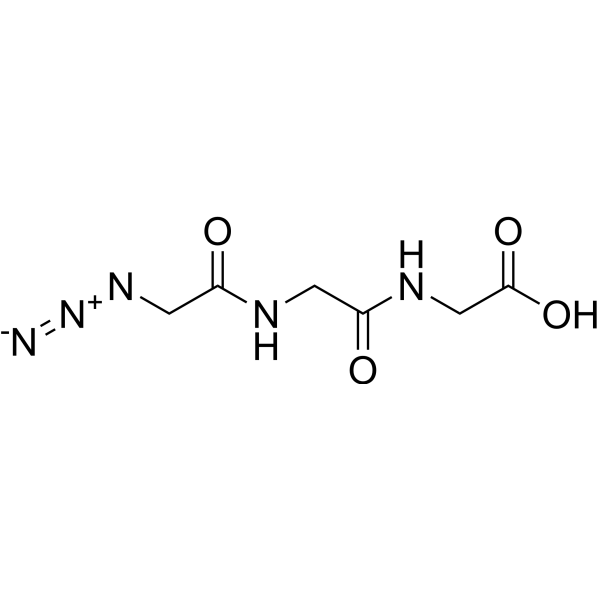
N3-Gly-Gly-Gly-OH is a oligo-Gly click chemistry reagent containing an azide group. Oligo-Gly also has been used as linker to combine different subunits of dimeric or oligomeric proteins or to create artificial multi-domain proteins. By modification into Gly-Gly-Gly-Ser motifs high solubility can be achieved . N3-Gly-Gly-Gly-OH is a click chemistry reagent, it contains an Azide group and can undergo copper-catalyzed azide-alkyne cycloaddition reaction (CuAAc) with molecules containing Alkyne groups. It can also undergo strain-promoted alkyne-azide cycloaddition (SPAAC) reactions with molecules containing DBCO or BCN groups.
loading...
    loading...
Cat. No.: HY-P11328
CAS No.: 245120-10-9
Target:  

Integrin

Research Areas:  

Others

GFOGER peptide is an artificially synthesized collagen-mimetic sequence. GFOGER peptide acts as a ligand for α2β1, α11β1 and α1β1 integrins, thereby supporting integrin-mediated cell adhesion to collagen. GFOGER peptide triggers signaling pathways mediated by the α2β1 integrin receptor and upregulates osteoblast differentiation. GFOGER peptide accelerates and enhances bone formation at sites of refractory femoral defects. GFOGER peptide can be passively adsorbed onto polymer scaffolds for cell-free/growth factor-free bone formation. GFOGER peptide is used in biomaterials such as hydrogels and 3D bioinks for tissue engineering research including bone formation .
loading...
    loading...
Cat. No.: HY-P5642A
Synonyms: RC-101 TFA
Retrocyclin-101 (RC-101) TFA is an artificially synthesized, cyclic-structured θ-defensin, a broad-spectrum agent with antimicrobial (covering viruses, bacteria, and fungi) activity and anti-inflammatory activity. Retrocyclin-101 TFA can inhibit the serine protease activity of ZIKV NS2B-NS3, with an IC50 of 7.20 μM. Retrocyclin-101 TFA has significant inhibitory activity against HIV, SARS-CoV-2, flaviviruses, influenza viruses, HSV-1/2, Staphylococcus aureus, etc. Retrocyclin-101 TFA inhibits the signal transduction mediated by TLR4 and TLR2, reducing the expression of pro-inflammatory cytokines .
loading...
    loading...

