
158 Results for "

liquid

" in MedChemExpress (MCE) Product Catalog:
Products (158)

158 Results for "liquid" in MCE Product Catalog:

Cat. No.: HY-108298
CAS No.: 306-94-5
Purity:  ≥98.0%
Synonyms: PP 5; Perfluorodecahydronaphthalene
Research Areas:  

Neurological Disease

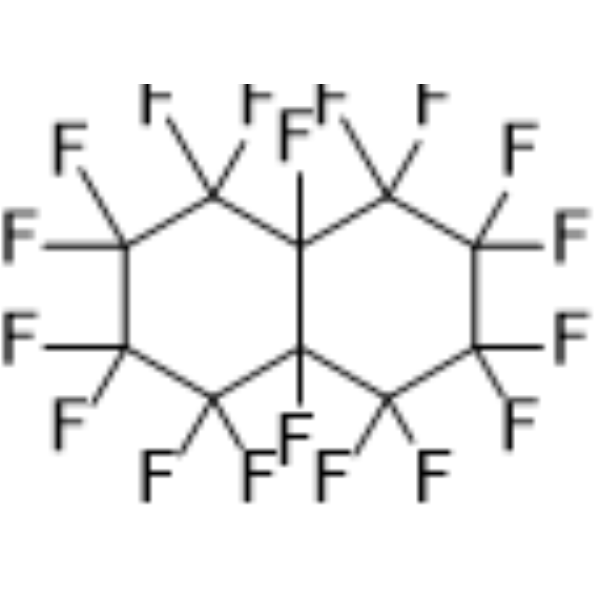
Perfluorodecalin liquids are largrly used in vitreoretinal surgery. Perfluorodecalin with tamponade lasting more than two days is detrimental to the retina in the case of rabbit. Perfluorodecalin can be used for the research of giant retinal tears . Perfluorodecalin is a non-toxic, non-flammable, thermally stable, non-bio-accumulating O2-carrier and used as artificial blood . Perfluorodecalin enhances bone regeneration and cell viability .
loading...
    loading...
Cat. No.: HY-122522
CAS No.: 50423-15-9
Target:  

Glycosidase Parasite

Research Areas:  

Infection

2-Methylcardol triene is a phenol found in cashew nut shell liquid that inhibits α-glucosidase (IC50=39.6 μM). 2-Methylcardol triene is schistosomicidal, killing 100% of adult S. mansoni worms after 24 hours when used at concentrations of 100 and 200 μM. 2-Methylcardol triene has been used as a starting material for the synthesis of mono- and bis-benzoxazines.
loading...
    loading...
Cat. No.: HY-134082A
CAS No.: 84601-19-4
Target:  

Phospholipase

Research Areas:  

Inflammation/Immunology

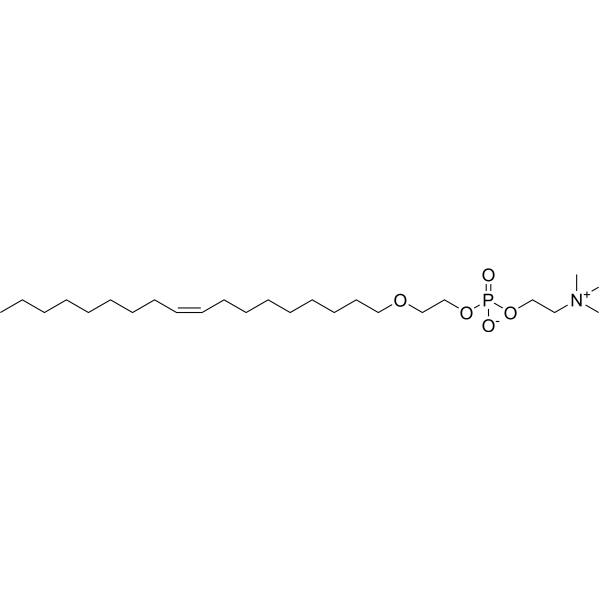
(Z)-Oleyloxyethyl phosphorylcholine ((Z)-OPC) is an isomer of Oleyloxyethyl phosphorylcholine (OPC). Oleyloxyethyl phosphorylcholine is an inhibitor of secreted Phospholipase A2 (sPLA2), which is involved in the biosynthesis of proinflammatory lipid media. Oleyloxyethyl phosphorylcholine can be used to study inflammatory diseases. Oleyloxyethyl phosphorylcholine also modified the red blood membrane and was used to bind the oxygen-carrying liquid perfluorocarbons as an antivenom agent to reduce toxin-induced hemolysis .
loading...
    loading...
Cat. No.: HY-182934
Research Areas:  

Others

Cy5 MMTr CPG 1000 is a type of fluorescently labeled solid-phase carrier used for the automated synthesis of solid-phase oligonucleotides. During the synthesis process, the Cy5 fluorescent dye can be directly covalently attached to the 3′-end of the oligonucleotide without the need for subsequent liquid-phase labeling. Cy5 MMTr CPG 1000 can be used for the synthesis of 3′-Cy5 labeled oligonucleotides.
loading...
    loading...
Cat. No.: HY-N7103
CAS No.: 111-62-6
Target:  

Endogenous Metabolite

Research Areas:  

Others

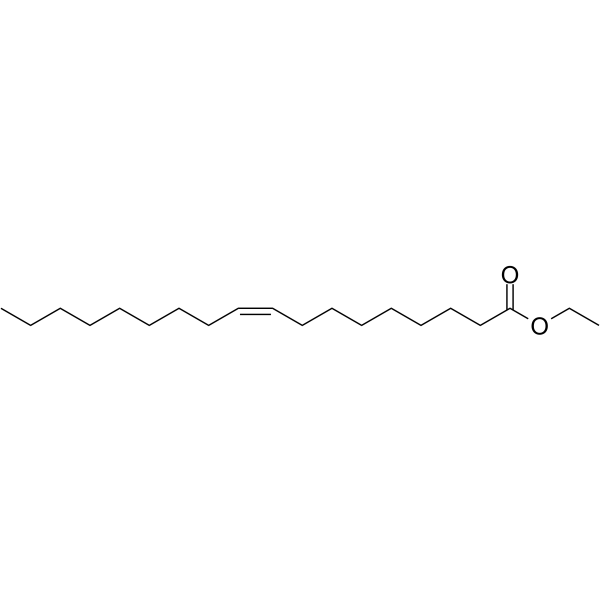
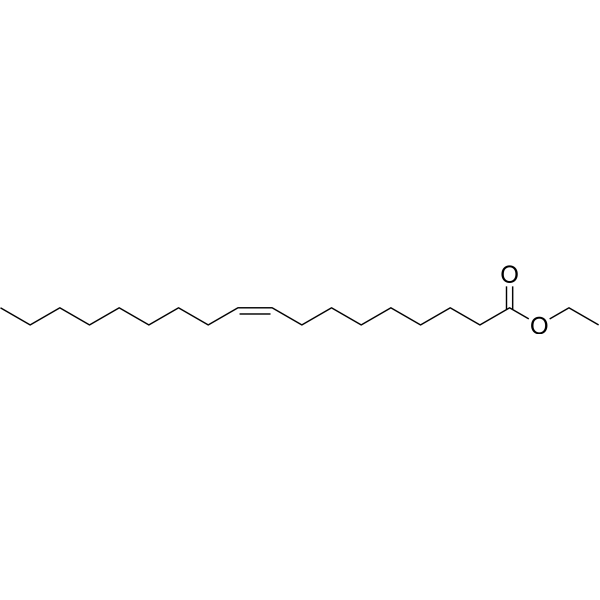
Ethyl oleate is an orally active fatty acid ester formed from the condensation of oleic acid and ethanol. Ethyl oleate is the main fatty acid ethyl ester in the blood after alcohol ingestion. Ethyl oleate has no obvious toxicity to rats and its absorption, distribution and excretionare similar to triacylglycerol. Ethyl oleate can accelerate the drying process of certain foods and can also be used as a liquid lipid component in nanostructured lipid carriers .
loading...
    loading...
Cat. No.: HY-W099644
CAS No.: 37910-77-3
Synonyms: Ethyl erucate
Research Areas:  

Others

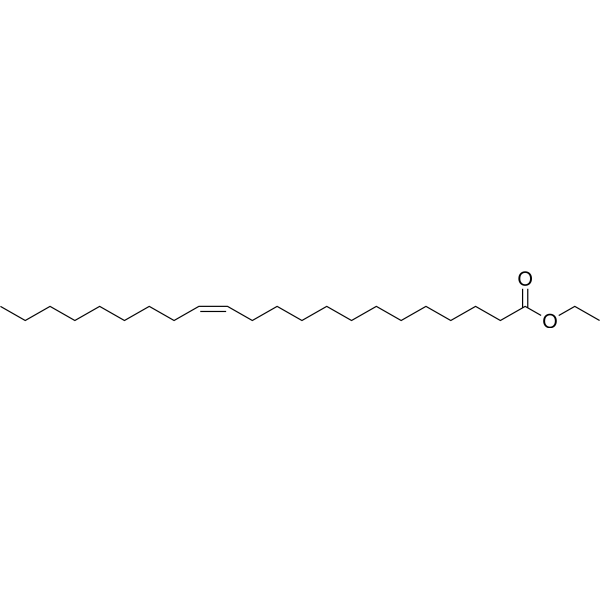
Ethyl docos-13-enoate is a colorless or pale yellow liquid with a sweet floral aroma, used as a flavoring agent in the food industry and as a flavor enhancer in perfumes and colognes. It is also found in some vegetable oils and is used as a surfactant and emulsifier in personal care products. Ethyl docos-13-enoate is a versatile compound used in various industries due to its pleasant odor and ability to mix ingredients together.
loading...
    loading...
Cat. No.: HY-W094846R
CAS No.: 629-59-4
Synonyms: n-Tetradecane (Standard)
Research Areas:  

Others

Tetradecane (n-Tetradecane) Standard is the analytical standard of Tetradecane (HY-W094846). This product is intended for research and analytical applications. Tetradecane (n-Tetradecane) is a low-temperature phase change material with a phase change temperature of 5°C and a latent heat of phase change of 220 J/g. Tetradecane undergoes solid-liquid phase transition around 5°C, and achieves temperature regulation by absorbing or releasing latent heat.
loading...
    loading...
Cat. No.: HY-W094846S
CAS No.: 204244-81-5
Synonyms: n-Tetradecane-d30
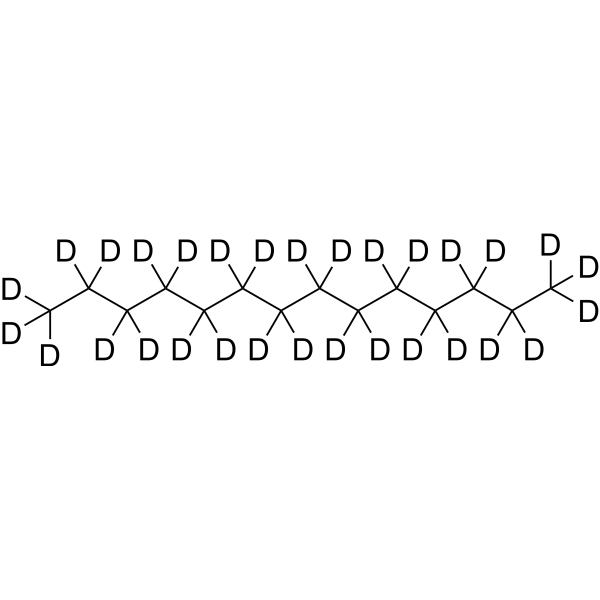
Tetradecane-d30 (n-Tetradecane-d30) is the deuterium labeled Tetradecane (HY-W094846). Tetradecane (n-Tetradecane) is a low-temperature phase change material with a phase change temperature of 5°C and a latent heat of phase change of 220 J/g. Tetradecane undergoes solid-liquid phase transition around 5°C, and achieves temperature regulation by absorbing or releasing latent heat .
loading...
    loading...
Cat. No.: HY-108299
CAS No.: 338-83-0
Purity:  ≥98.0%
Synonyms: Perfluorotripropylamine; FTPA; Tris(perfluoropropyl)amine
Research Areas:  

Others

Perfluamine (Perfluorotripropylamine; FTPA; Tris (perfluoropropyl) amine) is a colorless, odorless, inert liquid with high gas-dissolving capacity. Perfluamine is non-toxic in rats, forms stable emulsions, is slowly eliminated from organs, and dissolves and transports oxygen. Perfluamine can be used to prepare oil-in-water emulsions as oxygen-carrying media . Perfluamine can be used in organic synthesis-related research, such as encapsulation in PLGA-PEG nanocarriers to obtain PLGA-PEG/FC-3283 emulsions .
loading...
    loading...
Cat. No.: HY-N7854
CAS No.: 103904-74-1
Synonyms: Anacardic acid 15:2
Target:  

Bacterial

Research Areas:  

Infection

Anacardic acid diene is a polyunsaturated form of anacardic acid (HY-N2020) that has been found in cashew nut shell liquid. It has antibacterial activity against methicillin resistant S. aureus (MRSA) and S. mutans (MICs=12.5 and 6.25 μg/mL, respectively). Anacardic acid diene has schistosomicidal activity against adult S. mansoni worms when used at a concentration of 100 μM. It also inhibits soybean lipoxygenase-1 in a time-dependent manner.
loading...
    loading...
Cat. No.: HY-W007410
CAS No.: 1550-35-2
Target:  

Drug Intermediate

Research Areas:  

Others

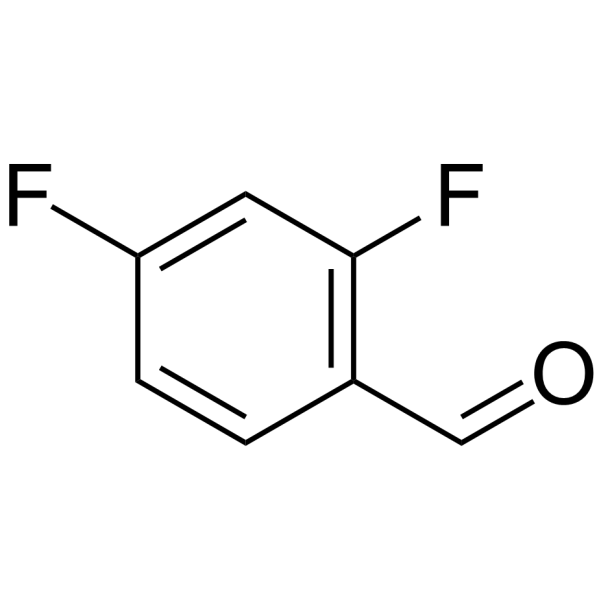
2,4-Difluorobenzaldehyde is a fluorinated benzaldehyde derivative commonly used as an intermediate in organic synthesis. 2,4-Difluorobenzaldehyde serves as a substrate for enzymatic oxidation and undergoes the Baeyer-Villiger oxidation reaction under the catalysis of 4-hydroxyacetophenone monooxygenase. 2,4-Difluorobenzaldehyde acts as a synthetic precursor for trichalcone enzyme inhibitors. 2,4-Difluorobenzaldehyde is applicable to related research in fields such as medicine, pesticides, and liquid crystal materials .
loading...
    loading...
Cat. No.: HY-W127717
CAS No.: 51142-49-5
Synonyms: Perfluoro-compound FC-40
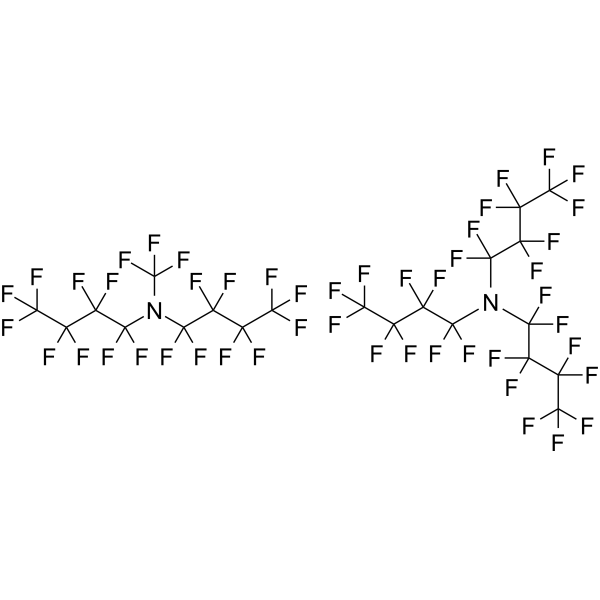
Fluorinert FC-40 is a non-conductive liquid containing a mixture of fluorinated compounds. It is commonly used as a cooling and heat transfer fluid in electronics, especially in high-performance computer systems and electronic components that generate a lot of heat. Fluorinert FC-40 has various properties that make it ideal for these applications, including its low viscosity, high thermal stability and excellent dielectric strength. In addition, it can be used as an inert solvent in chemical reactions and a lubricant in mechanical systems.
loading...
    loading...
Cat. No.: HY-104035E
CAS No.: 63148-62-9
Synonyms: Poly(dimethylsiloxane) (PDMS), viscosity 100 cSt (25 °C); Dimethylsilcone fluid, viscosity 100 cSt (25 °C)
Dimethyl silicone oil, viscosity 100 cSt (25 °C) (Poly(dimethylsiloxane) (PDMS), viscosity 100 cSt (25 °C); Dimethylsilcone fluid, viscosity 100 cSt (25 °C)) is a transparent, colorless, and inert polydimethylsiloxane liquid with stable properties. Dimethyl silicone oil, viscosity 100 cSt (25 °C) exhibits high dielectric strength and excellent lubrication, cushioning, and thermal conductivity. Dimethyl silicone oil, viscosity 100 cSt (25 °C) can be used in cosmetics, lubricants, and electronics.
loading...
    loading...
Cat. No.: HY-154739A
CAS No.: 112945-52-5
Research Areas:  

Others

Amorphous silica can be used as an excipient, such as viscosifier, suspending agent, tablet disintegrating agent, adsorbent dispersing agent as liquid in powders. Pharmaceutical excipients, or pharmaceutical auxiliaries, refer to other chemical substances used in the pharmaceutical process other than pharmaceutical ingredients. Pharmaceutical excipients generally refer to inactive ingredients in pharmaceutical preparations, which can improve the stability, solubility and processability of pharmaceutical preparations. Pharmaceutical excipients also affect the absorption, distribution, metabolism, and elimination (ADME) processes of co-administered drugs .
loading...
    loading...
Cat. No.: HY-187855
CAS No.: 17364-19-1
Synonyms: 18:0-LPC
1-Stearoyl-lysophosphatidylcholine (18:0-LPC) is a lysophosphatidylcholine generated by iPLA2β-mediated hydrolysis of phosphatidylcholine and present in circulating LDL; under different hydration conditions, it can form a bilayer gel phase, bilayer liquid crystalline phase, or micellar phase, and serves as a key metabolic node in the JSRV-induced OPA protein-metabolite network. 1-Stearoyl-lysophosphatidylcholine can be used in research on nonalcoholic steatohepatitis and ovine pulmonary adenocarcinoma .
loading...
    loading...
Cat. No.: HY-N7103R
CAS No.: 111-62-6
Ethyl oleate (Standard) is the analytical standard of Ethyl oleate. This product is intended for research and analytical applications. Ethyl oleate is an orally active fatty acid ester formed from the condensation of oleic acid and ethanol. Ethyl oleate is the main fatty acid ethyl ester in the blood after alcohol ingestion. Ethyl oleate has no obvious toxicity to rats and its absorption, distribution and excretionare similar to triacylglycerol. Ethyl oleate can accelerate the drying process of certain foods and can also be used as a liquid lipid component in nanostructured lipid carriers .
loading...
    loading...
Cat. No.: HY-108298R
CAS No.: 306-94-5
Synonyms: PP 5 (Standard); Perfluorodecahydronaphthalene (Standard)
Research Areas:  

Others

Perfluorodecalin (Standard) is the analytical standard of Perfluorodecalin (HY-108298). This product is intended for research and analytical applications. Perfluorodecalin liquids are largrly used in vitreoretinal surgery. Perfluorodecalin with tamponade lasting more than two days is detrimental to the retina in the case of rabbit. Perfluorodecalin can be used for the research of giant retinal tears . Perfluorodecalin is a non-toxic, non-flammable, thermally stable, non-bio-accumulating O2-carrier and used as artificial blood . Perfluorodecalin enhances bone regeneration and cell viability .
loading...
    loading...
Cat. No.: HY-120512
CAS No.: 13159-16-5
5-Phenyl-4E-pentenol is a product of the peroxidase-catalyzed reduction of PPHP. 5-Phenyl-4E-pentenol can be rapidly isolated by solid phase extraction and quantified by isocratic reversed-phase high performance liquid chromatography (HPLC) with UV detection. 5-Phenyl-4E-pentenol is a fluorescent dye that can be used to determine the kinetic properties of heme-containing and non-heme peroxidases and to evaluate the ability of oxidative compounds to serve as substrates for peroxidase reduction. .
loading...
    loading...
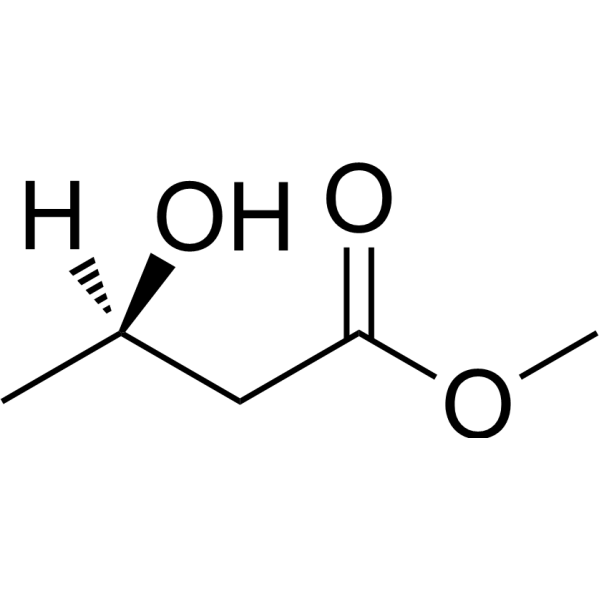
Cat. No.: HY-W010507
CAS No.: 3976-69-0
Synonyms: Methyl (R)-(-)-3-hydroxybutyrate
(R)-Methyl 3-hydroxybutanoate, (R)-Methyl 3-hydroxybutanoate is an enantiomer, from the perspective of the methyl (-CH3) group, the hydroxyl (-OH) group on the third carbon atom The group faces to the right, a colorless transparent liquid, soluble in organic solvents such as ethanol and ether, insoluble in water, (R)-Methyl 3-hydroxybutanoate is usually used to synthesize various organic compounds (including drugs, agricultural chemicals and flavoring agents) It can also be used as a chiral auxiliary in asymmetric synthetic reactions involving the formation of chemical bonds in a stereoselective manner.
loading...
    loading...
Cat. No.: HY-W134423B
CAS No.: 9002-18-0
Agar, meets USP testing specifications is a high-quality selective growth support and substrate for non-adherent cells. Agar, meets USP testing specifications effectively supports the growth, colony formation and metachromatic matrix production of chondrocytes, and also facilitates the isolation and differentiation of pure chondrocyte strains by restricting the proliferation of fibroblast-like cells. Chondrocytes grown in Agar, meets USP testing specifications can be successfully transferred to a liquid suspension culture system, where they continue to proliferate while retaining the characteristics exhibited during growth in agar .
loading...
    loading...

