270 Results for "

mitochondrial dysfunction

" in MedChemExpress (MCE) Product Catalog:
Products (270)

270 Results for "mitochondrial dysfunction" in MCE Product Catalog:

Cat. No.: HY-P10707A
Target:  

Endogenous Metabolite

Research Areas:  

Inflammation/Immunology

Tpp-CAQK TAF can bind to mitochondria, enabling the construction of an engineered mitochondrial compound, Mito-Tpp-CAQK TFA, with excellent bioactivity. Mito-Tpp-CAQK TFA can be internalized by macrophages, thereby enhancing the phagocytosis of myelin debris, alleviating mitochondrial dysfunction, and reducing proinflammatory profiles, ultimately facilitating tissue repair and functional recovery in mice after spinal cord injury .
loading...
    loading...
Cat. No.: HY-181862
Research Areas:  

Metabolic Disease

SHK1112218 is an orally active mitochondrial proton carrier with an EC50 of 0.48 μM. SHK1112218 restores proton transport and increases oxygen consumption rate. SHK1112218 can be used for the research of diabetes, obesity, and metabolic dysfunction-associated steatotic liver disease .
loading...
    loading...
Cat. No.: HY-FLW040298
CAS No.: 97867-33-9
Synonyms: Bay-09867 lactate solution
Ciprofloxacin lactate solution is mainly composed of Ciprofloxacin lactate (HY-W040298). Ciprofloxacin (Bay-09867) lactate is a potent, orally active topoisomerase IV inhibitor. Ciprofloxacin lactate induces mitochondrial DNA and nuclear DNA damage and lead to mitochondrial dysfunction, ROS production. Ciprofloxacin lactate has anti-proliferative activity and induces apoptosis. Ciprofloxacin lactate is a fluoroquinolone antibiotic, exhibiting potent antibacterial activity .
loading...
    loading...
Cat. No.: HY-111217R
CAS No.: 878983-38-1
AKOS-22 (Standard) is the analytical standard of AKOS-22 (HY-111217). This product is intended for research and analytical applications. AKOS-22 is a potent mitochondrial protein VDAC1 (voltage-dependent anion channel 1) inhibitor (Kd=15.4 μM). AKOS-22 interacts with VDAC1 and inhibiting both VDAC1 oligomerization and apoptosis. AKOS-22 protects against mitochondrial dysfunction .
loading...
    loading...
Cat. No.: HY-W040298R
CAS No.: 97867-33-9
Synonyms: Bay-09867 lactate (Standard)
Ciprofloxacin (lactate) (Standard) is the analytical standard of Ciprofloxacin (lactate). This product is intended for research and analytical applications. Ciprofloxacin (Bay-09867) lactate is a potent, orally active topoisomerase IV inhibitor. Ciprofloxacin lactate induces mitochondrial DNA and nuclear DNA damage and lead to mitochondrial dysfunction, ROS production. Ciprofloxacin lactate has anti-proliferative activity and induces apoptosis. Ciprofloxacin lactate is a fluoroquinolone antibiotic, exhibiting potent antibacterial activity [4].
loading...
    loading...
Cat. No.: HY-DY1073
CAS No.: 1392820-50-6
MitoPerOx (solution) is a mitochondrial-targeted, lipid peroxidation-indicating fluorescent probe with BODIPY581/591 fluorophores. The triphenylphosphine cation (TPP+) of MitoPerOx can be selectively enriched in mitochondria (depending on membrane potential) and can be used to detect lipid peroxidation in the inner mitochondrial membrane. Under the action of lipid peroxides, the BODIPY581/591 fluorophores of MitoPerOx shift their emission wavelength from 590 nm (reduced state) to 520 nm (oxidized state) , and ratiometric detection can be performed at an excitation wavelength of 488 nm. MitoPerOx can specifically monitor the peroxidation of mitochondrial phospholipids (especially cardiolipin) and is used in the study of oxidative stress-related diseases (such as aging, neurodegenerative diseases, and mitochondrial dysfunction) .
Solvent and concentration: DMSO: 2 mM
loading...
    loading...
Cat. No.: HY-157158
CAS No.: 3032446-53-7
Research Areas:  

Cancer

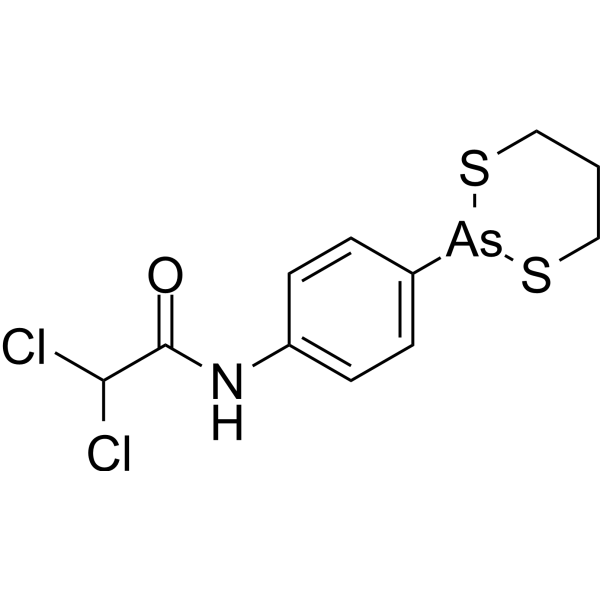
TrxR-IN-6 is a thioredoxin reductase (TrxR) inhibitor. TrxR-IN-6 induces reactive oxygen species (ROS) accumulation and cell apoptosis. TrxR-IN-6 induces mitochondrial dysfunction, endoplasmic reticulum stress and DNA damage. TrxR-IN-6 can be used for the research of breast cancer, leukemia .
loading...
    loading...
Cat. No.: HY-170498
CAS No.: 3076335-23-1
Target:  

GABA Receptor

Research Areas:  

Neurological Disease

GABA-A Receptor Ligand-1 (Compound 4) is a ligand for GABA-A receptor with a pKi of 7.27. GABA-A Receptor Ligand-1 reduces mitochondrial dysfunction, promotes neurite outgrowth and neuronal regeneration. GABA-A Receptor Ligand-1 exhibits neuroprotective efficacy in rats ischemic stroke models .
loading...
    loading...
Cat. No.: HY-116095
CAS No.: 1572646-93-5
Target:  

Sirtuin

CypD-IN-5 (compound C-9) is a potent cyclophilin D (CypD) inhibitor. CypD-IN-5 can be used in the study of Alzheimer's disease .
loading...
    loading...
Cat. No.: HY-N3383
CAS No.: 35897-92-8
Synonyms: Ligstroside
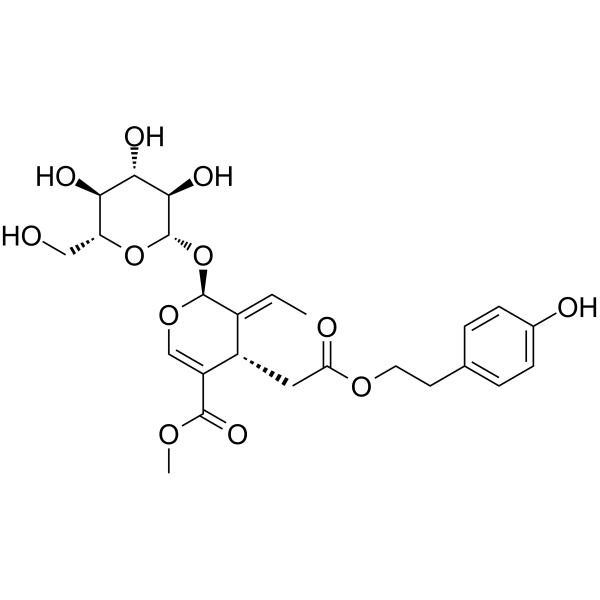
Ligustroside (Ligstroside), a secoiridoid derivative, has outstanding performance on mitochondrial bioenergetics in models of early Alzheimer's disease (AD) and brain ageing by mechanisms that may not interfere with Aβ production. Ligustroside significantly inhibits nitric oxide production in lipopolysaccharide-activated RAW264.7 macrophages .
loading...
    loading...
Cat. No.: HY-147696
CAS No.: 2851532-40-4
Purity:  99.58%
Research Areas:  

Cancer

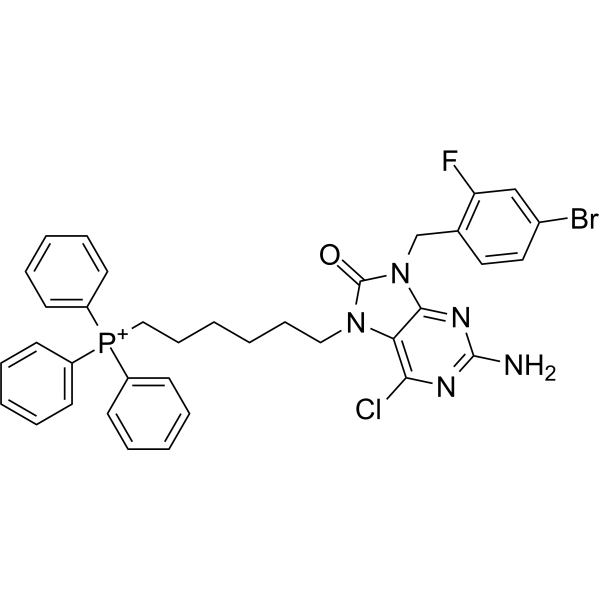
SMTIN-T140 (compound 6a) is a potent TRAP1 (tumor-necrosis-factor-receptor associated protein 1) inhibitor, with an IC50 of 1.646 μM. SMTIN-T140 shows anticancer activity. SMTIN-T140 leads to mitochondrial dysfunction, increases mitochondrial ROS production and activates AMPK. SMTIN-T140 potently suppressed tumor growth without any noticeable in vivo toxicity in a mouse model xenografted with PC3 prostate cancer cells .
loading...
    loading...
Cat. No.: HY-N6626R
CAS No.: 175013-18-0
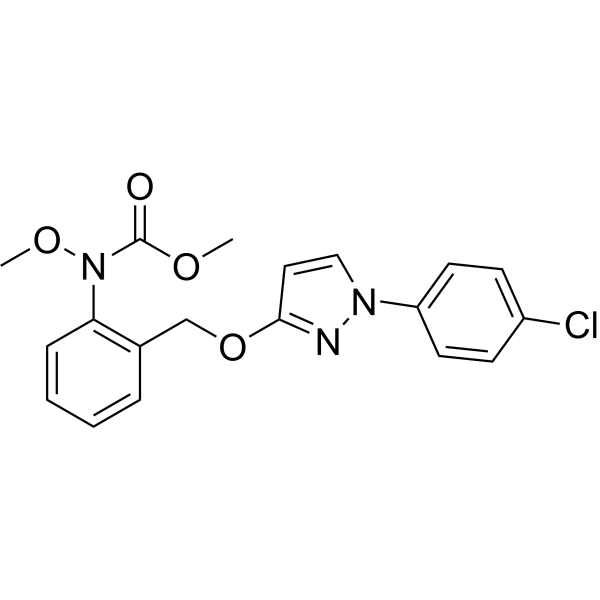
Pyraclostrobin (Standard) is the analytical standard of Pyraclostrobin. This product is intended for research and analytical applications. Pyraclostrobin is a highly effective and broad-spectrum strobilurin fungicide. Pyraclostrobin can induce oxidative DNA damage, mitochondrial dysfunction and autophagy through the activation of AMPK/mTOR signaling. Pyraclostrobin can be used to control crop diseases .
loading...
    loading...
Cat. No.: HY-W749980A
CAS No.: 61949-82-4
Synonyms: cis-9,10-Epoxy-12(Z)-octadecenoic acid
Target:  

Endogenous Metabolite

Research Areas:  

Others

cis-Coronaric acid is the 9,10-cis epoxide of linoleic acid, generated by neutrophils during the oxidative burst. It has been recovered from the lungs of hyperoxic rats and from humans with acute respiratory distress syndrome. Mitochondrial dysfunction is the main feature of cis-Coronaric acid cytotoxicity, which may be due to the diol metabolites as well as the parent epoxide.
loading...
    loading...
Cat. No.: HY-D3148
CAS No.: 1804107-88-7
Target:  

Fluorescent Dye

Research Areas:  

Others

TPE-Ph-In is a mitochondria-targeted voltage-sensitive probe that can be used for mitochondrial membrane potential detection, mitochondrial imaging of animal and plant cells and tissues, mouse sperm activity indication, and detection of mitochondrial membrane potential changes associated with early apoptosis. TPE-Ph-In is non-fluorescent in solution, but emits strong fluorescence when aggregated via restriction of intramolecular rotation/movement, and its fluorescence intensity is directly correlated with local probe concentration or mitochondrial membrane potential level. TPE-Ph-In can penetrate cell membranes, target mitochondria through charge-dependent accumulation, has low cytotoxicity and high photostability, and enables super-resolution imaging of plant mitochondrial fission, fusion and cristae structures. The excitation wavelengths of TPE-Ph-In include 450 nm, 488 nm, and 489 nm, while its emission wavelengths include 551-661 nm, 660 nm, and 694 nm. TPE-Ph-In can be used for studies on mitochondrial dysfunction associated with early apoptosis .
loading...
    loading...
Cat. No.: HY-163090
CAS No.: 3038691-79-8
Research Areas:  

Cancer

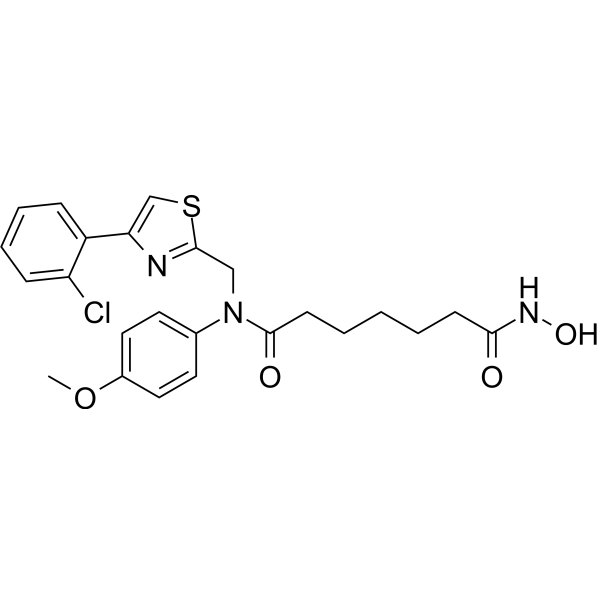
HR488B is an efficient HDAC1 inhibitor. HR488B specifically suppressed the growth of CRC cells by inducing cell cycle G0/G1 arrest and apoptosis. HR488B causes mitochondrial dysfunction, reactive oxygen species (ROS) generation, and DNA damage accumulation .
loading...
    loading...
Cat. No.: HY-128895A
CAS No.: 1800406-26-1
KL1333 hydrochloride is an orally active NAD + modulator that reacts with NAD(P)H:quinone oxidoreductase 1 (NQO1) as a substrate, leading to increased intracellular NAD + levels through NADH oxidation. Elevated NAD + levels trigger activation of SIRT1 and AMPK, and subsequently activate PGC-1α. KL1333 hydrochloride improves energy metabolism and mitochondrial dysfunction in mitochondrial encephalomyopathy, lactic acidosis, and stroke-like episodes (MELAS) fibroblasts. KL1333 hydrochloride protects against cisplatin-induced ototoxicity in mouse cochlear cultures .
loading...
    loading...
Cat. No.: HY-162456
Research Areas:  

Cancer

Anticancer agent 205 (compound 9) is a potent anticancer agent. Anticancer agent 205 binds to G4-mtDNA target and inhibits the replication, transcription, and translation of mtDNA (mitochondrial genome). Anticancer agent 205 causes mitochondrial dysfunction, increases ROS production, induces DNA damage and cellular senescence. Anticancer agent 205 induces apoptosis and cell cycle arrests at G0/G1 phase. Anticancer agent 205 has the potential for the research of colorectal cancer .
loading...
    loading...
Cat. No.: HY-N2522R
CAS No.: 33286-30-5
Synonyms: Gummiferin dipotassium (Standard)
Carboxyatractyloside (dipotassium) (Standard) is the analytical standard of Carboxyatractyloside dipotassium (HY-N2522). This product is intended for research and analytical applications. Carboxyatractyloside dipotassium is a diterpenoid. Carboxyatractyloside dipotassium can be isolated from plants of the genus Xanthium. Carboxyatractyloside dipotassium is an ADP/ATP carrier inhibitor, inhibiting mitochondrial ADP/ATP transport. Carboxyatractyloside dipotassium promotes ROS production, induces Ca 2+ release, and leads to mitochondrial dysfunction. Carboxyatractyloside dipotassium induces lethargy, weakness, and epileptic seizures in rats .
loading...
    loading...
Cat. No.: HY-N10443
CAS No.: 5224-54-4
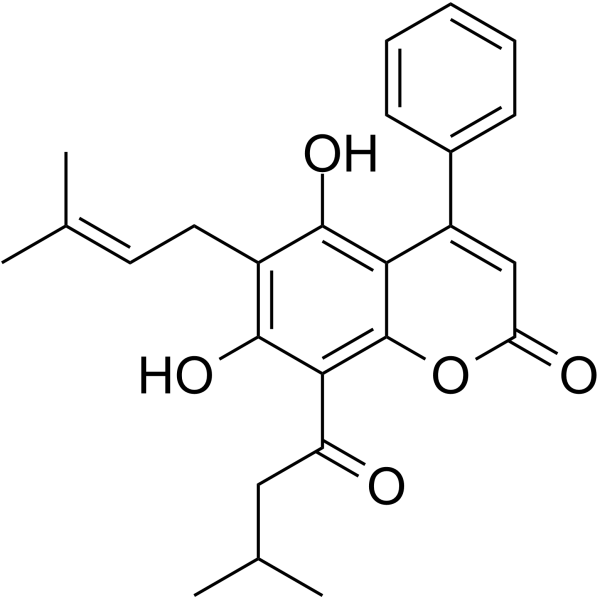
Mammea A/BA has potent activity against Trypanosoma cruzi (T. cruzi). Mammea A/BA induces mitochondrial dysfunction, reactive oxygen species (ROS) production and DNA fragmentation, and increases number of acidic vacuoles. Mammea A/BA can induce apoptosis, autophagy and necrosis. Mammea A/BA can be used for researching chagas disease .
loading...
    loading...
Cat. No.: HY-W046353
CAS No.: 1504-74-1
Synonyms: o-Methoxycinnamaldehyde
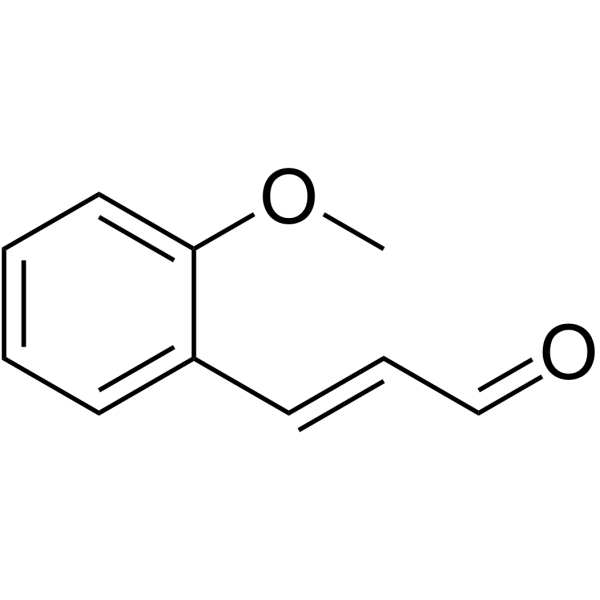
2-Methoxycinnamaldehyde (o-Methoxycinnamaldehyde) is a natural compound that can be isolated from Cinnamomum cassia. 2-Methoxycinnamaldehyde inhibits topoisomerase-I/II and NF-κB signaling pathway, causes mitochondrial dysfunction, induces lysosomal vesiculation, thereby leading to DNA damage and cell apoptosis. 2-Methoxycinnamaldehyde exhibits antitumor effects .
loading...
    loading...

