154 Results for "

soybeans

" in MedChemExpress (MCE) Product Catalog:
Products (154)

154 Results for "soybeans" in MCE Product Catalog:

Cat. No.: HY-B1605
CAS No.: 4638-48-6
Target:  

Bacterial Fungal

Research Areas:  

Infection Inflammation/Immunology

5-Chlorosalicylanilide is a bactericidal and antifungal compound. 5-Chlorosalicylanilide exhibits antibacterial activity against bacteria and fungistatic activity against dermatophytes. 5-Chlorosalicylanilide inhibits the photosynthetic electron flow required for nitrite reduction while stimulating nitrate reduction, leading to nitrite accumulation and NOx release in soybean leaves. 5-Chlorosalicylanilide is used in the research of tinea capitis and dermatophytosis .
loading...
    loading...
Cat. No.: HY-B2010S
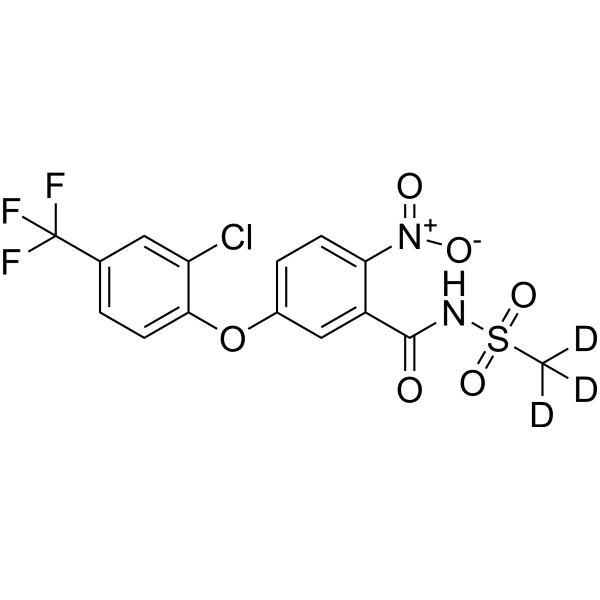
Fomesafen-d3 is the deuterium-labeled Fomesafen (HY-B2010). Fomesafen is an orally active herbicide. Fomesafen inhibits protoporphyrinogen oxidase (PPO). Fomesafen induces Apoptosis and increases ROS. Fomesafen exhibits developmental toxicity, immunotoxicity, and neurotoxicity. It induces precancerous lesions in the liver and hepaturoporphyria in mice. Fomesafen is used to control broadleaf weeds in soybean fields, rubber plantations, and orchards .
loading...
    loading...
Cat. No.: HY-136633R
CAS No.: 447399-55-5
Research Areas:  

Others

Pyroxasulfone (Standard) is the analytical standard of Pyroxasulfone. This product is intended for research and analytical applications. Pyroxasulfone is a broad-spectrum pyrazole herbicide used primarily for all-season residual weed control in corn and soybeans. Pyroxasulfone is active against a variety of annual grasses and some broad-leaved weeds, and can be absorbed through roots and stems to inhibit early seedling growth of sensitive plants. Pyroxasulfone can be used to study herbicide effects and weed resistance .
loading...
    loading...
Cat. No.: HY-W127366
CAS No.: 13175-44-5
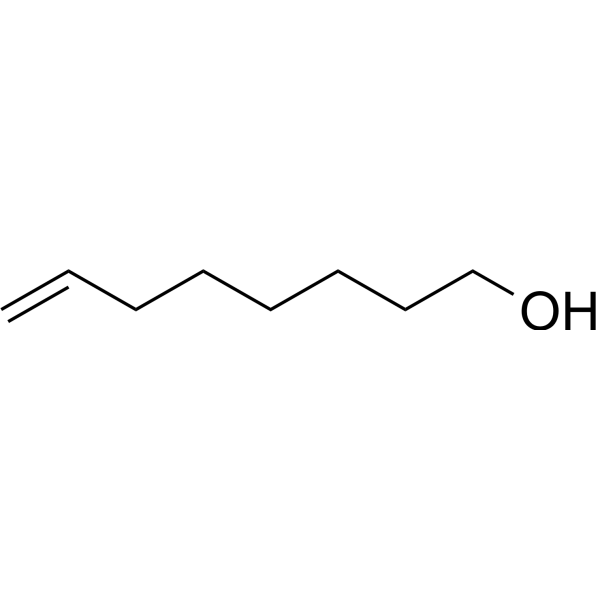
7-Octen-1-ol is an organic compound belonging to the group of alcohols. It has a strong mushroom-like smell and is commonly found in a variety of foods, such as mushrooms, soybeans, and peanuts. 7-Octen-1-ol has various applications in the flavor and fragrance industry, especially as a fragrance agent in products such as perfumes, colognes and air fresheners. In addition, it has potential utility in inhibiting inflammation-related diseases and cancer.
loading...
    loading...
Cat. No.: HY-100196AR
CAS No.: 122628-50-6
Synonyms: PQQ disodium salt (Standard); Methoxatin disodium salt (Standard)
Triazophos (Standard) is the analytical standard of Triazophos. This product is intended for research and analytical applications. Triazophos, a non-systemic insecticide and acaricide that acts as an acetylcholinesterase (AChE) inhibitor, covalently and irreversibly binds to the acetylcholine binding site, thus blocking the hydrolysis of acetylcholine and leading to hyperexcitability; it is effective against a variety of soil insects and mites, including aphids, thrips, midges, beetles, Lepidoptera larvae, cutworms, and spider mites in crops such as ornamentals, cotton, rice, maize, soybeans, oil palms, olives, and coffee.
loading...
    loading...
Cat. No.: HY-B0828R
CAS No.: 24017-47-8
Research Areas:  

Others

Triazophos (Standard) is the analytical standard of Triazophos. This product is intended for research and analytical applications. Triazophos, a non-systemic insecticide and acaricide that acts as an acetylcholinesterase (AChE) inhibitor, covalently and irreversibly binds to the acetylcholine binding site, thus blocking the hydrolysis of acetylcholine and leading to hyperexcitability; it is effective against a variety of soil insects and mites, including aphids, thrips, midges, beetles, Lepidoptera larvae, cutworms, and spider mites in crops such as ornamentals, cotton, rice, maize, soybeans, oil palms, olives, and coffee.
loading...
    loading...
Cat. No.: HY-B2010R
CAS No.: 72178-02-0
Fomesafen (Standard) is the analytical standard of Fomesafen (HY-B2010). This product is intended for research and analytical applications. Fomesafen is an orally active herbicide. Fomesafen inhibits protoporphyrinogen oxidase (PPO). Fomesafen induces Apoptosis and increases ROS. Fomesafen exhibits developmental toxicity, immunotoxicity, and neurotoxicity. It induces precancerous lesions in the liver and hepaturoporphyria in mice. Fomesafen is used to control broadleaf weeds in soybean fields, rubber plantations, and orchards .
loading...
    loading...
Cat. No.: HY-N20701
CAS No.: 60449-48-1
Eucomic acid is a derivative of Malic acid (HY-Y1311). Eucomic acid also acts as an anti-plasmodial inhibitor, pigment inducer and antioxidant. Eucomic acid inhibits the growth of Plasmodium falciparum. Eucomic acid promotes the production of black pigments in mature soybean pods and seed coats through oxidation or polymerization, while exerting antioxidant effects. Eucomic acid can be isolated from the roots of Eriosema montanum and the bulbs of Eucomis punctata. Eucomic acid can be used in research on malaria, antioxidation, etc .
loading...
    loading...
Cat. No.: HY-N7854
CAS No.: 103904-74-1
Synonyms: Anacardic acid 15:2
Target:  

Bacterial

Research Areas:  

Infection

Anacardic acid diene is a polyunsaturated form of anacardic acid (HY-N2020) that has been found in cashew nut shell liquid. It has antibacterial activity against methicillin resistant S. aureus (MRSA) and S. mutans (MICs=12.5 and 6.25 μg/mL, respectively). Anacardic acid diene has schistosomicidal activity against adult S. mansoni worms when used at a concentration of 100 μM. It also inhibits soybean lipoxygenase-1 in a time-dependent manner.
loading...
    loading...
Cat. No.: HY-W040194
CAS No.: 81777-89-1
Research Areas:  

Metabolic Disease

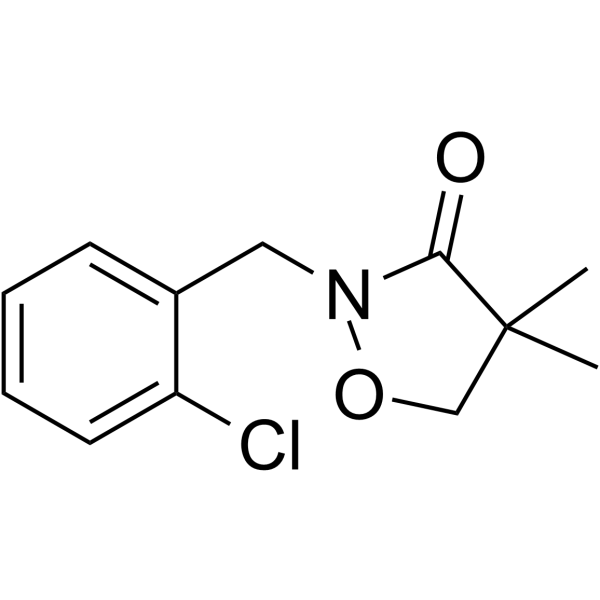
Clomazone is a broad spectrum herbicide, mainly used to control annual broadleaf weeds and grass weeds in various crops such as rice, soybeans, and peanuts. Clomazone inhibits carotenoid biosynthesis, and treated plants show typical "albinism" symptoms due to the destruction of chloroplast membrane structure leading to chlorophyll degradation. Clomazone exhibits multiple toxic effects on non-target organisms, including aquatic lethality, developmental malformations, liver damage, mitochondrial dysfunction, and hematotoxicity .
loading...
    loading...
Cat. No.: HY-122984S1
Diquat-d12 dibromide 1 is the deuterium labeled Diquat dibromide (HY-122984). Diquat dibromide is a comprehensive herbicide. Diquat dibromide increases the production of ROS and triggers mitochondrial Autophagy. Diquat dibromide generates free radicals such as superoxide anions through redox cycles, which induce oxidative stress. Diquat dibromide is cytotoxic, reproductive, and neurotoxic. Diquat dibromide is used in cotton, soybean, and other crops to combat noxious weeds .
loading...
    loading...
Cat. No.: HY-128429
CAS No.: 6728-26-3
Purity:  99.20%
Synonyms: (E)-2-Hexenal
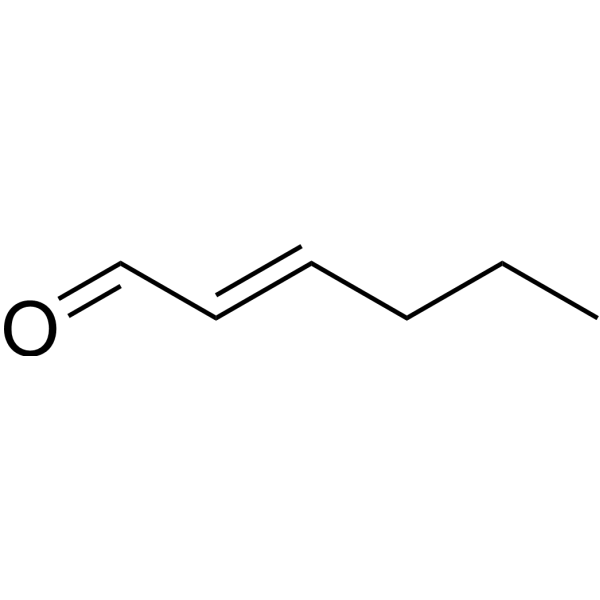
trans-2-Hexenal ((E)-2-Hexenal) is a volatile compound widely present in fresh plants, vegetables, and fruits, with a unique leafy aroma. trans-2-Hexenal has antifungal activity and can also inhibit the germination of soybean seeds and the growth of seedlings. In addition, trans-2-Hexenal can be used to determine low-molecular-weight carbonyl compounds that are reactive with biological nucleophiles in biological samples .
loading...
    loading...
Cat. No.: HY-136372R
CAS No.: 6385-62-2
Diquat (dibromide hydrate) (Standard) is the analytical standard of Diquat (dibromide hydrate). This product is intended for research and analytical applications. Diquat dibromide hydrate is a comprehensive herbicide. Diquat dibromide hydrate increases the production of ROS and triggers mitophagy. Diquat dibromide hydrate generates free radicals such as superoxide anions through redox cycles, which induce oxidative stress. Diquat dibromide hydrate is cytotoxic, reproductive, and neurotoxic. Diquat dibromide hydrate is used in cotton, soybean, and other crops to combat noxious weeds .
loading...
    loading...
Cat. No.: HY-178165
Target:  

Drug Derivative

Research Areas:  

Others

PPO-IN-22 (Compound B-04) is a benzothiazol-2(3H)-one derivative. PPO-IN-22 is a herbicide. PPO-IN-22 exhibits excellent post-emergence herbicidal activity against broadleaf weeds. PPO-IN-22 demonstrates potent pre-emergence activity against both dicotyledonous and monocotyledonous weeds. PPO-IN-22 exhibits favorable crop safety as a selective pre-emergence herbicide in soybean, peanut, and cotton cultivation systems .
loading...
    loading...
Cat. No.: HY-W758421
Diquat-d8 dibromide is a deuterium labeled Diquat dibromide (HY-122984). Diquat dibromide is a comprehensive herbicide. Diquat dibromide increases the production of ROS and triggers mitochondrial Autophagy. Diquat dibromide generates free radicals such as superoxide anions through redox cycles, which induce oxidative stress. Diquat dibromide is cytotoxic, reproductive, and neurotoxic. Diquat dibromide is used in cotton, soybean, and other crops to combat noxious weeds .
loading...
    loading...
Cat. No.: HY-131310
CAS No.: 111004-08-1
Target:  

Endogenous Metabolite

Research Areas:  

Metabolic Disease

9(S)-HpOTrE is a monohydroperoxy polyunsaturated fatty acid produced by the action of 5-lipoxygenase (5-LO) on α-linolenic acid. It can be further metabolized to colnelenic acid by a divinyl ether synthase activity found in garlic and potato microsomal fractions. 9(S)-HpOTrE also serves as a substrate for further oxidation by both soybean and potato LOs, resulting in the formation of 9,16-dihydroperoxy acid.The suicide inactivation of LOs when 9(S)-HpOTrE is used as a substrate is thought to occur via formation of an unstable epoxide.
loading...
    loading...
Cat. No.: HY-B0828S
CAS No.: 1773496-62-0
Synonyms: Hostathion 40EC-d5; Hostathion-d5; Hostation-d5
Triazophos-d5 (Hostathion 40EC-d5) is the deuterium labeled Triazophos(HY-B0828) . Triazophos, a non-systemic insecticide and acaricide that acts as an acetylcholinesterase (AChE) inhibitor, covalently and irreversibly binds to the acetylcholine binding site, thus blocking the hydrolysis of acetylcholine and leading to hyperexcitability; it is effective against a variety of soil insects and mites, including aphids, thrips, midges, beetles, Lepidoptera larvae, cutworms, and spider mites in crops such as ornamentals, cotton, rice, maize, soybeans, oil palms, olives, and coffee.
loading...
    loading...
Cat. No.: HY-W015343R
CAS No.: 1798-09-0
Synonyms: m-Methoxyphenylacetic acid (Standard)
3-Methoxyphenylacetic acid (Standard) (m-Methoxyphenylacetic acid (Standard)) is the analytical standard of 3-Methoxyphenylacetic acid (HY-W015343). This product is intended for research and analytical applications. 3-Methoxyphenylacetic acid (m-Methoxyphenylacetic acid) is an endogenous fungal phytotoxin found in the culture filtrate of Rhizoctonia solani. 3-Methoxyphenylacetic acid induces wilting in soybean seedlings in a concentration-dependent manner and may be involved in R. solani non-enzymatic toxin-mediated impairment of plant function. 3-Methoxyphenylacetic acid is used in research on resistance to Rhizoctonia root rot .
loading...
    loading...
Cat. No.: HY-W040194R
CAS No.: 81777-89-1
Research Areas:  

Metabolic Disease

Clomazone (Standard) is the analytical standard of Clomazone (HY-W040194). This product is intended for research and analytical applications. Clomazone is a broad spectrum herbicide, mainly used to control annual broadleaf weeds and grass weeds in various crops such as rice, soybeans, and peanuts. Clomazone inhibits carotenoid biosynthesis, and treated plants show typical "albinism" symptoms due to the destruction of chloroplast membrane structure leading to chlorophyll degradation. Clomazone exhibits multiple toxic effects on non-target organisms, including aquatic lethality, developmental malformations, liver damage, mitochondrial dysfunction, and hematotoxicity.
loading...
    loading...
Cat. No.: HY-114507R
CAS No.: 103361-09-7
Synonyms: V-53482 (Standard)
Flumioxazin (Standard) (V-53482 (Standard)) is the analytical standard of Flumioxazin (HY-114507). This product is intended for research and analytical applications. Flumioxazin (V-53482) is a protoporphyrinogen IX oxidase (PPO) inhibitor with a rat target IC50 of 4.58 nM. Flumioxazin is found in its biological sources and is used for pre-emergence control of dicotyledonous weeds in soybean and peanut. Flumioxazin inhibits protoporphyrinogen oxidase, blocking chlorophyll and heme biosynthesis, leading to protoporphyrin IX accumulation, oxidative stress, membrane damage, and cell death. Flumioxazin is used in research on weed control .
loading...
    loading...

